This guide is independent and contains no paid placement. If affiliate links are added later, they will be clearly marked and will not change our editorial checks.
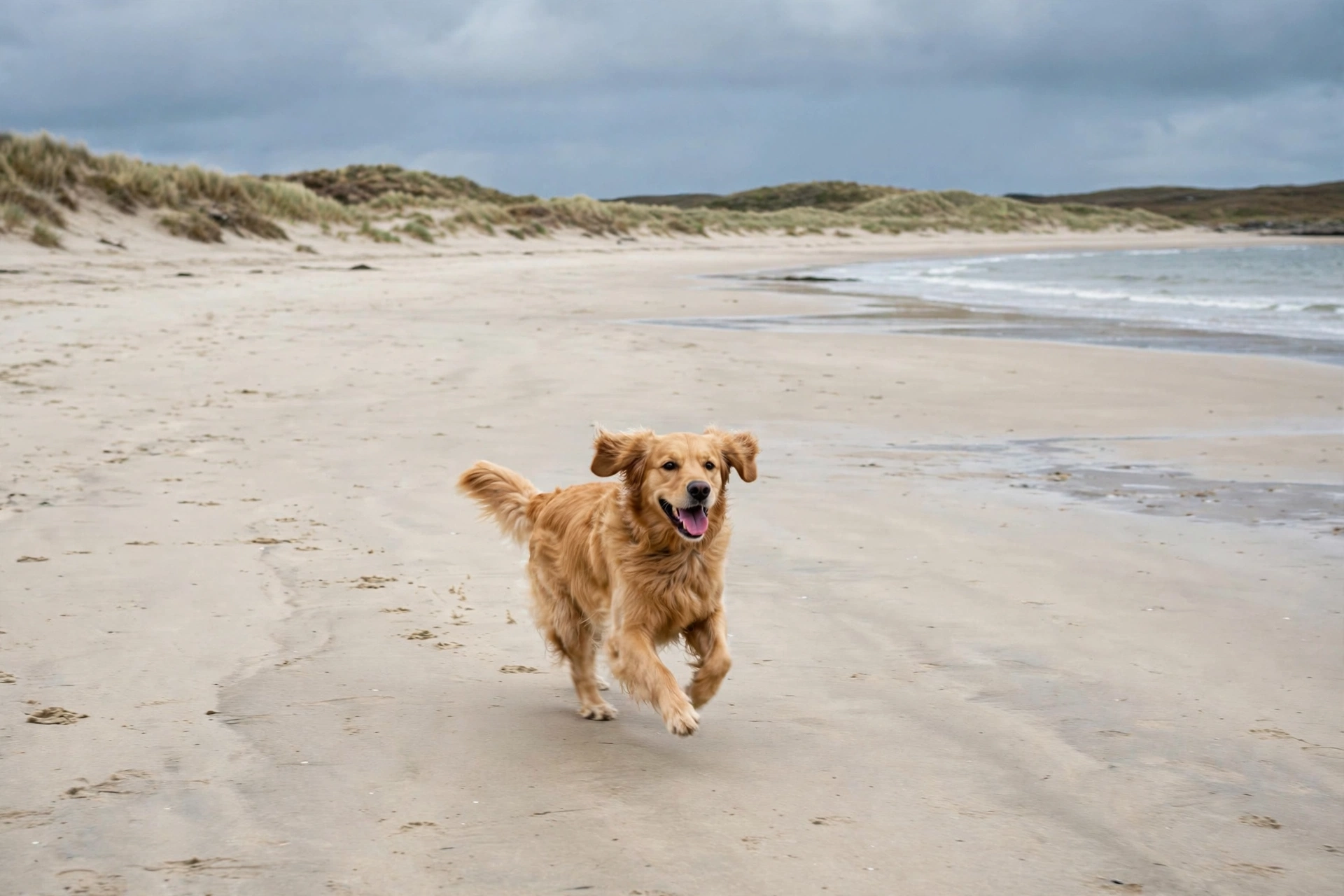
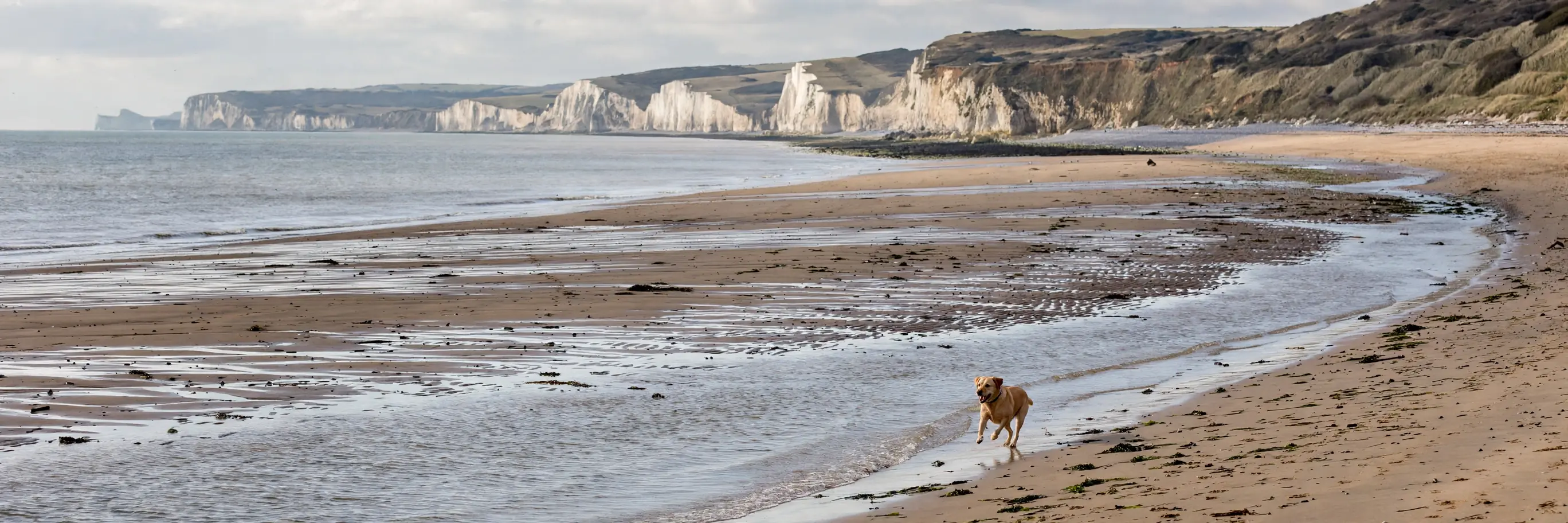
England's dog friendly beaches divide neatly into four coastlines: the surf sands of the south-west, the shingle and resort beaches of the south, the long flat sands of the east, and the wild, quiet beaches of the north. Most seasonal bans run from around 1 May to 30 September on busy resort beaches, while quieter beaches stay open all year. Check the official guidance before you travel, check the tide times, and carry fresh water.
Read England by coastline, not by county
The fastest way to plan a dog beach trip in England is to think in coastlines. A beach in Cornwall and a beach in Norfolk may both be labelled dog friendly, but they offer completely different days out: one is a surf beach with cliffs, strong currents and a long walk from the car park, while the other is a flat, firm stretch of sand where an older dog can walk for a mile without climbing a step. County boundaries do not tell you that. Coastlines do, because the geology, the tide and the weather shape the beach far more than the council that manages it.
Start with four zones. The south-west — Cornwall, Devon, Dorset and Somerset — has the longest sandy bays, the strongest surf and the most choice, but also the steepest cliff paths and the busiest summer car parks. The south coast — Hampshire, Sussex and Kent — mixes shingle beaches, resort promenades and a handful of sandy bays, with seasonal bans concentrated on the busiest frontages. The east coast — Norfolk, Suffolk, Essex and the Yorkshire coast — offers long, flat sands, big skies and quieter walking, with wide tidal ranges that need respect. The north — Northumberland, Cumbria and Lancashire — has some of the emptiest beaches in England, with castles, dunes and estuaries, and weather that can change in an hour.
Use the zones to match the beach to the dog. A young, fit retriever that loves swimming will be happiest on a south-west surf beach with room to run and a safe entry into the water. A nervous rescue that needs space from other dogs will do better on a long Northumberland or Norfolk beach on a weekday, where you can see other walkers coming from a long way off. An older dog with stiff joints needs firm, flat sand and a short walk from the car, which the east coast does best. A puppy on its first beach trip needs a sheltered, shallow bay with no strong current, which the south coast and south Devon provide in calm weather. Pick the zone first, then the beach inside it.
Rules follow the same pattern. Seasonal dog bans are most common where beaches are busiest: resort fronts in Devon, Dorset, Sussex and Kent, and the main bays in Cornwall. Quieter beaches, rural stretches and many estuary shores stay open all year. That is why a single national list of dog friendly beaches is misleading — the same beach can be fully open in February and partly restricted in August. The sections below give the character of each zone and named examples, but always check the official guidance before you travel, because councils change Public Spaces Protection Orders, and a ban that applied last summer may have new dates or a new marked zone this year.
South-west: Cornwall, Devon, Dorset and Somerset
The south-west is the natural first stop, and the county guides below carry the detail — this section is only the orientation. Cornwall holds the biggest choice of year-round sands: Perranporth spreads wide when the tide drops, a stream cuts across it, and the car park sits a short walk from the sand. Holywell Bay, a short drive away, is quieter and backed by dunes, which suits dogs that need room. Watergate Bay is wide and exposed, busy with surfers and kite flyers, so a nervous dog is better on a long line there until it learns what the boards and kites are. Crantock, near Newquay, pairs a long beach with a river estuary at one end, and the current in that channel runs fast, so walk the sand there and do not let a dog swim across it.
Devon is one county with two opposite coasts, and the dog day changes completely between them. The north, around Woolacombe, Saunton and Croyde, is Atlantic surf country: long golden sands, big waves and dunes behind the beach. Woolacombe keeps dogs to part of the sand in summer and opens more widely out of season, so the signs at each access point decide the day. Saunton runs long and straight behind the Braunton Burrows dunes and suits a fit dog that wants a straight run. Croyde is smaller and busier in summer, with a stream and rock pools dogs love, and a rip current that appears at times, so swimming there needs care. The south coast is gentler: Bigbury-on-Sea, where the sand leads across to Burgh Island at low tide, Bantham at the mouth of the River Avon, and Exmouth, a long sandy beach where the Exe meets the sea. Those sheltered bays suit families, older dogs and first swims better than the northern surf.
Dorset is quieter and more varied. Studland Bay, on the Purbeck coast, has several sandy beaches backed by heathland and dunes; South Beach and Knoll Beach have different rules and facilities, so check which section you are heading for. Charmouth, famous for fossils, is a shingle and sand mix where dogs can walk along the shore, but keep them away from crumbling cliffs and do not let them eat fossils or stones. Lyme Regis has a small sandy beach and a harbour, with seasonal restrictions on the main beach in summer — the neighbouring Monmouth Beach, a pebble shore to the west, is often the easier option with a dog. Weymouth's main sandy beach has a seasonal ban, so dog owners usually head to the quieter stretches at the edge of the bay or to nearby Ringstead and Bowleaze Cove.
Somerset's coast is often overlooked, and that is part of its appeal. Brean Down and Berrow offer very long, flat sands at low tide, with a huge tidal range — the Bristol Channel has one of the largest tidal ranges in the world, so the sea can come in fast across flat sand. Keep dogs close, watch the tide times, and avoid the muddy areas near the river mouths. Burnham-on-Sea has a long sandy beach that suits a steady walk, while the shingle shore at Porlock Weir, on the edge of Exmoor, is a quieter, wilder option for dogs that enjoy a rock-pool scramble. Our guide to UK beach dog rules, bans and fines explains how seasonal restrictions work across the country, and the dog paw care after the beach guide covers rinsing salt and sand from paws after a day on these sands.
South coast: Hampshire, Sussex and Kent
The south coast is the most built-up coastline in this guide, and that changes the dog beach experience. Beaches here are often shingle rather than sand, backed by promenades, piers and town centres. That makes them easy to reach — car parks, cafes and toilets are close — but it also means seasonal bans are common on the busiest stretches, and dogs need to be comfortable with crowds, cyclists and children. The best strategy on the south coast is to use the resort beaches out of season and the quieter stretches in summer.
In Hampshire, the New Forest coast around Lepe and Calshot offers shingle shores with views across the Solent to the Isle of Wight, and dogs are welcome on much of the shore. Southsea, near Portsmouth, has a long promenade and a shingle beach; dogs are restricted on parts of the beach in summer, so check the marked zones. Hayling Island has sandy stretches at low tide and a quieter feel than the city beaches. The Isle of Wight, a short ferry ride away, has its own set of dog friendly beaches, including the sandy bays at Ryde and Sandown out of season and quieter shores at Bembridge and Compton Bay, where the cliffs and rock pools make a good walk.
Sussex mixes resort fronts with quieter shingle bays. Brighton has a famous pebble beach, and dogs are restricted on the main central beach in summer, with a designated dog area to the east of the pier and quieter stretches further along the coast towards Rottingdean and Saltdean. Eastbourne and Hastings have similar seasonal arrangements, with the main beach restricted and neighbouring stretches open. Camber Sands, near Rye, is the exception: a long sandy beach backed by dunes, one of the few truly sandy beaches on the south coast, and a favourite with dog owners. It gets very busy on summer weekends, so arrive early, use the car park at the western end for a quieter start, and keep dogs on a lead in the car park and dunes.
Kent's coast runs from the sandy bays of the east to the shingle of Dungeness. Margate and Broadstairs have sandy beaches with seasonal restrictions on the main sands in summer, while nearby Botany Bay and Joss Bay offer quieter options. Whitstable is a shingle beach town where dogs are welcome along much of the shore, and the harbour and working fishing boats make a lively walk. Dungeness, a vast shingle headland with a nature reserve, suits a long, windswept walk with a dog that likes open space, but there is little shade or fresh water, so carry plenty and avoid the hottest part of the day. Folkestone's Sunny Sands and the beach at Hythe offer more sand, with seasonal rules on the main stretches.
East coast: Norfolk, Suffolk, Essex and Yorkshire
The east coast is the best choice for long, flat walks and for dogs that need space. Norfolk has some of the longest beaches in England, and many of them welcome dogs all year. Holkham Bay is a vast stretch of sand backed by pine woods and dunes, with a car park a short walk from the beach — arrive early in summer, because the car park fills up. Wells-next-the-Sea has a sandy beach reached through pine woods, with a harbour and a narrow-gauge railway that children love. Winterton-on-Sea, on the east Norfolk coast, is a quieter dune-backed beach with a good car park, and it is popular with dog owners precisely because it never feels crowded. Great Yarmouth has seasonal restrictions on the central beach, but the long northern stretch towards Caister is open to dogs and gives a fit dog a proper run.
Suffolk's coast is quieter and more village-based. Southwold has a sandy beach with seasonal restrictions on the main stretch in summer, and the harbour and the pier area make a good walk with a dog on a lead. Aldeburgh is a shingle beach town with a literary feel, dogs welcome along the shore, and a long walk south towards Thorpeness and Sizewell. Dunwich, a village that has largely fallen into the sea over the centuries, has a shingle beach and heathland behind it, and it suits a calm, uncrowded walk. Felixstowe has a mix of shingle and sand, with a promenade and gardens, and dogs are welcome on parts of the beach all year.
Essex has estuary beaches and island shores that feel very different from the open sea. Frinton-on-Sea has a sandy beach with seasonal restrictions, while nearby Walton-on-the-Naze offers a longer sandy stretch and a pier. Mersea Island, reached by a causeway that floods at high tide, has beaches and salt marshes where dogs can walk, but check the tide times before crossing — the causeway is a well-known trap for drivers who misjudge the tide. The Essex coast is also good for birdwatching, so keep dogs on a lead near reserves and nesting areas, especially in spring and summer when ground-nesting birds are vulnerable.
The Yorkshire coast adds cliffs and fishing villages to the east-coast mix. Whitby has a long sandy beach with seasonal restrictions on the main sands, and the harbour steps and the abbey make a good walk with a dog on a lead. Runswick Bay is a sheltered, sandy cove that suits families and older dogs, with a small car park and a steep walk down to the beach — worth it for the shelter, but not ideal for a dog that struggles with steps. Filey has a long sandy beach, Bridlington has a long south beach where dogs are welcome on parts of the shore, and Fraisthorpe, just south of Bridlington, is a quiet sandy beach backed by farmland that dog owners seek out for its space. Scarborough's north and south bays have seasonal restrictions on the main beaches, so check the zones before you go.
North: Northumberland, Cumbria and Lancashire
Northumberland has the emptiest beaches in England, and for many dog owners that is the whole point. Bamburgh Beach, below the castle, is a long sandy stretch with dunes behind it and views that make the drive worthwhile. Alnmouth, at the mouth of the River Aln, has a wide sandy beach and a village with pubs and cafes that welcome dogs. Druridge Bay is a seven-mile stretch of sand backed by a country park, with a car park in the middle and room to walk for hours without meeting another dog. Tynemouth Longsands, near Newcastle, is a long sandy beach with seasonal restrictions on part of the shore in summer — check the signs at the access points, because the restricted zone moves with the seasons.
Cumbria's coast is wilder and more estuarine. Silloth, on the Solway Firth, has a long sandy beach and a promenade, with views across to Scotland. Allonby is a quiet village beach with a good car park and a flat walk. St Bees, on the west Cumbrian coast, has a sandy beach below the cliffs, and it is the start of the Coast to Coast walk, so it gets walkers with dogs in spring and autumn. The Duddon Estuary and the sands around Ravenglass are beautiful but dangerous: the estuary channels shift, the tide comes in fast, and the sand can be soft in places. Keep dogs close, stay off the estuary sands unless you know the area, and check the official guidance before you travel.
Lancashire's coast mixes resort fronts with quiet dunes. Formby, on the Sefton coast, has pine woods, red squirrels and a sandy beach backed by dunes, with a National Trust car park — dogs are welcome, but keep them on a lead in the woods and near the squirrel areas. Ainsdale, just south of Southport, has a long sandy beach with a good car park and room to run. Southport itself has a long beach with seasonal restrictions on the main stretch, and the neighbouring Birkdale beach is quieter. Blackpool's beaches have seasonal restrictions on the central sections, so dog owners usually head to the quieter northern or southern ends, or to the neighbouring beaches at Cleveleys and Fleetwood.
The north's weather deserves respect. A sunny morning can turn into a cold, wet afternoon with a strong wind off the North Sea, and the water is cold even in summer. Bring a windproof layer for yourself and a drying coat for the dog, and do not let a dog swim for long in cold water — small and short-coated dogs chill quickly. On the plus side, the north's beaches are rarely crowded outside school holidays, car parking is usually cheaper and easier than in the south-west, and the walking — along the coast path, through dunes and into villages — is among the best in England.
Seasonal restrictions: the summer time window
Most seasonal dog bans in England run from 1 May to 30 September, but that is a pattern, not a rule. Some councils start on 1 April or at Easter, and some end on 30 September, 31 October or even later. A few beaches ban dogs only between 10am and 6pm in summer, rather than all day. Others ban dogs from a marked zone on the main beach but allow them on a neighbouring stretch. The only way to be sure is to check the council's beach page and the signs at the beach entrance on the day you visit, and to check the official guidance before you travel if anything is unclear.
Seasonal bans are usually made under a Public Spaces Protection Order, known as a PSPO. A PSPO lets a council set rules for a defined area, including where dogs can go, whether they must be on a lead, and what the fine is for breaking the rules. PSPOs are reviewed every few years, so a beach that was open last summer may have a new order this year, and a beach that was restricted may have had its zone redrawn. The order should be published on the council website, with a map of the restricted area. If you cannot find it, call the council or ask at the tourist information centre — do not guess from a blog post or a social media comment, because those go out of date fast.
A ban does not bind every dog in the same way. A registered assistance dog working with a disabled handler is normally outside a seasonal ban, because the ban would otherwise keep that person off the beach altogether. The exemption is written into each council order separately, so its exact wording changes from beach to beach — check the order for the beach you are visiting rather than assuming one rule covers the country. It covers a guide dog, a hearing dog, a medical alert dog or a similar trained dog doing its job, and it does not cover emotional support animals or pets. Even an exempt dog still has to stay under control, and carrying the dog's identification helps if anyone asks.
Treat the calendar as the plan, not the obstacle. From October to April most English beaches drop their restrictions entirely, car parks get cheaper or free, and the walking suits dogs better in the cooler air — pack a windproof layer and a towel, and those winter days, with long empty sands and no queues, are often the best of the year. In the May to September window, work the other way round: pick a beach that stays open all year, go early or late when it is quieter, and keep a second beach in mind in case the first is busy or a new sign has appeared. A weekday morning in August beats a Saturday afternoon, and a back-up ten minutes away beats an argument at a restricted beach.
Tides, currents and beach safety
Start with the tide table, not with the beach. On a flat east-coast sand the incoming tide can cross the beach faster than a person walks, and on an estuary beach the channels fill first and cut the way back to shore. Look up the times for the exact beach, not the nearest town — the UK Hydrographic Office publishes them, harbour offices and many car parks display them, and the timing can shift by half an hour or more along one coast. Plan to be off the sand well before high tide when the walk back is a long one, and treat a falling tide as the safe window for a long walk rather than a reason to linger.
After the tide, watch the water itself. Where a river meets the sea, where a harbour wall juts out, or where waves break over a sandbank, the current can run far harder than it looks from the shore, and a rip can pull a swimmer sideways and out. Dogs swim strongly in a pool and judge a rip badly: a dog that charges in happily may not be able to get back. Keep dogs out of the water by river mouths, harbour walls and piers, and never throw a ball into the sea where the current runs along the shore. If a dog does get into trouble, do not go in after it unless you are a confident swimmer and the conditions are safe — call the coastguard on 999, keep the dog in sight, and let the professionals take over.
Four quiet hazards are worth a check on arrival. Weever fish lie buried in shallow sand in summer, and their sting is painful for dogs and people alike: if a dog yelps after stepping on something in the shallows, keep it calm, keep the paw warm, and get veterinary advice. Jellyfish wash up after storms, and a dead one on the sand can still sting, so keep dogs away from them. Palm oil arrives as a waxy white lump and is toxic if eaten, so do not let a dog mouth anything white and waxy on the sand. Adders live in dunes and coastal grassland in summer; bites are rare and serious, so keep dogs on a lead through dune grass and seek veterinary help at once if you suspect a bite.
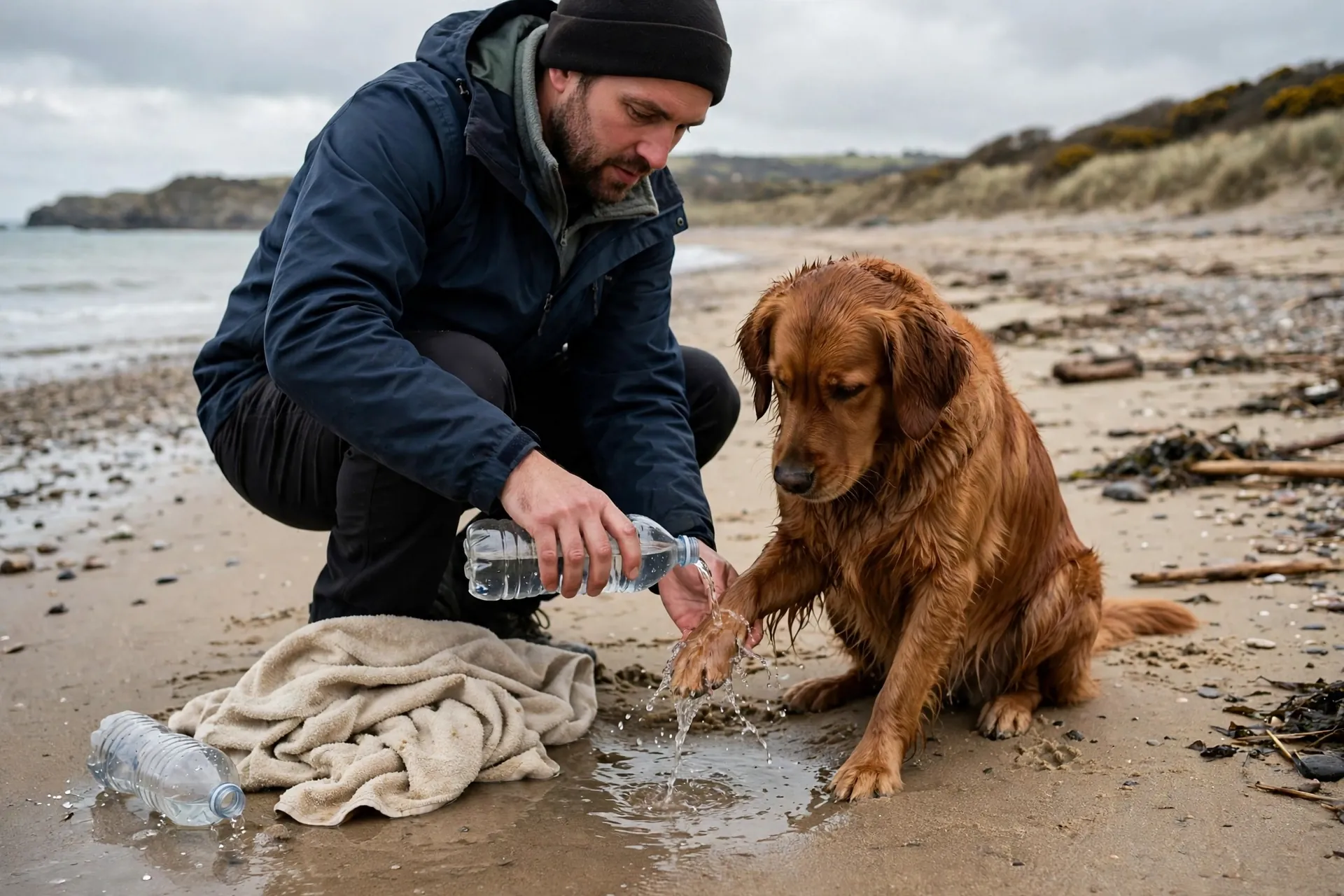
Water quality matters too. After heavy rain, rivers and storm drains can carry pollution into the sea, and some beaches have poor water quality for a day or two after a storm. Check the Environment Agency bathing water quality page for the beach you are visiting, and avoid letting dogs swim if there is a warning. Do not let dogs drink seawater — it causes vomiting, diarrhoea and, in large amounts, salt poisoning. Bring fresh water and offer it often, especially on a hot day, and rinse the dog with fresh water after swimming, because salt dries the skin and sand irritates the paws.
Parking, facilities and access
Parking shapes the beach day more than most people expect. A beach with a car park 200 metres from the sand is a different trip from a beach with a car park at the top of a steep cliff path. Before you go, check where the car park is, how far it is from the beach, whether it is pay and display or pay by phone, and whether it fills up early in summer. Many coastal car parks in Cornwall, Devon and Dorset are run by the council or by a private operator, and charges can be 8 to 15 pounds for a full day in summer, with cheaper rates out of season. Some car parks offer a weekly ticket, which is worth it if you are staying for a week and visiting the same beach every day.
Access matters for dogs as much as for people. Some beaches are reached by a flat, surfaced path from the car park, which suits older dogs, puppies and dogs in a pushchair or buggy. Others are reached by steep steps, a sandy dune path or a rocky scramble, which can be hard for a dog with stiff joints or a fear of heights. Check the access before you go, and if the beach has more than one access point, choose the easiest one — the main access is often the steepest, while a side access a few hundred metres along the road may be flat. If your dog struggles with steps, look for beaches with a slipway or a flat path, such as the east coast sands and many estuary beaches.
Assume the beach provides nothing, and let anything you find be a bonus. A resort beach usually has toilets, a cafe, a shop and a lifeguard in summer; a rural stretch may have none of those, no fresh-water tap and no shade. Coastal cafes often welcome dogs, but some only on the terrace, so ask before sitting down. A toilet block with an outdoor tap is handy for rinsing paws, but do not build the day around one — carry your own water and a towel. Shade is scarce on open sand, so bring a windbreak or a beach tent in summer, and treat a parked car as no place for a waiting dog: even with the windows down it heats quickly.
Blue Badge holders and people with limited mobility should check the beach's accessible parking and access in advance. Some beaches have a level access point and a beach wheelchair available to hire, while others have no step-free route at all. The council's beach page usually lists the access arrangements, and the local tourist information centre can advise on the easiest beaches in the area. If you need a flat, short walk from the car to the sand, the east coast and the estuary beaches are usually the best choice, while the cliff-backed beaches of Cornwall and north Devon are often the hardest.
What to pack for a dog beach day
Pack in order of need, starting with water. A litre per dog, plus a bowl, is the minimum, offered often, because dogs do not drink seawater and lose water fast running on hot sand. Next comes a lead and a long line: even where off-lead exercise is allowed, the car park, the promenade and any wildlife area will need the lead. Poo bags are essential, with a small bag to carry them in until a bin appears — never leave a filled bag on the beach or hanging from a fence, because it will still be there long after you have gone.
Drying comes next. Dogs chill fast after swimming, even in summer, and a wet dog turns the car damp and smelly on the way home. A microfibre towel dries a dog quickly, and a drying coat keeps it warm while you pack up. In summer add shade — a windbreak, a beach tent or a parasol — and a light-coloured towel for the dog to lie on, because sand can burn paws underfoot. Test it with your bare foot: too hot for you means too hot for the dog, so walk on the wet sand by the water or wait until later in the day.
A small first-aid kit earns its place in the bag. Pack a tick remover, antiseptic wipes and a bandage, and save the number of the nearest vet in your phone before leaving home. After walking through dunes and grassland, check the dog for ticks; after any beach walk, check between the toes for sand, grit and small cuts. Our dog paw care after the beach guide sets out the rinse-and-check routine in detail, and it is worth reading before a beach holiday, because a small cut cleaned early heals fast and one ignored can turn sore and infected.
Feeding needs timing. A large meal just before swimming can make a dog vomit, so feed lightly and leave a gap before the water. On the sand, do not let a dog eat seaweed, which swells in the stomach, or dead fish, which can carry bacteria, or anything else it finds — some beach litter is toxic. Bring a small snack for the journey home, and a chew or a lick mat for the car so the dog settles on the drive. For a dog prone to car sickness, keep the journey short, open a window for fresh air, and talk to your vet about medication before a long coastal drive.
Choose the right beach for your dog
Match the zone to the dog, not the other way round. A nervous rescue that needs space from other dogs does best on a long Northumberland or Norfolk beach on a weekday, where other walkers can be seen coming from far off. A young, fit retriever that loves swimming belongs on a south-west surf beach with room to run and a safe way into the water. An older dog with stiff joints needs firm, flat sand and a short walk from the car, which the east coast does best. A puppy on a first beach trip needs a sheltered, shallow bay with no strong current, which the south coast and south Devon provide in calm weather. Choose the zone first, then the beach inside it.
Coat is really about temperature control. Short-coated dogs such as greyhounds and whippets lose heat fast in cold water and in a sea breeze, so bring a coat and keep swims short. Thick-coated dogs such as spaniels and retrievers hold heat instead, and overheat faster in summer — pick a beach with shade and fresh water, and stay out of the middle of the day. Flat-faced breeds such as pugs and French bulldogs tire quickly and can struggle to breathe, so they should not swim in strong currents or cold water; keep them paddling in the shallows and watch them closely. Pale or thin-coated dogs can sunburn on the ears and nose, so use a dog-safe sunscreen if your vet recommends it.
Base the week on one beach, not on a new drive every day. A beautiful beach two hours from the cottage leaves a tired dog that has spent the journey in the car, and it will enjoy the sand far less than a beach ten minutes away. Staying a week, pick a main beach near your accommodation and return to it most days, with one or two day trips to a different coast for variety. The dog settles into a familiar routine, and you learn the tide, the best parking spot and the quietest stretch. Heading further north? Our guide to dog friendly beaches in Scotland covers the different rules and tides beyond the border.
Finally, check the weather and the sea conditions on the morning of your visit. A beach that is perfect in calm weather can be dangerous in a strong onshore wind, with waves breaking over the sand and a strong undertow. The Met Office and the RNLI publish beach safety advice, and many beaches have a lifeguard in summer — swim only where lifeguards are present if your dog is a strong swimmer, and keep dogs out of the water when the red flag is flying. If the weather turns, have a back-up plan: a coastal walk, a dog-friendly cafe or a woodland walk inland, so the day is not wasted.
Beach etiquette that keeps beaches open
Beaches stay open to dogs when owners behave as if the privilege can be lost. Pick up after your dog every time and take the bag with you. Keep the dog under control even where off-lead exercise is allowed, and call it back when it approaches other people, children or dogs on a lead. Do not let it chase birds, above all ground-nesting birds on dunes and estuaries in spring and summer, and keep it away from seals hauled out on the sand — a dog that gets close can be bitten, or can make a seal abandon its pup.
Respect other beach users. Not everyone loves dogs, and a dog that runs up to a family having a picnic, shakes seawater over a stranger's towel or steals a child's ball is not being friendly — it is being a nuisance. Keep your dog away from other people's belongings, and if your dog is not reliable off the lead, keep them on a long line. That is not a punishment; it is a practical way to give them freedom while keeping everyone else comfortable. If another dog approaches yours and your dog is not comfortable, move away calmly and do not make a fuss — most owners will understand.
Leave the beach as you found it. Take all your litter home, including poo bags, food wrappers and broken toys, and do not bury anything in the sand. Do not let your dog dig deep holes in the sand, because they are a hazard for other walkers, and fill in any hole your dog does dig. If you see litter, pick it up if you can — a clean beach is more likely to stay open to dogs, and a beach with dog mess and litter is more likely to get a ban. Councils do listen to complaints, and a few careless owners can cause a whole beach to lose its dog friendly status.
When something is wrong, say so. A dog in distress, a seal in trouble, palm oil or a dead animal on the sand — report it to the council or the coastguard rather than walking past it. If a sign is unclear or out of date, tell the council: they would rather fix a sign than fine a confused visitor. And when a beach gives you a great day, say that too — leave a review, tell other dog owners, and spend money with the local businesses that welcome dogs. The more owners use a beach responsibly, the more likely it is to stay open, and the more businesses will welcome dogs in future.
Practical questions
Before you go
Are dogs allowed on beaches in England all year round?
It depends on the beach. Many English beaches welcome dogs all year, but busy resort beaches often have a seasonal ban, usually from 1 May to 30 September, enforced through a Public Spaces Protection Order. Always check the official guidance before you travel, because the exact dates and the marked zone vary by council and by beach.
Which part of England has the most dog friendly beaches?
The south-west, especially Cornwall and Devon, has the widest choice, with long sandy bays, year-round options and good coastal walking. Northumberland and Norfolk also offer long, quiet sands. The best region depends on your dog: strong swimmers and runners suit the south-west surf beaches, while older dogs and puppies often do better on the flat, sheltered sands of the east coast.
Can my dog swim in the sea in England?
Yes, on most beaches where dogs are allowed, but check the conditions first. Avoid strong currents, river mouths and harbour entrances, keep dogs out of the water after heavy rain, and watch for blue-green algae warnings, jellyfish and sewage alerts. Rinse your dog with fresh water afterwards and do not let them drink seawater.
Do I have to keep my dog on a lead on English beaches?
Not on every beach. Leads are usually required near car parks and on promenades, around wildlife and livestock, and in some seasonal zones. Where off-lead play is allowed, the dog still has to stay under control and come back when called near people, other dogs and wildlife. Carry a lead even on beaches that allow off-lead exercise.
What is the fine for taking a dog onto a restricted beach?
Fines are set by the local council under a Public Spaces Protection Order and commonly reach 100 pounds, with higher penalties possible through the courts. The amount and the enforcement approach vary, so check the official guidance before you travel and respect the signs at the beach entrance.
What should I pack for a dog beach day in England?
Pack fresh drinking water with a bowl, a lead plus a long line, poo bags, a towel or drying coat, shade or a windbreak for summer, and a first-aid kit. After the beach, rinse the salt and sand from paws and coat, check between the toes for cuts, and watch for vomiting or wobbliness after swimming — both need a vet promptly.