This guide is independent and contains no paid placement. If affiliate links are added later, they will be clearly marked and will not change our editorial checks.
In the first week of the new year, fix three things: the dates you will protect for travel, one health or training priority for your dog, and a monthly travel pot. Everything else in this guide - booking windows, seasonal choices, packing systems and trip reviews - exists to protect those three decisions from drifting.
The first week: three decisions, not thirty resolutions
Most new year travel plans fail in the same quiet way. They start with enthusiasm, a long list and no dates. By February the list is still on the fridge, the good weekends are booked by other people, and the dog has had exactly the same walks as last year. A better start is smaller and much more specific. In the first week of January, sit down once, for less than an hour, and make only three decisions. The rest of the year can then be organised around them, and the plan will still make sense in July when energy, weather and prices are all different.
Decision one is dates. Look at the whole year, not just the next month, and protect the travel windows that matter most to you. That might mean one long week in late spring, two long weekends in autumn, and a short winter break when beaches and paths are quiet. Write the windows in a calendar now, even if you have not chosen a destination yet. A protected weekend is far easier to fill later than a free weekend is to create once work, family plans and school holidays have taken it. If you share the dog's care with a partner, family member or friend, agree the windows together at this stage, including who travels, who drives, and what happens if one trip has to move.
Decision two is the dog. Choose one health or training priority that will make travel easier, not five. For a young dog it might be reliable recall or settling on a mat in a new room. For an older dog it might be weight, joint comfort or shorter, more frequent walks. For a nervous dog it might be calm arrivals: entering a new building, hearing unfamiliar sounds and settling while other people move around. One priority gives you a clear way to judge progress. You will know by March whether the lead work, the mat work or the weight plan is actually changing daily life, and you can adjust before the first big trip rather than discovering the problem in a busy car park.
Decision three is money. Open a separate travel pot, even if it starts small, and set a monthly transfer that matches the trips you have protected. This is not about luxury. It is about avoiding the familiar pattern in which a single expensive peak-season week consumes the whole annual budget, leaving nothing for the quieter breaks that dogs often enjoy more. A monthly pot also changes how you book. When the money is already set aside, you can take a good shoulder-season deal when it appears, rather than waiting until payday and finding that the dog-friendly unit has gone.
Write the three decisions on one page and keep it where you plan trips. A single page beats a spreadsheet that nobody opens. It should show the protected dates, the dog's one priority, the monthly amount, and the date of your next review. That review date matters. Plans that are never reviewed become wishes. Plans that are reviewed every three months become habits, because each review is a chance to move a date, change a destination, or admit that a particular kind of trip does not suit your dog and choose a better one instead.
Health first, before the calendar fills
A new year is a sensible moment for a health check, not because January is magical, but because it gives you time to act before travel season. Book a routine veterinary appointment early in the year and take a short list with you: weight and body condition, teeth, joints and mobility, skin and ears, vaccination status, flea and worm treatment, and any medication that needs a repeat prescription while you are away. If your dog takes regular medicine, ask how much to carry, how to store it, and what to do if a dose is missed on a travel day. Keep a copy of the prescription details and the practice telephone number in your travel bag, and save the number of an emergency vet near each destination before you leave home.
Weight deserves particular attention because it affects almost every part of travel. A dog carrying extra weight tires sooner on hills, struggles more with steps, overheats faster in summer, and recovers more slowly from a long day. The fix is rarely dramatic. It is usually a measured food portion, fewer high-calorie treats, and a daily walk that is consistent rather than heroic. Weigh the dog at home or at the practice once a month and write the number down. Small, steady changes over three months are far more useful than a crash effort in the fortnight before a holiday, and they make the dog more comfortable on every walk, not just the holiday ones.
Joint and mobility care follows the same logic. Older dogs, larger breeds and dogs recovering from injury benefit from ramps for the car, a non-slip mat by the door, a supportive bed that travels with them, and walks that build gradually rather than jumping from short winter strolls to a long coastal hike. Warm up with a gentle ten minutes, watch for stiffness after rest, and plan routes with a shorter way back. If your dog is on joint medication or a pain plan, discuss travel explicitly with your vet, including how heat, cold, wet ground and long car journeys might affect them. A plan made in January is easy to test on local walks in February and March.
Seasonal health risks also belong in a new year plan. Spring brings ticks in grassland and woodland, adder activity on warm heaths, and blue-green algae warnings on some still waters in summer. Autumn brings darker evenings, wet paths and fireworks season, which can unsettle noise-sensitive dogs. Winter brings cold, wet paws, grit on pavements and shorter daylight for walks. None of these reasons should stop travel, but each one changes what you pack and where you walk. Tick removal tools, a torch and reflective gear, a drying coat and paw care are small items with an outsized effect when they are packed before you need them. For any rule that varies by place or season, such as beach restrictions or livestock rules on open land, check the official guidance before you travel.
Finally, think about identification and records. A microchip only helps if the registered details are current, so check the address and telephone number at the start of the year. An identity tag with a mobile number that you will actually answer while travelling is equally important. Carry vaccination records if your accommodation, ferry operator or activity provider asks for them, and keep a simple health note for anyone else who walks the dog: feeding amount, medication timing, triggers, and the vet number. That note turns a kind offer of help into safe help.
Training resolutions that survive real walks
Training resolutions usually fail because they are written as character traits rather than behaviours. “Be better behaved” cannot be practised. “Come back on the first call from twenty metres on a quiet field” can. Start by choosing the one behaviour that would change the most trips. For many owners it is recall, because reliable recall decides whether a dog can enjoy open space safely. For others it is settling in a new place, walking calmly past other dogs, or waiting at gates and car doors instead of barging through them. Pick one, practise it daily in short sessions, and only add a second behaviour when the first is reliable in easy conditions.
Short, frequent practice beats long, occasional sessions. Ten minutes, four or five days a week, will do more than an hour on a Saturday that leaves both of you frustrated. Practise in the easiest place first: a quiet garden, a hallway, an empty room. Then move one step at a time to a quiet street, a quiet park, and finally a busier path. Each new level should feel only slightly harder than the last. If the dog fails repeatedly, the step was too large, not the dog too stubborn. Step back, make it easier, get several successes, and then try again. This is slower than hoping for a breakthrough, and it is the reason the skill is still there in September.
Settle training is the quiet hero of dog-friendly travel. A dog that can lie on a mat, chew calmly and ignore passing people can join you in a cafe, a cottage lounge or a hotel room without constant management. Build it at home first: mat on the floor, reward for settling, gradually longer durations, then mild distractions such as a television, a visitor arriving, or a doorbell. Then practise in a friend's house, a quiet cafe garden, and a holiday cottage on a short stay. The goal is not a perfect dog. The goal is a dog that has a job to do in a new place, and therefore does not have to invent one, which is usually barking, pacing or investigating the bins.
Lead manners and other-dog manners deserve the same gradual approach. If your dog pulls, practise on quiet streets with a harness and lead that suit the dog, reward the position beside you, and change direction before the lead goes tight rather than after a struggle has started. If your dog is reactive, give distance first and training second: cross the road, use a side path, or wait behind a hedge, and reward calm attention at a distance where the dog can still think. A new year plan should include the routes you will use for this practice, not just the goal. A dog that only meets other dogs on narrow, busy paths has no chance to learn calm behaviour, while the same dog on a wide field with space to move may learn quickly.
Alone time is another travel skill, and it needs honest measurement. Many places do not allow dogs to be left alone in accommodation, and even where it is allowed, the dog must be quiet and settled. Practise at home with a camera or by listening from another room: leave for one minute, then five, then fifteen, building only when the dog is calm. If the dog barks, paces or panics, do not simply hope a holiday cottage will fix it. Seek advice early in the year, because separation problems take weeks to improve and cannot be solved in the week before departure. A realistic resolution here might be “no restaurant trip that requires leaving the dog alone until the dog can settle for thirty minutes at home”, which protects both the dog and the booking.
A travel budget that lasts twelve months
The most useful budget starts from the trips you actually want, not from a round number. List the protected dates from your first-week plan, then estimate each trip in the same five lines: accommodation including the pet fee, transport including fuel or fares and parking, food for people and the dog, activities and entrance fees, and a contingency for weather changes, a vet visit or a moved booking. When the same five lines are used for every trip, comparisons become honest. A cheaper cottage with a high pet fee and a long drive can cost more, in money and tiredness, than a slightly dearer base that is closer to the walks you want.
Pet fees are the line most often underestimated. They vary by property, by dog, and by length of stay, and they are sometimes charged per night rather than per stay. Two dogs can double the charge, and a refundable damage deposit is different from a non-refundable cleaning fee. Always ask for the all-in total for your exact booking, in writing, before you pay a deposit. Our guide to dog holiday costs in the UK breaks down the same five lines with sample weekend and week budgets, which makes it easier to see where your own plan is generous and where it is thin. If a destination guide gives a different figure, trust the written quote for your dates, because fees change by season and by unit.
A monthly travel pot turns that annual total into a habit. Divide the yearly estimate by twelve and transfer that amount on payday, even if the first trips are months away. Keep the pot separate from everyday spending, and keep a small contingency inside it rather than treating every unexpected cost as a crisis. If a trip comes in under budget, leave the saving in the pot; it will cover the next trip's higher fuel cost or a replaced lead. If a trip must be cancelled, the pot makes it easier to rebook a different date instead of losing the whole year to disappointment. The aim is not to spend exactly the budget. The aim is to avoid the two common failures: one expensive trip followed by nothing, or a year of trips paid for on credit that makes the next year harder.
Shoulder seasons are the budget's best friend. May, late September and October often offer lower accommodation prices, quieter paths and, on many beaches, the end of summer dog restrictions, while still giving long daylight and reasonable weather. School holiday weeks, by contrast, carry the highest prices and the most competition for dog-friendly units. That does not mean avoiding them if they are the only dates you can travel, but it does mean booking them first and budgeting for them honestly. A cheaper break in a quieter month is not a lesser break. For many dogs, a calm village, an empty beach and a host who has time to talk are a better holiday than a crowded peak-season resort.
Finally, budget for the dog's gear once a year, not trip by trip. A lead, harness, long line, drying coat, travel bed, water bottle and first-aid kit that are checked in January and replaced if worn will serve every trip. Buying the same item in a hurry at a service station or a resort shop costs more and usually fits worse. Keep a gear list in the travel pot notebook, note what needs replacing, and spread the cost across the quiet months. Good gear does not need to be expensive, but it does need to be tested on local walks before it is trusted on a long journey.
Set the pace your dog can actually keep
Trip pace is where good intentions most often collide with a real dog. A plan that looks exciting on a map - three villages, two castles, a beach and a pub lunch, all before tea - can be exhausting for a dog that has spent the morning in a car, met twenty strangers, and walked on hot or wet ground. A better rule is one anchor walk a day, plus short toilet and sniff walks around the base. The anchor walk is the one you have researched, chosen for the dog, and built the day around. Everything else is optional. If the anchor walk goes well and the dog is still bright, add a short second outing. If the dog is tired, the day is already a success.
Rest is not wasted time. Dogs, especially puppies, older dogs and brachycephalic breeds, need sleep after new experiences, and a tired dog in a new room is more likely to bark, chew or pace than a rested one. Build a midday pause into every travel day: back at the base, water, a familiar bed, a chew or a quiet sniff in the garden, and no new visitors for an hour. This pause also helps the people. A holiday that includes a slow lunch, a book and a nap is easier to repeat than a holiday that requires constant motion, and dogs read human calm as safety. If you travel with children, explain the pause as part of the plan, not as a punishment, and give the dog a genuine break from attention.
Match the walk to the dog in front of you, not the dog you wish you had. A young spaniel may thrive on an hour of off-lead running on a safe beach, while an older terrier may prefer forty minutes of sniffing on a level woodland path with benches for the humans. A reactive dog may prefer a wide, open route with good visibility and escape space over a narrow, busy trail with blind corners. A puppy needs many short outings, toilet breaks and sleep, not one long hike. Write the dog's real limits into the plan: maximum drive time, maximum walk length, heat and cold limits, and the signs that mean stop - heavy panting, lagging behind, seeking shade, or refusing to move. When you see those signs, the walk is over, even if the route is not.
Weather pace matters as much as distance. Summer heat requires early morning and late evening walks, shade, water and a cool resting place at midday, and some dogs should not walk at all in the hottest hours. Winter requires shorter, more frequent outings, drying routines and attention to paws on grit and ice. Rain requires a drying system and a backup indoor or sheltered option, not a determination to complete the planned route regardless. A plan that includes a weather alternative for each day - a covered market, a dog-friendly cafe, a short woodland loop instead of an exposed coastal path - is a plan that survives British weather, which is to say, most plans.
Book earlier, ask better questions
Booking windows are the least glamorous part of a new year plan and the part that saves the most disappointment. Dog-friendly units are a subset of all units, and the best ones - ground floor, enclosed garden, close to a walk, quiet location - go first. For peak dates, start six to nine months ahead. For shoulder-season weekends, three to four months is often enough, but the specific unit you want may still go early. The practical habit is simple: when you protect a date in January, set a booking deadline for it as well. If the deadline passes without a booking, move the date or change the destination, rather than drifting into a last-minute search with only the least suitable units left.
When you enquire, ask the questions that actually change a stay. Is the specific unit dog-friendly, or only selected units of that type? How many dogs are allowed, what is the total pet fee for your dates, and is there a damage deposit or cleaning charge on top? Are dogs allowed in the restaurant, bar, terrace or garden, and where can they go at night for a toilet break? Can the dog be left alone, and if so, for how long and under what conditions? What is the cancellation and date-change policy, and who holds your money if you book through a platform? Get the answers in writing and keep them with the confirmation. A friendly telephone reassurance is not a policy, and it will not help if a different member of staff is on duty when you arrive.
Location within a site matters as much as the site itself. Ask for a map and look for the unit's distance from roads, play areas, bin stores and the dog exercise field. An edge unit is often calmer for a watchful dog, while a central unit suits a sociable dog that enjoys company. For older dogs, ask about steps, doorway width, parking distance and the route to the nearest toilet area after dark. For puppies, ask about enclosed outdoor space and chew-safe flooring. For reactive dogs, ask about foot traffic past the door and whether a quieter pitch is available. These questions take ten minutes and can change a whole week, which is why they belong in the booking stage, not in a complaint on arrival day.
Cancellation terms deserve the same attention as price. Read the deposit percentage, the date the balance is due, and how refunds shrink as arrival approaches. Check whether a date change is cheaper than a cancellation, and whether travel insurance that covers cancellation is worth it for an expensive peak-season week. If you book through an agent or platform, confirm who processes refunds. Keep every email until you are home, and photograph any existing damage on arrival. A clear booking record protects you, and it also protects the host, which is why good hosts are usually happy to put the dog rules in writing.
For accommodation types beyond a single cottage or hotel, the same questions apply with different details. Dog-friendly holiday parks in the UK vary widely in pet fees, unit rules, boundary heights and shared-area access, so compare the total cost and the total friction, not just the headline price. A park that welcomes dogs on the terrace, has a practical after-dark toilet walk, and gives you a quiet edge unit may be worth more than a cheaper park that requires a drive for every walk. Whatever you choose, book the accommodation before you build the rest of the trip around it, because transport and activities are easier to change than a sold-out dog-friendly unit.
A seasonal calendar for the whole year
A year of dog-friendly travel works best when each season has a different job. Trying to do everything in summer overloads the dog, the budget and the calendar. Spreading trips across the year gives the dog varied experiences, gives you time to learn from each trip, and lets you use the seasons for what they do best. The calendar below is a starting point, not a prescription. Move months to fit your work, your dog's health and your local weather, but keep the principle: one kind of trip per season, with a review after each one.
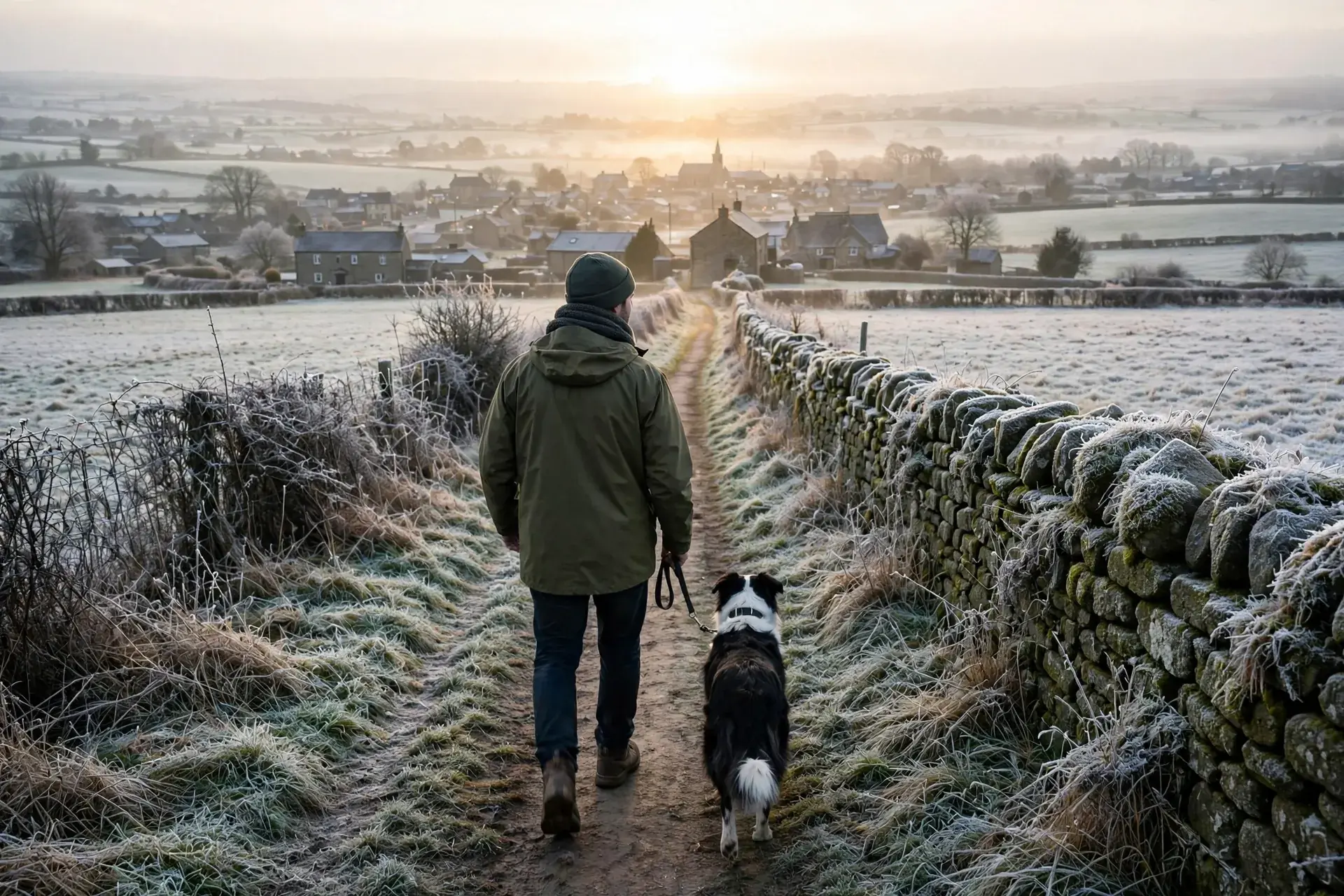
January and February are for foundations. Use the quiet months for the vet check, the one training priority, the gear check and the first bookings. Walks can be short, local and consistent, with attention to drying, lighting and paw care. A short winter break in a warm cottage with a level walk from the door is a good first test of the year's systems: packing, driving, settling and the after-dark routine. If something fails on a two-night winter break, it is easy to fix before a longer spring trip. If it works, you have confidence and a routine to repeat.
March and April are for building. Daylight lengthens, paths dry out, and many attractions reopen. This is a good time for a first longer walk, a first train journey, or a first visit to a new area, because the weather is changeable enough to test your backup plans without the pressure of peak-season crowds. Spring also brings lambing season on farmland and nesting birds on heaths and coasts, so keep dogs on leads where signs ask for it and check the official guidance before you travel to a new rural area. A spring trip that respects local rules is also a good training trip: recall, lead manners and settling all get tested in new places at a manageable level of distraction.
May and June are often the sweet spot. Late spring offers long days, warmer weather and, in many places, quieter paths than July and August. This is a good window for a main holiday if you can travel outside school holidays: a coastal walk, a national park base, or a longer road trip with several bases. Watch for heat on south-facing paths, ticks in long grass, and algae warnings on still water. Plan walks for the morning, rest at midday, and keep water and shade in mind for every outing. If your dog struggles in heat, May may be a better main holiday than August, and the calendar should say so honestly.
July and August are for careful choices, not for doing everything. If you travel in peak season, book early, choose a base with shade, water and a morning walk that does not require a car, and expect crowds, queues and busy beaches. Many beaches restrict dogs in summer, so check the rules for your exact dates and have a dog-friendly alternative ready. A peak-season trip can be wonderful, especially a beach holiday for a water-loving dog, but it needs more planning than a shoulder-season trip, not less. If peak season does not suit your dog, do not force it. A calm September break is a better holiday than a stressful August one, and the calendar should reflect that choice without guilt.
September and October are for harvest and space. As summer restrictions lift on many beaches, coastal walks open up again, woodlands colour, and accommodation prices often fall. This is an excellent time for a second main trip, a walking holiday, or a first visit to a new region. Autumn also brings darker evenings, wetter ground and fireworks season, so pack lights, a drying coat and a plan for Bonfire Night if your dog is noise-sensitive. A dog that has had a calm summer and a steady training year will often cope better with autumn novelty than a dog that has had no trips at all, which is another reason to spread travel across the year.
November and December are for rest and review. Short, local breaks, a festive cottage stay, or a quiet city break with a dog-friendly hotel can round out the year without the pressure of a long journey in bad weather. Use December to review the year properly: which trips worked, which did not, what the dog enjoyed most, what cost more than expected, and what you will change next January. That review is the bridge to next year's first-week decisions, and it is what turns one good year into a better next year. A festive trip also needs its own checks: decorations, chocolate, rich foods and fireworks are all hazards to plan around, and a calm base with a familiar routine matters more at Christmas than a spectacular location.
Transport: shorter, calmer, better timed
Transport is often the hardest part of a trip for the dog, and it is the part most easily improved by planning. Start with journey length. A two-hour drive to a base with a walk from the door will usually beat a four-hour drive to a prettier base that requires another drive for every outing. Set a maximum drive time for your dog and keep it, especially for puppies, older dogs and dogs that travel nervously. If a destination requires a longer journey, break it with a planned stop at a quiet, dog-friendly place where the dog can toilet, drink, stretch and settle, rather than a busy service area with no green space.
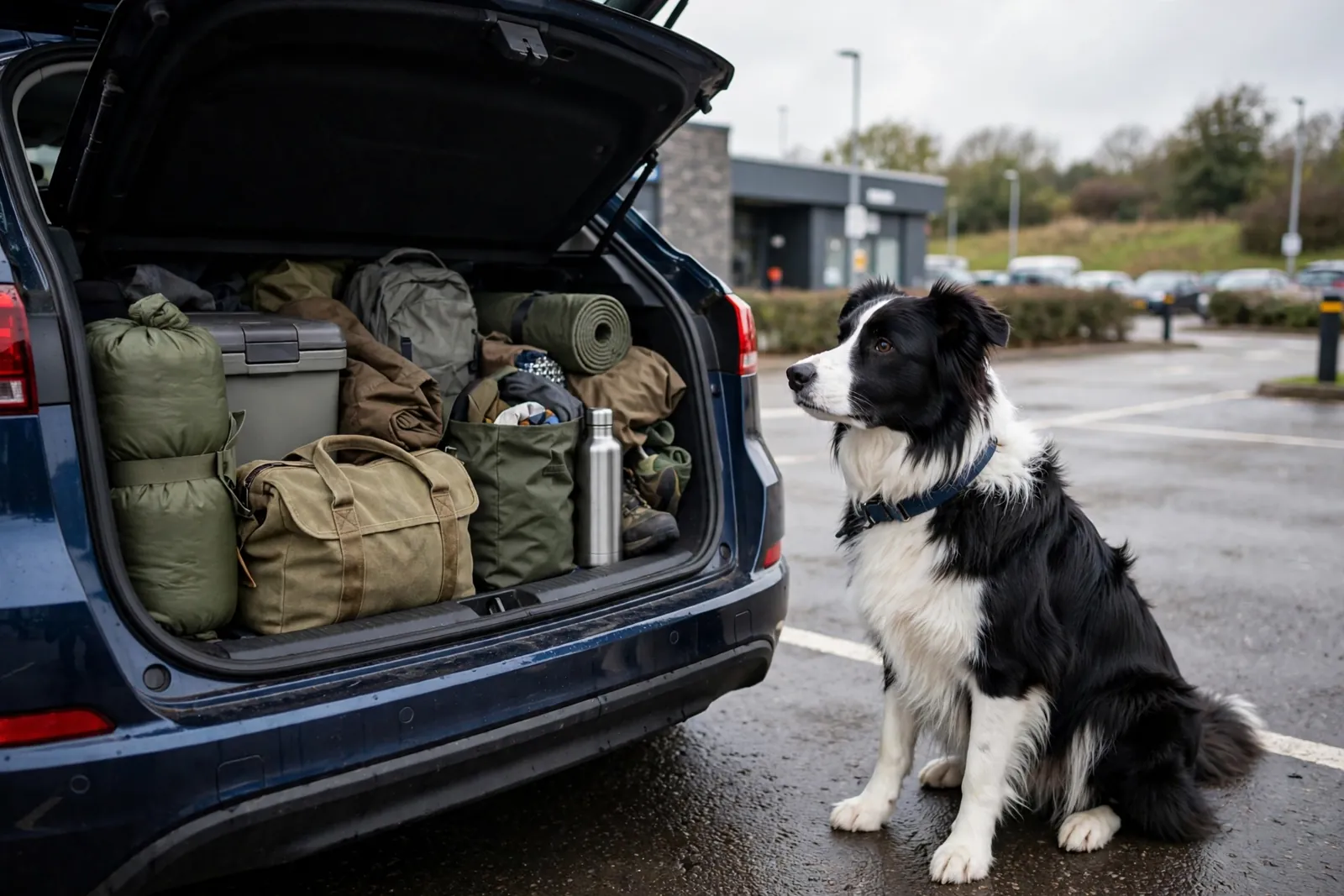
Car routines deserve a January check. Is the dog secured safely, with a harness, crate or guard that fits the car and the dog? Is there a non-slip mat, a familiar blanket, water for stops, and a plan for temperature? Never leave a dog alone in a car in warm weather, and in cold weather check that the car warms up before a long wait. Practise short, calm journeys before a long one, ending with something pleasant, so the car predicts good things rather than only long, stressful days. On travel day, feed at the usual time or slightly earlier, allow a toilet walk before departure, and keep the first stop early, before the dog becomes desperate or distressed.
Trains, buses and ferries each have their own rules, and those rules change by operator, route and time of day. Check the operator's dog policy before you book, including whether dogs travel free, whether they must be on a lead or in a carrier, whether they are allowed on seats, and what happens at peak times. For trains, choose a quieter service if you can, sit near a door for easy toilet stops, and carry water, a mat and something to chew. For ferries, check whether dogs stay in the car, in a kennel, or in a cabin, and how long the crossing is. A short crossing with a clear plan is very different from a long crossing with no access to the dog, and the choice should be made for the dog, not just for the timetable.
Walking from the base is the simplest transport resolution of all. When you shortlist accommodation, ask how far the first good walk is, and whether it needs a car. A base with a level loop from the door, a field edge, or a riverside path within ten minutes gives you a morning and evening walk without driving, which changes the whole rhythm of the trip. It also gives you a fallback: if the weather turns, the car breaks down, or the dog is tired, you still have a walk. A base that looks perfect in photographs but requires a twenty-minute drive for every toilet trip will feel less perfect by day three, especially in rain or darkness.
Make every trip repeatable
The best travel resolution is a system, not a memory. After your first trip of the year, write down what worked and keep it as a packing and routine template for the next trip. A repeatable system has four parts: a packing list by zone, a car routine, an arrival routine, and a daily rhythm. When those four parts are written down, the next trip starts calmly, even if the destination is new, because the dog recognises the routine even when the room is unfamiliar.
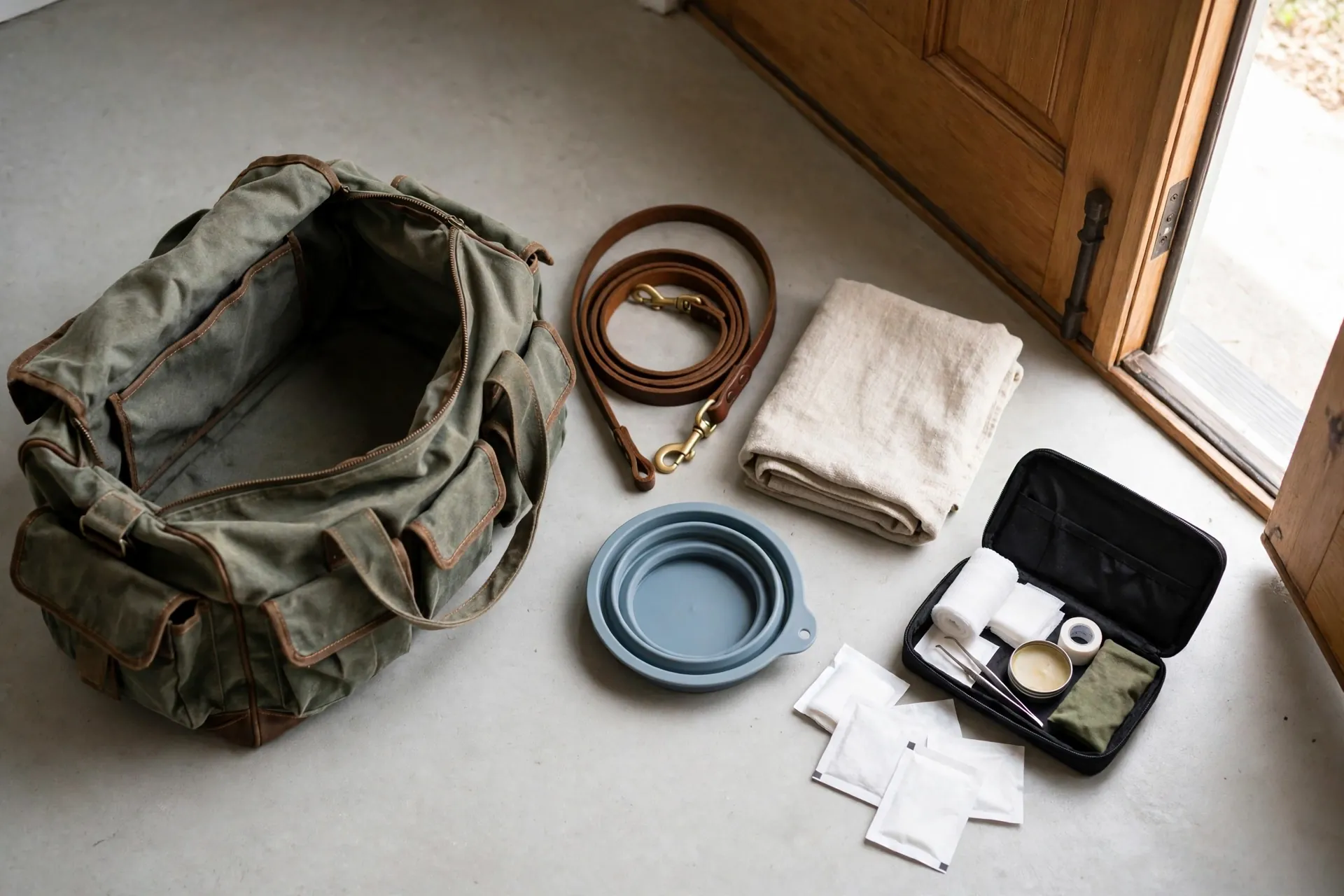
Packing by zone is faster and more reliable than packing by memory. Divide the list into dog bag, car, accommodation, walks and health kit, and keep the list in the same place every time. The dog bag holds food, measured portions, treats, bowls, medication and a familiar blanket. The car holds the harness or crate, a water bottle, a towel and a spare lead. The accommodation zone holds the bed, a non-slip mat, a drying coat and a torch. The walks zone holds a long line, poo bags, a torch and reflective gear. The health kit holds tick tools, a basic first-aid kit, the vet number and any records. Our dog holiday packing checklist uses exactly this zone system, and it is worth printing once and reusing all year, ticking off items as they are packed rather than trying to remember them under time pressure.
Arrival routine is the second part of the system. Walk the boundary or the room before unloading everything, check gates, gaps, wires and cleaning products, give water and a familiar bed, and take a short, calm sniff walk before any sightseeing. Keep the first evening close to home: same feeding time, same bed, same last toilet walk. Photograph any existing damage in rented accommodation and move hazards out of reach. A boring first hour is not a wasted hour. It is the fastest route to a settled first night, and a settled first night makes the whole trip easier for everyone.
Daily rhythm is the third part. Keep feeding, walking, rest and sleep times roughly consistent from day to day, even when the activities change. Dogs that know when the next walk, meal and rest are coming can relax in between, while dogs that face a completely new schedule every day stay on alert. That does not mean every day must be identical. It means the anchor points stay the same, and the new experiences fit between them. A morning walk, a midday rest, an afternoon outing and a calm evening is a rhythm that works in a cottage, a hotel, a caravan and a campsite, which is why it is worth protecting even when a destination tempts you to fill every hour.
Finally, keep a trip notebook, even a few lines on a phone. After each trip, note the drive time, the walk that worked best, the accommodation detail that mattered, the cost against budget, and one thing to change next time. That notebook becomes your personal guidebook, more useful than any generic list, because it is written for your dog. By December, it will tell you more about what your dog enjoys than any new year resolution list could, and it will make next January's three decisions much easier to write.
When a trip goes wrong, learn from it
Even a well-planned year will include a trip that goes wrong. The dog barks all night, the walk is too long, the accommodation is noisier than expected, or the weather ruins the main plan. The resolution that matters in that moment is not to pretend it went well, and not to decide that travel is impossible. It is to change one variable at a time. If the drive was too long, shorten the next journey and keep the destination type the same. If the accommodation was too busy, choose a quieter base and keep the journey the same. Changing everything at once teaches you nothing, because you cannot tell which change helped.
Review each trip within a week, while the details are fresh. Ask four questions: what did the dog enjoy most, what caused stress, what cost more than expected, and what would we do differently? Write the answers in the trip notebook and share them with anyone who travels with the dog, so the next plan is based on shared evidence rather than one person's memory. If a trip was genuinely distressing for the dog, take a break from travel and return to local walks and training. A pause is not a failure. It is often the fastest way back to enjoyable travel, because it lets the dog recover and lets you rebuild confidence in small steps.
Setbacks also include health, money and life changes. A vet bill, a job change, a house move or a new baby can all change what travel is possible, and a good new year plan should bend rather than break. That is why the first-week plan protects windows rather than specific destinations, and why the budget is a monthly pot rather than a single lump sum. If a long holiday becomes impossible, a series of short local breaks can still give the dog new experiences and give you the pleasure of planning. The resolution is not a specific trip. The resolution is a year in which the dog's needs shape the travel, and the travel, in return, gives the dog a richer, calmer life.
End the year by looking back before you look forward. Read the trip notebook, check the budget, and ask whether the one training priority improved, whether the protected dates were used well, and whether the dog is healthier, calmer or happier than in January. Then write next year's three decisions on a fresh page, carrying forward what worked and dropping what did not. A new year resolution that survives contact with a real dog is not a promise to be perfect. It is a simple system, reviewed regularly, that makes the next trip a little easier than the last. That is a resolution worth keeping, and it is one that a dog, who lives entirely in the present, will appreciate far more than any list on the fridge.
Practical questions
Before you go
How early should I book dog-friendly accommodation for peak dates?
For school holidays and popular coastal or national park areas, start six to nine months ahead, and earlier if you need a specific dog-friendly unit, a ground-floor room, or space for two dogs. Book the accommodation first, then build transport and activities around it, and get the pet fee, dog limit and alone-time rule in writing before you pay a deposit.
What is a realistic first travel resolution for a dog that pulls on the lead?
Choose one measurable habit, such as ten minutes of loose-lead practice on quiet streets four days a week for six weeks, rather than a vague promise to walk better. Practise in low-distraction places first, reward the position you want, and only add busier paths, livestock areas or beaches once the quiet-street version is reliable.
How much should I save each month for a year of dog-friendly travel?
Work backwards from the trips you actually want, add pet fees, transport, food and a contingency for vet care or a changed booking, then divide the annual total by twelve. A separate travel pot, even a small monthly transfer, stops one peak-season week from swallowing the whole year, and a written budget makes it easier to choose a cheaper shoulder-season break without feeling that you have failed.
Can a new year plan help an older or anxious dog travel better?
Yes, because planning replaces novelty with predictability. Shorter drives, ground-floor rooms, level walks, a familiar bed and the same feeding and toilet routine reduce the number of new things the dog must cope with at once. Build in rest days, keep the first trip short, and ask your vet about pain, mobility or anxiety support well before departure, not in the week you travel.
What should I do if our first trip of the year does not go well?
Treat it as data, not as proof that travel does not suit your dog. Write down what actually went wrong: the drive length, the noise, the walk, the alone time, or the accommodation layout. Change one variable for the next trip, such as a shorter journey or a quieter base, and keep everything else the same so you can tell whether the change helped.