This guide is independent and contains no paid placement. If affiliate links are added later, they will be clearly marked and will not change our editorial checks.
Split the move into three stages and protect one thing at each stage: routine before you move, safety on moving day, and familiarity during the first week. Keep the dog's bed, food, lead and toilet routine unchanged for as long as possible, update the microchip address promptly, and rebuild walks gradually on lead before you offer off-lead freedom in a new area.
Why boxes and strangers unsettle dogs
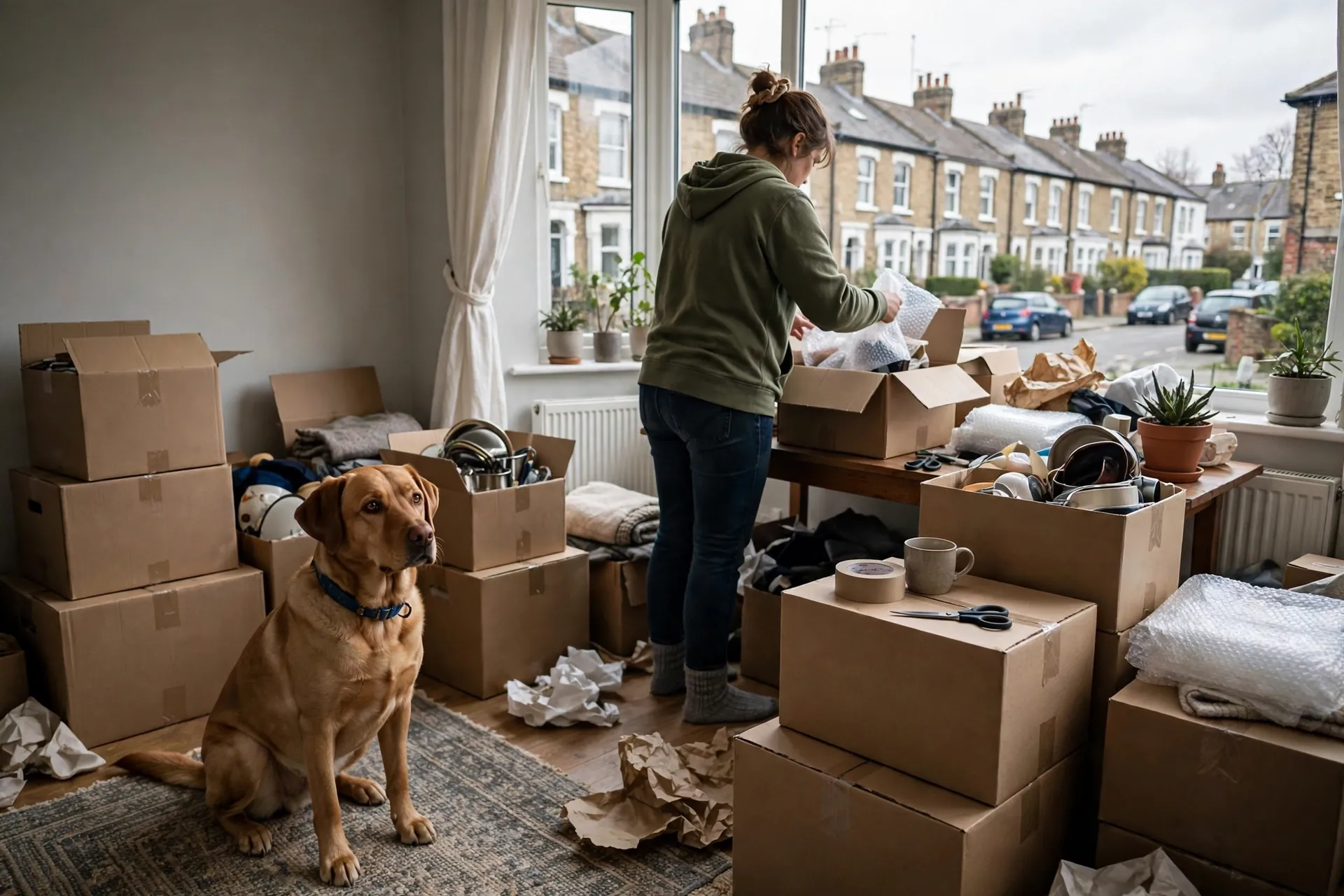
The first sign of trouble often appears long before the removal van. A stack of cardboard boxes changes the shape of a familiar room, a half-empty cupboard smells different, and a dog that used to sleep through the afternoon starts following its owner from room to room. Dogs do not understand that a move is temporary disruption with a better ending. They understand that the predictable world around them is coming apart, and that strangers are carrying pieces of it away.
That anxiety is not disobedience, and it is not a character flaw. Dogs rely heavily on scent, routine and territory to feel safe. A home is not just four walls to a dog. It is the bed that smells right, the garden gate that always opens the same way, the walk that turns left at the same corner, and the household rhythm that says when food, sleep and company will happen. Packing disturbs all of those signals at once. Furniture disappears, rooms echo differently, and the dog's usual resting places may be wrapped, stacked or loaded into a van.
Strangers add a second layer of stress. Removal staff, estate agents, cleaners and well-meaning helpers come and go, doors stay open, and voices rise above normal household volume. A dog that is friendly with visitors in a settled home can still struggle when visitors arrive in a stream, handle its belongings and walk through rooms that are normally private. A dog that is already wary of strangers may find the whole process overwhelming, and a nervous dog may try to guard the remaining furniture, bark at every new voice, or hide for hours. None of this means the dog has suddenly become difficult. It means the dog needs a plan that reduces novelty, rather than more novelty piled on top.
There is also a practical risk hiding inside the stress. Open doors and distracted humans are how dogs slip out, and a stressed dog in an unfamiliar street is harder to recall than a calm dog in a familiar park. Garden gates left ajar, a front door propped open for boxes, a lead clipped in a hurry, or a dog left loose in a van while someone fetches a forgotten item can all turn a stressful day into a lost-dog emergency. Planning for the dog separately from planning for the boxes is therefore not indulgence. It is the single most useful safety step in the whole move.
The good news is that most dogs recover well when the change is broken into manageable pieces. You do not need to make the move stress-free, because that is not realistic. You need to keep enough anchors stable that the dog can recognise its own life inside the new situation: the same bed, the same food, the same feeding times, the same lead, and a person who behaves predictably even when the house does not. This guide follows that logic through three stages: preparation, moving day, and the first week. Each stage has its own job, and each job is small enough to do properly even in a busy week.
Stage one: before you move
Preparation starts with a decision that sounds small but shapes everything else: where will the dog be on moving day, and who will be responsible for them? Book that arrangement early, before you book the van if you can. A trusted friend, a family member, a regular dog walker, a daycare place or a boarding kennel the dog already knows are all better than a last-minute scramble. If none of those is available, plan for one finished room in the new home, or one quiet room in the old home that the movers visit last, with a responsible adult checking in. Write the plan down and tell everyone involved, because moving day is exactly when informal plans fall apart.
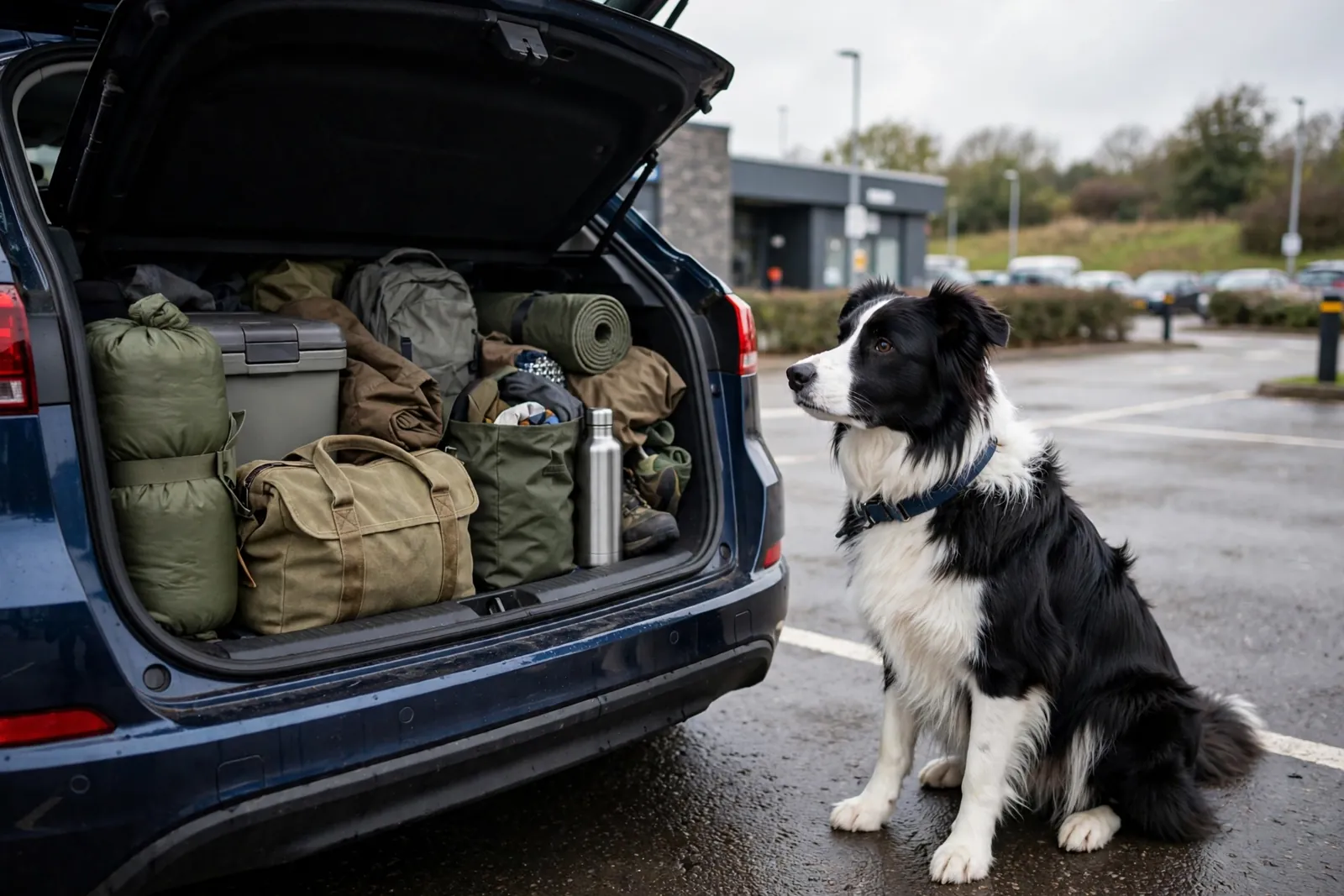
Next, protect the dog's essentials from the packing process. Pack a clearly labelled dog bag that travels with you, not in the removal van, and keep it accessible from the first evening. It should contain food for at least a week, measured portions or a measuring cup, the usual bowl, fresh water and a portable bottle, any medicine with its instructions, the lead and harness, poo bags, a towel, the dog's bed or a familiar blanket, a favourite toy, and the vet's phone number. If your dog uses a crate, keep the crate, its bedding and its door routine out of the boxes until the last possible moment. A dog that sleeps in a familiar crate in a strange room is still sleeping somewhere familiar.
Introduce change gradually where you can. Leave one or two boxes out for a few days before packing in earnest, so the dog can sniff them without the whole house changing at once. Keep feeding, walking and bedtime at the usual times even as the rooms fill with boxes. If the dog is particularly anxious, keep one room as normal as possible for as long as possible, and do the noisiest packing while the dog is out on a walk or with a friend. Short, calm departures also help: a dog that is used to brief, uneventful absences copes better with a busy day than a dog that has never practised being apart from its owner.
Use the preparation period to sort the paperwork that is easy to forget. Confirm the new property's rules about dogs if you are renting, including any pet clause, deposit condition or restriction on numbers, breeds or garden use, and get the agreement in writing. Check whether the garden is secure, what needs fixing before the dog uses it unsupervised, and whether neighbouring gardens, shared paths or communal areas create escape routes. Visit the new home with a dog owner's eye if you can: look for gaps under fences, low gates, broken panels, ponds, toxic plants, and roads close to the garden. A fifteen-minute garden check before moving day can prevent a week of anxious supervision afterwards.
Finally, start the administrative moves before the physical one. Register with a new vet practice if you are moving area, ask your current practice to transfer records, and find out the new practice's out-of-hours arrangements. Note the nearest emergency vet and save the number in your phone. Check your pet insurance: tell the insurer about the new address, confirm that cover continues without a gap, and check whether the policy has any condition about garden security or unattended dogs. If you are moving within the UK, the microchip rules are also worth sorting early, and the full checklist later in this guide covers exactly what to update and in which order. Doing these jobs while you still have a calm evening to spare is far easier than doing them from a half-unpacked kitchen.
Stage two: moving day itself
Moving day should be boring for the dog, even if it is chaotic for everyone else. The simplest version of the plan is this: the dog is somewhere safe, with a familiar person, away from open doors, and reunited with you only when one room in the new home is ready. If the dog is staying with a friend or at daycare, drop them off early, before the movers arrive, with their bed, food, lead and your phone number. If the dog is staying in the house, choose the room, set it up completely, and put a clear sign on the door saying that a dog is inside and the door must stay closed. Tell every mover, helper and visitor about the room at the start of the day, not when someone is already reaching for the handle.
Transport needs the same care as the rest of the day. Travel the dog in the usual way: a secured crate, a crash-tested harness, or whatever restraint your dog already knows and tolerates. Never travel a dog loose in a removal van, in a car boot full of boxes, or in a vehicle where boxes can slide onto them. Keep the journey short and direct where possible, offer water at a stop on a long journey, and avoid feeding a large meal immediately before travel if your dog is prone to travel sickness. On arrival, take the dog straight to the prepared room or garden area, offer water, and let them sniff without forcing a tour of the whole house. A dog that explores one room calmly is learning that the new place is safe. A dog dragged through six empty rooms, a garden and a staircase in ten minutes is learning that the new place is overwhelming.
Watch for the small hazards that appear only on moving day. Cleaning products, paint, tools, screws, packing tape, polystyrene, chocolate left in a welcome hamper, and medicines packed in an open bag are all within reach in a half-unpacked home. Keep one room genuinely safe before the dog has free run of the house: check floors for dropped items, close windows the dog could push open, block gaps behind appliances, and keep cables and cleaning sprays out of reach. Garden hazards deserve the same sweep. Check the fence line on foot, close every gate, and walk the garden yourself before the dog's first unsupervised visit, however brief that visit will be.
Keep the dog's routine as close to normal as the day allows. Feed at the usual time, even if you eat standing up among boxes. Take a short, calm toilet break in the new garden at the usual intervals, and use the same words and rewards you always use. If the dog is too stressed to eat, offer a small amount of familiar food rather than a new treat, and do not worry if appetite is reduced for a day, provided the dog is drinking and otherwise well. A familiar walk, even a short one, can help more than an extra hour of fuss: movement burns off stress, and a lead walk gives the dog something predictable to do while the house is still strange.
End moving day deliberately. Set up the dog's sleeping place exactly as it was at the old home if you can: same bed, same blanket, same position relative to a wall or door where possible, and a worn item of your clothing nearby if the dog finds that comforting. Keep the first night quiet. Avoid inviting a crowd round to see the new house, keep music and television at normal volume, and do the final toilet break at the usual time. Dogs settle faster when the first night follows a recognisable pattern, even if the walls around that pattern are completely new. If you are staying in temporary accommodation on moving night, the same rules apply: one familiar bed, one familiar routine, and no grand tour until morning. For a broader sense of what a move costs in time and money, our guide to dog holiday costs in the UK is a useful reminder that transport, gear and temporary stays add up quickly, and budgeting for them early reduces pressure on the day itself.
Stage three: the first week
The first week is about gradual expansion, not instant normality. Start small and let the dog earn more space by coping well with less. On day one, one or two rooms and the garden are plenty. Over the next few days, open up another room at a time, and watch how the dog responds before opening the next. A dog that paces, pants, hides or follows you constantly is telling you that the pace is too fast. Slow down, return to the smaller area, and try again later. A dog that eats, sleeps, plays and explores calmly is ready for a little more freedom.
Hold the daily rhythm steady even while the house is still half unpacked. Feed at the same times, walk at roughly the same times, and keep bedtime consistent. Dogs read routine as reassurance, and a week of shifting mealtimes and random walks can undo the good work of a careful moving day. If work or unpacking makes the usual walk time impossible, keep the walk itself even if the time shifts slightly, and keep the order of the day recognisable: toilet, food, walk, rest, play, toilet, sleep. Children and visitors should follow the same calm pattern: no chasing the dog around the new house, no cornering it for cuddles, and no forcing it to greet every new neighbour in the first forty-eight hours.
Expect some regression, and plan for it without panic. Toilet accidents, night-time restlessness, barking at new sounds, clinginess, reduced appetite and reluctance to be left alone are all common in the first week. They usually reflect stress and unfamiliarity, not a sudden training failure. Go back to basics: more frequent garden breaks, clear rewards for toileting outside, a consistent leaving routine with short absences built up gradually, and a safe resting place the dog can retreat to without being followed. Avoid punishment for stress-related behaviour, because it adds fear to an already anxious dog and makes the behaviour harder to resolve. If problems persist beyond a couple of weeks, worsen, or come with physical symptoms, ask your vet or a qualified behaviourist for advice rather than improvising a stricter regime.
Use the first week to learn the new home through the dog's senses. Notice which rooms the dog avoids, which sounds trigger barking, where the dog chooses to sleep, and how the dog reacts to neighbours, traffic and other animals. A dog that barks at the same delivery driver every morning may simply need a managed introduction and a view blocked for a few weeks. A dog that refuses one room may be reacting to a smell, a slippery floor or a draught that you have not noticed. A dog that sleeps pressed against your feet for three nights and then moves to its own bed has told you something useful: confidence is returning. Keep notes for a few days if it helps, because patterns are easier to see on paper than in the middle of unpacking.
Finally, protect the dog's social life during the first week. A move can isolate a dog just as it isolates a person: old walking friends disappear, familiar dogs are gone, and the new area is full of strangers. Short, positive encounters matter more than long, intense ones. A brief, calm greeting with one steady neighbour dog beats a crowded dog park on day two. A short visit to a dog-friendly cafe where the dog can lie quietly under a table beats a full day out. If your dog is older or less mobile, the first week is also a good time to check that the new home works for them physically, and our guide to senior dog travel in the UK covers ramps, ground-floor routines and shorter walks that transfer directly to a new house. The aim of the first week is not to show the dog everything. It is to show the dog enough, calmly, that the new home starts to feel like home.
Help the new home smell familiar
Scent is the fastest way to make a strange room feel less strange. Before the dog arrives, place the unwashed bed or blanket from the old home in the room where the dog will sleep first, and add a second familiar item, such as a worn jumper or the dog's usual rug, near the main resting place. Do not wash everything on arrival. Fresh laundry smells clean to humans and anonymous to dogs, and a dog that has lost its territory needs familiar scent more than it needs a spotless bed. Wash bedding gradually over the following weeks, one item at a time, so the new home's own scent builds up alongside the old one rather than replacing it overnight.
Let the dog deposit its own scent in safe, controlled ways. A calm sniffing walk around the garden, a rub of the dog's blanket on a new sofa corner, and a few minutes lying on a rug in each new room all help the dog claim the space gently. Avoid the temptation to spray strong air fresheners, scented candles or plug-in diffusers in the dog's first rooms. Strong artificial scents can mask the familiar smells you are trying to preserve, and some scented products irritate dogs' airways. If the new home has a strong smell of paint, new carpet or cleaning products, ventilate well and keep the dog out of freshly painted or newly carpeted rooms until the smell has faded and the surfaces are dry and safe.
Space matters as much as scent. A dog that has the whole house on day one has nowhere to retreat when it feels overwhelmed. A dog with a defined base — a bed in a quiet corner, a crate with the door open, a room where the dog is never disturbed while resting — can explore from safety and return to safety when it needs to. Teach children and visitors to respect that base: when the dog goes to its bed, interaction stops. This single rule prevents a large share of first-week friction, because a dog that knows it can escape attention will tolerate attention far more calmly. Over time, the base can move, expand or become less important, but in the first week it is the dog's anchor.
Sound and light are part of the same settling picture. A new home has different boiler noises, different traffic, different neighbours, and different patterns of doors opening and closing. Leave a low, familiar background sound on during the first few days if the dog is used to household noise, such as quiet radio or television at normal volume, rather than total silence followed by sudden loud unpacking. Keep lighting consistent at night: a dim light on the route to the garden helps a nervous dog that needs a night-time toilet break, and a dark, quiet bedroom helps a dog that needs to sleep. If fireworks, building work or roadworks coincide with your first week, plan around them: walk earlier, close curtains, and give the dog a safe indoor activity rather than expecting it to cope with two major changes at once.
Rebuild the walking routine
Walking routes are a dog's map of the world, and a move erases that map overnight. Rebuilding it is a gradual job, and the first walks set the tone. Start with a short loop from the new front door, on lead, at a quiet time of day. Walk the same loop for the first few days, so the dog learns one route well before you add variety. A familiar loop gives the dog scent marks to revisit, corners to anticipate, and a predictable return home. A different long route every day gives the dog novelty without security, and a tired dog that is also lost is not a settled dog.
Scout each route without the dog first where you can, or at least walk it with fresh eyes. Check for busy roads without pavements, narrow lanes where a loose dog could appear suddenly, livestock in adjacent fields, water that is unsafe to enter, and any local restrictions such as dogs-on-lead orders, seasonal beach rules or park bylaws. Check the official guidance before you travel if a sign or local rule is unclear, because rules vary between councils and parks. Note where bins are, where you can safely cross roads, and where there is shade and water on warm days. A route that looks pleasant on a map can be impractical for a dog that needs a toilet stop, a drink and a safe place to pass other dogs.
Expand gradually over the first two weeks. Once the first loop is calm, add a second loop in a different direction, then a slightly longer walk, then a visit to a local green space at a quiet time. Keep early off-lead freedom for enclosed or very familiar areas only, and only after recall has been tested on a long line in the new environment. Recall in a familiar park does not automatically transfer to a new field full of new smells, rabbits and other dogs. Use a long line, a whistle or a consistent recall word, and reward generously for every return in the first weeks, even if the dog was reliable off lead at the old home. If your dog's recall is still developing, the first month in a new area is a good time to practise it deliberately, with short distances and high-value rewards, rather than assuming it will hold.
Rebuild the social side of walking just as gradually. Greet one calm, known dog before you join a busy group walk. Avoid dog parks at peak times during the first week, and watch for the signs that a greeting is going badly: stiff body, hard staring, raised hackles, or a dog that tries to move away but is held on a short lead. A short, successful greeting followed by moving on is better than a long, tense stand-off. Keep a note of the walks that work: the quiet lane, the field with a clear view, the park with a separate small-dog area, and the cafe that welcomes dogs without fuss. Within a month, those notes become the new map, and the dog will start to anticipate favourite corners in the new area just as it did in the old one. If the move also involves temporary hotel or short-stay accommodation, our guide to dog friendly hotels in the UK explains how to choose a room and routine that keeps a dog settled between homes.
Vet, microchip and address checklist
Administrative jobs are unglamorous, but a move is exactly when they matter most. A dog that slips its lead in a new area needs a microchip record that leads back to you at the new address, and a dog that falls ill in the first week needs a vet practice that already holds its records. Work through this checklist in order, and keep confirmations together in one folder or email thread until the move is complete.
- Microchip database: update the registered keeper address and phone number with the database company shown on your dog's microchip paperwork, not only with your vet. Do this as soon as you know the new address, ideally before moving day. Keep the confirmation email or letter, and check that the database has recorded the change.
- Old vet practice: tell the practice you are moving, ask for a summary of records, vaccination history and any ongoing treatment plan, and confirm how records will be sent to the new practice. Ask for a copy of repeat prescriptions and the date of the next vaccination or health check.
- New vet practice: register before you need urgent care. Ask about opening hours, out-of-hours cover, emergency fees, and whether the practice offers a new-patient check. Book a routine visit in the first few weeks if your dog has an ongoing condition, so the new vet meets the dog while it is well.
- Medicine and supplies: carry at least a week's extra medicine, plus the prescription details, in your dog bag. Do not pack medicine in the removal van where it cannot be reached. Check storage instructions if medicine needs refrigeration during a long moving day.
- Pet insurance: notify the insurer of the new address and any change in circumstances, such as a different garden setup or a change in who lives in the household. Confirm that cover continues without a gap and that the policy terms have not changed.
- Local authority and licences: check whether your new council area has any specific local rules, such as dogs-on-lead orders, public space protection orders, or beach restrictions that affect your usual walks. Check the official guidance before you travel if a local rule is unclear.
- Tags and identification: update the tag on the dog's collar or harness with the new phone number, and check that the tag is legible and securely attached. A tag is not a substitute for a microchip, but it is the fastest route home if a neighbour finds the dog.
- Emergency contacts: save the new vet, the out-of-hours vet, the microchip database helpline, and a local trusted contact in your phone. Share the new address with the friend or family member who would collect the dog in an emergency.
A note on the law, stated carefully: in England, Scotland and Wales, dogs must be microchipped by eight weeks of age and the registered keeper's details must be kept up to date. Failing to update details can lead to enforcement action, and more importantly, an out-of-date record can delay a reunion if the dog is found. Rules and enforcement can change, so check the official guidance before you travel if you are unsure whether a particular rule applies to your situation, especially if you are moving between nations of the UK or from outside the UK. If your dog was microchipped abroad or has an unusual registration history, bring all paperwork to the new vet and ask them to verify that the chip number, database and keeper details match.
Renters and leaseholders have one extra check that owners often forget: confirm in writing that the new tenancy permits the dog, including any condition about numbers, size, garden use or damage, and keep that confirmation with the tenancy agreement. If a landlord requires a pet deposit, a professional clean at the end of the tenancy, or a specific clause about noise, read it before moving day rather than discovering it during a dispute. A clear written agreement protects both the dog's home and your tenancy, and it avoids the painful situation of moving twice because a verbal assurance was misunderstood.
When settling stalls
Most first-week problems fade as routine returns, but some need a different response. Night-time waking that continues beyond a week, persistent toileting indoors despite frequent garden breaks, destructive behaviour when left alone, or a dog that stops eating, drinking or playing should all prompt a vet check first. Pain, urinary problems, gastrointestinal upset and anxiety can look similar from the outside, and a dog that has just moved may be hiding discomfort behind stress. A vet can rule out medical causes and, if anxiety is the main issue, discuss behavioural support, environmental changes or, in some cases, short-term medication as part of a broader plan.
Separation-related behaviour deserves particular patience after a move. A dog that was happy alone for two hours in the old home may panic after ten minutes in the new one, because the new home has not yet become a safe place to be alone. Rebuild alone time from scratch: short departures with a calm return, a stuffed food toy or long-lasting chew, background sound the dog associates with normal life, and no dramatic hellos or goodbyes. Avoid leaving the dog for a full working day in the first week if you can arrange otherwise, and use a dog walker, friend or daycare to break up long absences while confidence builds. Punishing a dog for barking, toileting or chewing while alone usually increases anxiety and makes the next absence worse, not better.
Barking at new sounds is another common first-week pattern. New neighbours, delivery drivers, bin collections, school traffic and unfamiliar animals all trigger a dog that is still learning which sounds matter. Management helps faster than scolding: block the view of the trigger where possible, reward calm behaviour when the sound occurs, and give the dog a rewarding activity away from the window or door. If barking becomes a neighbourhood issue, talk to neighbours early, explain that you have just moved and are working on settling, and keep a record of what you are doing. Most neighbours are far more patient with a new household that is visibly trying than with one that ignores the problem.
Finally, be honest about the timeline. Some dogs settle in days, others need a month or more, and a small number need professional help to adjust, especially rescue dogs, dogs with a history of anxiety, or dogs that have moved several times in a short period. Needing help is not failure. A qualified behaviourist, recommended by your vet, can assess the dog in its new home and build a plan around the actual triggers, rather than generic advice. Keep expectations realistic, celebrate small progress — a relaxed sleep, a calm walk, a quiet night — and remember that the goal is not a dog that pretends the move never happened. The goal is a dog that feels safe in the new home, on its own terms, at its own pace.
That is the whole timeline in one sentence: protect routine before you move, protect safety on moving day, and protect familiarity in the first week, and the new house will gradually stop being new. The boxes will be unpacked, the garden will gain familiar scent marks, the walking loop will become the old route, and the dog that followed you anxiously from room to room will one day be asleep in a patch of sun, exactly where it belongs.
Practical questions
Before you move
When should I update my dog's microchip address after moving house?
Update it as soon as you know the new address, and ideally before moving day. In England, Scotland and Wales, dogs must be microchipped and the registered keeper details kept up to date. Contact the database shown on your dog's paperwork, not just your vet, and keep the confirmation. Check the official guidance before you travel if anything about your dog's records is unclear.
Should my dog stay in the house on moving day?
For most dogs, no. Open doors, strangers carrying boxes and a half-empty house are a difficult combination. A trusted friend, family member, daycare or a quiet room visited last by the movers is usually calmer. If the dog must stay, use one finished room with water, a bed and a familiar person checking in regularly, and keep the door clearly marked.
How long does it take a dog to settle into a new home?
Many dogs show visible progress within the first week, but full settling often takes several weeks. Appetite, sleep and toilet habits usually stabilise first, while confidence on new walks and tolerance of new sounds can take longer. A steady routine, familiar smells and short, successful outings matter more than any single settling trick.
Do I need to re-register with a vet straight away?
Yes, register before you urgently need one. Ask your old practice to send records to the new practice, and confirm the new practice's out-of-hours arrangements on the first visit. If your dog takes regular medicine, carry enough for the move plus a few extra days and ask for a repeat prescription plan in writing.
What if my dog keeps toileting indoors after the move?
Treat it first as stress, confusion or a changed garden routine rather than defiance. Go back to frequent, rewarded garden breaks, keep the same door and toilet spot as far as possible, and clean accidents with an enzymatic cleaner. If it continues, changes suddenly, or comes with straining, blood or lethargy, contact a vet promptly.
Can I walk my dog off lead in the new area on the first day?
Not until you know the area. Start on lead, even for a confident dog, until you have checked boundaries, livestock, roads, other dogs and any local restrictions. A dog that knows the old park perfectly can still bolt in an unfamiliar place, and recall is weaker when stress is high. Build up to off-lead freedom over several short, successful walks.