This guide is independent and contains no paid placement. Beach rules and business policies change, so check the latest official information before you travel.
Torquay works well with a dog if you plan around beach seasons. Use the palm-lined promenade and South West Coast Path as your reliable backbone, pick beaches from the current Torbay Council list rather than from memory, add Cockington for shade and variety, and stay somewhere with an easy first and last walk. Seasonal restrictions vary by beach — always check before you go.
Start on the palm promenade, not on the sand
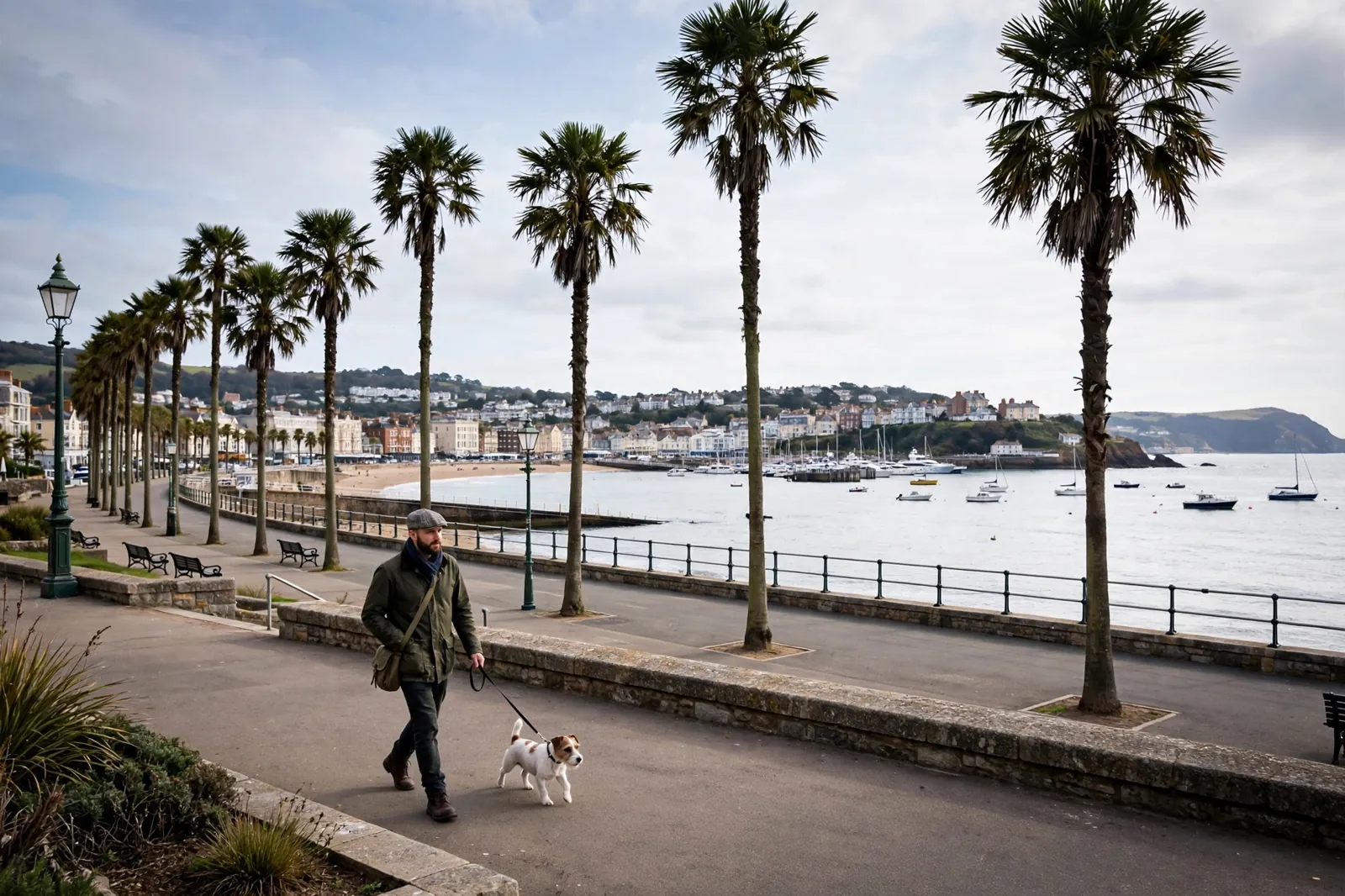
Palms are not what most people expect from a Devon seafront, and that is exactly why Torquay makes such a distinctive start. The promenade along Tor Bay is lined with the palm trees that gave the English Riviera its nickname, the harbour sits at one end, the bay curves away in a broad arc, and in the early morning the whole front belongs to dog walkers, joggers and people carrying coffee rather than to crowds. Begin there, whatever the season. A flat, surfaced, lead-on walk along the seafront tells you more about how your dog will cope with Torquay — the gulls, the other dogs, the mobility scooters, the smell of the harbour — than any beach list can.
That first promenade walk also solves a practical problem. Beach access in Torquay depends on the date, the tide and the individual beach, but the promenade is there every day. If you arrive late, if the weather turns, or if the beach you had in mind is restricted that week, you still have a proper walk with sea air, benches, bins and cafés nearby. For an older dog, a puppy still learning about traffic, or a dog that finds loose sand and loose dogs overwhelming, the promenade may honestly be the best walk of the trip: level, predictable, and easy to shorten by turning round at the next shelter.
Use the promenade as a spine and hang everything else off it. The harbour, marina and town centre sit close to the southern end; Torre Abbey and its grounds are near the seafront; and the coast path climbs away towards Babbacombe at the northern side. Once your dog has settled on the flat, you can judge whether today is a beach day, a headland day or an inland day at Cockington. That order — settle first, adventure second — is the difference between a dog that enjoys Torquay and a dog that is simply tired by it.
Keep promenade etiquette simple. Dogs should be on a short lead where it is busy, given space around cafés and bus stops, and never allowed to trail a long line across a cycle route or a mobility scooter's path. Carry water even on a short walk in summer, because the sheltered bay can feel warmer than an exposed coast, and use the frequent bins rather than leaving bags on railings. Torquay's front is shared space, and dog owners who treat it that way are the reason it stays welcoming.
Beaches in Torquay: year-round welcomes and seasonal favourites
Torquay does not have one beach; it has a string of them, each with a different character and, crucially, different dog rules. That variety is the town's strength, provided you stop thinking in terms of “the beach” and start thinking in terms of a named beach on a named date. In general terms, some smaller coves and less central beaches around Torbay welcome dogs throughout the year, while the main resort beaches — the broad, lifeguarded, family-centred sands closest to the promenade and harbour — usually restrict dogs during the main season. The pattern is familiar across England, and our guide to dog-friendly beaches in the UK and their rules explains how seasonal bans and local orders work in detail.
Torre Abbey Sands, directly opposite the abbey and the main seafront, is the classic example of a beach to enjoy with a dog outside the restricted season and to admire from the promenade during it. In the quieter months it offers an easy, flat outing combined with the abbey grounds and the promenade; in high season, plan on it being a people beach and take your dog elsewhere. Livermead and Preston, towards Paignton, follow a broadly similar resort pattern in general terms, with promenade walking available even when sand access is limited. Always treat these descriptions as a planning shape, not a permission slip.
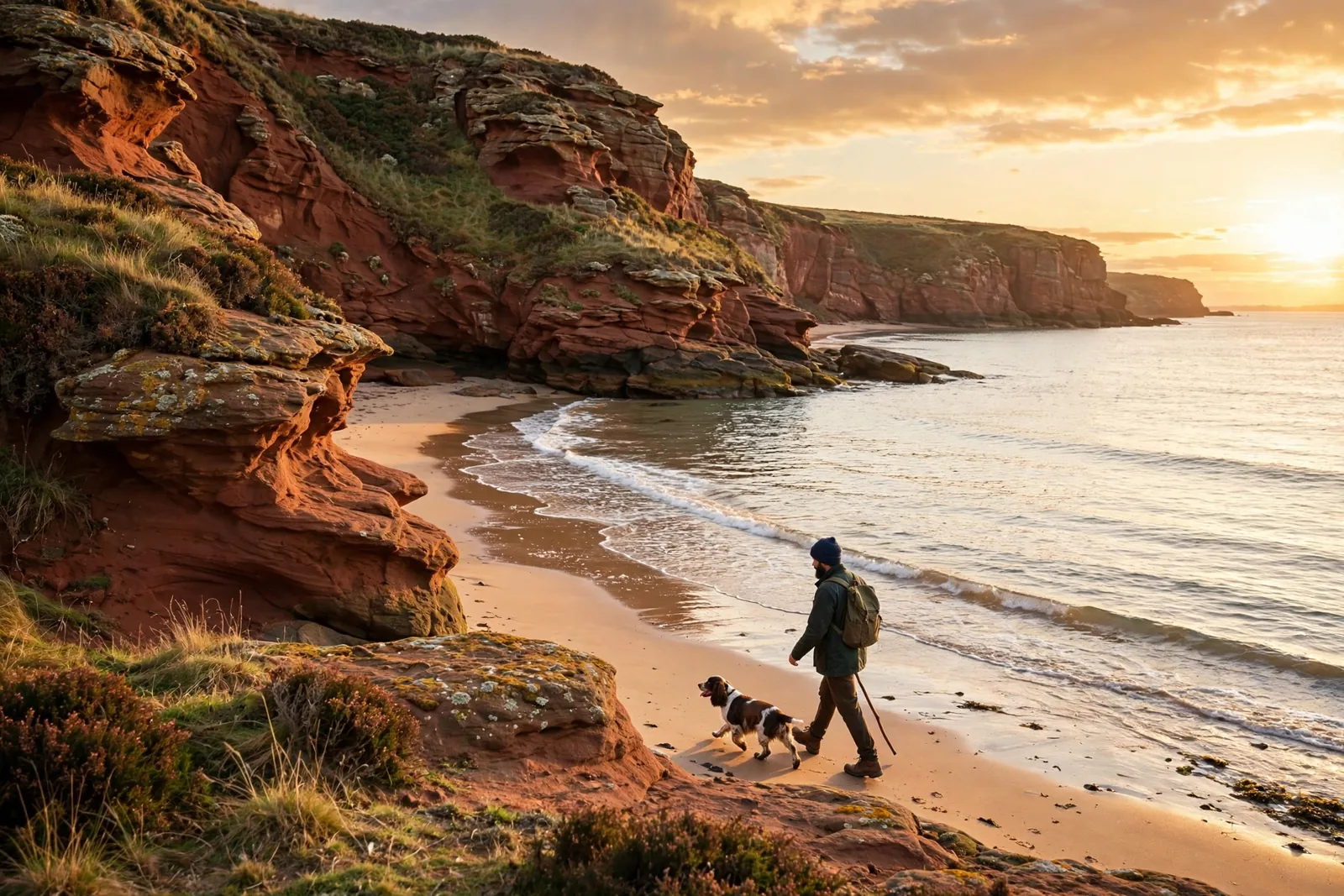
The coves to the north tell a different story. Around Babbacombe and St Marychurch, smaller beaches and coves have historically been more likely to welcome dogs for more of the year, and they combine naturally with a coast path walk. Anstey's Cove, tucked below the headland, is the kind of small, sheltered cove that rewards walkers who check the rules and the tide in advance; access is steep, facilities are limited, and it is not a sensible choice for a dog that struggles with steps or for anyone who needs a flat exit at high tide. Babbacombe's own beach areas and Oddicombe, reached on foot or by the cliff railway when it is running, need the same care: check whether dogs are welcome on that beach on that date, and whether the railway and cafés accept dogs on the day you visit, as policies vary.
Further round the bay, beaches near Paignton and Brixham widen the choice again, and some of the quieter, less serviced beaches in Torbay are the ones most likely to allow dogs year-round. That trade-off is typical: year-round dog beaches tend to have fewer facilities, steeper access, rock and shingle rather than soft sand, and limited parking. Seasonal resort beaches have lifeguards, toilets, cafés and flat access, but not your dog in summer. Neither is better — they suit different dogs. A young dog that needs a run and a swim will forgive a steep path; an arthritic dog that needs a bench every hundred metres will not.
Build a two-beach plan for every trip. Name a first-choice beach from the current Torbay Council list, then name a fallback: another beach, a promenade walk, or Cockington. Check the tide as well as the rules, because several Torbay coves shrink dramatically at high water, leaving little room for dogs and families to share comfortably. Arrive early or late in the day in summer even where dogs are allowed; a quiet beach at 8am is a different place from the same beach at noon, and most dogs prefer the earlier version.
Beach rules without the guesswork: read the council list, then read the sign
Here is the rule that matters most in this whole guide: seasonal restrictions vary by beach, and you should check the latest Torbay Council list before you travel and the sign at the beach entrance when you arrive. Councils update lists, dates sometimes shift, and a beach that welcomed dogs last October may have different arrangements this year. Screenshots, old blog posts and well-meaning advice in a car park are not a reliable source. Torbay Council publishes which beaches allow dogs and when; use that page as your starting point, then confirm on the ground, because the entrance sign is what enforcement officers will work from.
Expect several kinds of restriction, often in combination. A seasonal restriction may bar dogs from a named beach for a defined part of the year, commonly covering spring to early autumn. A zoned beach may allow dogs at one end only. A lead rule may allow access but require a lead at all times, on the access steps, or on the promenade above the beach. Some areas, such as harbours, piers, slipways and rock pools busy with children, carry their own rules. Read the whole sign, not just the dog symbol at the top, and note whether assistance dogs are treated separately — they usually are.
Fouling rules apply everywhere, all year, regardless of whether a beach is dog-friendly. Bag everything, including on shingle and among rocks where people assume it does not matter, and take it to a bin; if the beach bin is full, carry it further rather than balancing it on top. Keep dogs out of roped swimming areas, away from lifeguard stations, and under close control around beach huts, picnics and other people's towels. A recall that works in an empty field often fails beside a dropped ice cream, so use a long line where you are unsure — it protects your dog's welcome as much as anyone's afternoon.
Safety deserves the same attention as legality. Torbay's red sandstone coast is beautiful and fragile: cliffs can shed rock, paths above coves are exposed, and harbour walls are slippery. Never let a dog scramble on cliff faces or harbour edges, and think twice before allowing swimming where there are boats, paddleboards, strong currents around headlands, or algae warnings. In hot weather, check the sand temperature with the back of your hand; if it is too hot for your hand, it is too hot for paws, and the walk should move to grass, shade or early evening. If a sign, a lifeguard or a council page leaves you genuinely unsure, choose the promenade or another clearly dog-welcome beach. No single beach is worth a fine or an argument on a holiday.
The South West Coast Path to Babbacombe and Anstey's Cove
If the promenade is Torquay's spine, the South West Coast Path north towards Babbacombe is its best half-day adventure. The route climbs away from the harbour and seafront, threads along wooded headlands and open cliff tops, and passes the turnings for small coves including Anstey's Cove before reaching Babbacombe Downs, where the view back across the bay explains why people have been holidaying here for well over a century. On a clear day you can see across to the far side of Torbay; on a breezy day the Downs feel properly coastal despite being minutes from cafés and bus routes.
Plan the walk honestly. The path in this direction is not a flat extension of the promenade: expect steps, slopes, narrow sections and places where the drop is close enough that a lead is essential, not optional. Fit dogs will manage the return trip comfortably, but there is no shame — and often more pleasure — in walking one way and returning by bus or taxi, or in turning round at a cove and saving Babbacombe for another day. Check in advance whether any path diversions are in place, because cliff falls and maintenance work periodically reroute sections inland, and a diversion can add distance and road walking.
Anstey's Cove works best as a pause within the walk, not as a destination you rush to. The descent is steep, the cove is small, and at high tide there may be very little beach at all. Check dog access for the cove on the current council list, take water for both of you because facilities are limited, and keep dogs away from the rocks and other visitors in a confined space. Dogs that love a paddle should be watched closely around boats and paddle craft, and any dog prone to drinking seawater needs extra supervision — a stomach full of salt water can ruin the rest of the weekend.
Babbacombe itself rewards the effort. The Downs provide open, breezy grass for a lead walk and a sit-down, the cliff railway connects the Downs with Oddicombe when operating, and the village has its own cafés, pubs and small shops, plus the famous model village nearby — check its current dog policy before assuming dogs can enter, as attractions differ and some allow dogs only in outdoor areas or not at all. Babbacombe also makes a good alternative base: quieter than the main seafront, still walkable into town along the coast path, and well placed for an evening walk that does not involve driving. For a dog that finds the harbour area stimulating, ending the day up here can be the calmer choice.
South from Torquay, the coast path continues towards Paignton along a more urban stretch, mixing promenade, park and pavement. It lacks the headland drama of the Babbacombe direction but offers an easier, more level outing with frequent places to stop, which suits older dogs and wet days when cliff paths are muddy. Whichever direction you choose, carry the basics: water, a bowl, bags, a spare lead, and a phone with enough charge to check bus times. Coast path walking with a dog is at its best when turning back early is always an acceptable plan.
Cockington: shade, woodland and a village that slows everyone down
Every seaside dog holiday needs an inland counterweight, and in Torquay that is Cockington. A short distance from the seafront — walkable for fit dogs, a brief drive or bus ride for everyone else — Cockington feels like a different century: a village of thatched cottages, a manor house at Cockington Court, parkland, woodland, lakes and lanes where the pace drops immediately. For a dog that has spent a day watching gulls and dodging beach towels, an hour of sniffing along woodland paths and shaded grass is often more restorative than another hour on the sand.
Use Cockington strategically. It is the obvious choice on a hot day, when beaches are busy and shade is scarce, because the trees keep paths cooler — although you should still avoid the middle of the day in a heatwave and carry water. It is also the wet-weather compromise: paths can be muddy, but woodland in drizzle beats an exposed headland in a storm. And it is the answer when beach rules defeat you. If the council list says your chosen beach is restricted that week, Cockington gives the day a centre rather than leaving you circling car parks.
Behaviour matters here in a different way. Expect horses and riders on local lanes and bridleways, other dogs in a smaller space, ducks and waterfowl around the lakes, and visitors who have come specifically for the quiet. Keep dogs on a lead or under genuinely close control around the village centre, the court and the water, follow any local signs about leads in particular areas, and give horses a wide, calm berth. Check current arrangements for the Court, its gardens, craft spaces and cafés before you go, because indoor access for pet dogs is limited in many historic properties and policies can change; plan on Cockington as an outdoor visit with the dog, and you will rarely be disappointed.
Parking and access need a thought. Cockington is popular, lanes are narrow, and the car parks fill on sunny weekends; arriving early, using public transport, or walking in along a planned route all beat circling with a restless dog in a hot car. Never leave a dog in a parked car here — or anywhere — in warm weather, even briefly. Combine Cockington with a seafront evening walk and you have Torquay's best balanced day: green shade in the middle, sea air at the end, and a dog that has used its nose as much as its legs.
The harbour, the marina and a brief word on the Agatha Christie Mile
Torquay's harbour is the social centre of the town: boats, fishing trips, waterfront cafés, the marina, and a constant low-level theatre of people that some dogs adore and others find exhausting. As a walk, it is short, flat and best done on a short lead, with care around bollards, mooring lines, wet stone and the temptation — for the dog — of every dropped chip. Early morning and evening are the kindest times; at lunchtime in August, a sensitive dog will have a better hour almost anywhere else. Keep well back from working areas, never let a dog onto pontoons unless clearly permitted, and watch footing after rain or a high tide.
Many visitors pair the harbour with the Agatha Christie Mile, the self-guided trail linking places around Torquay connected with the crime writer, who was born in the town. With a dog, treat it briefly and practically: it is an outdoor, on-lead town walk taking in seafront and harbour viewpoints and plaques, which fits naturally into a promenade stroll, rather than an attraction to build a day around. Individual venues along the way set their own dog policies, and several are indoor attractions where pet dogs will not be admitted, so check each one in advance if an interior visit matters to you, and never tie a dog up outside unattended. Enjoy the trail for what it adds — a reason to walk the front slowly and read the plaques — and let the dog enjoy it as a good sniffing route with frequent benches.
The harbour area is also your transport and information hub. Boat trips around the bay and to Brixham or Paignton are a tempting way to see the coast, but dog policies vary by operator, sailing and even by where on the boat dogs may sit, so ask directly before booking and be ready for the answer to be no. The same applies to land trains, open-top buses and attractions generally: Torquay is welcoming, but “welcoming” is decided business by business, season by season. A two-minute check saves a queue-side refusal with a disappointed family and a confused dog.
Where to stay in Torquay with a dog: choose by the walks, not the view
Torquay offers the full range — grand seafront hotels, family guesthouses, self-catering flats, holiday parks on the outskirts and cottages towards Cockington and Babbacombe — but “dog-friendly” means something different in each. A hotel may welcome dogs in selected ground-floor rooms only, charge per night, and expect the dog to stay out of the restaurant while offering room service or a bar area instead. A guesthouse may accept one small dog but not two large ones. Self-catering gives you a kitchen and a door you control, but the garden in the photograph may be shared, unfenced, or up a flight of steps. None of this is a problem if you ask before booking; all of it is a problem if you discover it at check-in.
Choose your area by routine. The main seafront suits dogs that need flat, frequent, short walks: out of the door, onto the promenade, done — ideal for puppies, older dogs and winter breaks when daylight is short. The harbour and town centre suit people who want restaurants on foot and can manage busier pavements. Babbacombe and St Marychurch suit dogs that need a quieter evening and owners who are happy to walk the coast path or the Downs as the daily staple. Cockington and the town's leafier edges suit dogs that prefer grass and woodland to sand and crowds, with the seafront as an excursion rather than a doorstep. If a holiday park appeals, compare options using our guide to dog-friendly holiday parks in Devon, and apply the same questions about enclosed space, dog limits and the after-dark toilet walk.
Ask every property the same short list, and keep the answers in writing. Which specific room or unit will we be in, and does it accept our dog's size and number? What is the total pet charge for the whole stay? Is there a garden, is it enclosed, and may the dog use it off lead? Where is the nearest practical walk for the last outing of the day, and is it lit? May the dog join us for breakfast or in a bar area, or must we plan to eat elsewhere — bearing in mind that leaving a dog alone in unfamiliar accommodation is prohibited by many properties and unfair on most dogs? What is the nearest vet, including out-of-hours cover? Properties that answer clearly are telling you they have hosted dogs before and thought about it.
Arrival routine matters as much in a resort town as on a rural park. Walk the dog before you unload, check the room or unit for hazards and previous guests' leftovers, lay out bed and water in a quiet corner, and keep the first evening simple. If you are staying on an upper floor, confirm lift access or count the stairs honestly against your dog's age and joints — a sea view on the third floor is no bargain for a dog that must be carried down at midnight. Book ground-floor or step-free access at reservation stage if you need it; it cannot usually be conjured up on arrival in a full August hotel.
Eating and drinking with your dog in Torquay
Torquay's eating scene is at its most dog-welcoming outdoors: harbour terraces, seafront cafés, beach cafés in season and pub gardens in Babbacombe and Cockington all make eating together straightforward in fair weather. A growing number of cafés and pubs also welcome dogs inside in at least part of the building, but the pattern varies — dogs in the bar but not the restaurant, dogs downstairs but not up, dogs welcome except at the busiest services. Our national guide to dog friendly cafes in the UK sets out how to read those policies and the etiquette that keeps them in place; the local version is simply to ask at the door, accept the answer gracefully, and settle the dog under the table on a mat rather than in the walkway.
Plan meals around the dog's day, not the other way round. A long coast path walk followed immediately by a busy harbourside restaurant asks a tired, thirsty dog to lie still among dropped food and passing feet; a walk, a rest and water back at base, then an early dinner on a terrace, asks much less. Early sittings are generally quieter, easier for staff, and more likely to offer you a corner table where a dog can genuinely relax. In high summer, check shade before you sit down — a terrace that was perfect at noon can be a sun trap by two, and a dog cannot move itself into the shade if the lead is short.
Carry a small café kit: a travel mat or blanket that smells of home, a filled water bottle and bowl, a long-lasting chew for the waiting part, and bags for the inevitable pre-dessert toilet trip. Keep dogs off furniture unless explicitly invited, never feed them from the table in a way that teaches begging from strangers, and leave the floor cleaner than you found it. Torquay businesses that welcome dogs do so because most owners behave well; the minority who let a wet dog shake over neighbouring tables are why policies get withdrawn. If nowhere suitable is open, the town also does the classic British fallback well: fish and chips or a picnic eaten on the Downs or the promenade, with the dog legitimately included and nobody's carpet at risk.
Torquay in one day with a dog: a plan that does not try to do everything
Morning. Start early on the promenade while it is quiet, walking from the harbour along the palm-lined front and back, with water and a bench stop. Then check the day's beach position against the Torbay Council list: if a named beach welcomes dogs that day and the tide suits, go now, while it is calm, rather than saving it for the busy middle of the day. If it does not, take the coast path a short way towards Babbacombe instead, turning back at a sensible point for your dog's fitness.
Midday. Retreat from the heat and the crowds. This is Cockington time — shade, woodland and a slower hour — or, in poor weather, a long café lunch somewhere that has confirmed dogs are welcome inside, followed by a short harbour stroll. Feed and rest the dog properly; a day trip fails in the afternoon when the morning was overdone. Refill water, check paws for sand, grit or tar-like residue from paths and car parks, and rinse as needed.
Afternoon and evening. Choose one more thing, not three. Babbacombe Downs for the view and a grass walk, a gentle return to a permitted beach at a quieter hour, or the harbour and the Agatha Christie Mile plaques as an unhurried town walk. Finish with an early dinner on a terrace or fish and chips above the bay. If you are driving home, walk once more before the car, offer water, and plan a stop on a long journey. A good Torquay day trip is remembered for two excellent walks and a content dog, not for a completed checklist.
A relaxed Torquay weekend: Friday to Sunday
Friday. Arrive, walk the promenade before you unpack, and keep the evening to a short harbour stroll and a simple meal. Locate the nearest vet's details, the nearest lit walk for the last outing, and the bin you will use all weekend. An early night after travel sets up the whole break.
Saturday. Make this the coast path day. After breakfast, walk towards Babbacombe at your dog's pace, pausing at a cove only if the rules, tide and access suit, and decide honestly at Babbacombe whether to walk back or return by bus or taxi. Lunch in Babbacombe or back in town, then a deliberately quiet afternoon — Cockington if energy remains, or rest at base if it does not. Evening on the Downs or the seafront, when the light over Tor Bay is at its best and the day-trippers have gone.
Sunday. Use the morning for the beach, if the current council list and the tide allow your chosen one, and go early. Otherwise repeat whichever walk your dog enjoyed most — dogs value a familiar route more than novelty. A slow brunch somewhere dog-welcoming, a final promenade walk, and a check of your accommodation for leads, bowls and chargers before checkout completes the weekend. If you are already planning a return, note which beach rules applied on your dates and which walks suited your dog; that private record is worth more than any general guide, including this one.
Build one spare option into the weekend for weather. Torbay's sheltered position softens many forecasts, but a genuinely wet Saturday still happens. Indoor attractions in the area set individual dog policies and many will not admit pet dogs, so a wet-day plan usually means waterproofs, a shorter Cockington woodland walk, a dog-welcoming café, and time in your accommodation with a chew and a drying coat — not a forced march along an exposed cliff path. Dogs do not measure a holiday in miles; they measure it in smells, company and rest, all of which survive rain perfectly well.
Seasons, transport and the small kit that saves the day
When to come. Spring and autumn are Torquay's sweet spots with a dog: milder temperatures, quieter promenades, and a wider choice of beaches once seasonal restrictions ease — always confirmed against the current council list rather than assumed from the calendar. Summer brings the full resort, the warmest sea and the longest evenings, but also the tightest beach rules, the busiest harbour and a real risk of overheated dogs on hot sand and tarmac; plan early starts, shade and water as non-negotiables. Winter is underrated for hardy dogs and owners who like an empty coast path, provided you pack for wind on the headlands, check which businesses are open, and keep walks within the short daylight.
Getting there and around. Torquay has a railway station on the Riviera line, with connections via Newton Abbot to the main line, making a car-free break realistic: the station is a walkable distance from the seafront for most dogs, and local buses link the harbour, Babbacombe, Cockington's area, Paignton and Brixham. Check the current dog policy of any train or bus operator before travel — dogs generally travel on trains in the UK under conditions about leads and not occupying seats, but local arrangements and boat and attraction policies vary. Driving brings flexibility for coves and Cockington, balanced against narrow lanes, busy seafront parking in season and the absolute rule never to leave a dog in a warm car.
Packing for this specific town. Beyond the usual bed, food, medication and poo bags, Torquay rewards a few targeted extras: a long line for beaches and the Downs where recall will be tested, a spare lead for when the first gets wet and sandy, a drying coat and an old towel kept for cove days, paw balm or at least a paw check routine after shingle and hot pavement, a portable bowl for the coast path where water stops are scarce, and a light for the collar or harness for winter evenings on unlit stretches away from the front. Save the Torbay Council beach page and your vet's number offline, because signal on headlands and in coves cannot be relied on at the moment you need it.
A final check before you set off. Confirm, in this order: your named beaches on the current Torbay Council list for your exact dates; the tide times for any cove visit; your accommodation's written dog terms for the specific room or unit; the dog policy of any attraction, boat or railway you plan to use; and the weather, read for wind and heat as well as rain. Five checks, ten minutes, and Torquay becomes what it should be — an easy, palm-lined, properly dog friendly Torquay Devon break, built around the dog in front of you rather than around a photograph of a beach you may not be allowed to use. For the latest official information on beaches and local rules, check Torbay Council before you travel.
Practical questions
Before you go
Are dogs allowed on Torquay beaches all year?
Some Torquay and Torbay beaches welcome dogs all year, while the main resort beaches usually have seasonal restrictions during the busier months. The exact beaches, dates and lead rules vary by beach and can change, so check the latest Torbay Council list and the signs at the beach entrance before you go.
Can I walk from Torquay to Babbacombe with a dog?
Yes, the South West Coast Path links Torquay harbour and the seafront with Babbacombe via headlands and coves including the Anstey's Cove area. The route includes steps, slopes and exposed cliff sections, so keep dogs on a lead near edges, carry water, and shorten the walk in hot or very wet weather.
Is Cockington good for dogs?
Cockington is one of Torquay's easiest inland options, with woodland, parkland and village lanes a short distance from the seafront. Keep dogs under close control around other visitors, horses, water and wildlife, follow local signs, and check current rules for the court, gardens and indoor spaces before entering.
Where should I stay in Torquay with a dog?
Choose by the first and last walk of the day rather than by sea view alone. Seafront stays suit flat promenade walks, Babbacombe is quieter and close to the coast path, and Cockington or the town outskirts can offer more space. Always confirm the specific room accepts dogs, plus fees, dog limits and garden access.
What should I do if beach rules are unclear on arrival?
Do not guess from what other dog owners are doing. Read the entrance sign, check the Torbay Council beach information for that named beach, and if it is still unclear choose a beach where dogs are clearly welcome or use the promenade and coast path on a lead instead.