This guide is independent and contains no paid placement. If affiliate links are added later, they will be clearly marked and will not change our editorial checks.
Troon works for dogs because its three best things sit side by side: a long sandy beach for running, a harbour and pier for an on-lead wander, and golf links with public paths along the shore. Start on the beach at low tide, walk the promenade to the harbour, and keep the dog on a lead near the courses and the quayside.
Troon at a glance: where the fairways meet the sea
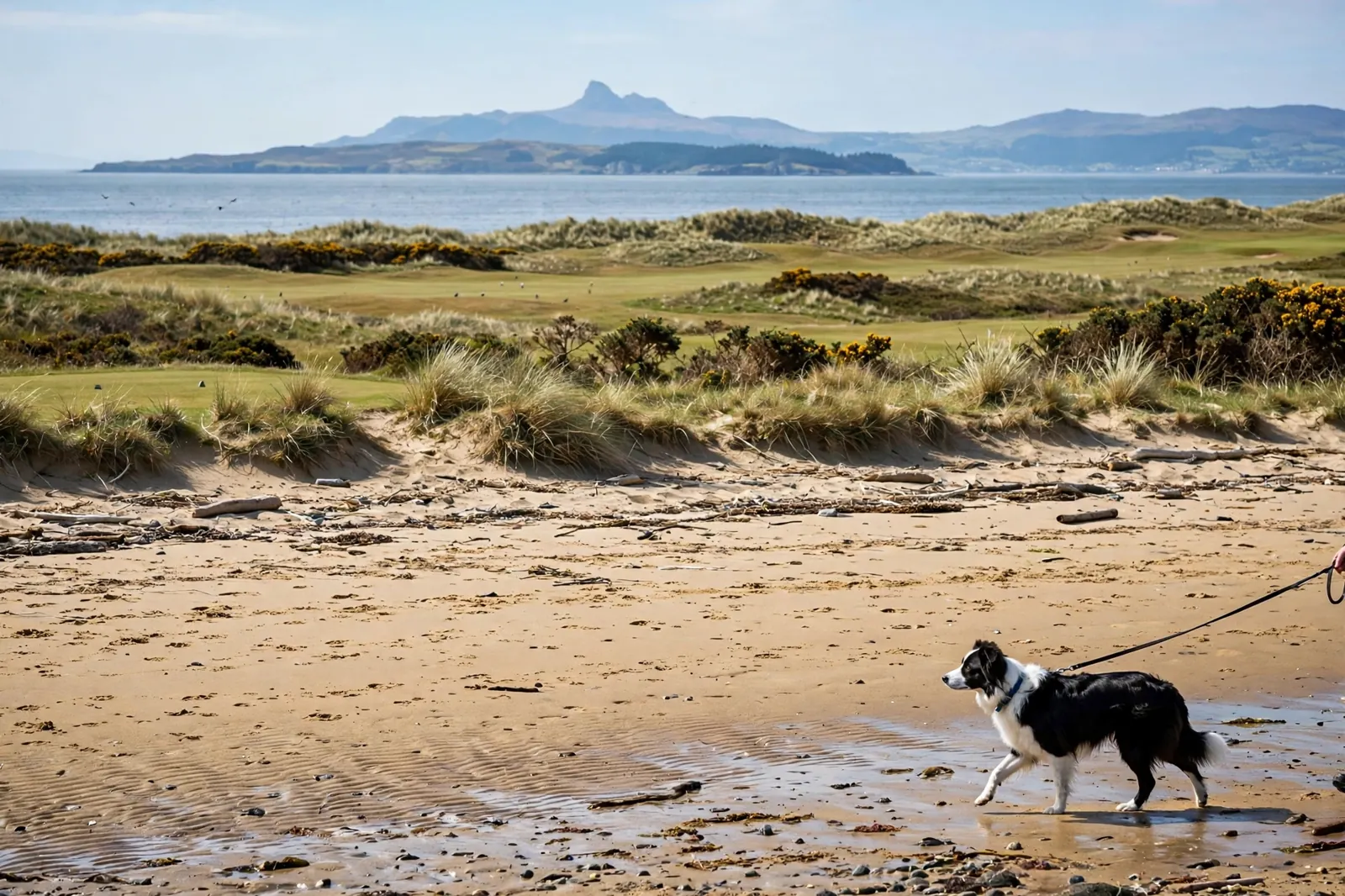
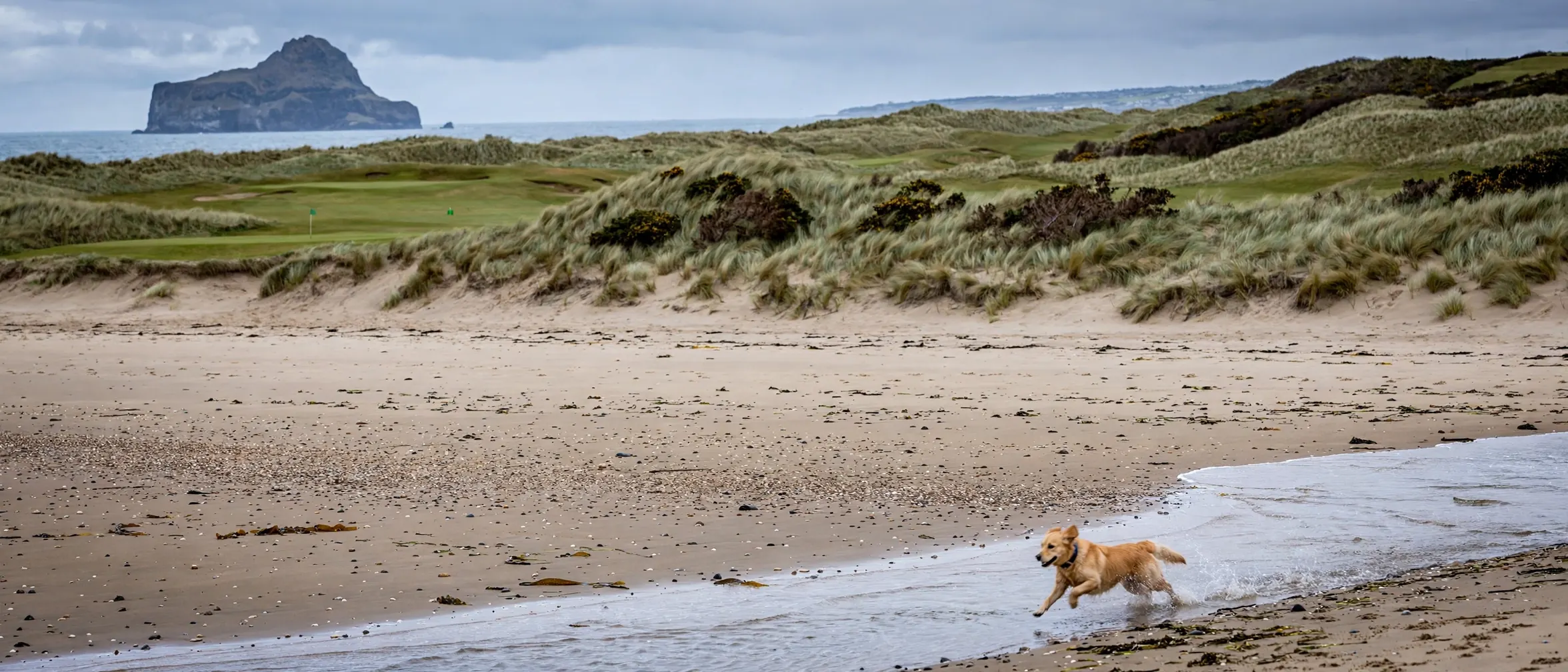
Stand on Troon Beach on a clear morning and the town explains itself in one look. To your left, a long sweep of sand curves south towards Ayr. To your right, the dunes rise into the golf links, where the fairways of Royal Troon and its neighbouring courses run parallel to the shore. Straight ahead, across the Firth of Clyde, the steep-sided rock of Ailsa Craig sits on the horizon like a punctuation mark, and on the clearest days the Isle of Arran rises behind it. It is an unusual combination: a working harbour town, a championship golf destination and a family seaside resort, all sharing the same few miles of coastline — and a dog can enjoy most of it on a single visit.
Troon sits on the Ayrshire coast in South Ayrshire, roughly eight miles north of Ayr and about thirty miles south-west of Glasgow. The town grew up around its harbour, which was developed in the early nineteenth century, and the railway arrived soon after, bringing holidaymakers to the beach. Golf followed, and the town is now best known internationally as the home of Royal Troon Golf Club, which has hosted The Open Championship. For a dog owner, that history matters less than the geography it left behind: a flat, walkable town with a long promenade, a sandy beach, a harbour and pier, and a network of coastal paths that link Troon to its neighbours in both directions.
The practical shape of a visit is simple. The beach and the South Beach car park anchor the southern end of town, the promenade runs north past the town centre, and the harbour, marina and pier sit at the northern end. The golf courses occupy the dunes between the beach and the inland roads, so a dog walk in Troon is always a negotiation between three zones — sand, links and quayside — and the best days use all three in the right order. Arrive early, walk the beach while the tide is out, take the promenade to the harbour while the town wakes up, and finish with a quiet café stop before the afternoon crowds arrive.
This guide is written for owners who want the detail that makes a day out work: which parts of the beach suit off-lead running, where the tide cuts off a walk, how to behave around the golf courses, where to park, and what to do when the weather turns. Where a rule can change — beach restrictions, parking charges, café policies — the guide says so and asks you to check the official guidance before you travel rather than guessing. Troon is an easy town to enjoy with a dog, but it rewards a little planning, especially on sunny weekends when the beach, the harbour and the golf courses are all busy at once.
The beach: sand, tides and off-lead space
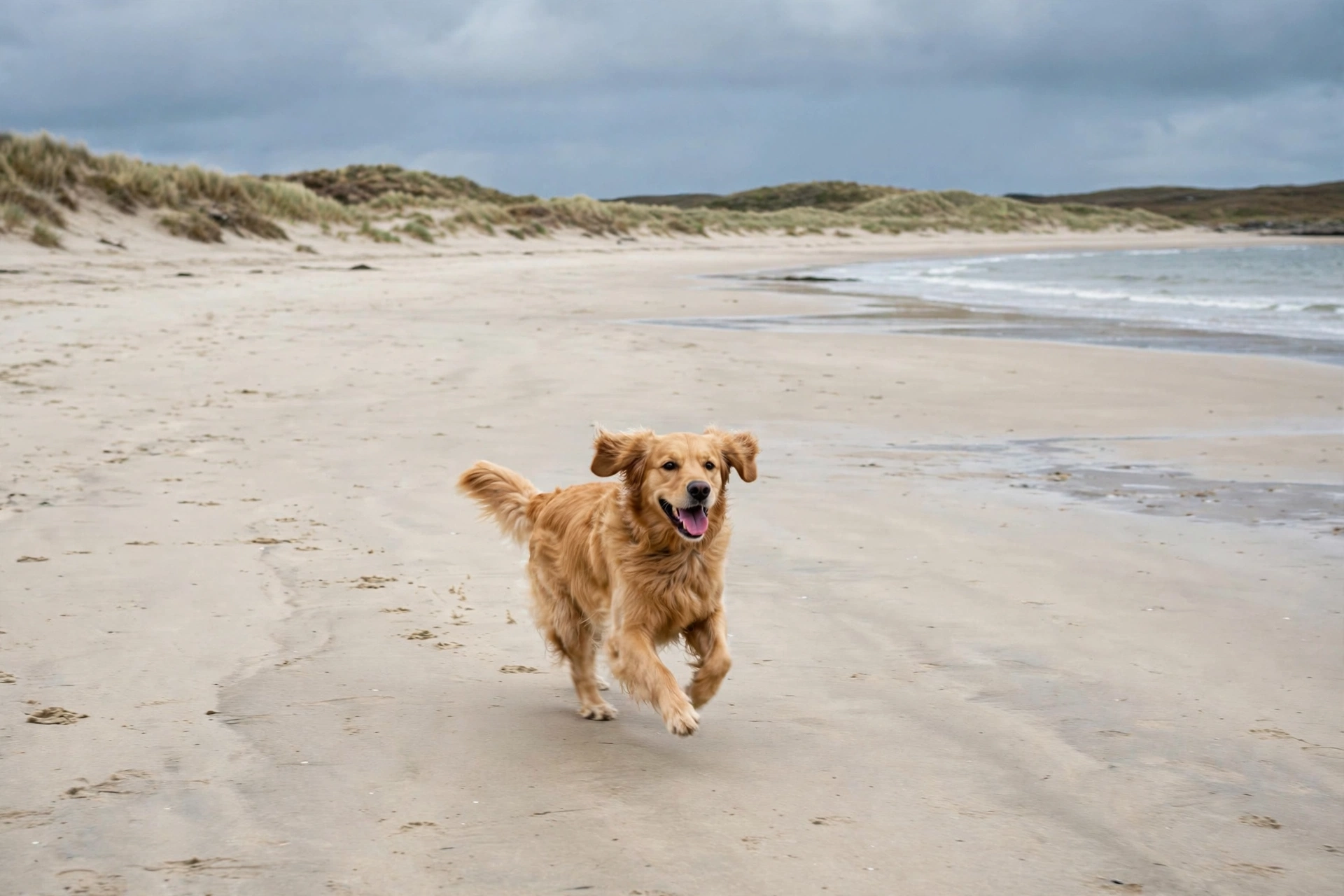
Troon Beach, also known as South Beach, is the town's main draw for dogs: a long, wide stretch of sand that runs from the harbour end of town southwards towards Barassie and, eventually, Ayr. At low tide the sand is firm and flat, which suits older dogs and puppies who struggle on soft, deep sand, and there is enough space for a proper off-lead run without crowding other beach users. The beach shelves gently, so paddling is possible on calm days, although the water of the Firth of Clyde is cold even in summer and the wind can pick up quickly, so treat a swim as a brief dip rather than a long session.
The first thing to check before any beach day in Troon is the tide. The difference between high and low water here is large, and at high tide the usable sand narrows considerably, pushing dogs, walkers and golfers' paths closer together. At low tide the beach opens up into a huge expanse, and it is the best time for fetch, recall practice and a long, straight run. Check the tide times for Troon before you travel, plan to arrive two or three hours before low water, and keep an eye on the incoming tide if you walk south towards Barassie — the return route along the top of the beach is the safe option, and you should never let a dog swim or chase a ball into deep water near the harbour entrance, where boats and currents make the water unpredictable.
Dog rules on Troon Beach are generally permissive, and dogs are welcome on the beach for most of the year, but local rules can change, and other stretches of the Ayrshire coast do have seasonal restrictions, so always check the official guidance before you travel. The practical etiquette matters more than the letter of any byelaw: keep your dog under close control near the promenade, the children's play areas and the golf course edge, pick up after your dog everywhere, and put the lead back on when the beach narrows at high tide or when you pass a family with a picnic. A dog that recalls reliably will have a far better time here than one that needs chasing, because the beach is long enough for a runaway to cover a surprising distance before you catch up.
The southern end of the beach, towards Barassie, is usually quieter than the stretch nearest the town centre and the car parks, and it is the best choice for reactive dogs or for owners who want space. The dunes behind the beach are part of the golf links landscape, and dogs should stay off the fairways and greens — use the beach itself and the marked paths for your walk, and keep the dog on a lead where the dunes meet the course boundary. Sand gets everywhere after a beach day, so bring a towel and a brush, and check paws for cuts from shells or the occasional sharp stone near the harbour wall. A bottle of fresh water is essential: dogs will drink seawater if they are thirsty, and a few mouthfuls can upset a stomach and spoil the rest of the day.
For a wider view of how beach rules vary around the country, our dog-friendly beaches in Scotland guide explains seasonal restrictions, tides and wildlife, and is a useful companion if you plan to visit other Ayrshire beaches on the same trip. Troon is one of the easier beaches to manage with a dog, but the same habits — checking the tide, keeping control near other users, and carrying water — apply everywhere on this coast.
Harbour, marina and the pier: a working waterfront walk
Troon Harbour is a working port, and that is exactly what makes it interesting to walk with a dog. Ferries, fishing boats, yachts in the marina and the occasional cargo vessel share the same stretch of water, and the quayside gives you a close-up view of a harbour that still earns its living. The walk from the beach to the harbour follows the promenade and the town's seafront, and the harbour itself is best explored on a lead, at a slow pace, with time to stop and watch the boats.
Start at the Ballast Bank, the grassy area and car park near the harbour end of the beach, and follow the quayside around towards the marina. The marina pontoons are a good place to watch yachts coming and going, but keep your dog well back from the water's edge and away from mooring lines, ropes and fishing gear, which are tripping hazards for dogs as well as people. The pier extends out into the Firth of Clyde and gives the best view back along the beach towards Ayr and out to Ailsa Craig; on a windy day the pier can be exposed, so hold the lead firmly and skip it if your dog is nervous of wind or open water.
The harbour is also the place in Troon where a dog needs the most supervision. Vehicles move around the quayside, including lorries and service vehicles, and there are no fences between the walkway and the water in places. A short lead and a calm pace are the right approach, and it is a poor place for a long flexi-lead or an off-lead dog. Early morning is the quietest time, and it suits dogs who find crowds and traffic stressful, while late afternoon brings more activity as boats return. If your dog is noise-sensitive, the harbour's gulls, engines and clanking rigging can be a lot to take in, so keep the visit short and reward calm behaviour as you go.
From the harbour, the view across the water is one of the best on the Ayrshire coast. Ailsa Craig, the uninhabited granite island that supplies the stone for curling stones, dominates the middle distance, and the Isle of Arran sits beyond it to the south-west. On a clear winter morning the light on the water is remarkable, and the harbour walk is worth doing in every season. In summer, the harbour area can be busy with day visitors, so plan your walk for the morning and save the beach for the afternoon when the tide is right, or reverse the order on a hot day when the sand is too warm for paws at midday.
Golf country on foot: links paths, etiquette and where dogs fit
Troon is a golf town first and a seaside town second, and the golf courses shape the landscape your dog will walk through. Royal Troon Golf Club, founded in 1878, is the most famous name here, and its Old Course has hosted The Open Championship many times, most recently in 2024. Alongside it sit the town's other courses — Troon Golf Club, the Portland course and the links at nearby Dundonald — and together they form a near-continuous band of links land between the beach and the town. For a dog walker, the important thing is not the golf itself but the etiquette: the courses are private land, the fairways and greens are out of bounds to walkers, and the public paths that cross or border the links are the routes to use.
The beach is the natural corridor through golf country. The sand runs alongside the links for much of its length, and a dog on the beach is not on the course, which keeps everyone happy. The problems start where the beach narrows at high tide or where a dog chases a ball into the dunes and onto a fairway. Keep the dog on a lead when the beach is narrow, and use a long line rather than full off-lead freedom on the stretches where the dunes are close to the sand. If a ball or a toy does go onto the course, wait for a gap in play, retrieve it quickly from the edge, and do not walk across a fairway to fetch it — golfers play fast and a stray dog on a fairway is a safety problem as well as a nuisance.
Dogs are generally not permitted on the golf courses themselves, and the clubhouses have their own rules, so do not plan a walk that crosses a course. Instead, use the coastal path and the promenade, which give you the views of the links without the access problems. The dunes themselves are worth a look from the path: the hummocky, grass-covered ridges are classic links terrain, shaped by wind and sand over centuries, and they are home to skylarks and other ground-nesting birds in spring and summer. Keep your dog out of the long grass during the nesting season, and stay on the paths — the dunes are fragile, and a dog running through them can damage the vegetation that holds the sand in place.
If you are a golfer travelling with a dog, the practical answer is to split the day: one person plays while the other walks the dog on the beach, then meet at the harbour or a café afterwards. Some courses allow dogs in the clubhouse bar or on the terrace, but policies vary and change, so check the official guidance before you travel rather than assuming. The town's golf heritage is also visible without playing: the clubhouse buildings, the practice areas and the sheer scale of the links are part of the walk, and the sight of golfers playing a few metres from the beach is one of the things that makes Troon feel different from an ordinary seaside town.
For the wider Ayrshire coast, where golf and beaches overlap in the same way at Ayr, Irvine and Turnberry, our Ayrshire coast with a dog guide covers beach rules, castle grounds and the coastal paths that link the towns together. It is the natural next read if you are planning a multi-day trip along this coast, and it explains the golf etiquette that applies at every links course on the Firth of Clyde, not just in Troon.
Longer walks: to Ayr, Barassie and beyond
Troon sits on the Ayrshire Coastal Path, and the town is a natural starting point for longer dog walks in both directions. The best-known route is south, along the beach and promenade towards Barassie, Prestwick and Ayr, and it is a walk that can be as short or as long as your dog needs. The first section, from Troon Beach to Barassie, is about two miles of sand and promenade, and it suits most dogs as a straightforward out-and-back. The full walk to Ayr is considerably longer — around eight miles — and it is a proper day walk rather than a casual stroll, so plan it carefully, check the tide times, and carry water for both of you.
The walk south is mostly flat and easy underfoot, which is why it suits older dogs and owners with pushchairs, but the flatness can be deceptive. There is little shade on the beach and the promenade, so on a sunny day the walk is hotter than it looks, and the sand can be hard on paws after a long stretch. Take the walk in the morning, rest at Barassie or Prestwick, and use the train to return: Prestwick Town and Ayr stations both sit close to the coast, and dogs are generally welcome on trains in the UK, although you should check the operator's rules before you travel. A one-way walk with a train ride back is the kindest version of this route, and it turns a long walk into a relaxed half-day rather than a slog.
North from Troon, the coastal path runs towards Irvine and the mouth of the River Irvine, and the landscape changes: the golf links give way to the dunes and the wide sands of Irvine Beach, and the views open out across the Firth of Clyde towards Arran. This direction is quieter than the walk to Ayr, and it suits dogs who prefer space to crowds, but the path can be rougher underfoot, and the dunes need care in the nesting season. Whichever direction you choose, the same rules apply: keep your dog on a lead near roads and car parks, watch for cyclists on the shared paths, and carry a lead even on the beach, because you will need it the moment the walk narrows or another dog appears.
Shorter loops suit most visiting dogs better than the full coastal path. A favourite is the beach-to-harbour loop: beach south to Barassie, back along the promenade, then around the harbour and pier, and home through the town centre. It is about four miles, takes two hours at a dog's pace with stops, and it gives you sand, sea views, the working harbour and a café stop in a single walk. Another good option is the loop around the Ballast Bank and the harbour, which is short enough for a puppy or an older dog and still gives the full Troon experience in miniature. For dogs that need a quieter route, the residential streets behind the seafront are calm and tree-lined, and they make a useful wet-weather fallback when the beach is too windy to enjoy.
Wildlife is part of the coastal walk here. Oystercatchers, curlews and gulls feed along the tideline, and seals are sometimes seen offshore, especially near the harbour. Keep your dog away from nesting birds in the dunes and from any seals hauled out on the shore — a dog chasing a seal is dangerous for both animals, and the law protects seals and nesting birds. If your dog has a strong chase instinct, a long line on the beach is the honest answer, and it still lets the dog run and sniff while you keep control. The coastal path is shared with walkers, runners and cyclists, so a dog that stays close and recalls well will be welcome everywhere, while a dog that ranges wide will need more management.
Eating and drinking with your dog
Troon has a good range of places to eat and drink with a dog, and the town's seaside layout means that many of them are within a short walk of the beach. The pattern is familiar from other Scottish coastal towns: dogs are most often welcome on outdoor terraces and in bar areas, less often in formal dining rooms, and policies change from season to season, so check before you travel rather than arriving with a hungry dog and no plan. A café with a terrace overlooking the beach is the classic Troon lunch stop, and it works best on a calm day when the dog can settle under the table with a mat and a chew.
The seafront and the harbour are the best places to look first. Cafés along the promenade and around the harbour tend to be used to dogs, and several have water bowls outside and a relaxed attitude to muddy paws — although you should still bring your own towel and clean the dog's feet before going inside anywhere. The town centre, a short walk inland from the seafront, has pubs and cafés that welcome dogs in the bar, and a few that allow dogs throughout. Fish and chips eaten on the seafront is the simplest option of all: buy it, find a bench with a view of Ailsa Craig, and let the dog settle beside you. Keep food out of reach and watch for dropped chips, which are a magnet for a hungry dog and a common cause of an upset stomach.
A little preparation makes eating out with a dog much easier in Troon. Bring a settle mat so the dog has a defined place to lie, a water bowl, and something to chew — a stuffed Kong or a long-lasting chew will keep a dog occupied while you eat, and it is far more effective than hoping the dog will simply lie still. Time your meal for the dog's rest period rather than the middle of a walk: a dog that has just had an hour on the beach will settle far more easily than one that is still full of energy. If your dog is reactive or nervous in busy places, choose a quieter café away from the seafront, or eat outside where the dog has space and an escape route.
If you are staying overnight, the choice of accommodation matters as much as the choice of restaurant. Troon has hotels, guesthouses and self-catering options, and the dog-friendly ones vary widely in how much they genuinely welcome dogs — some allow dogs in selected rooms only, some charge a per-night pet fee, and some have enclosed gardens that make the stay much easier. Our dog-friendly hotels in the UK guide explains the questions to ask before you book, including room types, pet fees and dining rules, and it is worth reading before you commit to a stay in Troon or anywhere else on the Ayrshire coast.
Parking, toilets, vets and practical details
Parking in Troon is straightforward, but the best spots fill early on sunny weekends. The South Beach car park gives the shortest walk to the sand and suits a beach-first visit, while the Ballast Bank car park near the harbour suits a harbour walk and a town-centre stop. There are also car parks in the town centre and near the railway station, which are useful if you plan to walk in from the inland side. Charges and time limits change, so check the official guidance before you travel, and arrive before 10am on a fine Saturday if you want a space near the beach. On-street parking in the residential streets behind the seafront is an option on quieter days, but be considerate of residents and never block a driveway or a dropped kerb.
Public toilets are available near the beach and in the town centre, although opening hours vary by season, so do not rely on them being open early or late in the day. The beach itself has no fresh water supply, so bring your own: a litre bottle for the dog and a collapsible bowl will cover a two-hour walk, and twice that on a hot day. Bins for dog waste are placed along the promenade and near the car parks, but they can be full on busy days, so carry spare bags and be prepared to carry waste to the next bin rather than leaving it beside a full one. The town's shops include a supermarket and several convenience stores where you can buy water, bags and treats if you run short.
Getting to Troon without a car is easy. Troon railway station sits on the line between Glasgow and Ayr, with regular services in both directions, and the walk from the station to the beach takes about fifteen minutes through the town centre. Dogs are generally welcome on trains in the UK, and the station is a useful starting point for a car-free day: walk to the beach, along the promenade to the harbour, and back to the station for the train home. Buses also serve the town from Ayr and Glasgow, although space for a large dog on a busy bus can be tight, so the train is usually the better option. If you are driving, the A77 from Glasgow and the A78 from the south both lead into the town, and the approach along the coast from Ayr is one of the prettier drives in the area.
Before any trip, save the number of a local vet. Troon has veterinary practices in the town, and Ayr has larger practices and an out-of-hours service a short drive away. Save the number in your phone before you set out, and note the location of the nearest practice on your walk — a dog that cuts a paw on a shell or eats something it should not will need help quickly, and the time to look up a vet is not when you are already worried. Also pack a small first-aid kit: a bandage, saline pods for flushing a cut, tweezers for thorns, and any medication your dog needs. The beach, the harbour and the dunes each have their own small hazards — sharp shells, fishing line, broken glass near the harbour wall — and a quick check of paws after every walk is a good habit.
Seasons, weather and what to pack
Troon is a year-round destination for dogs, but the experience changes with the seasons, and the best visit depends on what your dog enjoys. Summer brings the warmest weather and the longest days, and the beach is at its best — but it also brings the biggest crowds, the warmest sand, and the most competition for parking. If you visit in July or August, arrive early, walk the beach in the morning, and rest in the shade during the middle of the day, when the sand can be hot enough to hurt paws. Test the sand with the back of your hand: if it is uncomfortable for you after five seconds, it is uncomfortable for your dog.
Autumn is arguably the best season for a dog in Troon. The crowds thin out, the beach empties, the light on the Firth of Clyde turns golden, and the golf courses quieten down. September and October are often the driest months on this coast, and a long beach walk in autumn sunshine is one of the best dog days out in Scotland. The water stays cold, so swimming is still a brief affair, but the sand is cool, the air is fresh, and the town's cafés are quieter. Winter is bracing rather than bleak: the beach is empty, the views to Arran are at their sharpest, and the harbour walk in a cold wind is a proper Scottish experience — but dress for it, because the wind off the Firth of Clyde cuts through thin coats, and a dog that is wet and cold will not enjoy the walk. A drying coat and a towel in the car make winter beach days practical rather than miserable.
Spring brings the dunes back to life, and it is the season that needs the most care. Ground-nesting birds use the dunes and the rough grass behind the beach from March onwards, and dogs should stay on the paths and out of the long grass until the nesting season ends. The beach itself is unaffected, and a spring walk with the first warm sun is a pleasure, but the wind can still be cold, and the sea takes longer to warm up than the land. Whatever the season, the Ayrshire coast is changeable: a sunny morning can turn to rain by lunchtime, and the wind can rise in minutes. Pack a waterproof for yourself and a drying coat for the dog, and check the forecast and the tide times on the morning of your visit rather than the night before.
The packing list for a Troon day out is short but worth getting right. A lead and a long line, a water bottle and a bowl, poo bags, a towel, a brush for sand, a settle mat for café stops, a chew for the restaurant, and a first-aid kit cover almost everything. Add sun protection for a pale-nosed dog in summer and a drying coat in winter, and you are ready for any weather the Firth of Clyde can produce. The one thing not to pack is an expectation of a quiet beach on a sunny Saturday: Troon is popular for a reason, and the best days here are the ones where you arrive early, plan around the tide, and let the dog set the pace.
A relaxed day plan
Here is a simple plan that uses all three of Troon's strengths — beach, harbour and golf-town atmosphere — without rushing the dog. Arrive by 9am and park at the South Beach car park. Walk the beach at low tide for an hour, letting the dog run and paddle while the sand is wide and the crowds are thin. Then follow the promenade north, past the town centre, to the harbour and the pier, keeping the dog on a lead for the quayside. Stop for a coffee and a snack at a harbour café, letting the dog settle with a mat and a chew.
After lunch, walk the dog back along the beach or take the quieter inland streets through the town centre, depending on the weather and the dog's energy. If the dog still has energy, extend the walk south towards Barassie for another half-hour on the sand, or drive the short distance to Dundonald or Irvine for a change of scene. If the dog is tired, head home — a tired dog in the car is a happy dog, and pushing on for another hour rarely improves the day. Finish with a proper check of paws, a rinse of salt and sand, and a rest in a warm spot. The best Troon days are not the longest ones; they are the ones where the dog comes home tired, dry and content.
If you are staying for a weekend, Troon makes a good base for the wider Ayrshire coast. Ayr is a short drive or train ride south, with its own beach, the Robert Burns Birthplace Museum and the Heads of Ayr. Culzean Castle and Country Park, a little further south, has extensive grounds where dogs are welcome on leads and miles of woodland and coastal paths. Irvine and the Scottish Maritime Museum lie to the north, and the Isle of Arran is visible across the water throughout — a reminder that this coast is a gateway as well as a destination. Our Ayrshire coast guide covers these options in detail, and it is worth reading before you plan a longer stay.
Practical questions
Before you go
Can dogs go on Troon Beach all year round?
Troon Beach is generally dog-friendly, but local rules can change, and other stretches of the Ayrshire coast do have seasonal restrictions, so always check the official guidance before you travel. Keep your dog under close control near the promenade and the golf course edge, and clear up after your dog everywhere on the beach.
Where is the best place to park in Troon with a dog?
The South Beach car park and the Ballast Bank area give the shortest walk to the sand, while the harbour car parks suit a pier and marina walk. Arrive early on sunny weekends and bank holidays, because beach parking fills quickly. Check the official guidance before you travel for current charges and any time limits.
Can I walk my dog near the golf courses in Troon?
Yes, on the public paths and the beach, but never across a fairway or green while play is in progress. Keep your dog on a lead near the courses, give golfers a wide berth, and use the beach and the promenade for off-lead running where it is permitted. Check the official guidance before you travel for the current access rules.
Is the harbour walk at Troon suitable for dogs?
The harbour, marina and pier make a good on-lead walk with wide views across the Firth of Clyde, but it is a working port with vehicles, mooring lines and quayside edges, so keep your dog on a lead and away from the water's edge. Early mornings are quieter and calmer for nervous dogs.
Can I walk from Troon to Ayr with a dog?
Yes, the coastal path south from Troon towards Ayr is a popular dog walk, with long stretches of beach and promenade. It is a long walk, so check tide times, carry water, and plan a rest stop or a train ride back from Ayr station. Check the official guidance before you travel for current path conditions.
Are there dog-friendly places to eat in Troon?
Several cafes and pubs around the beach, the harbour and the town centre welcome dogs, most often on outdoor terraces or in a bar area. Policies change, so check before you travel, bring a settle mat and water, and keep your dog on a lead while you eat.