This guide is independent and contains no paid placement. If affiliate links are added later, they will be clearly marked and will not change our editorial checks.
Aberfeldy works best as a walking base: start with the Birks of Aberfeldy gorge in the morning, use the River Tay paths for a flatter afternoon walk, and finish in a dog-friendly cafe or pub in town. Keep dogs on lead in the gorge, check cafe and accommodation rules before you travel, and plan a shorter route in wet or icy weather.
Aberfeldy at a glance
Aberfeldy is a small market town in Perthshire, in the central Highlands of Scotland, set where the River Tay runs wide and slow beside wooded hills. It is the kind of place that suits a dog trip because everything is close together: a dramatic gorge walk on the edge of town, flat riverside paths, a compact high street with cafes, pubs, a bookshop, outdoor shops and food shops, and quieter roads out towards lochs and glens. Visitors often arrive for the scenery and stay longer than planned because the town is easy to use on foot, and because the walks change character within a few minutes — from a mossy gorge with waterfalls to open riverside grass, then to farmland and forest tracks.
The town sits on the A827, roughly between Pitlochry to the north-east and Crieff and Perth to the south. That position matters for dog owners planning a longer stay: Pitlochry, Dunkeld, Loch Tay, Kenmore, Blair Atholl and Perth are all realistic day trips, and the drive between them is part of the holiday rather than a chore, with lay-bys, viewpoints and short forest walks along the way. Aberfeldy itself is small enough to learn in an afternoon, which is a genuine advantage with a dog. You can park once, walk the town, and return to the car or your accommodation without a complicated route, and you can build a routine — morning gorge walk, midday rest, afternoon river walk — that most dogs settle into quickly.
Before going further, it helps to set expectations honestly. Aberfeldy is not a large resort town, and it is not a place for off-lead running on every path. The best-known walk, the Birks of Aberfeldy, is a wooded gorge with steps, bridges, tree roots and fast water, and it rewards a steady, on-lead pace rather than speed. The River Tay is a powerful river, and its banks deserve respect in every season, especially after rain. The town centre is friendly and used to dogs, but individual cafes, pubs and shops set their own rules, and those rules can change between seasons or between the bar and the dining room. Check the official guidance before you travel for path closures, cafe policies and accommodation terms, and treat anything in this guide as a starting point to confirm, not a promise that every door will be open on the day you arrive.
The shape of a good Aberfeldy trip follows the ground. Mornings are usually best for the gorge, when the light is softer, the paths are quieter and dogs are fresh. Midday is for the town: a slow lunch, a browse, a rest for the dog, and a chance to dry off if the gorge has been damp. Afternoons suit the Tay, where the walking is flatter, the views are wide and there is room to let a dog sniff without negotiating steps. Evenings are short and simple — a pub garden in summer, a quiet bar corner in winter, and an early night so the next day can start fresh. That rhythm works for a single day, a weekend, or a week, and it scales well: add a loch day, a forest day, or a town day in Pitlochry or Dunkeld, and the base stays the same.
This guide covers the gorge and river walks in detail, the town centre, where to stay, parking and arrival, day trips across Perthshire, seasonal conditions, packing, and a sample day that ties it together. It is written for owners who want practical detail — where the steps are, where the water is fast, where a nervous dog can wait, and what to do when the weather turns — rather than a list of superlatives. If your dog is older, reactive, small, or new to hill walking, the advice here is deliberately cautious: shorter loops, more rest, and a plan to turn back are all part of a good day, not a failure of one.
The Birks of Aberfeldy gorge walk
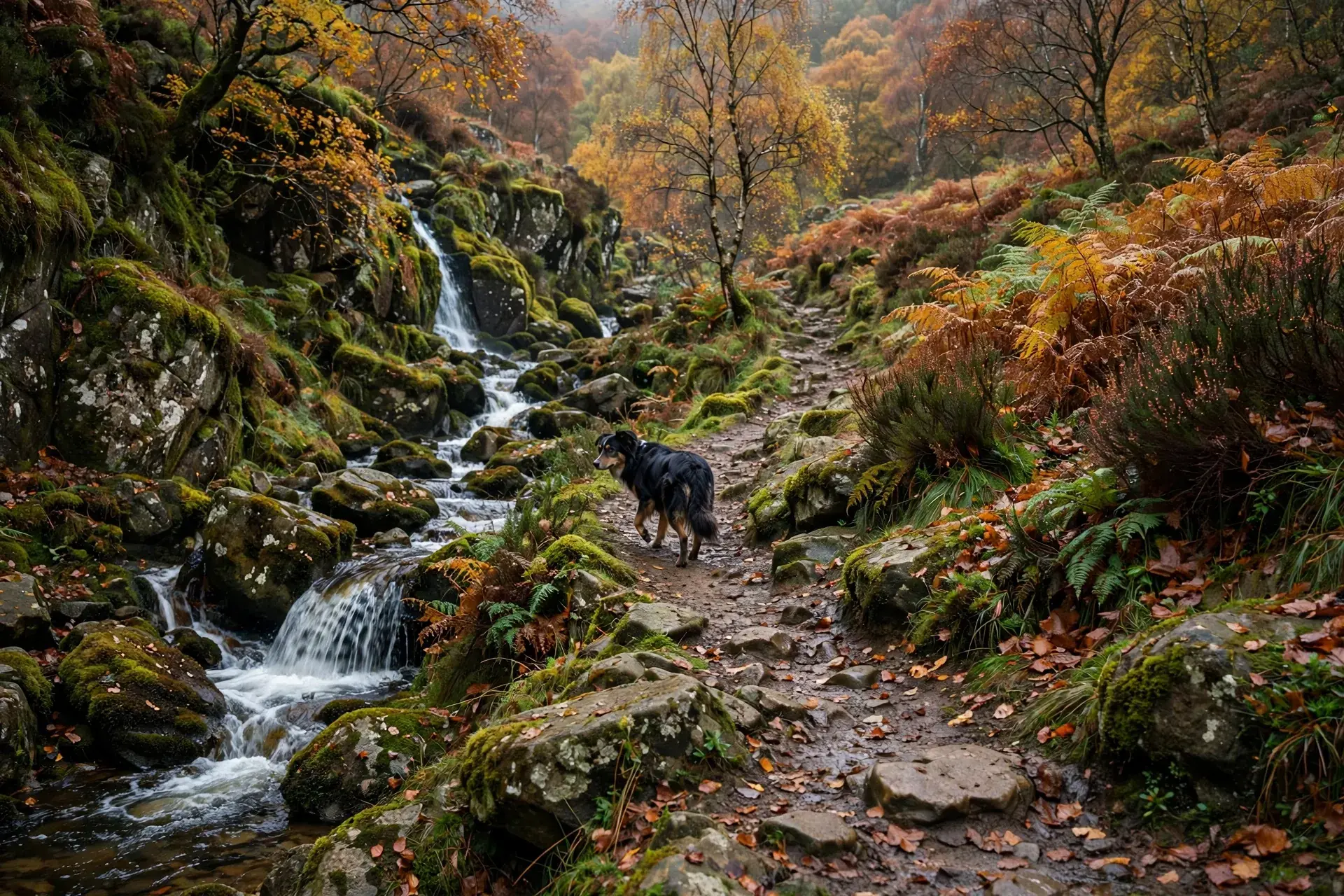
The Birks of Aberfeldy is the walk most visitors come for, and it is easy to see why. The path follows the Moness Burn through a steep, wooded gorge, past waterfalls, moss-covered rocks and mature trees, with the sound of water almost constant and the light changing as the canopy opens and closes. The word birks means birch trees, and the gorge is planted with a mix of birch, oak and other broadleaf trees that turn the path gold and copper in autumn. The route is associated with Robert Burns, whose poem The Birks of Aberfeldy celebrated the place in the late eighteenth century, and a monument to Burns stands near the walk. That literary link adds interest, but the walk itself needs no introduction: it is short, intense, and unlike the open moorland walking that many visitors expect from the Highlands.
Start at the lower end of the gorge, near the town, and allow time to go slowly. The path climbs beside the burn, with steps and uneven ground for much of the way, and several viewpoints over the falls. The Falls of Moness are the best-known feature, a series of drops where the burn narrows between rocks, and the sound and spray are strongest after rain. Bridges cross the burn at intervals, and the path on the far side gives a different view back down the gorge. The full circuit is often described as a few kilometres, but distance is the wrong measure here: the climb, the steps, the roots and the need to keep a dog close make it feel longer, and most owners should allow at least an hour and a half, plus time for photographs and for the dog to sniff and rest.
Dogs should stay on a lead through the gorge. The reasons are practical rather than formal: the path is narrow, the drops beside it are real, the water is fast, and other walkers, including families with children and other dogs, use the same steps and bridges. A short lead gives you control on the steps and at the viewpoints, where a dog that lunges towards a squirrel or another dog could pull you off balance. A long line is a poor choice in the gorge because it can snag on roots, wrap around trees, or trip other walkers. If your dog is strong on the lead, use a harness with a handle and a lead you can shorten quickly, and keep the dog on the uphill side of the path where possible, away from the edge.
Footing deserves attention. The steps can be wet, muddy and slippery even in dry weather, because spray from the falls and shade from the trees keep the ground damp. Tree roots cross the path, and loose stones collect on the steps after heavy rain. Wear boots with a good grip, walk at a steady pace, and use a handrail or a walking pole where one is available. For dogs, the risks are different: paws can slip on wet rock, claws can catch on roots, and a dog that rushes down steps can strain a leg. Let the dog choose a steady pace, stop on flat ground rather than on the steps, and check paws at the top for mud, grit or small cuts. Older dogs and dogs with joint problems may find the climb hard; for them, a shorter out-and-back along the lower path is a better plan than the full circuit.
Weather changes the gorge quickly. After heavy rain the burn rises, the falls are louder and more powerful, and the spray reaches further across the path. The path can become muddier and the steps more slippery, and the gorge feels colder and darker than the town below. In winter, ice can form on steps and bridges, and the gorge is best avoided in icy conditions or after a hard frost. In summer, the canopy keeps the gorge cool, which suits dogs, but midges can be present in still, humid weather, especially in the evening. Check the official guidance before you travel for any path closures, storm damage or maintenance work, and be ready to swap the gorge for a river walk if conditions look poor on the day.
There is also a quieter side to the Birks that rewards a slower approach. The upper part of the walk, above the main falls, opens out into broader woodland where the path is flatter and the burn is calmer, and this is where a dog can relax and sniff without the constant noise of falling water. The trees change with the seasons — fresh green in spring, dense shade in summer, colour in autumn, and bare branches in winter that open up views across the gorge. Take the time to notice the mosses, ferns and fungi on the rocks and fallen trees, and to listen for woodpeckers, nuthatches and other woodland birds. The gorge is a place to walk slowly and look around, not to tick off in a hurry, and dogs that are allowed to sniff and explore at their own pace usually enjoy it more than dogs that are marched through it.
The River Tay and riverside paths
The River Tay is the longest river in Scotland, and at Aberfeldy it is wide, calm-looking and deceptively powerful. The riverside paths here are the natural counterpoint to the gorge: flat, open, and easy on legs and paws, with long views across the water to fields and hills. They suit a second walk of the day, a gentle morning for an older dog, or a first walk for a dog that is still settling into a new place. The grass beside the river is good for sniffing, the paths are wide enough to pass other walkers comfortably, and there are places to sit and watch the water without feeling rushed.
Start from the town centre or from the bridge over the Tay and follow the riverbank in either direction, choosing a distance that fits your dog. The paths are generally surfaced or firm grass, though they can be soft and muddy after rain, especially near the waterline. Keep dogs on a lead near the riverbank unless you are certain of the local rules and your dog has reliable recall, because the Tay has strong currents, steep banks in places, and cold water even in summer. A dog that jumps in after a stick or a bird can be swept downstream quickly, and the bank can be hard to climb back up. A long line gives a dog room to explore while keeping you in control, and it is a good compromise on the wider, flatter stretches.
Riverside walking is also a chance to watch wildlife without disturbing it. Herons stand still in the shallows, dippers work the faster water upstream, and ospreys are sometimes seen over the Tay in the warmer months. Salmon and trout move through the river, and anglers fish from the banks in season, so give them space and keep dogs from running through their lines or splashing near their casts. If you meet livestock in riverside fields, put the dog on a short lead, walk calmly past, and close any gates behind you. The Scottish Outdoor Access Code gives a right of responsible access, but it also expects dog owners to keep dogs under close control near livestock and to avoid disturbing wildlife, so check the official guidance before you travel if you are unsure how the code applies to a particular field or path.
The Tay also connects Aberfeldy to the wider landscape. Upstream, the river leads towards Loch Tay and Kenmore; downstream, it flows towards Dunkeld, Perth and eventually the sea. That scale is part of the pleasure of walking here: the river feels like a road through Perthshire, and each bend brings a new view. For a longer day, combine a short riverside walk with a drive to Loch Tay, where the water is calmer and the shore paths are different again, or with a walk at Dunkeld, where the Tay meets wooded banks and the town is a short stroll away. For a shorter day, a simple out-and-back along the Tay, with a stop on a bench and a slow return, is enough. Dogs do not need a grand route to enjoy a river; they need time, smells and a chance to move at their own pace.
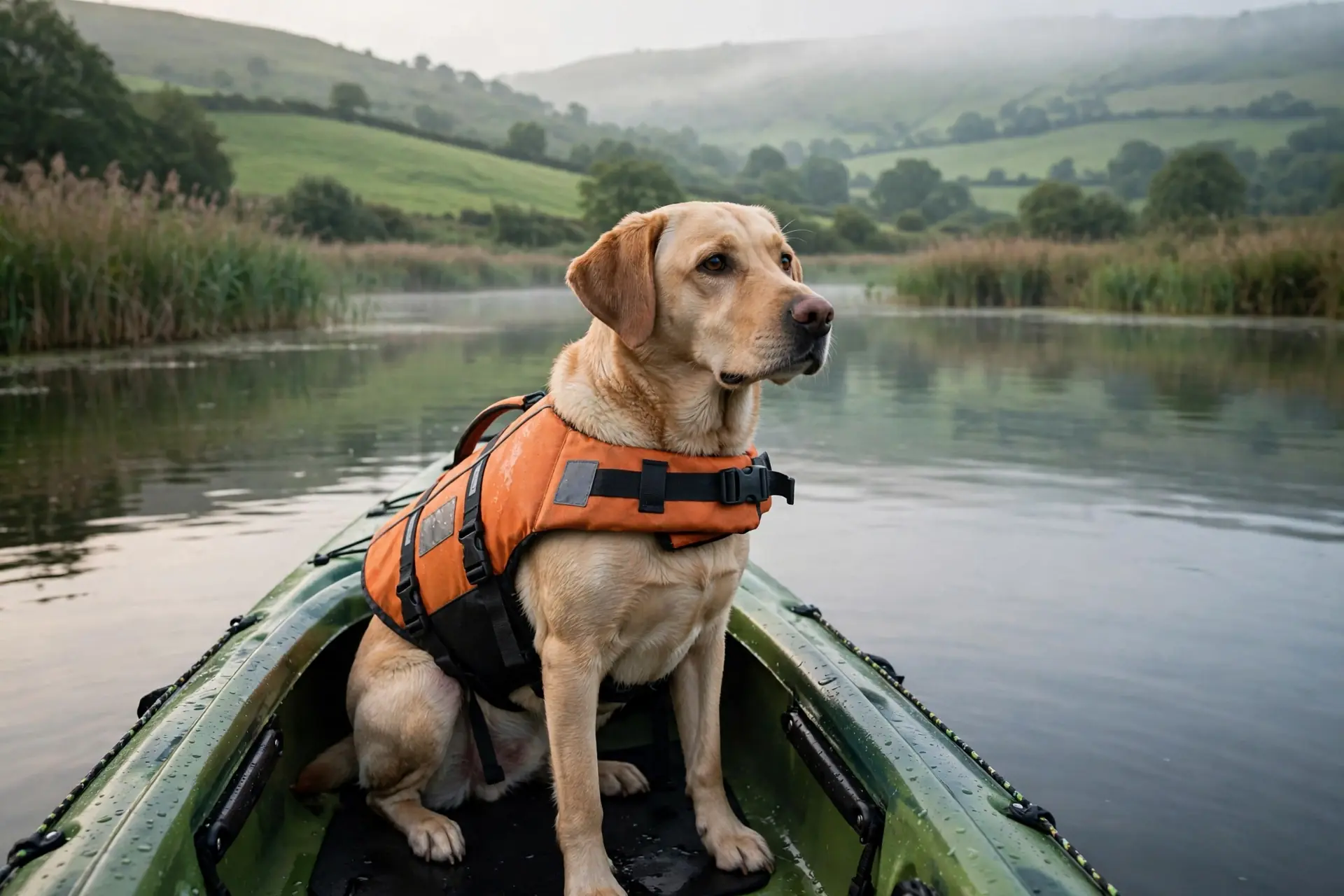
Safety on the river deserves a clear note. Never let a dog swim in the Tay without knowing the current, the depth and the exit points, and never throw a stick into fast water. In winter, the river can rise quickly after rain, and paths near the water can flood. In summer, the water is still cold, and a dog that swims for too long can become chilled. Carry a towel and a drying coat, and dry the dog thoroughly after any paddle, especially in cold weather. If your dog is a keen swimmer, look for a calm, shallow side pool or a still stretch of water rather than the main river, and keep the session short. Our guide to dogs on kayak trips in the UK covers water safety, life jackets and calm-water choices in more detail, and the same principles — a fitted life jacket, a short session, and a clear exit — apply to any dog that spends time near moving water.
Cafes, pubs and the town centre
Aberfeldy town centre is compact and walkable, centred on the Square and the streets that run off it, with a mix of cafes, pubs, a deli, a bookshop, outdoor shops, gift shops and a supermarket. It is the kind of high street where a dog is a normal sight rather than a novelty: owners tie dogs outside cafes, walk them through the Square, and stop to chat, and many businesses keep a water bowl by the door. That everyday welcome is one of the town's strengths, but it is also worth remembering that each business sets its own policy, and the most useful question is always a specific one — where, exactly, can the dog sit, and is that the bar, the terrace, or the dining room?
Cafes are usually the easiest option for a daytime stop. Look for a table near the door or on the terrace, where the dog can lie down without blocking a walkway, and bring a mat or blanket so the dog has a defined place to settle. Order at the counter if that is the system, and settle the dog before you queue, so the dog is not left alone at a table. A small treat or a chew can help a dog settle, but avoid feeding a dog at the table if the cafe is busy, and clean up any crumbs or spilled water before you leave. In wet weather, towel the dog down before going inside, and ask the staff where the dog should sit rather than assuming. Most cafe staff will be glad to help if you ask clearly, and a dog that settles quietly is usually welcome back.
Pubs in Aberfeldy are a good option for the evening, especially in winter, when a fire and a quiet corner suit a tired dog. The same rules apply: ask where dogs are welcome, choose a corner table away from the main route to the bar, and keep the dog on a lead under the table. Avoid the busiest times if your dog is nervous or reactive, and consider an early evening visit rather than a late one, when the pub is quieter and the dog can rest. Some pubs welcome dogs in the bar but not in the dining room, and some have a separate dog-friendly area; check the official guidance before you travel, and be ready to eat on the terrace in summer if the indoor policy does not suit your dog. A dog that barks, paces or begs is unlikely to be welcome for long, so plan the visit around the dog's tolerance, not your own.
Shops and services in the town are generally dog-friendly in the practical sense: many shops allow a well-behaved dog inside, especially outdoor and gift shops, and others are happy for a dog to wait outside with one owner while the other shops. Ask before entering, keep the lead short, and avoid letting the dog sniff stock or approach other shoppers without permission. The supermarket is the exception: dogs other than assistance dogs are not usually allowed inside, so plan shopping around that, with one person staying outside with the dog or a quick visit while the dog rests in the car in cool weather only. Never leave a dog in a car in warm weather, and never leave a dog tied up outside a shop for a long time in cold or wet weather.
The town also has a useful rhythm for dog owners. Mornings are quiet, with locals walking dogs before the shops open, and the Square is a good place for a slow circuit and a sniff. Midday brings more visitors, especially in summer and at weekends, and the cafes fill up. Afternoons are often quieter again, and the riverside is a good place to escape the busiest streets. Evenings are calm, with the pubs and restaurants drawing a local crowd. If your dog is reactive to other dogs or to busy streets, plan your town time for the quieter hours, and use the side streets and the riverside rather than the main pavements. A short, calm visit to town, with a clear purpose and a quick exit, is better than a long, stressful one.
Where to stay with a dog
Aberfeldy and the surrounding area offer a good range of dog-friendly places to stay, from self-catering cottages and lodges to bed and breakfasts, small hotels and holiday parks. The best choice depends on your dog and your plans: a cottage with a garden suits a dog that needs space and a secure place to toilet at night, while a hotel or bed and breakfast suits owners who want breakfast included and a central location. Whatever you choose, confirm the dog policy in writing before you book, including the number of dogs allowed, any size or breed conditions, the pet fee, and whether the dog can be left alone in the room. Policies that sound generous on a website can hide conditions in the small print, and a written confirmation protects both sides.
Self-catering is often the easiest option for dog owners in Aberfeldy. A cottage or lodge with a garden, a drying area by the door, and a nearby walk gives you the most control over the dog's routine, and it avoids the problem of leaving a dog alone in a hotel room while you eat. Look for a secure garden or a fenced area, and ask about the height and condition of the fence, especially if your dog is small or a keen digger. Check the flooring, too: hard floors are easier to clean after a muddy walk, while thick carpets can be a problem if the dog is wet. Ask where the nearest practical toilet walk is after dark, and whether there is an outdoor tap or a hose for washing muddy paws. For a wider comparison of park stays, our guide to dog-friendly holiday parks in the UK covers pet fees, boundaries, questions to ask and the small print that matters once you arrive.
Hotels and bed and breakfasts in and around Aberfeldy vary in how they welcome dogs. Some allow dogs in selected rooms only, some charge a per-night pet fee, and some welcome dogs in the bar or lounge but not in the dining room. Ask whether the dog can join you for breakfast, where the dog should sleep, and what happens if the dog barks when left alone. If you plan to eat out in the evening, check whether the dog can stay in the room, and for how long, and whether a crate is required. A dog that is used to a crate will often settle better in a new room if the crate is set up exactly as at home, with the same bed and a familiar-smelling blanket. Keep the first night simple: same feeding time, same bed, same last walk, and a quiet evening so the dog can learn that the new room is safe.
Holiday parks and lodges in Perthshire are another option, especially for a longer stay or for families with more than one dog. They often have more space, a dedicated dog exercise area, and walks from the door, but they also have their own rules about the number of dogs, the type of unit, and where dogs are allowed on site. Ask for the site map, check the location of your unit relative to the dog field, the play area and the main road, and confirm the check-in and check-out times so you can arrive in daylight. If you are booking a lodge with a hot tub, check the decking, the cover and the chemical storage, and confirm whether dogs are allowed on the decking at all. A park that is quiet in low season can be busy in school holidays, so ask about the season you are booking for, not the season in the photographs.
Whatever you book, pack for the accommodation as well as for the walks. Bring the dog's own bed or blanket, food and water bowls, a spare lead, towels and a drying coat, and a small supply of the dog's usual food so a change of diet does not upset the stomach. Bring a torch for night-time toilet trips, a poo-bag holder, and a lidded box for muddy leads and boots by the door. On arrival, walk the boundary of the garden or the area around the accommodation, check gates and fences, and move any cleaning products, medicines or food out of the dog's reach. Photograph any existing damage, and tell the host or reception about it straight away. A boring first hour — a walk, a drink of water, a familiar bed — is the fastest route to a settled first night.
Parking and arriving
Arriving in Aberfeldy by car is straightforward, and the town has car parks near the centre and the Square that make a good base for a day visit. Park once, walk the town, and return to the car only when you need to, rather than driving between the gorge, the river and the high street. The gorge entrance is a short walk from the centre, and the riverside is closer still, so a central car park usually works for both. Check the official guidance before you travel for current charges, time limits and any changes to car park layouts, and keep coins or a payment card ready, since small town car parks do not always accept every payment method.
Choose a parking spot with the dog in mind. In summer, look for shade, and avoid leaving the car in full sun even for a short stop. In winter, choose a spot that is easy to get out of in ice or snow, and avoid low-lying areas that flood after heavy rain. Park with enough space to open the doors fully and to let the dog out safely, away from traffic, and keep the dog on a lead from the moment the door opens. If you are parking for a gorge walk, allow extra time to walk to the entrance and back, and remember that the return walk is uphill in places. If you are parking for a river walk, the ground is flatter, but the paths can be muddy, so keep towels in the car for the return journey.
Arriving by public transport is possible but needs planning. Aberfeldy does not have a railway station, and the nearest stations are at Pitlochry and Dunkeld, with bus connections to Aberfeldy. Dogs are generally allowed on buses and trains in Scotland, but the rules vary by operator, and a dog may need to be on a lead, on the floor, or in a carrier, depending on its size. Check the official guidance before you travel, and allow extra time for connections, since rural buses can be infrequent. Our guide to dog-friendly train stations in the UK covers waiting rooms, platforms, changing trains and the difference between large hubs and small stops, and the same advice — arrive early, keep the dog close, and know the platform before you need it — applies to a bus and train journey to Perthshire.
If you are driving to Aberfeldy from further afield, plan the journey with the dog's comfort in mind. The roads into Perthshire are scenic but winding, and some dogs feel travel sick on bends. Feed the dog a light meal a few hours before departure rather than just before, stop every two hours for water, a toilet break and a short walk, and keep the car ventilated. Bring water, a bowl, a blanket and a familiar toy, and keep the dog secured with a harness, a crate or a guard, rather than loose on the back seat. In winter, check the road conditions before you leave, and carry a torch, a blanket, a phone charger and extra water in case of delays. The drive itself is part of the trip, and a calm arrival sets the tone for the first walk.
On arrival, give the dog time to settle before the first walk. A short toilet walk around the car park or the accommodation, a drink of water, and a few minutes to sniff the new place are enough. Do not go straight into the gorge on a tired or unsettled dog; start with a flat, easy walk, and save the climb for when the dog is relaxed and you have checked the weather. Keep the first day short, and build up the distance over the stay. Dogs that are allowed to settle gradually, with a clear routine and plenty of rest, usually enjoy a Perthshire holiday far more than dogs that are pushed into a long walk on the first morning.
Perthshire day trips from Aberfeldy
Aberfeldy is a good base because the day trips are short and varied, and each one offers a different kind of walk for the dog. Pitlochry, to the north-east, is a larger town with a riverside walk, a dam and fish ladder, and a range of cafes and shops. The walk along the River Tummel from Pitlochry is flatter than the gorge, and the town centre is easy to use with a dog, though it can be busy in summer. Allow a full morning or afternoon for Pitlochry, and combine it with a drive through the surrounding hills, stopping at viewpoints and short forest walks along the way.
Dunkeld, to the south-east, is a smaller, quieter town with a cathedral, wooded walks along the Tay, and a relaxed high street. The walks around Dunkeld are gentle and well surfaced, and the town is a good choice for an older dog or for a day when you want a slower pace. The Hermitage, near Dunkeld, is a famous woodland walk with a waterfall and a folly, and it is popular with walkers, so go early if you want a quieter visit and keep the dog on a lead on the narrow paths. Check the official guidance before you travel for any closures or access changes, and allow time for the drive, which is scenic and winding in places.
Loch Tay and Kenmore, to the west, offer a different landscape: a long loch with a shore path, a village with cafes and a pub, and views across the water to Ben Lawers, one of the highest hills in the area. The shore path at Kenmore is flat and easy, and the lochside is a good place for a calm walk and a paddle, though the water is cold and the shore can be stony. Ben Lawers itself is a serious hill walk and is not suitable for most dogs as a casual day out; admire it from the lochside instead, and save the hill for a day when you have the right kit, the right weather and a fit, experienced dog. A drive along the loch, with stops at viewpoints and short walks, is a good way to see the area without a long climb.
Blair Atholl and the surrounding glens, to the north, offer forest walks, a castle with grounds, and quieter roads. Blair Castle and its grounds are worth checking for current dog rules before you visit, since historic houses and gardens often have specific policies about where dogs are allowed. The forest walks around Blair Atholl are generally quieter than the walks near Pitlochry, and they suit a dog that prefers space to crowds. Further north, the Cairngorms are within reach for a longer day, but they are a different kind of walking — higher, colder and more exposed — and they need a separate plan, with proper kit and a weather check.
Perth, to the south, is the largest town in the area and a useful option for a wet day or for shopping. The city has riverside walks, parks and a range of cafes, and it is a good place to stock up on supplies or to visit a vet if needed. The drive to Perth is straightforward, and the city centre is walkable, though it is busier than Aberfeldy and less suited to a reactive dog. A day in Perth works best as a change of pace: a morning walk, a cafe lunch, and an afternoon in a park, rather than a full day of city walking. For any day trip, keep the same rules as in Aberfeldy: check the rules before you travel, keep the dog on a lead where the path is narrow or near water or livestock, and carry water, a lead and a towel.
Seasons, weather and ground conditions
Perthshire weather changes quickly, and Aberfeldy is no exception. The town sits in a valley, and the gorge and the river create their own microclimates: the gorge can be damp and cool when the town is warm, and the riverside can be windy when the town is still. Check the forecast before each walk, and be ready to change the plan if the weather turns. A waterproof jacket, a hat and gloves are worth carrying even in summer, and a spare layer for the dog, in the form of a drying coat, is useful after a wet walk in any season.
Spring in Aberfeldy is a good time for dog walking. The days get longer, the trees come into leaf, and the gorge is full of fresh green and birdsong. The paths can be muddy after winter rain, and the burn can be high, so wear boots with a good grip and keep the dog on a lead near the water. Spring is also lambing season in the surrounding farmland, so keep dogs on a short lead near sheep and lambs, and be aware that some fields may have temporary restrictions. Wild garlic, bluebells and other spring flowers grow in the woodland; admire them without letting the dog trample them, and keep the dog on the path where the ground is fragile.
Summer brings longer days, warmer weather and more visitors. The gorge is cool and shaded, which suits dogs, but the town and the riverside can be warm, and the car should never be used as a place to leave a dog, even for a few minutes. Midges are a feature of the Scottish summer, especially in still, humid weather in the evening, and they can bother both dogs and owners. A light breeze, a higher path or a riverside walk can help, and a dog that is sensitive to bites may need a vet-approved repellent. Check the official guidance before you travel for any advice on ticks, which are present in woodland and grassland in summer, and check the dog for ticks after every walk, especially around the ears, neck and belly.
Autumn is often the best season in Aberfeldy. The trees in the gorge turn gold, copper and red, the light is low and warm, and the paths are quieter after the summer crowds have gone. The gorge is at its most beautiful in autumn, but also at its most slippery, because fallen leaves cover the steps and roots, and the ground stays damp. Walk slowly, wear boots with a good grip, and keep the dog on a short lead on the steps. Autumn is also the season for fungi, which can be poisonous to dogs, so keep the dog from eating mushrooms or other fungi, and seek vet advice quickly if the dog eats something unknown. The days shorten quickly in late autumn, so plan walks to finish in daylight, and carry a torch if you might be out near dusk.
Winter in Aberfeldy is quiet and beautiful, but it needs care. The gorge can be icy, the steps can be treacherous, and the river can rise after rain or snowmelt. Short, flat walks along the Tay are often a better choice than the gorge in winter, and the town centre is a good place for a short, calm outing. Dogs need extra care in cold weather: dry them thoroughly after a walk, check paws for ice and grit, and watch for signs of cold, especially in small, short-coated or older dogs. A coat can help, and a warm bed and a quiet evening are part of a good winter day. If snow is forecast, check the road conditions before you travel, and be ready to stay put rather than driving on untreated roads.
What to pack for a gorge and river town
Packing for Aberfeldy is about layers, grip and drying. For the owner, the essentials are waterproof boots with a good tread, a waterproof jacket, a warm layer, a hat and gloves, and a small rucksack for water, snacks, a map and a phone charger. A walking pole is useful in the gorge, especially on wet steps, and a torch is worth carrying in autumn and winter, when the days are short. For the dog, the essentials are a well-fitting harness, a short lead and a long line, a water bottle and a collapsible bowl, a towel and a drying coat, poo bags, and a first-aid kit with tweezers for ticks, a bandage and any regular medication.
Footwear matters more in Aberfeldy than in many towns, because the gorge steps are the hardest part of the trip. Boots with a deep tread and ankle support are better than trainers, especially in wet or icy weather. For the dog, no special footwear is usually needed, but check paws after every walk for mud, grit, small stones or cuts, and carry a paw balm or a clean cloth to wipe paws before going indoors. If the dog is prone to sore paws, a pair of dog boots can help on rough or icy ground, but introduce them at home first, so the dog is used to them before the holiday.
Food and water need a little planning. Bring the dog's usual food, in pre-measured portions, so a change of diet does not upset the stomach. Bring fresh water for walks, because the burn and the river are not reliable drinking sources, and a dog that drinks from a fast river can swallow too much water or pick up an infection. Bring a few treats for training and for settling the dog in cafes, and a chew or a lick mat for quiet time in the accommodation. For the owner, a flask of tea or coffee, a sandwich and a snack are useful on a longer walk, and a picnic by the river is a good way to spend a calm afternoon.
Other useful items include a blanket or mat for the dog to lie on in cafes and pubs, a spare lead in case one breaks, a whistle if the dog is trained to it, and a copy of the dog's vet details and insurance information. A small towel for the car, a lidded box for muddy boots and leads, and a bag for wet clothes will keep the car and the accommodation cleaner. A camera or a phone with a good battery is worth bringing, because the gorge and the river are photogenic in every season, but keep the phone in a waterproof case near water. Finally, bring a sense of flexibility: the best Aberfeldy days are often the ones where the plan changes — a shorter walk because the dog is tired, a longer lunch because the rain has set in, or a different route because the gorge is busy.
A relaxed one-day plan
A good one-day plan for Aberfeldy with a dog starts early and stays simple. Begin with a morning walk in the Birks of Aberfeldy, arriving before the paths get busy. Walk the lower part of the gorge slowly, stopping at the viewpoints and letting the dog sniff and rest, and turn back at the top or at the point where the dog looks tired. Allow at least an hour and a half for the gorge, and do not rush it: the climb, the steps and the water make it a full morning in itself. On the way back to town, stop for water and a rest, and check the dog's paws for mud or grit.
Midday is for the town. Towel the dog down, find a cafe with a dog-friendly table, and have a slow lunch. Use the time to rest, to dry off, and to plan the afternoon. A short browse around the shops, with one person staying outside with the dog if needed, is enough; the town is small, and a calm, short visit is better than a long one. If the dog is tired, return to the accommodation for a rest instead, and save the town for the evening. Dogs that rest in the middle of the day usually enjoy the afternoon walk far more than dogs that are kept going without a break.
The afternoon walk is along the River Tay. Choose a flat, easy stretch, walk out for twenty or thirty minutes, and then walk back slowly, stopping to watch the river and to let the dog sniff. This is the time for a long line rather than a short lead, if the path is wide and the dog has good recall, and for a paddle in a calm, shallow spot if the dog likes water and the conditions are safe. Keep the walk short enough that the dog still has energy for the evening, and finish with a towel-down and a drink of water.
The evening is for a pub or a quiet meal, followed by an early night. Choose a pub with a dog-friendly corner, ask where the dog should sit, and keep the visit short and calm. A tired dog that settles under the table is a sign of a good day; a restless dog that paces or barks is a sign to go home and rest. The next day can follow the same pattern, with a different walk — a loch, a forest, or a neighbouring town — or a repeat of the gorge at a slower pace. The best Aberfeldy trips are not the ones that cover the most ground, but the ones where the dog is calm, dry and happy at the end of the day.
Practical questions
Before you go
Can dogs walk off lead in the Birks of Aberfeldy?
Not as a general rule. The gorge paths are narrow, steep in places and close to fast water, so most dogs should stay on a lead through the Birks. Use a short lead on the steps and bridges, and only consider a long line on the wider, flatter sections above the gorge if your dog has reliable recall and no other walkers or dogs are close by.
Is Aberfeldy a good base for a dog-friendly holiday in Perthshire?
Yes, for walkers who like variety without long drives. Aberfeldy puts a wooded gorge, a major river, loch-side paths and several Perthshire towns within a short drive, and the town itself has cafes, pubs and shops that are used to dogs. Choose accommodation with a garden or nearby green space, and check the dog rules in writing before you book.
Are dogs allowed inside cafes and pubs in Aberfeldy?
Many Aberfeldy cafes and pubs welcome well-behaved dogs, often in a defined area or on the terrace, but policies change and can differ between the bar and the dining room. Check the official guidance before you travel, ask on arrival where dogs are welcome, and bring a mat so your dog can settle under the table.
Where can I park in Aberfeldy with a dog?
Use the town car parks near the centre and the Square, and walk from there rather than trying to park beside the busiest path entrances. Check the official guidance before you travel for current charges and time limits, keep the car shaded and ventilated, and never leave a dog in a parked car on a warm day.
What should I do if my dog gets tired or hurt on a gorge walk?
Stop, move to a flat spot away from the edge, and check paws, legs and breathing before deciding whether to continue. Carry water, a first-aid kit and your vet details, and know the nearest vet in Aberfeldy or Pitlochry before you set out. On steep or slippery sections, turn back rather than pressing on with a tired dog.