This guide is independent and contains no paid placement. If affiliate links are added later, they will be clearly marked and will not change our editorial checks.
Start on a calm lake, in a stable kayak, with a properly fitted canine life jacket and a dog that has practised boarding on dry land first. If any item on the pre-launch checklist fails — weather, water conditions, fit of the jacket, or the dog's state of mind — postpone the trip. A short, boring first paddle beats a dramatic one.
The pre-launch safety checklist
Every kayak trip with a dog should start on land, before a single paddle touches the water. Run through this checklist in order, and treat any failed item as a reason to change the plan rather than a detail to work around. The checklist is deliberately strict: on the water you cannot pull over, pop into a shop, or easily fix a problem, so the time to catch it is while you are still standing on the bank with dry feet and a calm dog.
First, check the dog. Is your dog fit, rested, and free of diarrhoea, vomiting, lameness, or any recent illness? Has the dog toileted, drunk water, and had a chance to settle? A dog that arrives over-excited, panting hard from the car journey, or desperate for a toilet is not ready to board. Give the dog at least fifteen minutes at the launch site to sniff, toilet, and calm down. If the dog is still pacing, whining, or pulling hard on the lead after that, consider a bank walk instead and save the paddle for another day.
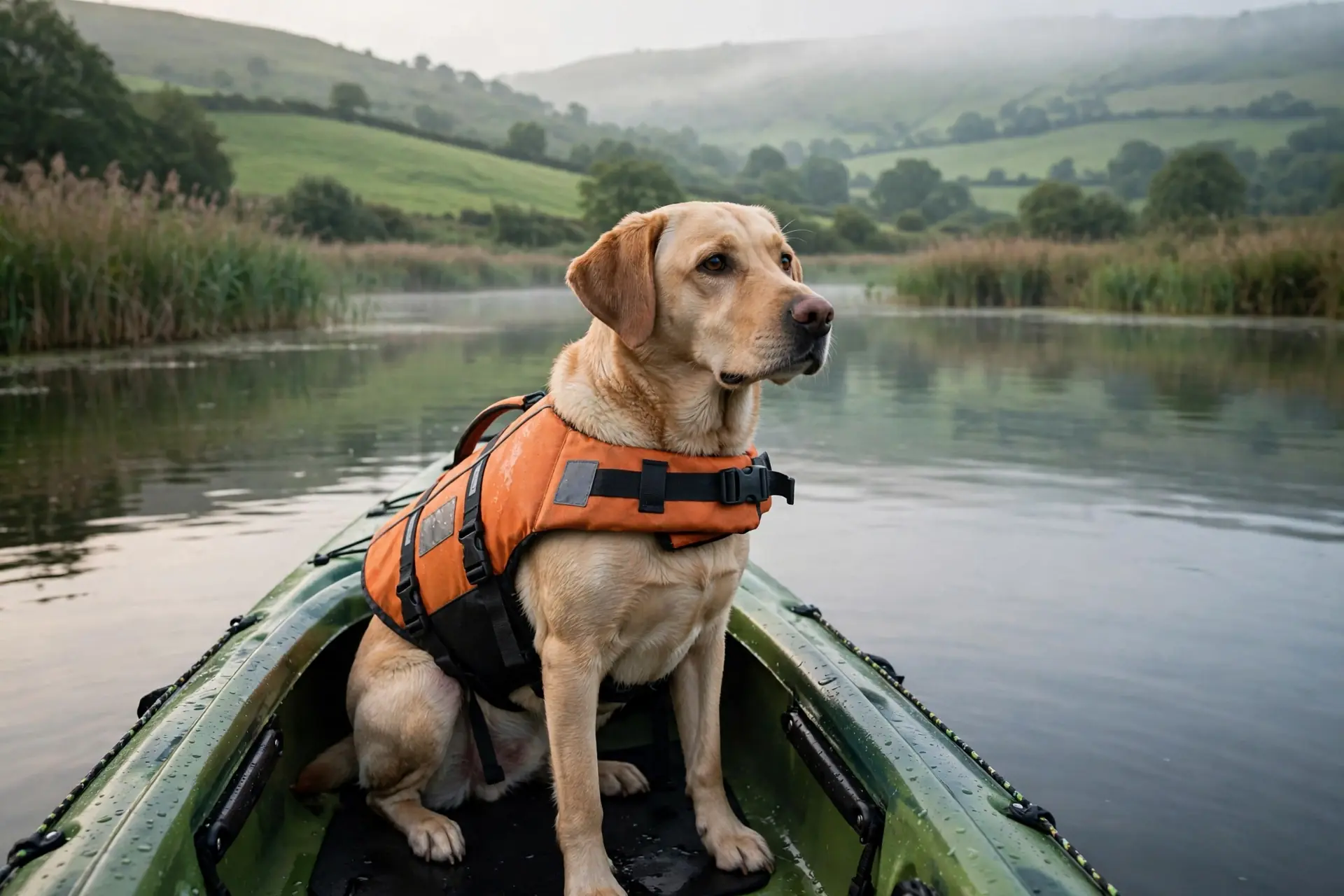
Second, check the jacket. The canine life jacket should fit snugly without restricting breathing or leg movement, with all straps fastened and the handle on top sitting where you can reach it from your seat. Slip two fingers under the chest strap: if you can fit a whole hand, it is too loose and could slide off in the water. Check for worn stitching, cracked buckles, and foam that has gone thin or lumpy after a season in storage. A jacket that fitted last summer may not fit this year, especially for a young dog that has grown.
Third, check the boat and the water. Is the kayak stable and wide enough for the dog's size, with a non-slip mat where the dog will sit? Are the bungs in, the hatches closed, and your own buoyancy aid fastened? Then look at the water itself: wind strength and direction, flow speed, boat traffic, and the forecast for the next two hours, not just the current moment. On a lake, wind can build a chop surprisingly fast; on a river, rain upstream can change the flow while you are out. If whitecaps are forming, if the current is pushing debris past at walking pace or faster, or if thunder is anywhere in the forecast, stay ashore.
Fourth, check permissions and the exit plan. Are dogs allowed at this launch site and on this stretch of water, and is there a bank or slipway where you can get out quickly if the dog needs a break? Know where the nearest road access point is downstream, carry a phone in a waterproof pouch, and tell someone ashore roughly where you are going and when you expect to be back. Pack water and a bowl for the dog, a towel, a spare lead, a first-aid kit, and a dry bag for your keys and phone. Only when all four checks pass should the dog step aboard.
- Dog check: healthy, toileted, watered, and calm after at least fifteen minutes ashore.
- Jacket check: snug fit, all straps fastened, handle reachable, no worn stitching or damaged buckles.
- Boat and water check: stable kayak, non-slip surface, your own buoyancy aid on, wind and flow within easy limits.
- Permission and exit check: dogs allowed here, a quick way out identified, phone charged and waterproofed.
- Kit check: dog water and bowl, towel, spare lead, first-aid kit, dry bag, and a change of clothes for you.
Write this list on a card and keep it in the dry bag for the first season. Experienced paddlers skip steps because they have done them a hundred times; beginners skip steps because they do not know them yet. A written list removes the difference, and it costs nothing.
Is your dog suited to a kayak?
Not every dog will enjoy a kayak, and enjoyment matters as much as safety: a miserable dog fidgets, shifts its weight without warning, and tries to climb out at exactly the wrong moment. The three questions to ask are about body, temperament, and swimming ability, and the honest answer to any one of them can rule a trip out.
Body comes first because it decides whether the boat can carry the dog safely at all. A kayak has a weight limit, and the dog's weight counts along with yours and the gear. A small terrier adds little; a large adult Labrador or German Shepherd can add thirty kilograms or more, which changes stability and freeboard noticeably. Very small dogs chill quickly in wind and spray and may need a jacket even on a warm day, while very large dogs need a boat wide and long enough that they can lie down without their weight sitting high and off-centre. Older dogs with arthritis may struggle with the step up into a kayak and the need to hold a position while the boat rocks; a low, stable sit-on-top with a gentle bank launch is far kinder than a narrow sea kayak launched from a jetty. Dogs recovering from surgery, dogs with heart or breathing conditions, and dogs that overheat easily should stay ashore — check the official guidance before you travel if you are unsure whether your dog's condition rules paddling out.
Temperament is the second test. The ideal first-time kayak dog is calm around new sounds, happy to settle on a mat for twenty minutes, and not prone to lunging at ducks, other dogs, or passing paddleboards. A dog that barks at every heron, chases anything that moves, or panics at the sound of splashing will turn a gentle paddle into a wrestling match. That does not mean such dogs can never paddle: it means they need longer land training, shorter first trips, and very calm water, in that order. Fearful dogs deserve the same honesty. A dog that freezes, trembles, or tries to bolt when it hears water lapping against a hull is telling you something, and the kindest response is to stop, go back to garden training, and try again another month.
Swimming ability is the third test, and it surprises people. Many dogs swim well; many do not, and breed is an unreliable guide. Bulldogs, pugs, dachshunds, and other short-legged or heavy-fronted breeds often swim poorly or not at all, while some spaniels and retrievers take to water instantly. Even a confident swimmer can struggle in cold water, against a current, or while wearing a waterlogged coat, and a dog that swims happily in a warm garden pool may panic in a deep, dark lake. Test swimming in a controlled place first: a shallow, gently shelving lake edge or a dog-friendly swimming pool, with the life jacket on and you standing in the water beside the dog. If the dog cannot swim calmly for a few minutes and climb out on its own, the kayak trip waits.
Age matters too. Puppies should wait until they are settled, fully vaccinated, and comfortable with water and new sounds, and their first trips should be very short and close to shore. Senior dogs can paddle happily if they are fit and the launch is easy, but they tire faster, chill faster, and need more frequent breaks. In both cases, the trip is built around the dog's limits, not the paddler's ambitions.
Gear, sized by your dog
Kayak gear for dogs is not one-size-fits-all, and the most common mistake is buying by breed label instead of by measurement. Measure your dog before you buy anything: chest girth at the widest point behind the front legs, neck circumference, and back length from neck to tail base. Write the numbers down and compare them with the manufacturer's size chart, because a jacket that is merely close in size will ride up, twist, or slip off when it gets wet. If your dog sits between sizes, choose the smaller size when the chest measurement is near the top of its range, and test the fit at home with the dog moving, sitting, and lying down.
For small dogs, up to about ten kilograms, the priorities are warmth, a secure fit, and a handle you can use with one hand. A small dog is easy to lift, which is an advantage in a rescue, but also easy to lose over the side if the jacket is loose, and quick to chill in wind and spray. Choose a jacket with a snug neck closure, a belly panel that stays put, and bright colours that stay visible against dark water. The kayak itself can be a standard tandem with the dog in the front cockpit, or a wide single with a mat in the bow area. Small dogs often prefer a slightly raised, enclosed-feeling spot where they can see you; a towel folded into a nest shape on the mat helps them settle. Bring a small fleece or drying coat for the bank afterwards, because a wet five-kilogram dog loses heat far faster than a wet thirty-kilogram one.
For medium dogs, roughly ten to twenty-five kilograms, balance becomes the main issue. This is the size range of spaniels, collies, and many mixed breeds: big enough to shift the boat's trim when they stand, light enough that owners underestimate the effect. Seat the dog low and centrally, ideally lying on a non-slip mat in the bow or front well, and train a solid "settle" on that mat before you launch. The life jacket needs a sturdy top handle and a chest panel that supports the dog horizontally in the water; test this in shallow water by lifting the dog by the handle and checking that the jacket stays level rather than tipping the dog nose-down. A medium dog also needs a longer lead for bank breaks and a bigger water bowl, and will drink more than you expect on a warm day.
For large dogs, over twenty-five kilograms, the boat matters more than any accessory. A narrow touring kayak will feel tippy with a large dog aboard, however calm the dog is, so choose a wide sit-on-top, a tandem, or a canoe-style kayak with a high weight capacity, and check that the combined weight of paddler, dog, and gear stays comfortably under the manufacturer's limit. The dog should lie in the largest flat area available, never perched on a narrow bow deck, and you should practise weight shifts on land: have the dog step in, lie down, and stand up while the boat is held steady at the bank, so you learn how much the boat moves before you are mid-lake. The life jacket for a large dog needs heavy-duty buckles and a handle rated for the dog's weight, and you should practise lifting the dog back aboard in shallow water, because a wet large dog is heavier and harder to handle than the same dog dry on land.
Beyond the jacket, the shared kit list is short but worth getting right. A non-slip mat is essential: wet plastic decks are slippery, and a dog that cannot grip will scramble, which rocks the boat. A dry bag holds your phone, keys, and car fob; a second small dry bag or zip-lock bag holds treats and a spare lead. Take a collapsible bowl and more water than you think the dog needs, because dogs cannot drink lake water safely everywhere and will not tell you they are thirsty until they are already panting hard. A towel is for the dog at the bank, not for the boat, where it becomes a sodden weight. Finally, wear your own buoyancy aid: a paddler who falls in while rescuing a dog is no help to anyone.
One more sizing note: re-measure every season. Dogs gain and lose weight, puppies grow, and older dogs lose muscle. A jacket that was perfect in May can be loose by September, and a mat that fitted a puppy will not fit the same dog as an adult. The five minutes spent measuring before the first trip of the year is the cheapest safety upgrade available.
Choosing calm water
Where you paddle matters more than how far you paddle. The best first waters for a dog are still, shallow-edged lakes and slow, wide rivers with easy banks, gentle access, and somewhere to get out every few hundred metres. The worst are fast rivers, tidal stretches, reservoirs with steep sides and sudden depth, and any water with a current that would carry a swimming dog away from the bank faster than you could paddle after it. Choose the water for the dog's first trip as if you were choosing a first swimming lesson, not a paddling challenge.
Calm lakes are the classic starting point. Look for a lake with a gently shelving shore, a designated launch area, and little or no motorboat traffic. Still water lets the dog learn the feeling of the boat without the added complication of current, and if the dog does fall in, you can reach it quickly and the bank is never far away. Lakes also make it easy to cut a trip short: paddle back to the launch, dry the dog, and go home with a success rather than pushing on because the river only flows one way. Check the local rules before you go, because some lakes restrict dogs at certain times of year, require leads on the shore, or ban dogs from swimming areas during the summer. If you are unsure, check the official guidance before you travel.
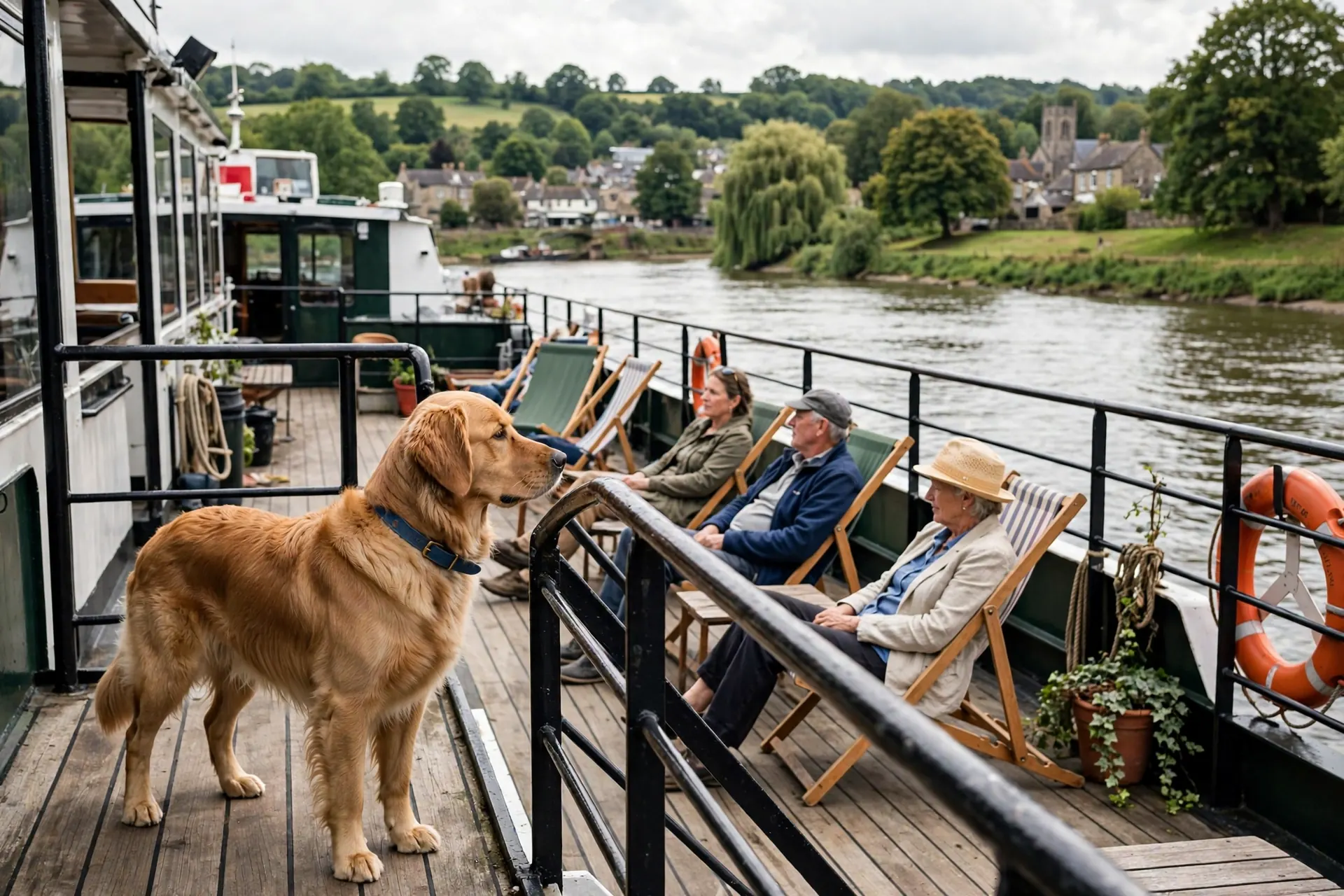
Slow rivers can work well once the dog is confident, provided you choose the right stretch. Look for wide, slow-moving water with a gentle flow, grassy banks, and no weirs, locks, or fast narrows on your route. Paddle upstream first so the return journey is easier, and plan an exit point before you start rather than assuming one will appear. Avoid rivers after heavy rain, when the flow is higher, the water is murkier, and debris is moving; avoid narrow channels where the current quickens, and never paddle a stretch you have not checked for weirs, because a weir that looks small from upstream can be dangerous for a dog in the water. If you enjoy bigger boats as well as kayaks, our guide to dogs on river cruises in the UK covers deck rules, boarding, and shore walks on calmer, crewed waterways.
Some waters should simply be ruled out for dogs. Fast-flowing rivers, tidal estuaries, and sea kayaking in waves are advanced paddling that most dogs should not be part of, however confident the paddler. Reservoirs often have steep concrete edges that make it hard for a dog to climb out, and some ban dogs from the water entirely. Nature reserves may restrict dogs during bird breeding season, and canals, while calm, bring their own hazards: deep, steep-sided water, towpath cyclists, and locks that dogs must be kept well away from. Blue-green algae is a seasonal danger on lakes and slow rivers in warm weather: if the water looks green, scummy, or paint-like, or if warning signs are posted, keep the dog out of the water completely and check the official guidance before you travel.
Whatever water you choose, time the trip for the dog. Early morning is often calmest, with less wind and fewer other water users, and it avoids the midday heat that makes dogs overheat. Keep the first trip to twenty or thirty minutes on the water, with a bank break in the middle if possible, and build up gradually over several outings. A dog that has had three short, happy trips will be a far better paddling companion than a dog that endured one long, tiring one.
Boarding and launch training
Most kayak problems with dogs start at the bank, not on the water. A dog that leaps into a kayak from a jetty, scrambles across the deck, or tries to jump out mid-lake is not being naughty; it has simply never been taught what to do. Training in stages, on land first, solves nearly all of it, and the whole programme takes a couple of weeks of short sessions rather than a single heroic afternoon.
Stage one is the mat. At home, teach the dog to go to a mat and lie down on it on cue, and to stay there while you move around, make odd noises, and rock gently from side to side. Reward calm settling, not just arriving on the mat, and build the duration gradually to several minutes. This mat becomes the dog's place in the kayak, so use the same mat you will take on the water, and practise on different surfaces: grass, gravel, a wooden deck, and a slightly wobbly board if you have one. A dog that can settle on its mat anywhere will settle in a boat.
Stage two is the boat on land. Put the kayak on grass, steady it, and let the dog investigate it without pressure: sniffing, putting paws on the side, and being rewarded for calm curiosity. Then lure the dog in, ask for the mat position, and reward settling. Rock the boat gently by hand while the dog is aboard, a little more each session, and reward the dog for staying relaxed rather than jumping out. Practise the dog stepping in and out on cue, and practise you stepping in and out while the dog waits on the mat: the boat will move when your weight shifts, and the dog needs to learn that movement is normal, not a reason to panic.
Stage three is shallow water at the bank. With the kayak in a few inches of water, held steady by a helper or beached on a gentle slope, repeat the boarding exercise. Let the dog feel the boat float and move slightly, keep sessions to a few minutes, and end each one with the dog stepping out calmly and getting a reward on the bank. If the dog jumps out, do not chase or scold; simply reset, shorten the session, and try again another day. Only when the dog boards, settles, and stays relaxed in shallow water should you paddle a few strokes away from the bank.
Stage four is the first real paddle. Choose a calm lake, a windless morning, and a route that stays within a few minutes of the launch. Paddle gently, talk calmly to the dog, and stop regularly so the dog can look around without the boat moving. Keep it to twenty minutes, finish with the dog stepping out calmly, and follow with a bank walk and a drink. If the dog is relaxed and keen to get back in, you have a paddling dog. If the dog is stiff, panting, or reluctant, you have useful information: go back to stage two for a week and try again shorter. There is no deadline, and a dog that learns to love the boat slowly will enjoy it for years.
Launch technique deserves a note of its own. Always board the dog before you get in, with the boat held steady and beached or in very shallow water, and always get out first at the end, holding the boat while the dog steps out. Never lift a dog into a floating kayak from a high jetty if you can avoid it: the drop, the movement, and the height combine to frighten even confident dogs. A gentle bank launch, with the boat's side against the shore and someone steadying it, is worth a short walk to find.
Managing the trip afloat
Once you are moving, your job changes from trainer to manager: keep the dog settled, comfortable, and safe, and read the dog's body language the way you would read the water. A relaxed paddling dog lies down, watches the banks, rests its head on its paws, and occasionally looks back at you. A stressed dog pants hard, paces, whines, stands repeatedly, licks its lips, or tries to climb towards you. The correct response to stress is almost always the same: stop paddling, let the boat drift or hold it steady, speak calmly, and head for the nearest bank. Pushing on in the hope that the dog will settle usually achieves the opposite.
Thirst is the most underestimated problem on a kayak trip. Dogs cannot drink from the lake safely in every location, and they lose water through panting even on a mild day, faster in wind and sun. Offer water at every bank stop and at least every twenty minutes on longer trips, using a bowl the dog can drink from without the boat rocking: hold the bowl low and steady, or stop and rest the paddle across your lap while the dog drinks. Bring more water than you think you need, because a dog that has been swimming or splashing will drink more, and because you may need water to cool the dog down. Signs of dehydration include a dry nose and gums, thick saliva, lethargy, and loss of skin elasticity; if you see them, get ashore, offer small amounts of water frequently, and end the trip.
Overheating is the greater danger on warm days. Dogs cool themselves mainly by panting, which is inefficient in humid air and impossible to do well while stressed, and a life jacket adds insulation. Watch for heavy panting that does not ease when you stop, bright red gums, drooling, wobbling, or vomiting: these are signs to get ashore immediately, move the dog to shade, wet the belly and paws with cool (not ice-cold) water, and offer small sips. Do not wrap a hot dog in a wet towel, which traps heat, and do not plunge it into cold water, which can cause shock. On hot days, paddle early, keep trips short, and choose shaded banks for stops. If the air temperature is high and there is no shade or breeze, the kindest choice is a walk in the woods instead.
Falling in is not a disaster if you have prepared for it. Stay calm, keep your own weight low and central, and do not lunge across the boat, which is how kayaks capsize. Talk to the dog, reach for the jacket handle, and lift the dog back aboard hindquarters first if you can manage it, guiding the dog onto the mat rather than over the side. If the dog is a strong swimmer and close to the bank, it may be easier and safer to tow the dog gently to the shore by the handle while you paddle slowly beside it. Once the dog is back aboard or ashore, dry it, check for swallowed water, coughing, or distress, and end the trip if the dog is shivering, vomiting, or unusually quiet. A dog that has inhaled water can develop problems hours later, so watch the dog for the rest of the day and seek veterinary advice promptly if breathing changes or coughing persists; check the official guidance before you travel if you are unsure what to watch for.
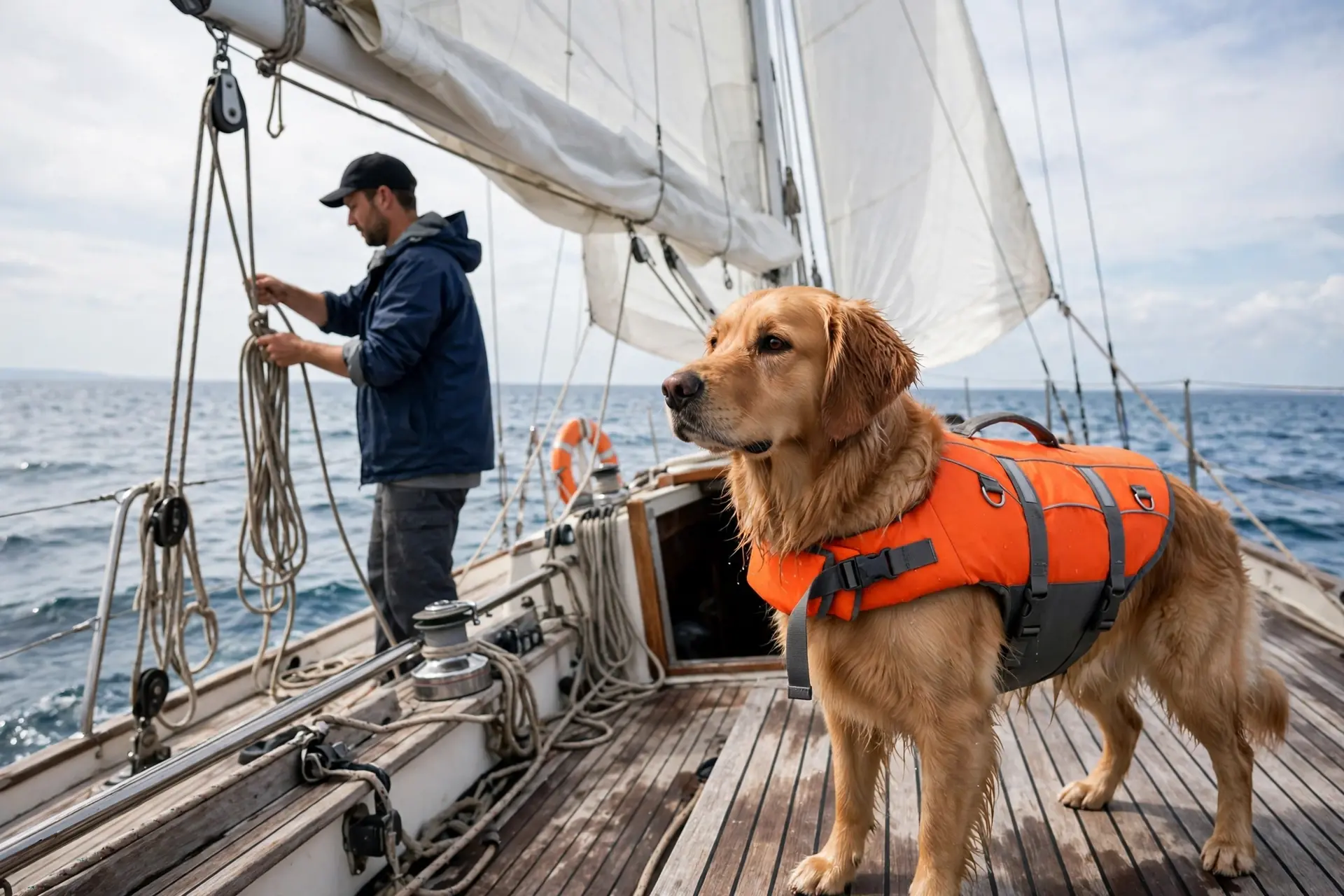
Capsize is rarer, but worth thinking through before it happens. If you capsize with a dog aboard, your first job is your own safety: keep hold of your paddle if you can, stay with the boat, and get yourself to a position where you can breathe and think. The dog, in its life jacket, will usually surface and swim; call it to you, hold the jacket handle, and tow the dog to the bank or to the upturned boat, which the dog may be able to climb onto. Do not try to right a loaded kayak in deep water while holding a panicking dog. Practising a capsize drill without the dog, in shallow warm water, teaches you how your boat behaves and how long righting it takes; that knowledge is worth more than any piece of gear. For dogs that prefer larger, more stable craft altogether, our guide to dogs on sailing boats in the UK covers deck safety and life jackets for bigger boats and open water.
Wildlife and other water users need management too. Ducks, swans, and other dogs on the bank are powerful distractions, and a dog that lunges at a swan can capsize a kayak or end up in the water with an angry bird. Keep the dog on its mat with a short lead attached when passing wildlife, steer a wide line around nesting birds, and give other paddlers, anglers, and swimmers plenty of room. Anglers in particular deserve a wide berth: hooks, lines, and bait are hazards for a curious dog, and a quiet stretch of bank is someone's fishing spot, not a landing stage. A calm, predictable paddler with a settled dog is welcome on the water; a chaotic one is remembered for the wrong reasons.
Finally, manage your own expectations. A kayak trip with a dog is slower, shorter, and less ambitious than the same trip alone, and that is the point. The best dog paddles are unremarkable: a gentle lake, a settled dog, a short route, and a happy return to the bank. If you find yourself pushing for distance, speed, or a particular destination, check whether you are paddling for yourself or for the dog, and adjust accordingly.
After the paddle: cleaning and ear care
The trip is not over when the boat is back on the car. A wet dog that is bundled into a car and driven home without care can chill, develop skin irritation, or carry lake water into its ears for hours. Spend ten unhurried minutes at the bank before you leave, and the dog will travel home comfortable and dry.
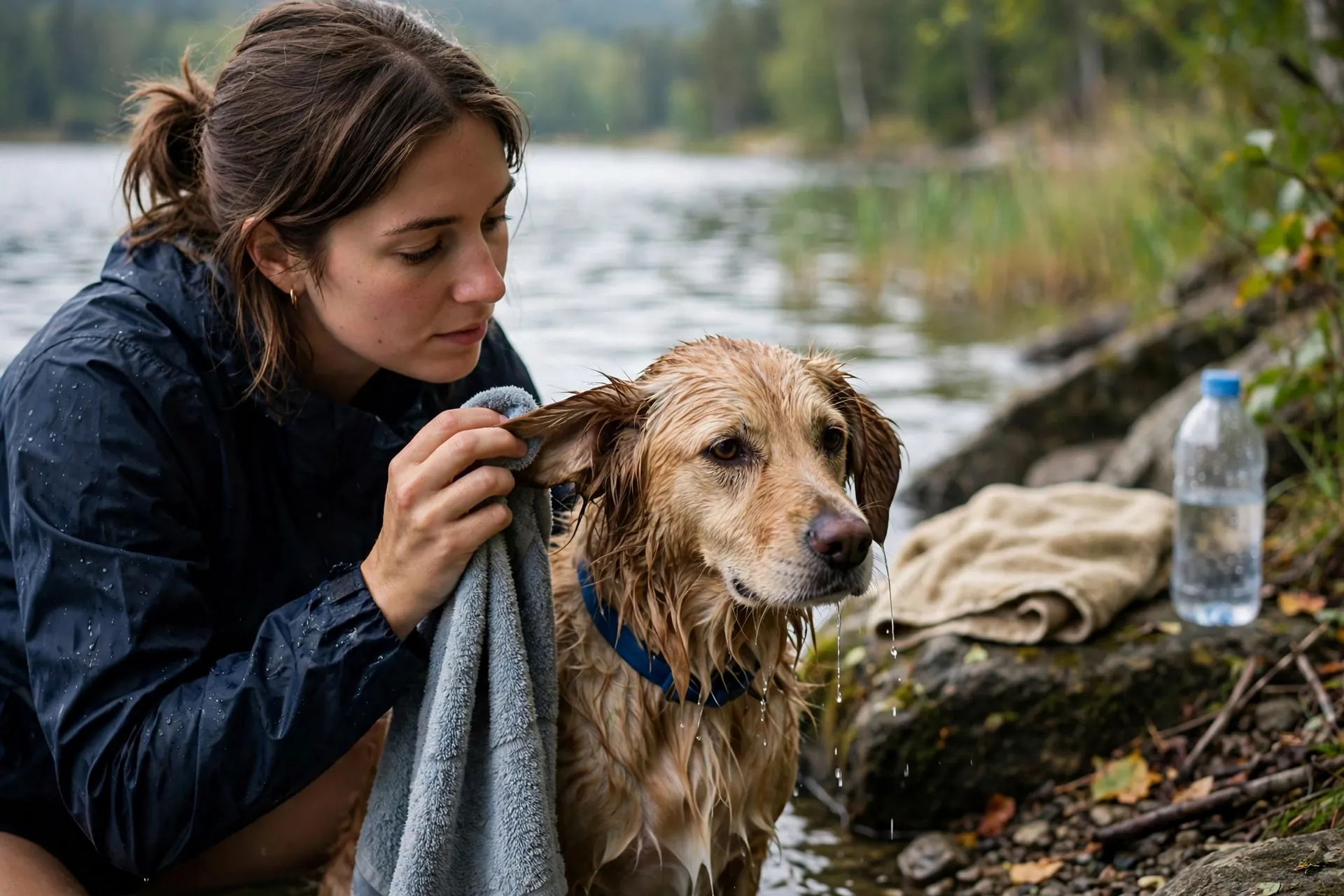
Start with a rinse if fresh water is available. Lake and river water can carry mud, algae, and bacteria, and a quick rinse with clean water removes most of it. Towel-dry thoroughly, paying attention to the belly, armpits, groin, and between the toes, where moisture lingers and mud packs in. Check the paws for cuts, grit, or trapped stones, and check the coat for ticks, especially after paddling near reeds and long grass. Put on a drying coat for the journey home if the day is cool or the car has air conditioning, and give the dog water before setting off. Do not leave a wet dog in a cold car while you load the boat: load the boat first, or ask a companion to stay with the dog.
Ear care deserves its own routine, because ears are where a fun paddle most often turns into a vet visit. Water trapped in the ear canal, especially in floppy-eared breeds such as spaniels and retrievers, creates a warm, damp environment where yeast and bacteria thrive. After every paddle, dry the outer ear gently with a towel, let the dog shake its head naturally, and look inside the ear flap for redness, swelling, smell, or dark discharge. Watch over the next day or two for head shaking, pawing at the ear, tilting the head, or reluctance to have the ear touched: these are early warning signs worth acting on. If you use an ear-cleaning product, use only one recommended for dogs and follow its instructions; never push cotton buds into the ear canal, and check the official guidance before you travel if you are unsure which product suits your dog. Our full guide to dog ear care after swimming covers drying technique, cleaning, and the signs that mean a vet visit.
Gear needs the same attention. Rinse the life jacket in fresh water, hang it to dry out of direct sunlight, and check the buckles and stitching before it goes back in the cupboard. Wash the mat, empty and dry the dry bags, and air the kayak's cockpit so it does not develop mould. A jacket that is put away wet and muddy will smell, stiffen, and fail sooner, and a mat left damp in the boat will be unpleasant for the dog next time. Ten minutes of gear care after each trip extends the life of everything you bought and means the next launch starts clean.
Finally, debrief the dog. Was the dog relaxed or stressed? Did it settle quickly or pace? Did it drink enough, and did the jacket fit well when wet? Note what worked and what did not, and adjust the next trip: shorter route, different lake, better mat, or more training. Dogs improve as paddling companions over a season, not over a single outing, and the owners who enjoy it most are the ones who treat each trip as practice for the next one. Keep a simple log — date, water, duration, and how the dog coped — and patterns will emerge quickly: the dog that loves still lakes but hates rivers, or the dog that settles after ten minutes every time. That log is worth more than any amount of new gear.
A last word on seasons. Spring and early summer offer the calmest water and the warmest banks, but also the busiest launch sites and the start of algae season. Autumn brings quieter water and cooler air, which many dogs prefer, but shorter days and colder water, so trips get shorter and drying matters more. Winter paddling with a dog is for experienced pairs only: cold water, short daylight, and a dog that chills fast is a combination that punishes mistakes. Whatever the season, the rule stays the same: calm water, a fitted jacket, a trained dog, and a trip that ends while it is still fun.
Practical questions
Before you go
Does my dog need a life jacket on a kayak?
Yes. Even strong swimmers tire, panic or get caught by cold water, and a jacket with a top handle lets you lift the dog back aboard. Choose one by chest and neck measurement, not by breed label, and test the fit on land first.
What size kayak is best for a dog?
A stable, wide sit-on-top or a tandem kayak usually works best, because the dog gets a flat, low space of its own. Small dogs can ride in the front cockpit of a tandem; medium and large dogs need the bow area or a dedicated front well, never a cramped sealed cockpit.
Can puppies go kayaking?
Wait until the puppy is settled, fully vaccinated and comfortable with water and new sounds, and keep the first trips very short and close to shore. Puppies chill and tire quickly, so a calm lake, a warm day and a quick exit matter more than distance.
What should I do if my dog falls in?
Stay calm, keep the kayak steady and use the jacket handle to lift the dog back aboard, hindquarters first if you can. Then paddle to the nearest bank, dry the dog, check for swallowed water and coughing, and end the trip if the dog is shivering, vomiting or unusually quiet.
Are dogs allowed on every lake and river in the UK?
No. Access rules vary by waterway, landowner and season, and some reservoirs, nature reserves and stretches of river ban dogs or require leads. Always check the official guidance before you travel, and confirm launch permission with the operator or landowner.
How do I protect my dog's ears after kayaking?
Dry the outer ears gently with a towel, let the dog shake, and watch for head shaking, scratching, smell or redness over the next day or two. Floppy-eared dogs are more prone to trapped moisture, so check the official guidance before you travel if you are unsure about ear cleaning products.