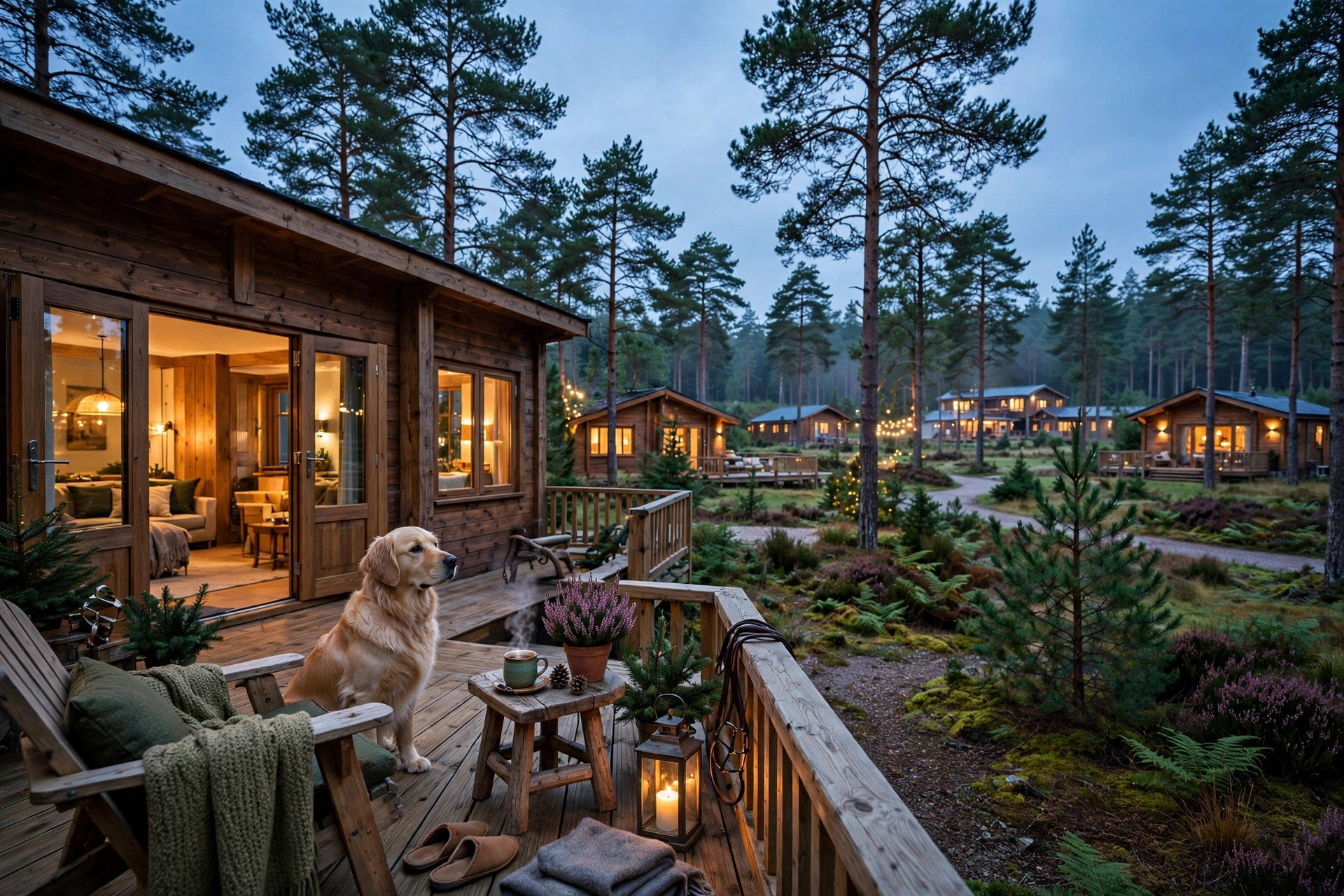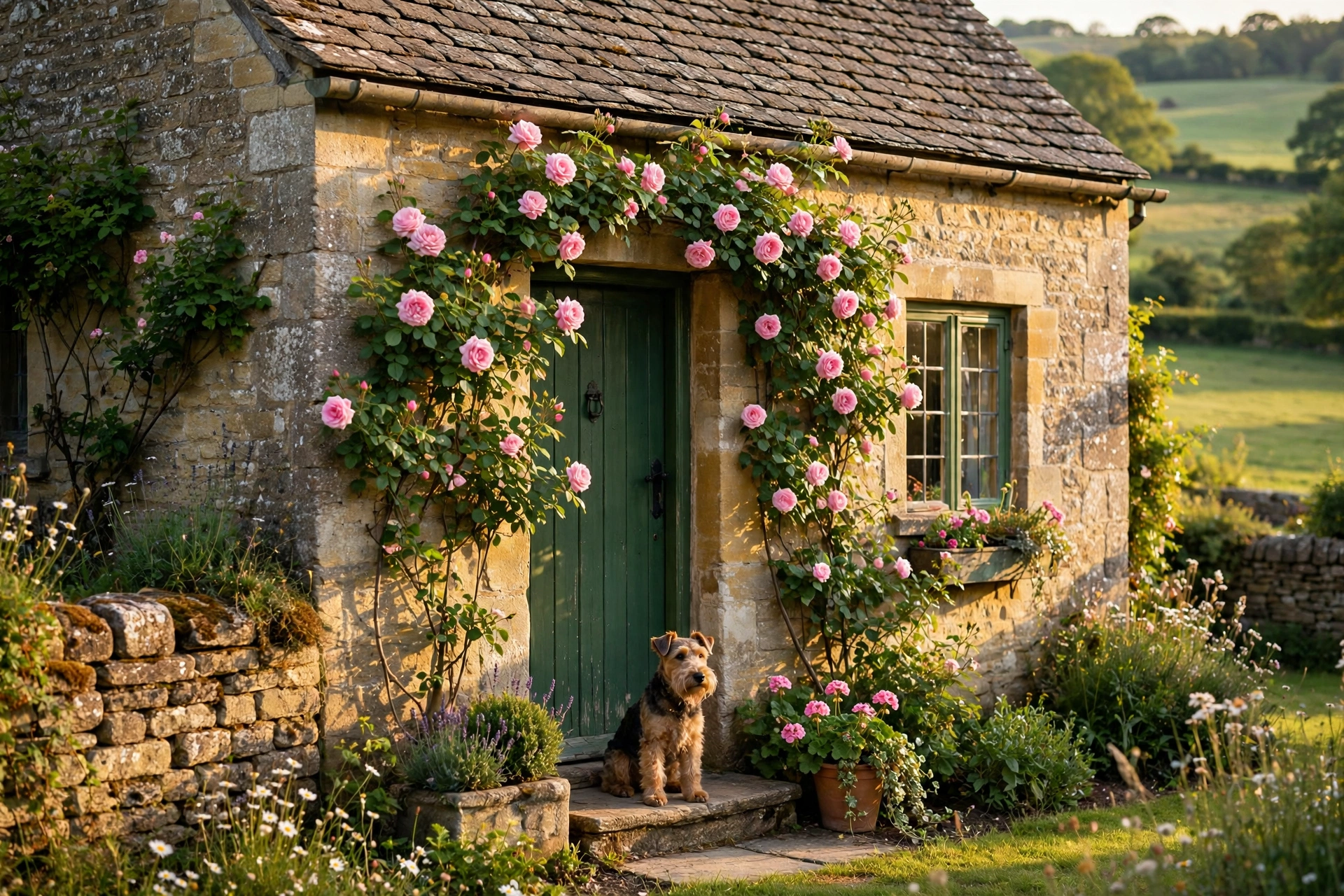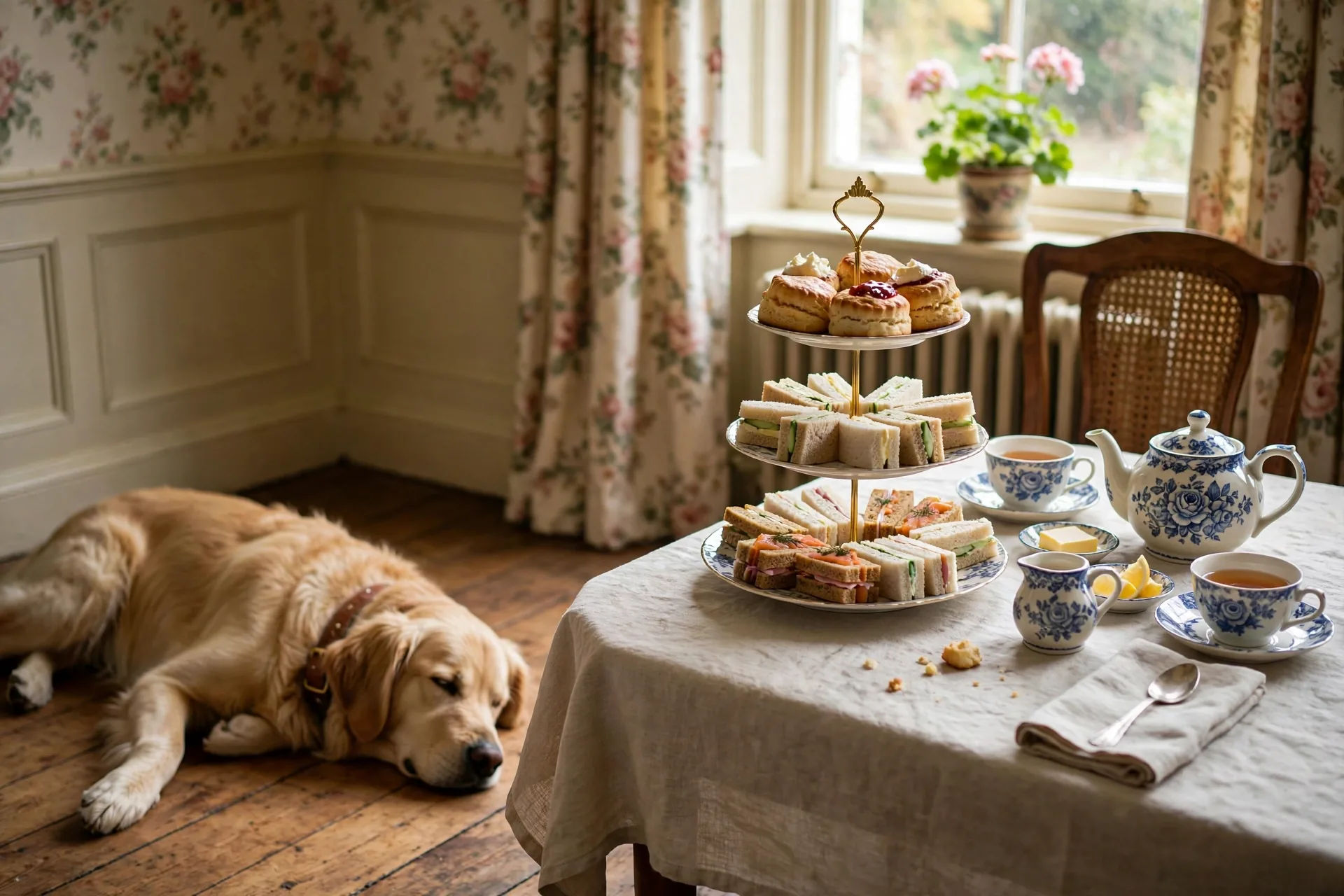
This guide is independent and contains no paid placement. If affiliate links are added later, they will be clearly marked and will not change our editorial checks.
Yes, many UK venues welcome dogs at afternoon tea — but it is not a normal tea with a dog tolerated in the corner. Book a venue that seats dogs in a named room, confirm the lead, size and settling rules in writing, walk your dog beforehand, and bring their own mat, water and treats so the human food stays on the stand.
Start with the booking, not the cake
Picture the scene that causes most problems. A table is reserved for two people, the confirmation says nothing about a dog, and the party arrives with a large, wet, excited animal at the busiest sitting of the week. Staff then improvise: a cramped table by the door, a rushed conversation about leads, and neighbouring guests who had booked a quiet celebration. Nobody has behaved badly, yet the afternoon is strained from the first minute because the dog was never part of the plan on paper.
Now reverse the order. The reservation names the dog, the venue assigns a corner table with floor space, the kitchen knows a dog menu item is wanted or not wanted, and the host on the door is expecting four legs as well as two. That is the entire secret of this particular outing. Afternoon tea is a slow, seated, food-heavy ritual, so etiquette begins with admin: an honest phone call, a clear email trail and a table chosen for a animal who needs to lie down out of the walkway.
It also helps to be realistic about which dogs enjoy this format at all. A dog who can settle on a mat in a pub for an hour will usually manage tea. A puppy still learning to ignore dropped food, a dog who guards high-value items, or one who lunges at waiters carrying trays is not being excluded unfairly when you choose a walk and a café instead. The kind option is sometimes a shorter outing first, building up to a full sitting once the settle is reliable.
Finding tea rooms that mean it
Search using the exact phrase dog friendly afternoon tea plus your town or county, then read past the headline result. Many venues describe themselves as dog-welcoming because dogs may sit on a terrace in summer, while the afternoon tea itself is served in an indoor room where pets are not admitted. Look for three concrete signals: a dedicated booking option or menu page mentioning dogs, a named indoor space where dogs are seated, and recent reviews or photos showing dogs inside rather than only in a garden.
Hotel websites tend to bury the detail inside pet policy pages, so search the site for words such as lounge, bar, terrace and assistance dogs to work out where pet dogs actually go. Independent tea rooms often explain themselves better on social media than on a formal website, but a cheerful photograph is still not a policy. Garden centres, farm shops and heritage properties can be excellent middle ground, although their tea may be a simpler cream tea rather than a full three-tier service.
Treat directories and round-ups as leads, not proof. Policies change with new managers, refurbishments and food hygiene reviews, and a listing written two years ago may describe a room that no longer exists. Before travelling, check the venue's own current pages and then confirm by phone or email. If you are comparing everyday options rather than a formal tea, our guide to dog-friendly cafés across the UK covers walk-ins, water bowls and muddy-paw practicalities in more depth.
- Strong evidence: a booking form with a dog field, a stated room for dog parties, a maximum number of dogs per table, and a named dog treat or water provision.
- Weak evidence: a single stock photograph, the phrase “four-legged friends welcome” with no location, or reviews that only mention an outdoor bench.
- Warning sign: staff who cannot say whether dogs sit indoors, because that uncertainty usually lands on you at the door.
Questions to ask when you reserve
Afternoon tea is frequently prepaid, deposit-backed or made to order, which makes vague arrangements expensive. Ask these questions before money moves, and keep the answers with your confirmation email. A good venue will not be offended; clear questions mark you out as the sort of dog owner they want back.
- Which room will we sit in? Lounge, bar, drawing room, conservatory and main dining room are very different experiences. Confirm the dog is booked into the same space as the food, not merely allowed somewhere on the premises.
- Is there a size, number or breed limit? State your dog's size honestly. Two large dogs under one small table is a practical problem even where no formal limit exists.
- Where should the dog lie, and must the lead stay on? Some venues require a short lead attached to a chair leg or held throughout; others allow a mat beside the table. Ask whether extending leads are banned, as they should be in any serving area.
- What happens about water and dog food? Check whether a bowl is provided, whether you may bring your own treats, and whether any dog menu item must be ordered in advance.
- How long is our sitting, and are there toilet breaks? Timed sittings of ninety minutes are common. Ask where the nearest outdoor relief area is and whether you can return to the table after a short break.
- What is the cancellation position if the dog is unwell? Menus are prepared in advance, so late changes may be charged. Clarify whether the booking can move to another date rather than disappearing entirely.
- Are children, other dogs or events expected at that sitting? A wedding showcase or a children's party tea changes noise levels. Choosing the first weekday sitting often buys a calmer room.
Finish the call by repeating the arrangement back in one sentence: date, time, number of people, number of dogs, room, total price and any dog charge. If the reply by email differs from what you heard, query it the same day rather than at the table.
Three kinds of venue, three trade-offs
Hotel lounges and drawing rooms usually deliver the most polished service: trained staff, spacious tables, reliable booking systems and a kitchen used to dietary requests. The trade-offs are price, formality and placement. Dog parties are often seated in a lounge or bar annexe rather than the signature restaurant, which is no hardship if the same menu arrives, but worth knowing if you had pictured a particular room. Hotels may also impose smarter dress expectations and stricter sitting times.
Garden tea rooms and heritage properties suit dogs who need an outdoor break close at hand. A walk before and after tea fits naturally, staff are often relaxed about muddy weather, and gardens give restless dogs visual space. The compromises are weather exposure, wasps in late summer, uneven ground for older dogs and menus that may stop at scones, cake and sandwiches rather than a patisserie selection. Properties covered in our guide to visiting National Trust places with dogs illustrate the pattern well: cafés, gardens and indoor access each carry separate rules on the same site.
Independent high-street tea shops can be the warmest welcome of all, with owners who know regular dogs by name and flexible portions for smaller appetites. Space is their constraint. Tables sit closer together, queues form at the counter, and a big dog can block a serving route without anyone intending a problem. Book the largest table offered, arrive exactly on time, and avoid peak Saturday lunch if your dog needs room to stretch out.
Whichever type you choose, the decisive factor is floor geometry, not chandeliers. A modest café with a genuinely spare corner beats a grand hotel that squeezes your dog between chair legs and a swinging kitchen door.
Table foods that can poison a dog
An afternoon tea table concentrates several foods that are dangerous to dogs within paw and nose reach, at exactly the height a hopeful dog finds interesting. Prevention is simple: the stand stays in the centre of the table, plates never rest on the floor, and dropped items are picked up immediately rather than left for staff. If your dog does eat something on this list, contact a vet promptly for advice, ideally with the ingredient and a rough quantity. Rules and product recipes change, so check the venue's latest menu information and your vet's current guidance if you are unsure.
- Chocolate: present in cakes, mousses, truffles and drinking chocolate. Darker chocolate carries more theobromine, and even small amounts matter for small dogs.
- Raisins, sultanas and currants: hidden in fruit scones, tea breads and some chutneys. Grapes and their dried forms can cause serious kidney problems, with no reliable safe quantity.
- Xylitol, also labelled birch sugar: a sweetener found in some sugar-free cakes, mints, chewing gum and peanut butters. It is extremely dangerous to dogs and may not be obvious from a menu description.
- Onion, garlic, leeks and chives: may appear in sandwich fillings, quiches, chutneys and savoury scones. These allium plants can damage red blood cells, and effects may be delayed.
- Macadamia nuts and nut-heavy bakes: macadamias are a particular hazard, and any rich nut cake adds a large fat load. Keep marzipan, praline and nut brittle out of reach as well.
- Alcohol and caffeine: celebration teas may add sparkling wine, liqueur cakes or coffee. None belongs in a dog bowl, and cups left on low tables are an easy accident.
- Cooked bones and rich leftovers: cooked bones can splinter, while fatty sandwich trimmings and cream can trigger stomach upsets or, in susceptible dogs, pancreatitis. Rich food is a risk even when it is not strictly poisonous.
Brief everyone at the table before food arrives, including well-meaning relatives who believe one small piece cannot hurt. A single instruction, repeated kindly, prevents the awkward mid-meal negotiation that dogs find so encouraging: nobody feeds the dog except the owner, and the owner uses only the treats they brought.
Table manners for ninety quiet minutes
Prepare the dog before you prepare yourself. A walk of thirty to forty-five minutes ending shortly before the sitting, with time for sniffing and a toilet stop, sets up a genuine rest rather than an exhausted fidget. Arrive a few minutes early, let your dog look at the entrance and settle outside for a moment, then go in once rather than repeatedly entering and leaving. A familiar mat placed under or beside the table gives a clear job: lie here, on this, and good things will arrive quietly.
Position matters. The dog should be on the floor, never on a chair or banquette, with the lead short enough to prevent wandering but loose enough to lie comfortably. Tuck bags and coats out of the serving path, keep the lead away from table legs where a sudden stand can drag crockery, and choose the side of the table furthest from the kitchen route. Reward calm behaviour at intervals with a treat delivered low and quietly, not with ceremony that attracts the room.
Manage the predictable pressure points. Trays passing overhead, dropped cutlery, other dogs arriving and children approaching can all break a settle. Ask approaching adults to let the dog rest, position yourself between your dog and the busiest aisle, and take a short outdoor reset before frustration builds rather than after barking starts. If a lick mat or long-lasting chew is allowed, save it for the sweet course when human attention drifts. Venues differ on chews that smell strong, so check at booking and skip anything pungent.
End as neatly as you began. Check under the table for dropped food, wipe muddy paws if the weather demanded it, and leave the floor as you would wish to find it. Staff remember tidy dog parties, and that memory is the reason the next booking is easy.
Prices, dress codes and lead rules
Expect a wide spread. A simple café cream tea with a dog at your feet might cost under £10 per person, while a full served afternoon tea in Britain commonly falls between about £20 and £40 per person at regional hotels and independent venues, rising to £50 and well beyond at famous London hotels or for special seasonal menus. Celebration versions with sparkling wine, gift items or live music cost more again. Prices change frequently, so treat these figures as budgeting bands and confirm the current menu price, service charge and deposit terms on the venue's own pages before you travel.
Dogs are rarely charged as guests in their own right. Where a charge exists it is more likely to be a small supplement, a refundable good-behaviour deposit at a hotel, or the price of an optional dog menu item. Ask for the complete total per booking, including the human service charge, so comparisons between venues stay honest. If the tea is part of a longer trip, the budgeting approach in our weekend breaks with dogs plan helps place a treat like this inside a wider itinerary without it swallowing the whole budget.
Dress codes have relaxed in most British venues, but smart casual remains the safest interpretation: clean shoes, no sportswear at formal hotels, and nothing you mind a dog hair finding. The dog has a dress code too, in practical terms. A standard fixed lead and a flat collar or harness are the norm, extending leads are widely disliked in dining spaces, and muddy coats may be asked to stay at the door. Assistance dogs are a separate legal category and are not subject to pet rules; this guide is written for pet dogs joining a leisure booking.
A short packing list that earns its place
Afternoon tea needs less kit than a day hike, but the right five items prevent most problems. Pack the night before, because sittings are timed and a delayed start compresses the calmest part of the experience.
- A settle mat or familiar blanket: defines the dog's place, protects venue floors from wet fur and carries a home smell that speeds relaxation.
- A short fixed lead: keeps the dog close without the trip hazard of an extending line, and clips or loops safely out of walkways.
- Water and a travel bowl: some venues provide a bowl at the door rather than at the table, so carrying your own avoids a thirsty wait.
- Familiar treats and, if allowed, a quiet chew: rewards that do not smell strongly and ingredients your dog already tolerates well.
- Poop bags and a small towel: for the pre-tea walk, muddy paws at the entrance and any rain shower between car and door.
- A spare layer for you: garden rooms and conservatories can run cool, and a comfortable owner stays for the full sitting instead of rushing.
- Booking confirmation on your phone: the email naming the dog, the room and the price settles any confusion at reception in seconds.
Rain, heat and other British weather
Rain changes the etiquette more than the menu. A soaked dog shakes, and a conservatory full of white table linen is the wrong stage for it. Towel your dog thoroughly before entering, ask staff where they would prefer a wet dog to sit, and consider whether a muddy garden-room booking should move indoors or to another day. Waterproofs for the owner belong on a hook or in a bag, not draped over the dog's resting space, and extra time for the pre-tea walk keeps the rush out of your arrival.
Summer brings the opposite hazards. Glass-roofed rooms heat up quickly, terraces can offer little shade at midday, and wasps gather around jam from July onwards. Choose earlier or later sittings in hot weather, confirm shade at the table rather than somewhere across the garden, keep water topped up, and never leave the dog in a car while you finish a course. Dogs who chase insects belong away from open jam pots, and everyone should agree a plan for moving inside if the temperature climbs. On genuinely hot days, rebooking is a reasonable decision rather than a failure.
Between seasons, light levels and closing times shift plans quietly. A late-afternoon sitting in November ends in darkness, so bring a lead light for the walk back to the car and check the car park surface for ice in winter. None of these details appear on a glossy menu page, yet they decide whether the memory is of cake or of logistics.
Practical questions
Before you go
Can my dog join afternoon tea in the main room, or only outside?
It depends entirely on the venue. Some hotels seat dog parties in a lounge or bar area rather than the formal dining room, garden tea rooms often allow dogs indoors but not near food preparation, and many terraces are seasonal. Ask which room your reservation actually covers before paying, especially in winter when an outdoor-only rule changes the whole plan.
Do places charge extra when a dog comes to afternoon tea?
Most venues do not charge for a well-behaved dog, but some add a small fee, take a refundable deposit, or sell an optional dog menu item such as a bakery treat made for dogs. Any charge should be confirmed in writing with the booking total, so it does not appear as a surprise on the final bill.
Is it safe to give my dog a little scone or sandwich?
Plain, tiny tastes are usually a poor idea at the table, even when a single ingredient seems harmless. Scones may contain raisins, sandwiches can hide onion, garlic or rich fillings, and cakes bring chocolate, sweeteners and large amounts of fat. Feeding from the stand also teaches begging. Bring your dog's own treats and keep every part of the human menu out of reach.
How long does afternoon tea usually take, and can we pause halfway?
Allow around ninety minutes to two hours for a full served tea, longer for large groups or special menus. A short toilet and stretch break between courses is normal in relaxed venues if you tell staff first. Hotels with timed sittings may be less flexible, so raise the question when you book rather than assuming you can drift in and out freely.
What if my dog barks or will not settle during the sitting?
Step outside calmly for a walk around the block, let your dog sniff and toilet, then try once more in a quieter corner if staff can move you. If settling still fails, ask for the remaining items to be boxed up. Leaving early without fuss protects other guests, keeps your welcome intact for next time and is kinder than battling through.
Can my dog have its own afternoon tea or doggy menu?
Some venues offer a doggy menu, puppuccino-style treats or a small plate for dogs, but most do not — and you should never share chocolate, grapes, raisins, onion or rich cream cakes with your dog. Bring your dog's own treats and water, and ask the venue in advance what it provides.