This guide is independent and contains no paid placement. If affiliate links are added later, they will be clearly marked and will not change our editorial checks.
A good 48-hour break needs fewer pins on the map: a realistic travel radius, one dependable walk, one weatherproof meal, and enough empty time for the dog to settle. Plan the arrival routine and the weather backup before you leave, and the weekend will feel spacious instead of rushed.
Draw a travel-time radius
For two nights, the journey is part of the break — and the journey happens twice. Start with the longest door-to-door time your dog handles comfortably, not the furthest destination you fancy. For many dogs that is two to three hours with a planned stop; for some it is less, and that is fine. Draw that radius on the map and search inside it. A celebrated viewpoint three counties away is not better than a good wood an hour away if Friday evening dissolves into stop-start traffic with a whining dog in the back.
Be honest about the kind of travel too. Motorway miles are dull but predictable; cross-country lanes are scenic but slow, and slow lanes after dark in rain are nobody’s idea of a holiday start. If you are travelling by train rather than car, check the dog rules and the change pattern before committing — our guide to taking dogs on UK trains covers the planning in detail. Wherever you draw the line, add one planned stop before the dog becomes restless rather than after: a layby with grass, a services with a dog area, or a village green ten minutes off the route. Arriving with a settled dog repays the stop many times over.
Choose the right kind of base
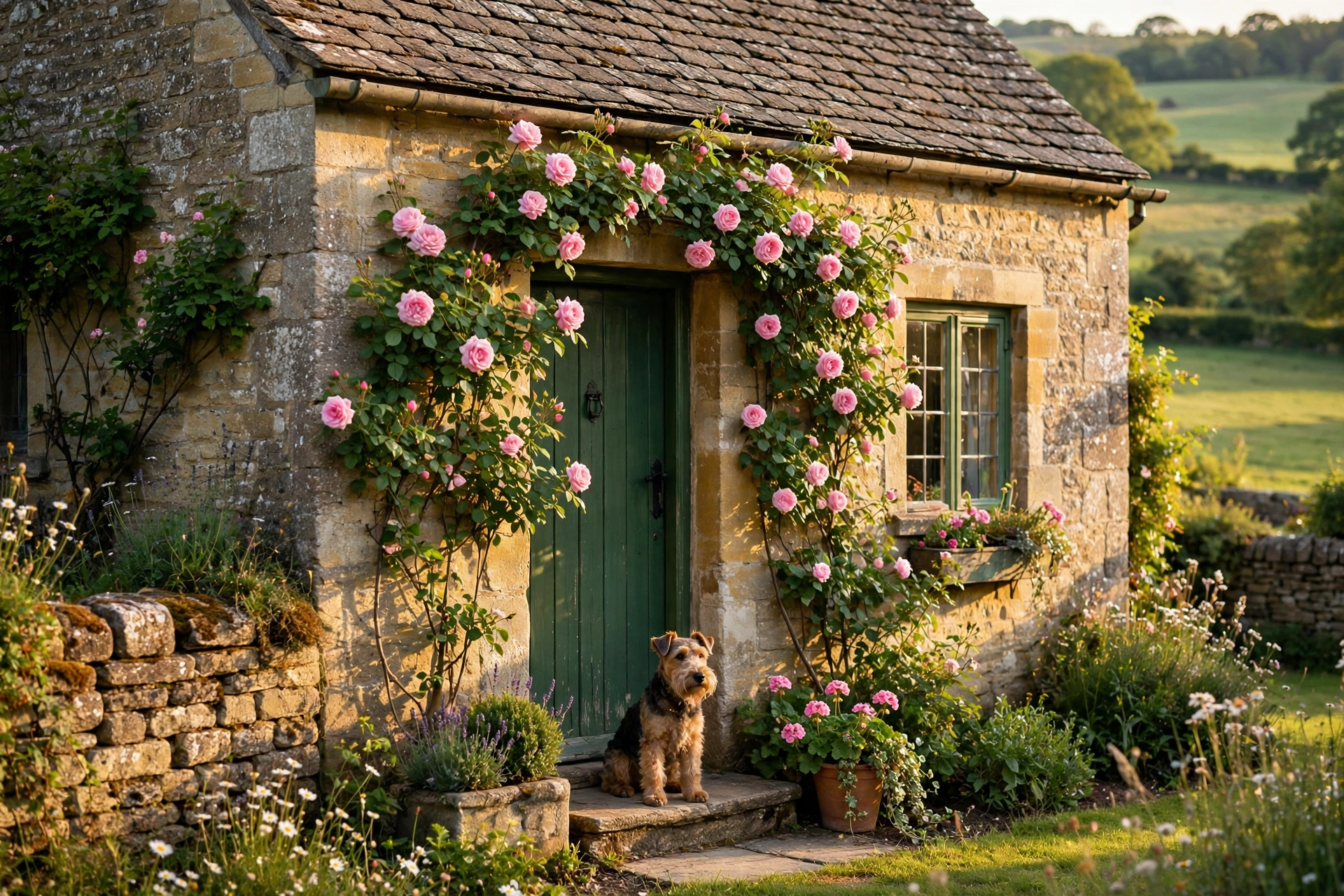
For 48 hours, the base should be simple to arrive at, easy to settle into and forgiving of mud. Holiday parks and caravan stays work well for short breaks: clear rules, dog exercise areas, and staff to call if something goes wrong. Self-catering cottages give you a kitchen and a garden but vary wildly in how secure that garden is — confirm the boundary before you picture the dog roaming free. Pubs with rooms and dog-friendly B&Bs suit owners who want dinner sorted, but check where the dog sleeps, whether dogs can be left briefly in the room, and how breakfast works with a dog in tow.
Match the base to the dog, not the brochure. An anxious dog does better in a quiet cottage at the end of a lane than in a lively park beside the entertainment complex; a sociable young dog may love the park’s bustle. For a first weekend away, boring is good: a straightforward caravan stay with a proper dog walking field nearby removes a dozen small uncertainties. Whatever you choose, read the pet terms before booking — maximum dog numbers, charges, alone-time rules — so the small print does not ambush you at reception on Friday night.
A realistic 48-hour budget
Short breaks concentrate costs, so price the whole weekend before you book the accommodation. Two nights in a dog-friendly cottage or park unit typically runs £200–£500 depending on region and season, plus a per-dog charge of £25–£50 per stay at many parks. Add fuel or train fares, food — self-catering is cheaper but a pub dinner for two is easily £60–£80 — and a contingency for the things dogs cause: an extra towel purchase, a vet visit, a damaged throw you end up paying for.
The classic money pits of the 48-hour break are all avoidable. One is the far-flung destination that doubles fuel costs and eats half of Friday. Another is over-booking paid attractions the dog cannot enter, leaving one adult on car-park duty. A third is the premium “hot tub upgrade” chosen for ten minutes of actual soaking — lovely if the deck is secure and the dog has a plan, questionable otherwise, as our hot-tub safety checklist explains. Spend the money where the dog feels it: a shorter drive, a secure garden, a good walk nearby. The dog will never know what the thread count was.
Friday: arrive with nothing to prove
The Friday evening has one job: produce a dog that sleeps. Everything else is optional. On arrival, take a short toilet-and-sniff loop around the immediate area — long enough to empty and to map the smells, short enough not to become an expedition. Check the accommodation boundary before you unpack: gates, fences, gaps, and the route from the door to the road. Then unpack the dog’s bed first, not last. The bed going down is the signal that this place is now base camp.
Eat something simple. A supermarket stop on the way, a one-pan dinner, a takeaway — whatever keeps the evening calm. Do not try to fit a pub visit, a sunset viewpoint and a town walk into the remaining light; every one of them is available tomorrow, and none of them matters if the dog spends the night wired. Feed at roughly the normal time, run the normal bedtime sequence, and be deliberately ordinary. The useful outcome of Friday is not a story. It is a sleeping dog and an owner who is not already tired.
Saturday: one anchor walk
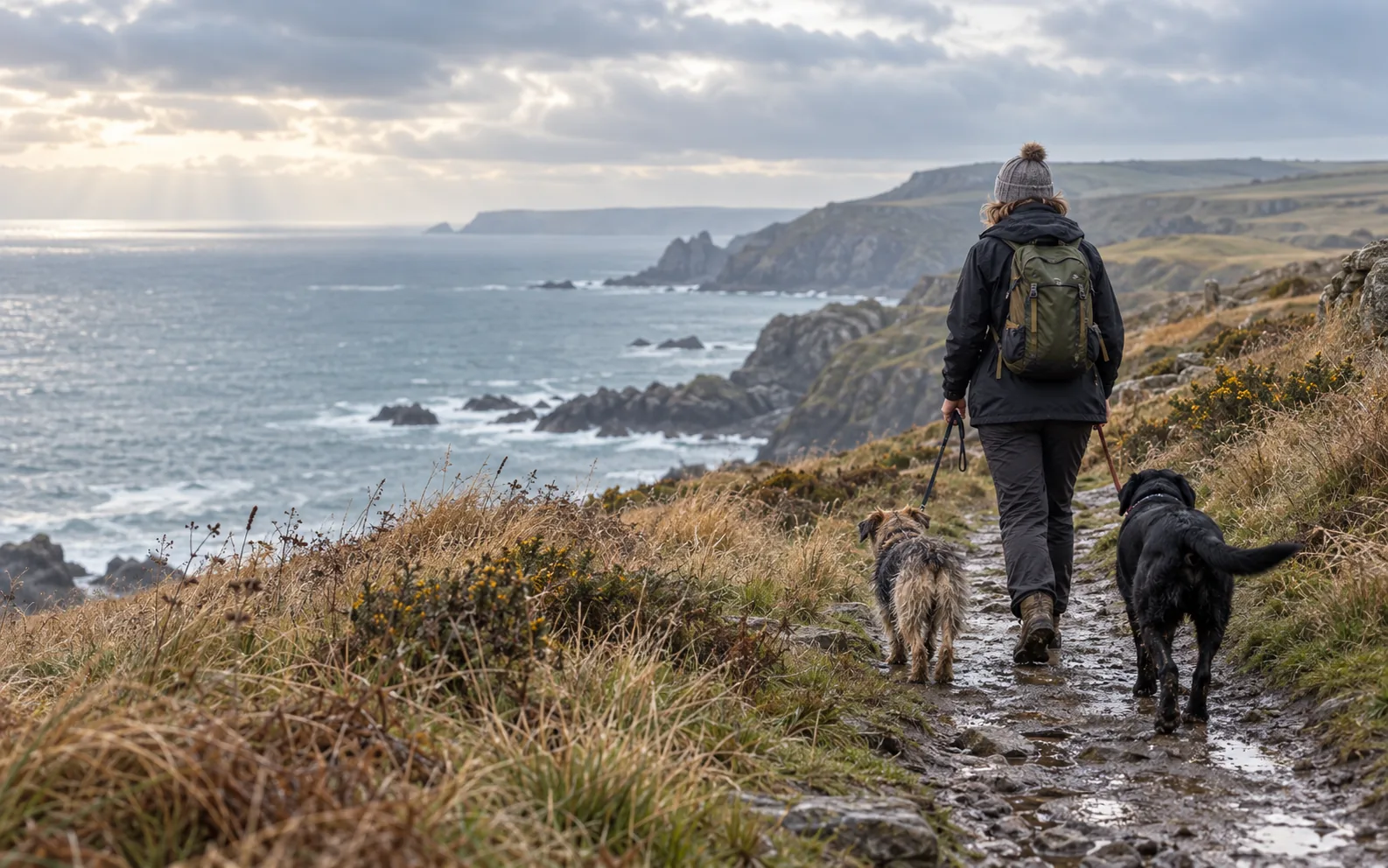
Saturday gets one anchor walk — a single route chosen with care, done well, and finished while everyone still feels good. Choose it for the dog’s normal fitness, not the mileage you hope to post. Research it the way a good walk deserves: check livestock and lambing restrictions, tide times for coastal routes, parking arrangements, and escape points where you can shorten the loop. Look at recent weather, not just the forecast — a path that was fine on Tuesday can be a quagmire on Saturday, and a boggy eight-miler is nobody’s anchor.
On the walk, carry water and a bowl, turn back at the point of peak enjoyment rather than peak exhaustion, and keep one eye on the dog rather than the view. Dogs do not experience scenery; they experience smells, ground underfoot and your mood. Leave the afternoon deliberately loose: a nap, a café terrace, a shorter sheltered loop if energy remains. The anchor walk is the day’s achievement; everything after it is bonus. Two medium walks with a rest between them beat one epic that leaves the dog stiff on Sunday — and a stiff dog makes the journey home miserable.
Eating out with a dog, minus the drama
Food is where short breaks often wobble, so decide the shape of it in advance. Dog-friendly pubs are the backbone of the British dog weekend: many welcome dogs in the bar area, some throughout, and a few provide water bowls and treats as standard. Check the specific pub rather than assuming — “dog-friendly” on a listing can mean the garden only, and gardens close in bad weather. Booking ahead matters at weekends; a table booked with “plus one well-behaved dog” in the notes removes the awkward doorway negotiation.
Set the dog up to succeed. A familiar mat under the table gives the dog a job — lie here — which is easier than the abstract instruction to behave. Time meals after walks, not before: a walked, fed-adjacent dog settles; a fresh, hungry one audits the kitchen. Keep the lead short and out of the serving aisle, order food that arrives at a predictable time, and have an exit plan: if the dog cannot settle after fifteen minutes, one adult takes the dog for a loop while the other holds the table. There is no prize for enduring a stressful meal. Cafés with terraces, farm shops with outdoor seating and picnic spots are all honourable alternatives — the weekend does not require a restaurant.
Sunday: protect the journey home
Sunday is a travel day wearing a leisure disguise, so treat it as one. Take a morning walk of a familiar length — this is not the day for the epic you skipped on Saturday — and then allow real time for the dog to cool down, drink and dry before the car or train. A wet, panting dog loaded straight into a car is uncomfortable for everyone and fogs the windows for the first hour. Keep food timing close to normal; a dog fed at odd hours on travel day is a dog more likely to be sick.
A final attraction is only worthwhile if it does not turn checkout into a rush. Work backwards from checkout: checkout, then pack the car, then load the dog, then the last walk, then breakfast — and see what time that leaves. If the answer is 10am, the 11am castle visit was never real. A calm departure with a settled dog beats a frantic one with a bonus sighting, because the journey home is the last thing the dog will remember about the weekend. Plan the stop on the way home with the same care as Friday’s: grass, water, a stretch, and home.
Make the backup plan before the forecast changes
British weekends do not ask permission to rain. The backup plan is not a consolation prize; it is what keeps a wet weekend from becoming a chain of improvised car journeys. Before you leave home, identify three things: one wooded or surfaced route that stays walkable in rain, one covered food option where the dog is genuinely welcome, and one indoor period the dog can tolerate — a pub with a fire, a rest back at the base, a drive to somewhere with a view from the car. Save them offline, with postcodes, because phone signal fails exactly where you need it most.
Pack for the weather you might get, not the weather you want. Waterproofs for humans, a dog coat if your dog feels the cold, twice as many towels as seems reasonable, and a dedicated “wet dog” kit in the car: old towels, a waterproof seat cover, a bag for the sodden lead. Mud is not a problem to be solved but a condition to be managed — the base with a boot room, a hose or at least a hard floor by the door earns its keep in November. And reframe the rain: a wet woodland walk with the dog, followed by a pub fire, is one of the best weekends Britain offers. The backup plan is how you get to enjoy it instead of enduring it.
Pack once, pack light
Forty-eight hours needs less than you think, and over-packing steals Friday evening to unpacking. For the dog: the usual bed, the usual food plus a spare meal, bowls, a fixed-length lead and a spare, poo bags, towels, a familiar mat for pubs and cafés, any medication, and the vaccination record on your phone. Add a dog coat and a drying coat if the season suggests it. That is the whole list — the dog does not need options, the dog needs the familiar.
For the humans, pack for the backup plan as well as the main plan: waterproofs, layers, decent walking shoes that are already broken in. Keep a car kit permanently packed if you do these weekends often — towels, seat cover, water, bowl, spare lead, torch — so departure is a matter of adding the dog and the food. Charge everything the night before, download offline maps for the walking area, and put the accommodation’s check-in instructions, the vet’s number for the area and the train or route details somewhere you can reach them without signal. Preparation is invisible when it works; its absence is unforgettable.
Season notes
The same weekend plays differently across the year, and a little seasonal awareness prevents the classic mistakes. Spring brings lambing: dogs on leads around livestock is the law and the custom from roughly March, and many open-access paths cross lambing fields. Summer brings heat and beach restrictions — many popular beaches ban dogs during the day in peak season, and midday walks need shade, water and shorter routes. Heat also changes the car calculus: never leave a dog in a parked car in warm weather, and plan travel for cooler hours.
Autumn is arguably the finest dog-walking season: cool air, firm ground, empty paths — but daylight shrinks fast, so carry a torch and plan the anchor walk to finish well before dusk. Winter weekends are short, muddy and wonderful: book bases with drying facilities, check heating, and accept that the big walk happens between 10am and 2pm. Whatever the season, check the specific rules for where you are going rather than assuming last year’s arrangements still hold. Seasonal restrictions change, and the sign at the car park outranks your memory.
Practical questions
Before you go
How far should I travel for a two-night break?
Use the longest journey your dog regularly handles well — often two to three hours with a planned stop — rather than the widest destination radius. For 48 hours, the journey happens twice, so a shorter drive usually buys a better weekend.
How many activities should I book?
One anchor plan per full day is plenty. Leave room for rest, weather and a slower-than-expected walk; an over-scheduled weekend with a dog is just logistics with scenery.
What if the weather ruins the plan?
It only ruins the weekend if there is no backup. Before leaving, line up a rain-proof walk, a covered dog-friendly food option and an indoor rest period — saved offline. A wet woodland walk followed by a pub fire is a feature, not a failure.
Should I choose a cottage, caravan or pub B&B?
For a first 48-hour trip, pick the simplest base that fits the dog: a caravan or holiday park with clear rules and a dog exercise area removes the most uncertainty. Cottages suit anxious dogs that need quiet; pubs suit owners who want dinner sorted. Confirm pet terms in writing before booking any of them.
How do I stop Friday night from being stressful?
Arrive, take a short sniff-and-toilet loop, check the boundary, put the dog’s bed down first, eat simply and run the normal bedtime routine. The goal of Friday is a sleeping dog, not a packed evening.
What does a 48-hour dog break typically cost?
Budget roughly £200–£500 for two nights’ accommodation depending on region and season, plus £25–£50 per dog per stay at many parks, fuel or fares, and food. The money is best spent on a shorter drive and a secure base rather than premium extras.