This guide is independent and contains no paid placement. If affiliate links are added later, they will be clearly marked and will not change our editorial checks.
Book months ahead, walk at the cool edges of the day, assume main beaches still ban dogs, travel before the peaks, and keep a shaded, low-effort plan for the middle of every day. August rewards early risers and punishes improvisation.
Why August is different from every other bank holiday
May feels optimistic and September feels like a bonus. Late August feels final. It is the last long weekend before schools return, the last one that reliably promises warm evenings, and for many families the last realistic chance to use a beach hut, a holiday park or a seaside rental before autumn routines close in. That sense of a deadline changes behaviour. People book earlier, pay more, drive further and tolerate crowds they would avoid in June — and they all arrive at the same honeypots within the same few hours.
For a dog, four pressures stack up at once in a way they do not on the spring bank holidays. First, heat: late August can still produce genuinely hot days, and even a merely warm day becomes hard work on tarmac, sand and crowded promenades with no breeze. Second, density: pavements, pub gardens, ice-cream queues and train platforms are at their fullest, which matters for nervous, reactive, elderly or very young dogs far more than the headline temperature does. Third, restrictions are at their strictest — seasonal beach rules, lead requirements around ground-nesting birds and livestock, and algae risks in still water all peak in summer. Fourth, everything costs peak money and sells out in peak order: the dog-friendly rooms go first, then the enclosed gardens, then the ground-floor units.
None of that means stay home. It means August should be planned backwards from the dog's limits rather than forwards from a list of attractions. Decide the latest you will walk, the longest you will queue and the furthest you will drive in heat, and let those answers choose the destination. A modest inland break executed calmly will beat a famous coastal town endured in a traffic jam for almost every dog. If you want the broader bank holiday framework first, our general guide to bank holiday weekend breaks with dogs covers booking and traffic principles that apply all year; this page is specifically about the extra layer August adds.
The booking clock: how late is too late for August
Think of August availability as a staircase that drops in steps, not a smooth slope. The first step goes early in the year: properties with a genuinely enclosed garden, ground-floor access and no steps — the features many dog owners actually need — are often reserved six to nine months ahead, especially in Cornwall, Devon, the Lake District, North Yorkshire, the Norfolk coast and Snowdonia. The second step goes by Easter: standard dog-friendly cottages, lodges and hotel rooms in popular towns. The third step goes by early summer: what remains is a mix of cancellations, less popular locations, larger properties at higher prices and places where dogs are accepted only in selected units.
That does not make a late booking impossible, but it changes what a late booking should look for. Instead of searching a famous town and hoping, search a radius. Staying twenty minutes inland from a headline resort often halves the crowd pressure while keeping the same beaches reachable for an early-morning visit. Join cancellation and waiting lists with your dates, dog count and non-negotiables stated clearly — owners re-let cancellations fastest to the enquiry they can say yes to without a follow-up exchange. Be ready to pay the balance promptly, keep your pet details accurate, and confirm in writing that the specific unit, not just the property in general, accepts your dog.
Lead times apply to more than beds. Dog-friendly train tickets at sensible prices, popular dog-welcoming restaurants, beach hut hire, holiday-park entertainment passes and even kennel or pet-sitter cover for a non-dog day all tighten for this weekend. If your plan depends on one scarce element — a particular ferry, a step-free room, a sitter for a wedding — book that element first and build the rest around it. And read the cancellation terms before you pay peak prices: a flexible rate that looks expensive in February can be cheaper than a non-refundable bargain if a heatwave, illness or a vet bill changes your plans in August.
Heat is the headline risk, not an inconvenience
The most common August mistake is treating heat as something to push through with extra water. Water helps, but it does not make a midday walk on hot pavement safe, and it does not prevent heatstroke in a dog that is excited, stressed by crowds and unable to find shade. Plan the day in three bands instead. Before about 10am is your main walking window: longer routes, beaches where dogs are allowed, and any exposed terrain. The middle of the day is for rest, shade, indoor dog-friendly stops and short toilet breaks on grass. After about 6pm, when pavements have started to cool and day-trippers thin out, you get a second, often lovelier window for a proper walk and an evening meal outside.
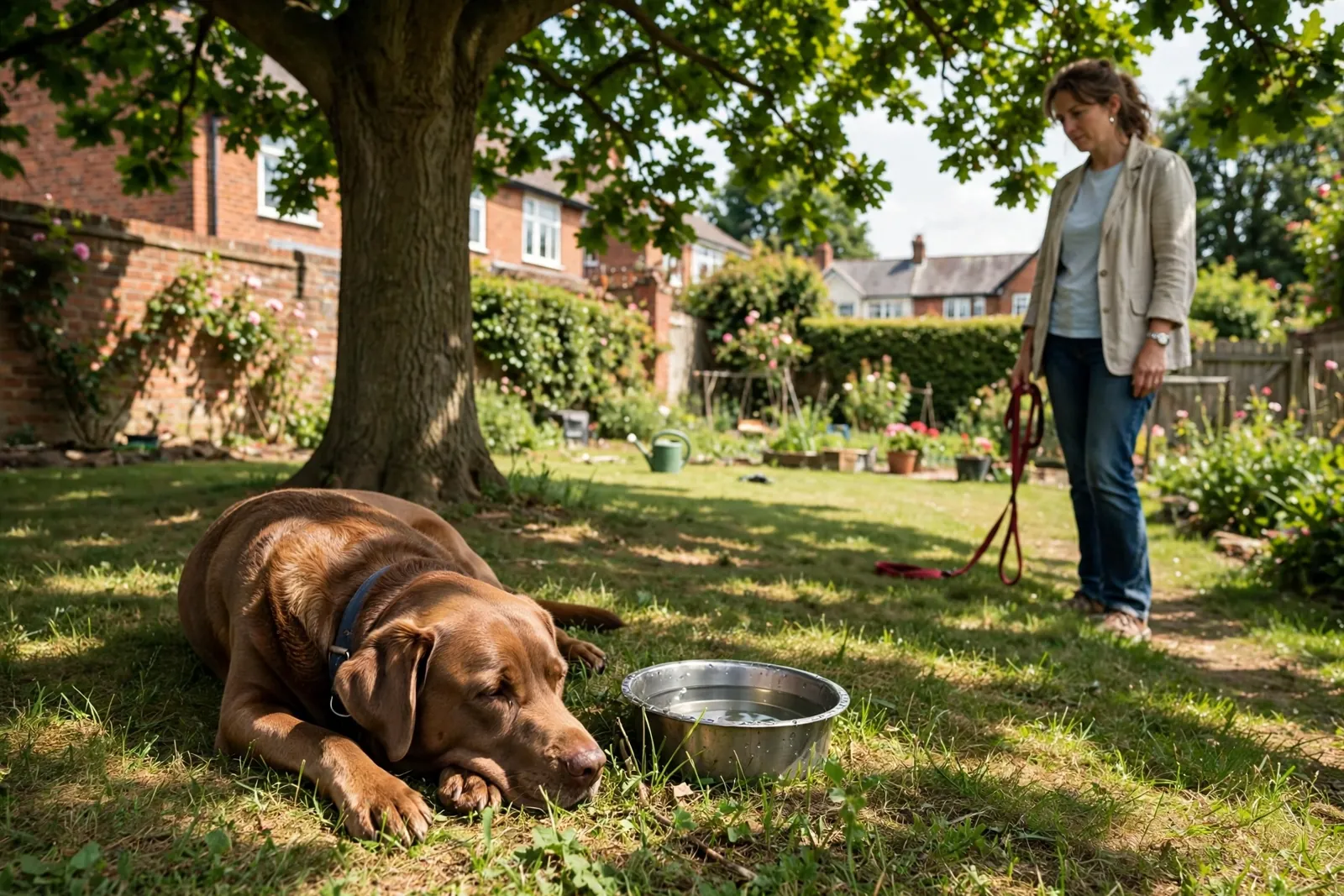
Learn the pavement test and use it honestly: place the back of your hand on the surface for several seconds — if it is too hot to hold comfortably, it is too hot for paws. Choose grass, woodland and shaded riverside paths over tarmac and sand at midday, carry water for the dog separately from your own, and stop in shade before the dog asks you to. Flat-faced breeds, older dogs, puppies, overweight dogs and thick-coated breeds overheat faster and need a more conservative plan; for them, a hot Saturday may mean no expedition at all, and that is a good decision, not a spoiled weekend.
Cars deserve a blunt paragraph. Never leave a dog in a parked car in warm weather, even with windows cracked and even for a few minutes — temperatures inside rise dangerously fast, and bank holiday queues make “a few minutes” unreliable anyway. Travel in the coolest part of the day, use air conditioning or safe ventilation, stop every two hours for water and legs, and never plan a service-station break that requires the dog to wait in the vehicle. Our detailed guide to travelling with a dog in hot weather covers heatstroke signs, cooling and emergency steps; read it before August, save your nearest emergency vet's number at your destination, and check the latest official advice before you travel if you are unsure.
Beach bans are still in force — do not assume summer is over
Late August feels like the end of the beach season, but legally and locally it is still the middle of it. On many of Britain's most popular bathing beaches, seasonal dog restrictions typically run from May through to the end of September. That means the main section of the beach in front of the promenade — exactly the section families head for — is often the section your dog cannot use over this weekend. Restrictions are set beach by beach, sometimes section by section, and enforced locally; fines can apply where public spaces protection orders are in place, and ignorance of a sign is not a defence.
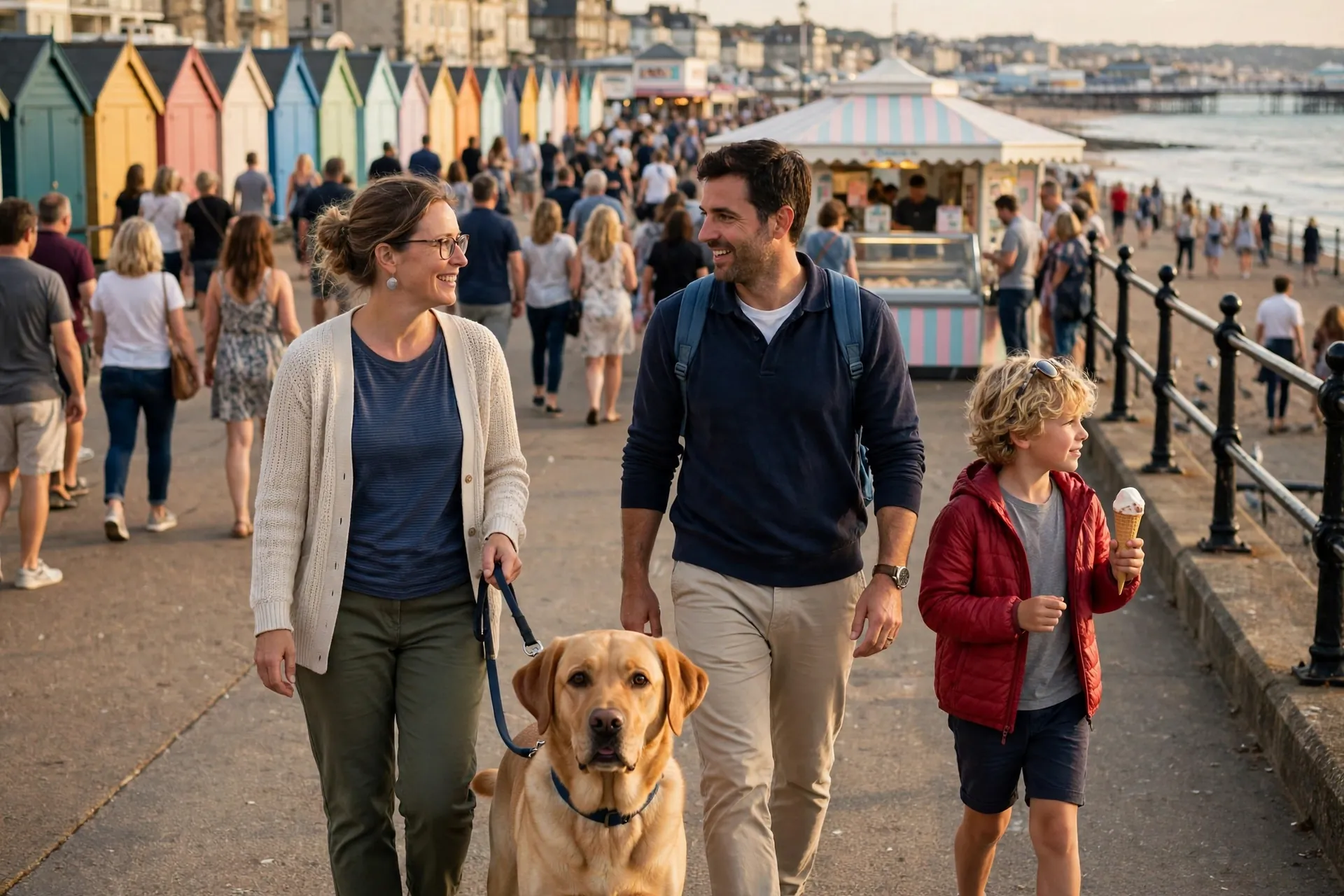
The workable pattern is to split the beach day in two. Use a dog-allowed beach, or the permitted end of a larger beach, for the early-morning run and swim, then move to promenade, café and town activities later with the dog on a lead where that is allowed — checking first, because some promenades have their own lead or exclusion rules in season. Keep a shortlist of two or three alternative beaches within a short drive before you leave home, so a full car park or an unexpected restriction does not turn into a roadside argument. Our explainer on UK beach dog rules, bans and fines sets out how to check a specific beach properly, including where to find the council's current order.
Water itself needs checking too. In hot, still weather, blue-green algae can build up in lakes, reservoirs and slow rivers and is toxic to dogs; warning signs are not always present, and green, scummy or paint-like water should be avoided entirely — do not let a hot dog charge into the first water it sees. The sea brings different cautions: strong sun on wet sand, sharp shells and fishing hooks in busy areas, jellyfish after warm spells, and crowded shallows where a dog on a long line can tangle swimmers. Rinse salt and sand off afterwards, dry ears carefully, and watch for excessive water drinking during swimming, which can itself make dogs ill.
Traffic: leave at the wrong hour and you lose the day
August bank holiday traffic is predictable, which is the good news — you can plan around a pattern that repeats every year. Friday afternoon and early evening are the heaviest outbound window as the weekend combines with ordinary commuter traffic. Saturday mid-morning is the day-tripper peak towards coasts and national parks. Monday brings a long, compressed return from late morning through early evening, worsened by any incident, roadworks or hot weather breaking down vehicles. Add a dog and every delay costs more: toilet needs, heat, water and stress all accumulate in a stationary car.
The simplest countermeasure is to shift, not to speed. Leaving before 7am on Friday or Saturday transforms most routes; travelling after the evening peak works too, provided your accommodation allows a later arrival and your dog travels calmly after dark. For the return, either commit to an early Monday departure before the main flow, or deliberately stay for a late lunch and an evening walk and drive home after the peak — the miserable option is the half-hearted 11am start that lands in the middle of it. Build a proper stop every two hours into the plan rather than treating stops as lost time, choose stops with grass and shade in advance, and keep water, a bowl, waste bags and a familiar chew accessible without unpacking the boot.
Trains remove the traffic jam but add their own August pressures: busy services, hot platforms, limited space for a large dog and engineering work that is often scheduled over bank holidays. Check for planned engineering before you book, reserve seats where possible, travel outside the busiest services, and carry water for the platform wait, not just the journey. If your dog struggles with crowded carriages, a quieter first or last service of the day is worth an awkward alarm. Whatever the mode, tell your accommodation if delays make you late — a quick message protects a late check-in far better than silence.
Events, shows and crowds: choose deliberately, not accidentally
Late August is dense with country shows, food festivals, regattas, air shows, outdoor concerts, funfairs and village fetes. Some are genuinely enjoyable with a dog: outdoor agricultural shows with space to move, shaded food markets visited early, and harbour festivals where you can watch from the edges and leave easily. Others are a poor fit even if dogs are technically admitted: enclosed festival sites with loud stages, fireworks finales, air displays with sudden noise, crowded beer gardens at peak hour, and any event where the exit route funnels you through a dense crowd with a stressed dog.
Before adding an event to the plan, answer five questions. Are dogs admitted everywhere you intend to go, or only to the car park and outer field? Is there shade and water on site, and somewhere quiet to retreat to? How loud is it, and are there fireworks, cannons, aircraft or fairground rides that could startle your dog? Can you leave quickly at any point, or are you parked in and committed? And what is the dog's alternative if you decide on the morning that it is too hot or too busy — a calm companion staying behind, or a plan that simply drops the event?
Crowd craft matters as much as the choice itself. Arrive at opening rather than at lunchtime, walk the perimeter before diving into the centre, keep the lead short in dense areas and long only where there is space, and watch your dog rather than the stalls: lip-licking, panting that does not settle in shade, pulling towards exits and snapping at close-passing dogs are all information. Bank holiday crowds also mean dropped food everywhere — cooked bones, corn cobs, onions and chocolate are genuine vet risks, so a dog that scavenges needs a close lead and your attention on the ground, not the view.
Quieter alternatives that still feel like summer
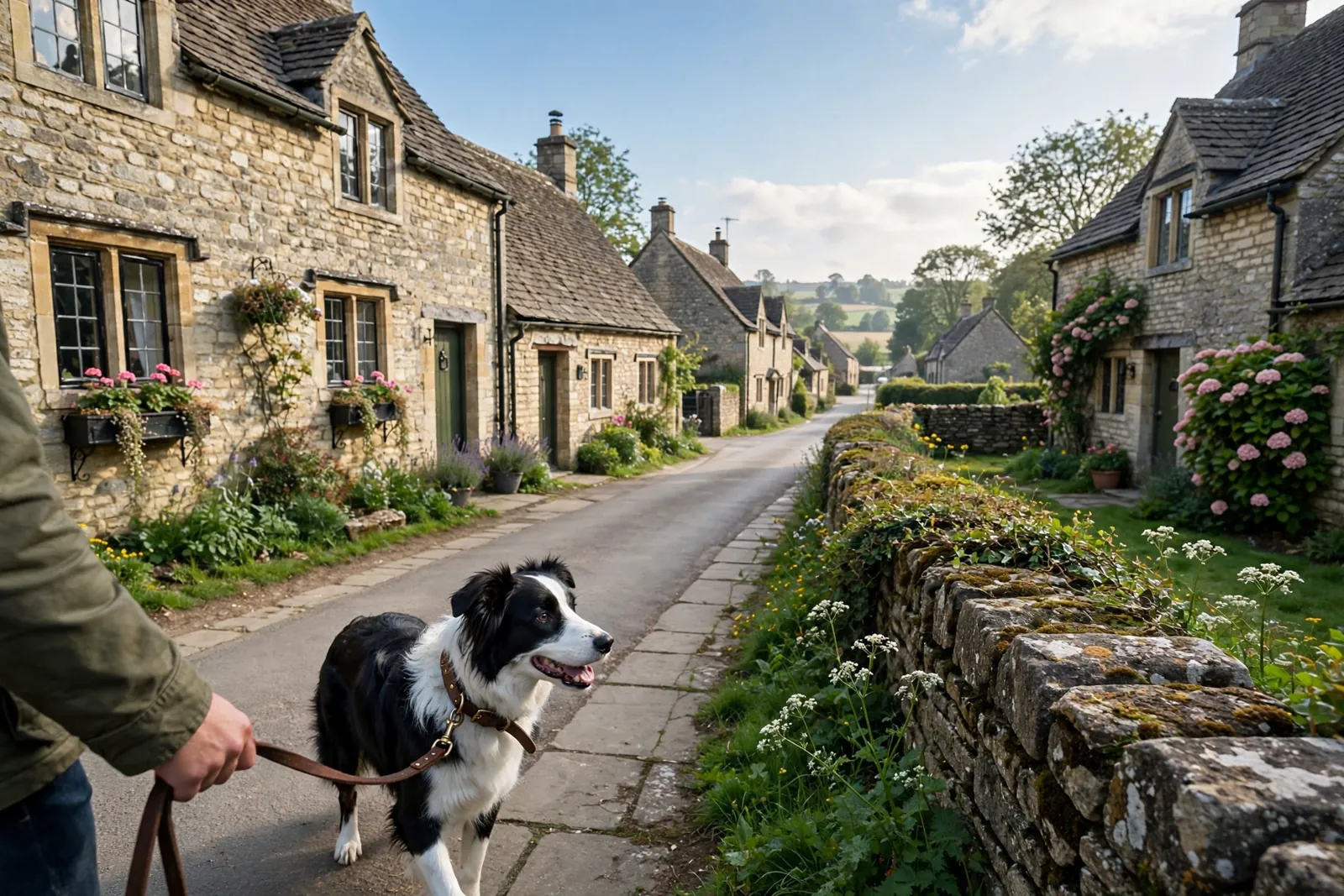
The alternative to a honeypot is not a dull weekend; it is usually the same landscape one valley, one beach or one town further on. Inland riverside towns, market towns away from the coast, canal towpaths, reservoir circuits where dogs are allowed on lead, and less famous sections of national trails all deliver summer without the promenade crush. Woodland is the August cheat code: Forestry sites and large country parks offer shade, waymarked routes and picnic space, and they are at their best exactly when beaches are at their worst — hot, bright middays.
Use a simple substitution method. For every famous name on your list, find its working neighbour: the smaller resort along the coast from the big one, the village beach beyond the town beach, the quieter lake shore, the second-choice national park edge with the same geology and fewer car parks. Stay inland and visit the coast early, rather than paying peak prices to sleep in the middle of the crowd you spend the day avoiding. Consider swapping the geography entirely: northern and higher ground tends to run cooler, and Scotland's different summer bank holiday timing can change crowd patterns, though Scottish schools return earlier in August, which cuts both ways — check local term dates rather than assuming.
Quieter also applies to timing within a famous place. The same beach that is unbearable at noon is peaceful at 7am; the same beauty spot that queues for its car park on Saturday is manageable on Monday morning while everyone else packs. Build one headline outing at an anti-social hour, done properly with an early alarm and a good breakfast afterwards, and let the rest of the weekend be deliberately modest. Dogs do not measure a holiday by its landmarks. A shaded wood, a safe swim where it is allowed, new smells and an unhurried evening outside a pub are, from the dog's side of the lead, an excellent August.
Day-trip formulas when you cannot — or should not — stay away
Not every August plan needs a booking. For many dogs, especially older, reactive or heat-sensitive ones, a well-built day trip beats three nights in a strange, noisy holiday park. The trick is to use formulas rather than vague intentions. The first is the dawn formula: leave home early, walk long and well before 10am, take a slow dog-friendly brunch in shade, make one low-effort stop, and be home before the afternoon heat and traffic. The second is the evening formula: rest at home through the hot day, drive out in the late afternoon, walk as the light softens, eat outside somewhere that welcomes dogs, and drive home on empty roads.
The third formula is the base-and-radius day: pick one easy base — a country park, a canal basin, a reservoir visitor centre or a market town with parking you have checked — and do everything on foot from it, so the car stays parked and the dog is never left waiting. Whichever formula you choose, apply the same checks as for a longer break: confirm dog rules for the specific beach, woodland or attraction, identify shade and water, note the nearest vet, and set a leaving time in advance. A day trip with a firm, early finish stays pleasant; one that drifts into “just one more stop” at 2pm on a hot A-road does not.
Day trips are also the honest answer when accommodation money would be better spent elsewhere. Peak August prices for an average unit can fund several excellent days out, a good meal where the dog is welcome under the table, and new cooling or walking gear you will use all year. If your dog sleeps best in its own bed, travels calmly for an hour but not four, and lights up at familiar forests made fresh by an early start, believe that evidence. The long weekend is yours to shape; nobody awards marks for distance travelled.
A calmer shape for the three days
If you are staying away, give each day a different job so the weekend does not become three attempts at the same exhausting expedition. Let Saturday be the arrival and territory day: travel early, settle the accommodation, find the after-dark toilet walk, do one shaded local loop and eat simply. Keep ambitions low and information high — you are learning the ground that makes the next two days easy. Let Sunday carry the one big outing, started early: the allowed beach, the longer trail or the show you chose deliberately, followed by a genuinely lazy afternoon and evening.
Let Monday be the departure-shaped day rather than a bonus full day that ends in a frantic pack. Walk early somewhere familiar, pack in the cool of the morning, check the unit for leads, chargers, bowls and the dog's medication before you hand back keys, and choose your return strategy — early or late — and commit to it. If you have flexibility, a Monday evening return after a final walk and meal can feel like an extra half-day of holiday, provided the dog can rest somewhere cool and legitimate while you wait out the traffic, never in the car.
Across all three days, protect the routines that keep dogs settled: roughly normal feeding times, familiar bedding, a last outing at a familiar hour, and downtime that is actually down — a dog that is walked, visited, travelled and entertained for twelve hours a day will be overtired, not fulfilled. Build in sniffing time on a long line where it is safe and allowed, because twenty unhurried minutes of sniffing often settles a dog more deeply than an extra hour of marching. The weekend you remember fondly is rarely the one where you fitted most in; it is the one where nobody — two-legged or four — ended a day frazzled.
Packing and home prep for a hot long weekend
August packing starts with cooling and shade rather than jumpers and waterproofs, though a light rain layer still earns its place in a British summer. Pack more water capacity than you think you need, a portable bowl, a cooling mat or damp towel system you have tested at home, shade for rest stops, and a spare lead and collar in case one gets soaked or lost in a crowd. Add paw protection for hot or rough ground if your dog tolerates it, dog-safe sun protection only where a vet advises it for vulnerable skin, and a basic first-aid kit including saline, bandaging and tick removal — then check our guidance and your vet's advice for anything medical rather than improvising.
Food and medication need peak-weekend thinking. Take enough of your dog's normal food for the whole break plus a spare day, because a sudden diet change plus heat plus travel is a reliable recipe for an upset stomach, and the local shop may not stock your brand. Pack medication with doses counted out, keep it cool and accessible rather than buried in a hot boot, and photograph prescription details and your vet's number. Bring familiar bedding unwashed if you can — in a strange, noisy place, home smells do real work — plus waste bags in every bag and pocket, because bank holiday bins overflow and carrying is sometimes the only option.
Finally, prepare the information layer. Save offline copies of your booking confirmation stating the dog is expected, the accommodation's late-arrival instructions, the destination vet and emergency vet numbers, beach restriction details for your shortlisted beaches, and your traffic route with two planned dog stops marked. Tell a neighbour your return day, set timers and post as you normally would, and make sure whoever holds a spare key knows the dog is away with you — small confusions multiply on a weekend when everyone is travelling. Preparation is invisible when it works; in August, it is most of what makes the visible parts enjoyable. Before you travel, check the latest official guidance on any point you are unsure about, as local rules can change.
Practical questions
Before you go
When is the August bank holiday and does it apply across the UK?
In England, Wales and Northern Ireland the summer bank holiday falls on the last Monday in August. Scotland has its summer bank holiday on the first Monday in August instead, so Scottish accommodation, events and traffic patterns peak at a different time. Always check the official government bank holiday list for the nation you are visiting before fixing dates.
How far ahead should I book dog-friendly accommodation for August bank holiday?
For popular coastal and national park areas, book six to nine months ahead if you need a specific dog-friendly unit, an enclosed garden or step-free access. Flexible travellers can sometimes find cancellations two to four weeks before, but choice narrows sharply and prices rarely fall for this weekend. Set alerts, join cancellation lists and have a second-choice area ready.
Can my dog go on the beach over August bank holiday?
On many popular beaches, no — not on the main bathing section. Most seasonal dog restrictions run from May to the end of September, so late August is still firmly inside the ban season. Some beaches allow dogs on lead on the promenade or on a separate section, and nearby less central beaches may be unrestricted. Check the specific beach and section before you travel, because fines can apply.
What time should we travel to avoid the worst traffic with a dog?
Leave before 7am on the Friday or Saturday, or travel in the evening after the main daytime peak, and plan the return for before mid-morning on Monday or later on Monday evening. Build in a proper leg-stretch and water stop every two hours, never leave your dog in a stationary car in warm weather, and keep an extra hour of slack so a delay does not turn into a stressed rush.
What should I do if it is too hot for my dog during the weekend?
Cancel the midday plan, not just shorten it. Walk early and late on shaded, grassy routes, keep the middle of the day for rest in cool accommodation, offer water frequently and skip festivals, hot pavements and car journeys in the heat. Brachycephalic, older, overweight and thick-coated dogs need extra caution. Know the signs of heatstroke and your nearest emergency vet before you need them.