This guide is independent and contains no paid placement. If affiliate links are added later, they will be clearly marked and will not change our editorial checks.
Bowmore works best as a slow base, not a whistle-stop. Walk the shore at low tide, look up at the round church, plan distillery visits around the dog rather than the other way round, and use the village as a hub for short drives to beaches, villages and other distilleries across Islay.
First, the round church and the white houses
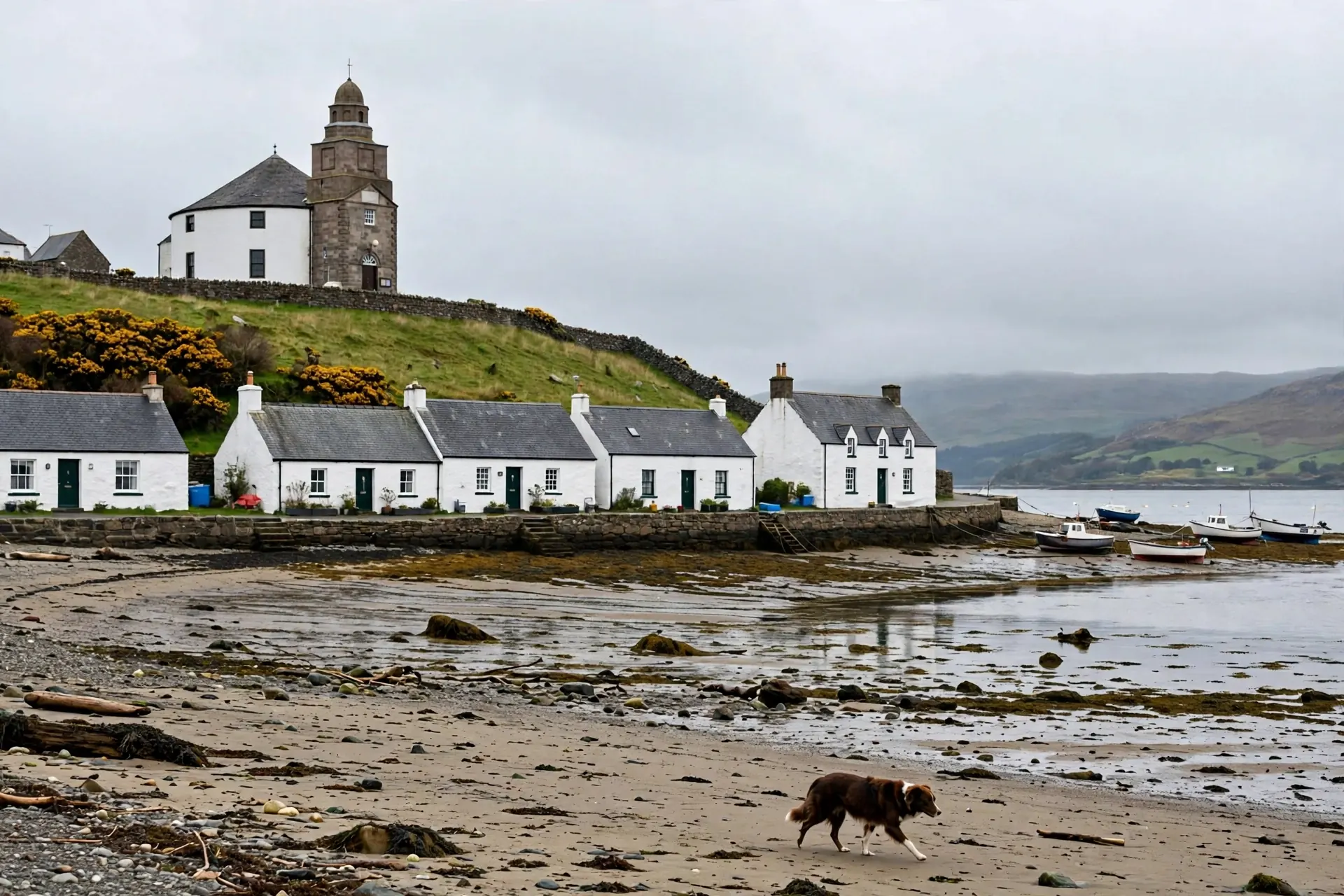
The first thing to do in Bowmore is not to rush anywhere. Stand on the shore road, with Loch Indaal on one side and the village rising on the other, and let the shape of the place settle. The whitewashed houses climb in neat rows from the water, their windows facing the loch, and above them sits the round church — a circular building that looks unlike almost any other parish church in Scotland. It is the landmark that gives Bowmore its silhouette, and it is also the simplest way to orient yourself: if you can see the round church, you can find your way back to the centre of the village.
The church, known as the Round Church or Kilarrow Parish Church, was built in the 1760s as part of a planned village laid out by Daniel Campbell of Shawfield. The story usually told is that the circular shape was chosen so that the devil could find no corner to hide in, although other explanations point to the practical wish to give every worshipper a clear view of the pulpit. Either way, the result is a building that feels calm and slightly unexpected, set on a small rise with views across the loch. Dogs do not go inside the church, and there is no reason to try: the pleasure of the building is outside, in the way it anchors the street scene and the way the light changes on its white walls through the day. Walk the pavement around it, let the dog sniff the grass at the edges, and take the photograph from the shore road rather than from the churchyard itself.
From the church, the village drops towards the water in a grid of streets that is easy to learn in a single walk. Main Street runs along the shore, with shops, a hotel, cafes and the distillery close together, while the residential streets climb gently behind. That compact layout matters for dog owners, because almost everything you need in a day — a morning walk, a coffee, a shop for supplies, an evening stroll — is within a short distance, and you are rarely far from the car or your accommodation if the weather turns or the dog needs a rest. Bowmore is the administrative centre of Islay, which in practice means it has more everyday services than the smaller villages: a supermarket, a post office, a bank, a petrol station and a range of places to stay. It is not a large town, and it does not try to be one. Its appeal is that it feels like a working village with a loch at its feet, rather than a resort built around visitors.
The white houses deserve a closer look, because they tell you how Bowmore lives with the weather. Thick walls, small windows on the windward side, bright paint that catches low sun, and doors painted in strong colours are all part of a Hebridean pattern that repeats across Islay and the wider islands. In rain the houses look almost luminous against grey water; in evening light the whole shore glows. For a dog walk, that means the village itself is worth a slow loop even on a day when you do not drive anywhere. Start at the shore, walk up past the church, loop back down a parallel street, and finish with a stretch along the water. The dog gets a changing route with plenty of smells, you get a proper sense of the village, and neither of you has to cover a long distance to do it.
One practical note before you set off: Bowmore sits on a main road, and traffic through the village can be faster than it looks, especially in summer when campervans and delivery vehicles pass through. Keep the dog on a lead on pavements and at road crossings, even if the dog is calm, and use the shore path and quieter streets for any off-lead time. The village rewards slow walking, but it is still a place where people live and work, and the pavements are narrow in places. A short lead, a pocket of treats and a habit of stepping aside for pushchairs and wheelchairs will make the walk easier for everyone.
Walking the Loch Indaal shore
Loch Indaal is the broad, sheltered sea loch that defines Bowmore. It opens to the south-west, between the Rhinns of Islay on one side and the main body of the island on the other, and at low tide it reveals wide flats of sand and mud that stretch a long way from the shore. That tidal rhythm is the single most important thing to understand about walking here with a dog, because the same stretch of shore can feel like two different places six hours apart: at high tide the water comes close to the road and the beach narrows to a strip, while at low tide there is room to walk for a long way, with the dog able to run, sniff and paddle in shallow pools.
Check the tide times before you plan a long beach walk, and check the official guidance before you travel for any local advice about access or wildlife. Tide tables for Islay are published online and are also available in local shops, and a quick check the evening before will tell you whether the morning walk will be a wide sandy wander or a shorter pavement stroll. The safest pattern for most dogs is to walk the shore as the tide is falling or at low water, when the sand is firm and the dog has space, and to keep the dog closer as the tide turns and the water starts to cover the flats again. Wet sand can be soft in places, and muddy channels can be deeper than they look, so watch where the dog is running and call the dog back if it heads towards a channel or a patch of dark, wet mud.
The shore at Bowmore is also a place for birds, and that changes how you walk it. Loch Indaal is known for waders, ducks and geese, especially in autumn and winter, when large flocks of barnacle geese and white-fronted geese arrive from Greenland and Iceland. The sight of thousands of geese lifting off the loch at dawn is one of the great wildlife moments in Britain, but it is also a moment when a loose dog can cause real harm by flushing birds that need to feed and rest. Keep the dog on a lead or a long line when birds are feeding close to the shore, and give flocks a wide berth even if the dog seems uninterested. The same care applies to seals, which sometimes haul out on the shore, and to ground-nesting birds in spring and early summer. A dog that is under control is not a problem; a dog that chases is.
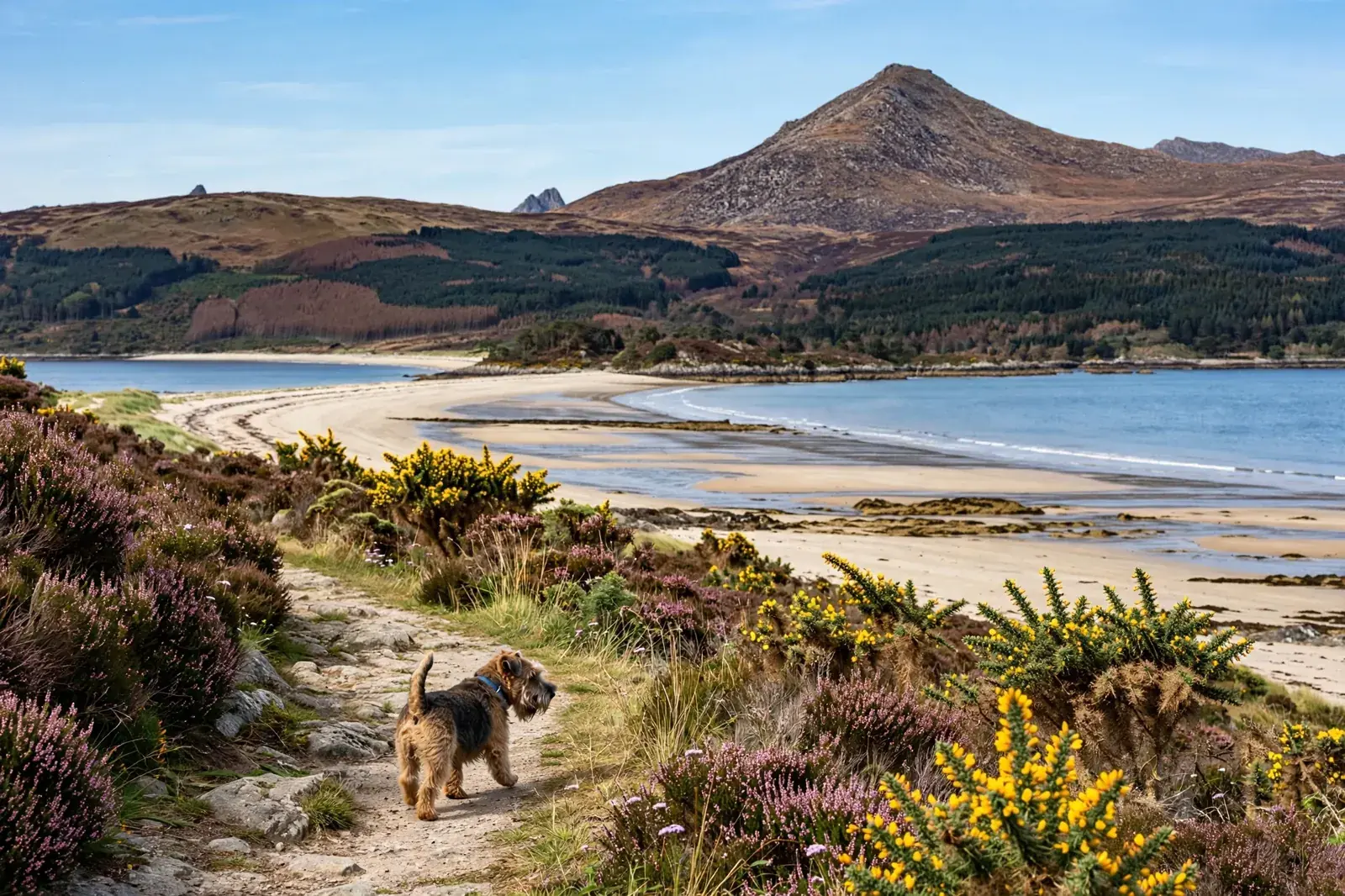
For a practical route, start at the village centre and follow the shore road south, then turn onto the beach where access is clear and the ground is firm. Walk for as long as the dog is comfortable, then turn back the same way or loop inland through the quieter streets. A second, shorter option is to walk north along the shore towards the edge of the village, where the houses thin out and the loch opens up. Either way, the walk is mostly flat, which suits older dogs, puppies and owners who prefer a gentle pace, and the views change constantly as the light moves across the water. Bring water for the dog, because sea water is not a substitute for fresh water, and bring a towel for the car: even on a dry day, a dog that has been paddling will bring sand and salt back with it.
Beach safety deserves a short checklist of its own. Rinse the dog's paws after a walk on salt water and sand, check between the toes for grit, and watch for any cuts from shells or sharp stones. Keep the dog away from dead fish, seaweed that may hide hooks, and any washed-up debris, and do not let the dog drink sea water. If the dog swims, choose a calm, shallow entry and stay close; Loch Indaal is sheltered, but it is still a sea loch, and currents and cold water deserve respect. A dog that is a confident swimmer at home may still tire quickly in cold water, so keep swims short and let the dog rest on the sand between paddles.
After the walk, the village is close enough that you can dry the dog, change into dry shoes and be sitting with a coffee within minutes. That closeness is part of what makes Bowmore work as a base: the big walk does not need a drive, a car park or a long planning session. You can fit a proper beach walk into the morning, a distillery visit into the afternoon, and an evening stroll along the shore without ever feeling rushed. For dogs that settle best with a familiar routine, that repeatable pattern — shore in the morning, rest at midday, short walk in the evening — is often better than a new expedition every day.
Whisky capital: distillery rules for dogs
Bowmore is often called the whisky capital of Islay, and the claim is easy to understand once you are there. The village is home to Bowmore Distillery, one of the oldest distilleries in Scotland, and it sits within a short drive of several other famous names: Bruichladdich and Kilchoman to the west, Ardbeg, Lagavulin and Laphroaig to the south, and Bunnahabhain to the north-east. Islay whisky is known around the world for its peaty, smoky character, although not every Islay malt is heavily peated, and part of the pleasure of a visit is learning how different the distilleries are from one another. For a dog owner, the question is not whether the whisky is worth tasting — it is how to enjoy it without leaving the dog in the car or missing the visit altogether.
The honest answer is that distillery rules for dogs vary, and they vary by area within the same building. As a general pattern, dogs are often welcome in the shop, the reception area and sometimes an outdoor seating area, while the still house, the warehouses and the guided tour itself may have different rules. That is not a lack of welcome; it reflects the practical realities of a working distillery. Production areas can be hot, noisy and slippery, with moving machinery, strong smells and alcohol vapour, and a tour group moving through narrow passages is not a good place for a dog on a lead. Warehouses may have uneven floors and low light, and tasting rooms are often small. The shop, by contrast, is a calmer space where a well-behaved dog on a lead is usually fine.
Plan each distillery visit in advance, and check the official guidance before you travel for the current dog policy. The simplest approach is to contact the distillery directly before you book, explain that you are travelling with a dog, and ask three questions: can the dog come into the shop and visitor centre, can the dog join the tour you are considering, and is there an outdoor area where the dog can wait comfortably with one of your party? The answer will often depend on the tour: a short tasting in the shop may be straightforward, while a longer warehouse tasting or a production tour may not be suitable. Some distilleries allow dogs on certain tours at quieter times, others ask you to leave the dog outside the tour area, and a few have a dog-friendly cafe or terrace where the dog can settle while you take turns.
If you are travelling as a couple or a small group, the easiest solution is to take turns. One person joins the tour while the other walks the dog along the shore or sits with the dog in the cafe, then you swap and compare notes. That way the dog is never left alone in a car or tied up outside for an hour, and nobody has to miss the distillery entirely. If you are travelling alone with a dog, choose the distilleries that are most clearly dog-friendly in their public areas, book a shorter visit rather than a long tour, and be prepared to enjoy the shop, the tasting bar and the setting rather than the full production tour. A shorter visit done well is better than a long tour that leaves the dog stressed.
Never leave a dog in a car while you visit a distillery, even for a short time. Cars heat up quickly in sun, cool down fast in winter, and a dog left alone in an unfamiliar car park is at risk even on a mild day. The same rule applies to leaving a dog tied up outside a distillery: it is stressful for the dog, unfair to other visitors, and unnecessary when there are better options. If the distillery you most want to visit cannot accommodate the dog, treat that as information, not a problem: choose a different distillery, visit the shop only, or plan the tour for a day when the dog can stay comfortably at your accommodation with a familiar routine.
Bowmore Distillery itself sits on the shore at the edge of the village, close enough to walk to from most accommodation. Its visitor centre is a good first stop, because it gives you a sense of the village's whisky history and a chance to ask staff about the best way to plan the rest of your visits. The distillery is one of the oldest on Islay, and its warehouses sit close to the loch, which is said to influence the character of the whisky as it matures. Whether or not you believe the sea air changes the spirit, the setting is memorable: low white buildings, the smell of malt and peat smoke, and the loch just beyond the wall. Take the dog for a walk along the shore before or after your visit, so the dog has had its exercise and is more likely to settle quietly in the shop.
Beyond Bowmore, the southern distilleries — Ardbeg, Lagavulin and Laphroaig — are clustered along a short stretch of coast near Port Ellen, and they make a natural half-day trip by car. The road is scenic, the shore is dramatic, and each distillery has its own character: Laphroaig is famous for its intensely peaty style, Lagavulin for its long, slow maturation, and Ardbeg for its experimental releases. Check each one separately before you go, because their dog policies, tour lengths and booking requirements are not the same, and a distillery that welcomes dogs in its cafe may still restrict them on a warehouse tour. Bruichladdich, on the western shore, is known for a different, unpeated style in many of its bottlings, and Kilchoman, a smaller farm distillery, offers a quieter, more personal visit. Bunnahabhain, in the north-east, is the most remote of the main distilleries and rewards the drive with a sheltered bay and a very different landscape. A realistic plan is to visit one distillery a day, or two at most, and to leave plenty of time for the dog's walks in between.
A dog-friendly day in the village
A good day in Bowmore does not need a timetable, but it does help to have a shape in mind. Start early, while the village is quiet and the light is low over the loch. Walk the shore at low tide if the timing allows, or take the quiet streets past the round church if the tide is high. The dog gets a proper walk, you get the village almost to yourself, and by the time the shops open you have already had the best part of the day. Breakfast can be back at your accommodation or in a cafe that welcomes dogs, and the choice will often depend on the weather: a sunny morning suits a terrace, a wet morning suits a warm room with the dog settled under the table.
Mid-morning is the best time for the practical jobs. Buy supplies, check the ferry times for the day you leave, and confirm any distillery bookings. Bowmore has a supermarket and a handful of independent shops, so you can stock up on dog food, treats and fresh water without a drive. If the dog needs anything — a spare lead, a towel, a packet of poo bags — this is the time to buy it, because the smaller villages on Islay have fewer shops and shorter opening hours. Keep the dog on a lead in shops unless the shop clearly invites dogs inside, and ask before you bring the dog into a small space where other customers may be close.
Late morning or early afternoon is the natural slot for a distillery visit or a short drive. If you are visiting a distillery, walk the dog first so the dog is tired and settled, and keep the visit to the length the dog can manage comfortably. If you are driving, choose a destination that has a walk at the other end — a beach, a coastal path or a village with a shore — so the drive feels like part of the day rather than a chore. The Rinns of Islay, to the west, has long beaches and open views; Port Charlotte, a short drive from Bowmore, has whitewashed houses and a small museum; Port Ellen, to the south, has a harbour, shops and the road to the southern distilleries. Any of these makes a good half-day, and none of them needs a long drive.
Afternoon is for rest, especially in summer. Dogs tire in heat and wind, and a tired dog that is allowed to sleep in a cool room will be a happier companion in the evening than a dog that has been kept going all day. Use the quiet hours to plan the next day, read about the places you have seen, or simply sit with the dog while the village goes about its business. If the dog is restless, a short, slow walk around the block is better than a long expedition. The aim is to keep the dog's routine steady: food at the usual time, water always available, a familiar bed, and no surprises.
Evening is when Bowmore is at its most attractive. The light on Loch Indaal softens, the white houses glow, and the shore road becomes a gentle promenade. Take the dog for a last walk along the water, then settle in for dinner — either in your accommodation or in a place that welcomes dogs in its bar or dining area. Ask in advance, because dog policies in pubs and restaurants vary by room and by season, and a place that welcomes dogs on the terrace in summer may have different rules indoors in winter. A dog that has had a good day, a proper walk and a quiet rest will usually settle under a table without fuss, especially if you bring a mat or blanket that smells of home.
That rhythm — early walk, practical morning, one outing, rest, evening stroll — works for most dogs, and it works particularly well in a village as compact as Bowmore. It also leaves room to change the plan. If the weather turns, you can shorten the walk and spend longer in a cafe. If the dog is full of energy, you can add a second beach walk. If you discover a place you love, you can go back the next day. The village does not demand a packed itinerary; it rewards the opposite, a slow pace that lets you notice the church, the houses, the loch and the dog beside you.
Where to stay and eat with a dog
Bowmore has a useful range of places to stay, from a hotel on the shore to guesthouses, self-catering cottages and bed and breakfasts in and around the village. That range matters, because the right choice depends on the dog as much as on the budget. A hotel room can work well for a calm dog that settles quickly, especially if the hotel has a garden or a short walk nearby, while a self-catering cottage often suits a dog that needs space, a garden of its own, or a routine that does not fit hotel mealtimes. Our guide to dog friendly hotels in the UK explains the questions to ask before you book any hotel room with a dog, from pet fees and room location to dining rules and what happens if the dog barks.
When you compare places in Bowmore, ask the same questions you would ask anywhere, but pay attention to the details that matter on Islay. Is there a secure outdoor area where the dog can go out last thing at night without a long walk? Is the garden fenced, and how high is the fence? Can the dog be left alone in the room or cottage for a short time, and if so, under what conditions? Is there a charge per dog per night, and does it cover cleaning or is there a separate fee? Is there parking beside the door, so you are not carrying bags and a lead across a busy road? And is the accommodation close enough to the shore that the morning walk does not need a drive? The answers will tell you more than any star rating.
Self-catering is a popular choice on Islay, and it suits many dog owners for a simple reason: you control the routine. You can feed the dog at the usual time, leave a familiar bed in a quiet corner, and come and go without worrying about hotel corridors or dining rooms. Look for a cottage with a hard floor in the entrance, a place to dry a wet dog, and a garden that is genuinely enclosed rather than merely described as fenced. Ask for photographs of the garden and the entrance if they are not shown online, and ask whether the garden is shared with other guests or private to your cottage. A private garden changes the whole stay for a dog that needs a safe place to stretch its legs.
Eating out with a dog in Bowmore is usually straightforward if you ask first. Several places welcome dogs in the bar or on a terrace, and some allow dogs in a defined part of the dining room, especially outside peak hours. The rules can change by season, by time of day and by the layout of the building, so do not assume that a place that welcomed dogs last year will have the same policy this year. Call or message ahead, explain the size and temperament of your dog, and ask where the dog will sit. A dog that can settle under a table on a mat is a very different guest from a dog that needs to be held on a lead in a busy doorway, and the staff will be able to tell you which arrangement works in their space.
Pack for the stay as if you were staying in a cottage even if you are in a hotel. Bring the dog's bed or a familiar blanket, food and water bowls, enough food for the whole trip plus a spare day, any medication, a towel, poo bags, a spare lead, and a drying coat if the dog has one. Islay's shops stock the basics, but they may not stock your dog's usual food or medication, and the ferry timetable means a forgotten item cannot be replaced quickly. A small first-aid kit — tweezers for ticks, saline for eyes, a bandage, and the vet's number — is worth packing too, especially if you plan coastal walks where the dog may pick up a cut or a thorn.
Booking ahead is essential, particularly in summer, during the whisky festival in late May and early June, and at weekends. Islay is a small island with a limited number of beds, and the most dog-friendly places are often booked months ahead. If you are travelling in peak season, book the ferry and the accommodation together, and confirm the dog policy in writing before you pay a deposit. If you are travelling in the quieter months, you will have more choice, but you should still confirm the dog policy and the opening hours, because some places close or reduce their hours in winter. Check the official guidance before you travel for the current opening times and booking rules.
Day trips across Islay
Bowmore's greatest strength as a base is its position. It sits near the middle of the island, with roads radiating out to the coast in every direction, so most day trips are short drives rather than long expeditions. That matters for dogs, because a dog that spends two hours in a car to reach a walk will often be too stiff or too restless to enjoy it. From Bowmore, you can reach a beach, a village or a distillery within half an hour in most directions, walk the dog properly, and be back in the village for dinner.
To the west, the Rinns of Islay offers long, open beaches that are among the best dog walks on the island. The road to Port Charlotte passes through farmland and moorland, with views across Loch Indaal, and the beaches beyond the village — including the long sands at Machir Bay — are wide, sandy and often quiet outside the summer months. Machir Bay is a beautiful place, but it deserves care: the Atlantic swell can be strong, the beach is exposed, and the walk from the car park is across dunes and grass. Keep the dog on a lead near the dunes in nesting season, watch the dog near the water, and check the official guidance before you travel for any local advice. Port Charlotte itself is worth a stop: a planned village of whitewashed houses, a small museum in a former church, and a shore where the dog can stretch its legs.
To the south, the road to Port Ellen runs through the island's interior, past farms and moorland, to a working harbour town with shops, cafes and a ferry terminal. From Port Ellen, the coast road to Ardbeg, Lagavulin and Laphroaig is short but scenic, with the sea on one side and the distilleries on the other. The Kildalton area, further east, is known for its historic carved cross and its quiet shore, and it makes a good destination for a dog walk that combines history and coast. The south is also the part of Islay where the landscape feels most dramatic: low cliffs, rocky bays and the sound of the sea.
To the north-east, the road to Port Askaig and Bunnahabhain takes you through a different Islay: wooded valleys, a narrow road along the Sound of Islay, and the ferry terminal for Jura. Bunnahabhain itself sits in a sheltered bay, with a distillery, a small shop and a shore walk. The drive is slower and narrower than the main roads, so allow extra time and keep the dog settled in the car. Jura, across the water, is a separate island with its own ferry, and it is not a casual day trip with a dog unless you plan the ferry, the walking and the return carefully. For most visitors, the view of Jura from Islay is enough.
To the north, the road towards Bridgend and the interior leads to quieter farmland, lochs and the island's only substantial woodland. This is the Islay that many visitors miss: a landscape of fields, burns and small lochs, with fewer cars and more birds. It is also a good area for a short, gentle walk with an older dog, because the paths are often flat and the distances are short. Ask locally for a recommended route, and keep the dog on a lead near livestock, which is common on these roads.
Whatever direction you choose, keep the day trip short and the walk at the other end long. A good rule is one destination, one proper walk, and plenty of time to get back without rushing. Bring water, a lead, a long line for the beach, and a towel, and check the weather before you set off: Islay weather changes fast, and a sunny morning can turn into a wet afternoon. If the dog is tired, cut the trip short and go back to Bowmore. The island will still be there tomorrow, and a dog that has had a good day is more likely to enjoy the next one.
For a wider sense of how island travel works with a dog, our guide to the Isle of Arran with a dog covers a different Scottish island at a slower pace, with the same emphasis on ferry timing, base villages and realistic daily distances. The islands are different — Arran is hillier and more wooded, Islay is flatter and more open — but the planning principles are the same: book the ferry early, choose one base, and let the dog's routine set the pace.
Practical planning: ferries, parking and vets
Getting to Islay with a dog starts with the ferry, and the ferry deserves more planning than any other part of the trip. Islay is served by Caledonian MacBrayne, known as CalMac, from Kennacraig on the Kintyre peninsula to Port Ellen and Port Askaig. The crossing takes around two hours, and the timetable varies by season and by day of the week, so check the official guidance before you travel for the current sailing times. Book as early as you can, especially if you are taking a car: vehicle space on popular sailings sells out weeks or even months ahead in summer, and the whisky festival week is particularly busy.
Dogs travel on CalMac ferries under rules that depend on the route and the vessel, and those rules are worth reading before you book. Our guide to dogs on UK ferries explains the main patterns — vehicle, kennel, pet cabin and pet lounge — and the questions to ask the operator. On the Islay route, dogs are generally expected to stay in the vehicle or in a designated pet area, and they are not usually allowed in the main passenger lounges or restaurants. That means you need to think about the crossing from the dog's point of view: will the dog be comfortable in the car for two hours, will it need water, and will it need a toilet break before boarding? Walk the dog thoroughly before you join the ferry queue, offer water, and make sure the car is ventilated and shaded while you wait.
Foot passengers travelling with a dog should check the operator rules just as carefully. A dog on foot needs a lead, a muzzle may be required in some circumstances, and there may be a designated area on board where dogs are allowed. If you are travelling without a car, think about how you will get from the ferry terminal to Bowmore: there are buses and taxis on Islay, but they are less frequent than on the mainland, and not every taxi takes dogs. Booking a taxi in advance and confirming the dog policy is the safest approach, and a car — whether your own or a hire car — gives you far more freedom once you are on the island.
Parking in Bowmore is generally straightforward, with on-street parking and small car parks in and around the village. In summer, the village can be busy, especially around the distillery and the shops, so allow extra time and be prepared to park a short walk from where you want to be. That is not a problem for most dogs, but it is worth remembering if your dog is older or struggles with distance. Keep the dog on a lead in car parks, watch for moving vehicles, and never leave the dog in a parked car while you go into a shop or a distillery.
Veterinary cover is the practical point that most visitors forget until they need it. Islay has limited veterinary services, and the nearest practice may have restricted opening hours, especially at weekends. Before you travel, find the nearest vet, save the phone number, and note the opening hours and the emergency arrangements. Bring any medication the dog needs, plus the details of the dog's usual vet, so that a local vet can advise quickly if something happens. In an emergency, call the practice first: they can tell you whether to come in, whether to go to a mainland practice, or what first aid to give while you travel. Check the official guidance before you travel for the current contact details, because practices and opening hours can change.
Other practical points are small but worth getting right. Mobile phone signal on Islay is generally good in Bowmore and the main villages, but it can be patchy on the coast roads and in the north of the island, so download maps and tide times before you set off. Cash is useful in smaller shops and cafes, although most places take cards. Petrol is available in Bowmore, but the filling station may have limited hours, so keep the tank topped up if you plan a long drive. And if you are travelling with a dog that needs a special diet, bring enough food for the whole trip: the supermarket in Bowmore stocks the basics, but it may not stock a specialist brand.
Weather, tides and seasons
Islay weather is changeable, and Bowmore is no exception. The island sits in the Atlantic, exposed to wind and rain from the west, but sheltered by the loch and the hills in a way that makes the weather feel local: it can be raining on the Rinns and sunny in Bowmore, or windy on the shore and calm a mile inland. The best approach is to dress for the weather you have, not the weather you hoped for, and to build flexibility into every day. A waterproof jacket, waterproof trousers, sturdy shoes and a warm layer are worth packing in every season, and the dog will need a drying coat or a towel after most walks.
Spring, from March to May, is a good time to visit Bowmore with a dog. The days lengthen, the geese begin to leave, the first flowers appear, and the island is quieter than in summer. The weather can still be cold and wet, especially in March, but the light is beautiful and the beaches are often empty. Keep the dog on a lead near nesting birds, and watch for lambs in the fields: spring is lambing season, and a dog that chases livestock can cause serious harm and legal trouble. The whisky festival, held in late May and early June, brings visitors and events to the island, and it is a lively time to visit, but it also means busier ferries, fuller accommodation and a need to book well ahead.
Summer, from June to August, is the busiest season, with the longest days, the warmest weather and the most visitors. The beaches are at their best, the distilleries are in full operation, and the village is lively. It is also the season when the dog needs the most care: heat, sun and midges can all be problems. Walk the dog early in the morning and late in the evening, avoid the hottest part of the day, and always carry water. Midges are a particular issue on Islay in still, damp evenings, especially near water and woodland; a dog that is bothered by midges will be restless and uncomfortable, so a midge net for the dog, a repellent that is safe for dogs, and a willingness to move indoors can all help. Check the official guidance before you travel for the latest advice on midge protection for dogs.
Autumn, from September to November, is many people's favourite season on Islay. The summer crowds thin, the light turns golden, the geese return in large numbers, and the island feels quieter and more spacious. The weather can be wet and windy, but the beaches are often empty and the distilleries are less crowded. This is a good time for long beach walks, provided you keep the dog away from feeding geese and waders, and for a slower pace in the village. The days shorten quickly in October and November, so plan walks in daylight and carry a torch for the evening walk.
Winter, from December to February, is the quietest season, with short days, strong winds and frequent rain. Some places close or reduce their hours, and the ferry timetable may be reduced, but Bowmore remains a working village with shops and services, and the island has a stark, beautiful quality in winter. A winter visit suits a dog that is comfortable in cold, wet weather and an owner who is happy with short walks and long evenings indoors. Check the official guidance before you travel for the current opening hours and ferry times, and be prepared for the possibility that a sailing may be delayed or cancelled in bad weather.
Tides deserve a final word, because they shape the beach walks more than any other factor. Loch Indaal has a tidal range that can expose a wide expanse of sand at low water and cover it again within a few hours. That is a wonderful thing for a dog walk, but it also means you should never assume the beach will be the same when you return as it was when you arrived. Check the tide times, watch the water, and keep the dog in sight. If you are unsure, walk the shore as the tide is falling, when the sand is firm and the water is moving away from you, and turn back well before the tide turns.
Dogs, livestock and wildlife
Islay is a farming island, and livestock is part of the landscape. Sheep, cattle and horses graze in fields that border the coastal paths and beaches, and a dog that chases livestock can cause injury, stress and financial loss, as well as legal consequences for the owner. In Scotland, the law on dogs and livestock is strict, and a farmer may take action if a dog is worrying livestock. The rule is simple: keep the dog on a lead near livestock, even if the dog has never chased before, and keep the dog under close control in fields where animals are present. If you see livestock ahead, put the dog on a lead before you reach the field, and give the animals a wide berth.
Wildlife deserves the same care. Islay is famous for its birds, from the geese that winter on the loch to the choughs that nest on the cliffs and the hen harriers that hunt over the moors. Ground-nesting birds are particularly vulnerable in spring and early summer, when a dog running through long grass can destroy a nest without the owner noticing. Keep the dog on a lead or a long line in areas where birds are nesting, and stick to paths where they are marked. Seals, otters and other marine mammals may be seen on the shore, and a dog that chases them can cause stress or injury. Give wildlife space, and teach the dog that wildlife is not a toy.
Other dogs are part of the etiquette too. Bowmore's shore and beaches are popular with local dog owners, and you will meet other dogs on most walks. Not every dog wants to say hello, and not every owner wants their dog to be approached. Keep your dog on a lead when you meet another dog, ask the other owner before you let the dogs greet each other, and respect a request to keep your distance. A dog that is on a lead is not necessarily unfriendly; it may be nervous, in training, recovering from an injury, or simply not in the mood. A short, polite greeting is enough.
Finally, leave the shore as you found it. Pick up after your dog, every time, and take the bag with you: there are bins in the village, but there may not be one on the beach. Do not leave bags on fences, walls or paths, and do not bury them in the sand. The beach is a shared space, and a single bag left behind is enough to spoil it for the next walker. The same principle applies to the village: pick up, bin it, and move on. It is a small act, but it is the one that keeps Bowmore welcoming for dogs and their owners.
Bowmore rewards the visitor who slows down. The round church, the white houses, the loch at low tide and the smell of peat smoke from the distillery are not sights to be ticked off; they are the background to a few days of good walks, good food and good company — with the dog at the centre of it all. Plan the ferry, check the tides, ask about the distilleries, and let the village set the pace. The dog will tell you when the day has been right: a tired, happy dog, asleep by the fire, with sand still on its paws.
Practical questions
Before you go
Can dogs walk on the beach at Bowmore?
Yes, in general the shore at Bowmore is a practical place for a dog walk, especially at low tide when wide firm sand is exposed. Keep your dog under control, watch for other walkers and wildlife, and check the official guidance before you travel for any local restrictions or seasonal advice.
Can dogs go into whisky distilleries in Bowmore?
Dogs are usually welcome in distillery shops and visitor areas, but the production areas and guided tours often have different rules. Ask the distillery before you book, and check the official guidance before you travel, because policies can change by tour type, season and group size.
Is Bowmore a good base for exploring Islay with a dog?
Yes. Bowmore sits near the centre of Islay, with road links to Port Ellen, Port Askaig, Port Charlotte and the Rinns of Islay. It has shops, places to eat and shore walks on its doorstep, which makes it a convenient base for day trips if you plan driving times and ferry bookings carefully.
Do I need to book the Islay ferry in advance with a dog?
Yes, book well ahead, especially in summer and at weekends. Vehicle space sells out, and foot passengers travelling with a dog still need to know the operator rules for pets on board. Check the official guidance before you travel and arrive with time to spare.
Are dogs allowed off the lead around Loch Indaal?
Some open stretches of shore are suitable for off-lead play when they are quiet and your dog has a reliable recall, but a lead is the safer choice near roads, car parks, livestock, nesting birds and other dogs. Use a long line on the beach if you are unsure, and always keep your dog in sight.
Where is the nearest vet to Bowmore?
Veterinary cover on Islay is limited, so find the nearest practice before you travel and save its phone number and opening hours. In an emergency, call the practice first for advice, and check the official guidance before you travel for the current contact details.