This guide is independent and contains no paid placement. If affiliate links are added later, they will be clearly marked and will not change our editorial checks.
Base a Cardiff dog trip on the River Taff corridor. Bute Park and Pontcanna Fields give you the daily off-lead and sniffing walks, the Bay Trail gives you a flat, scenic half-day to the barrage, and the centre works best in short, planned bursts between parks. Check castle and venue rules before you set off, because pet access is narrower than the marketing suggests.
How Cardiff fits together for a dog owner
Cardiff is easier with a dog than most capital cities, and the reason is geography rather than generosity. The River Taff cuts straight through the middle, with parkland stitched along both banks from the Bay in the south to Llandaff and beyond in the north. If you learn that one green spine, you can reach almost everything a dog needs without repeatedly crossing busy roads or relying on a car. The castle, the Principality Stadium, the main shopping streets and Cardiff Central station all sit within a few minutes of the river, yet step a hundred metres into Bute Park and the traffic noise drops away.
Think of a visit in three zones. Zone one is the park corridor itself: Bute Park, Pontcanna Fields, Hailey Park and the Taff Trail, where most proper walks happen. Zone two is Cardiff Bay, about a mile south of the centre, linked by the river path and by a largely flat Bay Trail that suits older dogs, pushchairs and anyone who prefers a surfaced route in wet weather. Zone three is the built-up centre — arcades, markets, cafes and accommodation — which most dogs tolerate best in shorter visits, ideally after a real walk rather than instead of one. Planning each day as park first, city second prevents the classic mistake of dragging a restless dog around shops and then wondering why the evening falls apart.
A few city habits help everywhere. Cardiff has plenty of water refill points in parks and around the Bay, but carry a bottle and a collapsible bowl anyway, especially on the barrage where there is no shade. Bins for dog waste are frequent in the main parks and noticeably scarcer on quieter residential streets, so carry bags further than feels necessary. Pavements in the centre are wide, yet delivery bikes, e-scooters and match-day crowds make a short lead and a dog that can settle under a cafe table far more valuable here than perfect recall. If your dog is nervous around crowds, build the trip around early mornings and the northern, quieter stretches of the Taff Trail rather than the Bay waterfront at lunchtime.
Bute Park and the Taff Trail: the daily walk sorted
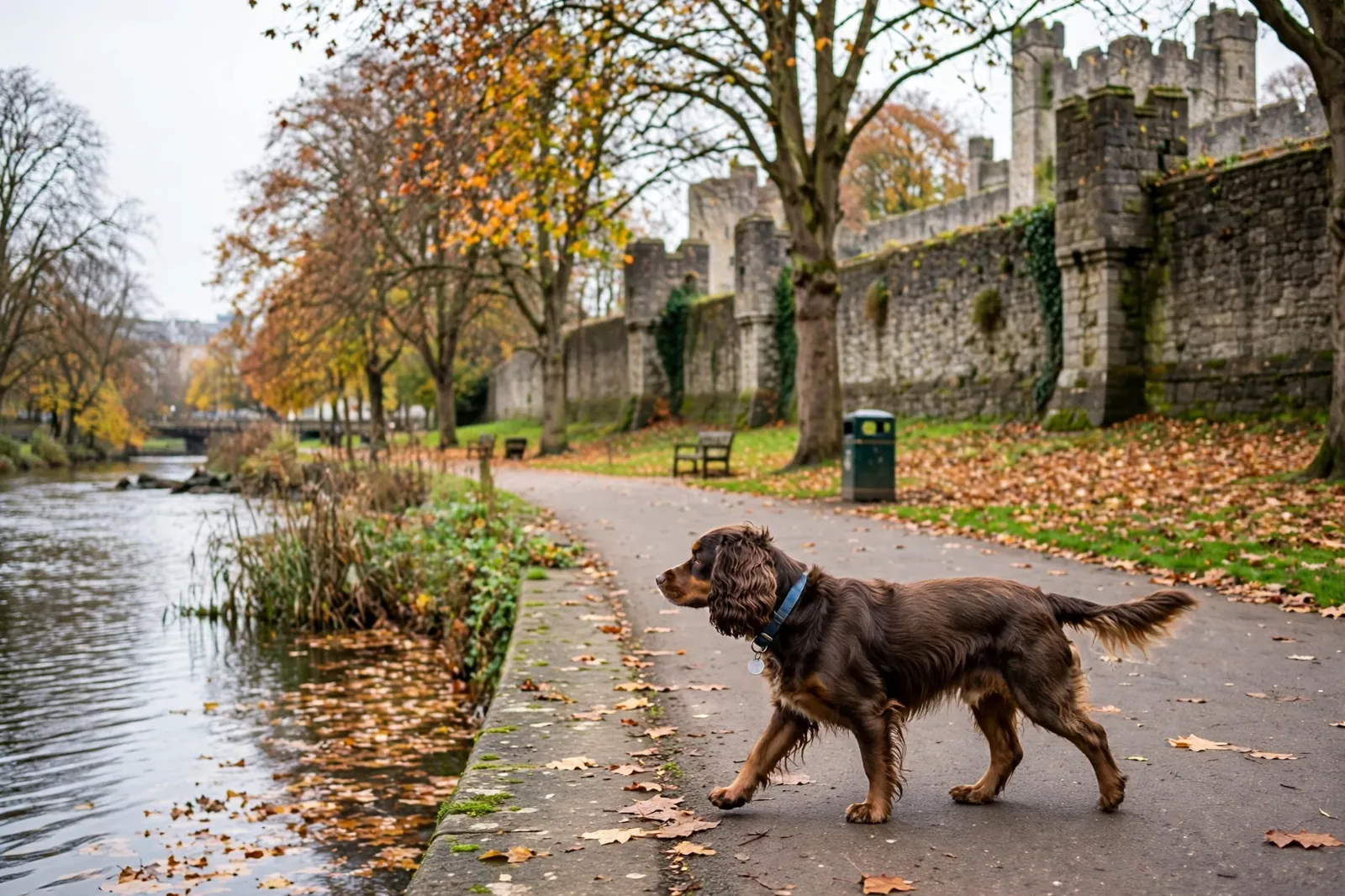
Bute Park is the walk that makes a Cardiff stay work. The park runs from the castle northwards along the Taff, mixing formal planting near the city end with broad meadows, woodland edges and riverside paths further out. The arboretum areas reward a slow, sniff-heavy wander, while the open fields suit a ball game or a long-line session away from the main cycle route. Because the park is large, two visits in one day can feel completely different: a brisk loop before breakfast from the North Gate side, then a longer, unhurried circuit in the late afternoon when sports training and commuter cyclists have thinned out.
Lead rules need attention rather than assumption. Formal gardens, cafe terraces and areas around sports pitches expect dogs on leads, and some sections are signed for on-lead walking at all times. Designated off-lead space exists within the wider park and across the river at Pontcanna Fields, but boundaries are shown on entrance signs, not painted on the ground, so read the board at whichever gate you use and check the latest official guidance before you travel if your plans depend on a particular field. Cyclists use the Taff Trail at speed, so even in off-lead areas keep dogs close when you cross or join the surfaced trail, and never let a dog drift across the path while you look at your phone.
The Taff Trail itself is the obvious extension. Heading north from Bute Park, the route passes Blackweir, follows the river through increasingly leafy suburbs and can be cut short at almost any bridge for a bus or a walk back on the opposite bank. Heading a full morning north towards Llandaff gives you a cathedral village feel, quieter paths and a natural turning point for lunch, while a shorter there-and-back to Hailey Park suits puppies, seniors and wet days. Surfaces are mostly tarmac or compacted path, which helps after rain, but riverside sections can flood after prolonged heavy weather and fallen leaves hide mud in autumn. Paws need a rinse after gritty winter walks, and in summer the shaded northern stretches are noticeably kinder than the exposed Bay route at midday. For a longer upland contrast later in a Welsh trip, many visitors pair a Cardiff base with our Brecon Beacons dog walking guide, using the city for easy days between hill walks.
Cardiff Bay and the barrage loop
The Bay offers the other essential Cardiff dog walk, and it could hardly feel more different. Where Bute Park is wooded and enclosed, the Bay is open water, big skies and wind. The Cardiff Bay Trail loops around the freshwater lake created by the barrage, linking the city-side waterfront at Mermaid Quay with Penarth across the water. You do not need to complete the full loop, which is a substantial outing, to get the best of it: the section from the Bay across the barrage and back is a satisfying flat walk in its own right, with views back to the Senedd, the Norwegian Church and the city skyline.
Dogs cross the barrage on leads alongside walkers and cyclists. The route is shared, busy at weekends and exposed in poor weather, so keep the lead short near the locks, give way at the bascule bridges and pause well clear of the path if your dog wants to watch the boats. Bridge lifts and lock operations can briefly hold pedestrians, which is part of the interest for people and a test of patience for dogs; a settle on a mat or a handful of treats makes the wait easier. There is little natural shade and no grass relief area on the barrage itself, so offer water before you cross, plan a toilet stop on the parkland at either end, and avoid the hottest part of a summer day, when the surface radiates heat and the wind can still make it feel deceptively cool.
Back on the city side, the waterfront terraces are the social heart of the Bay. Many cafes and bars welcome dogs outside and a growing number allow them inside, but policy belongs to each venue and changes with refurbishments and seasons, so ask at the door rather than relying on a sticker in a window. The wetlands reserve on the northern side of the Bay is a calmer add-on for a dog that needs space from crowds, though wildlife comes first there and leads are essential. If the weather turns, the Bay still works as a short, bracing walk followed by a long lunch, whereas forcing a full loop in driving rain pleases nobody. Visitors heading further west afterwards often continue to our Gower Peninsula dog guide for beaches and coast paths, which makes a neat city-to-coast pairing within a single Welsh break.
Cardiff Castle, the centre and what dogs can actually do
Cardiff Castle dominates photographs of the city, so it is important to be precise about dog access. The castle walls border Bute Park, and dogs can enjoy the parkland, the river path and the views of the Norman keep and the ornate towers from outside without any ticket at all. Inside is a different matter. Pet dogs are generally not permitted inside the castle interiors, and access to the grounds for pet dogs is restricted and can change for concerts, festivals and private events. Assistance dogs are a separate case and are treated differently. The practical advice is simple: do not build a day around taking a pet dog inside the castle, split the group if some people want the tour while another person walks the dog in Bute Park, and check the latest official guidance before you travel for the current position on grounds access.
The wider centre rewards the same split approach. Cardiff Market, the Victorian and Edwardian arcades and the main shopping streets are fascinating for people and mostly nose-level temptation and slippery floors for dogs. Some individual shops welcome dogs and say so clearly; many food premises cannot. A better centre plan is a short, purposeful visit — coffee at a venue that has already confirmed dogs are welcome, a browse in a dog-friendly independent shop, then back to the park — rather than an open-ended shopping afternoon. The civic centre around Cathays Park, with its gardens, museum quarter and broad pavements, is the calmest built-up area for a dog that dislikes shopping crowds, and it links neatly back to Bute Park for a proper walk afterwards.
Two centre-specific logistics catch people out. First, events transform access: concerts at the castle, stadium fixtures and city festivals can close park gates, fence off lawns and redirect the Taff Trail, sometimes with little notice on the ground. Second, pavements around Cardiff Central and the stadium become one-way human rivers at peak times, which is frightening for small dogs and exhausting for reactive ones. If your dog falls into either category, cross the centre early in the morning, use the river path as your north-south route instead of the main streets, and treat midday in the centre as optional rather than essential. For ideas on eating out once you leave the centre, our UK dog-friendly cafes guide explains how to judge a venue beyond a welcome sign.
Roath Park: the local favourite for a calmer reset
Every city dog trip benefits from one walk that is not the famous one, and in Cardiff that walk is Roath Park, about two miles north-east of the centre. Built around a large boating lake with a lighthouse memorial, wild gardens, a botanic garden area, rose gardens and a recreation ground, Roath feels like a neighbourhood park that happens to be exceptionally handsome. For a dog, the appeal is variety in a compact area: surfaced lakeside paths for a steady lead walk, lawns for a breather, and quieter garden corners for decompression after a busy day in the centre or at the Bay.
That variety comes with tighter control than Bute Park. The lake attracts swans, geese and other water birds year-round, and dogs must be kept away from the water edge and under close control around wildlife. Formal garden sections and the conservatory area have their own restrictions, cafe surroundings expect leads, and fishing and boating activity means leads are the sensible default for most of a Roath visit. Treat it as an on-lead pleasure walk rather than an off-lead run, and pair it with an earlier off-lead session at Pontcanna if your dog needs to burn energy. Chasing birds is the single fastest way to ruin goodwill in parks like this, so if your dog has a strong prey drive, keep a double grip near the lake and choose the recreation-ground side for any games.
Getting there is straightforward by bus or by a longer walk through Cathays and Roath residential streets, and parking nearby can be tight at weekends when local families arrive for the lake and the playgrounds. Mornings are quietest, light on the lake is at its best early, and the park works beautifully as a final morning walk before a train home, because it tires a dog gently without the stimulation of the stadium end of town. In autumn the tree colour around the lake rivals anything in Bute Park, while in spring the garden planting gives the walk a completely different character, which is why local owners return weekly rather than treating Roath as a one-off sight.
Eating, drinking and filling a rainy hour
Cardiff is strong on independent cafes, and dog owners do well in the neighbourhoods as much as in the centre. Pontcanna, Roath, Grangetown and the Bay each have clusters of cafes where dogs are part of the morning routine, and staff in genuinely dog-welcoming places will usually offer water without being asked. Judge a venue by what happens after you sit down: space between tables for a dog to lie down, a floor that is not treacherously polished, and a team relaxed about a wet dog on a wet day. A business that only tolerates dogs on an empty terrace in June is not the same as one that welcomes them indoors in November, so ask specifically about indoor access if your visit is in the colder half of the year.
Pubs follow a similar pattern. Traditional city-centre pubs vary widely, with some allowing dogs in the bar but not in dining areas, and many becoming effectively no-go zones on match days regardless of their usual policy. Neighbourhood pubs near the parks tend to be calmer and more consistent. Wherever you go, use the standard courtesies that keep doors open for the next owner: settle the dog away from walkways and food routes, keep leads off chair legs and table legs, bring a mat or blanket for longer stops, and leave promptly if your dog cannot settle. A dog that barks at every new arrival will enjoy a park bench coffee far more than a busy brunch service, and there is no shame in choosing that instead.
Rain deserves its own plan in Cardiff. A classic wet-weather combination is a full Bute Park walk in proper waterproofs — dogs rarely mind, and the park empties — followed by a long, booked lunch at a venue that welcomes dogs indoors, then a short evening loop once the rain eases. Pack a drying coat and a spare towel for cafe stops, because arriving with a dripping dog tests even friendly policies. If rain is set in for the whole day, shorten the Bay plan rather than abandoning movement altogether: the barrage in wind and rain is genuinely unpleasant, while the tree cover along the northern Taff Trail makes a far better bad-weather walk. Check the latest official guidance before you travel for any park closures or path diversions after storms, as fallen trees can close sections at short notice.
Where to stay with a dog in Cardiff
Where you sleep matters more in a city than in the countryside, because the first and last walks of the day happen on your doorstep. The most practical bases for dog owners are the edges of the park corridor: Pontcanna and Canton on the west side put Pontcanna Fields and Bute Park within minutes, while Roath and Penylan suit Roath Park regulars and feel quieter at night. The Bay suits visitors who want evening waterfront walks and do not mind travelling into the centre, while a central hotel suits a short stay with a calm, city-proof dog and a willingness to walk to Bute Park for every proper outing.
Hotels, aparthotels, guest houses and self-catering flats all take dogs somewhere in Cardiff, but the detail varies more than the label. Confirm, in writing, the pet fee per night or per stay, the maximum number and size of dogs, whether dogs may be left alone in the room, and which areas — breakfast room, bar, terrace — dogs may enter. A hotel that welcomes dogs in bedrooms but not at breakfast is workable if there is a cafe nearby and a problem if there is not. Ask about lift access if your dog dislikes stairs, about the nearest patch of grass for a late-night toilet trip, and about noise: a room overlooking a stadium route or a busy bar street is a poor choice for a sound-sensitive dog, however good the rate looks.
Self-catering gives you a kitchen for muddy-day feeding routines and usually more floor space, but check the garden claim carefully in a city. A shared courtyard is not a private garden, a yard with a low gate onto an alley is not secure, and many otherwise excellent flats sit above commercial premises with no outdoor space at all. For a longer Welsh base that mixes city days with park stays, comparing Cardiff accommodation against our Welsh dog-friendly holiday parks guide helps you decide whether a city flat or a park unit fits the trip better. Whichever you choose, arrive before dark if you can, walk the immediate toilet route once in daylight, and keep the first evening routine deliberately dull: food, water, familiar bedding, one calm walk, sleep.
Match days, crowds and getting around the city
Cardiff is a sporting capital, and fixtures shape the city more than any other single factor. The Principality Stadium sits almost on top of the Taff and the castle, Cardiff Arms Park is next door, and Cardiff City Stadium draws crowds to Leckwith, while the Bay venues host everything from sailing to street food festivals. On a big match day the centre fills hours before kick-off, pubs operate queues and one-in-one-out doors, roads close, and the park gates nearest the stadium become congested. None of this makes Cardiff a bad choice for that weekend, but it does mean the day needs designing rather than drifting through.
The workable pattern is to walk early and walk away from the stadium. A long Bute Park or Taff Trail walk before the crowds build, followed by a base in Pontcanna, Roath or the Bay during the match itself, keeps a dog out of the worst pinch points at the station, Westgate Street and the stadium bridges. Book any dog-friendly lunch for a match day well in advance and reconfirm, because some venues suspend dog access when they expect to be at capacity. After full time, wait at least forty-five minutes before routing through the centre, or leave via the Bay Trail, which stays comparatively calm. If your dog is frightened by singing, drums or sudden cheering, check fixture lists before you book dates at all — an international weekend in Cardiff is loud in a way a normal Saturday is not, and there is always another weekend.
For transport, Cardiff is compact enough that most dog owners walk almost everywhere within the centre-Bay-parks triangle. Local buses and trains each have their own conditions for dogs, and those conditions, along with any restrictions at peak times, should be checked with the operator, so check the latest official guidance before you travel rather than assuming a rule from another city applies. Taxis and private hire vary by driver and company, so declare the dog when booking and confirm the car will accept it. If you arrive by car, city-centre parking is expensive and fills early on event days; staying on the park side of the city and walking in is usually simpler than driving between sights, and it means the dog starts every outing on foot rather than in a car park stairwell.
Two sample days that actually work with a dog
The river day. Start with an early off-lead and sniffing session in Bute Park or Pontcanna Fields before the cycle commuters build up, then coffee in Pontcanna once the dog is ready to settle. Late morning, walk the Taff Trail north to Llandaff at an easy pace, pause for lunch in the village, and return by the opposite bank or by bus if younger or older legs have had enough. Keep the late afternoon free for rest at your accommodation, then finish with a short, calm loop around the civic centre gardens and an early dinner at a neighbourhood venue that welcomes dogs indoors. This day covers Cardiff's best walking without ever needing the car, and it leaves the centre's shops for anyone who wants to split off for an hour while the dog rests.
The Bay day. Begin in the centre with a short Bute Park leg-stretch, then follow the river path south to the Bay late in the morning, when the waterfront has woken up. Cross the barrage on leads, take in the views towards Penarth and the Bristol Channel, and either complete a shorter return by the same route or linger on the Penarth side before coming back. Lunch works best at a Bay venue with space for a dog to lie down properly after the exposed crossing. In the afternoon choose between the wetlands reserve for quiet or a gentle circuit of the waterfront, and if the weather collapses, cut the walk and keep the lunch — the Bay rewards flexibility. End the day with a Roath Park sunset walk if you are staying on that side of the city, or a final short Taff loop if you are central.
A short packing list makes both days easier. Bring a standard lead plus a long line for signed off-lead areas, plenty of waste bags, a bottle and bowl, a drying coat and towel, a settle mat for cafes, treats that can hold attention during bridge lifts and match-day noise, and paw balm or a rinse plan for gritty winter paths. Add a printed note of your accommodation address, a local emergency vet number saved offline, and a fixture check for your dates. Cardiff asks very little of a prepared owner: give the dog the river in the morning, respect the signs in each park, keep the centre in short bursts, and the Welsh capital becomes one of the easiest city breaks in Britain to share with a dog.
Practical questions
Before you go
Are dogs allowed in Bute Park in Cardiff?
Yes, dogs are welcome in Bute Park, but rules vary by area. Keep dogs on a lead in formal gardens, near cafes and on sports pitches, use signed off-lead areas for free running, and always follow on-site signs on the day. Rules can change for events, so check the latest official guidance before you travel.
Can dogs walk across the Cardiff Bay Barrage?
Yes, the barrage route forms part of the Cardiff Bay Trail and dogs on leads can cross with walkers and cyclists. Keep to the pedestrian side where marked, hold the lead short near the locks and bridges, and allow extra time when the route is busy or a bridge lift is in progress.
Are dogs allowed inside Cardiff Castle?
Pet dogs are generally not permitted inside the castle interiors and access to the grounds is restricted and can change for events. Assistance dogs are treated differently. Do not plan a castle visit around bringing a pet dog inside, and check the latest official guidance before you travel for the current grounds policy.
Where can dogs go off lead in Cardiff?
Signed off-lead areas exist in parts of Bute Park and Pontcanna Fields, and many neighbourhood parks allow free running away from pitches, play areas and cafes. Roath Park has more controlled areas around the lake and gardens. Always read the signs at each entrance, because boundaries differ from park to park.
Is Cardiff dog-friendly on match days?
Cardiff copes well if you time it carefully. Streets near the Principality Stadium, Cardiff City Stadium and Cardiff Arms Park get very crowded before and after fixtures, and pubs fill quickly. Walk early, use Bute Park or the Bay as an escape route, book dog-friendly tables in advance and avoid the stadium pinch points at kick-off and full time.