This guide is independent and contains no paid placement. If affiliate links are added later, they will be clearly marked and will not change our editorial checks.
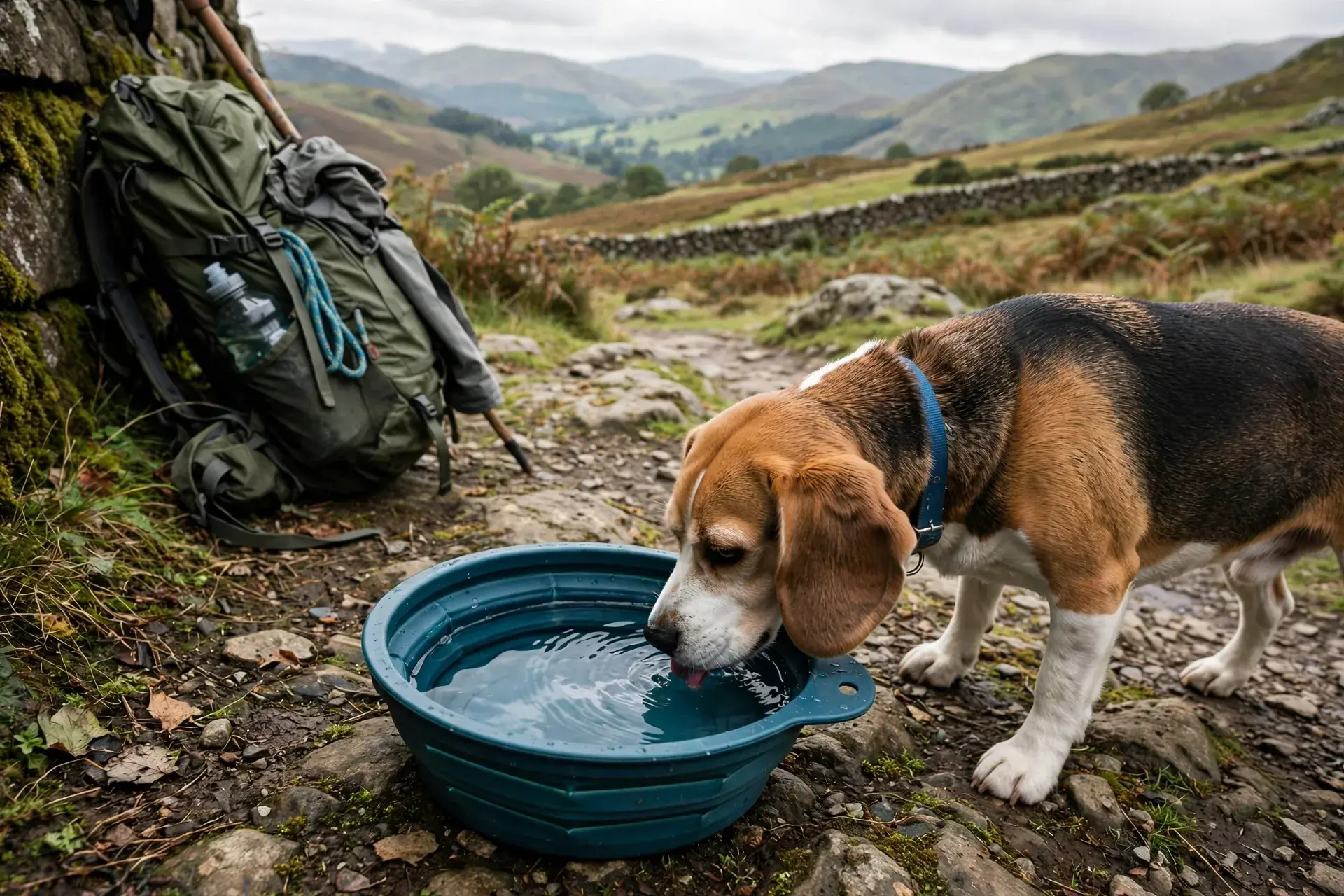
A food-grade silicone bowl with a wide base, a folded thickness under 4 cm and a genuine non-slip bottom covers almost every UK trip. Fabric bowls pack flatter and weigh less, but check the seams for seepage. Size the bowl to your dog's meals, not just their water.
The one-bowl packing problem
Every dog owner who travels knows the argument against carrying a proper bowl: it is bulky, it rattles around the boot, and it is only used twice a day. So people improvise. They pour water into a plastic sandwich box, a hotel ashtray, or cupped hands at a tap on a station platform. It works, after a fashion, right up until the moment it does not — the box splits at a fold and soaks the back seat, the "bowl" blows off a cafe table, or the dog, reasonably enough, refuses to drink from something that smells of last week's tuna.
A collapsible bowl exists to end that improvisation with a piece of kit that weighs about as much as a phone and flattens into a jacket pocket. The best ones handle both jobs that matter on a trip: water on demand during the day and a proper meal in the evening. That dual duty is the real test, and it is stricter than it looks. A bowl that is fine for sipping water at a pub garden can be hopeless for dinner — too shallow for a hungry labrador's kibble, too tippy for a dog that eats at speed, or too hard to clean after wet food. Buying for "a bowl" is easy; buying for both meals and water is what separates a gadget from kit you will still be using in three years.
The economics are worth stating plainly. A decent collapsible bowl costs roughly the same as two rounds of emergency bottled water and a disposable tray at a motorway services, and it removes a small recurring stress from every trip. The failure mode of the cheap ones is not dramatic — they just slowly stop being used. They seep at the seam, so they live permanently damp in a rucksack. They keep a faint smell of wet dog that puts the dog off drinking. They collapse mid-lap when a big dog leans on the rim. Each small annoyance teaches you to leave the bowl at home, and then you are back to the sandwich box. Spend the small amount of attention this guide asks, and you buy the thing once.
British travel sets its own requirements, which is why a guide written for generic "travel" does not quite do. Trips here involve rain, mud, pub gardens, station platforms, car boots on wet days, and countryside where the nearest tap can be a mile away. The bowl you pick has to dry fast when you cannot hang it up properly, not hold smells in a confined car, survive being stepped on in a tent, and sit steady on surfaces that are rarely level — think picnic tables, stone walls, and the sloping grass of a dog friendly cafe beer garden. Keep that picture in mind as you read the comparisons below, because it is the filter that turns a list of features into a decision.
Silicone vs fabric vs hybrid: the material decision
The whole market divides into three material families, and the choice between them determines nearly everything else — weight, packed size, washability, lifespan and how the bowl behaves when a thirsty dog charges at it. Start here and most of the other decisions get easier.
Food-grade silicone is the default recommendation for most travellers, and for good reason. It is the same class of material used in baking moulds and baby feeding equipment, which means it tolerates heat, cold and repeated folding without the plasticiser worries that dog owners reasonably have about cheap plastic bowls. A silicone bowl unfolds into a genuinely rigid shape — it holds its walls upright when full, which matters for dogs that lap hard — and it survives being dropped, stepped on, kicked across a patio and frozen in a winter car boot. The walls wipe clean with a damp cloth, and most designs are dishwasher-safe, so the weekly deep clean is trivial. Downsides: silicone is heavier than fabric (a medium bowl typically weighs 150–250 grams) and it folds flat but not paper-thin — expect 3–5 cm of packed thickness. It also attracts dust and dog hair through static, which is a cosmetic annoyance rather than a real problem.
Fabric bowls — usually nylon or polyester with a waterproof laminated lining — are the ultralight option. They collapse to the thickness of a folded envelope and weigh almost nothing, which makes them the choice of long-distance walkers and anyone already rationing rucksack space. The trade-off is structure: a fabric bowl relies on its rim and the water's own weight to hold shape, so a boisterous drinker can fold it over, and some dogs find the soft walls unsettling for eating from. The lining is the weak point over time. It can delaminate after many wash cycles, develop pinhole seeps at creases, or trap odours in the fabric that survive washing. A good fabric bowl, rinsed and dried properly, can last several seasons of weekend use; a cheap one used daily may weep within months. Check product reviews specifically for mentions of leaking and smell, not just for star ratings.
Hybrid designs try to take the middle ground: a rigid or semi-rigid base ring with fabric or silicone walls. In practice they behave like the material of their walls, with one genuine advantage — the stiff base makes them noticeably harder to tip, which helps with enthusiastic drinkers. The penalty is packed size and price; hybrids rarely fold as flat as pure fabric and cost more than plain silicone. They suit one specific owner well: someone with a large, clumsy dog who needs tip-resistance but still wants packability.
A word on materials to avoid. Thin single-use style plastic bowls — the kind given away at events — crack at the fold line within weeks and are false economy. Stainless steel travel bowls exist and are superbly durable, but they are heavy, do not collapse, and solve a different problem; this guide treats them as home bowls that happen to travel, not as collapsible kit. Whatever you choose, look for an explicit "food-grade" or equivalent food-contact claim on the listing rather than vague "safe material" language. If the listing will not name the material, treat that as information in itself.
Six things to check before you buy
Once the material is settled, six practical checks separate the bowls that last from the ones that migrate to the back of a cupboard. Run through them against any shortlist and you will rarely go wrong.
1. Capacity, sized for meals — not just water. Most collapsible bowls come in roughly 350 ml, 750 ml and 1 litre-plus sizes, and buyers consistently undersize. A 350 ml bowl is fine for a small terrier's water top-up but useless for a spaniel's dinner. Size up: the bowl should hold your dog's full meal with room to spare, because a bowl filled to the brim is a bowl about to be knocked over. As a rough guide, small breeds (under 10 kg) suit 500–750 ml, medium breeds 750 ml–1 litre, and large breeds 1 litre or more. If you travel with two dogs, two medium bowls beat one enormous one — each dog gets its own, and you avoid resource-guarding tension at the water stop.
2. Folded thickness and real packed size. Manufacturers love to photograph bowls folded flat under a book, but check the stated folded dimensions and imagine the shape in your actual bag. A disc 18 cm across and 4 cm thick fits a jacket pocket or a rucksack lid; a disc 22 cm across does not, whatever the thickness. For car travel this barely matters, but for travel bed plus bowl plus lead plus treats in one daypack, every centimetre counts. Fabric bowls win this category outright; silicone needs a few centimetres of depth to hold its shape.
3. Waterproof seams and genuine leak-proofing. The classic failure of a collapsible bowl is not a dramatic split — it is a slow seep at a seam or fold crease that leaves everything in the bag faintly damp. Silicone bowls are inherently watertight because they are moulded in one piece; check that any carry loop or carabiner hole does not pierce the bowl wall below the fill line. Fabric bowls need welded or taped seams rather than stitched ones, and the listing should say so explicitly. Before trusting a new bowl on a trip, fill it at home, set it on a dry tea towel for an hour, and check the towel. This two-minute test catches most duds.
4. Base stability and grip. A bowl that slides across a pub floor or tips when a dog leans on the rim is worse than no bowl, because it teaches the dog to distrust it. Look for three things: a base wider than the rim is tall (low and wide beats tall and narrow), a textured or rubberised underside rather than smooth silicone on smooth tile, and walls stiff enough that the bowl does not fold inward when a muzzle pushes against it. On uneven British ground — grass, gravel, a sloping station platform — a slightly flexible rim that conforms to the surface actually grips better than a perfectly rigid one.
5. Odour retention. This is the check buyers forget and travellers regret. Some plastics and cheap silicone blends absorb the smell of wet food, and a bowl that smells of last Tuesday's dinner will put a fussy dog off water. Food-grade silicone resists odours far better than fabric, which is why fabric bowls need more diligent rinsing. The home test: after a week of normal use, sniff the dry bowl. If it still smells of food, it will only get worse. Dishwasher cycles help silicone; for fabric, a soak in warm water with bicarbonate of soda before a proper wash resets most smells.
6. Cleaning effort. The bowl you will actually clean is the bowl you will keep using. Smooth interior walls with no textured patterning rinse out in seconds; deep ribs and decorative moulding trap kibble dust and need a brush. Dishwasher-safe is worth having even if you rarely use it, because the occasional hot cycle sanitises in a way hand-washing does not. Avoid designs with separate removable parts — extra pieces get lost in a tent porch. One piece, smooth inside, wipeable outside: that is the shape of a bowl that survives years of travel.
Pick by how you travel: four British scenarios
There is no single best collapsible dog bowl — there is a best bowl for the trip you actually take. Match your scenario below and buy for that.
Hill walking and long hikes. Weight and packed volume dominate, and the bowl will be used on uneven ground in weather. A fabric bowl in the 750 ml–1 litre range is the natural pick: it weighs next to nothing, stuffs into a rucksack side pocket, and the soft walls forgive being sat on at a summit. Accept the trade-off that you will replace it sooner than a silicone one. Pair it with a water bottle you can pour one-handed, and fill the bowl little and often rather than brimming it — a half-full bowl on a windy fell top stays upright far longer. After a muddy walk, rinse it at the first opportunity; dried mud in fabric creases is what starts the smell cycle.
Driving tours and staycations. The bowl lives in the car boot, so weight is irrelevant and durability is everything. This is silicone's home turf: a 1-litre food-grade silicone bowl with a wide non-slip base, tossed in the boot without ceremony. It will be stepped on, frozen, baked in a summer car and dropped on gravel, and it will keep working. Keep a second smaller one as a backup — at the price, redundancy is cheap, and the backup lives in your daypack for the walks away from the car. On a multi-stop driving holiday, the boot bowl plus a pocket bowl covers every situation.
Flying with a dog. Space is tight, weight allowances are real, and the bowl may be the only water source you control for hours. Pack the bowl empty in hand luggage — an empty collapsible bowl passes through security like any other item, and you fill it after the checkpoint. Fabric wins on weight here, but silicone wins on reliability when you cannot afford a seam failure mid-journey. Either way, practise at home first: some dogs will not drink from an unfamiliar bowl in a stressful airport, so let your dog use the travel bowl for a week before the flight. Check the airline's current guidance on water provision for dogs in the cabin or hold, as rules vary by carrier and route — check the official guidance before you travel.
City day trips and cafe culture. The bowl needs to be discreet, quick to deploy and steady on hard floors. A medium silicone bowl around 500–750 ml is ideal: it slips into a tote or cross-body bag, opens one-handed while you hold a lead in the other, and sits flat on cafe floors without skittering. In dog friendly cafes many staff will happily fill a bowl at the counter, and a clean, odour-free silicone bowl makes a better impression than a stained fabric one. Wipe it dry before packing so it does not mark the inside of your bag, and rinse it when you get home — city grime from pavements is fine in small doses but not worth feeding daily.
For multi-dog households, buy identical bowls rather than one big shared one. Identical bowls remove the novelty factor that makes one dog guard the "new" bowl, and if one fails you still have a working spare of the same type. Colour-coding per dog is a small touch that prevents mix-ups when one dog is on medication added to water.
Cleaning and care that keeps it safe
A travel bowl goes through more in a week than a home bowl does in a month: mud, pavement grit, car-boot dust, other dogs' slobber at shared water points, and long damp stretches in a bag. A simple routine keeps it hygienic without becoming a chore.
On the trip itself, rinse after every use when you can and do a proper wash daily. For silicone, hot water and washing-up liquid with a bottle brush for the fold creases is enough; the creases are the one place biofilm builds up, so give them a deliberate scrub rather than a swish. For fabric, turn the bowl inside out if the design allows, wash with mild detergent, and rinse thoroughly — detergent residue is a common reason dogs refuse a clean-looking bowl. Never use harsh bleach or strongly scented cleaners on either material; residue and smell linger, and a dog's nose will find both.
Drying matters more than most owners expect. A bowl packed damp grows the musty smell that eventually ruins it, especially fabric. Shake off excess water, wipe with a cloth, and leave it open to air for at least twenty minutes before folding it away. In a tent or a car, drape it over something rather than sealing it in a bag — even a stuff sack with the drawcord loose is better than a sealed plastic bag. Silicone dries faster than fabric and tolerates being packed slightly damp; fabric does not, so give fabric bowls the full air-dry.
Weekly, give the bowl the deep clean: dishwasher cycle for silicone (top rack is gentler on printed markings), or a warm soak with bicarbonate of soda followed by a thorough rinse for fabric. Inspect as you clean. On silicone, look for cracking at the fold creases and any permanent deformation that stops the bowl sitting flat. On fabric, check the lining for bubbling or peeling and press the seams — if they seep under gentle pressure, the bowl is telling you its working life is over. Retire bowls on evidence, not on a calendar: a lightly used silicone bowl can last five years, while a hard-used fabric one may be done in one heavy season.
Storage between trips deserves a sentence. Keep the bowl clean, fully dry and unfolded if you have the shelf space — long-term compression at the fold lines is what eventually cracks silicone and creases fabric linings. A cool, dark cupboard beats a hot car boot for the months the bowl is not travelling.
Common mistakes buyers make
Buying too small. The single most common error. A bowl sized only for water top-ups fails at the first proper meal, and an overfilled small bowl tips. Size for your dog's dinner, then confirm the folded size still fits your bag.
Trusting "leak-proof" without testing. The home tea-towel test described earlier takes an hour of passive time and catches the seam seeps that reviews mention too late. Do it before the first trip, not during it.
Choosing by colour or pattern. Bright prints fade, dark colours hide grime you should be seeing, and textured decorative moulding traps food. Plain, light-coloured, smooth interiors are a feature, not a lack of design.
Skipping the dog's opinion. Some dogs distrust soft-walled bowls, and some will not drink from a bowl that smells of the factory. Let the dog use the new bowl at home for several days before relying on it away. A bowl the dog will not drink from is dead weight, however well it scored on paper.
One bowl for two dogs. Sharing forces compromises on size, slows down the thirsty dog, and can spark guarding in dogs that are fine sharing everything else. Two medium bowls cost little more than one large and remove the friction entirely.
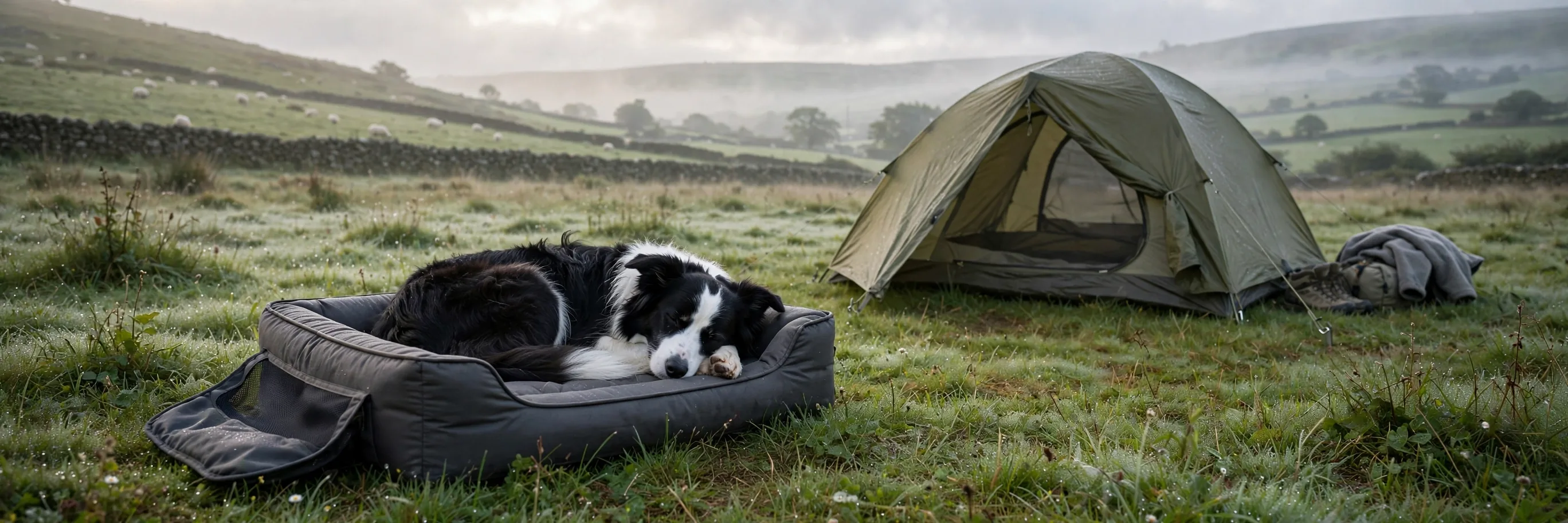
Forgetting the backup on long trips. Collapsible bowls are cheap and light; that is the whole point. On any trip longer than a weekend, the second bowl in a different pocket is insurance against loss, damage and the day you leave the first one at a cafe table. If you are packing a full kit for a longer break, our travel dog bed guide covers the other half of the comfort equation.
Practical questions
Before you buy
Can a collapsible travel bowl replace my dog's normal bowl at home?
For occasional use, yes, but a collapsible bowl is best treated as travel kit rather than the everyday bowl. Travel bowls prioritise low weight and packability, so they are shallower, lighter and easier to knock over than a heavy ceramic or stainless bowl. Use the collapsible bowl on trips and keep a stable, easy-to-clean bowl for daily meals at home, especially for enthusiastic eaters and large breeds.
Is food-grade silicone safe for a dog to drink from in hot weather?
Yes. Food-grade silicone is heat-stable and does not leach when it warms up in the sun, which makes it a better choice than thin plastic for hot days. The bigger summer risk is the water itself: change it often and keep the bowl in the shade, because warm standing water encourages bacterial growth regardless of the bowl material. Rinse and air-dry the bowl at the end of each day.
How do I stop a collapsible bowl tipping over?
Choose a bowl with a wide base relative to its height and fill it no more than two-thirds full, since a full bowl raises the centre of gravity. Place it on a flat surface away from foot traffic, and pick designs with a textured or slightly weighted base rather than a narrow folded foot. For dogs that paw at water, a wider, lower bowl with a non-slip base works far better than a tall, narrow one.
Can I take a collapsible dog bowl through UK airport security?
Yes, an empty collapsible bowl is fine in hand luggage and goes through the X-ray tray like any other item. The restriction is on liquids, not on the bowl itself, so pack it empty and fill it after security or on arrival. If you are flying with a dog in the hold or cabin, check the airline's current guidance for water provision during the journey, as rules vary by carrier and route.
How often should I replace a fabric travel bowl?
Inspect fabric bowls every few months and replace them when the waterproof lining shows wear, seams start to seep, or odours survive washing. A well-made fabric bowl used a few weekends a year can last several seasons, while one used daily on long trips may need replacing within a year. Silicone bowls generally last longer, but they too should be retired if the fold creases crack or the bowl no longer holds its shape when open.