This guide is independent and contains no paid placement. If affiliate links are added later, they will be clearly marked and will not change our editorial checks.
Solo dog travel works when the trip is designed for one pair of hands: accommodation where the dog is genuinely welcome indoors, food you can eat with the dog beside you, luggage you can carry while holding a lead, and a written backup plan for vets, taxis and early finishes. Choose a base, keep distances short, and leave unscheduled space in every day.
What actually changes when you travel alone
A couple travelling with a dog divides the labour without thinking about it: one holds the dog, the other checks in; one queues for coffee, the other finds the table. Solo, every one of those micro-tasks lands on the same person, and the trip succeeds or fails on how honestly you plan for that. None of the tasks is hard. The accumulation is what tires people, usually on day two, when a rainy check-in, a heavy bag, a muddy dog and a locked café door arrive in the same twenty minutes. The fix is not toughness; it is subtraction. Fewer moves, lighter luggage, shorter distances and venues confirmed in advance remove most of the friction before it can stack up.
The other change is subtler: there is no one to sanity-check decisions. When a path looks washed out, a pub looks unwelcoming or the dog looks tired, the call is yours alone, which makes some travellers oddly reluctant to make it. Give yourself permission in advance. Turning back, skipping the planned attraction, ordering the takeaway and going to bed early are not failures of the trip; they are the trip working as designed. Dogs are excellent solo companions partly because they never audit the itinerary. A dog that has had a good walk, a familiar dinner and a warm bed beside yours believes the day was a triumph, and there is a real sense in which the dog is right.
What solo travel gives back is considerable. You walk at your dog's pace, stop when you want, choose the cottage nobody else fancied and fill evenings exactly as you please. Many people find strangers talk to them more, not less, when a dog is present, and pubs in particular treat the solo walker-plus-dog as a recognised category of guest. Plan the mechanics tightly so the days can be loose, and solo stops feeling like a compromise version of a holiday and becomes its own, very good thing.
Choosing stays that suit one person and a dog
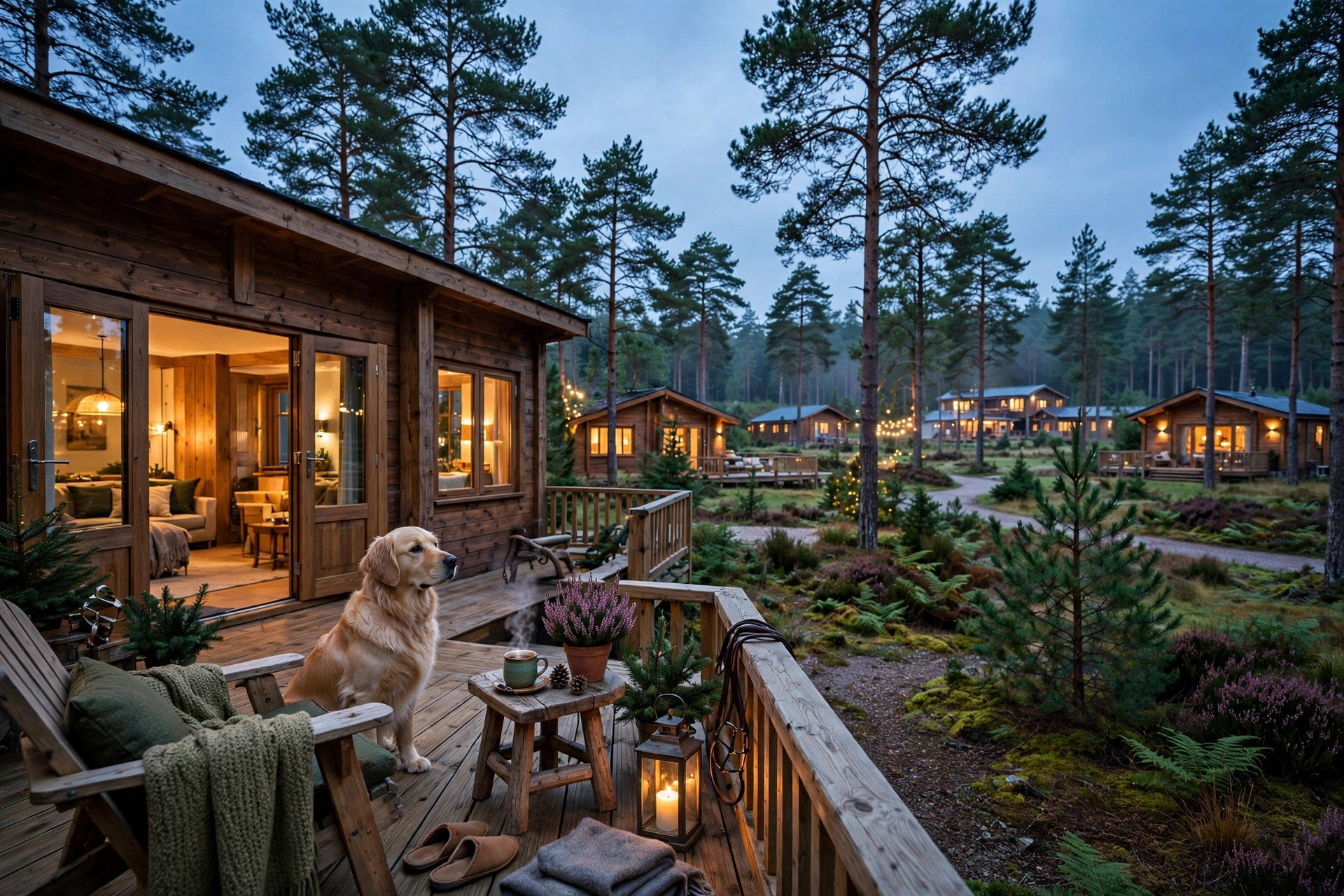
The ideal solo base is small, ground-floor and honest about dogs. A one-bedroom cottage, annexe, shepherd's hut or B&B room with its own external door beats a grand hotel room up two flights of stairs, because the midnight toilet trip is the moment that defines solo dog travel. You want a short, lit, enclosed route from your door to a patch of ground the dog can use, without crossing a lobby in your pyjamas holding a conversation with night staff. Ask about exactly that route when you book; owners who answer in practical detail are owners who understand the product they are selling.
Check the unattended-dog rule with unusual care. Couples can rotate; a solo traveller whose accommodation bans leaving the dog alone has effectively banned themselves from breakfast rooms, spas, non-dog shops and any attraction without the dog. Some properties allow a settled dog to rest in the room for short periods, some allow it only in a crate, and some prohibit it outright. All three are legitimate policies — but only the first two fit a solo trip comfortably. Our guide to dog-friendly B&Bs covers the questions to ask small properties, and the same checklist applies to cottages and inns. Get the answer in writing, and plan as though you will follow it to the letter, because solo travellers get remembered.
Self-catering deserves a special mention for solo trips. It removes the restaurant problem at breakfast and on tired evenings, gives you a fridge for the dog's food as well as your own, and usually comes with the washing machine and drying space that wet British walking demands. The trade-off is that nobody cooks for you — which, after the third pub dinner eaten one-handed while managing a lead under the table, many solo travellers count as no trade-off at all. A hybrid works well: self-catering base, one or two booked dog-friendly dinners out, and a freezer stocked against the evening you simply cannot be bothered.
Eating well without a second pair of hands
Food is where solo dog trips are won or lost, because eating is the activity that most often assumes a second person. The strong pattern is to make lunch the main event. Pubs and cafés are at their most relaxed in the middle of the day, dog-friendly indoor space is easier to get, and a proper lunch means the evening can shrink to soup, a sandwich or a takeaway eaten in your slippers without any sense of defeat. Our guide to dog-friendly cafés across the UK helps you find the kind of place where a dog under the table is normal rather than tolerated, and booking ahead — naming the dog when you reserve — turns arrival into a non-event.
Master the practical choreography. Choose a table against a wall or in a corner so the dog can settle out of the walkway; loop the lead short, ask for the dog's water bowl first, and order everything in one go so you are not flagging staff down while managing a hopeful nose near a neighbouring plate. A long-lasting chew saved specifically for restaurants is worth its weight in the bag: it converts the waiting-for-food window, when most dogs fidget, into a settled routine. If your dog guards food, be honest about it and pick venues with space between tables rather than hoping for the best in a crowded bar.
Keep a no-questions fallback for every evening: a takeaway that definitely allows a dog in the collection queue or delivers to the door, a supermarket within reach for a picnic supper, or a freezer meal at the base. The fallback matters because the day it is needed — rain, a closed kitchen, a dog too tired to settle in company — is the day improvising feels hardest. Solo travellers who eat well are not the ones who found the best restaurants; they are the ones who never faced a hungry evening with no plan.
Transport when every job is yours
Driving yourself remains the simplest solo option: the dog rides in its usual setup, stops happen when you choose, and the car doubles as a mobile kennel for the two minutes you need both hands at a petrol station — windows cracked, shade considered, never in warm weather. What changes solo is fatigue. There is no second driver, so build days around a maximum driving stretch you know you enjoy, and treat the scenic route as an optional extra rather than a promise made to a map.
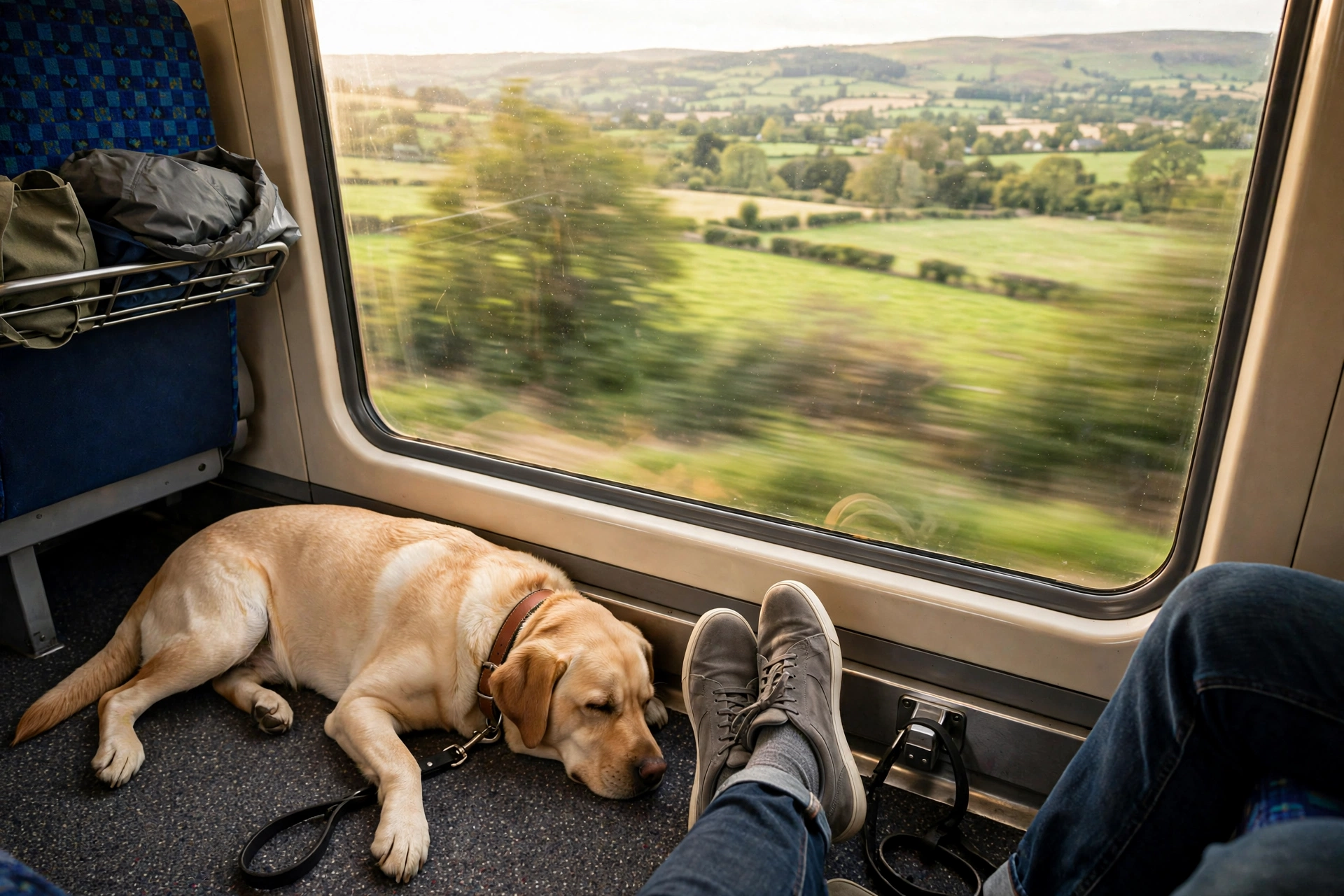
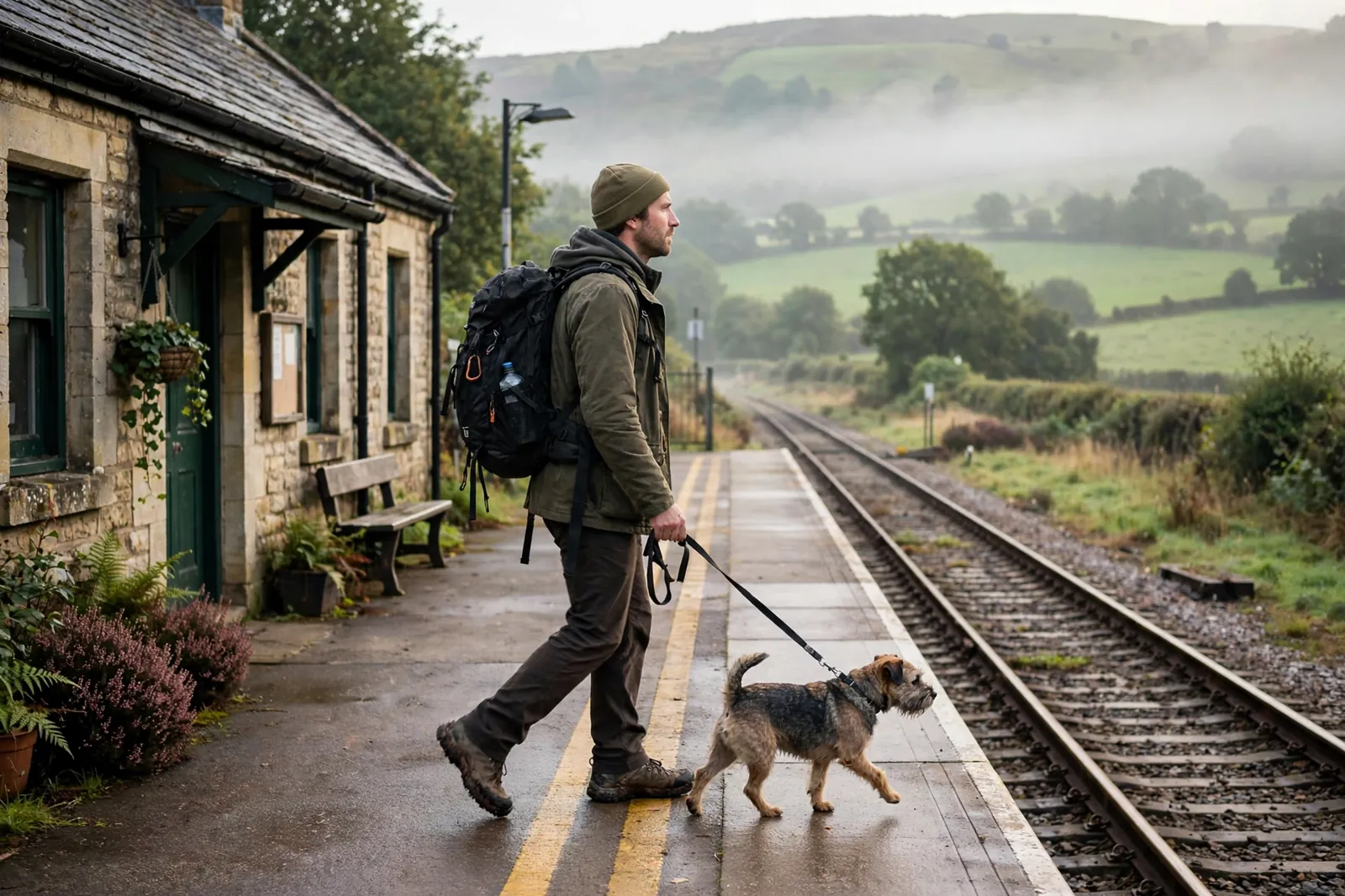
Trains are entirely workable and many solo travellers prefer them. Dogs travel free on most UK rail services, stations are usually central, and somebody else does the driving while you read. The discipline is luggage: one bag you can carry up stairs while holding a lead, worn on your back, leaving one hand for the dog and one for tickets and gates. Our complete guide to taking a dog on UK trains covers bookings, busy carriages and station navigation in detail. Choose off-peak services, allow over-generous connection times at unfamiliar stations, and locate the lift before you need it — stairs plus bag plus dog plus crowd is the one combination worth engineering out of the day.
Local movement needs a plan too. Walking everywhere is the dog's preference but not always yours after dark or in a storm, and not every taxi firm carries dogs. Save the numbers of two dog-friendly taxi firms before you arrive — our guide to dog-friendly taxis explains what to ask — and keep a note of the last bus back from anywhere you visit. A solo traveller's transport plan is finished not when the outbound journey works, but when the tired, wet, late version of the day still has a way home.
Your safety net: contacts, vets and what-ifs
Solo does not mean unsupported; it means the support is arranged in advance instead of sitting beside you. Before you leave, send someone at home your accommodation address, dates and rough daily plans, and agree a check-in rhythm — a message each evening is enough for most trips. Carry your phone charged, with a small power bank in the walking bag, because the phone is now your map, torch, taxi rank, vet directory and lifeline in one object, and its battery deserves the same respect as the dog's water supply.
Research the veterinary safety net for your base before you travel. Identify the nearest practice, check its out-of-hours arrangements, and save both numbers offline. If your dog has ongoing medication or a known condition, carry a photo of the prescription and your own vet's contact details; an unfamiliar vet treating an unfamiliar dog works much faster with records in hand. Our holiday emergency vet guide walks through finding help fast away from home, and reading it on a quiet evening at home beats reading it in a car park at midnight.
Think through the awkward scenario nobody enjoys: what if you are the one who is unwell or injured? Make sure the dog's collar tag carries your mobile number, add a temporary tag or written card with your accommodation details, and keep an instruction note in the cottage and in your bag — who to call, what the dog eats, any medication, and the name of a friend or a local boarding service who could collect the dog. It takes ten minutes to write, will almost certainly never be used, and converts the one genuinely hard solo problem into a handled one. Accommodation hosts are usually glad to be named as the first call; ask them, and you will find most have done it before.
Showers, shops and the small moments
Ask solo dog travellers what actually puzzled them and the answers are gloriously small: how do I shower, nip into a bakery, visit a public toilet or browse a bookshop with a dog attached? The shower solves itself — the dog rests on its bed in the room or just outside the bathroom door, following whatever unattended rule the property sets, and most dogs treat the whole business as a nap opportunity. Public toilets on walks are the tricker case: accessible facilities and larger cubicles sometimes allow a dog in with you, outdoor cubicles in some car parks do not, and the honest answer is to plan routes around facilities you have checked, carry everything you need so stops are quick, and never tie a dog outside a toilet block on a busy site where theft and interference are real risks.
Shops divide into three kinds. Farm shops, garden centres, outdoor retailers and many independent high-street shops welcome dogs and are worth favouring with your money. Supermarkets and food shops generally do not, so use click-and-collect, delivery to your accommodation, or the village store's willingness to bring items to the door — asking politely at a quiet moment works surprisingly often in rural Britain. Attractions split the same way: grounds-only visits with the dog, interiors saved for a trip with company, or a booked local sitter for the one must-see interior of the week. A registered, insured local dog walker or day-care place, booked and trial-checked in advance, is the solo traveller's secret weapon for exactly these gaps.
The deeper trick is sequencing. Cluster the dog-free errands into one planned block with the sitter, keep food shopping to collection orders, and let the rest of the day flow at dog pace. Solo trips feel hard when a dozen tiny exclusions pepper every day; they feel easy when the exclusions are gathered, solved once, and forgotten.
Budgeting without splitting the bill
Solo travel costs more per person and it is better to budget for that plainly than to resent it daily. Accommodation is the big item: a cottage sleeping four rarely costs half when one books it, so hunt the genuinely small stock — one-bedroom conversions, annexes, pods and huts — where the price reflects the size rather than the maximum occupancy. B&Bs and inn rooms priced per room rather than per person can work out well, especially midweek, and many owners will negotiate a fair single rate for a quiet week if asked directly and politely. Pet fees, typically charged per dog per stay or per night, do not shrink for solo guests, so fold them into the comparison from the start rather than discovering them at checkout.
Food spending shifts rather than simply rising. You will spend less on group rounds and shared plates, more per head on eating out, and you can claw it back with the lunch-as-main-meal pattern and self-catering breakfasts. Transport is where solo drivers feel it most: fuel and parking are undivided, which is another argument for a single well-chosen base and days out on foot or by train rather than a touring itinerary with a tank of fuel per move. Our breakdown of UK dog travel costs gives realistic figures for fees, fuel and food to build your own budget from.
Keep one line in the budget labelled simply "ease": the taxi back instead of the wet walk, the sitter for the gallery afternoon, the drying room upgrade, the second coffee while the rain passes. Solo travellers who pre-fund a little ease spend it without guilt at exactly the moments it transforms the day; solo travellers who do not, spend it anyway and enjoy it less. Twenty or thirty pounds across a trip, deliberately allocated, is the cheapest morale on the itinerary.
A first solo itinerary that builds confidence
If you have never travelled alone with your dog, design the first trip to be almost embarrassingly manageable, because success compounds. Choose a base within two hours of home, in a village or small town with a pub, a shop and circular walks from the door. Book three nights rather than a week. Arrive in daylight, walk the immediate streets together so the geography becomes familiar to you both, and let the first evening be a simple meal and an early night in a room that already smells like your dog's own bedding.
Day two is the rehearsal day: a morning walk with a café at the midpoint, a lazy middle of the day, and one small planned challenge — a short train ride, a booked pub dinner, a beach trip with a tide window — executed while your energy is high. Day three repeats whatever worked best, because repetition is where confidence actually comes from; the second successful pub lunch feels entirely different from the first. Leave one idea deliberately undone. A reason to return is a better souvenir than a completed list, and it quietly converts the trip from a test you passed into a habit you have started.
Notice, as you drive home, which moments you are replaying. Solo travellers consistently report the same ones: the dawn walk with nobody else on the hill, the dog asleep under the table while rain worked on the window, the conversation with a stranger that would never have happened in a group. Build the next trip around more of those and less of everything else. One person and one dog is not a reduced travelling party; planned properly, it is the original size.
Practical questions
Before you go
Is it safe to travel alone with a dog in the UK?
For most people, yes, with ordinary precautions done properly: share your itinerary and accommodation details with someone at home, keep your phone charged, save local vet and taxi numbers before you need them, and choose well-lit, populated walking routes after dark. A dog is good company and a natural conversation starter, but plan as if you will handle every problem yourself, because that is the honest basis of solo travel.
How do I eat out when I cannot leave my dog alone?
Build the trip around places where the dog comes too: pubs and cafes with dog-friendly indoor areas, terraces in warmer months, and accommodation with an on-site restaurant that welcomes dogs. Book the dog in when you reserve the table, choose earlier sittings when venues are calmer, and keep a picnic and takeaway plan as backup so a refused entry never means a missed meal.
What do I do with my dog when I need a shower or a quick shop?
In your accommodation, a settled dog can rest in the bathroom doorway or in its crate while you shower, following the property rules about unattended dogs. For shops that do not allow dogs, keep stops short and planned, use click-and-collect where possible, and never tie an unattended dog outside a shop. If you need a longer dog-free block, book a local registered dog sitter or day care in advance and check their insurance and reviews.
Do single travellers with dogs pay more?
Sometimes. Single supplements exist in some hotels, and per-property pet fees do not halve just because one person is travelling. Smaller cottages, annexes, glamping units and B&Bs often price more fairly for one person plus a dog than large hotels do. Compare the total cost per night including the pet fee, parking and breakfast rather than the headline room rate.
Which transport works best when travelling solo with a dog?
Your own car gives the most control over stops, luggage and timing. Trains work well too and dogs travel free on most UK services, but you must manage luggage, the dog and platform changes single-handed, so pack light and allow generous connection times. Our train guide covers the practicalities, and coaches and long-distance buses are the most restrictive option, as many accept only assistance dogs.