This guide is independent and contains no paid placement. If affiliate links are added later, they will be clearly marked and will not change our editorial checks.
Pick the bed by transport first: a grippy car bed for driving, a light roll-up mat for trains, an insulated or raised bed for camping, and a washable, quiet bed for hotels. Then size it from your dog stretched out, not curled up, and let your dog practise on it at home for several days before the first trip.
Match the bed to the trip first
Most disappointing purchases happen because someone buys a good bed for the wrong journey. A thick, luxurious bed that fills half a small car boot is a poor travel bed if it leaves no room for luggage. A featherweight mat that is perfect on a train becomes a miserable night on cold campsite ground in October. So begin with a simple comparison in your head. For each trip you take most often, ask four things: how will the bed be carried, what surface will it sit on, how warm or cold will that surface be, and how dirty is it likely to get?
Think of it as a small decision table. If you mainly drive, packed size matters least and grip matters most, because the bed must stay put under braking and cornering. If you mainly use trains, weight and shoulder-carry comfort matter most, because you will haul the bed through stations alongside luggage and a lead. If you camp, insulation from the ground and a base that tolerates damp grass matter most. If you stay in hotels, cottages and caravans, quiet fabrics, fast washing and a bed that looks tidy in someone else's property matter most, along with a cover that contains loose hair.
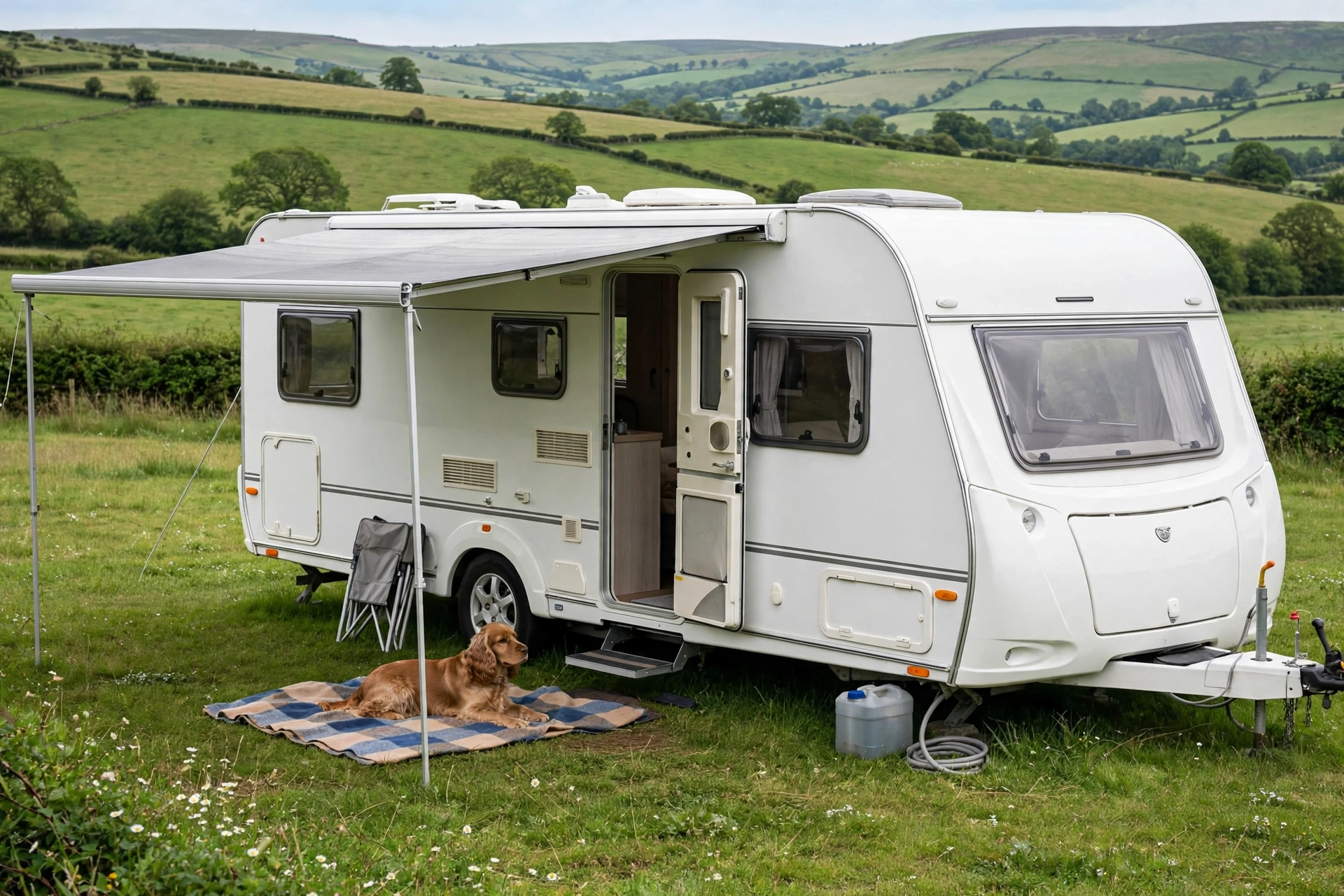
Households that mix trip types have two sensible options. The first is one versatile roll-up foam mat that does an acceptable job everywhere. The second is two cheaper, specialised beds — for example a car bed that lives in the boot permanently plus a light mat for trains and overnight stays. Two specialised beds often cost less than one premium all-rounder and each one works better at its own job. Our guide to dog-friendly caravan holidays shows why a dedicated stay-away bed is useful: space inside a caravan is measured in centimetres, and a bed that folds flat against a wall earns its place every single day of the trip.
Finally, be honest about your dog's sleeping style. Sprawlers need length. Curlers tolerate smaller, bolster-edged beds and often prefer them. Leaners like a raised edge to rest a chin on. Diggers and nesters will rearrange any loose blanket you add, so choose a surface that survives scratching rather than one that merely looks soft in photographs. The best travel dog bed is the one your particular dog settles on quickly in a strange place — everything else in this guide is about narrowing the field before that final, practical test.
The five main types explained
Roll-up mats are the default recommendation for most owners. A layer of foam or padded quilting rolls or folds into a cylinder, usually with carry handles or straps. Thickness typically runs from about 2 to 5 centimetres: enough for carpets, caravan floors and pub corners, marginal on bare cold ground. They are quiet, hard to damage, easy to wash in many cases, and double as a settle mat for training. Their weakness is insulation and support on hard or uneven surfaces.
Inflatable beds borrow the logic of camping air mattresses. Pumped or self-inflating chambers give generous cushioning from a tiny packed size, which suits backpackers and anyone short on boot space. The trade-offs are real: puncture risk from claws and grit, a faint crinkling noise that bothers light sleepers, and slow leaks that only reveal themselves at two in the morning. Treat inflatable beds as a specialist choice for calm adult dogs, not a universal one.
Folding camp beds, sometimes called elevated or raised beds, stretch fabric across a folding metal or plastic frame so the dog sleeps off the ground. Air circulates underneath in summer, and damp, cold or uneven ground stops mattering in winter. They pack longer and flatter than most mats, weigh more than a roll-up of similar size, and some dogs need a session or two to accept the slight bounce. A thin pad on top adds warmth and familiarity.
Car back-seat and boot beds are shaped for vehicles rather than rooms. Expect waterproof bases, raised bolsters that fill seat edges, non-slip backing, and sometimes straps or seat-belt slots. Some cover the whole back seat like a hammock, protecting upholstery while giving the dog a defined area. They are excellent in the car and clumsy everywhere else, so most owners treat them as vehicle equipment that stays in place between trips.
Crate and carrier pads are thin, exactly sized inserts for crates, airline-style carriers and bicycle trailers. Padding is deliberately slim so headroom and ventilation are preserved, and covers are usually the easiest of all to remove and wash. Check the carrier or crate maker's current sizing guidance before ordering, because internal dimensions differ from the external figures in listings. A pad that is even a couple of centimetres too wide will ruck up into ridges your dog then has to lie on for hours.
Choosing by car, train, camping and hotel
By car, prioritise grip, washable surfaces and a shape that matches the space. Measure the boot floor or back seat before ordering, including wheel-arch intrusions, and remember that a bed which slides will worry many dogs even when they cannot fall far. Raised edges help nervous travellers feel contained, while flat mats suit dogs that like to stretch across the full width. Ventilation matters on long summer drives: a bed that traps heat against a dog that is already panting is a poor combination, so breathable top fabrics beat fully plastic surfaces for daytime travel. Always pair the bed with proper restraint — a crash-tested harness, secured crate or dog guard as appropriate — because bedding provides comfort, never protection.
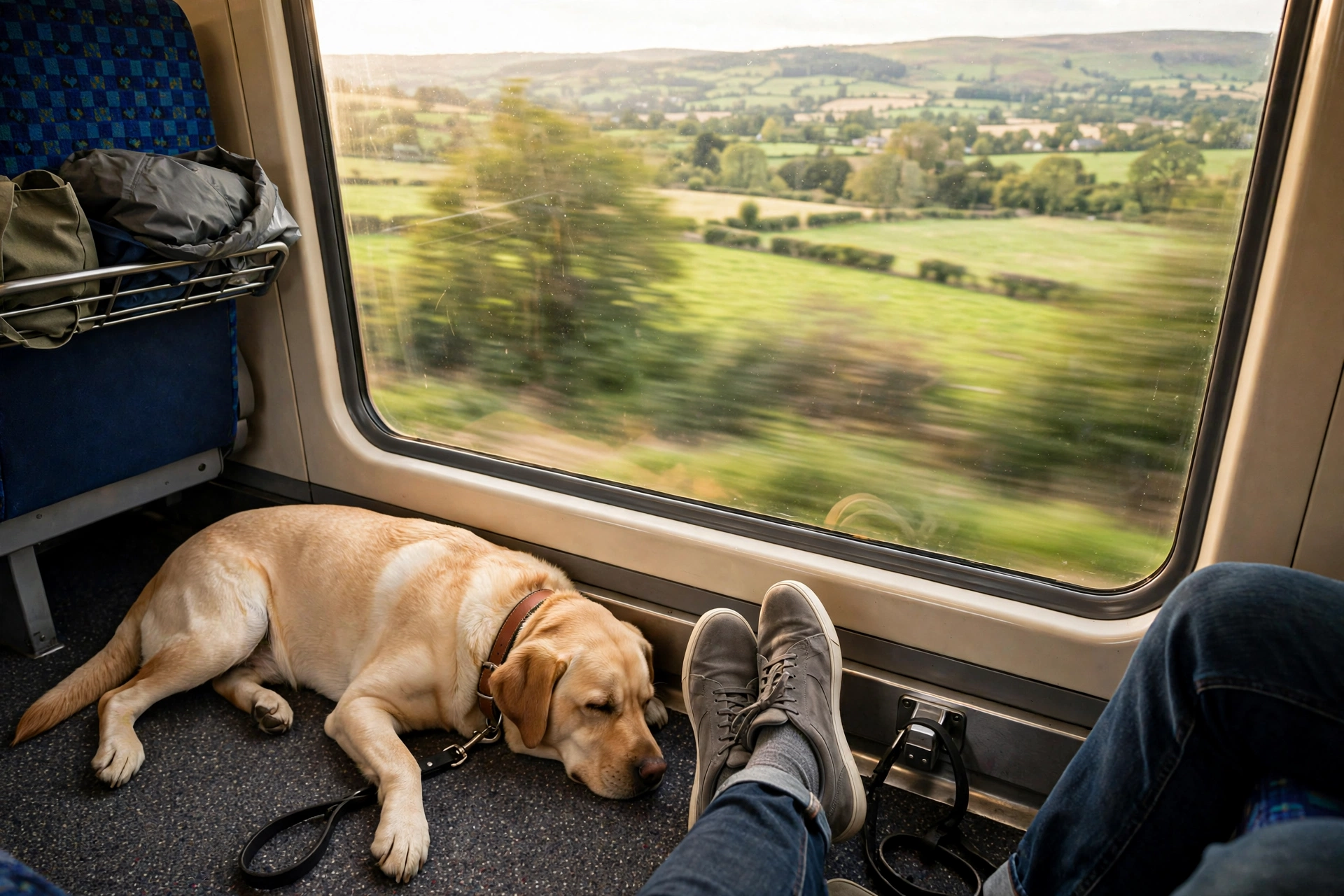
By train, every gramme and every centimetre counts twice, once on the platform and once in a crowded carriage. A roll-up mat with a shoulder strap, or a folding mat that clips to a rucksack, beats any framed bed. Your dog will mostly lie at your feet or beside your seat, so a mat defines its patch, keeps it off a grubby floor and signals to other passengers that the dog is settled and supervised. Practise the whole routine — mat down, dog on mat, mat rolled away quickly — before travelling at peak times. Our step-by-step advice on taking your dog on UK trains covers the etiquette and timing that make this much easier, and train operator rules can change, so confirm the current pet policy with the operator before you travel.
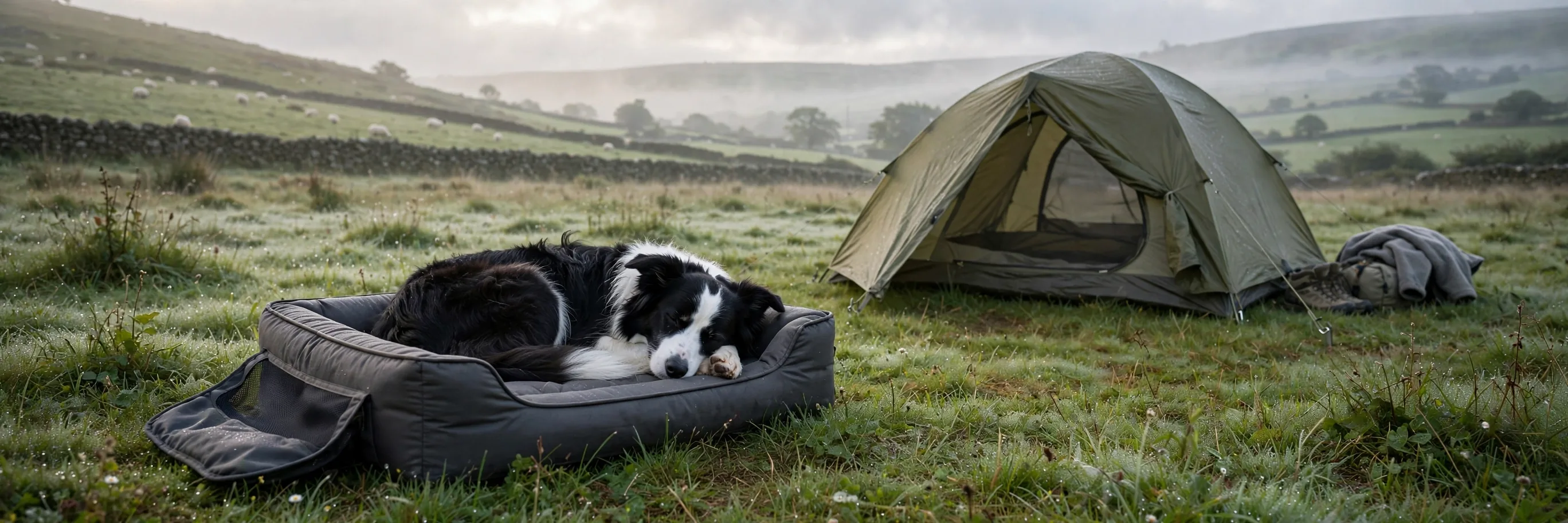
Camping adds cold, damp and grit to the equation. Ground insulation is the single biggest comfort factor: a mat that feels plush indoors can feel thin and chilly on tent groundsheet over cold soil. Layering works well — an insulating base layer under a familiar-smelling top pad — and raised camp beds remove the problem altogether on waterlogged pitches. Choose dark, forgiving colours, fabrics that shake clean, and a base you can wipe down before the bed goes back into the car. Keep the dog bed away from stoves and guy ropes, and expect to move it as the sun and wind shift around the pitch.
In hotels and holiday lets, courtesy is part of the specification. A bed with a removable, hair-containing cover protects the property and your deposit, while quiet fabrics avoid disturbing neighbouring rooms when a dog circles and resettles at night. Place the bed where you agreed with the host, keep it off sofas and human beds unless the host explicitly allows it, and carry a spare cover for multi-night stays so a muddy day does not mean a dirty bed for the rest of the week. Many properties that welcome dogs for stays such as caravan holidays still expect dogs to sleep on their own bedding, so bringing a proper bed is also evidence that you are a considerate guest.
Sizes and weights that actually fit
Ignore breed labels on packaging for a moment and measure the dog instead. With your dog lying on their side, legs extended in a natural stretch, measure from the tip of the nose to the base of the tail, then measure the widest span across shoulders or hips. Add roughly 15 to 20 centimetres to the length. That figure is your minimum internal sleeping area. Product dimensions in listings are usually external, and bolsters can steal 5 to 10 centimetres on every side, so a bed advertised at 90 centimetres may offer only 70 centimetres of flat sleeping space.
As a working guide, small dogs under about 10 kilograms, such as many terriers and miniature breeds, usually suit beds around 60 by 45 centimetres. Medium dogs between roughly 10 and 25 kilograms — spaniels, many collies and similar builds — typically need something near 80 to 90 centimetres long. Large dogs from about 25 to 40 kilograms generally need 100 to 110 centimetres, and giant breeds or very long dogs may need 120 centimetres or more. These are starting points, not rules: a tightly curling 28-kilogram dog may be happier on a smaller bolster bed than a sprawling 18-kilogram dog is on a medium mat.
Weight limits matter most for raised camp beds and inflatable designs. Frame beds state a maximum load, and a dog that drops heavily onto the bed loads it harder than one that steps on gently, so stay comfortably inside the stated figure rather than right at it. Foam thickness should also rise with body weight: heavier dogs compress thin padding to nothing within an hour, effectively sleeping on the floor with a fabric layer in between. Press a knee firmly into any bed you are considering — your knee concentrates weight roughly the way a dog's bony points do. If you can feel the hard floor straight through, so will the dog.
Two-dog households face a genuine choice. One shared extra-large bed keeps the pair together if that is how they sleep at home, but two individual mats are more flexible across cars, tents and rented rooms, and they prevent one restless dog from disturbing the other all night. Mirror the home arrangement whenever possible; a trip is the wrong moment to renegotiate sleeping politics that took months to settle.
Fabrics, waterproofing and scratch resistance
The top fabric decides comfort and noise, the base fabric decides grip and floor protection, and the filling decides warmth and support. For tops, brushed polyester, fleece and quilted microfibre feel warm and stay quiet when a dog shifts position. Smooth nylon and canvas-style fabrics feel cooler, shed hair readily and tolerate claws better, but can rustle. Cotton covers breathe well and wash easily, though they absorb moisture and dry slowly in a tent or a cold caravan.
Waterproofing comes in three grades, and listings rarely distinguish them clearly. A water-resistant coating shrugs off splashes and damp grass for a while before soaking through. A waterproof membrane or coated base keeps moisture out of the filling for much longer and protects car seats and carpets beneath. Fully sealed, wipe-clean designs suit incontinent older dogs and very muddy trips but can feel clammy in warm weather. Decide which problem you are actually solving: most owners need a waterproof base and a comfortable, absorbent top, not a bed that is plastic on every surface.
Scratch resistance is about weave density as much as material name. Tightly woven fabrics with a high denier rating resist claw punctures and digging far better than loose knits, and short-pile surfaces give claws less to catch on. Check seams as carefully as fabric: double-stitched or bound edges survive nesting behaviour that splits a single row of stitching in a week. Zips deserve suspicion too. Hidden zips with fabric guards resist chewing and keep grit out of the teeth; exposed metal zips corrode after beach trips and can snag fur.
Removable, machine-washable covers are close to non-negotiable for travel use. A bed you cannot wash properly will smell by its third trip, and that smell transfers to cars and tents. Look for covers that come off without wrestling, fillings that tolerate airing if not washing, and spare covers sold separately so one can dry while the other is in use. Always follow the maker's current care instructions rather than generic advice, because waterproof coatings and memory foams are damaged by the wrong temperature or detergent, and guidance varies between products and changes over time.
Joint support and older dogs
Support is where travel beds most often fall short, and older dogs pay for it first. A dog with arthritis, hip or elbow problems, or recovering from injury needs a surface that spreads weight evenly, stays a consistent thickness all night and is easy to step on and off without climbing. Memory foam and high-resilience foam layers of around 5 centimetres or more, laid on a flat and stable base, are the usual benchmark for overnight use. Very soft, sinky beds can be as unhelpful as hard ones, because an arthritic dog has to haul itself up out of the hollow every morning.
Low entry height matters as much as padding. Raised camp beds suit many dogs, but a stiff older dog may struggle with a high frame edge night after night, particularly in a confined tent or caravan doorway. If you use a raised bed, put a supportive pad on top rather than relying on the stretched fabric alone, and position it against a wall so the dog can brace while turning. In cars, a flat, firm boot bed usually beats a deeply bolstered design that forces an older dog to step over a padded wall on every outing.
Warmth is a joint issue too. Cold, damp floors stiffen sore joints, so insulate underneath the bed in tents, caravans and unheated rentals with a blanket, foam tile or the dog's second mat. Keep the bed out of draughts from doors and vents, and dry it thoroughly after wet walks, because a damp bed chills a sleeping dog for hours. Owners travelling with older dogs will find more detail in our guide to senior dog travel, including journey pacing and rest planning that sit alongside the bedding choices here.
Watch for honest feedback from the dog. Slower rising, reluctance to use the bed, restlessness and shifting position every few minutes, or choosing a hard floor over the travel bed are all signals worth taking seriously. A dog that abandons a new bed for the doormat is telling you the surface, the height or the location is wrong, and adjusting one variable at a time will show you which. If lameness, pain or sudden mobility changes appear, that is a conversation for your vet rather than a shopping problem, and you should seek veterinary advice before long trips.
Puppies, chewing and accidents
Puppies test a bed in ways adult dogs rarely do: teeth, claws, bladders and sheer curiosity. Prioritise survival and hygiene over luxury. Dense foam mats without loose stuffing, raised beds with replaceable fabric, and covers that wash hot enough to deal with accidents will outlast any plush novelty shape. Avoid beds with detachable toys, toggles, tassels or chewable zip pulls, and supervise early sessions so chewing the bed itself does not become a rehearsed habit.
Expect to size up. A bed bought for a twelve-week-old puppy may be outgrown within a few months, so budget buyers often choose the expected adult size and add a folded blanket to make it feel snug and secure in the meantime. A smaller, cheaper puppy mat for the car plus the adult-size bed for overnight stays is another sensible split. Either way, comfort now matters: puppies sleep a great deal, and broken nights on a poor surface make travel training harder for everyone in the tent or room.
Plan for accidents as a certainty, not a risk. A waterproof inner liner under a washable cover protects the filling, which is the part you cannot easily clean. Carry a spare cover or a second thin mat on trips longer than a weekend, plus the cleaning supplies you are allowed to use where you are staying. Rinse and dry the bed promptly; odour left in fabric encourages repeat toileting in the same spot. Check the latest manufacturer guidance before using any cleaning product on a new fabric, and keep all cleaning chemicals stored away from the puppy, in the vehicle or a closed bag.
Inflatable beds and puppies remain a poor match, as the questions section below explains, and the same caution applies to known power-chewers of any age. For a determined chewer, a simple raised frame bed with a taut fabric sling offers the least material to grab, and even then, provide a legal chewing alternative beside the bed so the lesson is clear: chew toys are for chewing, beds are for sleeping.
Packed size, weight and storage
Manufacturers quote packed dimensions inconsistently, so verify with your own tape measure once the bed arrives and before the return window closes. Roll-up mats typically pack to a cylinder roughly 15 to 25 centimetres across, framed beds fold long and flat, and inflatable beds pack smallest of all — sometimes to the size of a large drinks bottle, plus a pump if one is needed. Weigh the bed on kitchen scales too. As a rough guide, a mat you will happily carry through stations and across campsites should stay under about 1.5 kilograms for a medium dog size; car-only beds can weigh whatever the vehicle tolerates.
Carry design separates thoughtful products from frustrating ones. Handles positioned so the rolled bed hangs level, compression straps that actually hold the roll tight, and a shoulder strap for station walks all matter more than decorative piping. A stuff sack or carry bag keeps mud on the bed from reaching car upholstery and protects the fabric from boot clutter. If the bed will live in the car, check it still fits when the boot holds its normal load, not an empty showroom version of your packing.
Storage at home decides how long the bed lasts. Pack it away only when fully dry, store it unrolled or loosely rolled so foam recovers its shape, and keep it away from direct heat and strong sunlight, which age foams and coatings. Before each trip, unroll and air the bed overnight, check seams, zips, straps and valves, and let the dog lie on it again at home — which conveniently refreshes the training described in the next section. A bed that smells of the house, rather than of the garage, settles a dog measurably faster in a strange room.
Teach your dog to love the new bed
Even the perfect bed fails if its first appearance is in a noisy hotel room. Introduce it at home, in the dog's normal resting area, at least several days before departure — a week is better. Follow a simple sequence and keep every session short, calm and well rewarded.
- Step one: investigate. Unroll the bed, let the dog sniff it thoroughly, and reward any interest with praise and a treat placed on the bed. Do not lure the dog on and trap it there with fuss; curiosity should do the work.
- Step two: settle practice. Ask for a known down or settle cue on the bed, reward, release, and repeat a few times. Add a familiar blanket from the dog's usual bed so the new surface carries a known smell.
- Step three: short stays. Build to the dog resting on the bed while you watch television or work nearby, rewarding calm behaviour occasionally rather than constantly.
- Step four: a full night. Let the dog sleep on the travel bed at home for at least one or two whole nights, in the usual sleeping place, before it has to perform in a tent or rental.
- Step five: rehearse the setting. Practise in the car with the engine off, then on a short drive; practise in the garden with the tent up if you camp. Each rehearsal removes one novelty from the real trip.
- Step six: pack the ritual. On the trip itself, unroll the bed early, in the same relative position where possible, add the familiar blanket, and follow the home bedtime routine as closely as the setting allows.
If a dog remains reluctant, troubleshoot rather than force. Move the bed a metre, add or remove the blanket, check for draughts, noise or a surface texture the dog dislikes, and consider whether a different shape — bolster versus flat — suits its sleeping style better. Puppies and anxious dogs may need the sequence stretched over two weeks with more, shorter sessions. The goal is a dog that sees the travel bed appear and reads it as good news: rest is coming, in a place that is theirs.
Cleaning and care on the road
Travel beds collect a distinctive mixture: mud, sand, wet paw prints, loose hair and the occasional travel-sickness incident. A small field routine prevents most of it becoming permanent. Shake the bed outside daily, brush dried mud off before it grinds into the weave, and wipe waterproof bases with a damp cloth before the bed goes back into the car or tent. A lint roller or damp rubber glove lifts hair from most fabrics in seconds, which hosts and fellow passengers will appreciate.
For washing, separate the jobs. Covers usually machine wash; fillings often only sponge clean or air. Read the care label on your specific bed and follow it, because heat and tumble drying can destroy waterproof coatings, shrink covers so they no longer fit, and damage memory foam. Wash after every muddy break and at least after every few trips in dry weather, using a mild detergent and an extra rinse if your dog has sensitive skin. Avoid strongly scented products; a dog's nose is far more sensitive than yours, and a heavily perfumed bed can put a dog off using it.
Drying deserves as much attention as washing. Air-dry covers fully, ideally outdoors, and never pack a bed away damp in a sealed bag — mildew will colonise it in storage and the smell is extremely difficult to remove. On multi-week trips, the spare-cover strategy pays for itself: wash one, use the other, and rotate. Inspect while you clean. Loose seams, thinning fabric where claws land, cracked waterproof coating and broken straps are all cheaper to repair early, and a bed that fails mid-trip on a remote campsite is a problem with no easy shop nearby.
Between trips, store the clean, dry bed somewhere the dog can smell it occasionally, or refresh it at home for a night every month or two if it lives in a cupboard. That tiny habit keeps the bed familiar, which is the entire point of owning one: it is the piece of home that travels.
Budget tiers and value checks
Prices vary widely and change often, so treat the bands below as orientation rather than promises, and check current prices and specifications with retailers before buying. Simple roll-up mats and crate pads commonly sit in a budget band of roughly £15 to £35. They suit occasional trips, puppies that will outgrow or destroy things, and second beds for the car. Mid-range beds, roughly £35 to £80, usually add thicker or layered foam, better zips, tougher fabrics, spare-cover options and more honest sizing — this is the value sweet spot for most regular travellers. Premium beds above roughly £80 to £150 or more should justify themselves with orthopaedic-grade foam, replaceable parts, long guarantees or exceptional packed size, not merely with branding.
Judge value per trip, not per purchase. A £60 bed used on forty nights over three years costs far less per settled night than a £25 bed replaced twice and endured in between. Equally, an expensive bed that does not fit your car or your dog is worth nothing at any discount. Buy from sellers with clear returns policies, test the bed at home well inside the return window, and be sceptical of miracle claims about health benefits that no bed can evidence. Where a listing makes specific medical, waterproof or safety claims, check the manufacturer's own current documentation before relying on them.
A final shortlist check pulls everything together. Measure the dog stretched out and the space the bed must occupy. Choose the type by your main transport. Confirm the cover removes and washes, the base grips and resists water, and the packed bed fits your real luggage. Match foam depth to body weight and joint needs. Then run the home training sequence before you judge the result. Follow that order and the best travel dog bed for your household usually selects itself — quietly, practically, and without a boot full of almost-right alternatives.
Practical questions
Before you buy
What size travel dog bed should I buy?
Measure your dog lying fully stretched out, from nose to the base of the tail, then add roughly 15 to 20 centimetres in length and width. The dog should be able to turn, curl and stretch without hanging off an edge. If your dog falls between two sizes, choose the larger one for overnight trips and the smaller one only for short car journeys where boot space is tight.
Can a travel dog bed replace my dog's normal bed at home?
For a few nights, yes, provided it offers enough padding and your dog has practised sleeping on it at home first. For regular or long trips, a thin travel mat is not a full substitute for a supportive home bed, especially for older or heavier dogs. Many owners use the travel bed at home for a week before a trip so it smells familiar, then return it to travel use afterwards.
Are inflatable dog beds suitable for puppies?
Usually not as a first choice. Puppy teeth and claws can puncture air chambers, and a slow overnight leak leaves the puppy on cold, hard ground. A dense foam roll-up mat or a raised camp bed with a washable cover copes far better with chewing and accidents. If you do use an inflatable bed, supervise early use and check it for leaks before every trip.
How do I stop my dog sliding around on a car dog bed?
Choose a bed with a grippy, rubberised base, size it so it fills the footwell, boot section or seat area without bunching, and secure loose beds with the straps or seat-belt slots provided. A non-slip mat underneath helps on leather seats and in plastic-lined boots. The dog should still travel restrained with a suitable harness, crate or guard, because a bed alone is not a safety device.
How often should I wash a travel dog bed?
Wash the removable cover after every muddy or multi-night trip, and air the inner padding outdoors between trips even when it looks clean. Shake off grit before washing, because trapped sand damages zips and fabric coatings. Follow the care label for temperature and drying, and make sure the bed is completely dry before packing it away, or mildew smells will build up in storage.