This guide is independent and contains no paid placement. If affiliate links are added later, they will be clearly marked and will not change our editorial checks.
A week in Devon for two people and one dog typically costs GBP 1,050 to GBP 1,600 in shoulder season and GBP 1,700 to GBP 2,400 in peak August, which is roughly 15 to 25 percent less than the same week in Cornwall. Inland farm stays, a shorter M5 run and free moorland walks do most of the saving. All figures below are 2026 ballparks and prices move, so check the latest quote from the provider before you book.
Devon vs Cornwall, line by line
Devon is often sold as the sensible alternative to Cornwall: two coastlines, the same South West Coast Path drama, cream teas without the arguments about jam first, and a noticeably smaller bill. The table below prices the same hypothetical week in both counties so the difference is visible rather than assumed. It assumes two adults and one dog, seven nights of self-catering in shoulder season, a mix of cooking and pub meals, and two paid outings across the week. All figures are 2026 ranges; prices move, so check the latest quote from the provider before you book.
| Cost line | Devon | Cornwall |
|---|---|---|
| Two-bedroom dog-friendly cottage, one shoulder-season week | GBP 650–950 | GBP 800–1,200 |
| Pet fee for one dog, one week | GBP 30–60 | GBP 35–75 |
| Two-course pub dinner for two, dog under the table | GBP 38–55 | GBP 42–62 |
| Beach or town car park, full day | GBP 6–9 | GBP 7–11 |
| Fuel for the return drive, Midlands start point | GBP 60–100 | GBP 100–150 |
| Two paid attractions across the week | GBP 25–50 | GBP 30–60 |
| Weekly total for two adults and one dog | GBP 1,050–1,600 | GBP 1,350–2,050 |
The gap is widest on accommodation and travel, which together explain roughly three-quarters of the saving. The daily spending lines — food, parking, attractions — differ only modestly between the two counties. In peak August the totals rise to roughly GBP 1,700–2,400 for Devon and GBP 2,100–3,000 for Cornwall, and the percentage gap narrows slightly because demand compresses everywhere. If you want the Cornwall version of this arithmetic in full, our Cornwall dog holiday cost guide works the same week the other way round.
Why the Devon bill comes out lower
The price difference is not an accident of marketing; it comes from three structural facts about the county. First, geography. Devon sits one to two hours closer to London, the Midlands and the North than Cornwall, because the M5 runs straight to Exeter and the A30/A38 carry on from there. A shorter drive means less fuel, less need for an overnight stop, and for many families the difference between one tank and one-and-a-bit. It also means weekend competition for the same cottages is spread over a bigger catchment, which softens shoulder-season prices.
Second, supply. Cornwall's dog-friendly accommodation stock is heavily coastal and heavily marketed; Devon has the same coastal cottages in the South Hams and around Salcombe, but it also has a deep inland bench of farm bed and breakfasts, working farms with converted barns, and pubs with rooms that take dogs as a matter of course. These inland options do not appear in the glossy coastal searches, yet they sit ten to twenty minutes from the sea and cost meaningfully less per night. The wider the funnel of options, the less you pay.
Third, the peak premium is flatter. Cornwall's August pricing carries a fame surcharge on top of the normal school-holiday uplift; Devon's August weeks are still the most expensive of its year, but the multiplier from January to August is typically two to two-and-a-half times rather than the three times seen on Cornwall's best-known stretches. The exception is the South Hams — Salcombe, Dartmouth, Kingsbridge — where coastal cottage prices sit within touching distance of Cornwall and the comparison table above stops flattering Devon. Book there and you are paying Cornwall money for Devon views, so the budget-conscious move is to base slightly inland or further west along the north coast.
Coastal cottages: the headline spend
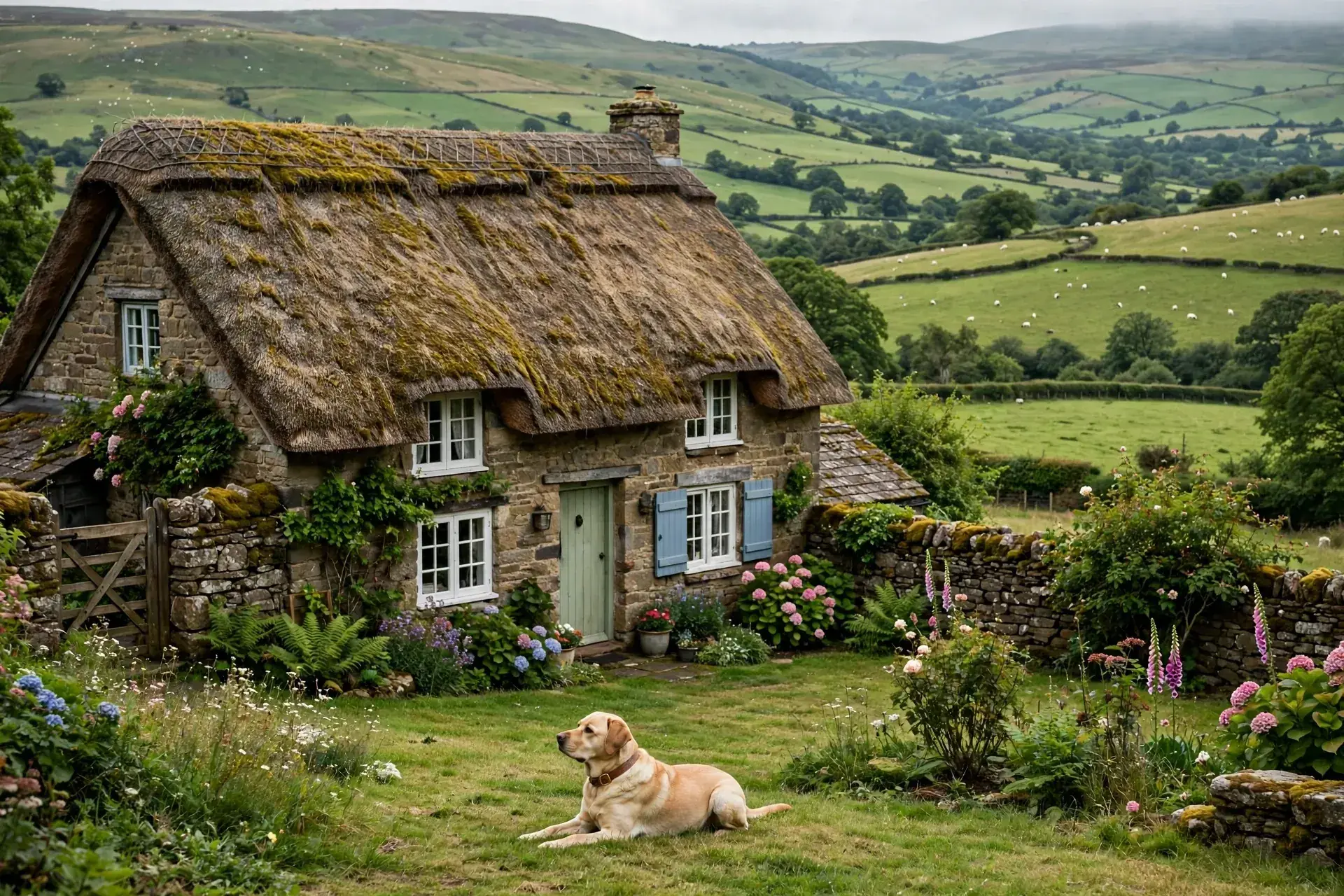
The cottage is the single biggest line in any Devon dog week, usually half the total. A two-bedroom dog-friendly cottage sleeping four, with an enclosed garden and within walking distance of a beach, runs GBP 650–950 for a shoulder-season week, GBP 950–1,400 in the main school summer holidays, and GBP 350–550 in deep winter. Move the same cottage five miles inland, or swap the sea view for a village-edge location with a ten-minute drive to the coast, and the shoulder-season figure drops to GBP 450–700.
What the listing promises about dogs changes the effective price more than the headline. An enclosed garden is the feature worth paying for: it converts into genuine off-lead time every morning and evening, which otherwise has to be bought with drives to exercise fields or paid secure dog parks. Check what "enclosed" means before you pay extra for it, because cottage descriptions sometimes describe a low drystone wall or a garden with an open gate as enclosed. Ask for the wall or fence height and whether there is a working gate, especially with terriers and sighthounds. A cottage that charges a pet fee but has no secure outdoor space is the worst of both worlds.
Hot tubs deserve a budget line of their own. Devon cottages with hot tubs add roughly GBP 100–250 to the weekly price over the equivalent cottage without one, plus the question of whether the dog can be on the decking at all. If the answer is no, you are paying for a feature that complicates the dog's evenings rather than improving them. Changeover day is Friday or Saturday for most Devon agencies, and Saturday changeovers in August sell out first; a Friday start sometimes prices a few percent lower for the identical week and gives you a quieter M5 on the way down.
Booking direct with an owner can shave the platform service fees, which commonly run 10 to 15 percent of the rental on the big listing sites. The saving is real, but so is the loss of the platform's rebooking guarantees, so weigh it against the cancellation terms. Whatever route you take, confirm the dog charge in writing before the deposit: "one dog free" sometimes means the first dog, and the second dog's fee appears only in the terms document. For the broader tactics on timing and weekday tricks that apply across the country, see our guide to cheap dog-friendly holidays in the UK.
Farm B&Bs: the value tier
If cottages are the headline spend, farm stays are Devon's quiet answer to it. A dog-friendly farm bed and breakfast or a working farm with a converted barn typically charges GBP 90–140 per room per night in shoulder season, which puts a seven-night stay at GBP 630–980 before the dog is counted — and the dog is often the cheapest part of this tier. Many farm hosts charge GBP 5–10 per dog per night, and a surprising number still waive the fee entirely outside peak dates, because the dog sleeps in a boot room or utility area rather than on the good bedding.
The value here is not just the nightly rate. Breakfast is included and usually substantial, which removes one meal a day from the food budget; several farm hosts will pack a simple packed lunch for a few pounds, which is cheaper than any cafe on the coast path. The bigger saving is structural: farms sit on land, and land means an immediate, free, off-lead walk from the door. That single fact can remove two or three car journeys a day, saving fuel and parking charges that quietly add GBP 50–100 to a cottage-based week.
There are trade-offs to price in honestly. Working farms mean early machinery noise, livestock the dog must ignore, and sometimes a strict rule that dogs stay on a lead anywhere near animals — non-negotiable and rightly so. Evening meals are rarely served, so you will be driving to the pub, and check-in windows can be narrower than an agency cottage. For nervous or livestock-fixated dogs, a farm is the wrong kind of cheap; for a steady dog with decent recall, it is the best value accommodation in the county.
Holiday parks and campsites
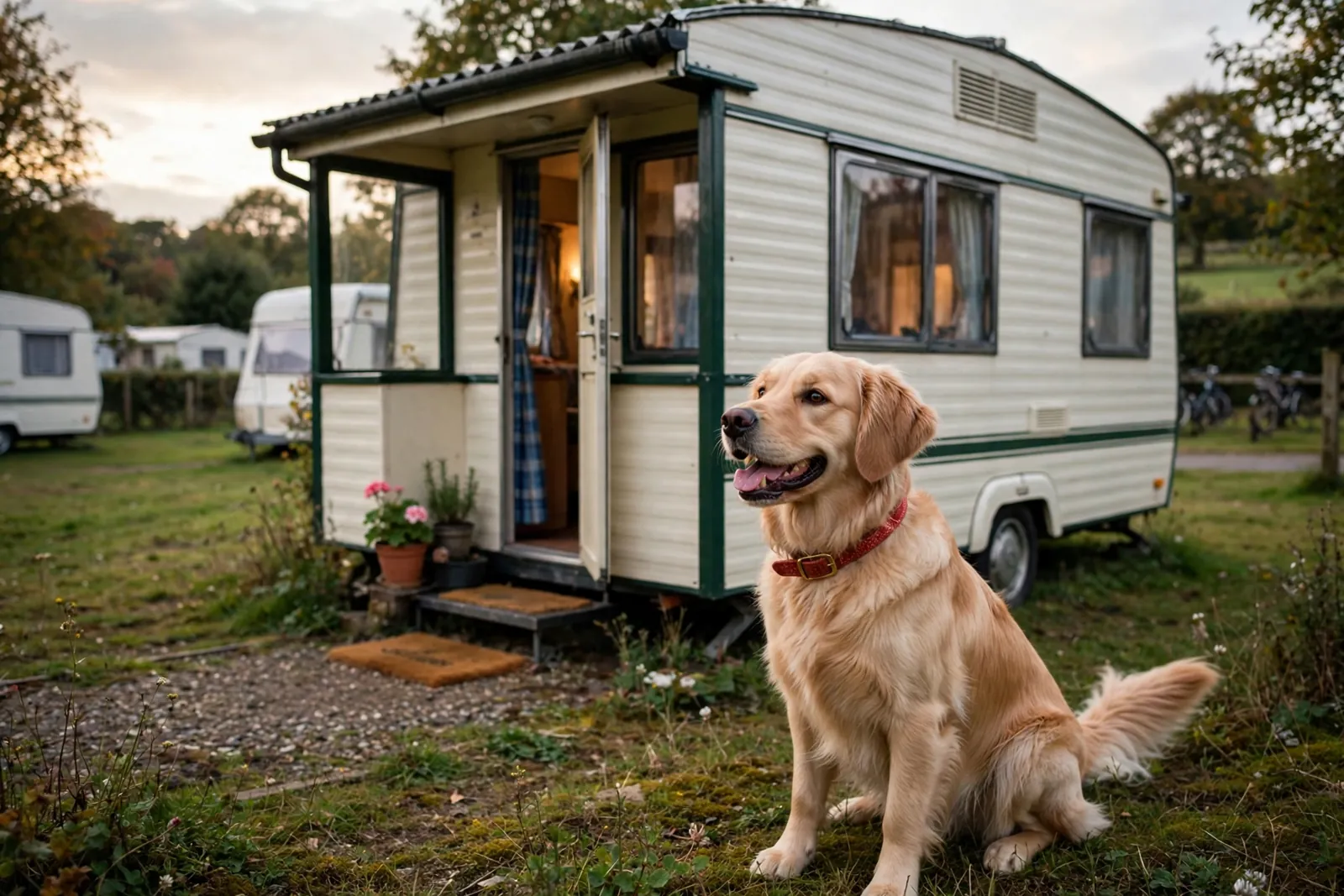
Devon's holiday parks cluster around Woolacombe, Ilfracombe, Dawlish and the Exe estuary, and they price a notch below Cornwall's equivalent parks for the same week. A dog-friendly caravan for seven nights in shoulder season runs GBP 400–650, rising to GBP 800–1,200 in August; lodges with a bit more space run GBP 550–850 shoulder and GBP 1,000–1,600 peak. Campsites with electric hook-up are cheaper still at GBP 25–45 per night in season, though you are trading weather risk for the saving.
Parks sell themselves on the entertainment passes, and this is where the dog owner's maths diverges from the brochure. The passes cover pools, clubs and shows the dog cannot attend, so price the park as accommodation plus location and ignore the rest. What matters for the dog is the same trio as anywhere: the pet fee, the boundary, and the nearest practical toilet walk. Park pet fees in Devon typically run GBP 25–50 per dog per week, sometimes bundled with a deep-clean line item, and the number of dogs per unit is usually capped at two.
Ask where the dog-friendly units actually sit before you book. On several large parks they cluster near the perimeter, which can be a blessing (quieter, closer to the dog walk) or a curse (near the service road, further from the beach path) depending on the site map. Arrival-day traffic on the M5 and A361 makes the parks near Barnstaple and Ilfracombe meaningfully slower to reach on a Saturday than the map suggests; a Friday arrival, where the park offers it, can save an hour of queuing with a restless dog in the back.
The dog-related charges in the small print
Devon's dog surcharges are not the highest in the country, but they are spread across more line items than most people expect. The pet fee itself is the visible one: GBP 30–60 per dog per week for cottages and parks, GBP 5–10 per night for B&Bs, with some cottages charging a flat per-stay figure instead. Two dogs roughly doubles it, and a few properties cap the total number of dogs at two while quietly charging the fee per animal.
The quieter lines are where budgets leak. Refundable damage deposits of GBP 100–250 are common on cottages and are not a cost if nothing goes wrong, but they are a cash-flow hold on the card for the week. Deep-clean charges of GBP 30–50 sometimes sit inside the pet fee and sometimes beside it; ask which. Some agencies add a linen or "dog towel pack" line at GBP 10–20, which is genuinely useful if you would otherwise buy a set, and less useful if you pack your own. A handful of premium cottages charge a "dog bond" that is only returned after an inspection, so read the checkout conditions before you assume it comes back automatically.
The most important sentence in this whole section is a procedural one: get the all-in per-booking total in writing, with every dog-related line itemised, before the deposit leaves your account. Our full decoder on UK holiday pet fees walks through nightly versus per-stay pricing, the deposit question and the ten questions worth asking any host, and the logic applies in Devon exactly as it does everywhere else.
Pubs, cream teas and the self-catering split
Devon is one of the easiest counties in England to eat out with a dog, and that ease is a budget feature: when the dog can come to the pub, you do not pay for alternative arrangements or cut evenings short. A two-course pub dinner for two with the dog asleep under the table runs GBP 38–55 in most of the county, rising toward GBP 55–75 in Salcombe and Dartmouth. Sunday roasts, the county's signature outing, run GBP 16–24 per person. The cream tea, non-negotiable at least once, costs GBP 8–14 for two with the dog watching every move.
The self-catering split is where the weekly food bill is really decided. Cooking four nights and eating out three keeps a couple's food spend around GBP 220–320 for the week including a supermarket shop; eating out most nights pushes the same week toward GBP 450–650. The dog tilts the maths toward cooking, because every restaurant evening is an evening the dog either comes along (fine in Devon, mostly) or waits in the cottage (fine once or twice, wearing by night five). A practical rhythm that many dog owners land on is pub lunches on walking days and cooked dinners back at base: lunch menus are cheaper than dinner menus, the dog is tired and welcome, and the evening stays relaxed.
Two small food costs catch people out. Farm shops on the lanes into the coast are wonderful and priced like it; do the main shop at a supermarket in Exeter, Barnstaple or Newton Abbot on the way in and use the farm shop for treats. And ice cream economics are real on a family beach week: at GBP 3.50–4.50 a cone across several children and several days, the beach kiosk can quietly add GBP 40–60 to the week. Nobody regrets the ice cream; just know it is a line item.
Getting there and moving around
The M5 is Devon's front door and its main cost advantage over Cornwall. From the Midlands, a return run to South Devon uses roughly GBP 60–100 of fuel in a typical petrol family car at 2026 prices; from London and the South East, budget GBP 90–140. Devon levies no tolls on the main holiday routes — no bridge, no estuary crossing — which keeps the travel line of the budget to fuel plus any services spending. Fill up before joining the motorway where you can; services fuel carries a premium of roughly 10–15p per litre.
The services themselves are part of the dog logistics, not just the fuel maths. Taunton Deane, Exeter and Cullompton all have signed dog exercise areas or generous grassed verges away from the lorry park, and a proper twenty-minute stop with water and a toilet walk at one of them pays for itself in a settled dog for the final leg. Budget a few pounds for services coffee and snacks rather than pretending you will drive through; the stop you plan is cheaper than the stop you are forced into.
Once in the county, the car keeps costing. Council beach and town car parks run GBP 6–9 for the day, and a week of driving to a different cove each day adds GBP 40–60 before you have bought anything. Two tactics cut this: base within walking distance of at least one good walk, and buy the weekly or multi-day parking ticket where the council offers one — several Devon districts do, and the saving over seven daily tickets is typically 20 to 30 percent. If you are arriving by train, CrossCountry and Great Western services reach Exeter with dogs travelling free on the lead; the onward bus or taxi to the coast then becomes the constraint, so price that leg before committing to a car-free week.
Free days out and the paid exceptions
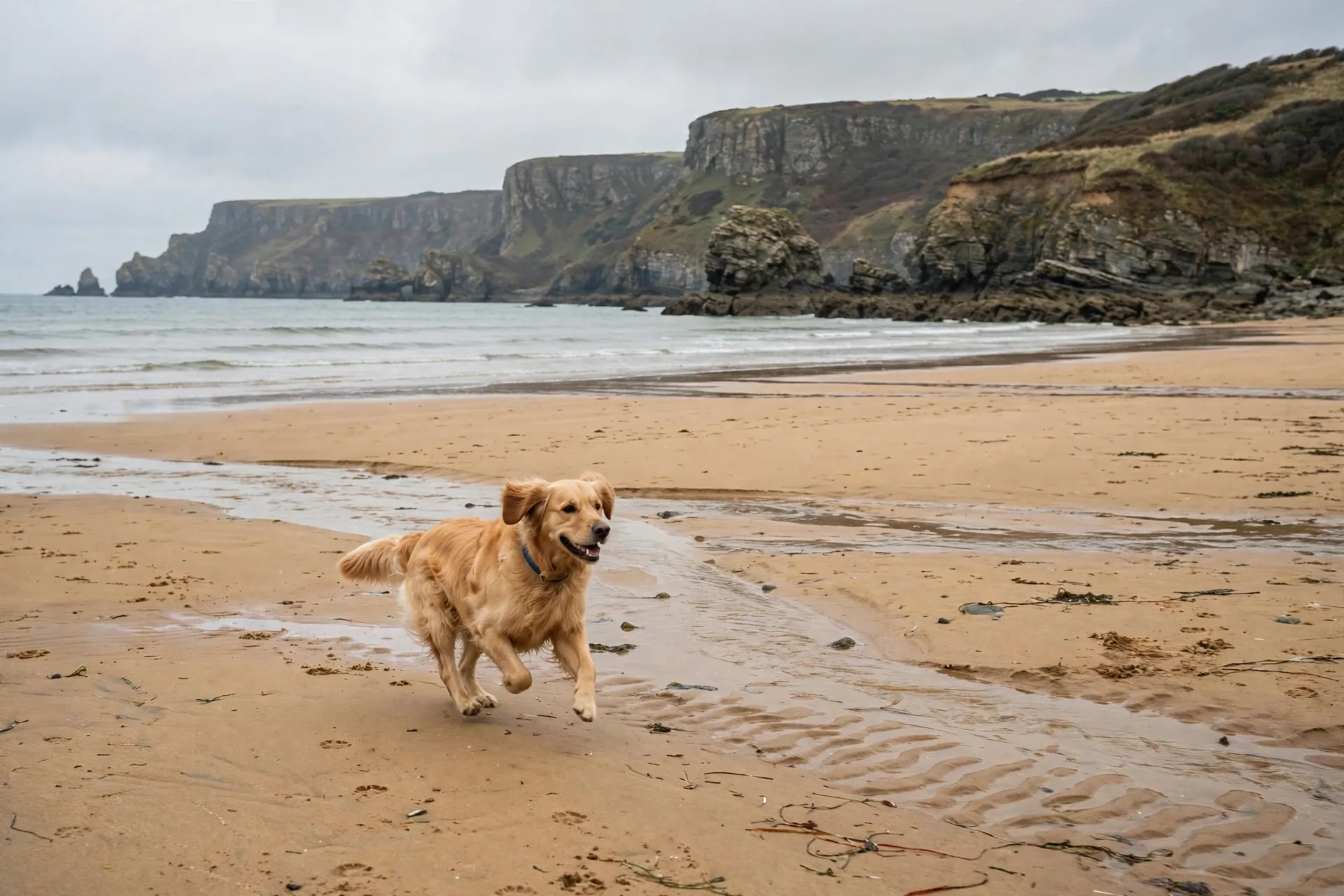
Devon's cheapest asset is its free walking, and it is better than Cornwall's in one specific way: the moors. Dartmoor and Exmoor are both free to walk, both allow dogs under control, and both absorb full days without a single ticket. The South West Coast Path through Devon is free as well, and the stretches around Hartland, the Exmoor coast and Start Bay give you the drama people pay to find elsewhere. Add the county's long list of year-round dog-friendly beaches, and a week can genuinely pass with the only daily cost being parking.
Beach rules need a careful note because they change. Many Devon beaches welcome dogs all year, while the busiest resort beaches apply seasonal restrictions — commonly from May or July through September — and some use time-zoned access (dogs before 10am and after 6pm, for example) rather than a full ban. District councils set the rules beach by beach, and they do change, so check the official guidance before you travel rather than relying on last year's memory or a blog post.
The paid exceptions are worth pricing because they are the days people remember. National Trust houses and gardens in Devon charge roughly GBP 14–18 per adult where dogs are limited to the grounds; membership pays back fast if you will visit three or more properties in the year. Steam railways, which many dogs can ride on, run GBP 20–30 per adult for a return. Surf lessons on the north coast run GBP 35–50 per person, and coasteering or guided gorge walks sit in the same band. The Donkey Sanctuary near Sidmouth remains free entry and genuinely dog-welcoming, and is the rare paid-tier day out that costs nothing but the car park.
A money-saving checklist for dog owners
Pulling the levers above together, this is the order that saves the most money for the least effort. Work down the list until the week fits the budget.
- Travel in May, June or September. The single biggest saving: shoulder-season cottages run 30 to 50 percent below August, and most beaches are dog-open.
- Base five miles inland. A village-edge cottage or farm stay near the coast costs far less than the sea-view equivalent and adds one short drive a day.
- Choose the enclosed garden over the sea view. Free off-lead time from the door removes paid exercise sessions and several car journeys.
- Ask for the all-in dog total in writing. Pet fee plus cleaning plus deposit, itemised, before the deposit — the question that prevents every surprise in the section above.
- Book direct where the cancellation terms are fair. Cutting 10 to 15 percent of platform fees is worth it only if the refund terms survive the comparison.
- Cook four nights, pub lunch three days. Lunch menus are cheaper than dinners, the dog is welcome and tired, and evenings stay easy.
- Do the big shop before the coast. Supermarkets in Exeter, Barnstaple or Newton Abbot beat coastal convenience stores and farm shops on staples.
- Buy the weekly parking ticket. Where the district offers multi-day parking, it undercuts seven daily tickets by roughly a quarter.
- Walk the moors. A Dartmoor or Exmoor day is the best free day out in the South West, and the dog will vote for it over any attraction.
- Pack the dog kit properly. Drying coats, spare leads, poo bags, a vet number saved on day one — every forgotten item is bought at tourist prices.
Two worked snapshots to close. A disciplined shoulder-season week — inland farm stay, one dog, mostly self-catering, moors and beaches for entertainment — lands at roughly GBP 850–1,100 for two adults and the dog. A comfortable version of the same week — coastal cottage with an enclosed garden, three pub dinners, two paid attractions — lands at roughly GBP 1,400–1,800. Both are real weeks people actually take; the difference is which levers you pull. Prices move, so treat every figure here as a 2026 ballpark and check the latest quote from the provider before you book.
Practical questions
Before you go
Is Devon really cheaper than Cornwall for a dog holiday?
For a like-for-like week it usually is, by roughly 15 to 25 percent. The gap comes from a shorter drive for most of England, a bigger supply of inland farm stays and fewer of the peak-week premiums that Cornwall's best-known beaches command. The exception is the South Hams, where prices sit close to Cornwall levels, so check the latest quotes before you decide.
How much is the pet fee for a week in Devon?
Expect GBP 30 to GBP 60 per dog per week for cottages and holiday parks, with farm bed and breakfasts often charging GBP 5 to GBP 10 per night instead. Some inland cottages still waive the fee outside peak season. Always ask for the all-in per-booking total, because cleaning surcharges and refundable deposits are itemised separately.
What is the cheapest month to take a dog to Devon?
January, February and November are the cheapest months for accommodation, often half the August price, and many beaches that restrict dogs in summer open back up. May and September are the sweet spot for many owners: prices sit well below peak, the weather is usually kind and most attractions are fully open. Check the official guidance before you travel if beach access matters to your plans.
Are Devon beaches dog friendly in summer?
It varies by beach and by council. Many Devon beaches allow dogs all year, while the busiest resort beaches apply seasonal restrictions, usually from May or July to the end of September, often with time-zoned access instead of a full ban. Rules change, so confirm the current restriction for the exact beach before you set off.
How much fuel should I budget for the M5 run to Devon?
A return trip to South Devon from the Midlands typically uses GBP 60 to GBP 100 of fuel in a petrol family car at 2026 prices, or GBP 90 to GBP 140 from London and the South East. Devon has no toll bridges or estuary crossings on the main holiday routes, which keeps the travel line of the budget simple. Add a few pounds for motorway service prices if you will not fill up before joining the M5.
Can two people and a dog do a week in Devon for under GBP 1,000?
Yes, outside school holidays, with self-catering and mostly free days out. A shoulder-season inland cottage or farm stay at GBP 450 to GBP 650, a GBP 30 to GBP 50 pet fee, fuel, supermarket food and one or two paid outings lands a disciplined week in the GBP 850 to GBP 1,050 range. The budget breaks if you eat out most nights or upgrade to a coastal cottage in peak season.