This guide is independent and contains no paid placement. Prices below are general typical ranges only — prices vary, check before booking and always confirm the latest rules with the provider.
The cheapest dog-friendly holiday is rarely the cheapest headline price. Go off-season or midweek, pick a simple self-catering base near free walks, watch the pet fee per dog per night, and compare the total — accommodation, dog charges, food, parking and travel — before you pay anything.
Go when prices drop: off-season timing
Timing is the single biggest saving most dog owners can make, and it costs nothing in quality if you choose well. School-holiday weeks — especially late July and August, Easter, and the October and February half terms — carry the highest prices across almost every type of stay. The same caravan, cottage or lodge can cost two or even three times more in peak week than in a quiet week either side of it. Prices vary by region and provider, so check before booking, but the pattern is consistent enough to plan around: if your work and family life allow any flexibility at all, use it here first.
Shoulder season is the sweet spot for value. Late September, October, May and early June often bring lower prices, milder weather than midwinter, open facilities, and beaches and footpaths that are far less crowded. That quiet matters for dogs as well as budgets: a nervous dog gets more space on the path, a young dog gets calmer practice around other walkers, and you are less likely to queue for a table where dogs are welcome. Travelling just one week outside a school holiday can change both the price and the feel of the whole trip. One of the cheapest bases of all is a dog friendly youth hostel, where dogs are usually accepted in private rooms rather than dorms.
Winter deserves a serious look too, with eyes open about the trade-offs. Many holiday parks close or reduce facilities between November and March, but those that stay open, along with many cottages and pubs with rooms, discount heavily to fill quiet weeks. The savings can be substantial, yet you need to check heating — whether it is included or metered — daylight hours for walks, and whether local attractions and cafés keep winter hours. A cheap week that leaves you paying extra for heating and driving further for an open café is less cheap than it looked. Ask those questions before you book, not on arrival.
Finally, think in terms of weather you and your dog actually enjoy, not postcard weather. If your dog loves mud, water and empty hills, an off-season week is not a compromise at all — it is the better holiday at a lower price. Pack for rain, plan a wet-day fallback near the base, and the low season stops feeling like second best.
Use beaches after the bans lift
Many popular British beaches restrict dogs during the main summer season, typically from spring into early autumn, although exact dates and sections vary by beach and local council. That restriction is one reason peak-season coastal breaks can disappoint dog owners: you pay the highest price of the year for the weeks when your dog may be limited to a small section of sand, a promenade on a lead, or no beach at all during the day. Always check the current local rules for the specific beach before you travel, because there is no single national pattern.
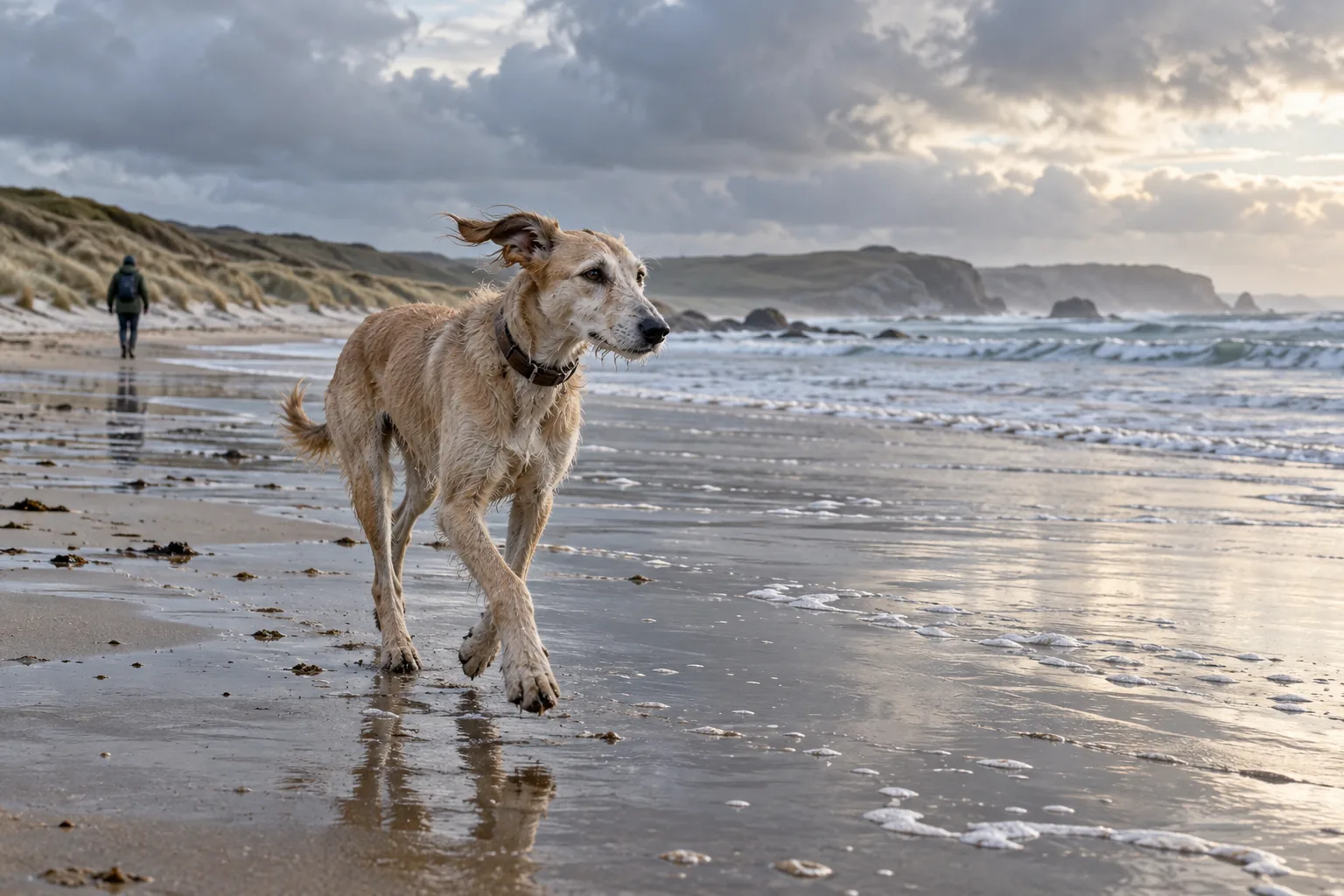
Travel after those seasonal restrictions lift and the maths flips in your favour. Accommodation prices fall, car parks empty, and on many beaches dogs regain access to the full stretch of sand. For a dog that loves to run and swim, an October or March beach can be a better experience than an August one — more space, cooler temperatures that are safer for exercise, and no stressful weaving through crowds with a wet, excited dog on a lead. Cooler weather also removes the midday heat problem that forces summer walkers into very early or very late outings.
Do not assume winter means every beach is open to dogs, either. Some beaches have year-round restrictions in certain zones, protected wildlife areas may ask for leads, and storm debris, high tides and cliff conditions change what is safe day by day. A practical routine is to pick a base near two or three different beaches rather than one, check each one's current dog rules and tide times, and keep a non-beach walk in reserve for rough days. That flexibility is free, and it protects a cheap break from being spoiled by a single closed or unsuitable beach.
Inland water needs the same care. Rivers, reservoirs and lakes have their own access rules, algae warnings in warmer months, and livestock on surrounding fields. Free swimming for a dog is a wonderful part of a low-cost holiday, but only where it is allowed and safe — check local signage on the day and follow it.
Choose cheaper places to stay
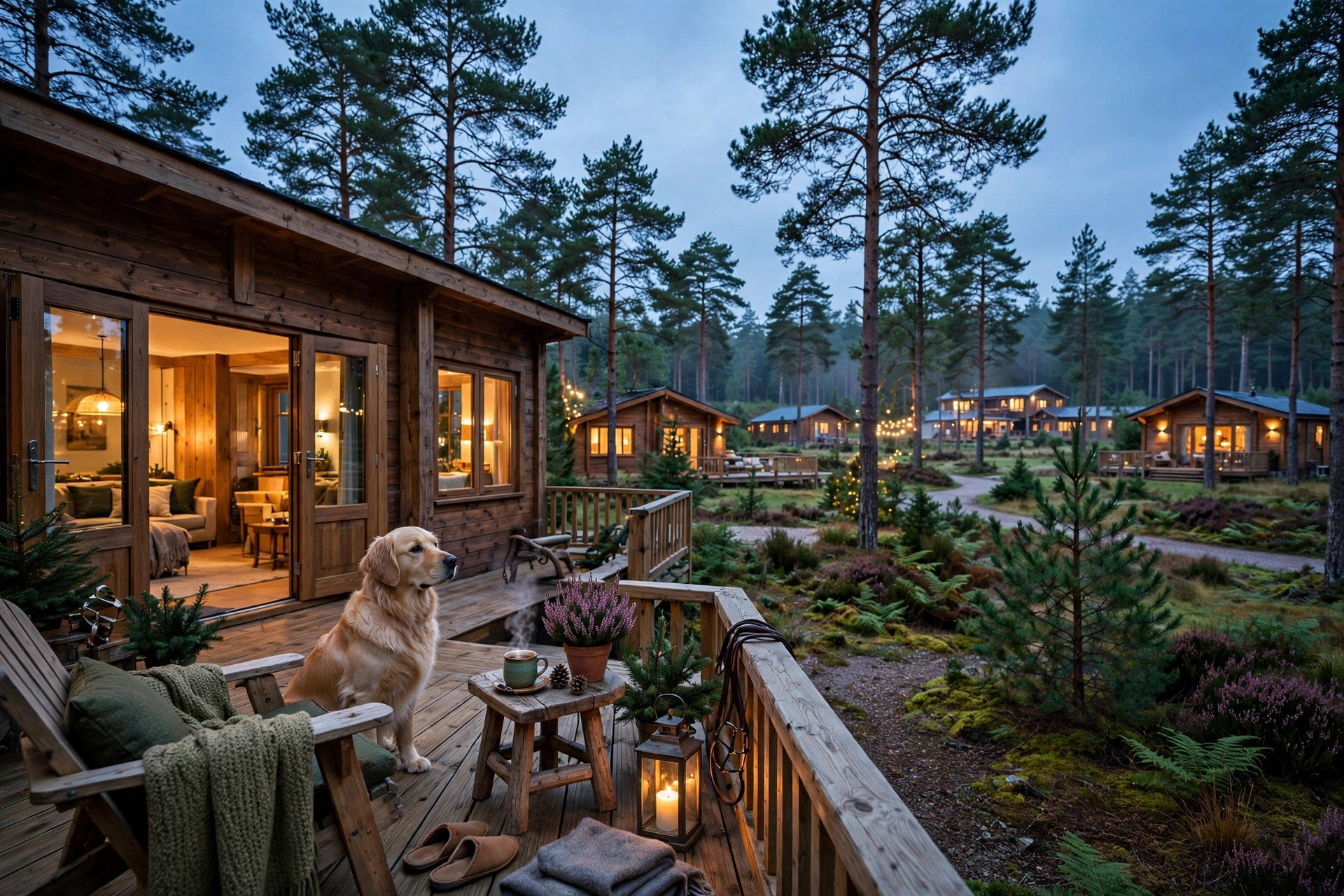
The type of accommodation you choose sets the floor for the whole budget, so compare types, not just listings within one type. As a broad pattern, a simple static caravan on a park, a basic self-catering cottage or flat, and a touring pitch if you have your own caravan or campervan usually cost less per night than a hotel room or a lodge with extras such as a hot tub. Prices vary widely, so check before booking, but stripping out features you will barely use — spa access, entertainment passes, premium sea views — is one of the most reliable savings available.
Start with what the dog actually needs, then pay only for that. Most dogs need a washable floor, a door that closes securely, somewhere safe for a toilet walk after dark, and enough space for their bed — not a designer interior you will spend the week protecting. A modest unit on the edge of a park, near open ground, often suits a dog better than a premium unit in the busy centre, and it is usually cheaper. Our guide to dog-friendly holiday parks in the UK explains how to judge layout, boundaries and location on a park map before you commit, which helps you pick the good-value unit rather than just the low-priced one.
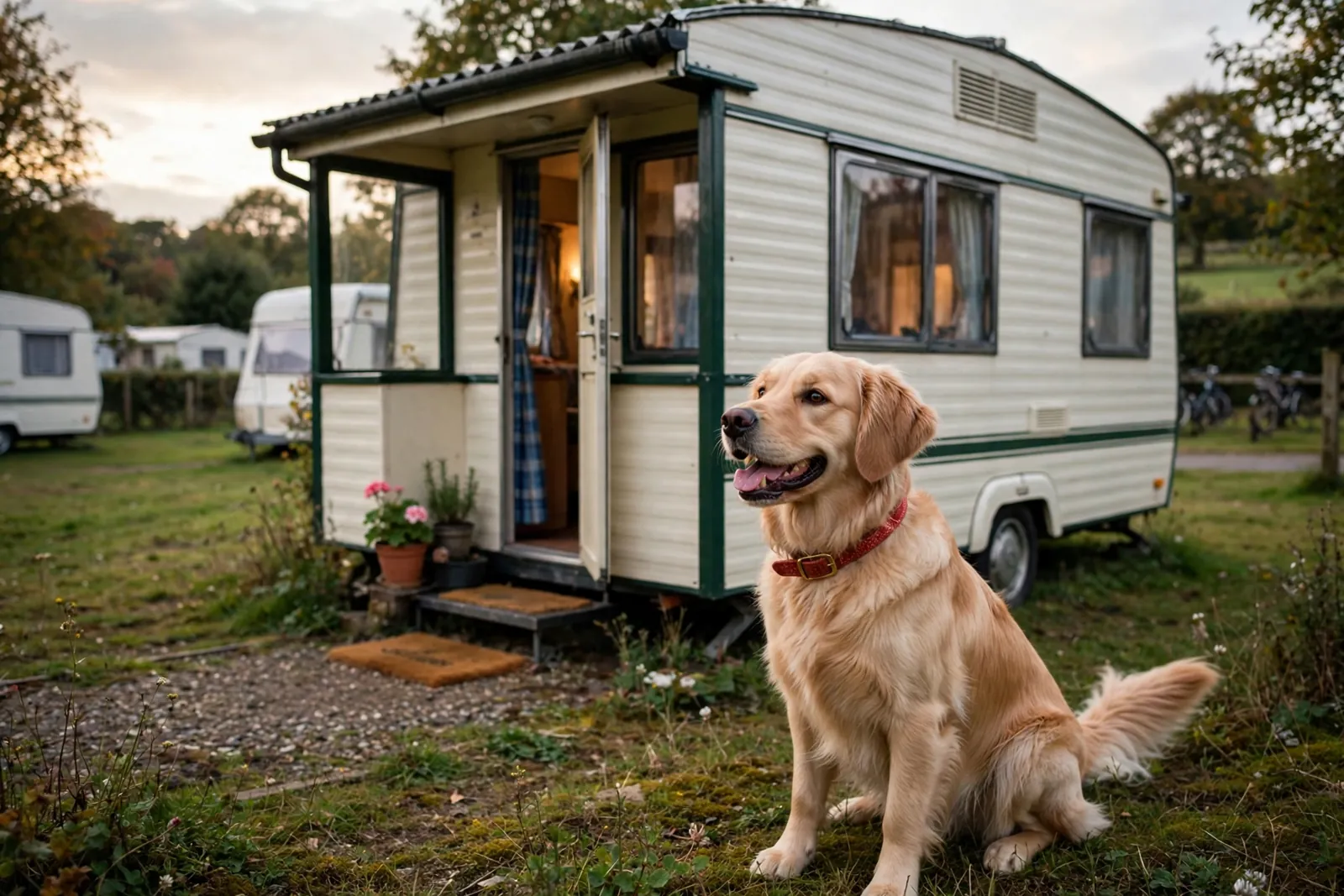
Caravans deserve a particular mention for value. A well-chosen caravan gives you a kitchen, a living space where a dog can settle, and often a small outdoor area, all for less than most hotel stays — and you are not paying restaurant prices for every meal. If that format appeals, read our dog-friendly caravan holidays guide for what to check about heating, steps, decking and enclosed outdoor space before booking a cheaper unit, because the lowest-priced caravans can be older, smaller or further from the walks.
Other lower-cost options can work well depending on your dog. Pubs with rooms sometimes price midweek stays keenly and welcome dogs in the bar, which saves a separate evening out. Small independent cottages booked directly with the owner can occasionally beat platform prices, and some owners waive or reduce dog fees for longer stays — it is always worth a polite ask. Hostels with private rooms, basic bunkhouses and farm stays vary a great deal in whether they accept dogs at all, so confirm in writing. Whatever the type, the rule is the same: cheap is only cheap if the dog is genuinely welcome and the space is safe.
Avoid pet-fee traps
Pet fees are where a cheap headline most often stops being cheap. Typical charges are often around £25–£75 per dog per week, or roughly £5–£12 per dog per night, while some places charge a single flat fee per stay and a few include dogs free on selected dates or in selected units. Prices vary, so check before booking — and check the structure of the charge, not just the number. Per-night and per-dog pricing punishes longer stays and multi-dog households: two dogs for seven nights at a nightly rate can add well over £100, while the same stay under a flat per-stay fee might add a fraction of that.
Look for the charges that hide behind the pet fee. Ask whether there is a separate deep-clean fee, a refundable damage deposit (commonly £100–£200 where charged), or a higher rate for a second dog. Ask whether assistance dogs are treated separately — they should not incur pet fees or count against pet limits. Get the all-in dog total for your exact booking, in writing, before you pay a deposit. If a listing says dogs are welcome but never states a fee, do not assume free: ask, because a fee added at checkout or on arrival is a common and avoidable surprise.
There are honest ways to reduce this cost. Choose places that charge per stay rather than per night if you are staying a week. Look for low-season “dogs go free” offers, but read the conditions — they often apply only to certain units or dates. Consider a longer stay in one base instead of two short stays in two places, since two bookings can mean two sets of per-stay fees, two cleaning charges and two lots of travel. And if you travel with two dogs, always compare the two-dog total, not the single-dog headline: the ranking of your shortlist can reverse completely once the second dog is priced in.
Protect yourself on deposits too. Photograph the accommodation on arrival, note any existing marks or damage, keep dogs off furniture if that is the house rule, and bring your own throws, towels and cleaning basics. A retained deposit or a damage claim wipes out every other saving in this guide, and most of them are preventable with a ten-minute arrival routine.
Save serious money with self-catering
Food is the second budget, and for dog owners it is often the one that leaks most. Eating out with a dog means finding places that welcome dogs, which can push you towards pricier cafés and pubs, and a week of bought lunches and dinners adds up to more than many people spend on the accommodation itself. Self-catering flips that: a simple kitchen lets you eat well for a fraction of the cost, at times that suit your dog's routine, without any worry about whether the dog can come inside.
You do not need to cook elaborate meals on holiday. A workable pattern is one planned shop on arrival day — ideally at a larger supermarket near the base rather than a small convenience store at holiday prices — covering breakfasts, packed lunches and most dinners, with one or two meals out chosen deliberately as a treat rather than by default. Bring store-cupboard basics from home (tea, coffee, oil, salt, dog food and treats) so you are not buying full-size replacements for a week. Dog food in particular can be oddly expensive in small local shops, and switching brands abruptly upsets some dogs, so pack what your dog normally eats.
Packed lunches unlock the best free days out. Sandwiches, a flask and dog water in a rucksack mean a full day on a coastal path, in a forest or around a reservoir costs little beyond parking and travel. That is the real financial engine of a cheap dog holiday: the walks dogs love most are free, and self-catering stops food spending from quietly cancelling that out. A cool bag and a couple of reusable bottles pay for themselves within a single trip.
Check the kitchen before you rely on it. Cheaper accommodation sometimes has a minimal kitchen — two rings, no oven, a tiny fridge, few pans. Ask what is actually provided, whether there is freezer space, and whether essentials such as a tin opener, sharp knife and chopping board are included. If the kitchen is truly basic, plan hob-top and no-cook meals rather than discovering the limitation with a bag of shopping in your hand.
Fill the week with free walks and days out
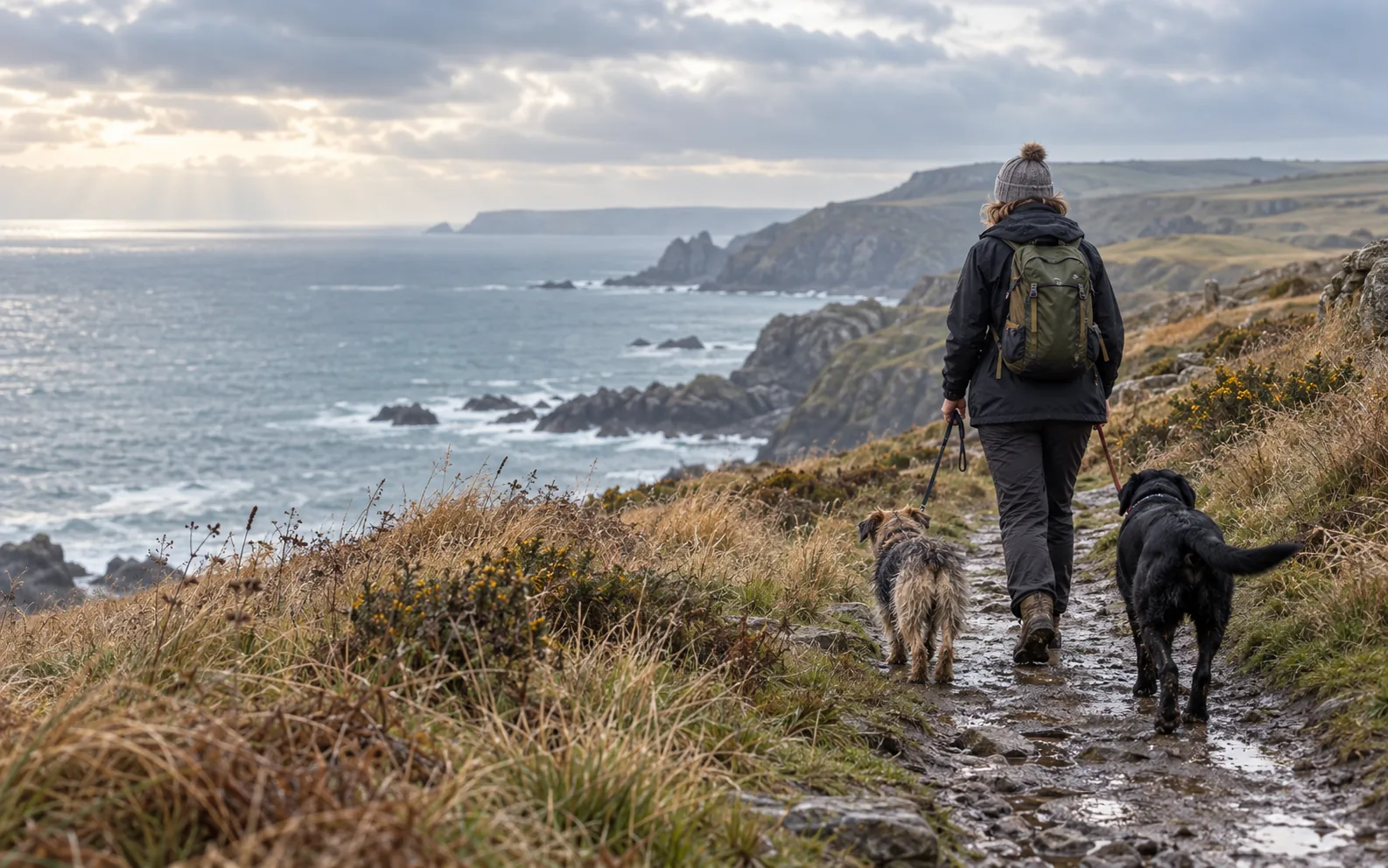
The best entertainment on a dog holiday is almost always free, and building the week around it is what makes a cheap break feel generous rather than restricted. Coastal paths, national trails, canal towpaths, forest tracks, country parks, river walks and big open beaches after restrictions lift can fill every day without an entry ticket. Many towns also have dog-welcoming markets, harbours and high streets where an hour of wandering costs nothing. Plan each day around one good walk and one simple pleasure — a swim spot, a viewpoint, a village green — and the holiday feels full.
Use free and low-cost resources to plan those days before you go. Council and national park websites list routes, parking charges and dog rules; community walking sites and apps can help, but verify dog restrictions and livestock warnings locally, because conditions change. Forestry and canal sites often have free or low-cost parking away from the main honeypot car parks, and arriving early or later in the day can mean cheaper or available parking as well as quieter paths. Where parking is charged, one well-chosen base for a long day is better value than three short stops each with their own fee.
Be honest about paid attractions. Some gardens, estates and attractions welcome dogs in grounds but not in houses or cafés, which can still be good value if the grounds are the main event — and poor value if they are not. Check exactly where dogs can go before paying, and check whether a second visit within a year, a membership, or an off-peak ticket changes the maths for a longer stay. There is no saving in a discounted ticket to a place your dog can only experience from the car park.
Keep a free wet-weather plan as well. A woodland walk in rain, a harbour town with dog-welcoming cafés where you buy one coffee slowly, a drive to a different beach between showers, or simply a rest day in the accommodation with games and training can rescue a rainy day without emergency spending. Dogs rarely mind a quieter day; it is usually the humans who need the plan.
Weekdays, booking timing and total-cost thinking
Weekday breaks are the quiet discount hiding in plain sight. Monday-to-Friday stays, and midweek nights generally, are frequently priced below weekends, because demand is lower — and sites, beaches, roads and car parks are calmer at the same time. For a reactive, elderly or easily overwhelmed dog, that calm is worth money on its own: less queuing, more space, easier parking and a better chance of a dog-welcoming table without a wait. If you can shift even part of a trip into the week — arriving Sunday evening or leaving Friday morning, for example — compare that price against the pure weekend version. Our weekend breaks with dogs guide shows how to structure a short break well, and many of its plans work even better, and more cheaply, stretched across quieter weekdays.
Early booking versus last-minute booking is not a contest with one winner; it depends on your dog. Early booking secures the limited number of genuinely dog-friendly units — ground-floor, enclosed garden, quiet corner — before they sell out, and sometimes comes with a lower deposit or an early-booking rate. Last-minute prices can be lower, but the remaining units may be the ones nobody wanted: beside the entertainment complex, up steep steps, or with no safe outdoor space. If your dog's needs are specific, the early saving in stress usually beats the last-minute saving in cash. If your dog is easy-going and you are flexible on place and date, last-minute can work well — set a total budget, check the dog rules as carefully as ever, and be willing to walk away.
Whatever you choose, compare total cost, not nightly rate. Build one honest figure per option: accommodation, all dog fees and deposits you must actually pay upfront, parking, linen or pass charges, estimated food, fuel or train fares, and parking on days out. Then add the cost nobody lists: travel time and hassle. A slightly pricier base ten minutes from free walks can beat a bargain base that needs a forty-minute drive to every walk, once fuel, parking and lost time are counted. That three-part test — money, effort and fit for your dog — is the same one worth using for any stay, cheap or not.
Finish with two small protections. First, read the cancellation terms before paying: a cheap non-refundable booking is expensive if a dog's illness or a family emergency forces a change, so weigh flexible terms as part of value. Second, keep every confirmation, fee breakdown and rule you were sent in one place until you are home. Saving money without stress is mostly this: no surprises, because you asked the questions while asking was still free. Prices vary and rules change, so check the latest details with the provider before booking — and then go and enjoy the quiet beaches, the free paths and a dog who never knew the holiday was a bargain.
Practical questions
Before you go
When is the cheapest time for a dog-friendly holiday in the UK?
Outside school holidays is usually cheapest, especially midweek in late autumn, winter and early spring, and in shoulder weeks just after bans lift on many beaches. Prices vary by park and region, so check before booking and compare the total including pet fees, not just the headline nightly rate.
How much are dog fees on a cheap holiday, and can they be avoided?
Typical pet fees are often around £25 to £75 per dog per week, or £5 to £12 per night, though some stays charge a flat fee and a few include dogs free on selected dates. Prices vary, so check before booking. You cannot reliably avoid a stated fee, but you can choose places with a per-stay rather than per-night or per-dog charge if you travel with more than one dog.
Are weekday breaks really cheaper than weekends?
Often yes. Monday-to-Friday and other midweek stays are frequently priced below Friday-to-Monday weekends, and sites, beaches and car parks are quieter too. That calm can also suit nervous or reactive dogs. Prices vary, so check before booking and compare like-for-like lengths of stay.
Is it cheaper to book early or last minute with a dog?
Both can work, for different reasons. Early booking secures the limited dog-friendly units that sell out first, sometimes with a lower deposit. Last-minute deals can be cheaper but may leave only unsuitable units or locations. If your dog needs a ground-floor, enclosed or quiet unit, early is usually the safer saving.
What hidden costs catch dog owners out most often?
The common surprises are per-dog and per-night pet fees, deep-clean charges, refundable damage deposits, parking, linen, entertainment passes and paying for meals out because there is nowhere to cook or nowhere dogs are welcome. Add them all before you compare, and keep the written total with your booking confirmation.