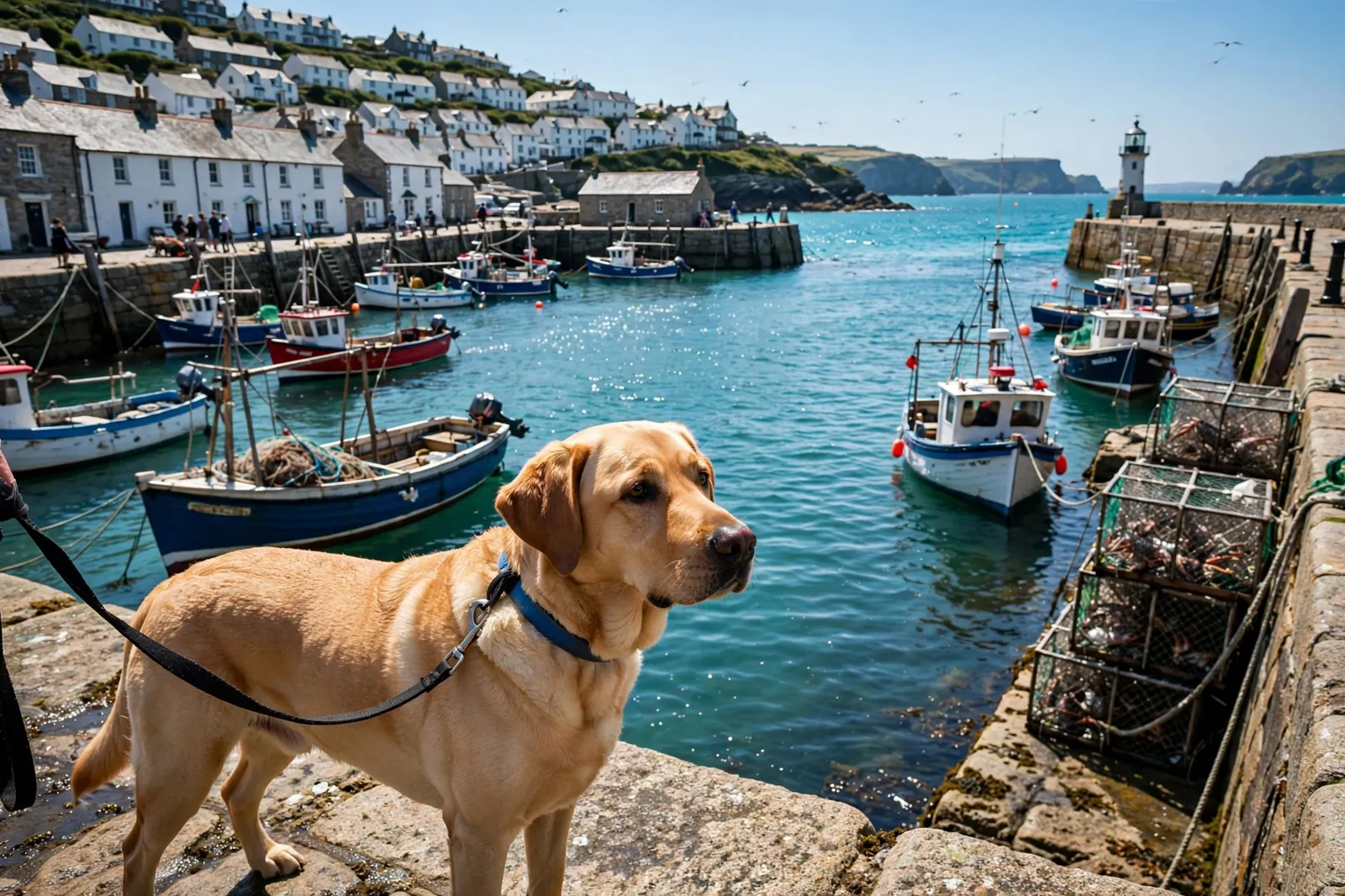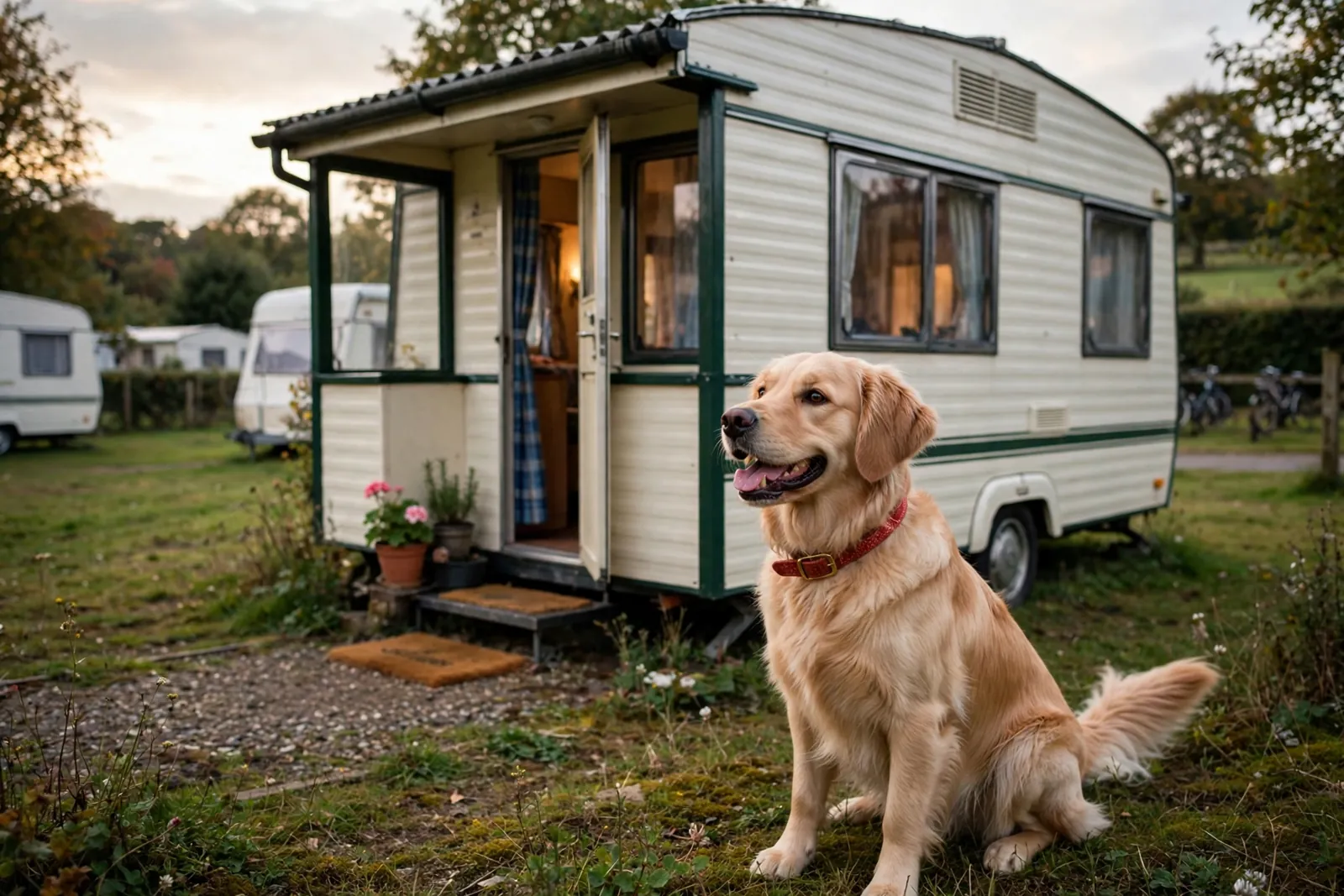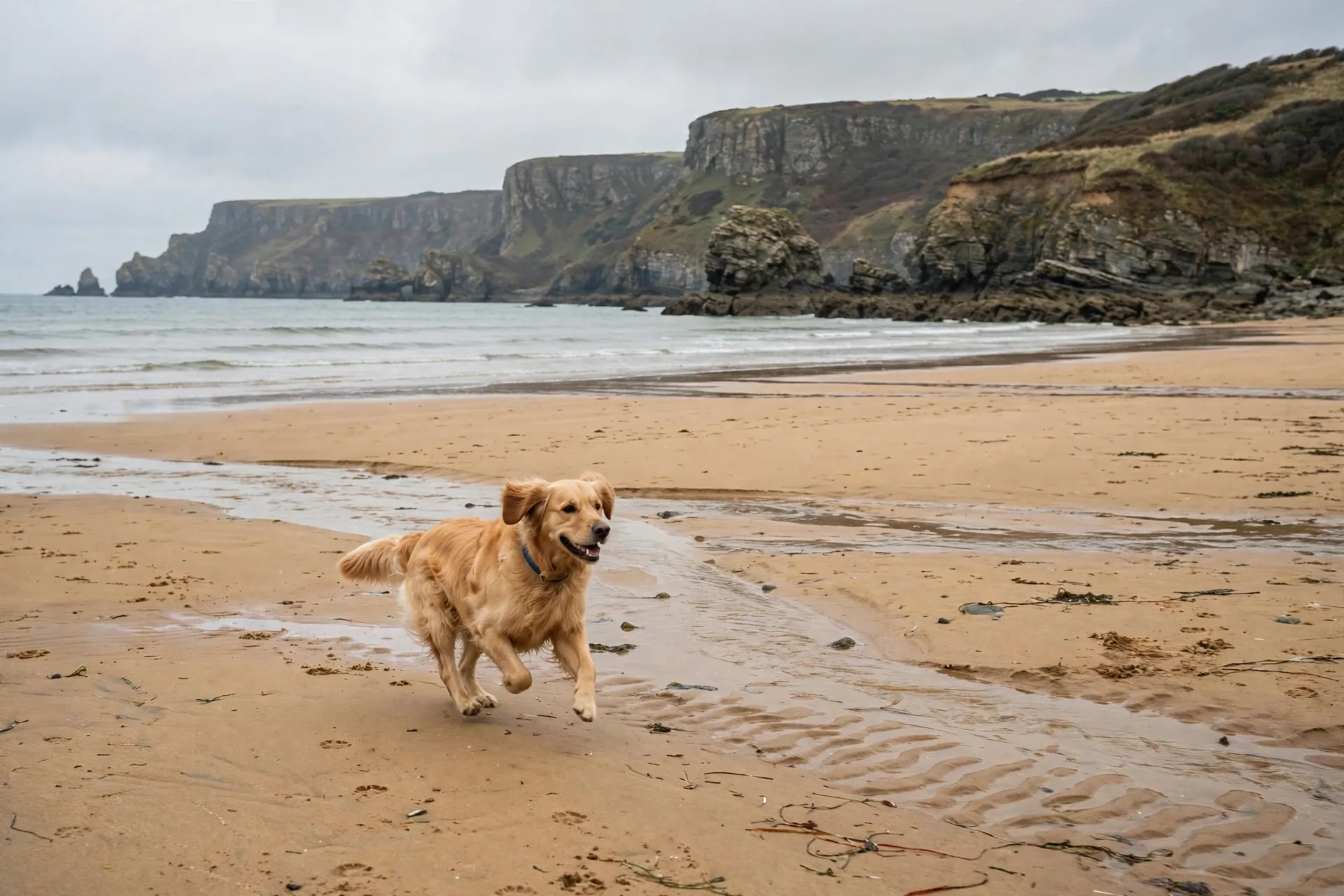
For two adults and one dog in self-catering accommodation, a week in Cornwall typically costs around £950–£1,600 in low season (November–March, excluding Christmas), £1,300–£2,100 in the shoulder months (April–June, September–October) and £1,700–£3,100+ in the July–August peak, with pet fees, parking and travel included. Moving the same trip from August to May or October is the single biggest saving you can make — it can cut the total by a third. Prices move with demand, so treat every figure here as a range and let the price on the booking page at the time you book have the final word.
The week at a glance: low, shoulder, peak
Cornwall is one of the most seasonal holiday markets in Britain. The same dog-friendly cottage that costs £500 a week in January can ask £1,500 in August, and the difference has nothing to do with the dog — it is school holidays, weather and sheer demand. Before pricing anything else, decide which season you are buying, because that choice sets the budget more than any single line item.
| Line item | Low season (Nov–Mar) | Shoulder (Apr–Jun, Sep–Oct) | Peak (Jul–Aug) |
|---|---|---|---|
| Dog-friendly stay, 7 nights | £450–£750 | £700–£1,100 | £1,000–£1,900 |
| Pet fee (one dog) | £30–£60 | £40–£75 | £50–£100 |
| Food and drink | £280–£420 | £320–£480 | £350–£550 |
| Getting there and around | £120–£220 | £140–£240 | £160–£280 |
| Beach parking and paid outings | £20–£60 | £40–£100 | £60–£150 |
| Buffer for extras | £50–£100 | £50–£100 | £80–£150 |
| Rough weekly total | £950–£1,610 | £1,290–£2,095 | £1,700–£3,130 |
Three things jump out. First, accommodation is roughly half the total in every season — that is where negotiation, timing and flexibility pay off most. Second, the dog-specific costs (pet fee, extra parking to reach dog-friendly beaches, a damage deposit buffer) add roughly £100–£250 to the week, which is meaningful but not the main driver. Third, the spread between low and peak is about 2:1, wider than in most English regions, because Cornwall's peak is so concentrated. Christmas and New Year weeks behave like peak season; October half term sits at the top of shoulder pricing.
These are planning ranges, not quotes. Cornwall's market moves with school holiday dates, weather forecasts and how early you book — a cottage booked nine months ahead can undercut the same property booked in June by hundreds of pounds. Use the ranges to choose your season and your accommodation type, then price the actual week on real booking pages.
Where the dog premium hides in stays
The self-catering cottage is Cornwall's default holiday format, and it is where dog owners meet the pet fee in its purest form. Most cottage agencies add £25–£100 per dog per week; a few fold the charge into the rent and market themselves as fee-free, which is worth filtering for. Two dogs usually means double the fee, and some properties cap the total at two or three dogs — always declare the real number, because arriving with an undeclared second dog is the fastest way to lose a deposit. Enclosed gardens command a premium and sell out first in peak weeks, so if your dog needs one, book early or accept that you will pay more for it.
Holiday parks with static caravans and lodges are the next tier down in price, and their fee structures are more varied: some charge per dog per night (£5–£12), others a flat weekly supplement. Parks suit dogs that cope well with neighbouring units and shared paths; they suit budgets too, especially in shoulder season when weekly deals appear. Hotels and B&Bs mostly charge per night per dog (£10–£25), which quietly becomes the most expensive option over seven nights — fine for a weekend, punishing for a week. Campsites and glamping sites are the cheapest roof over your head, often £3–£6 per dog per night, but in Cornwall's Atlantic weather you are betting on the forecast.
How you book changes the number as well. Booking direct with an independent cottage owner sometimes waives or reduces the pet fee, particularly for repeat guests or longer stays; agencies are less flexible but offer clearer cancellation terms. In peak season most Cornwall cottages run Saturday-to-Saturday changeovers, which removes your flexibility on travel days — a Friday arrival can dodge the worst of the A30 traffic, but only if the property allows it. And a note on timing: the cheapest Cornwall weeks are consistently the ones booked furthest ahead, because owners release low-season calendars early and raise prices as occupancy fills. If you want May at January prices, book in January. Our UK-wide dog holiday costs guide puts these fee structures side by side with other regions, and our cheap dog-friendly holidays guide covers the timing tactics that cut accommodation costs specifically.
Beach bans and the car park meter
Cornwall's seasonal dog bans are a budget factor disguised as a rule. Many of the county's main resort beaches restrict dogs from around 1 July to 31 August under public space protection orders, and a good number extend the ban from Easter to the end of September. Fines for breaching a PSPO can reach £100, so this is not a rule to test. The practical effect is that an August visitor may need to drive past the nearest beach to reach one where dogs are welcome year-round — and in Cornwall, that drive usually ends in a pay-and-display car park.
Coastal car parks in peak season commonly charge £5–£12 for the day, and a family that drives to a different beach most days can easily spend £60–£100 on parking in a week. Cornwall Council and some private operators offer weekly or multi-day tickets that undercut the daily rate meaningfully, so check what the car park you will actually use sells before paying day by day. In shoulder and winter months the same bans are mostly lifted — many beaches revert to year-round dog access from 1 October — and several council car parks drop to winter tariffs or go free, which is part of why the low-season totals in the table above fall so far.
Plan around the geography, not just the rules. Beaches a few miles outside the main resort towns are more likely to welcome dogs all year and their car parks are cheaper and quieter. Check the signs at the beach entrance on the day — they override anything you read online — and keep the dog on a lead where the signage asks for it. Our guide to UK beach dog bans and fines explains how PSPOs work and how to verify a beach before you go, and the St Ives with a dog guide walks through one town's beach rules beach by beach, season by season.
Getting to Cornwall and moving around
For most of England, Cornwall is a long drive — roughly 300 miles from London, 250 from Birmingham, 350 from Manchester — so fuel is a real line item rather than an afterthought. A return trip in a petrol car typically costs £70–£120 in fuel depending on where you start and what you drive; add tolls if your route uses the M6 Toll or the Tamar crossing options. The A30 on a summer Saturday is famously slow, and slow traffic with a dog in the car means planning comfort stops — factor in an extra hour and a services stop with a proper dog walk, not just a layby.
The train is the underrated option for dog owners. Dogs travel free on UK trains — up to two per passenger — including Great Western Railway's long-distance services from London Paddington to Penzance, a journey of about five to six hours. There is no dog ticket to buy, but there is also no reserved space, so bring water, a chew, and a blanket the dog can settle on, and aim for off-peak services where carriages are emptier. Branch lines within Cornwall, such as the scenic St Ives Bay Line, also carry dogs. If you arrive by train, check how you will reach your accommodation: rural cottages several miles from the station can make a taxi essential, and not every local firm takes dogs.
Once there, Cornwall rewards drivers and tests non-drivers. Local buses generally accept dogs at the driver's discretion, often for a small fare, but rural services are infrequent and you cannot rely on them for a tight itinerary. Budget for the mileage between your base and the beaches, towns and walks you actually plan to visit — a cottage ten miles inland is cheaper per night but adds fuel and parking every single day. Electric car drivers should map chargers in advance: the network along the A30 and in larger towns is reasonable, but remote coves and moorland car parks are charging deserts.
Pubs, pasties and the self-catering split
Cornwall is genuinely one of the easiest places in Britain to eat out with a dog. A large share of pubs, cafés and even some restaurants welcome dogs — often with water bowls, treats and a spot by the fire — which means dog owners are not confined to takeaways in the way they can be elsewhere. That hospitality is lovely, but it is also a spending trap: a pub lunch for two with drinks lands around £35–£55, a decent evening meal £60–£90, and doing that daily for a week doubles the food line in the table above. Decide in advance how many meals out the week includes, and treat the rest as a number to protect.
The self-catering split is where the savings live. A weekly shop for two at a large supermarket — the big stores around Truro, St Austell and Bodmin are far cheaper than the convenience stores in harbour towns — typically costs £80–£130, and cooking five or six evenings a week keeps the food budget near the bottom of the ranges. Tourist-town pricing is real: the same pasty, coffee or sandwich can cost 20–30% more on a harbourside in St Ives than a mile inland, so a £4.50–£7 pasty, £12–£18 fish and chips and £3.50–£4.50 coffee are sensible planning figures, with the higher end applying in the honeypot towns. Dogs are welcome in many farm shops and food markets too, which makes the weekly shop itself a pleasant outing rather than a chore.
One Cornwall-specific tip: breakfast and lunch are the cheap meals out, dinner is the expensive one. A café breakfast or a pasty eaten on a dog-friendly beach costs a fraction of a restaurant dinner and the dog is usually just as welcome. If your accommodation has a barbecue or a decent kitchen, a couple of "cook together" evenings with local produce from a farm shop feel like an event without the restaurant bill. And keep a small contingency for the rainy afternoon café stop — Cornwall's weather will eventually drive you indoors, and a dog-friendly café with cake is the correct response.
Free days out and the paid exceptions
The South West Coast Path is Cornwall's great budget leveller: 300-odd miles of it run through the county, it costs nothing, and it is purpose-built for dogs that like a long, sniff-rich walk. A week structured around the coast path — a different stretch each day, a beach at the end, a pub on the way home — can fill seven days with almost no attraction spending at all. Off-season beaches, moorland walks on Bodmin Moor and harbour towns explored on foot are similarly free. This is why Cornwall's daily spend can undercut regions where the main draws are paid attractions: the best thing here genuinely costs nothing.
The paid exceptions still add up if you are not selective. Gardens and historic properties typically charge £12–£22 per adult; several welcome dogs on leads in their grounds while keeping them out of houses and glasshouses, which suits a split visit if one adult stays outside with the dog. Large-scale attractions vary widely in dog policy — some allow dogs only in outdoor areas, others not at all — and policies change, so check the attraction's own dog page in the week before you go rather than relying on last year's review. Boat trips along the coast sometimes accept dogs and sometimes do not; the ones that do are a memorable splurge at roughly £15–£30 per adult.
Budget for the weather, not just the wishlist. Cornwall gets around 200 days of rain a year in the west, and indoor options with a dog are thin: most museums, galleries and indoor play centres do not admit dogs. That means a wet week either becomes a series of short damp walks punctuated by café stops, or you pay for the few dog-tolerant indoor options. A realistic plan prices in one or two paid days and treats the rest as coast-path and beach days — and accepts that the dog will probably prefer it that way.
Three worked weekly budgets
Ranges are useful for planning; worked examples are useful for deciding. Each budget below is for two adults travelling with the stated number of dogs, in self-catering accommodation, and includes the pet fee, food, travel, parking and a small buffer. Treat them as realistic sketches — your numbers will differ by where you start from and how you eat.
The careful shoulder-season week: one dog, May
| Cottage, 7 nights | £780 |
|---|---|
| Pet fee | £50 |
| Fuel, return from the Midlands | £140 |
| Food (mostly self-catered, 2 pub lunches) | £340 |
| Beach parking (weekly ticket) | £40 |
| One paid garden visit | £60 |
| Buffer | £60 |
| Week total | £1,470 |
This is the value sweet spot: beach bans mostly lifted, mild weather, and prices well below August. The weekly parking ticket and the mostly self-catered food plan do most of the work.
The comfortable peak week: one dog, August
| Cottage, 7 nights | £1,650 |
|---|---|
| Pet fee | £80 |
| Fuel, return from London | £170 |
| Food (mix of cooking and eating out) | £520 |
| Beach parking (daily, peak tariffs) | £90 |
| Two paid outings | £140 |
| Buffer | £100 |
| Week total | £2,750 |
August is Cornwall at full price: the cottage alone costs more than the entire May week above. If August is non-negotiable, booking nine to twelve months ahead is the only reliable discount — last-minute August availability with dogs is scarce and priced accordingly.
The shoestring winter escape: two dogs, November
| Lodge, 7 nights | £520 |
|---|---|
| Pet fees, 2 dogs | £80 |
| Fuel, return from the South East | £130 |
| Food (self-catered, 1 pub dinner) | £300 |
| Parking (winter tariffs) | £20 |
| Days out (coast path, beaches) | £30 |
| Buffer | £50 |
| Week total | £1,130 |
Winter is Cornwall's bargain season for dog owners: empty beaches with year-round access, short stormy walks, long pub evenings — and the dog is welcome almost everywhere. Pack for the weather and check the lodge's heating costs are included, because a cold snap changes the arithmetic.
If you want to push any of these numbers down, the levers rank in this order: change the season, book earlier, cook more, choose a base with free parking or a beach in walking distance, and pick one or two paid outings instead of five. The pet fee itself is the smallest lever — worth querying, but not worth choosing a worse property to save £20.
Practical questions
Before you go
What is the cheapest month to take a dog to Cornwall?
November through February, excluding Christmas and New Year, is usually cheapest: dog-friendly cottages can cost half the August price, car parks are cheaper or free, and many seasonal beach dog bans are lifted. January is often the lowest point, but expect shorter daylight, stormy weather and some closed attractions. Late September and early October are the sweet spot for many dog owners: lower prices, mild weather and beaches back to year-round dog access.
Do Cornwall's summer beach bans add to the cost?
Indirectly, yes. Many of Cornwall's main resort beaches restrict dogs from around 1 July to 31 August (some from Easter to the end of September), which can push you to drive to year-round dog-friendly beaches instead. That means extra fuel and £5–£12 a day in coastal car parks, plus the time cost. In the shoulder and winter months the same beaches are usually open to dogs, so a May or October trip can skip this surcharge entirely.
How much is the pet fee for a week in Cornwall?
For self-catering cottages and holiday parks, a common range is £25–£100 per dog per week; some charge per night at £5–£12 instead. Hotels and B&Bs more often charge £10–£25 per night per dog. Two dogs roughly doubles the fee, and a separate deep-clean charge or refundable damage deposit of £100–£300 sometimes appears at checkout. Always ask for the all-in figure with every dog-related line item before paying the deposit.
Is Cornwall more expensive than other UK regions for a dog holiday?
In peak season, yes — Cornwall is one of the priciest UK regions for a week with a dog, driven by extreme seasonal demand and long drives for many visitors. Off-season the gap narrows considerably, and Cornwall's abundance of free coastal walking means the daily spend can be lower than in regions where paid attractions dominate. Our UK-wide dog holiday costs guide breaks down the same line items for comparison.
Can I take my dog on the train to Cornwall?
Yes. Dogs travel free on UK trains, including Great Western Railway services from London Paddington to Penzance — up to two dogs per passenger, no ticket needed. The ride takes around five to six hours from London, so bring water, a chew and something for the dog to settle on. Branch lines like the St Ives Bay Line also accept dogs. Check the current policy before booking, as sleeper and reservation rules can change.
How much daily spending money do we need in Cornwall with a dog?
On a self-catering week, £40–£70 a day covers food, parking and the odd paid outing for two adults with a dog in shoulder season; add £20–£40 a day in August when car parks and attractions charge peak rates. Days built around the South West Coast Path and dog-friendly beaches can cost almost nothing beyond parking. Budget one or two paid days — a garden, a boat trip that accepts dogs, a pub lunch — rather than paying for an attraction every day.