This guide is independent and contains no paid placement. If affiliate links are added later, they will be clearly marked and will not change our editorial checks. This guide is educational only and is not a substitute for veterinary advice; if your dog is seriously ill or injured, call a vet immediately.
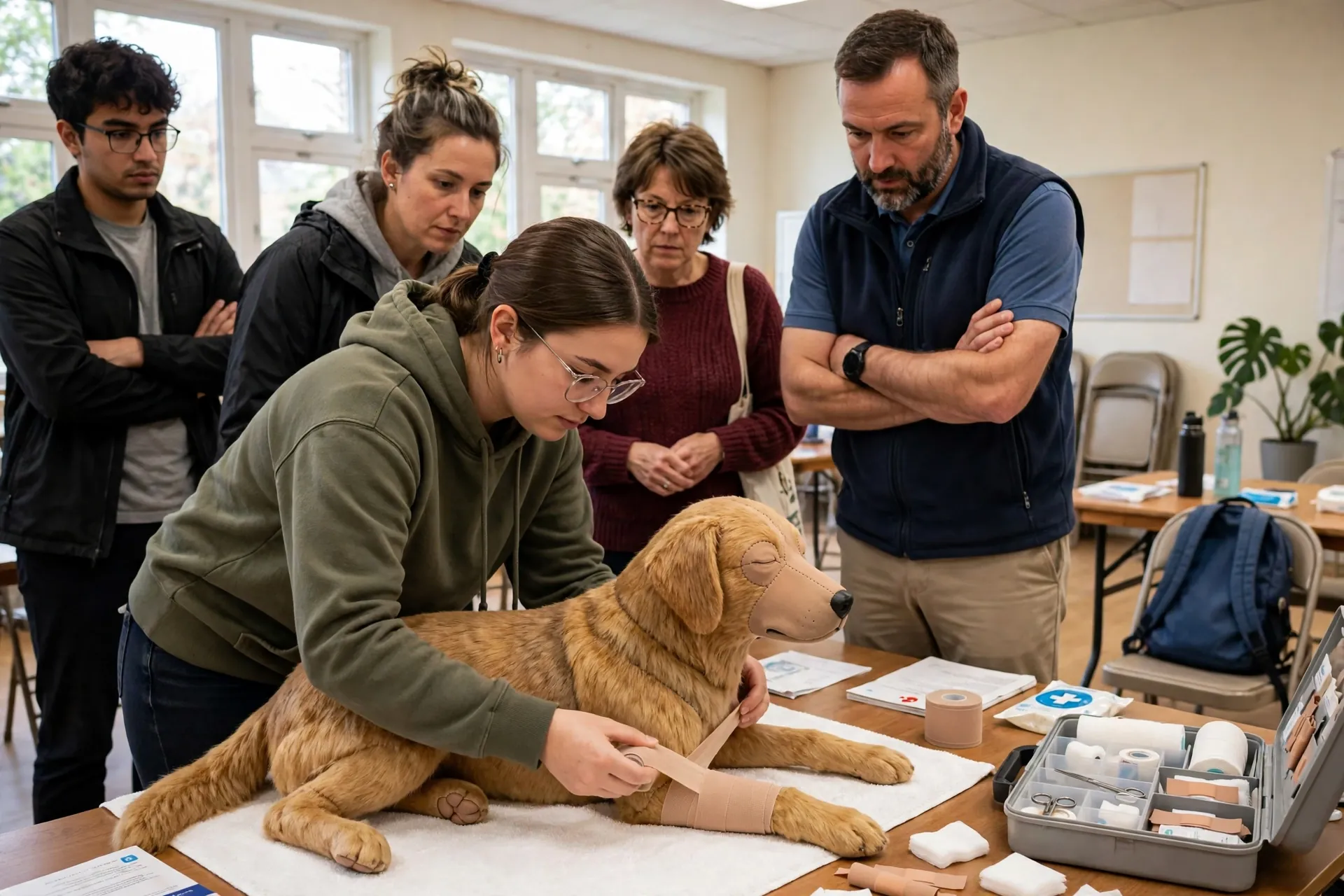
Choose a practical, in-person course taught by a vet nurse or experienced veterinary professional, covering assessment, bleeding, choking and CPR, poisoning, heatstroke and safe transport. Practise bandaging and CPR on a model, build a kit you can actually carry, and refresh the skills every year or two.
Why the owner is the first responder
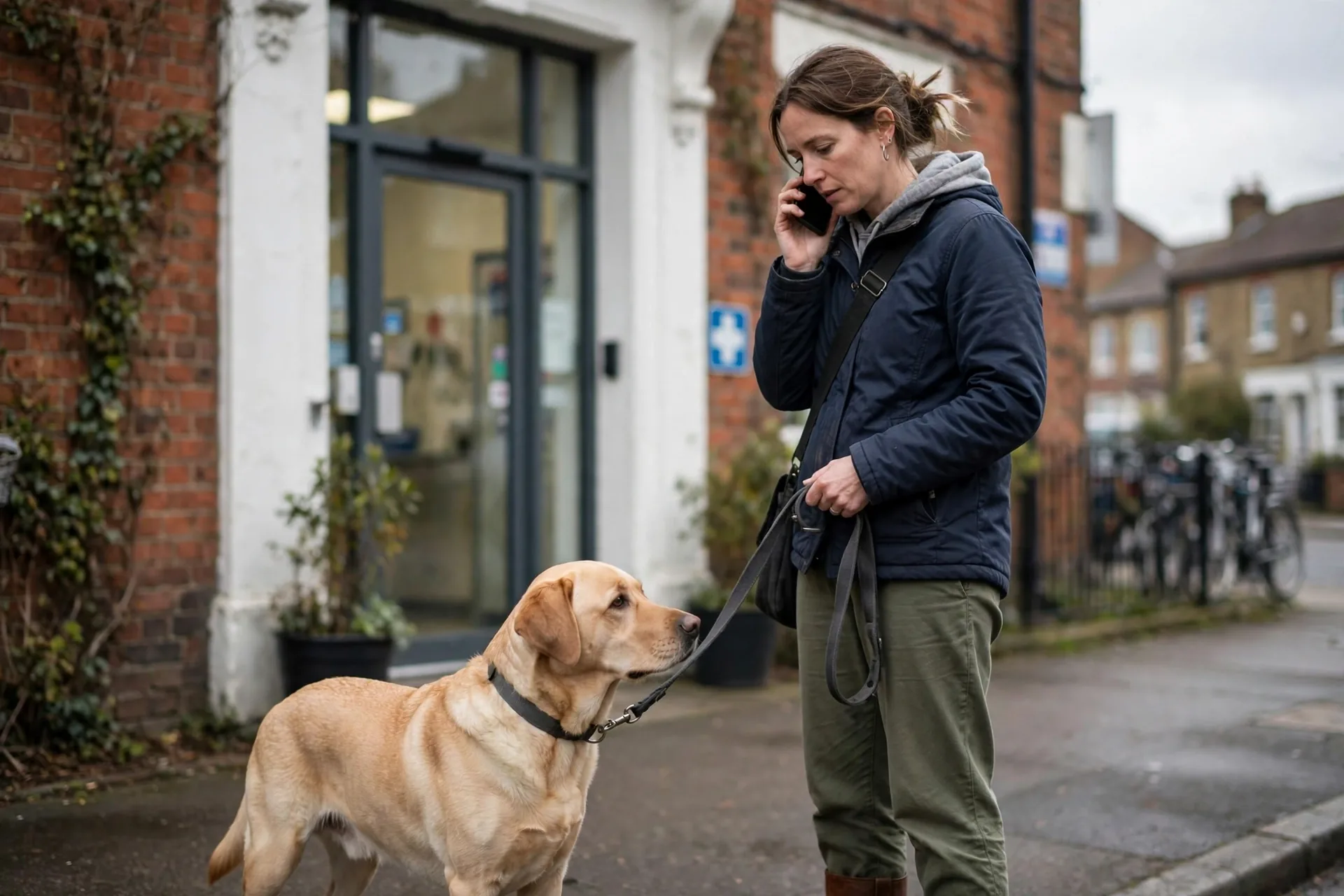
In almost every dog emergency, the owner arrives first. The vet may be twenty minutes away, the practice may be closed, or the incident may happen on a moor, a beach or a motorway service area where help cannot arrive instantly. The minutes between the incident and veterinary care are therefore the owner's minutes, and what happens in them can change the outcome: a pressure bandage applied correctly, a choking dog cleared safely, a poisoned dog kept calm and transported quickly, or a heatstroke dog cooled gradually rather than plunged into ice water. A first aid course does not make you a vet, and it should never pretend to, but it does replace panic with a sequence, and a sequence is what a frightened person can follow.
The second reason to learn is that first aid is mostly about not making things worse. Well-meaning owners commonly give human painkillers that are toxic to dogs, induce vomiting when they should not, apply tourniquets that cut off circulation, or move an injured dog in a way that worsens a spinal injury. A course teaches the small, counterintuitive rules that prevent these errors: never give ibuprofen or paracetamol to a dog unless a vet directs it, never induce vomiting after a corrosive substance or a sharp object, never remove an embedded object from a wound, and always support the spine when lifting a dog that may have been hit by a car. These are not advanced skills; they are the kind of knowledge that fits on a single card and saves a dog from a second, avoidable injury.
The third reason is confidence in ordinary situations, not just dramatic ones. Most first aid use is undramatic: a torn nail, a small cut from a bramble, a tick that needs removing, a dog that has eaten something questionable, or a paw cut on a beach walk. An owner who has practised bandaging a model dog will bandage a real paw calmly, check circulation, and know when the injury can be monitored at home and when it needs a vet the same day. That calm is contagious: dogs read their owner's tension, and a steady voice, slow movements and a familiar routine can keep a frightened dog still enough for treatment. The course is therefore as much about the owner's behaviour as about the dog's body.
It is also worth learning before you need it, not after. Owners often book a course after a scare, which is understandable, but the best time is when the dog is healthy and the owner is relaxed, because skills learned under calm conditions are easier to recall under stress. If you walk dogs professionally, foster, volunteer with a rescue, or take a dog on long rural walks, the case is stronger still: you are more likely to encounter emergencies, you may be responsible for someone else's dog, and your training may be a condition of insurance or employment. For the ordinary owner, the case is simpler: a few hours of training, once, for a skill you hope never to use but will be grateful to have.
What a good course actually covers
A good dog first aid course is built around scenarios, not slides. Expect the syllabus to start with safety and assessment, then move through the emergencies an owner is most likely to meet, with hands-on practice at each stage. The core topics should include a primary survey, control of bleeding, wound care and bandaging, choking and CPR, seizures, poisoning, heatstroke and hypothermia, fractures and safe handling, bites and stings, eye injuries, and safe transport to the vet. A course that spends an hour on theory and ten minutes on practice has the balance backwards: you should leave with bandaging and CPR in your hands, not just in your notebook.
Watch for what a course does not promise. A reputable provider will state clearly that first aid does not replace veterinary care, that you should call a vet early in any serious emergency, and that some treatments, such as giving medication or inducing vomiting, should only be done on veterinary advice. Be wary of courses that teach home diagnosis, recommend unproven remedies, suggest human medicines for dogs, or imply that a certificate qualifies you to treat other people's dogs professionally. The best courses also teach communication: how to describe an emergency to a vet by phone, what information the vet needs first, and how to stay on the line while you act, because a good phone call can be as valuable as a good bandage.
Depth matters more than breadth. A course that races through twenty topics in two hours will leave you with a list, not a skill, while a course that covers eight topics properly, with practice and feedback, will leave you able to act. Ask for the syllabus before booking and look for practice time explicitly: how long is spent bandaging, how long on CPR, and whether every participant practises or only watches a demonstration. Small groups, ideally under fifteen, allow the instructor to correct hand placement, bandage tension and lifting technique, which is where most learning happens. A course that offers a printed or digital summary to take home is also a good sign, because you will forget details, and a pocket guide in the car is worth more than a perfect memory.
Finally, check whether the course addresses your dog. A course aimed at professional dog walkers will emphasise group handling, road accidents and multiple-dog incidents, while a course for owners of brachycephalic breeds may emphasise breathing emergencies and heat sensitivity, and a course for rural walkers may emphasise adder bites, ticks and remote transport. None of these is wrong, but the emphasis should match your life. If you have a puppy, an older dog, a dog with epilepsy or a dog on medication, tell the provider in advance and ask whether the course covers those situations, because a generic course may not, and a tailored example can make the whole day more useful.
Choosing a provider and format
Dog first aid courses in the UK are offered by veterinary practices, veterinary nurses, pet first aid training companies, dog training schools, charities and online platforms, and quality varies more than price suggests. The strongest signal is the instructor's background: a registered veterinary nurse, a vet, or a trainer with substantial veterinary first aid experience and a clear, checkable biography is a better bet than a provider whose only credential is enthusiasm. Look for reviews that mention practical time, instructor knowledge and whether participants felt able to act afterwards, rather than reviews that only praise friendliness. A provider that publishes its syllabus, group size, duration and cancellation policy openly is usually more reliable than one that hides these details behind a booking form.
Format is the next decision, and it trades convenience against skill. In-person courses offer model dogs, bandages, muzzles and splints to practise with, immediate correction, and the chance to ask questions about your own dog, and they are the format most owners should choose for a first course. Online courses are cheaper, more flexible and useful for theory, revision and for owners in remote areas, but they cannot correct your CPR hand placement or your bandage tension, and they should be seen as preparation or refresher rather than a complete first training. Blended courses, which combine online theory with a short practical session, are a good compromise if travel is difficult, provided the practical session is genuinely hands-on and not just a demonstration.
Duration and price should be judged together. A three to four hour in-person course typically costs in the region of a modest training day, while a full-day course costs more but covers more scenarios and allows more repetition. A very cheap, very short course may be a sales funnel for products rather than a training session, while a very expensive course may be aimed at professionals and include content an owner does not need. Ask what is included: a certificate, a manual, a first aid kit, and post-course support all affect value, and a course that includes a basic kit you can take home is often better value than a cheaper course that leaves you to buy supplies separately. Check the official guidance before you travel if a provider claims accreditation, because accreditation in pet first aid is not regulated in the same way as human first aid, and claims should be verifiable.
Location and logistics matter more than they seem. A course held in a village hall with parking, floor space and a nearby cafe is easier to learn in than a cramped room with no space to kneel, and a course that invites you to bring your own dog needs careful thought: a calm, well-socialised dog may benefit, but a reactive or nervous dog in a room full of strangers and model dogs may be stressed, and many providers use model dogs precisely to avoid this problem. Ask in advance whether dogs attend, what facilities exist, and whether the course is accessible if you have mobility needs, because much of the practice happens on the floor. A provider that answers these questions clearly is likely to run a well-organised day.
The primary survey: assess before you act
Every good course teaches a primary survey, and it is the single most valuable habit you will learn, because it stops you treating the obvious injury while missing a life-threatening one. The survey is a rapid, systematic check: is the scene safe, is the dog breathing, is there catastrophic bleeding, is the dog responsive, and what is the most urgent problem. It takes under a minute when practised, and it gives you a clear order of action when everything feels urgent at once. The survey also gives you the words for the vet phone call: breathing, bleeding, responsiveness and what happened, in that order, are what a vet needs to hear first.
Safety comes first, even before the dog. A dog that has been hit by a car may be on a road, a dog that has been poisoned may be near the substance, and a frightened injured dog may bite, even a normally gentle one. Approach slowly, speak calmly, and muzzle if you can do so safely and if the dog is not vomiting, choking or struggling to breathe, because a muzzle on a vomiting dog is dangerous. If the scene is unsafe, move yourself and, if possible, the dog to safety before treating, and call for help early rather than trying to manage everything alone. A second person, even a stranger, can hold a lead, call the vet, direct traffic or fetch a blanket, and asking for help is part of first aid, not a failure of it.
The survey itself follows a simple sequence that courses teach with variations in wording but the same logic. Check responsiveness by calling the dog's name and touching gently; check breathing by watching the chest and feeling air at the nose; check for major bleeding by looking and feeling for blood, especially under the body where it can pool unseen; check gum colour and capillary refill if you have been taught how, because pale or grey gums suggest shock or blood loss; and check for obvious fractures, swelling or wounds without moving the dog more than necessary. Record what you find, even mentally, because you will need to report it, and because a dog's condition can change during transport, so a baseline matters.
Practice the survey at home when the dog is healthy, because a healthy baseline is what makes an abnormal finding obvious. Learn your dog's normal resting breathing rate, normal gum colour, normal heart rate if you can feel it, and normal temperature range, and note any medication, allergies and chronic conditions on a card in the first aid kit. A course will teach you how to take these readings without stressing the dog, and a few calm repetitions at home will make the survey feel familiar rather than clinical when you need it. The survey is not a diagnosis: it is a way to decide what to do first, what to tell the vet, and whether the dog needs immediate transport or can be monitored.
Bleeding, wounds and bandaging
Bleeding is the skill most owners use first, and it is the skill most worth practising, because the technique is simple but the details matter. The principle is direct pressure: place a clean pad or dressing over the wound, press firmly, and maintain pressure without repeatedly lifting the pad to peek, because lifting disrupts clotting. If blood soaks through, add another pad on top rather than removing the first, and then bandage firmly but not so tightly that circulation is cut off. A good course will have you practise this on a model, check that you can still feel a pulse or see normal toe colour beyond the bandage, and learn the signs of a bandage that is too tight: swelling, cold toes, pain or the dog chewing at the bandage.
Different wounds need different handling, and a course should distinguish them. A small cut from a bramble or a torn nail can often be cleaned, dressed and monitored, while a deep cut, a cut over a joint, a puncture wound, or a wound that gapes open needs veterinary assessment the same day. Puncture wounds are deceptive because the surface hole is small while the internal damage may be significant, especially from bites, where infection is common even if the wound looks minor. Embedded objects should be left in place and padded around, not pulled out, because removal can cause catastrophic bleeding. Eye wounds, wounds near the throat, and wounds that involve the chest or abdomen are emergencies, not home-care cases, and the first aid goal is to protect the wound and transport quickly.
Bandaging is a craft, and the course should teach it as one. Learn to bandage a paw, including between the toes, with a layer that prevents the bandage slipping, a padded layer that distributes pressure, and an outer layer that stays clean and dry, and learn to finish with tape that does not stick to fur. Learn to bandage an ear, a tail and a body wound, because each has a different shape and a different tendency to slip, and learn when a bandage is a bridge to the vet rather than a treatment in itself. A bandage that is too loose will fall off, a bandage that is too tight will cause damage, and a bandage that gets wet will lose its shape, so carry spares and check the bandage regularly during transport. Finding an emergency vet on holiday is the natural companion skill, because a well-bandaged dog still needs a vet, and knowing where to go is part of the treatment.
Cleaning and aftercare are part of the same lesson. Clean a minor wound with clean water or a saline solution, not with hydrogen peroxide, alcohol or strong antiseptics that damage tissue, and remove obvious debris gently without scrubbing. Do not apply human antibiotic ointments, creams or powders unless a vet directs it, because dogs lick wounds and ingest what you apply. After bandaging, monitor the dog for swelling, discharge, smell, pain or lethargy, and seek veterinary advice if any of these develop, because infection can develop over days even when the initial injury seemed minor. Keep the wound dry, prevent licking with a cone or suit if needed, and record when the injury happened and what you did, because the vet will ask.
Choking, breathing and CPR
Choking is frightening because it is fast, loud and visible, and a course teaches you to distinguish a dog that is coughing effectively, which should be left to clear the obstruction itself, from a dog that cannot breathe, which needs intervention. A dog that is pawing at its mouth, gagging silently, drooling, panicking or turning blue is in trouble, while a dog that is coughing forcefully and still moving air is often clearing the problem. The course will teach you to open the mouth safely, look for a visible object, and remove it only if you can do so without pushing it further down, and to use back blows or abdominal thrusts adapted for dogs only when the dog cannot breathe, because these manoeuvres carry risks of their own and should not be used casually.
Breathing emergencies have many causes, and the course should help you recognise the patterns: rapid shallow breathing, laboured breathing with effort, noisy breathing, blue or grey gums, and collapse are all signs to act on urgently, while a dog that is panting after exercise but recovering normally is a different situation. Brachycephalic breeds, dogs with laryngeal paralysis, and dogs with heart disease are at higher risk, and owners of these dogs should discuss an emergency plan with their vet as part of the course preparation. Keep the dog calm, cool and still, minimise handling, and transport to the vet promptly, because breathing problems can deteriorate quickly and home treatment is limited to keeping the airway clear and the dog calm.
Cardiopulmonary resuscitation, or CPR, is the most dramatic skill on any course, and the most misunderstood. Canine CPR involves chest compressions and rescue breaths, with hand placement, rate and depth depending on the dog's size and shape, and it is only appropriate when the dog is unresponsive and not breathing, not when the dog is merely collapsed but breathing. A course will teach you to check responsiveness and breathing first, to position the dog correctly, to compress at the right rate and depth, and to work in cycles with minimal interruption, and you will practise on a model until the rhythm feels physical rather than theoretical. The honest message of every good course is that CPR rarely restarts a heart outside a veterinary hospital, but it can buy time, and it is worth knowing even with modest success rates, because the alternative is doing nothing.
After any choking or CPR event, veterinary assessment is essential even if the dog seems to recover. Complications such as aspiration pneumonia, rib fractures, internal bleeding and brain injury from oxygen deprivation may not be obvious immediately, and a vet can assess, monitor and treat them. Record the duration of the event, what you did, and how the dog responded, because this history helps the vet enormously. Do not be discouraged if a course leaves you feeling that CPR is difficult: it is difficult, and the value of the course is that you will recognise the situation, start correctly, and keep going until help arrives, rather than freezing or doing the wrong thing. Refresh CPR practice regularly, because it is the skill that fades fastest without use.
Poisoning, seizures and shock
Poisoning is a common owner emergency, and the first aid lesson is largely about restraint: do not induce vomiting unless a vet tells you to, do not give milk, food or home remedies, and do not wait to see if symptoms develop. The right actions are to keep the dog calm, prevent further ingestion, note what was eaten, how much, and when, keep any packaging or a sample of the substance, and call a vet or a poisons helpline immediately. Some substances, such as chocolate, xylitol, grapes, rat poison, certain lilies and human medications, are dangerous in small amounts, while others are less urgent, and only a vet can judge the risk from the substance, the dose and the dog's weight. Time matters: treatment is most effective early, and a phone call made promptly is better than a perfect journey made late.
Seizures are distressing to watch, and a course teaches you to protect the dog without interfering. Keep your hands away from the mouth, because a seizing dog cannot swallow its tongue and you risk a bite, move objects and other animals away, dim lights and reduce noise, time the seizure, and keep the dog safe from stairs, water and sharp edges. Most seizures last under two minutes; a seizure lasting over five minutes, repeated seizures, or a seizure in a dog that does not recover between episodes is an emergency requiring immediate veterinary care. After a seizure, keep the dog quiet, warm and supervised, note the duration and any triggers, and contact your vet even if the dog seems normal, because the cause needs investigation and the dog may need medication or monitoring.
Shock is a condition, not an injury, and it can follow blood loss, trauma, severe infection, allergic reaction or poisoning. The signs a course teaches you to recognise include pale gums, rapid weak pulse, rapid shallow breathing, cold extremities, weakness, collapse and a glazed or unresponsive expression. First aid for shock is to keep the dog warm, still and calm, control any bleeding, keep the airway clear, and transport promptly, without giving food or water to an unconscious or semi-conscious dog. Do not delay transport to treat minor wounds if shock is present, because shock is the priority, and a vet needs to treat the underlying cause. Anaphylaxis, a severe allergic reaction, is a particular form of shock that can follow a sting, a drug or a food, and it needs emergency veterinary treatment, including medication you cannot provide at home, so rapid transport is the first aid.
All three topics share a lesson: call early, give accurate information, and follow veterinary instructions rather than improvising. A course will practise the phone call, because it is a skill in itself: state the dog's breed, age, weight and known conditions, describe what happened and when, list what the dog ingested or what you observed, and answer the vet's questions without embellishment. If you are travelling, emergency vet access on holiday and a saved local vet number are part of the same preparation, because a poisoning call is only useful if you can reach a vet who can act. Keep the poisons helpline number and your vet's out-of-hours number in your phone and in the first aid kit, not just in your memory.
Heatstroke, cold and bites
Heatstroke is a summer emergency that first aid courses emphasise because it is preventable, fast and often fatal, and because well-meaning cooling can cause harm if done incorrectly. The signs include excessive panting, drooling, bright red or pale gums, vomiting, diarrhoea, weakness, collapse and seizures, and brachycephalic, overweight, older and thick-coated dogs are at higher risk. First aid is to move the dog to shade or a cool area, offer small amounts of cool water, cool gradually with wet towels, a fan or cool water on the body, and transport to a vet promptly, without using ice water, ice baths or covering the dog in wet towels that trap heat. Cooling should stop once the dog's temperature begins to fall, because overcooling is also dangerous, and veterinary assessment is essential even if the dog recovers, because organ damage can be delayed.
Cold emergencies are less common in the UK but still relevant for small, short-coated, wet or older dogs, especially after swimming, in snow, or on long winter walks. Hypothermia signs include shivering that stops as the dog gets colder, lethargy, weak pulse, shallow breathing and collapse, and first aid is to move the dog to warmth, dry the coat, wrap in blankets, and warm gradually, without using direct high heat such as a hot bath or a radiator, which can cause shock. Frostbite affects ears, paws and tails, and should be warmed gently without rubbing, which damages tissue. A course will also cover the less dramatic cold problem: a wet dog that is chilled after a walk needs drying and warming at home, not just a towel by the door, and a dog that has been in cold water needs monitoring for afterdrop, where temperature continues to fall after leaving the water.
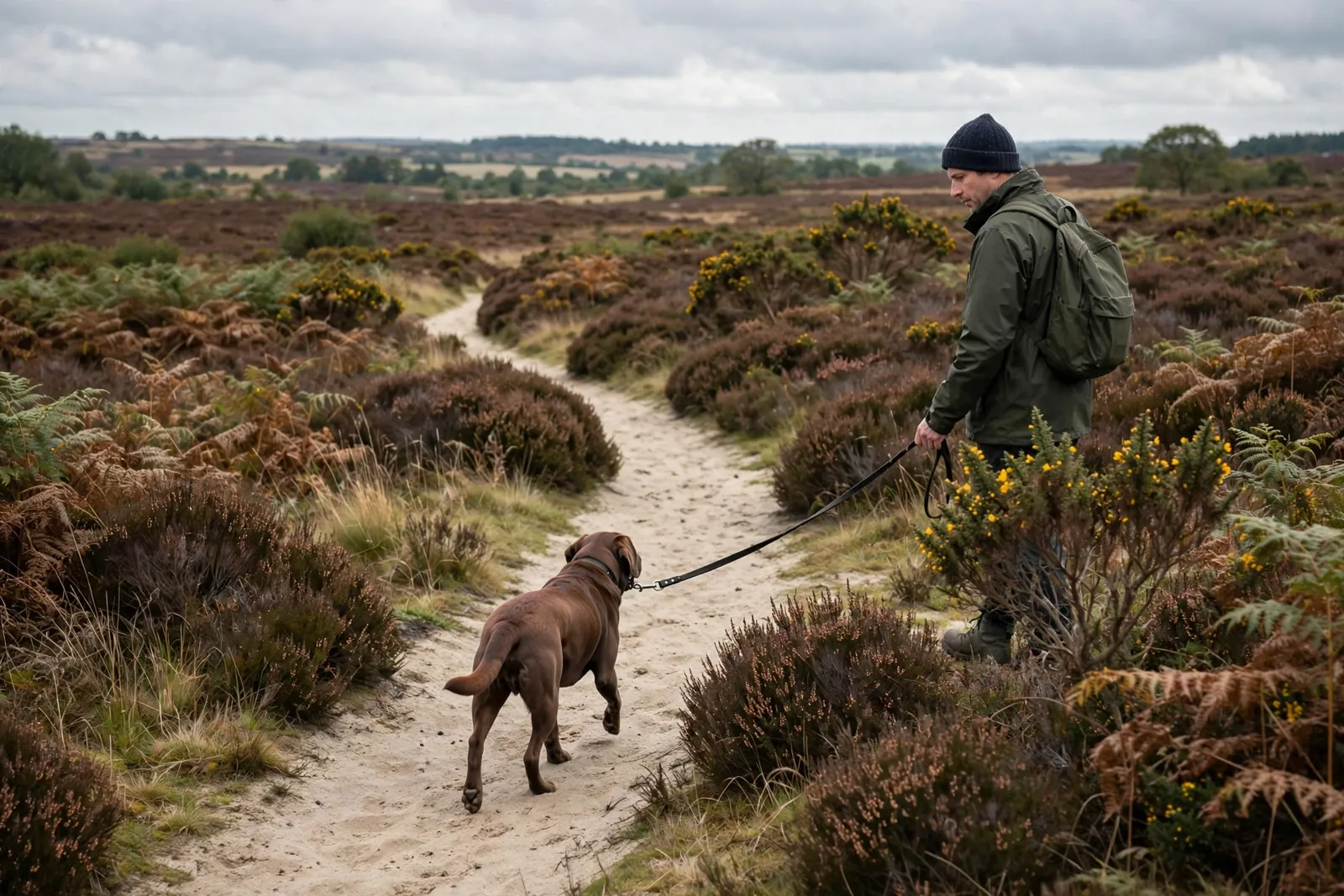
Bites and stings are a mixed group, and the course should separate them clearly. Adder bites are a particular UK risk on heathland and moorland in spring and summer, and first aid is to keep the dog still, carry the dog if possible, avoid tourniquets and suction, and get to a vet promptly, because movement spreads venom and time matters. Bee and wasp stings usually cause local pain and swelling, and first aid is to remove a bee sting by scraping, not squeezing, apply a cool compress, and monitor for allergic reaction, which needs emergency care. Tick bites are a slower problem: remove the tick correctly with a tick tool, clean the area, and monitor for illness, because ticks transmit diseases that appear days or weeks later. Dog bites from other dogs need wound care and veterinary assessment even when they look minor, because puncture wounds and infection are common.
Eye injuries, ear injuries and swallowed objects complete the picture. An eye injury, from a scratch, a foreign body or a chemical, needs gentle flushing with clean water or saline and prompt veterinary care, without rubbing or applying drops unless a vet directs it. A swallowed object, such as a sock, a stone or a toy part, may pass, may obstruct, or may perforate, and the correct action depends on the object, so call a vet rather than inducing vomiting or waiting. A course that covers these topics will emphasise the same principle throughout: protect the affected area, prevent further harm, keep the dog calm, and get veterinary advice early, because first aid is a bridge, not a destination.
Building a kit and practising at home
A first aid kit is only useful if you can find it, carry it and use it, and a course should help you build one that fits your life rather than a generic list. A home kit can be generous: dressings, bandages, tape, scissors, a tick tool, saline, a thermometer, a muzzle, a torch, a blanket, gloves and a card with vet numbers, medication and allergies. A walking kit must be small: a dressing, a bandage, tape, a tick tool, poo bags, water and a phone are the essentials, with a collapsible bowl and a spare lead if space allows. A car kit sits between the two, and it should include a blanket for lifting, a towel, water and a torch, because many emergencies happen away from home and the car is the transport. Check the kit regularly, replace used or expired items, and keep it in the same place every time, because searching for a kit during an emergency wastes the minutes that matter.
Practising at home is what turns a course into a lasting skill, and it need not be elaborate. Once a month, practise bandaging a paw on a calm dog, with treats and praise, so that the dog learns bandaging is not frightening and you learn how tight is right. Practise lifting and carrying your dog safely, especially if the dog is large, because an injured dog that cannot walk will need to be carried, and a practiced lift is safer for both of you. Practise taking a resting breathing rate and checking gum colour, so that you know your dog's normal values and can report a change accurately. Practise the phone call: write a script with your dog's details, your location and the vet's number, and keep it in the kit, because a script is easier to follow than a memory when you are distressed.
Involve the whole household, because an emergency may happen when the trained person is not present. Teach partners, older children, dog walkers and sitters where the kit is, how to call the vet, and what to do first, and make sure everyone knows the dog's medication, allergies and vet details. A short family practice session, even twenty minutes, can be more valuable than a second course for one person, because first aid is often a team effort: one person holds the dog, one person bandages, one person calls the vet, and one person drives. Agree these roles in advance, even informally, so that an emergency does not become a debate about who does what.
Finally, practise with the equipment you actually own, not with ideal equipment. If your bandages are a different width from the course bandages, practise with yours; if your muzzle is a different style, practise fitting yours; if your car has a boot guard or a crate, practise loading an injured dog into it. The gap between course equipment and home equipment is where skills fail, and closing it is a matter of a few minutes of practice, not another course. Keep the course manual or summary with the kit, and re-read it every few months, because details fade, and a brief refresher is often enough to restore a skill that has not been used.
After the course: vets, travel and refreshers
After the course, the most useful step is to strengthen the veterinary relationship that first aid depends on. Register with a vet if you have not already, save the practice number and the out-of-hours number in your phone, and note the nearest emergency practice to your home, your regular walking routes and any holiday destination. Tell your vet that you have completed a first aid course and ask whether they have any specific advice for your dog, such as a breed risk, a medication interaction or a condition that changes first aid priorities. A vet who knows your dog and knows that you are trained is easier to call in an emergency, and the call will be shorter and more effective because the vet can trust your assessment.
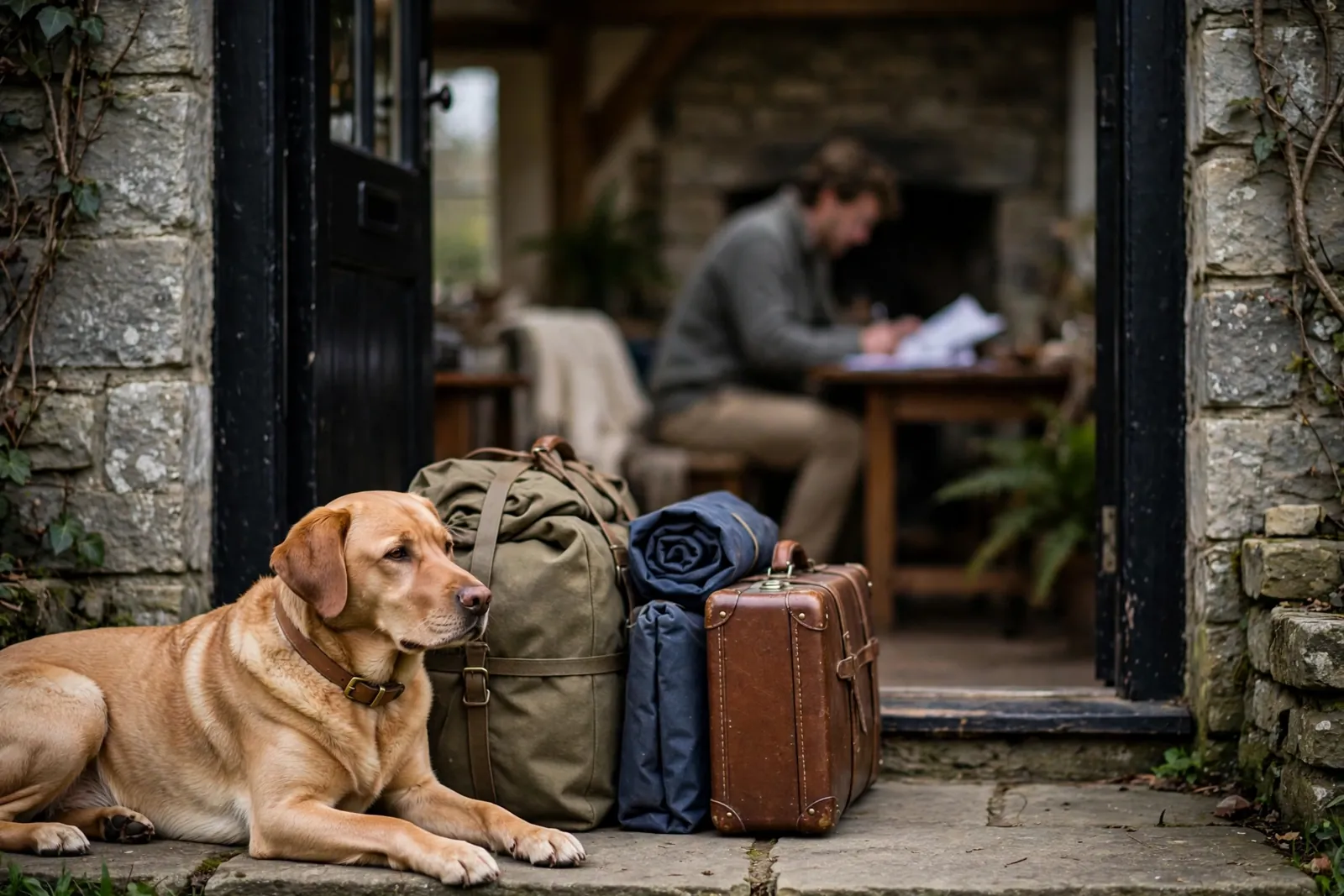
Travel preparation is the next application, because emergencies are more likely and more stressful away from home. Before a holiday, research the nearest vet and emergency practice, check their opening hours, and save the address and phone number offline, because rural signal is unreliable. Pack the walking kit and the car kit, carry the dog's medication and health records, and brief anyone travelling with you on the dog's conditions and the first aid plan. If you are travelling abroad, the preparation is different and more complex, involving documentation, disease risks and local veterinary access, and it deserves separate research, but the first aid principles remain the same: assess, stabilise, call early and transport safely. A first aid course taken before a long trip is one of the best preparations you can make, because it reduces the fear of the unknown that makes travel stressful.
Refreshers are essential, because first aid skills fade without use, and guidance changes as veterinary knowledge develops. A refresher every one to two years, even a short online update or a practical evening, is enough to restore CPR rhythm, bandaging technique and current advice on poisoning and heatstroke. If you have used first aid in a real emergency, debrief with your vet or course provider afterwards, because a real incident teaches lessons that a course cannot, and it may reveal gaps in your kit, your transport plan or your phone numbers that are worth fixing before the next incident. Do not be embarrassed to ask for a refresher: veterinary professionals refresh their own training regularly, and owners should do the same.
The final lesson of a good course is humility. First aid teaches you what you can do, but it also teaches you what you cannot do, and the wisdom to call early, transport promptly and let a vet take over is the most important skill of all. A trained owner who recognises a serious emergency and gets the dog to a vet in twenty minutes has done more than an untrained owner who spends an hour trying home treatments. The course certificate, if you receive one, is less important than the calm, the sequence and the kit, and the best measure of a course is not what you remember on the day, but what you can still do, calmly, a year later, when it matters.
Practical questions
Before you go
Do I need a certificate to give my dog first aid?
No. An owner can give basic first aid to their own dog without a certificate. A course is valuable because it teaches safe technique and calm decision-making, not because it grants legal permission. Professional carers, walkers and sitters may need training for work or insurance reasons, so check the requirements for your role.
How long does a dog first aid course take?
Most in-person introductory courses last three to four hours, while fuller courses run for a full day. Short online courses can be completed in one to two hours but offer no hands-on practice. For most owners, a half-day practical course is the best balance of time, cost and retained skill.
Can I learn dog CPR online?
You can learn the theory online, including hand placement, rate and when to start, but CPR is a physical skill that needs practice on a model dog to be reliable under stress. Treat an online course as preparation, and follow it with a practical session if you want to be able to act in a real emergency.
What should I bring to a dog first aid course?
Bring your dog only if the provider explicitly invites dogs, because many courses use model dogs for safety. Otherwise bring a notebook, a list of your dog's conditions and medications, and your vet's phone number. Wear clothes you can kneel in, because most practical work happens on the floor.
Does a first aid course replace a vet visit?
Never. First aid stabilises a dog and buys time until veterinary care is available. Any dog that has had CPR, a seizure, poisoning, a serious wound, heatstroke or a road accident needs a vet assessment even if it seems to recover, because internal injuries and delayed effects are common.