This guide is independent and contains no paid placement. Penalty amounts and local rules change, so always check the local council's latest guidance before you travel.
Most dog fouling fines in the UK are fixed penalties of £50–£100 set by the local council under a Public Spaces Protection Order (PSPO) — £80 or £100 is common. Refuse or fail to pay and a court can fine you up to £1,000. Amounts vary by council, so check the PSPO for the place you are walking, and always carry bags: in many areas, having no means to pick up is an offence in itself.
What the law actually says
Dog fouling is not a trivial matter of etiquette. Leaving dog faeces on land where the public has access is an offence across most of England and Wales, and councils in Scotland and Northern Ireland operate their own long-standing fouling laws with similar practical effects. The person in charge of the dog at the time — not necessarily the registered owner — is responsible for cleaning up immediately. That point catches visitors out: if you are walking a friend's dog, dog-sitting on holiday, or letting an older child hold the lead, the duty to pick up follows the lead, not the paperwork.
The offence is generally about failing to remove the fouling, not about intent. It does not matter that your dog went in long grass, on a quiet verge or on a path almost nobody uses, if the land is covered by the relevant order. Nor does it help that you intended to come back later with a bag. The expectation is simple and immediate: bag it, tie it, and bin it in a dog waste bin, a litter bin where the council permits it, or take it home. Bagging mess and then leaving the bag on a fence, branch or wall is still littering, and can attract a separate littering penalty on top of any fouling offence. Fines are only one part of dog law — when dogs must be on a lead in the UK depends on roads, livestock, local orders and the season.
There are good public-health reasons behind the rules. Dog faeces can carry parasites, including Toxocara, which is a particular risk to children playing on grass and sports pitches. That is why sports fields, play areas and school grounds often carry the strictest local controls, and why many councils treat fouling on a pitch more seriously than fouling on a rural verge. Whatever the setting, the safest working assumption on any trip is that picking up is required everywhere the public can walk — and the sections below explain the few, narrow exceptions.
How much is the fine?
The honest answer is: it depends where you are standing. There is no single UK-wide dog fouling fine, because the amount is set locally. In most council areas the penalty is issued as a Fixed Penalty Notice (FPN), and the typical range is £50 to £100. Figures of £80 and £100 are particularly common in England, and some councils offer a reduced amount — for example £50 or £65 — if the notice is paid within a shorter early-payment window, often 10 or 14 days. Other councils offer no discount at all. Always check the local council's PSPO and enforcement pages for the exact figure before you travel, and treat any number quoted by a fellow dog walker, a campsite noticeboard or an old forum post as out of date until you have verified it.
The fixed penalty is only the first tier. A fixed penalty is an offer to discharge liability without a court case: pay it on time and the matter ends, with no criminal conviction for that offence. Ignore it, refuse it or let the deadline lapse, and the council can prosecute in the magistrates' court, where the maximum fine for a fouling offence under a PSPO is £1,000, plus costs and a victim surcharge. That jump — from around £100 to a potential £1,000 — is the single most important number in this guide, and it is why a notice should never be left in a coat pocket or a glovebox.
Bear in mind that fouling is not the only fine a dog walker can pick up on the same walk. Many PSPOs bundle several dog-control offences together, each with its own fixed penalty: failing to carry bags, letting a dog off the lead in a lead-only area, walking more dogs than the local maximum, or letting a dog enter an excluded area such as a fenced play park or a seasonal beach. Two offences on one walk can mean two notices. Our guide to dog-friendly beach rules in the UK explains how seasonal beach exclusions work, because beaches are where visitors most often meet a rule they did not know existed.
PSPOs and local rules explained
In England and Wales, most dog control rules are now made under Public Spaces Protection Orders, introduced by the Anti-social Behaviour, Crime and Policing Act 2014. PSPOs replaced the older Dog Control Orders, and they let each council define, for its own area, where dogs must be on leads, where dogs are excluded entirely, how many dogs one person may walk, and whether walkers must carry a means to pick up. An order usually lasts up to three years and can be renewed after consultation, which is one reason rules in a town you visited happily two summers ago may have tightened since.
Because PSPOs are local, the map of rules is a patchwork. One council may require bags to be shown on request; its neighbour may not. One seaside town may exclude dogs from the main beach from May to September; the next bay may allow them on a lead all year. Councils must publicise their orders, usually with signs at entry points to parks, beaches and other controlled land, and the full text should be on the council website. The practical habit for travellers is to read the sign at the gate or the beach steps before unclipping the lead, not after an officer has walked over. If a sign and a website disagree, follow the stricter rule on the day and check the council's latest published PSPO afterwards.
Scotland works differently in structure but similarly in effect: dog fouling there has been a specific offence under the Dog Fouling (Scotland) Act 2003, with a fixed penalty — historically £40, rising if unpaid — issued by authorised officers and police. Northern Ireland councils make dog control orders under the Clean Neighbourhoods and Environment Act (Northern Ireland) 2011. The details differ, but the traveller's rule does not: pick up everywhere, carry bags, and check local signage. Where this guide quotes a figure or a procedure, it describes the common pattern, not a guarantee — before you travel, check the local council's latest guidance for the destination itself.
Who is responsible, who can fine you
Responsibility sits with the person in charge of the dog when the fouling happens. Owners cannot avoid a fine by saying someone else was holding the lead, and walkers cannot avoid one by saying the dog is not theirs — although a council will usually want the owner's details too. Professional dog walkers are in the same position, and in some areas they face additional PSPO limits on the number of dogs per walker, which is worth knowing if you book a walker while on holiday.
Fixed penalties are issued by authorised officers: typically council dog wardens, environmental enforcement officers and, in some districts, private enforcement contractors working on the council's behalf. Police community support officers can issue notices for fouling in some areas as well. An officer should identify themselves, may show or quote their authorisation, and should explain clearly what offence they believe has been committed, the amount payable, the deadline, how to pay, and how to challenge the notice if you believe it was issued in error. You can be asked for your name and address; giving false details or refusing to provide them can itself be an offence and can lead to police involvement.
Officers do not have to catch you in a dramatic act. Many notices follow an officer watching a dog foul and the walker move on without picking up, and some follow a failure to produce bags when asked in an area whose PSPO requires you to carry them. Reports from the public, including photographs, can prompt patrols and investigations, although councils vary in how they use public reports. The calm approach, if you are approached, is to listen, take the notice, and check the details carefully at home — arguing at the kerbside rarely changes the outcome, while the notice itself explains the challenge route.
What happens if you do not pay
A Fixed Penalty Notice will state the amount, the payment deadline — usually 14 days — and any early-payment discount period. Pay within the deadline and, for that offence, the matter is closed. Do not pay, and the council may start court proceedings. In the magistrates' court, a fouling offence under a PSPO carries a fine of up to £1,000, and the court can add prosecution costs and a victim surcharge, so the total can be several times the original penalty. A conviction can also be reported locally, which adds embarrassment to expense.
If you believe a notice was issued wrongly — for example, the dog was not yours, you did pick up, or the land is not covered by an order — the route is the challenge or representation process described on the notice or the council website, not simply ignoring it. There is no independent national appeals tribunal for these fixed penalties in the way there is for parking tickets; ultimately, a disputed case is decided by letting it go to court and presenting a defence there, which carries the higher financial risk described above. That trade-off is worth weighing carefully, and anyone unsure about their position should get proper legal advice rather than relying on a guide like this one. Keep copies of the notice, any correspondence and proof of payment until well after the deadline has passed.
Excuses, defences and exemptions
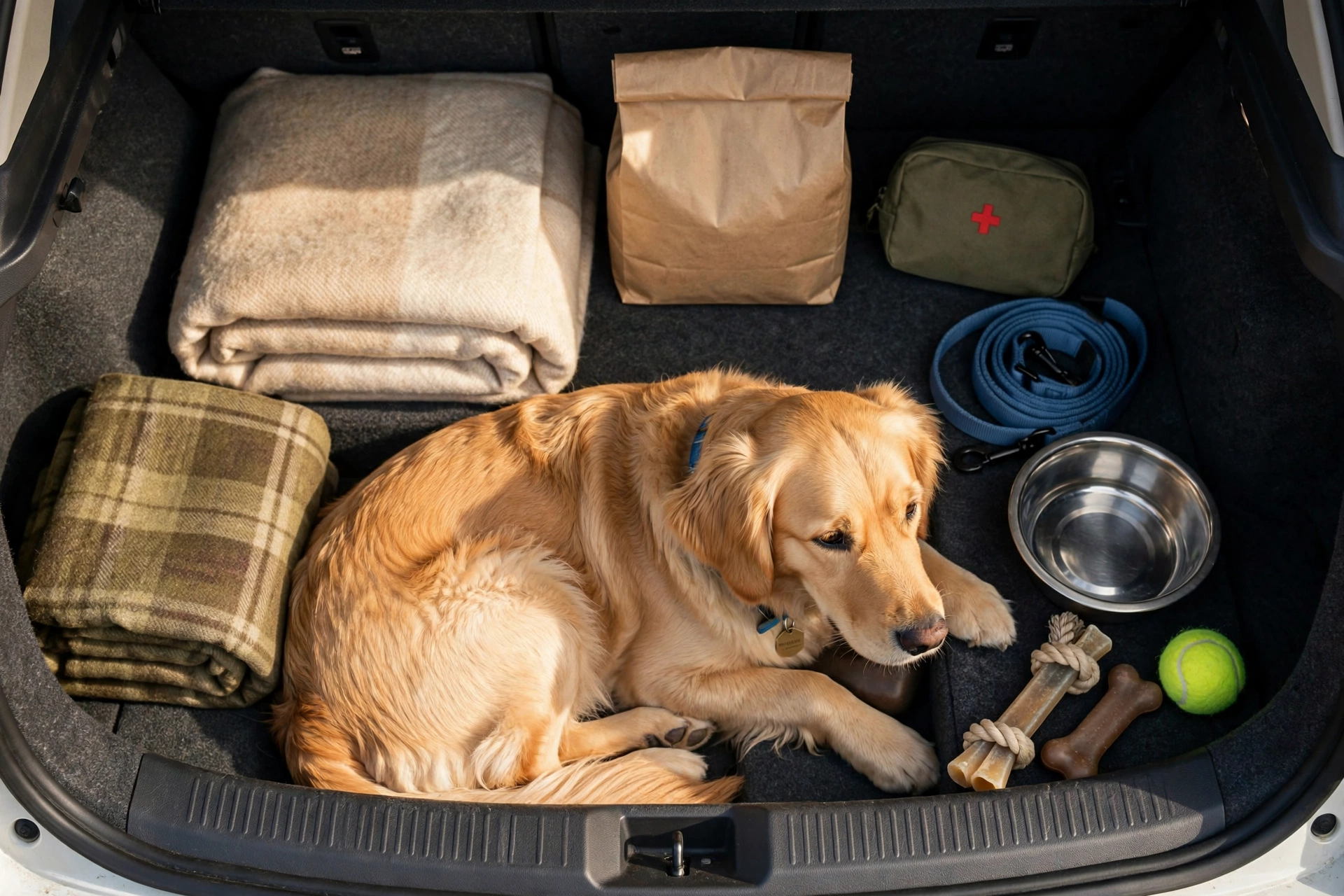
Most everyday excuses do not work. Not seeing your dog foul because it was off lead and ahead of you is treated as part of the problem, not a defence — keeping your dog in sight is basic control. Running out of bags fails in much the same way, and in PSPO areas with a means-to-pick-up rule it can be a second offence. Heavy rain, a missing bin and not knowing the local rules are likewise unlikely to help: bins are a convenience, not a condition of the duty, and councils will point to the signs at the site entrance. The genuine lesson is preventive — carry more bags than you think you need, and keep spares in the car, in a coat pocket and in your walking bag, as our dog travel packing checklist recommends for trips away from home.
There are, however, narrow exemptions in many areas. PSPOs commonly exempt registered blind people, and assistance dog users whose disability prevents them from being able to clean up, from the fouling requirement. Some orders also treat land such as certain agricultural, woodland or marshland areas differently, and old exemptions around shepherds and working dogs exist in limited contexts. None of this should be assumed: exemptions are defined in the wording of each local order, they do not apply everywhere, and they never extend to leaving mess on paths, play areas or beaches. Anyone who relies on an exemption should read the destination council's PSPO wording in advance and carry any relevant identification or registration evidence with them.
Loose or diarrhoea-style fouling from an ill dog is another grey area walkers ask about. The rules rarely distinguish by consistency: the expectation is to pick up what you reasonably can, and most owners do their best with a bag and a bottle of water where needed. Officers exercise discretion in practice, but discretion is not a right, so visible effort matters. If your dog is unwell, the kindest and safest choice is short toilet walks close to home or your accommodation rather than a busy promenade.
How to avoid a fine: the simple system
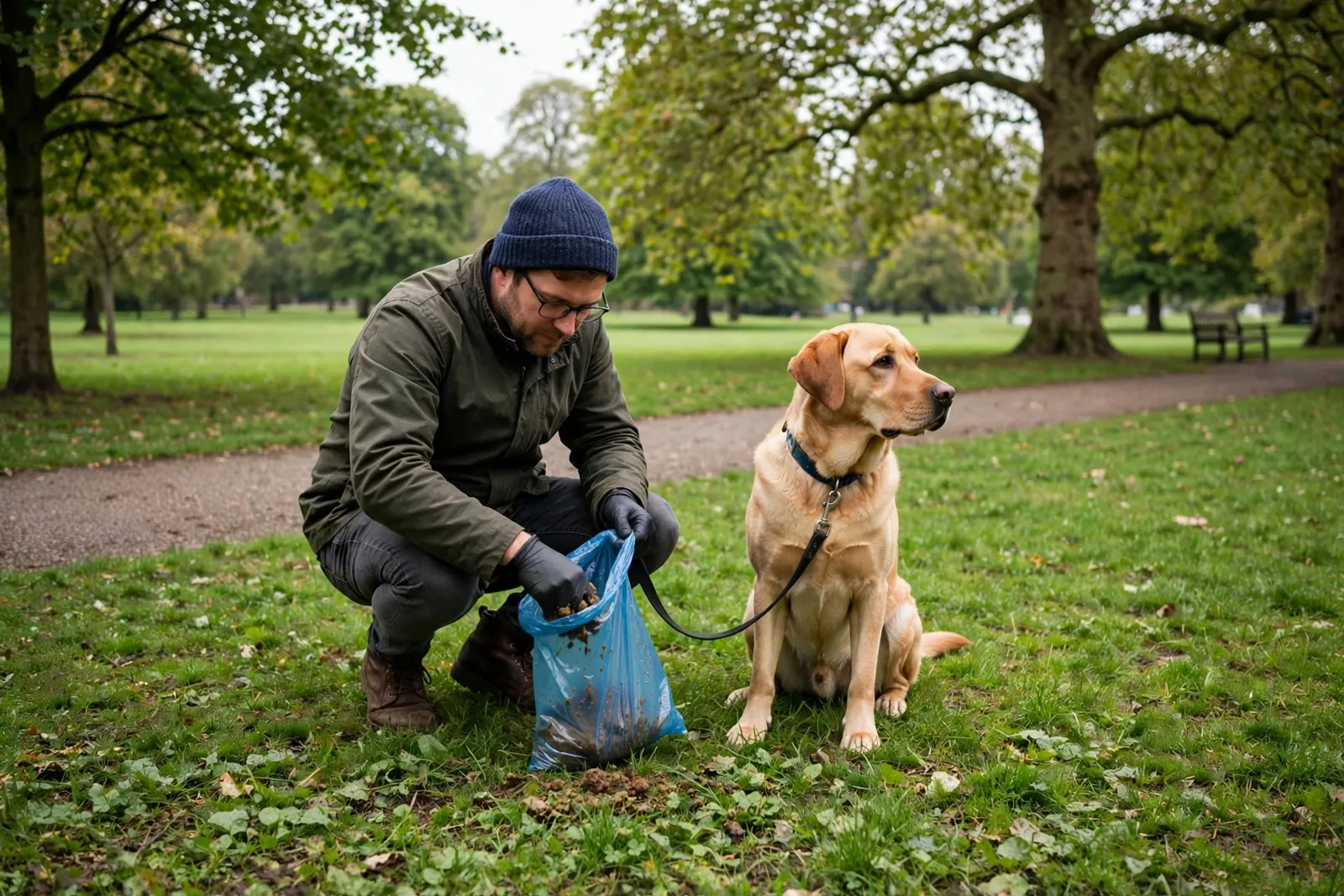
Avoiding a fouling fine requires no specialist equipment, just a system that survives tiredness, rain and unfamiliar places. Start with bags: carry at least three more than you expect to use, split across locations so that one forgotten pocket never leaves you empty-handed. A small dispenser clipped to the lead covers the everyday case; a sealed spare roll in your bag covers the day the dispenser runs out mid-walk. Biodegradable claims vary, so choose sturdy bags that will not tear — a split bag is how a willing owner still ends up leaving a mess behind.
- Watch the dog, not the phone. Most fouling offences happen in the first ten minutes of a walk or just after a dog is let off the lead. Keep your dog in view until they have been, then relax.
- Pick up immediately. Do not mark the spot and plan to return. Tying the bag straight away also removes the risk of forgetting which patch of grass it was.
- Bin it properly or take it home. Use a dog waste bin or a general litter bin where the council allows it, and never leave a bag hanging on a fence or tree, which is littering.
- Read the gate sign. In a new park, beach or village, check for lead rules, excluded areas and bag-carrying requirements before you set off.
- Plan the night walk. Carry a torch so the last toilet walk of the day is not guesswork, especially around holiday accommodation where you do not know the verges.
Teach the habit to everyone who walks your dog. Children, grandparents and holiday dog-sitters should all know where the bags live and what the local rules are. A two-minute briefing at the start of a trip is far cheaper than a fixed penalty, and it also protects the person holding the lead, who is the person legally responsible on the day.
Fouling rules when you travel
Travel multiplies the risk in predictable ways. Dogs often toilet more often in new places, routines slip, and the nearest bin is rarely where you expect it. Holiday parks, campsites and cottage agencies add their own site rules on top of the council's PSPO: many require dogs to be kept on a lead around the site, direct owners to a designated dog-walking area or dog toilet, and treat fouling on a pitch as a breach that can lead to cleaning charges or being asked to leave. Before booking, our guide to dog-friendly holiday parks in the UK is a useful companion, because the questions it suggests asking about boundaries and after-dark toilet walks are exactly the ones that prevent fouling problems on site.
Beaches deserve special care. Seasonal dog bans, lead-only promenades and PSPO bag rules often overlap, and enforcement patrols are common in summer. The tide is not a cleaning service: fouling left below the high-tide line is still fouling, and on many beaches it is an offence to leave it anywhere on the sand. The same applies on access paths and slipways, which are usually covered even when a stretch of beach is not.
Finally, build fouling into your packing and your route planning, not just your conscience. Bags, a torch, hand sanitiser and a small bottle of water belong on every packing list; a quick search of the destination council's website before you set off takes five minutes and settles the local amount, the bag rule and any exclusions. Rules and amounts change as PSPOs are renewed, so always check the local council's latest guidance before you travel — and then enjoy the walk, bags in pocket, with nothing to worry about when an officer appears over the hill.
Practical questions
Before you go
How much is a dog fouling fine in the UK?
There is no single UK-wide amount. Most councils set a fixed penalty of £50 to £100 under a Public Spaces Protection Order, commonly £80 or £100, sometimes reduced for early payment. If the case goes to court, the fine can be up to £1,000. Always check the local council PSPO for the exact figure where you are walking.
Can I be fined if I run out of poo bags?
Yes, in many areas. A lot of PSPOs make it an offence not to carry a suitable means to pick up after your dog, as well as an offence to leave fouling behind. Running out of bags is not usually accepted as a defence, which is why carrying spares in more than one pocket or bag matters.
Who can issue a dog fouling fine?
Authorised council officers, including dog wardens and environmental enforcement officers, can issue a fixed penalty notice. In some areas police community support officers and authorised contractors can too. The officer should identify themselves and explain the offence, the amount and how to pay or appeal.
What happens if I do not pay a fixed penalty notice?
If you do not pay within the period stated on the notice, usually 14 days, the council can take the case to the magistrates court. A court conviction can mean a fine of up to £1,000 plus costs, which is considerably more than the original fixed penalty. Paying the fixed penalty normally discharges liability for that offence.
Are any dog owners exempt from dog fouling rules?
Some PSPOs provide exemptions, for example for registered blind people and for assistance dog users who are unable to clean up due to their disability. Exemptions vary by council and are not automatic everywhere. Check the wording of the local PSPO, and always check the local council's latest guidance before you travel.