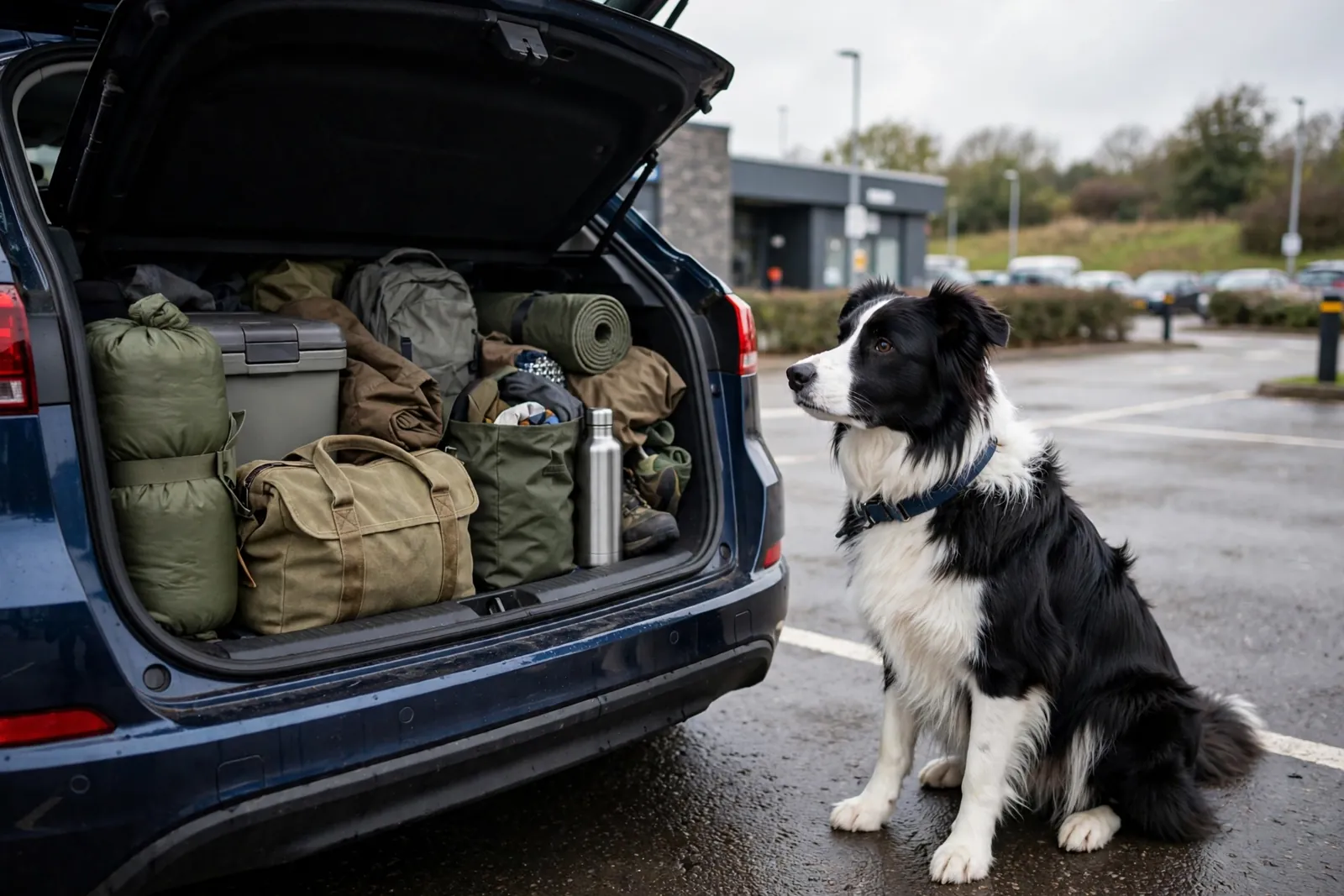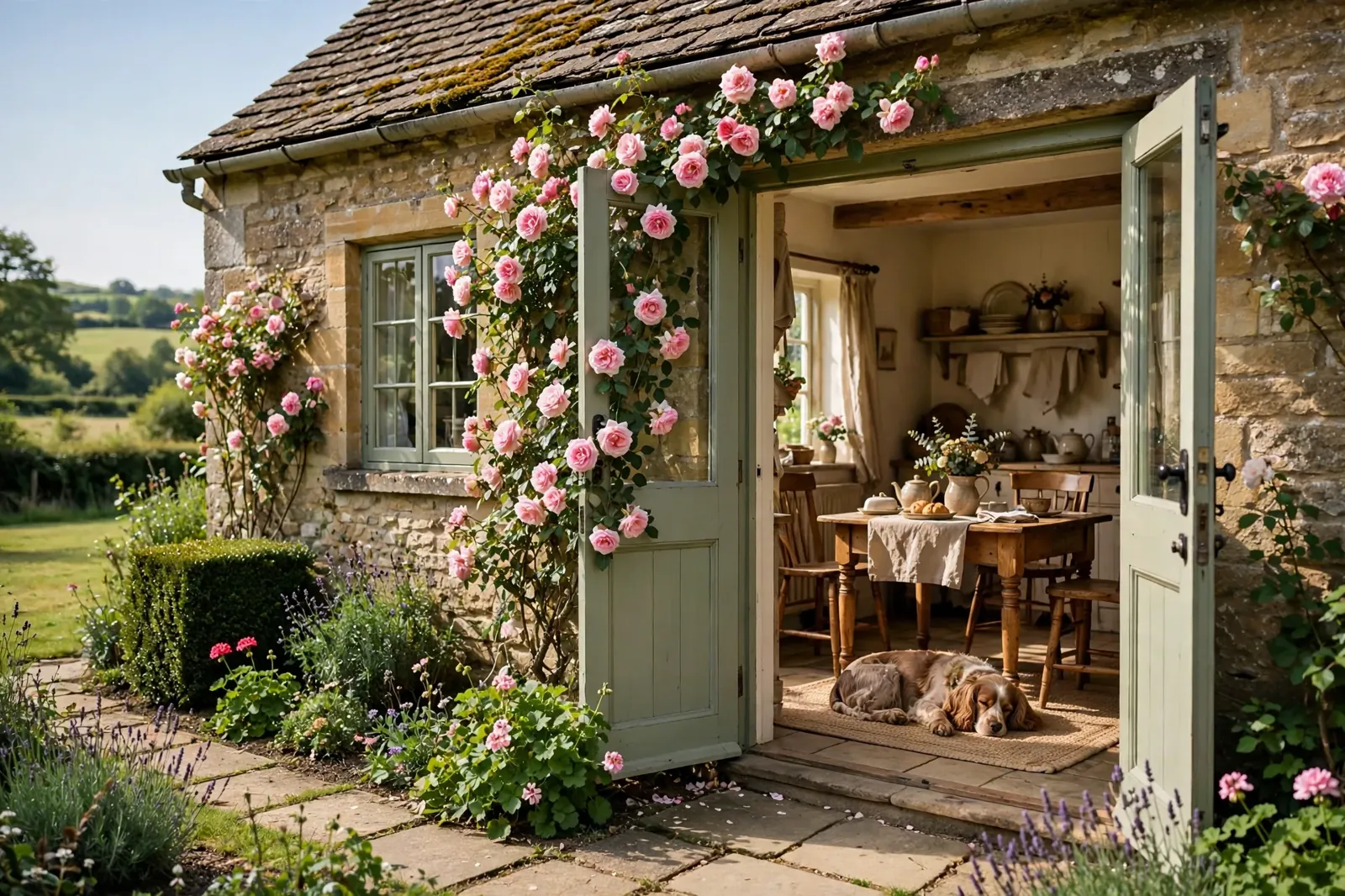
This guide is independent and contains no paid placement. Policies change often, so confirm dog rules directly before you book or travel.
The best dog-friendly B&Bs specify where dogs may go, what breakfast looks like with a dog, garden security and charges, all before you book. Phone the host, describe your dog honestly, confirm the breakfast-room and alone-time rules in writing, and choose the property whose routines fit your dog rather than the one with the vaguest warm welcome.
Think like a host: why B&B rules are personal, not corporate
Start at the kitchen table, not the search results page. A bed and breakfast is usually someones home as well as a business, often with a resident dog, a cat behind a stair gate, hens in the garden or a partner who is allergic to dogs in the dining room. When a listing says dogs welcome, it can mean anything from a dog that sleeps in your room and breakfasts under your table to a dog that is tolerated in one ground-floor bedroom and nowhere else. Both can be honest offers. Only one may suit you.
That personal scale is the B&Bs great strength. A host who knows your dogs name, points you to the field path behind the church and cooks breakfast early so you can walk before the heat is offering something no large property can copy. It is also why generic platform filters fail here. The filter knows a box was ticked. It does not know the garden gate sticks, the resident terrier dislikes intact males, or that breakfast is served in a small room where a large dog under a table changes everyone elses morning.
Read every listing for specifics and treat warmth without detail as a starting point for a phone call, not as information. Phrases worth trusting name the room, the charge, the garden, the breakfast arrangement and the maximum number or size of dog. Phrases worth questioning promise that dogs are treated as family without saying where that family member sleeps, eats or toilets at eleven at night in the rain.
Breakfast is the defining B&B question
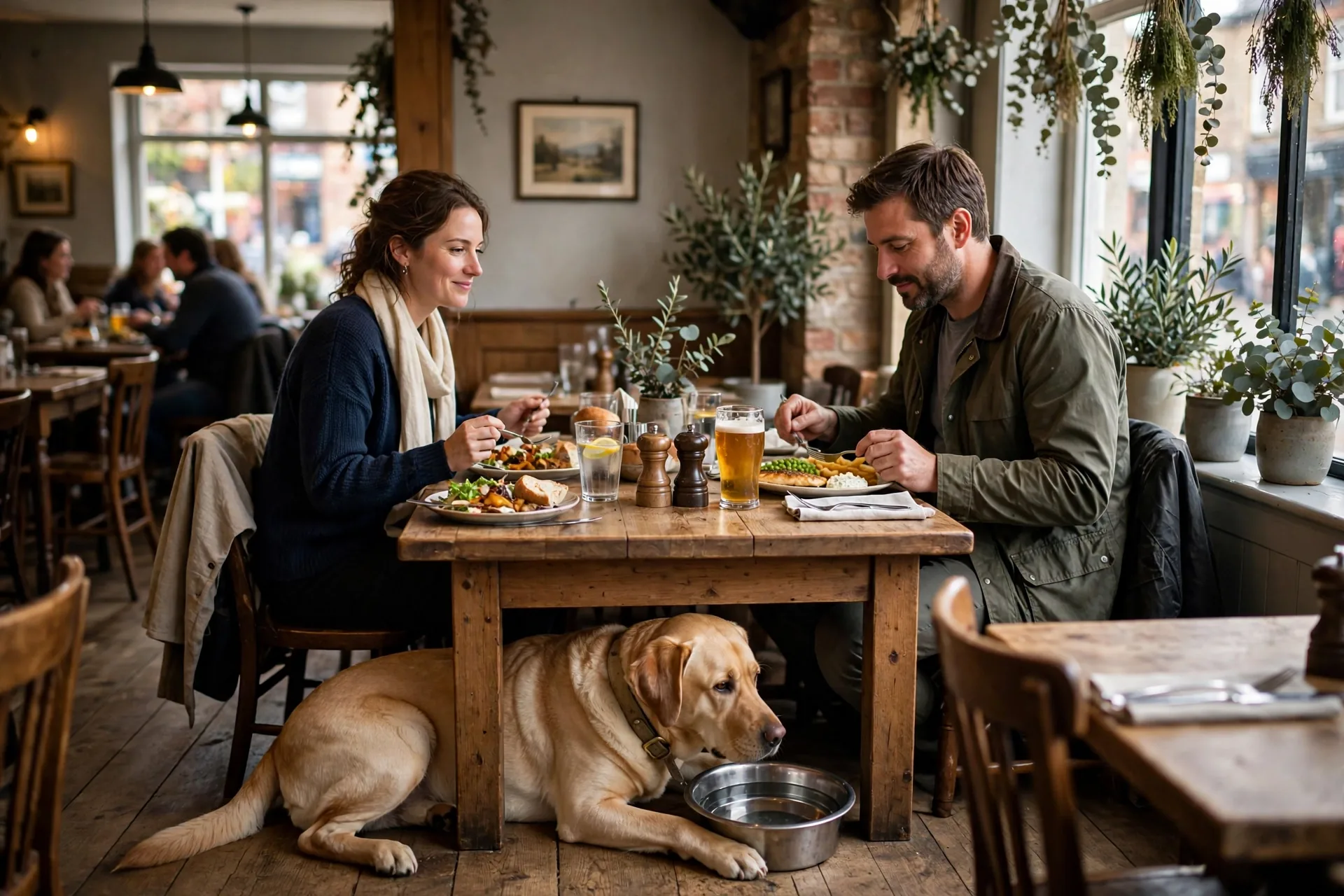
In a hotel the dog question centres on the bedroom. In a B&B it centres on breakfast. Cooked breakfast is the product, served at set times in a shared room, often the hosts own dining room. Ask directly: can my dog sit under our table, is there a separate room or staggered sitting, can breakfast be taken in the bedroom or garden, or is the expectation that the dog waits elsewhere. Each answer creates a different morning, and none is unreasonable if you know it before you book.
Dogs that settle under cafe tables usually manage breakfast rooms well, especially at an early sitting before the room fills. Our guide to dog-friendly cafes is a useful honest test: if a forty-minute cafe settle is currently difficult, a B&B breakfast room at peak time will be harder, not easier, because smells are stronger and space is tighter. Choose a property offering breakfast in the garden, in the room, or at a quiet first sitting, and practise the settle mat at home until it is boring.
Also ask about food temptation and floor hazards. Breakfast rooms mean toast crusts under tables, butter within tongue reach and other guests who may offer titbits with kind intentions. Position your dog away from the serving route, keep the lead short and looped, and tell nearby guests cheerfully that your dog is on a settle and not to be fed. A host who sees you managing this calmly will relax, and so will the room.
Do not forget timing. Hosts cook to order around a working morning that may include animals, school runs or another job. Arriving twenty minutes late with a muddy dog compresses everyone. Agree your sitting the night before, walk and dry the dog first, and be the table that is ready when called.
Rooms, stairs and the small geography of a house
B&B bedrooms sit inside houses never designed as hotels. Stairs may be narrow and steep, landings creak, the dog-friendly room may be the one beside the kitchen because it has a washable floor, and the best view room may be kept dog-free to protect carpets and bedding. Ask which room the dog offer applies to, whether it is ground floor or up stairs your dog can manage, and whether it has an opening window, because a warm small room with a panting dog helps nobody sleep.
Bathroom arrangements matter. En-suite is simplest for night routines. A shared bathroom down a landing with a dog that follows you everywhere needs a plan: crate, settle behind a closed bedroom door if allowed, or a travelling companion who stays with the dog. Ask rather than improvising, because hosts have usually solved this before and may offer the room nearest the bathroom to dog guests for exactly this reason.
Clarify furniture rules house by house. Some hosts provide throws and invite dogs onto a designated armchair. Others ask that dogs stay off beds and furniture entirely, which is fair and easy if you bring a proper dog bed rather than expecting a dog used to sofas to understand a bare floor is now the offer. Bring the bed, a settle mat and a throw of your own to protect floors during wet weather, and ask where muddy kit can dry so you do not drape it over bedroom radiators uninvited.
Gardens, resident animals and the evening toilet walk
A garden photograph tells you almost nothing about security. Ask about fence height, gates onto roads or fields, gaps under hedges, and whether the garden is shared with resident animals. A beautiful unfenced cottage garden may be perfect for a dog that toilets on a lead and recalls instantly, and completely unsuitable for a young dog that needs off-lead freedom before bed. Neither the garden nor the dog is at fault. The match is the question.
Resident animals deserve specific questions. Is there a resident dog, will they meet, and does the host prefer a controlled introduction in a neutral space or complete separation using different garden times. Cats, poultry and horses change lead rules around the property. Declare your dogs likely reaction honestly. A host who knows your dog chases cats can protect everyone with room choice and timing. A host who discovers it at dusk cannot.
The evening walk is the practical test. Ask where hosts suggest for the last toilet walk, whether there is an outside light, a bin for waste, and a tap or towel station for muddy paws. In rural properties the honest answer may be a torch-lit lane and a long line, which is fine if you packed a headtorch. In town properties there may be a small yard and a park two minutes away. Picture the walk in rain, in the dark, after a long dinner, and decide if it still works.
Charges, damage and what fair looks like
Dog charges in B&Bs commonly take three forms: a small per-night fee, a flat per-stay fee, or no charge with a clear expectation that any damage or extra cleaning is paid for. Any of these can be fair. What matters is the total in writing, whether it covers one dog or two, and what counts as damage versus ordinary cleaning. A host deep-cleaning a room after every dog is doing real work, and a modest transparent fee that funds it is better value than a free welcome followed by a disputed bill.
Ask about deposits only if the host raises them, but do photograph the room on arrival as a matter of routine, note existing marks, and tell the host immediately if anything happens. A chewed door edge reported at once with an offer to pay is a five-minute conversation. The same damage discovered by the host after checkout becomes a story they tell about dog guests generally, and it closes doors for the next owner. The reputation of dog travellers is a shared asset; spend it carefully.
Compare totals like for like with other stay types in our UK dog travel costs guide: room rate, dog fee, breakfast included or not, parking, and the cost of eating out if the dog cannot be left and no evening food is offered locally. B&Bs often win on breakfast value and local knowledge while losing on evening flexibility. Price the trip you will actually take, not the room alone.
The phone call: a five-minute script that reveals everything
Many B&B hosts prefer a phone call to a platform message, and five minutes of conversation reveals more than twenty listing photographs. Open by naming dates, room, dog breed, age, size and temperament in one sentence. Hosts relax when owners are specific because vagueness usually means the awkward detail is being saved for arrival. Then ask, in order: breakfast arrangement, garden and resident animals, alone-time rule, charge and total, and the evening toilet walk.
Listen for how answers are given. A host who answers crisply, names limits and suggests solutions is offering a managed welcome that will probably hold on the day. A host who says everything is fine to every question, including a dog that barks, two large dogs and leaving them alone during dinner, may simply be avoiding a difficult booking conversation. Neither response guarantees the stay, but specificity remains the best predictor of a calm arrival.
Close the call by repeating the agreement back: room, dog charge, breakfast plan and any condition such as garden on a lead. Ask the host to confirm by email or message, and send your own summary if they do not. This is not distrust. It is how small businesses avoid misunderstandings when bookings are taken between breakfast service and walking their own dog.
If the call reveals a mismatch, thank the host and move on warmly. The right B&B for a reactive dog, a puppy or a giant breed exists, but it is found by matching, not by persuading a reluctant host to stretch rules that exist for good reasons.
Guest etiquette that earns the next dog a welcome
Arrive with a walked, toileted, reasonably clean dog, and keep the lead on until the host shows you the room and garden arrangements. Greetings happen at human pace: bags down, dog settled, then conversation. Do not let your dog charge to greet a resident dog, investigate the kitchen or claim the hallway as territory in the first ten minutes. First impressions in a small property set the tone for the whole stay and are remembered long after checkout. If you would rather have the whole place to yourselves, dog friendly Airbnb in the UK explains the pets filter, host messages and fee checks.
Manage mud as if the house were your own, because it is someones. Towel paws at the door every time, use the mat and tap the host points out, and keep wet kit where directed. If your dog shakes, and every wet dog shakes, try to make it happen outside or on the washable floor, and wipe the wall if it did not. These tiny acts are the difference between a host who advertises dog-friendly confidently and one who quietly stops ticking the box.
Noise deserves the same care. A B&B has other guests behind thin doors and a host who starts work early. Walk properly before bed, keep corridor trips minimal and calm, and settle barking quickly by taking the dog out rather than shushing through a door. At breakfast, be ready on time, keep the dog under the table, and leave the area under your chair cleaner than a dropped-toast standard would suggest.
On departure, strip nothing you were not asked to strip, but do gather dog hair visible on bedding if your dog was allowed on a throw, empty your waste into the outside bin as directed, and tell the host about anything broken or marked before they find it. A short thank-you message later, naming what worked for the dog, helps the host refine their welcome and helps the next owner more than a generic five-star rating.
Choosing between B&Bs: a simple scoring method
When two B&Bs look equally charming, score them on the five things that decide dog stays: breakfast arrangement, garden security, room position, alone-time rule and host specificity. Give each a simple mark out of two based on written answers, not photographs. The property with the plainer website and the clearer dog information wins this scoring almost every time, because clarity is what survives contact with a wet Tuesday evening.
Location adds the final adjustment. A B&B with a footpath from the gate and a dog-welcoming pub within walking distance reduces car use, evening stress and toilet-walk friction every single day. One that requires a drive for every walk may still suit a dog that loves the car and a traveller with a walking plan elsewhere, but count those drives honestly. For dogs that eat out with you each evening, check that plan against our restaurant guide principles: book ahead, name the dog, and confirm the table position before you rely on it.
Book the winner direct where possible. Direct booking gives the host your dog details without platform abbreviation, often improves room choice for dog guests, and keeps the conversation that made the match possible. Then put the agreement, the hosts number and the nearest vet in one note on your phone, and your B&B stay is organised in the way hosts themselves would organise it.
Practical questions
Before you go
Can my dog join me in the breakfast room?
Sometimes, and it is the single most important question to ask a B&B host before booking. Some hosts seat dogs under the table, some offer a separate room, garden or bedroom breakfast, and some ask dogs to wait in the bedroom during service. Any arrangement can work if you know it in advance and your dog can settle for the length of a cooked breakfast.
How much do B&Bs charge for dogs?
Charges vary widely: a small nightly fee, a flat per-stay amount, or occasionally no fee with damage and extra cleaning charged if needed. Ask for the total for your dates and number of dogs in writing, and confirm what the fee covers so there is no surprise on the final bill.
Can I leave my dog alone in a B&B bedroom?
Only if the host explicitly agrees. Many B&Bs prohibit unattended dogs because bedrooms are inside a family home, other guests are nearby and housekeeping may need access. Plan evenings around the rule you were given: eat where the dog is welcome, take turns, or choose a property whose host confirms brief absences are acceptable for your dog.
Are dogs allowed on B&B beds and furniture?
It depends entirely on the house. Some hosts provide throws and allow dogs on designated furniture, others require dogs to stay on the floor on their own bed. Ask before booking, bring your dogs own bed either way, and follow the house rule exactly, because soft furnishings are a major reason some hosts stop accepting dogs.
What should I tell a host about my dog before booking?
Breed or type, size, age, number of dogs, and honest notes on barking, reactivity, chasing, house training and settling. Hosts use this to choose the right room, manage resident animals and set garden arrangements. Specific honesty almost always improves a booking, while surprises on arrival are what create problems.
Is a B&B or a hotel better for a nervous dog?
It depends on the property and the dog. A small B&B can be quieter and more personal, but shared breakfast rooms and resident animals bring close contact. A larger hotel offers anonymity but busier corridors and lifts. Match the specific routines, breakfast, alone-time and garden or walk arrangements to your dog rather than choosing by category.