This guide is independent and contains no paid placement. Platform policies and individual listing rules change, so confirm the current terms in your booking messages before you pay.
Yes, many UK Airbnb listings accept dogs — but successful dog-friendly rentals are made in the messages, not the search results. Filter for pets allowed, then message the host about garden security, dog numbers and size, furniture rules and the true pet fee before booking. Choose whole-place listings with hard floors and an enclosed outdoor space, and get every agreement in the platform thread where it can be referred back to.
The filter trap
Let us start with the warning this page exists to give. On Airbnb and similar platforms, 'pets allowed' is a setting a host toggles, not a description of the stay you will get. Behind the same filter result sit hosts who keep treats in the welcome basket and hosts who allow one small dog, downstairs only, never on any soft surface, with a cleaning fee that doubles the cost of a short stay. Both listings are telling the truth as the platform defines it. The difference only emerges in the listing text, the house rules tab, and — most reliably of all — a direct message exchange before you book.
The platform's own mechanics add traps for the unwary. Your search must include your dog in the guest count for pet fees to be calculated and for the booking to be honest; arriving with an undeclared dog breaches the terms of most listings and can end the stay on the spot. Instant Book properties can be booked without any conversation, which feels convenient until you discover the garden is shared, the stairs are open-tread, or the 'pet fee' mentioned in paragraph nine exceeds the nightly rate. None of these details is hidden maliciously — hosts write listings for the majority of guests, who do not read them as dog logistics documents. Reading them that way is your job.
There is good news buried in the caution: rentals are the most flexible form of dog accommodation in Britain. Unlike hotels, a whole cottage or flat gives the dog a hallway, a kitchen routine and usually a door straight outside. Unlike campsites, there are solid walls and a washing machine. Our guide to self-catering stays with a secure garden covers the wider rental market beyond one platform, and the principles transfer directly. The method below — filter, read forensically, message precisely, confirm in writing — turns a lottery into a repeatable booking system.
Messaging the host properly
The pre-booking message is where dog stays are won. Keep it short, specific and easy to say yes to: introduce the dog by breed, age, weight and temperament; state your dates and that the dog is house-trained, flea-treated and never left alone (or ask honestly if your plans differ); then ask the four questions that decide the stay — is the garden fully enclosed and how high is the fencing, is there a fee and what is the total, are there rooms or furniture the dog must stay off, and are there resident animals or livestock next door that we should know about. Hosts answer this message well because it signals an owner who has thought like a host.
Ask about the things photographs cannot show. Photographs flatter gardens from the angle that hides the gap under the gate, and they never show the open-tread staircase, the white carpet in the main bedroom, or the fact that the 'private garden' is reached through a shared yard where the host's own dog roams. Ask directly about floor coverings in the rooms the dog will use, whether the dog may go upstairs, and where the nearest patch of grass for the last-night walk actually is — 'two minutes to the common' and 'across the main road' produce very different evenings in the rain.
Keep the whole exchange inside the platform messaging thread, and treat anything agreed there as part of your booking. If a host offers to waive the pet fee, clarifies that two dogs are fine, or agrees an early check-in so you can settle the dog in daylight, those words in the thread are what you rely on if a co-host, cleaner or later misunderstanding tells a different story. Hosts who answer fully and promptly are also, in practice, the hosts whose properties are as described — the message exchange is a quality test as well as a fact-finding exercise. If replies are vague on the garden or the fee, move on; Britain has thousands of rentals, and ambiguity is the one amenity you do not need.
Gardens, gates and boundaries
The garden is the single feature that decides whether a rental relaxes or exhausts a dog owner, so interrogate it hardest. 'Enclosed' should mean a continuous boundary your specific dog cannot jump, dig under, squeeze through or unlatch — which is a different standard for a dachshund than for a springer spaniel. Ask the fence height, ask about gaps at gates, and ask whether the boundary is shared with a neighbouring garden containing dogs, because fence-line socialising at 6am delights nobody. Our secure-garden guide linked earlier in this article sets out the full boundary checklist, including the questions for rural properties where gardens meet fields.
Terraces, decking and balconies need the same scepticism indoors-out. Decking gaps trap small paws and dropped treats roll into inaccessible voids; balcony railings on first-floor flats are often spaced for adult aesthetics, not terrier shoulders. If the listing is a flat with no private outdoor space at all, be honest about what that means: every toilet trip is a lead, shoes, keys and stairs production, four to six times a day, in whatever the British sky is doing. That is a workable city break with a healthy adult dog and a misery with a puppy, an elderly dog, or anyone staying beyond two nights.
Check the exits beyond the garden too. A cottage whose front door opens straight onto a lane, a farm track with working vehicles, or a village green where dogs must be on leads is fine if you know it in advance and keep the lead by the door. It is a hazard if you discover it with an armful of luggage and a dog that has just spotted a cat. Hosts usually describe these things proudly as 'rural' or 'vibrant'; your message should convert the adjectives into facts — how far is the nearest safe off-lead walk, are there livestock in the adjoining fields during our dates, and does the lane carry fast traffic. Facts, once again, are what good stays are built from.
Fees, rules and deposits
Money on rental platforms arrives in layers, so assemble the whole stack before comparing listings. Beyond the nightly rate there may be a pet fee (charged per dog, per night, or per stay — three very different numbers wearing the same name), a cleaning fee that rises when a dog is declared, the platform service fee calculated on top of all of it, and in some listings a refundable security deposit or a post-stay claim process for damage instead. A two-night stay with two dogs can carry pet-related charges approaching the cost of a third night, which is why rental economics favour longer stays: the fixed fees spread across more days, and weekly discounts often apply. Run the total, not the headline, for every shortlisted property.
House rules deserve the same forensic read as the price. The rules that most affect dogs are usually written by a host who has cleaned up after one: no dogs on beds or sofas, no dogs upstairs, dogs never to be left alone in the property, and wet dogs to be dried in the utility or porch. All four are reasonable; all four shape your stay. A dog that sleeps on your bed at home will not understand a bedroom ban in a strange house, so either choose a property whose rules match your dog's habits or bring the throws, the stair gate and the resolve to enforce a new routine from the first hour.
If anything in the rules is unclear, clarify it in the message thread rather than hoping for leniency on the day — 'left alone' that means 'while you pop to the village shop' to you may mean 'never, under any circumstances' to the host, and the time to discover the difference is before payment. Hosts can also make exceptions when asked properly in advance: many will permit a settled dog to be left for a defined evening if you explain the dog, the duration and the precautions. An agreed exception in writing is hospitality; the same act unagreed is a breach, and reviews — on both sides — record which one it was.
Which property types suit dogs
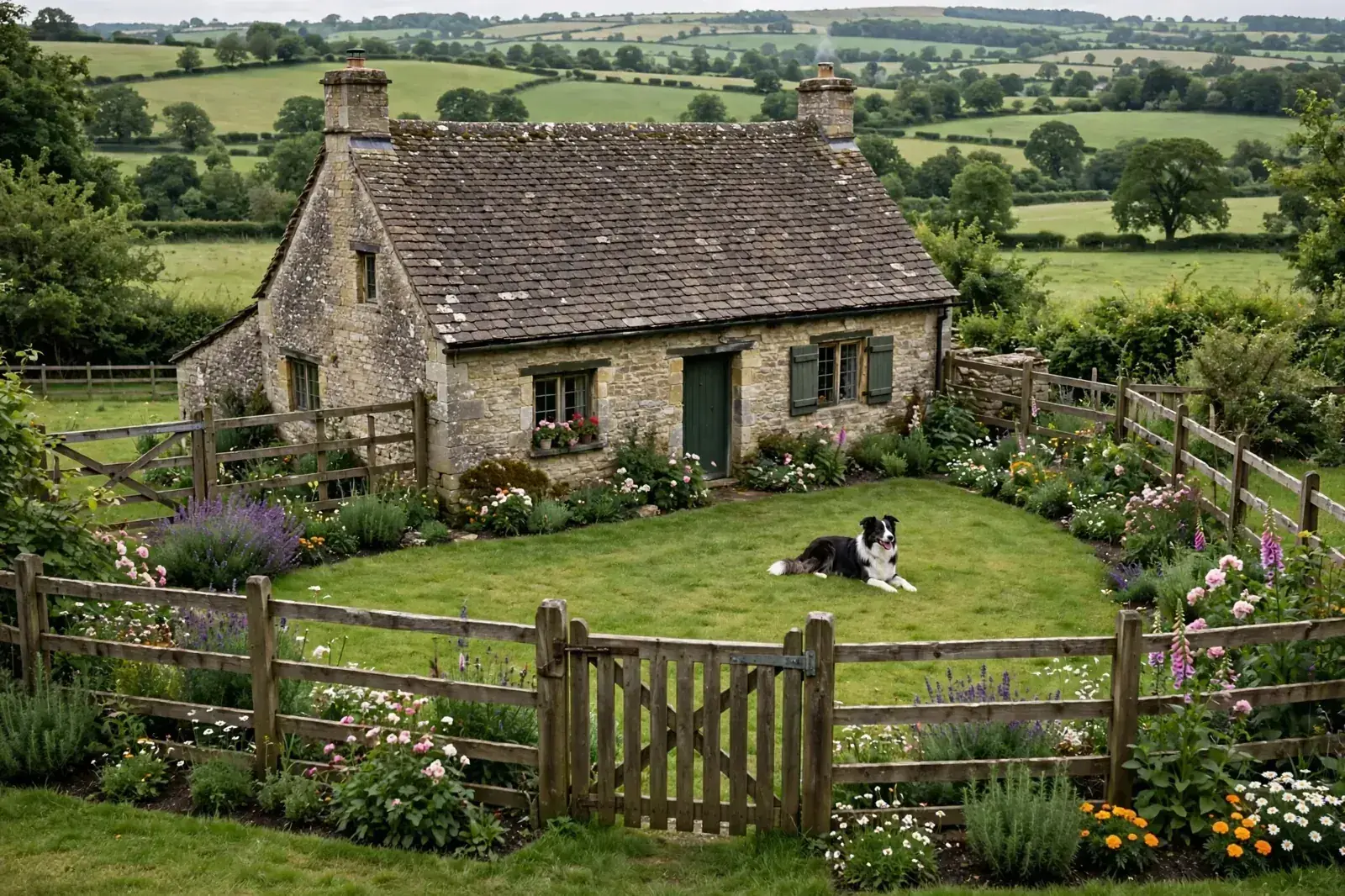
Whole-place cottages in walking country remain the gold standard: your own door, an enclosed garden, hard floors downstairs, nobody above or below to hear the dawn chorus. Barn conversions and annexes on farms can be equally good and often cheaper, with the caveat that working farms mean working dogs, livestock and early machinery — wonderful stimulation for a steady dog, a fraught soundtrack for a reactive one. Ask the farm question directly: what animals will be within sight and sound of the property during our stay, and are there farm dogs loose in the yard.
Flats and apartments work for the right trip and the wrong dog is the only problem. Ground-floor flats with a small private terrace approach cottage convenience; upper-floor flats in converted houses are the hardest format in the rental market — stairs, shared hallways where other residents' cats appear, thin sound insulation carrying every bark to the neighbours, and no outdoor space at all. If you book one, book it for a short stay, choose a dog that is quiet and stair-capable, and walk the neighbourhood virtually beforehand to find the grass. City flats also carry one hidden virtue: they are usually near the parks, cafés and pubs that make an urban dog weekend, as our dog-friendly cafés guide shows.
Apartments managed by agencies and aparthotels sit between rentals and hotels, and their dog policies tend to be stricter and less negotiable than an individual host's — weight limits, designated floors, and no flexibility on the alone rule are common. They suit business-style trips with a calm dog and suit almost nothing else. At the other end of the scale, unusual properties — shepherd's huts, houseboats, converted chapels — can be magical with a dog, provided you apply the same checks: boundaries, stairs, water hazards, and what 'the dog will love it' translates into at 11pm in November rain. Novelty is a bonus, never a substitute for the basics.
Checking the neighbourhood
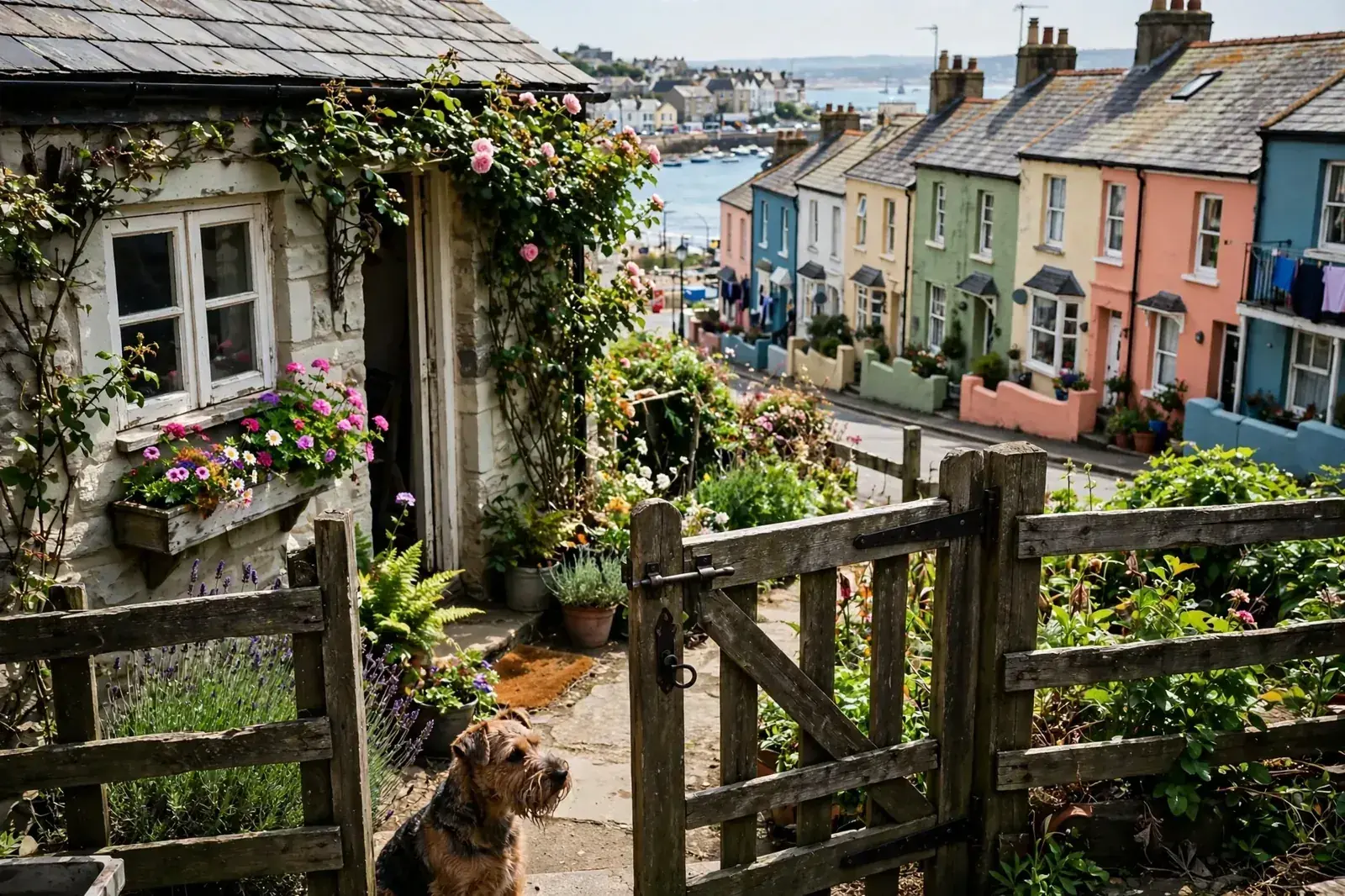
A rental gives you a neighbourhood, not just a property, and the dog experiences the neighbourhood four times a day. Spend fifteen minutes with a map before booking. Find the nearest green space suitable for a first-morning walk, check whether the direct route crosses a main road or passes a school at kicking-out time, and look for the basics that make a week easy: a shop for forgotten supplies, a pub or café that welcomes dogs, and a footpath network that means the long walk does not require the car. Properties described as 'secluded' sometimes mean the first walkable grass is a ten-minute drive, which converts every toilet trip into an expedition.
Season changes the neighbourhood calculation. Coastal rentals in summer sit within beach dog-restriction zones that may push your swimming beach a mile along the coast; moorland and farmland rentals in lambing season come with lead rules on the very paths you booked for. Check the specific restrictions for your dates — beach rules are usually published by the local council, and hosts in walking areas generally know the current livestock position if you ask. Our regional guides, from the Cotswolds dog guide to the coastal destination pages, flag the seasonal patterns worth knowing.
Finally, check the unglamorous infrastructure. Where is the nearest vet, and is there an out-of-hours service within a sensible drive? Is there phone signal at the property — rural rentals still surprise guests — and a place to park that does not involve unloading a dog on a blind bend? Is the refuse arrangement dog-proof, because remote cottages store bins outside and local wildlife treats them as restaurants. None of this requires extensive research; it requires noticing that a rental stay is a small relocation, and relocating with a dog goes well exactly when the small things have been looked at once, in advance.
Arrival and the first evening
Arrive like a professional. Walk the property and garden with the dog on a lead before any luggage comes in: check every gate latch, look along fence lines at dog height for gaps and dig-points, note cleaning products, firelighters and welcome-basket chocolates stored within reach, and find the outside tap and the bin. Then set up the dog's corner — bed, water, a familiar blanket — before you unpack your own things, so the dog has an address inside the house from the first ten minutes. Photograph any existing damage, pet-related or not, and send anything significant through the platform thread the same evening; the arrival photo habit protects guests exactly as much as hosts.
The first evening sets the rules of the house. Feed at the usual time in the place you have chosen, enforce the furniture and upstairs rules from the first attempt rather than the fifth, and take the last walk along the route you will use all week so it is familiar by the second night. Keep excitement low: a new house is stimulation enough. Most dogs sleep deeply after a travel day if the corner is comfortable and the humans are calm, and a good first night predicts the week — dogs that settle on night one rarely unravel later.
During the stay, treat the property as borrowed, because it is. Wipe paws at the door, keep wet dogs in the agreed rooms, use your own throws on any furniture the dog is permitted near, and bag and bin waste from the garden daily rather than leaving a week's accumulation for the cleaner. If the dog damages anything — a chewed skirting board, a stained carpet — tell the host before checkout with a photograph and an offer to pay. Hosts forgive accidents disclosed honestly far more readily than surprises found by a cleaner, and your review profile as a guest with a dog is an asset worth protecting across every future booking.
Reading reviews like a dog owner
Reviews are the rental market's memory, but they must be filtered for relevance. The reviews that matter to you are the minority written by guests who brought dogs, and they are worth searching for deliberately — scan for the words dog, garden, enclosed, lead and vet, and weight a detailed dog review from last season above twenty generic five-star comments about the hot tub. A review saying 'garden not quite secure for our escape-artist beagle' is the most valuable sentence on the page if you own a beagle, and hosts' responses to dog reviews reveal as much as the reviews themselves about how problems are handled.
Read critically in both directions. A property with no dog reviews at all may be new to accepting dogs — which means an untested garden, an optimistic host and you as the experiment — or may simply host dog guests who do not write reviews; your pre-booking message is how you find out which. Equally, a single angry review about a pet fee usually says more about a guest who did not read the listing than about the host. Patterns are what count: three mentions of road noise, mud, or a superb dog walk nearby are data; one mention of anything is an anecdote.
Contribute to the system when you leave. Write the review you needed to read: state your dog's size and type, whether the garden held them, what the pet fee actually totalled, where the best walk was, and anything the listing photographs did not show. Precise guest reviews are how the good dog properties build the reputations they deserve and how the traps in the filter get marked for the next owner. Platforms reward detailed reviews with visibility, and the dog-owning corner of the rental market runs on exactly this kind of shared intelligence.
When something goes wrong
Most rental problems with dogs are small and soluble in the thread: the garden gate does not latch, the promised dog towels are absent, the neighbouring dog is louder than advertised. Message the host first, promptly and politely, with a photograph where relevant — hosts can fix a latch the same day, and a problem raised on day one is a service request while the same problem raised in a review is a grievance. Keep expectations proportionate: you are staying in someone's property, not a hotel with a maintenance team, and a reasonable response time is part of the format you chose.
Serious problems follow a different order. If the property is materially not as described — the enclosed garden does not exist, the dog you declared and paid for is suddenly refused — document everything in the platform thread, contact the platform's support through the app rather than by any number in a message, and do not abandon the property or accept a side arrangement off-platform without advice, because refunds and rebooking help depend on the record staying inside the system. If the dog injures itself or falls ill, the vet comes first and the paperwork second; your arrival research should already hold the local practice's number.
Prevention remains cheaper than every remedy in this section. Declare the dog fully and accurately — breed, size, number, age — pay the fee without creative accounting, and keep the agreements in the thread. The overwhelming majority of dog rental stays pass without a whisper of trouble, and the minority that go wrong almost always trace back to a fact somebody softened at booking: a second dog unmentioned, a garden assumed rather than confirmed, an alone rule bent on the last evening. Book honestly, and the platform, the host and the house rules all end up on your side.
Practical questions
Rental questions dog owners ask
Does the Airbnb 'pets allowed' filter guarantee my dog can stay?
No. The filter shows that a host accepts pets in principle, but numbers, size, fees and house rules vary by listing, and some hosts set conditions that only appear in the full listing text. Always declare your dog in the guest count, read the house rules, and message the host to confirm the specific arrangements for your dog before you book.
How much is a typical pet fee on a UK rental?
It varies widely: some hosts include dogs free, many charge roughly £20–£50 per stay or £5–£15 per dog per night, and cleaning fees may also be higher for bookings with dogs. Because the fee structure differs, compare the full total — nightly rate, pet fee, cleaning fee and platform charges — for the whole stay rather than the headline nightly price.
Can I leave my dog alone in an Airbnb?
Only if the host explicitly agrees. Most listings prohibit leaving dogs unattended, because a distressed dog in a strange house can cause damage and noise complaints. If your plans require it, ask in advance, explain the duration and your precautions, and get the agreement in the message thread. Never assume a cottage rule matches what your dog is used to at home.
What should I check about the garden before booking?
Ask whether the garden is fully enclosed for a dog of your size, the fence height, whether gates latch securely, whether the space is private or shared, and whether neighbouring gardens or fields contain dogs or livestock. Photographs rarely show gaps at dog height, so a direct answer from the host is worth more than any picture in the listing.
What happens if my dog damages something in the rental?
Tell the host as soon as you notice, with a photograph, and offer to cover the cost. Hosts handle honestly reported accidents far more reasonably than damage discovered after checkout. Platforms operate claim and deposit processes for disputed cases, which is another reason to keep all communication inside the platform messaging system.
Can I bring two dogs to an Airbnb?
It depends on the host and the listing — some welcome two dogs, others set a limit of one or charge per dog. Use the pets filter, then message the host with the number, size and breed of your dogs and get their agreement in the platform thread before you book.