This guide is independent and contains no paid placement. Policies change often, so confirm dog rules directly before you book or travel.
Book ahead and name the dog, ask where dogs may sit and request a corner or wall-side table, arrive with a walked and toileted dog that can settle on a mat, keep leads short and bowls out of walkways, and never feed your dog from the table. If your dog cannot yet settle for a full meal, choose a terrace, an early sitting or a cafe first. For chain coffee specifically, see our guide to dogs in Costa Coffee — the rules vary by store, not by brand.
It starts with a phone call, not a hopeful arrival
Picture the conversation that sets up a good meal. You phone at a quiet hour, name the date and party size, and say clearly that you would like to bring one well-behaved dog, giving breed and size because a chihuahua and a Newfoundland create different table geography. You ask where dogs sit, whether there is a specific area, and whether a corner table is possible. You finish by asking about water, the busiest hour to avoid, and whether the booking is noted with the dog included. Two minutes, and everyone knows what is coming. For a special occasion rather than an everyday meal, a dog friendly afternoon tea needs booking ahead, with the venue's dog rules confirmed in writing.
That call matters because restaurant dog policies are more granular than a doorway sticker. Many restaurants welcome dogs in the bar, snug or terrace but not in the main dining room, often because of food hygiene practice, carpet, space or the expectations of other diners. Some welcome dogs throughout but only until a set hour, some take assistance dogs everywhere while pet dogs use one area, and some small dining rooms accept one dog per table by booking only. None of this appears reliably on a listing page, and all of it changes your evening.
If the answer is hesitant, do not bargain. A restaurant stretching its comfort for a dog it is unsure about will seat you in the draughtiest corridor and remember the experiment unkindly. Thank them, choose somewhere that sounds pleased, and note the hesitant venue for a dog-free evening. Confidence at booking is the strongest predictor of a relaxed welcome at the door, stronger than cuisine, price or postcode.
Online bookings need the same clarity. Use the notes field for the dog, then phone to confirm the note was seen, especially for Friday and Saturday services. A booking note nobody read is not an agreement, and discovering that at the door with a hungry party and a patient dog helps nobody.
Where dogs sit: dining room, bar, terrace and the law in plain terms
Restaurants decide their own pet dog policy in most of their space, while food preparation areas are a different matter and dogs do not belong in kitchens. That is why the bar-versus-restaurant split is so common in Britain: the same building can lawfully and sensibly run two policies in two rooms. Assistance dogs are not pets in this context and have wide access rights, so never use a guide dogs presence in a dining room as evidence that pet dogs are allowed there too.
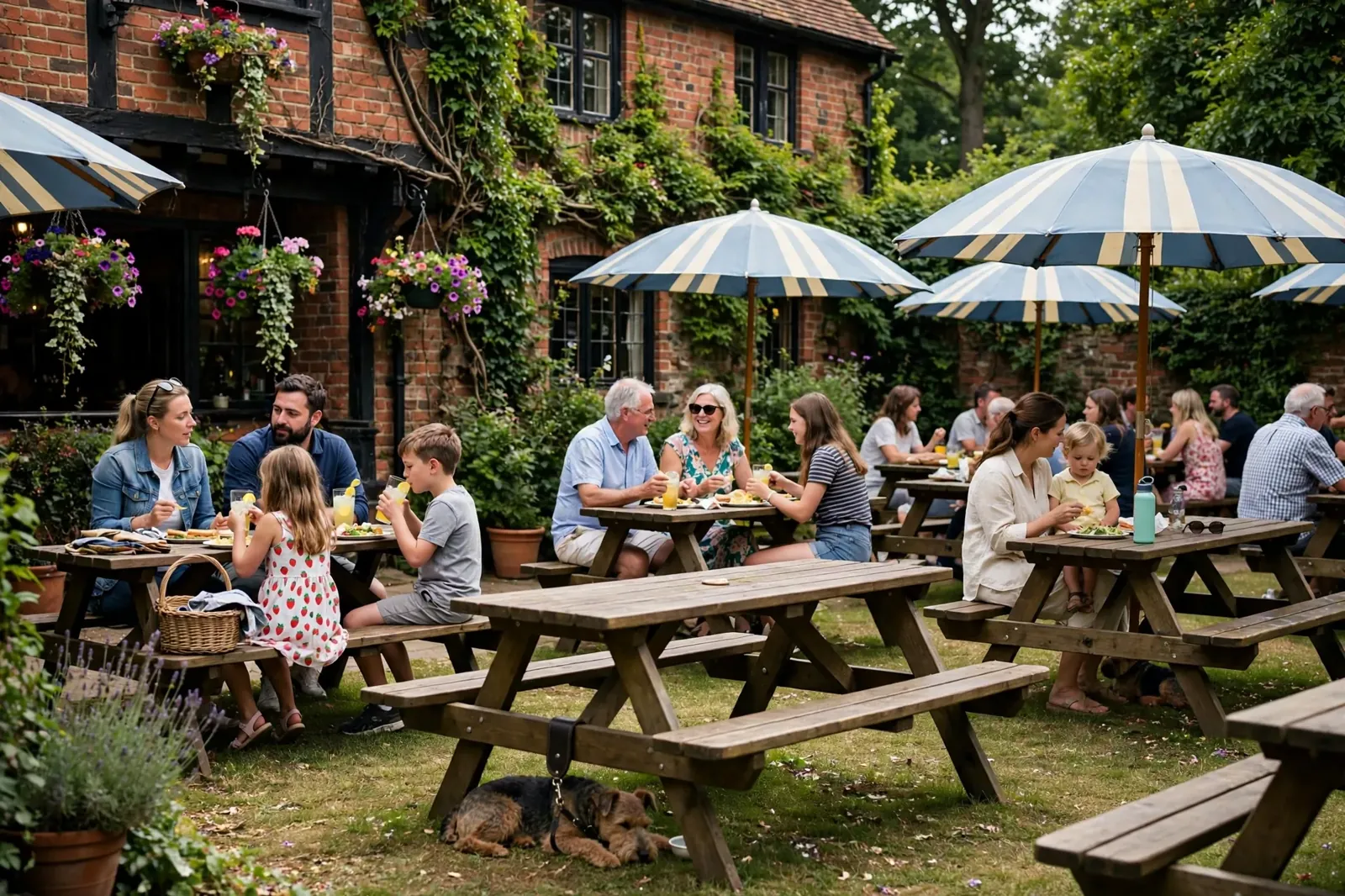
Terraces and gardens expand options in fair weather and shrink them in a British winter. Ask what the terrace really offers: heaters, cover, lighting, and whether the dog area stays open in rain or only in sunshine. A terrace booking for a dog that hates umbrellas dripping and heaters ticking may still fail, so describe your dog if the weather is uncertain and ask what happens if the evening turns. Good restaurants have an answer, often a bar table held as backup.
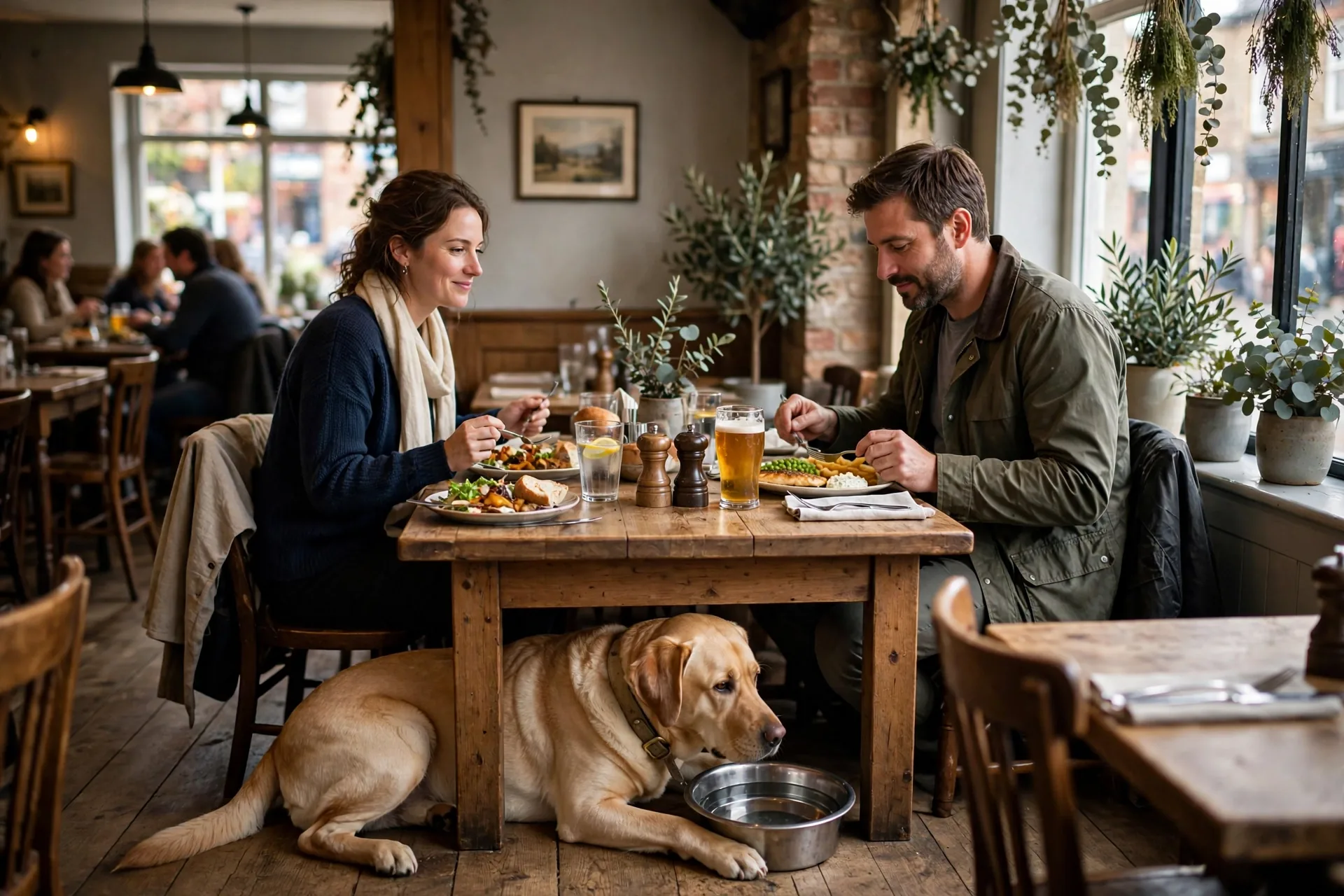
Table position is a quality issue, not a fuss. Ask for a wall-side or corner table with floor space for your dog to lie fully, away from the kitchen door swing, the toilets corridor and the bar queue. A dog stretched across a walkway will be stepped around, stared at and eventually stepped on, and the resulting yelp becomes the story of the evening. If the only dog table is the one beside the serving station, an earlier or later sitting usually fixes it.
Is your dog ready for a restaurant? An honest readiness test
Restaurants ask more of a dog than cafes do. The meal lasts longer, the room is busier and warmer, plates pass overhead carrying smells at nose height magnified tenfold, and leaving mid-service is awkward. The readiness test is simple and best done before you book the anniversary dinner. Can your dog settle on a mat for sixty to ninety minutes in a busy cafe or pub, toilet beforehand, ignore dropped food with a practiced leave, and greet neither neighbouring tables nor passing staff. One chain breaks the usual pattern entirely: see our guide to dogs in Wetherspoons, where company policy does not allow animals in pubs, hotels, gardens or other external areas.
If the answer is nearly, build up in stages. Start with the cafe pattern in our dog-friendly cafes guide, then a pub lunch, then a restaurant lunch at a quiet hour, then a full evening service. Each stage teaches the same skill in a harder room: the mat means rest, the table is not a source of food, and boring behaviour produces a calm walk afterwards. Dogs learn restaurants by routine, not by lecture, and two or three successful short visits protect a long special meal.
Some dogs should skip restaurants without shame. Dogs that guard food or bones, react to close strangers, bark at other dogs across a room or become distressed by sustained noise will not enjoy the evening and neither will the room. Choose a terrace picnic, a takeaway of the same quality eaten in your accommodation garden, or a dog-free restaurant night with the dog settled at home if that is its happiest routine. Good dining decisions are about matching, not proving a point.
Puppies and adolescents need shorter tests. A puppy that can manage thirty cafe minutes is not ready for a two-hour tasting menu. Book lunch, sit outside where exits are easy, and leave while it is still going well. The memory of leaving calmly is training gold compared with the memory of an overwhelmed last half hour.
Arrival choreography: the first five minutes set the meal
Walk and toilet the dog properly before you arrive, not a token loop of the car park. A dog that has sniffed, moved and emptied itself can lie down. A dog brought straight from a long car journey will rehearse every fidget it knows during the first course. Arrive a few minutes early, water the dog outside if bowls there allow, and enter calmly, telling the host immediately that the booking includes a dog so there is no doorway negotiation in front of a queue.
Set your station before you sit. Mat down in the floor space agreed, dog settled on it, lead short and secured to your chair leg or held, never tied to a table that a large dog could drag. Bag and coats out of the dogs lying space, water bowl placed against the wall or table leg, out of the serving walkway, after asking staff where they prefer it. This ninety-second setup looks practised because it is, and staff visibly relax when they see it.
Order with the dog in mind at least a little. Water for the dog early, especially in a warm room. If the restaurant offers a dog menu or treats, decide in advance whether that fits your dogs stomach and training; rich novelty food at nine at night is a common cause of a broken night afterwards. Many experienced owners bring a familiar long-lasting chew or a lick mat with a smear of the dogs usual food, used only if the restaurant is happy, and never anything that crunches loudly, smells strongly or guards easily.
During the meal: invisible is the goal
The compliment you are aiming for is that neighbouring diners did not notice a dog until you stood up to leave. Keep the dog on the mat and under the tables footprint, not visiting the next tables children however inviting they look. If children or other guests want to say hello, a cheerful boundary works: explain the dog is resting and working on being good, and offer a greeting outside afterwards if your dog enjoys that. You are protecting your dogs training and the other tables evening at the same time.
Feeding from the table teaches begging in one meal and can undo months of home routine, besides risking ingredients that harm dogs, including onion, garlic, rich sauces, cooked bones and sweeteners in desserts. Keep every plate movement boring. Dropped food gets a calm leave cue and, if it lands near the dog, a quiet word to staff who would far rather remove one chip than manage a scuffle. If your dog steals food, apologise plainly, pay for anything spoiled without debate, and treat it as training information for next time.
Breaks are normal and kind. Between courses, a short lead walk outside to stretch and toilet resets most dogs better than any chew. Tell staff you are stepping out briefly so your table is not cleared in a misunderstanding. On return, reset the mat routine exactly as at arrival. Dogs understand repeated choreography, and the second settle is usually deeper than the first.
If the evening goes wrong, leave early and well. A dog that becomes distressed, ill or persistently noisy is telling you the format does not fit tonight. Settle the bill gracefully, thank staff, and go. Restaurants remember gracious early leavers fondly and welcome them back for lunch sittings. They remember owners who endured two loud hours through gritted teeth rather differently.
Choosing a restaurant format that suits your dog
Gastropubs and pubs with dining rooms are often the easiest full-meal option because dog culture is built in, bar areas are spacious and staff expect muddy boots in season. That connects naturally with the garden and bar etiquette in our pub garden etiquette guide, and the same settle mat routine transfers without change. Check kitchen hours carefully, because rural pubs may stop food earlier than town restaurants.
Independent bistros and neighbourhood restaurants can be excellent when booked personally: smaller rooms, owners who answer the phone, and corners that suit a mat. Chain restaurants vary by branch because local layout and management shape the policy, so branch-level confirmation matters more than brand reputation. Fine dining rooms are the hardest format: close tables, long menus, hushed rooms and high expectations from every table. Some accept dogs at lunch or on terraces only, and that restricted offer is often the right one to take.
Cuisine affects practicalities in small ways. Sharing-plate formats keep food moving at dog height for longer. Open kitchens add noise, heat and theatre that excite some dogs. Fragrant, sizzling dishes carried high usually bother owners more than dogs, who care chiefly about duration and dropped opportunities. None of this rules a venue in or out, but a thoughtful owner weighs format, not just permission.
Location logistics finish the choice. Evening parking near the door helps an older dog. A safe, lit toilet walk nearby matters more than a fashionable address. If you are staying in a B&B where the dog cannot be left, a restaurant within walking distance also removes the car from the evening entirely, which many dogs and all designated drivers appreciate.
Groups, children, other dogs and special occasions
Group bookings multiply every variable. Two dogs under one table need double the floor space and dogs that already know each other, or separate tables within the party. Tell the restaurant the full dog count at booking, not per person as a surprise at the door. For celebrations, consider whether the dog truly belongs at a three-hour event with speeches, balloons and dancing, or whether a shorter appearance at a lunch sitting serves everyone better, including the guest of honour.
Children change the floor-level picture. Toddlers drop food continuously, approach dogs at eye level and move unpredictably, all of which is normal childhood and none of which your dog signed up for. Position the dog on the far side of the table from young children, brief the adults cheerfully, and take breaks before excitement builds. A dog that adores children still needs an off-duty corner in a long meal.
Other diners dogs are the wildcard. Most settle invisibly. Occasionally a reactive dog fixes on yours across a room. Staff handle this professionally when told early and quietly, often by moving one party a table apart before anything escalates. Your part is to keep your dog settled, avoid a greeting parade in the doorway, and never let leads tangle between tables in an introduction nobody planned.
A one-page restaurant checklist to reuse
Before booking: policy confirmed for your room of the restaurant, dog noted on the booking, table position requested, busy hours avoided, water and mat plan agreed, nearest evening walk identified. The day before: confirm the booking still includes the dog, check weather if the terrace is the plan, and prepare the kit bag with mat, short lead, familiar chew, bags, towel and water for the car.
On the night: proper walk and toilet first, early arrival, station set before sitting, dog watered, no table food, a mid-meal break, floor checked for dropped food and your dogs belongings before leaving, and thanks to staff that names the welcome. If the meal went well, tell them and review honestly, because specific praise helps restaurants keep dog places at the tables where they work best.
After a poor experience, diagnose before you judge. Was the room wrong, the duration too long, the settle training not ready, the table position impossible, or the dog simply tired from a huge day. Each cause has a different fix, and most fixes are cheap: an earlier sitting, a lunch instead of dinner, a quieter venue, another month of cafe practice. Restaurants with dogs are a skill that compounds, and the owners who enjoy them for years are the ones who treated early meals as training sessions with good food attached.
Practical questions
Before you go
Are dogs allowed in all areas of a restaurant?
No. Each restaurant sets its own policy for pet dogs, and many welcome them only in a bar area, snug or terrace rather than the main dining room. Food preparation areas are off limits to dogs. Ask which area your booking applies to when you phone, and confirm the dog is noted on the reservation.
Are assistance dogs allowed where pet dogs are not?
Yes, assistance dogs are not treated as pets and have wide access to restaurants, including dining rooms that do not accept pet dogs. If you travel with an assistance dog, telling the restaurant in advance helps them prepare the best table position, but their welcome does not depend on the pet dog policy.
Can I feed my dog from my plate in a restaurant?
You should not. Feeding from the table teaches begging, risks ingredients that are unsafe for dogs such as onion, garlic, rich sauces and cooked bones, and disturbs other diners. Feed your dog its normal food before or after, and if you use a chew or dog menu item, choose something familiar and ask staff where they prefer it to be given.
What table should I ask for when dining with a dog?
Ask for a corner or wall-side table with enough floor space for your dog to lie fully on a mat, away from kitchen doors, toilet corridors and bar queues. If that table is unavailable at your preferred time, an earlier or later sitting often solves it. Tell the restaurant your dogs size so they can judge the space honestly.
My dog cannot settle for a whole evening meal. What are my options?
Build up gradually: cafes first, then a pub lunch, then a restaurant lunch at a quiet hour, keeping each visit successful and short enough to leave calmly. Choose terraces where exits are easy, or eat the main meal at lunch and keep evenings simpler. Some dogs never enjoy long formal meals, and matching the format to the dog is the kind choice.
Do restaurants charge for dogs or require a deposit?
Most restaurants do not charge for a dog, but some require booking for dog tables because numbers are limited, and damage or extra cleaning could be charged if it occurs. The practical requirement is honesty at booking: number, size and behaviour of dogs, agreed in advance, so the restaurant can plan seating fairly for all guests.