This guide is independent and contains no paid placement. If affiliate links are added later, they will be clearly marked and will not change our editorial checks.
Caravans are compact, warm quickly and sit close to neighbours. Success comes from choosing a quiet pitch, managing temperature as a moving target, and recreating the dog’s normal sleep routine as faithfully as a small box allows.
Static caravan, lodge or touring pitch?
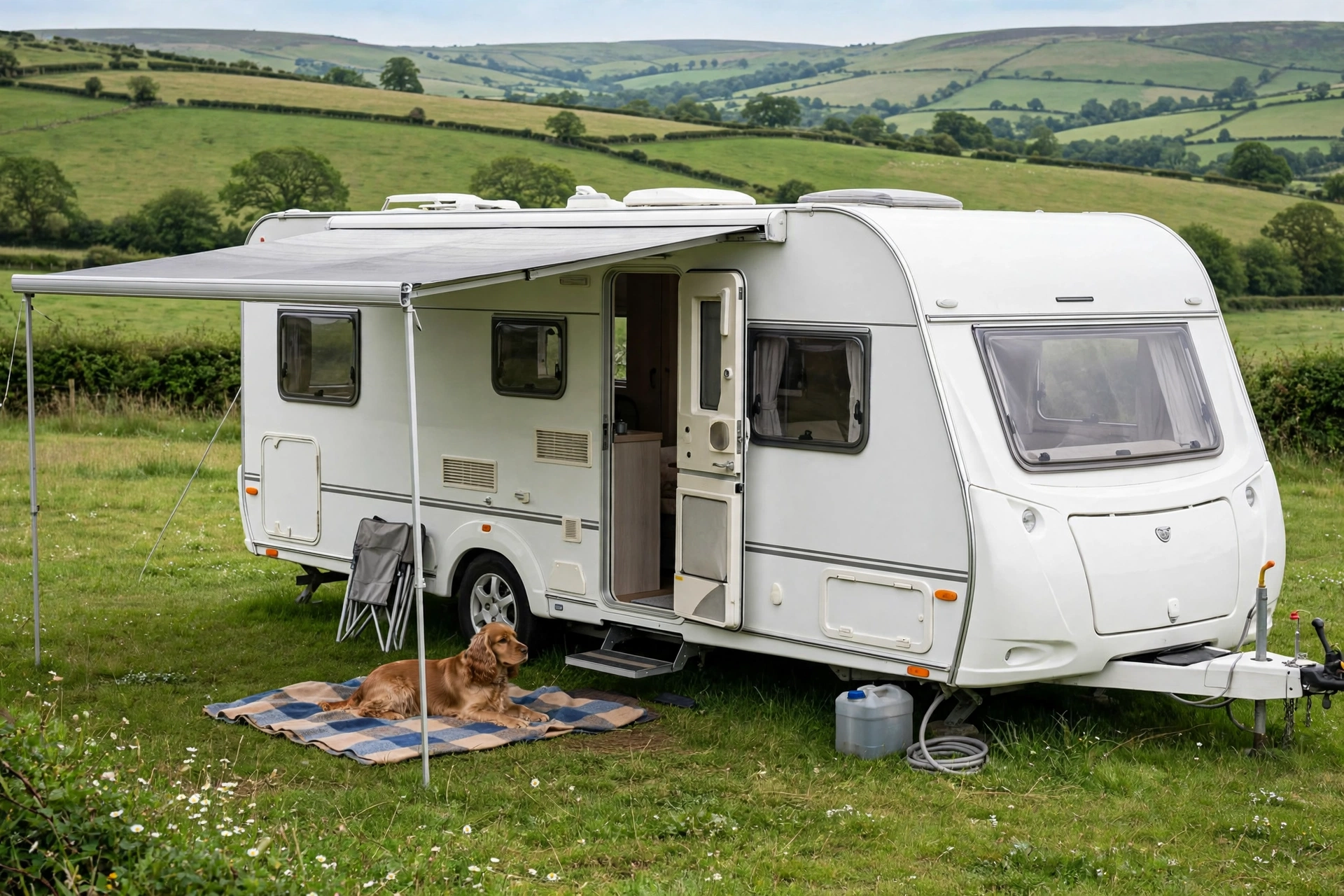
“Caravan holiday” covers three quite different stays, and the dog experience differs in each. A static caravan — the classic park unit — is compact, with thin walls, close neighbours and a small outdoor footprint. It suits dogs that settle easily and owners who plan to be out walking most of the day. A lodge or premium caravan adds space, often a veranda and better insulation, which matters for anxious dogs that need distance from corridor noise and for winter breaks when everyone spends more time inside. A touring pitch with your own caravan or motorhome gives you the most control — your dog’s smells, your layout, your rules — but brings towing, levelling and site-wardens’ pitch rules into the holiday.
For a first timer, a static caravan on a park with a designated dog exercise area is the gentlest introduction: no towing, on-site help if something goes wrong, and plenty of other dogs to calibrate against. Whatever you choose, read “pet-friendly” as permission, not endorsement. The park has decided your dog may come; whether your dog will be comfortable is decided by the pitch, the neighbours, the noise and the temperature — which is what the rest of this guide is for. Our hot-tub safety checklist is worth a look if you are tempted by a tub upgrade, since caravans and hot tubs combine two sets of boundary questions.
Choose the pitch as carefully as the caravan
When you book, ask where the unit sits, not just what grade it is. Request distance from the entertainment complex, the play area, the bar terrace and the main footpath: evening noise travels through caravan walls, and a unit beside the thoroughfare gets a parade of passing dogs that a reactive dog will catalogue all day. A corner plot at the quiet end of a row is usually calmer than a central pitch; a unit facing the dog exercise field sounds convenient until you realise it faces every dog on the park. Ask for specifics in writing — “quiet end, away from entertainment” — because the person allocating pitches on the day works from notes, not memory.
Then interrogate the immediate outside. Check the steps up to the door: steep, open-backed steps are hard for older dogs and puppies, and a ramp or shallow-step unit can be requested. Look at the surface outside the door — gravel, grass or hard standing — and whether there is any defined outdoor space at all, since many caravans open straight onto a shared path. Ask whether the park permits a portable pen or windbreak on the pitch; some do, many forbid anything staked into the ground. A unit with a small fenced veranda changes the whole stay, so it is worth asking for by name rather than hoping.
Treat temperature as a moving target
A caravan is a thin metal box, and its temperature is never still. In sunshine it becomes a greenhouse within an hour, even on a mild spring day; at night it cools sharply, especially in shoulder seasons. Never rely on a cracked window for cooling, and never leave the dog unattended “because the morning feels mild” — the weather that greets you at 9am is not the weather inside the van at 1pm. Dogs overheat faster than people expect, and a hot caravan with no escape route is dangerous. If you would not leave the dog in a parked car in those conditions, do not leave the dog in the caravan either.
Manage it actively. Use blinds and curtains against direct sun, ventilate as the unit is designed to be ventilated, and learn where the thermostat and heating controls are on arrival rather than at midnight. A simple indoor thermometer — the kind that costs a few pounds — removes all guesswork about whether it is safe to pop to the shop. Plan the day so the dog comes with you or is supervised: caravan holidays work best as outdoor holidays, with the van as a bedroom rather than a day kennel. In winter the reverse applies: check the heating works, bring the dog’s normal bedding plus a layer, and remember that a cold draughty floor is where the dog’s bed will sit.
The alone-time rule
Many parks state plainly in their terms that dogs must not be left alone in the accommodation — and even where it is not written down, thin walls make it a social contract. A dog that barks for twenty minutes while you are at dinner becomes the reason the park tightens its pet policy next season. Before booking, read the written rule and plan activities the dog can join; if your break depends on dog-free dinners and day trips, a caravan park is the wrong format and a cottage with a secure garden would serve you better.
If brief alone time is permitted and your dog is genuinely settled alone at home, keep it short, boring and verifiable: a familiar routine, a safe chew, and a quick return. A camera or a neighbourly check removes the anxious guesswork. Crate-trained dogs often do better, since the crate is a portable piece of home — but only if the dog already loves the crate; a holiday is not the week to start. For most first-timers, the honest plan is simpler: the dog comes everywhere, or one adult stays back. Our 48-hour weekend plan shows how to build a short break around that constraint without it feeling like a compromise.
Pack for containment and clean-up
Caravan packing for dogs has two jobs: recreate home, and clean up after the bits of home that leak. Start with the non-negotiables from home: the usual bed (not a new one), the usual food in the usual quantities plus a day spare, bowls, and any medication with the prescription details. Add a fixed-length lead and a spare collar or harness — retractable leads and caravan parks are a bad combination around roads, pitches and other dogs’ doors. Spare towels are the most underestimated item on this list; pack twice as many as you think, plus washable throws to cover the caravan’s soft furnishings, and a small absorbent mat for the doorway that catches the worst of the mud before it reaches the carpet.
The clean-up kit continues: plenty of waste bags, a tick remover, basic first aid, and the park’s phone number plus the nearest vet saved in your phone before you arrive — not searched for in a panic at 10pm. A portable gate or pen is useful only if the park permits it, so confirm in advance. Quiet chews and a familiar toy help the first evening; squeaky toys do not, given the neighbours. And pack the dog’s vaccination record or a photo of it: a few parks ask, and it is useful at any vet you might visit.
Rehearse a dull first evening
The first evening sets the tone for the whole stay, and the goal is deliberate boredom. Arrive, take a short toilet-and-sniff loop around the immediate site so the dog maps the smells, then feed at roughly the normal time and settle at roughly the normal time. Put the bed in its spot, lay out the familiar mat, and then be aggressively ordinary: normal voices, normal television volume, no excited unpacking relay past the dog. Close the blinds if passing dogs trigger attention at the windows — caravan windows are at exactly dog-nose height along the paths.
Resist the urge to cram the evening with the park’s entertainment, the bar and a sunset walk. A dog that sleeps well on night one will cope with everything better on day two; a dog that spends night one wired, barking at corridor sounds and strangers’ doors, starts day two already over threshold. If your dog struggles despite the routine, a quiet late walk and the familiar bedtime sequence usually help more than another busy attraction. The holiday is long; the first evening is short.
Walking from the pitch
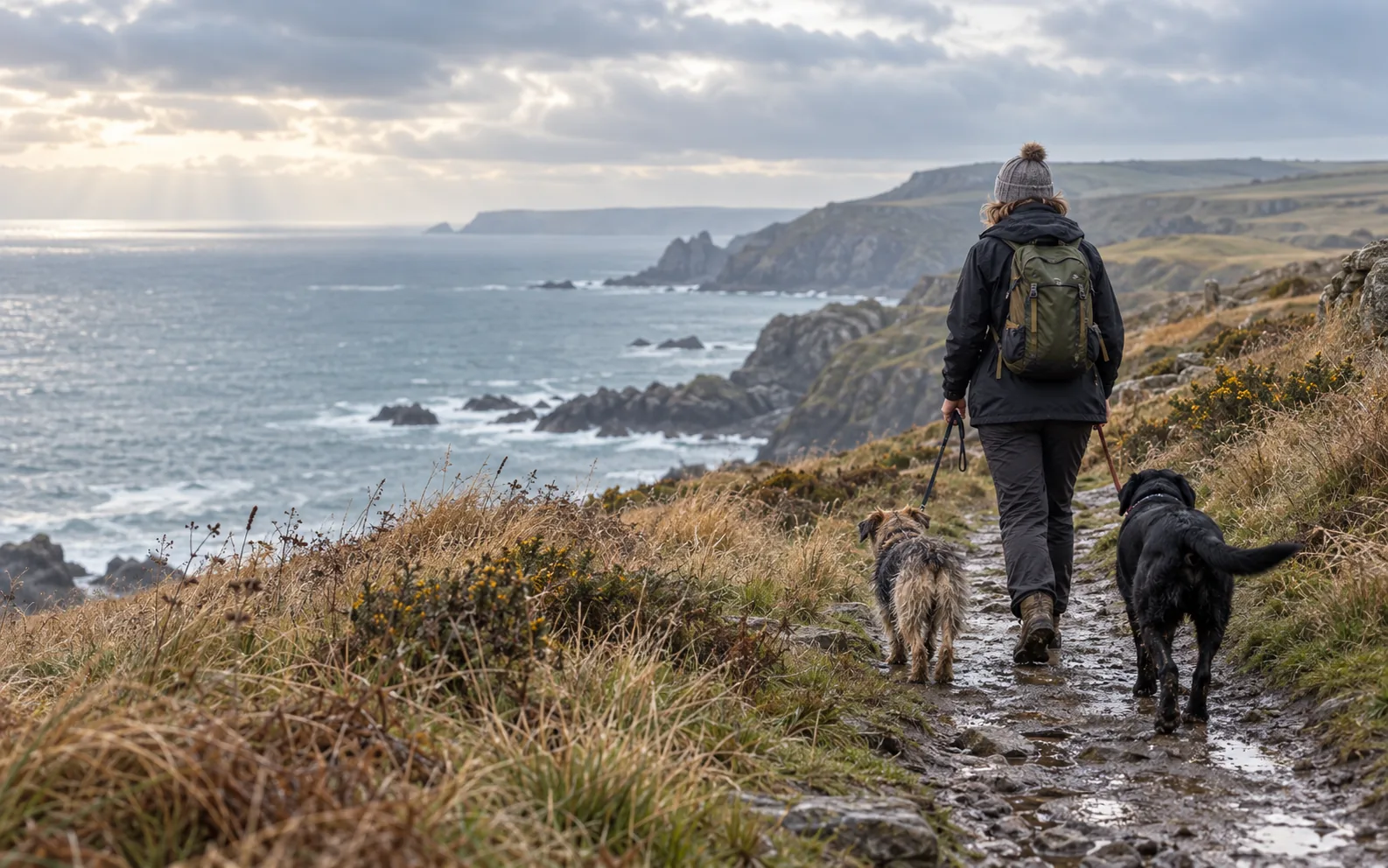
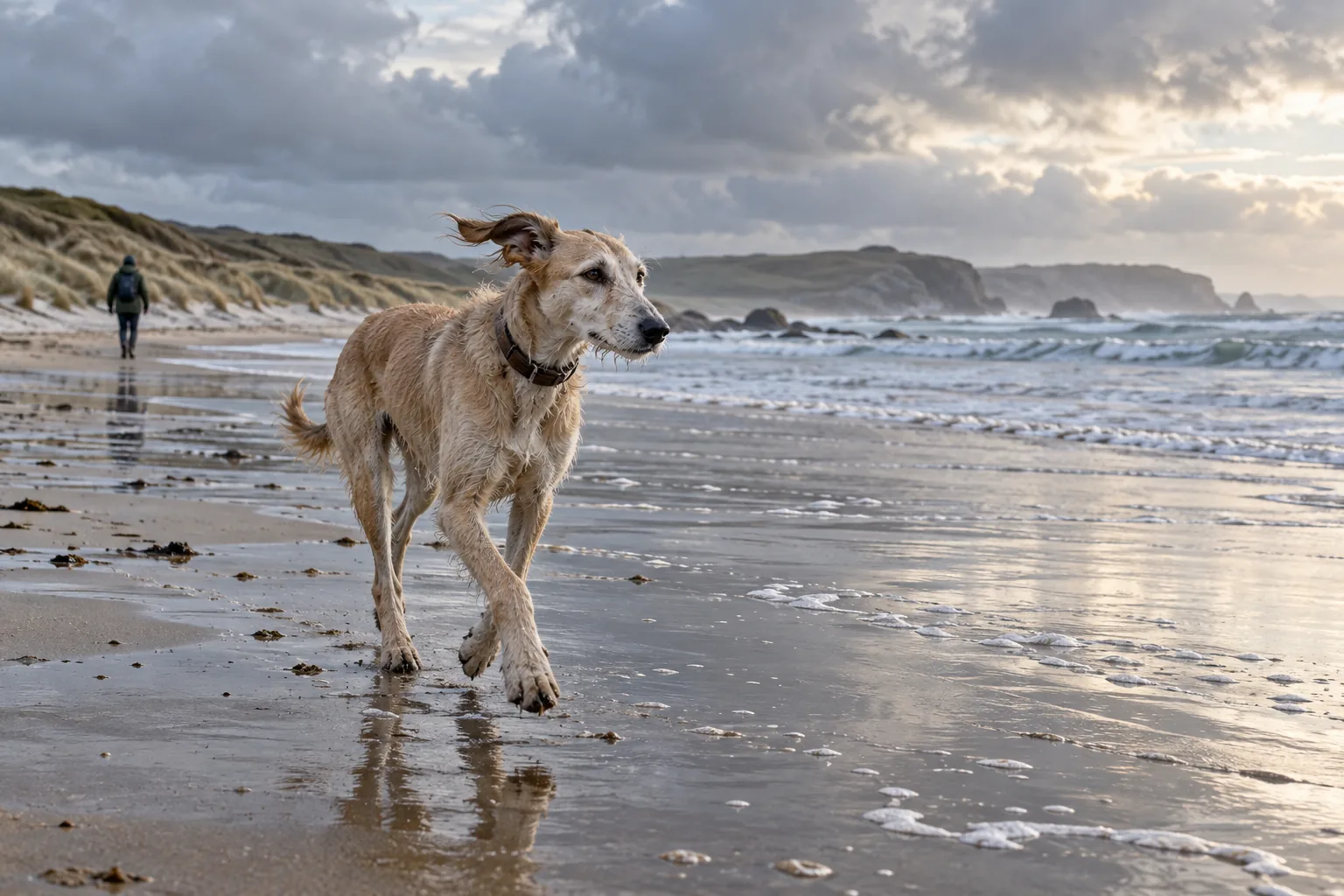
Before you arrive, find out where the dogs actually walk. Most parks have a designated exercise area, but “area” can mean anything from a proper fenced field to a scrubby corner by the bins — check its size, surface and fencing, and whether it is shared with the whole park at peak times. Beyond the park, look at what is genuinely walkable: coastal paths, woodland, bridleways. Note the seasonal rules that change everything — many beaches restrict dogs in summer, farmland means livestock and lambing from spring, and some nature reserves require leads year-round.
Build the walking day around the dog’s normal fitness, not the mileage you hope to post on your return. Morning walks before the park wakes up are quieter and cooler; midday in high summer is for shade and water, not miles. Carry water and a foldable bowl on every walk, turn back while everyone still feels good, and have a shorter sheltered loop in reserve for bad weather. A caravan stay lives or dies on its walks: get one dependable route sorted on day one and the rest of the break relaxes.
Shared-site etiquette protects future dog bookings
A caravan park is a dense neighbourhood, and every dog owner is an ambassador for the next one. Use the designated exercise areas rather than the ornamental grass by someone’s pitch. Pick up immediately — not on the way back, immediately — and use the dog bins provided; bagged waste left on a fence post is worse than none at all. Keep the lead short around roads, car parks and other people’s doors, and do not allow greetings at someone else’s caravan: what looks friendly from your end reads as territorial intrusion from theirs.
Barking is the make-or-break issue. Some alert barking is normal; sustained barking is a management failure. If it starts, intervene — bring the dog in, redirect, close the windows — rather than waiting for it to stop or hoping the neighbours are tolerant. The same goes for off-lead roaming: even a friendly dog loose on a shared site creates complaints, and complaints accumulate into policy. Parks keep pet-friendly units because the maths works; every bad stay makes the maths worse for everyone. Leave the pitch cleaner than you found it and you have voted for dogs to be welcome next year.
Costs, seasons and booking checks
Expect a per-dog charge on top of the accommodation — £25–£50 per dog per stay is typical at UK parks — plus the usual peak-season multipliers. School holidays can double the price of the same van; if your dates are flexible, early June and September offer the best combination of price, weather and quieter parks. Winter caravan breaks are cheap and atmospheric but short on daylight, so check heating, insulation grade and whether the park’s facilities actually stay open — some parks run a reduced winter service with the pool, restaurant or shop closed.
When booking, confirm the written pet terms rather than the marketing page: maximum number of dogs, size or breed restrictions, whether dogs can be left briefly, and the cleaning and damage-deposit terms. Booking direct with the park sometimes unlocks pitch requests that third-party sites cannot pass on. Travel insurance that covers the accommodation cost is worth considering in winter, when storms can close parks. And read the cancellation terms with a dog owner’s eye: a dog that comes into season, falls ill or injures itself the week before travel is not an exotic scenario, and knowing where you stand removes a layer of stress.
Practical questions
Before you go
Can I leave my dog alone in a caravan?
Many parks forbid it in their written terms, and thin walls make even permitted absences socially risky. Check the rule before booking and plan a break where the dog joins in — if you need dog-free days out, a cottage with a secure garden usually fits better.
What should I bring from home?
The usual bed, food, bowls and medication matter most, because familiarity settles dogs faster than anything new. Add spare towels, washable throws, a fixed-length lead, waste bags, a tick remover, basic first aid and the nearest vet’s details saved in your phone.
How do I stop my dog barking at every passer-by?
Choose a quiet pitch away from footpaths, close the blinds, and rehearse a boring first evening so the van feels like a bedroom, not a watchtower. If barking starts, intervene immediately — bring the dog inside and redirect — rather than hoping it fades.
Are caravans too hot for dogs in summer?
They can be. A caravan heats like a greenhouse in direct sun, so never leave a dog unattended in warm weather, use blinds and ventilation actively, and plan the day around shade, water and cooler morning walks.
Static caravan, lodge or touring pitch — which is best for a first trip?
A static caravan on a park with a proper dog exercise area is the simplest start: no towing, staff on hand, and clear rules. Lodges add space and insulation for anxious dogs or winter breaks; touring suits owners who want their own setup and are comfortable towing.
What does a dog-friendly caravan break typically cost?
Allow £25–£50 per dog per stay on top of the accommodation, with the van itself varying hugely by season — school holidays can double the price of the same unit. Shoulder-season weeks in June or September usually give the best value.