This guide is independent and contains no paid placement. If affiliate links are added later, they will be clearly marked and will not change our editorial checks.
A dog friendly honeymoon works when you slow the whole trip down: one main outing a day, a stay with an enclosed garden, meals where the dog is genuinely welcome, and short, planned periods of couple-only time. Book the stay around the dog, not around a sightseeing list, and the honeymoon stays romantic instead of turning into a logistics exercise.
Why a honeymoon with a dog should be slow
Many newly married couples face the same quiet dilemma in the weeks after the wedding: they do not want to leave the dog at home, but they also do not want the dog to turn the honeymoon into a chore. Kennels feel like a betrayal of the family member who waited patiently through months of wedding planning, while a friend house-sitting can feel like an imposition at exactly the moment everyone else is also exhausted. Taking the dog along is often the kindest option for everyone, provided the trip is designed around it rather than squeezed into a conventional honeymoon shape.
The first thing to accept is that a honeymoon with a dog is a different kind of trip, not a lesser version of one. The classic honeymoon sells intensity: long-haul flights, packed days, late nights and a different restaurant every evening. A dog makes that pattern impractical, and trying to force it anyway is what spoils the romance. What replaces it can be better, especially for a couple who have just spent months organising a wedding. Slow mornings without an alarm, a long walk before lunch, an afternoon with nowhere to be, and an evening in a cottage garden cost very little and leave room for the two of you to actually enjoy being married.
Post-wedding tiredness is real and deserves a place in the plan. Most couples arrive at their honeymoon sleep-deprived, socially wrung out and running on adrenaline that fades within a day or two. Add a dog that needs walking, feeding and settling in a strange place, and a packed itinerary becomes a source of friction rather than fun. The couples who enjoy a dog friendly honeymoon most are the ones who treat the first two days as recovery: lie-ins, short walks, familiar food and early nights. The trip can build gently from there, but it should never start at full speed.
It also helps to be honest about what the dog actually enjoys. Most dogs do not care about a famous view, a tasting menu or a spa treatment. They care about a good sniff, a safe garden, a comfortable bed and their people being relaxed rather than rushed. A honeymoon built on those four things will suit the dog, and a relaxed dog is what makes the romantic parts possible. A dog that is overtired, overstimulated or anxious will bark through dinner and pull through every photograph, while a dog that has had a proper walk and a quiet afternoon will sleep peacefully under the table.
Finally, agree on the shape of the trip together before you book anything. One partner may dream of long coastal walks while the other wants a hotel with a bath and room service, and the dog will expose that difference within a day. Talk through how much walking feels right, how you feel about leaving the dog for an evening meal, and what a perfect day actually looks like for each of you. The honeymoon is the first trip you plan as a married couple, and planning it around the dog you share is a good rehearsal for the years of compromise ahead.
Choose a stay that does the heavy lifting
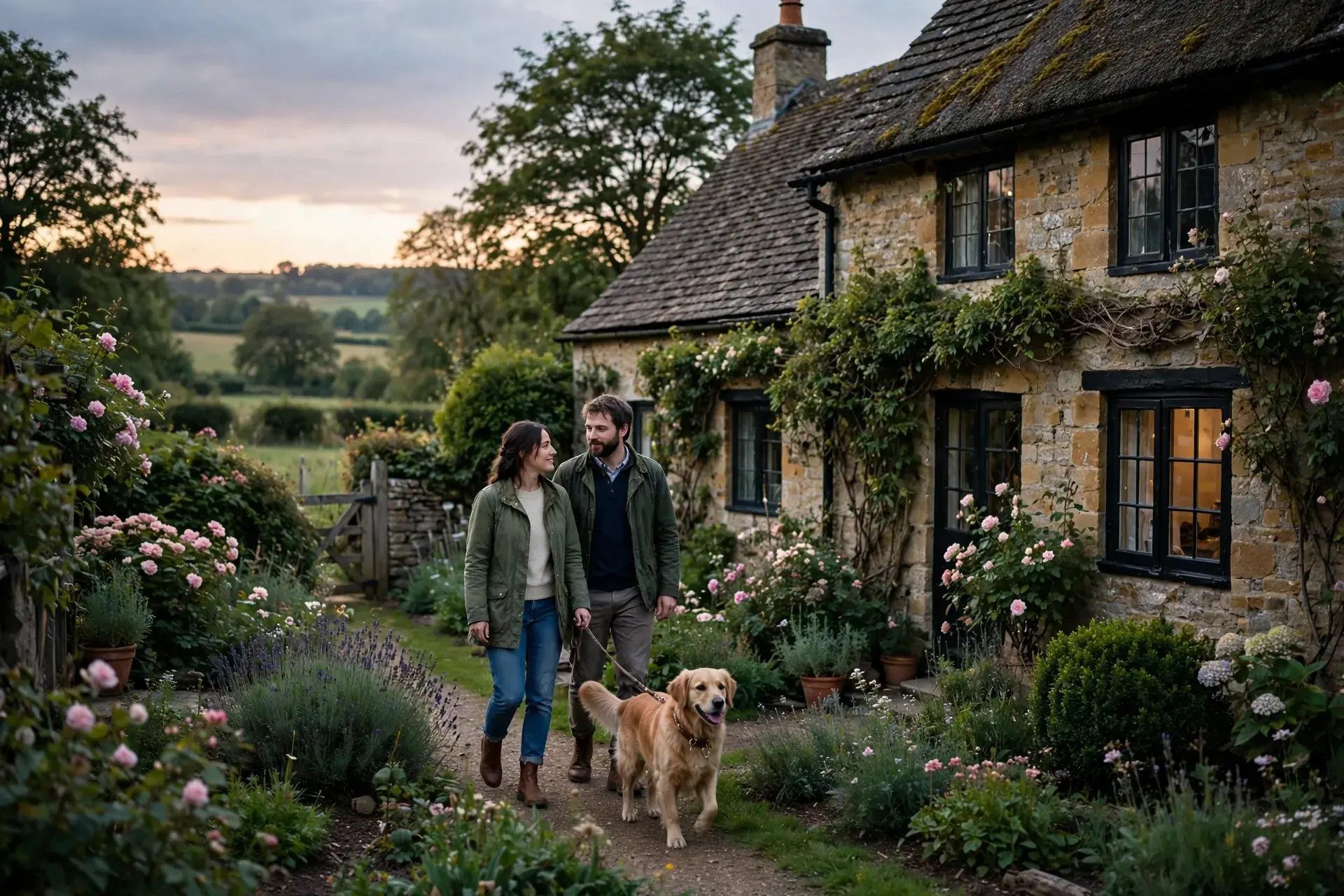
The single most important decision is the stay, because a good one quietly solves half the problems a honeymoon with a dog creates. A self-contained cottage with an enclosed garden is usually the strongest choice: you get privacy, your own kitchen, no shared corridors, and a safe place for the dog to toilet at midnight without a lead and a torch. Look for a garden that is genuinely enclosed rather than merely described as private, and ask about the height of the fence and whether the gate latches properly. A gap that a determined terrier can exploit will dominate your whole stay if you discover it at dusk on arrival day.
Hotels can work beautifully for shorter honeymoons, but the questions are different. Ask which rooms accept dogs, because dog rooms are often limited to the ground floor or to a particular wing, and the nicest room in the brochure may not be one of them. Ask whether dogs may use the restaurant or only the terrace, whether there is a garden or a nearby walking route, and what the alone-in-room rule is. Our guide to dog friendly hotels in the UK sets out the booking questions that prevent disappointment, including pet fees, room types and dining rules, and it is worth reading before you pay a deposit on a hotel stay.
Glamping and lodges sit somewhere between the two. A lodge with a hot tub and a deck can feel wonderfully honeymoon-like, but check the decking for gaps, confirm the hot tub has a lockable cover, and ask where the dog sleeps if the lodge is open plan. Some couples love the novelty; others find that a dog, a wood burner and a mezzanine bedroom make for a restless night. Whatever you choose, prioritise a ground-floor bedroom or a bedroom the dog can reach without steep stairs, especially for older dogs or for a dog that sleeps in your room at home.
Honeymoon extras are worth asking about, because many properties will add them if you mention the occasion. A bottle of something cold in the fridge, fresh flowers, a late checkout or a breakfast hamper left at the door all cost the property very little and change how the stay feels. Some places offer a dog welcome pack with treats, a towel and a bowl, which is a good sign that dogs are genuinely expected rather than merely tolerated. Ask about cleaning charges too: a pet fee of twenty to fifty pounds per stay is common, but some properties add a deep-clean charge, and it is better to know the total before you arrive.
Location matters less than most couples think, and more than most brochures admit. A cottage ten minutes from a beach you cannot use with a dog in summer is a worse choice than a cottage next to a year-round woodland walk. Check the practical geography: the nearest dog friendly beach, the nearest vet, a shop for emergency dog food, and a walk that works in rain. A honeymoon that depends on perfect weather and a long drive to every outing will feel fragile; one with a good walk from the door feels generous even on a grey day.
Romantic meals with the dog at the table
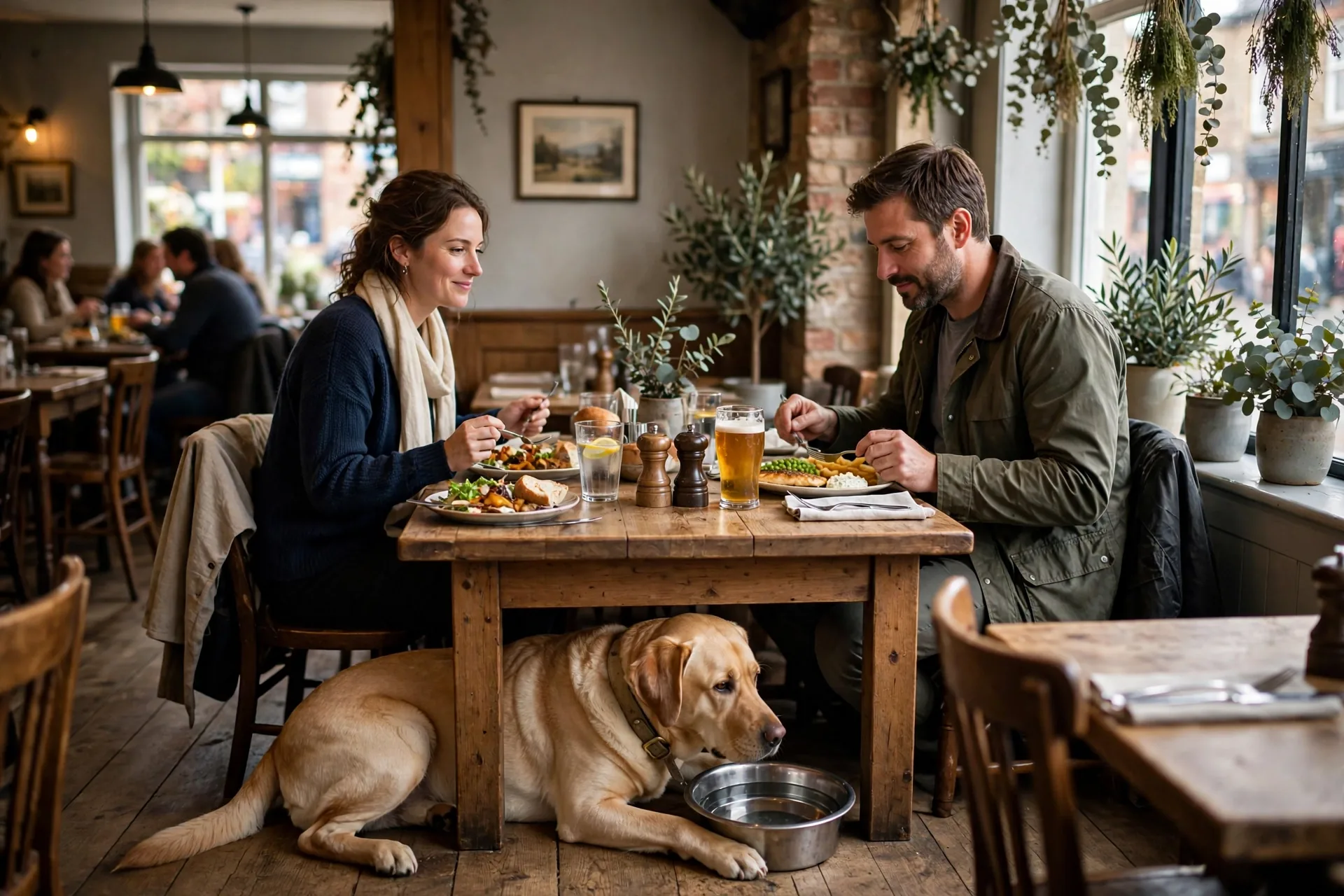
Food is where many dog friendly honeymoons quietly fall apart, because a romantic dinner and a restless dog are hard to combine. The solution is to choose the meal around the dog rather than expecting the dog to adapt to the meal. Lunch is usually easier than dinner: pubs and cafes are busier, more relaxed and more forgiving of a dog under the table, and a dog that has had a morning walk is far more likely to settle. Save the one special evening meal for a night when you have arranged couple-only time, and treat the other evenings as relaxed, dog-inclusive eating.
When you book, say the dog is coming. This sounds obvious, but many couples book a table and mention the dog only on arrival, which leaves the restaurant scrambling for a suitable corner. A short note at booking time lets the restaurant place you somewhere with space for a bed, away from the main walkway and the kitchen door. Ask whether dogs are welcome in the restaurant itself or only in the bar or garden, because the distinction matters in cold or wet weather. Our guide to dog friendly restaurants in the UK covers table etiquette, water and feeding rules and how to book well, and it is worth a read before you plan a week of eating out.
Table manners are a shared project, not a test the dog either passes or fails. Bring a familiar blanket or mat so the dog has a defined place to settle, feed the dog before you sit down, and keep a chew or a long-lasting treat for the middle of the meal when attention wanders. Keep the lead short and under the table rather than stretched across a walkway, and agree in advance which of you handles the dog if it gets restless, so neither of you spends the meal on edge. A dog that has had a proper walk, a meal and a toilet break before you arrive is a different animal from one that has been waiting indoors all afternoon.
Some of the most romantic meals on a dog friendly honeymoon are not in restaurants at all. A picnic on a quiet beach, a takeaway eaten in the cottage garden, a local farm shop supper with the fire lit, or breakfast in bed while the dog sleeps on the rug can all feel more intimate than a formal dining room. Plan at least two such meals deliberately rather than treating them as fallbacks. They give the dog a rest from new environments, they cost less than a restaurant, and they create the unhurried evenings that a honeymoon is actually for.
Finally, keep a sense of proportion about the special meal. One truly romantic dinner, properly arranged with the dog looked after, will be remembered far longer than five mediocre dinners where the dog barked at every passing waiter. Book it early, dress for it, and enjoy it without guilt. The dog will be perfectly happy with a sitter, a familiar bed and a treat, and you will come back to the cottage more relaxed than if you had spent the evening managing a lead under a table.
Photographs that include the dog properly
Honeymoon photographs with a dog in them are worth planning, because the dog will not be in the wedding photographs in the same way, and these may become the pictures you keep. The mistake most couples make is trying to pose the dog like a person. Dogs photograph best in motion or at rest, not sitting upright and smiling on command. Walking shots along a lane, the dog running ahead on a beach, or the two of you sitting on a cottage step with the dog asleep at your feet all look natural because they are natural.
Light matters more than location. The hour before sunset gives soft, warm light that flatters everyone, including the dog, and it usually coincides with the dog being calmer after a day of walking. Midday sun, by contrast, makes dogs squint, pant and seek shade, and it washes out coats. If you are hiring a photographer, ask whether they have photographed dogs before and whether they are happy to work at a slower pace with treats and breaks. A photographer who rushes a nervous dog will get tense pictures; one who lets the dog sniff the location first will get relaxed ones.
Prepare the dog as you would any other member of the wedding party. A bath or a good brush the day before, a clean collar or a favourite bandana, and a pocket full of high-value treats will do more than any camera setting. Walk the dog properly before the session so the frantic energy is spent, and bring water, especially on a warm day. Agree on a few simple cues the photographer can use, such as asking the dog to sit or to look towards you, and accept that the best shot may be the one where the dog is looking at a squirrel instead of the camera.
Think beyond the posed session. Some of the most treasured honeymoon photographs are the unplanned ones: the dog asleep on the honeymoon bed, muddy paws on a cottage floor, the two of you sharing a picnic with the dog begging politely at the edge of the frame. Keep a phone handy for those moments and do not worry about perfection. A slightly blurred photograph of a genuinely happy day will mean more in ten years than a technically perfect one from a stressful afternoon.
If you want a keepsake, consider what you will actually do with the photographs. A small album, a framed print for the hallway, or a set of prints to send to the people who looked after the dog during the wedding all give the session a purpose beyond social media. Tell the photographer which of these you have in mind, because a print needs a different composition from a phone screen. And remember to photograph the dog alone too, in the garden or on the beach: the couple shots will be framed, but the dog portrait is the one you will smile at every day.
Couple-only time without the guilt
Every good honeymoon needs some time alone together, and having a dog does not remove that need. The couples who struggle are not the ones who leave the dog for an evening, but the ones who never plan for it and then feel guilty whenever the subject comes up. Build couple-only time into the trip from the start, as a normal part of the plan, and it stops feeling like a betrayal and starts feeling like good dog ownership.
Start with what your dog can actually manage. If your dog already settles alone at home for two or three hours, a short evening out is entirely reasonable. If your dog has never been left alone, a honeymoon is not the week to discover that, so build up gradually in the months before the wedding: short absences, a settled routine, and a calm departure that does not make a fuss of leaving. A dog that is tired, fed, toileted and left with a familiar bed and a chew will usually sleep through a dinner out, and many couples are surprised how uneventful it is.
For longer absences, look at local options before you travel. Some hotels offer a dog sitting service or can recommend a trusted local sitter, and some areas have licensed home boarders who will look after a dog for an afternoon or an evening. A day at a local doggy daycare can also work well on a day when you want to visit somewhere dogs cannot go, provided you check the facility, its insurance and its reviews, and provided your dog is sociable enough to enjoy it. Book these services early, because good sitters are in demand in holiday areas, and ask what happens if you run late.
Another option is to ask a friend or family member to join the trip for a day or two, not as a third wheel but as a dog companion for a specific outing. This works best when the person already knows the dog and when the arrangement is explicit: they take the dog for a long walk and a pub lunch while you have a spa afternoon, and everyone meets for dinner. It also gives the dog a familiar face in an unfamiliar place, which can be more reassuring than a stranger.
Whatever you arrange, keep the first absence short and treat it as a trial. Leave the dog settled, go out for an hour, and come back calmly rather than with a dramatic reunion. If the dog was relaxed, you can extend the next absence with confidence; if the dog was distressed, you have learned something important before committing to a long evening. And if you decide that your dog simply does not cope with being left in a new place, that is useful information too: it means the honeymoon should be built around dog-inclusive days, with romance found in long walks and cottage evenings rather than in restaurants the dog cannot enter.
A slow four-day honeymoon rhythm
The best way to understand a slow honeymoon is to see one laid out, so here is a four-day rhythm that many couples find works. It is deliberately undemanding: one main outing a day, long mornings, and afternoons that belong to nobody but the two of you and the dog. Adapt the locations to wherever you are staying, and do not be afraid to repeat a walk the dog loved rather than chasing novelty every day.
Day one is arrival and nothing else. Arrive in daylight if you can, walk the garden boundary together, let the dog sniff every corner, and unpack slowly. Cook something simple or order a takeaway, light the fire if there is one, and go to bed early. Resist the urge to fit in a sunset walk, a village pub and a photograph session on the first evening: the dog is tired from travel, you are tired from the wedding, and a calm first night sets the tone for the whole trip. If you do go out, make it a ten-minute stroll, not an expedition.
Day two is the gentle exploration day. After a lie-in and a slow breakfast, take one walk that suits the dog: a beach, a woodland trail or a riverside path, ideally starting from the door or after a short drive. Stop for a pub lunch where the dog is welcome, then come back for a long afternoon in the cottage or garden. This is the day for the first photographs, taken in the soft light of late afternoon, and for a relaxed evening meal with the dog settled under the table. One good walk and one good meal is a full day, not a wasted one.
Day three is the couple-only day, planned around whatever you arranged in advance. While the dog is with a sitter or at daycare, visit the place dogs cannot go, book the spa treatment, or simply have a long lunch and a walk on your own. Come back in time for the dog's evening routine, and spend the evening together in the cottage. Couples often say this is the day the trip starts to feel like a honeymoon rather than a holiday with a dog, because it gives the marriage itself a little undivided attention.
Day four is the slow farewell. Repeat the walk the dog liked best, revisit the cafe that welcomed you warmly, and pack without rushing. Leave the cottage clean and the dog's things packed last, so the dog is not unsettled by suitcases all morning. If you have a late checkout, use it for a final garden hour rather than one more attraction. Driving home tired and happy beats driving home exhausted from a last-minute dash, and the dog will settle far more easily after a calm final day.
For longer honeymoons, repeat this rhythm rather than inventing a new one every day. Two days of gentle exploration, one couple-only day, one rest day, and then the pattern again gives a week a shape without making it a schedule. Build in a rainy-day plan from the start: a dog friendly cafe, a covered market, a bookshop that welcomes dogs, or simply a cottage day with films and a fire. A rainy day that was planned feels cosy; a rainy day that ruins a packed itinerary feels like a failure, and the difference is entirely in the planning.
Packing and practical details
Packing for a honeymoon with a dog is mostly about familiarity: the more the new place smells and feels like home, the faster the dog settles. Pack the dog's own bed or a blanket that smells of home, the usual food measured for the trip plus a day extra, the usual bowls, a long lead and a short lead, poo bags, towels, a drying coat if the weather may be wet, and any medication with a little to spare. A familiar toy or chew helps, but avoid bringing a brand-new toy that the dog has no attachment to yet.
Identification and health details deserve a moment before departure. Check that the dog's ID tag carries a mobile number you will actually answer on the trip, that the microchip details are up to date, and that you have the number of a vet near your stay saved in your phone. If your dog takes medication, carry it in your hand luggage rather than in a suitcase that might be delayed, and bring a copy of the prescription if the medication is unusual. Pet insurance documents are worth having accessible, and if your policy covers holiday cancellation or third-party liability, check the details before you travel rather than assuming them.
Car travel is part of the honeymoon too, especially for a UK trip. The Highway Code requires dogs to be suitably restrained in a vehicle, so use a crate, a guard or a harness that you have practised with before the wedding week, not one bought the day before departure. Plan a stop every two hours for a toilet break, water and a short walk, and never leave the dog alone in a parked car, even briefly, in warm weather. A calm car journey with regular stops will deliver a relaxed dog to the cottage; a frantic non-stop drive will deliver a dog that needs an hour to decompress.
Beach days need their own preparation, because the rules change with the season. Many popular beaches restrict dogs during the summer months, and the restrictions are enforced through public space protection orders with fines for breaches, so check the specific beach before you go rather than assuming a beach that welcomed dogs in October will welcome them in August. Our guide to dog friendly beaches in the UK explains the 2026 rules, seasonal bans and fines, and how to check a beach before you travel. Pack fresh water for the dog, a shade option, and a towel for sandy paws, and rinse salt water off the coat before the drive home.
Finally, keep a small honeymoon kit for yourselves alongside the dog kit: a phone charger, a first aid kit, a torch for late garden trips, and a printed copy of the booking confirmation with the property's phone number and the alone-in-property rule. Phones run out, signal fails in rural cottages, and a printed confirmation has rescued more than one tired arrival. The goal of all this preparation is not to be anxious but to be free: when the practical details are handled, the romantic parts take care of themselves.
Seasons, costs and booking windows
Late spring and early autumn are the sweet spot for a dog friendly honeymoon in the UK. May, June and September offer long daylight, mild weather and beaches where seasonal bans have either not yet started or have just lifted. The countryside is at its best, pubs have gardens in use, and prices sit below the peak summer weeks. October can be wonderful for coastal walks and cottage fires, though daylight shortens quickly and some attractions move to weekend-only opening, so check times before you travel.
Summer has obvious appeal and equally obvious complications. Coastal honeymoons in July and August need shade, water and a plan for hot pavements, and many beaches will be closed to dogs during the day, which pushes beach walks to early morning or evening. If summer is your only option, choose a stay with a garden for midday rest, plan walks for the cooler hours, and book restaurants with shaded terraces. Winter, meanwhile, suits couples who want a cottage, a fire and short, crisp walks followed by long evenings indoors. The trade-off is shorter days, muddier paths and the need to confirm heating costs and whether the property is genuinely open in the depths of winter rather than merely listed.
Costs are easier to control than most couples expect, because a dog friendly honeymoon replaces expensive elements with cheaper ones. There is no long-haul flight, and a cottage with a kitchen replaces several restaurant meals. The main extra costs are the pet fee, typically twenty to fifty pounds per stay, any dog sitting or daycare, and the cost of travelling with a dog, which is usually just fuel and stops. Set a total budget that includes the pet fee, a sitting session and one special meal, and you will avoid the creeping sense that the dog is making the trip expensive when it is actually making it simpler.
Booking windows matter more for honeymooners than for ordinary holidaymakers, because popular cottages and dog friendly hotels book out early for weekends and school holidays. For a summer honeymoon, start looking six to nine months ahead, especially if you need a specific property with an enclosed garden. For a shoulder-season trip, three to four months is usually enough, though the best cottages still go first. Mention that it is a honeymoon when you enquire: properties remember honeymooners, and a small gesture on arrival often follows. If your dates are flexible, ask about midweek stays, which are quieter, cheaper and kinder to a dog that dislikes busy places.
One last seasonal point: check the official guidance before you travel if anything about your trip is unusual, such as travelling with a puppy that has not completed its vaccinations, a dog with a health condition, or a breed subject to specific legislation. Rules change, and a honeymoon is a poor time to discover a restriction at the door. A quick check before booking, and another a week before departure, will catch most changes in time to adjust.
When things go wrong
Even a well-planned honeymoon can hit a snag, and the difference between a ruined trip and a funny story is usually decided in the first hour. If the dog will not settle in the new place, go back to basics: a walk, water, familiar bedding, the usual feeding time, and a quiet room with no visitors. Do not try to fix anxiety with a busy day out, which usually makes it worse. If the dog is unwell, call the local vet you saved before departure rather than waiting to see if it passes, and keep the vet's number on the fridge as well as in your phone.
If the accommodation disappoints, such as a garden that is not enclosed as described or a dog room that is not the one you booked, raise it calmly and promptly with the property, and keep a photograph of the problem. Most properties would rather move you to a better room or adjust the arrangement than deal with a complaint later, but they cannot fix a problem they do not know about until checkout. If the weather turns against you, use the rainy-day plan rather than forcing a walk in a storm: a wet, frightened dog and two soaked honeymooners will not enjoy a coastal path, however famous it is.
Finally, protect the marriage part of the trip when things go wrong. It is easy, when tired, to blame each other for a barking dog, a muddy floor or a restaurant that turned you away. Agree in advance that setbacks are a shared problem, not someone's fault, and that the measure of the honeymoon is not whether everything went to plan but whether you enjoyed each other's company. The dog, who has no interest in perfect plans, will forgive a changed itinerary instantly. Following that example is usually the wisest course.
A dog friendly honeymoon in the UK is not a compromise honeymoon. It is a slower, kinder and often more memorable one, built on long walks, quiet gardens, good food and the company of the two people, and one dog, who matter most. Plan it slowly, book the stay around the dog, protect a little time alone together, and let the rest unfold at walking pace.
Practical questions
Before you go
Can we really take our dog on honeymoon without spoiling the romance?
Yes, if you plan for a slower rhythm rather than a packed itinerary. Choose stays with an enclosed garden and a dog-welcome dining room, keep to one main outing a day, and build in short periods of couple-only time with a trusted sitter. The dog then becomes part of the honeymoon rather than a logistical problem to solve.
How long can we leave our dog alone during a honeymoon stay?
It depends on your dog and on the property rules, so check both before you book. Many hotels and cottages allow only one to three hours, and some allow none at all. Build up to that length at home first, leave the dog tired and settled, and keep absences short on the first day while you learn how the dog settles in a new place.
What kind of stay suits a honeymoon with a dog best?
A self-contained cottage with an enclosed garden usually suits honeymooners best, because it gives you privacy, your own kitchen and no shared corridors. A dog-welcome hotel room works well for shorter breaks, especially when the hotel has a garden and a terrace where dogs may join you for meals.
How do we get good honeymoon photos with our dog?
Photograph the dog in the golden hour before sunset, when the light is soft and the dog is usually calmer after a walk. Let the dog sniff and settle first, keep treats in a pocket, and ask the photographer for candid walking shots rather than forced poses. A tired dog that has just had a good walk photographs far better than a restless one.
What should we do if our dog is nervous in a new place?
Keep the first day deliberately boring: a short garden walk, familiar bedding, the usual feeding times and no visitors. Bring a blanket that smells of home, keep the dog's routine as close to normal as possible, and postpone busy attractions until the dog has had one calm night. If anxiety persists, check the official guidance before you travel and ask your vet for advice.
When is the best time of year for a dog friendly honeymoon in the UK?
Late spring and early autumn usually offer the best balance: milder weather, quieter beaches once seasonal dog bans lift, and lower prices than peak summer. Summer suits coastal trips but needs shade and water planning, while winter suits cosy cottage stays with fires and short walks, provided the accommodation is well heated.