This guide is independent and contains no paid placement. It is general information, not veterinary advice. If your dog is coughing, unwell or getting worse, contact your vet promptly.
Kennel cough spreads easily where dogs meet, share air, bowls and toys. Vaccinate in good time, avoid busy dog areas in the days before a boarding stay, and do not travel with a coughing dog. Most cases are mild, but a cough that lasts, worsens or comes with a temperature, lethargy or loss of appetite needs a vet.
How one cough can ruin a trip
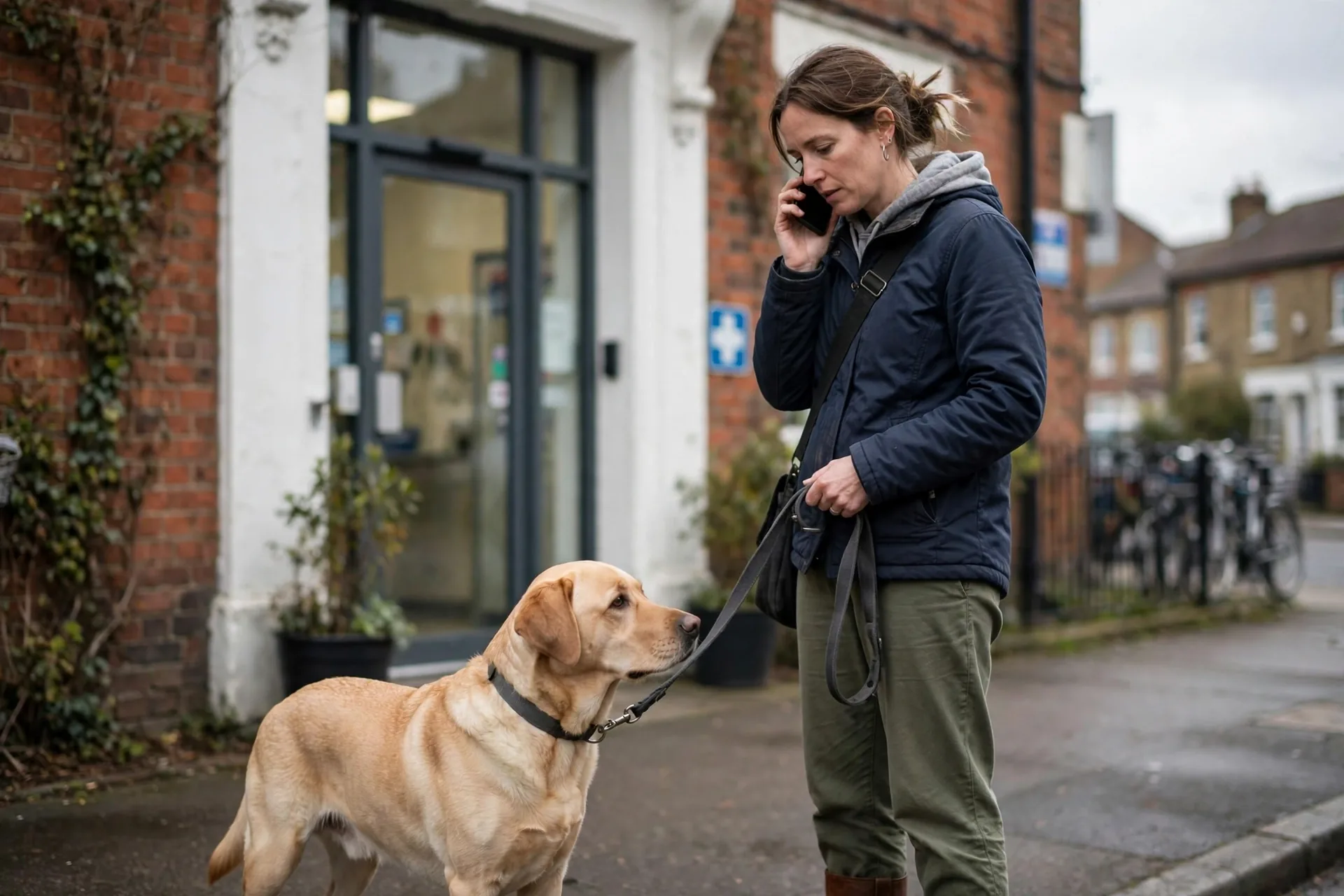
Picture the scene: the car is packed, the holiday cottage is booked, the dog is already in the back seat, and then you hear it — a dry, hacking cough, like something stuck in the throat, followed by a retch. It happens once, then again at the first service station. By the time you reach the cottage, your dog is coughing every few minutes, you are wondering whether the host will notice, and the boarding kennels you had booked for the day trip tomorrow are suddenly out of the question. One cough does not just spoil a day; it can unravel the whole plan.
That is the particular cruelty of kennel cough for travelling dog owners. It arrives fast, it is hard to hide, and it affects everyone else's plans as well as your own. A coughing dog is usually turned away from kennels, daycare, group walks and dog-friendly accommodation, not because anyone is being unkind, but because the illness spreads so easily from dog to dog. The host who lets a coughing dog into a shared cottage risks complaints from the next guests; the kennel that accepts one risks an outbreak among twenty dogs. So the honest answer to "can we still go?" is often no, at least not in the way you planned.
The financial sting follows quickly. A non-refundable cottage, a prepaid kennel stay, a ferry or train ticket and a day's driving can all be lost or rearranged at short notice, and travel insurance does not always cover a dog falling ill. That is why the real work against kennel cough happens before the trip, not during it. The vaccine, the timing, the choice of where your dog mixes with others and the decision to keep a slightly off-colour dog at home are all cheaper than a cancelled holiday.
This guide is written for that moment of decision — the week before you travel, the morning you hear the first cough, and the days after, when you are working out when it is safe to go out again. It covers what kennel cough is, where the risk is highest, how long it takes to show up, what the vaccine can and cannot do, what boarding providers actually ask for, and how to look after a coughing dog at home. It is general information to help you ask your vet better questions, not a substitute for veterinary advice. If your dog is coughing and you are unsure, contact your vet promptly rather than waiting to see if it passes.
What kennel cough actually is
Kennel cough is not a single germ. It is the common name for canine infectious respiratory disease, a group of infections that inflame the windpipe and the upper airways and produce a harsh, dry cough. The best-known cause is a bacterium called Bordetella bronchiseptica, often working together with viruses such as canine parainfluenza virus and canine adenovirus type 2. Other viruses and bacteria can be involved too, which is one reason the illness does not always behave the same way twice: one dog may cough for a few days and recover, while another, infected with a different combination of germs, may be ill for longer.
The name is a little misleading. Dogs do not need to have been in a kennel to catch it. Anywhere dogs breathe the same air, greet nose to nose, share a water bowl or chew the same toy can pass it on. The germs travel in tiny droplets when an infected dog coughs or sneezes, and they can also survive for a time on surfaces such as bowls, bedding, leads, fences and hands. A dog can pick it up from a fence at a dog park, a shared bowl at a pub, a busy beach path or the waiting room at the vet, as easily as from a boarding kennel. The kennel simply became the shorthand because outbreaks there are so visible.
For most healthy adult dogs, kennel cough is an unpleasant but mild illness. The classic sign is a dry, honking cough that sounds worse than the dog looks — the dog may still be bright, eating normally and keen to walk, which tempts owners to carry on as normal. That is also what makes it so contagious: a dog that feels almost fine can still be spreading the infection to every dog it meets. Puppies, older dogs, dogs with heart or lung problems, dogs with a weakened immune system and flat-faced breeds that already struggle to breathe are more likely to become seriously ill, and in those dogs a simple cough can develop into pneumonia. That difference in risk is worth remembering when you decide whether your dog should mix with unknown dogs on a trip.
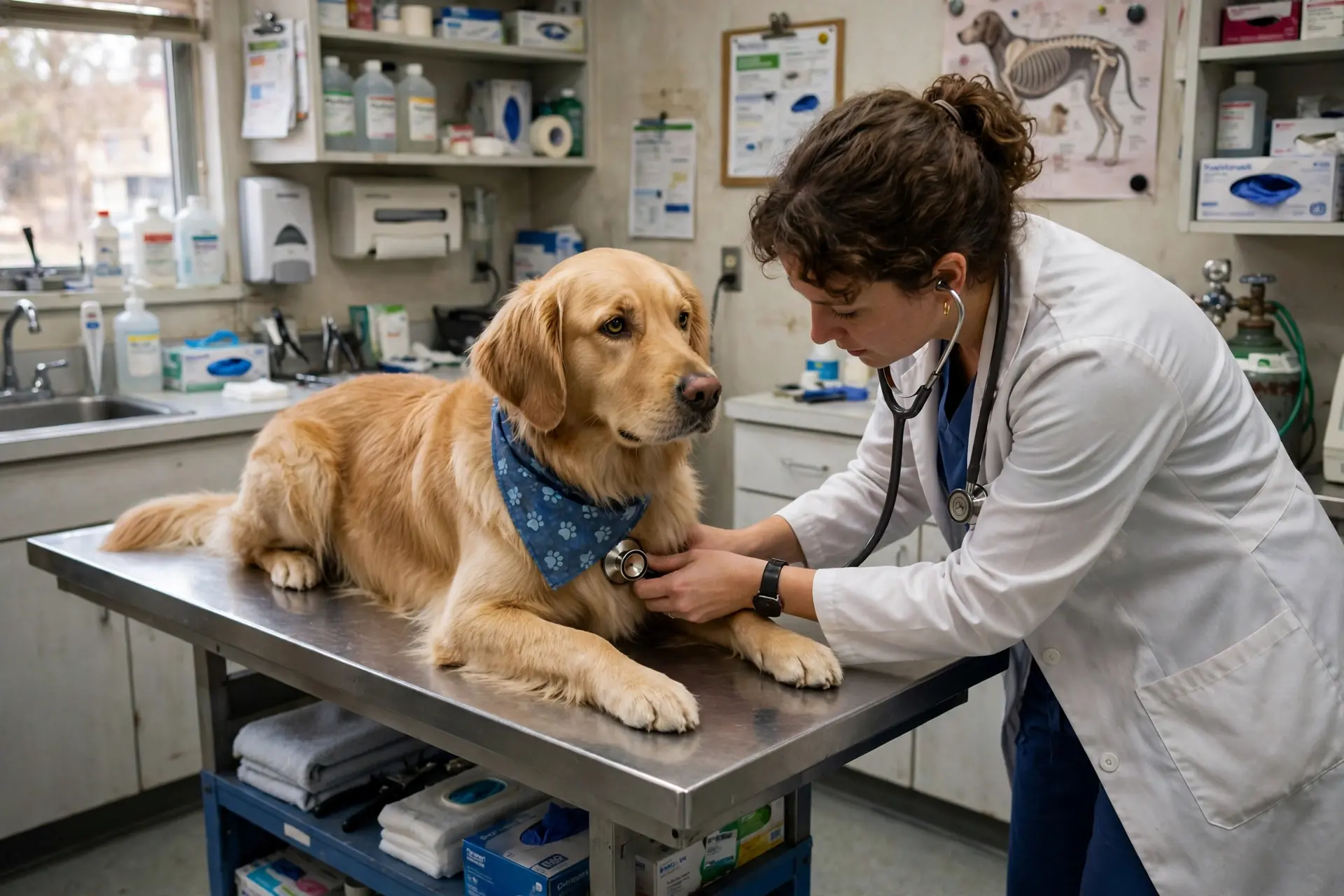
It is also worth knowing what kennel cough is not. It is not usually caught from people, and people do not usually catch it from dogs, although anyone with a weakened immune system should still ask their own doctor or vet about close contact with a coughing dog. It is not the same as a dog that coughs once after drinking too fast, or a dog with a heart cough, a collapsing windpipe or an allergy. Those conditions can look similar to an untrained eye, which is why a new or persistent cough should be assessed by a vet rather than diagnosed from a description on the internet. This guide uses the term kennel cough in its everyday sense, but your vet may need to examine your dog, listen to its chest and sometimes run tests before deciding what is really going on.
Where the risk is highest on a trip
Risk is not evenly spread across a holiday. It concentrates wherever dogs are close together, indoors or in enclosed spaces, for more than a few minutes. Boarding kennels and daycare centres sit at the top of the list, because dogs there share air, sleeping areas, play groups and staff hands all day. A well-run kennel reduces that risk with vaccination rules, ventilation, cleaning and separating new arrivals, but it cannot remove it entirely — and the busiest weeks, such as school holidays and Christmas, are when the most dogs pass through in the shortest time. If your dog is going into kennels as part of a trip, that stay is the single biggest exposure to plan around.
Dog parks, enclosed fields and busy beaches come next, especially in the morning and evening rush when dozens of dogs greet each other in quick succession. Nose-to-nose greetings, shared balls and communal water bowls are efficient ways to pass on respiratory germs. That does not mean you should avoid dog parks altogether, but it does mean choosing your moment: a quiet weekday walk on a wide path is a different risk from a crowded enclosed field on a Saturday morning. The same logic applies to dog-friendly pubs, cafes and holiday-park bars, where dogs settle under tables close together and share the floor space for an hour or more. Outdoor seating with space between tables is lower risk than a small, warm, crowded indoor room.
Transport adds its own pinch points. A ferry with an indoor pet lounge, a train carriage full of dogs, a busy service-station dog area and a vet waiting room are all places where unfamiliar dogs are held close together. None of these is a reason to cancel a trip on its own, but together they add up. The practical approach is to keep greetings short, avoid letting your dog drink from communal bowls, carry your own water bowl and ball, and give your dog space from dogs that are coughing or look unwell. If you hear a dog coughing repeatedly in a shared space, move away calmly rather than waiting to see whether yours catches it.
Group activities deserve a second thought too. Group dog walks, training classes, agility sessions, dog shows and "doggy day out" events bring together dogs from many households, often with shared equipment and close contact. These are enjoyable, and for a healthy vaccinated dog the risk is usually manageable, but they are a poor choice in the week before a boarding stay or a long trip, when an infection picked up there would still be incubating as you set off. The same applies to the dog walker or sitter who looks after several dogs in one home: ask how many dogs they take at once, whether any are currently coughing, and what they do if one becomes ill. A good provider will have a clear answer and will not be offended by the question.
Incubation and contagious period: the timeline that catches people out
The timeline is the part most owners get wrong, and it is the reason kennel cough ruins trips that seemed perfectly planned. After a dog is exposed to the infection, symptoms usually appear within three to ten days, although the exact period varies with the germ involved and the dog's own immunity. That gap — the incubation period — means a dog can be infected on a Saturday, look completely well on Monday, and start coughing on Thursday, just as you are loading the car. It also means that keeping a dog away from other dogs for a day or two before a trip is not enough to be sure it is clear.
The contagious period is longer than most people expect. A dog with kennel cough can spread the infection for several weeks, commonly for around two to three weeks after symptoms begin, and sometimes longer. The dog is often most contagious in the first few days of coughing, when the cough is frequent and forceful, but shedding of the germs can continue after the cough has eased. That is why vets often advise keeping a dog away from other dogs for a week or more after the cough has fully stopped, not just until it sounds a little better. If you are unsure about the exact period for your dog, check the official guidance before you travel and ask your own vet, because the right answer depends on the cause and the severity.
Put the two periods together and the planning lesson becomes clear. A dog that mixed with unknown dogs at a busy event a week before your holiday could start coughing on the holiday itself. A dog that caught kennel cough during a boarding stay could still be contagious when you bring it home and let it greet the neighbour's dog. And a dog that seems recovered after ten days may still be shedding germs at the dog park the following weekend. The safe habit is to count in weeks, not days, and to treat "no cough for a full week" as the earliest point to start thinking about mixing again, rather than the day to rush back to the busiest places.
There is one more timing trap: vaccination. The kennel cough vaccine does not work instantly, and boarding providers know it. Most ask for the vaccine to have been given a set number of days before arrival — commonly at least seven to fourteen days — precisely because a vaccine given the day before a kennel stay has not had time to build protection. A dog vaccinated on a Friday and boarded on a Monday is not a protected dog, and some kennels will turn it away. Work backwards from your travel date, not forwards from the day you remember to book the vet, and leave a margin for a delayed appointment or a dog that is slightly unwell on the day and cannot be vaccinated.
Vaccines: types and timing
The kennel cough vaccine is different from the core vaccines most owners know. Core vaccines — against distemper, parvovirus and infectious hepatitis — are usually given by injection and are part of the routine puppy course and boosters. The kennel cough vaccine, which usually protects against Bordetella bronchiseptica and sometimes canine parainfluenza virus, is often given separately, and it is not always included in a standard booster appointment unless you ask for it. That is the single most common reason dogs arrive at kennels unprotected: the owner assumed the annual booster covered everything, when in fact the kennel cough component was never given or had lapsed.
There are several forms of the vaccine, and your vet will choose the one that suits your dog. Some are given as drops into the nose, some as a liquid squirted into the mouth, and some by injection under the skin. The nasal and oral forms tend to produce local immunity in the nose and airways, which is where the infection first takes hold, and they are often chosen for dogs that need protection quickly. The injectable form is sometimes preferred for dogs that will not tolerate a nasal vaccine, or for puppies and dogs with particular health needs. The details vary by product, so the brand and route matter less to you as an owner than two things: that your dog has had it, and that it is still in date. Check the official guidance before you travel if you are unsure which form your dog had, and ask your vet to confirm the expiry date in writing.
Timing is where most trips go wrong, so plan it like any other travel deadline. If your dog has never had the kennel cough vaccine, or if it has lapsed, book the appointment at least three to four weeks before travel, not the week before. That leaves time for the vaccine to take effect, time to meet the kennel's minimum gap, and time to rearrange if the vet finds something that means the vaccine should wait — a mild illness, a temperature, or a course of treatment that needs to finish first. Dogs that are already unwell should not be vaccinated until the vet says they are well enough, so a last-minute appointment can easily become a "come back next week" appointment.
Boosters matter too. The kennel cough vaccine usually needs repeating every year, and some products need a second dose for a puppy or a dog having it for the first time. Put the renewal date in your calendar with a reminder a month ahead, and check it whenever you book a holiday, not when you arrive at the kennels. A vaccine that expired two weeks ago is, for boarding purposes, no vaccine at all, and kennels are right to treat it that way. Our guide to dog vaccinations before a holiday walks through the full countdown — core vaccines, kennel cough, rabies rules for travel abroad, worming and flea treatment — so you can check every item in one place rather than relying on memory.
Finally, be honest about what the vaccine can and cannot do. It reduces the chance of catching kennel cough and usually makes the illness milder and shorter if the dog does catch it, but it does not give complete protection. Kennel cough can be caused by several different germs, and the vaccine covers only the most common ones. A vaccinated dog that spends a week in a busy kennel during an outbreak can still catch a cough, just as a flu-vaccinated person can still catch a cold. That is not a reason to skip the vaccine — it is a reason to combine it with the other precautions in this guide: choosing quieter walks, avoiding communal bowls, keeping a coughing dog at home, and not travelling in the first place if your dog is already ill.
Boarding and kennel vaccine rules: what providers actually ask for
Every boarding kennel, cattery-with-dogs service, home boarder and daycare provider sets its own rules, but the pattern is consistent across the UK. Almost all licensed boarding establishments ask for proof of up-to-date core vaccinations and a current kennel cough vaccine, and most ask to see the vaccination certificate before they will confirm a booking. Many also ask for the kennel cough vaccine to have been given at least seven to fourteen days before arrival, and some ask for a longer gap. A few will accept a dog whose vaccine is only a few days old; most will not, and the stricter ones are usually the better-run ones. Check the official guidance before you travel if you are relying on a rule you read online, and confirm the exact requirement with your own provider in writing.
Home boarders licensed by the local council follow similar rules, because their licence conditions usually require them to check vaccination records for every dog they take. The difference is that a home boarder's dogs share a living room, a garden and often a sofa, so the exposure is closer and longer than in a kennel with separate runs. Ask a home boarder how many dogs they take at once, whether they mix dogs from different households, and what happens if one dog starts coughing during the stay. A good boarder will have a plan — usually isolation in a separate room and a call to you and to the vet — and will tell you about it before you book rather than improvising on the day.
Daycare centres vary more. Some apply the same rules as kennels; others are looser, especially if they take dogs for a single day rather than overnight. That looseness is a risk, not a convenience: a daycare that accepts unvaccinated dogs is also accepting the dogs most likely to bring an infection in. If you are using daycare as part of a holiday — for a day when you visit somewhere dogs cannot go — treat it with the same care as a kennel stay. Ask for the vaccination policy, the maximum group size, how the groups are separated, and whether new dogs are introduced gradually or thrown straight into a large play group.
Paperwork is the part owners most often leave to the last minute. Photograph or scan the vaccination certificate, keep the original with your travel documents, and carry the vet's phone number and your dog's insurance details with you. If your dog's vaccine was given by a different vet, or if the certificate is an old paper booklet with handwriting that is hard to read, ask your current vet to confirm the dates in a short letter or a printed record before you travel. That small step can save a refused admission at the kennel gate, which is a miserable way to start a holiday. If you are comparing a kennel stay with daycare for a trip, our comparison of dog boarding vs daycare explains how the costs, routines and risks differ, so you can choose the option that fits your dog rather than the cheapest headline price.
Your pre-trip checklist
Four weeks before travel, book the vet appointment and check every vaccine date. Confirm the kennel cough vaccine, the core vaccines, worming and flea treatment, and ask the vet to check your dog's chest, ears and teeth at the same visit. A dog that is due a booster, or that has a mild ear infection or a sore tooth, is better treated at home than on holiday, when every vet is unfamiliar and every appointment is urgent. This is also the moment to ask the vet whether your dog's age, breed or health makes kennel cough a bigger risk than average, and whether any extra precaution is worth taking. If your dog has a long-term condition, take a written summary of its medication and doses, and check that you have enough medicine for the trip plus a few spare days.
Two weeks before travel, confirm the booking in writing and send the vaccination proof. Ask the kennel or host to confirm the vaccine gap they require, the arrival time, the feeding routine, the exercise plan and the emergency vet they use. Check that your dog's microchip details are up to date, that the collar tag has your mobile number on it, and that the lead, harness and any muzzle your dog needs are in good condition. Pack your own water bowl, a familiar blanket, the dog's usual food measured into daily portions, and any medication in its original packaging with the instructions. A familiar blanket and the usual food do more for a nervous dog's appetite and sleep than any new toy bought at a service station.
In the final week, change the routine, not the dog. Keep walks quiet and local, avoid crowded dog parks and group events, and do not introduce your dog to unfamiliar dogs you do not need it to meet. If your dog goes to daycare or a group walk, consider pausing it for that week, or at least telling the provider that you have a trip coming up and asking whether any dog there is currently coughing. Watch for the earliest signs: a single cough, a sneeze, a runny nose, a slightly reduced appetite or a dog that is a little quieter than usual. Any of those is a reason to call the vet for advice, not a reason to wait and see whether it turns into a full cough on the morning of departure.
On the day itself, do a final honest check before you load the car. Is your dog bright, eating normally, breathing comfortably and free of coughing? Has it coughed at all in the last few days? Has it been in contact with a coughing dog in the last ten days? If the answer to any of those is worrying, call the vet before you set off, and call the accommodation or kennel to warn them. Cancelling or delaying a trip is frustrating, but arriving with a coughing dog and being turned away at the gate is worse — and it puts every other dog on the site at risk. Keep this checklist with your travel documents, and work through it in order rather than relying on memory in the rush of packing.
- Four weeks before: vet check, kennel cough vaccine, core vaccines, worming and flea treatment, medication supply.
- Two weeks before: send vaccination proof, confirm booking in writing, check microchip and collar tag, pack food and medication.
- One week before: quiet local walks only, no crowded dog parks or group events, watch for coughs, sneezes and reduced appetite.
- Departure day: final health check, vet's number and insurance details in your pocket, vaccination certificate with you.
Symptoms: what to watch for and how serious it is
The classic kennel cough symptom is a dry, harsh cough that sounds like the dog is trying to clear something from its throat. It often comes in fits, especially after excitement, exercise, pulling on the lead or a change in temperature, and it may end with a retch or a gag as if the dog is about to be sick. The cough can sound alarming — owners often describe it as a honk, a goose call or a hacking cough — but the dog may otherwise seem well. A runny nose, watery eyes and the occasional sneeze often go with it. In a mild case, that is the whole illness: a coughing dog that is still bright, eating and drinking normally, and keen to go out.
Mild is the most common pattern, and it is also the pattern that causes the most spread, because a dog that feels almost normal is the one most likely to be taken to the park, the pub and the kennel. Do not be reassured by a good appetite alone. A dog can be eating well and still be highly contagious, and the cough can worsen over the next few days even if it starts gently. Keep a simple record: when the cough started, how often it happens, whether it is worse at night or after exercise, and whether there is any discharge from the nose or eyes. That record helps your vet enormously, and it helps you judge honestly whether the cough is improving or not.
Moderate symptoms are a clear reason to call the vet the same day. A cough that is frequent, that stops the dog sleeping, that brings up mucus, or that comes with a reduced appetite, a temperature or a dog that is quieter and less keen to walk should not be watched at home for a week. Puppies, older dogs and dogs with existing heart or lung disease fall into this group sooner, and flat-faced breeds such as pugs, French bulldogs and bulldogs should be assessed early because their airways are already narrow. If you are unsure whether your dog is mild or moderate, treat it as moderate and call the vet — that is the safe side of the line.
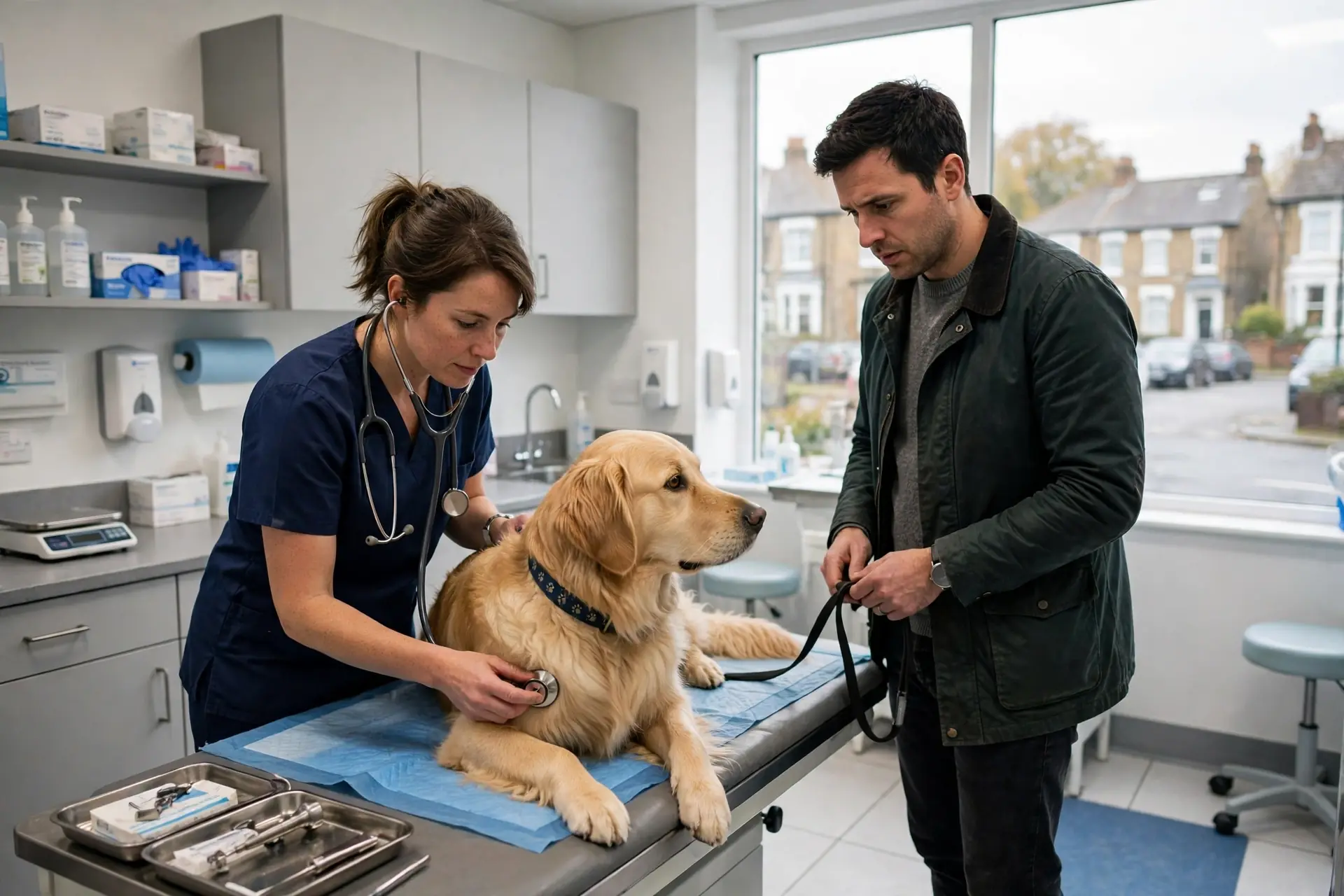
Severe symptoms need urgent veterinary attention. These include difficulty breathing, breathing that is fast or laboured at rest, blue or pale gums, a high temperature, refusing food and water, vomiting, lethargy that means the dog will not get up, or a cough that produces blood. A puppy that stops feeding, an older dog that becomes confused or collapses, or any dog whose breathing sounds wheezy or crackly should be seen urgently, not the next morning. This is not veterinary advice for your individual dog — it is a general guide to what should prompt a call — but the principle is simple: a cough that affects breathing, eating or energy is not a cough to manage on your own. Contact your vet promptly, and if you are travelling, find the nearest vet before the situation becomes an emergency.
Home care and when to see a vet
For a mild case in a healthy adult dog, your vet may advise rest, fluids and time, and may not prescribe antibiotics at all. That surprises many owners, who expect a medicine for every illness, but kennel cough is often caused by viruses, and antibiotics do not treat viruses. Antibiotics are more likely when the vet suspects a bacterial infection, when the cough is severe or prolonged, or when the dog is at higher risk. Never give your dog antibiotics left over from another illness, a friend's dog or an old prescription, and never give human cough medicines, paracetamol or ibuprofen unless your vet has specifically told you to — many human medicines are dangerous for dogs. If your vet does prescribe something, finish the full course exactly as directed, even if the cough improves after a few days.
Rest is the most useful treatment you can give at home. Keep walks short, calm and on a lead, and swap a harness for a collar if the collar presses on the throat and triggers coughing — or swap a collar for a harness if pulling on the lead is the problem. Avoid excitement, rough play, training sessions that involve a lot of barking, and any activity that leaves the dog panting hard. Keep the dog indoors in a warm, comfortable room, away from smoke, strong cleaning products, air fresheners and dust, all of which can irritate the airways and make the cough worse. A steamy bathroom can help some dogs: sit with your dog in the bathroom while a hot shower runs for ten minutes, a couple of times a day, so the warm moist air can soothe the airways. Do not put the dog in the shower itself, and stop if the steam seems to distress it.
Food and water matter more than they seem. Offer small, frequent meals of the dog's usual food, and make sure fresh water is always within easy reach. A dog that is coughing may be reluctant to eat dry kibble, so softening it with a little warm water can help. Tempt a dog that is off its food with something bland and familiar, but do not switch to rich new foods that could upset its stomach at the same time. Keep a note of how much the dog eats and drinks, and how often it coughs, so you can give the vet a clear picture rather than a vague "it seems a bit worse". If the dog stops drinking, refuses food for more than a day, or becomes lethargic, call the vet the same day.
Know when to stop managing at home and call the vet. The triggers are straightforward: a cough that lasts more than a week without improving, a cough that is getting worse rather than better after a few days, any difficulty breathing, a temperature, loss of appetite, lethargy, vomiting, or a discharge from the nose or eyes that becomes thick, yellow or green. Puppies, older dogs, dogs with heart or lung disease and flat-faced breeds should be seen sooner rather than later. If you are away from home when the cough starts, do not wait until you are back — call your own vet for advice and ask them to recommend a vet near where you are staying. A phone call costs nothing and can prevent a mild case becoming a serious one.
Isolation and telling other people
Isolation is the least enjoyable part of kennel cough and the most important. A coughing dog should be kept away from other dogs until your vet says it is safe to mix again — commonly for at least two to three weeks after symptoms start, and for at least a week after the cough has fully stopped. That means no dog parks, no group walks, no daycare, no kennels, no dog-friendly pubs and no greetings on the pavement. It also means thinking about the dogs you cannot see: the neighbour's dog through the garden fence, the dog that uses the same shared garden, and the dogs that visit your house. Keep walks short, on a lead, at quiet times and in quiet places, and cross the road rather than letting your dog greet another dog.
Inside the house, reduce the risk to other dogs in your own household. If you have more than one dog, the others may already have been exposed before you noticed the first cough, so ask your vet whether they should be isolated from the coughing dog or simply monitored. In practice, complete separation in one house is hard, but separate bowls, bedding and toys, washing your hands between handling dogs, and cleaning bowls and surfaces regularly all help. Do not share bowls, toys or chews between a coughing dog and a healthy dog, and wash bedding and towels on a hot wash where the fabric allows. The germs can survive on surfaces, so a clean floor and clean bowls are part of the treatment, not just good housekeeping.
Telling other people is a duty, not a courtesy. If your dog was at a kennel, daycare, group walk, training class, dog show or a friend's house in the days before the cough started, tell the provider or the owner promptly. They need to know so they can watch their own dogs, warn other owners and clean their premises. If your dog was due to go into kennels or to a sitter, tell them straight away and do not try to hide the cough in the hope it will pass — a kennel that discovers a coughing dog on arrival will turn it away, and a sitter who is told honestly can plan around it. The same applies to your holiday accommodation: tell the host, ask what they would like you to do, and be prepared to cancel or rearrange if they ask you to. Honesty now is far cheaper than an outbreak later.
Isolation is hard on the dog as well as the owner. A sociable dog that is used to a daily run with friends will be bored and frustrated, and a puppy in its socialisation window will miss valuable experiences. Compensate with calm indoor enrichment: sniffing games, puzzle feeders, gentle training, short garden sessions and new scents to investigate on a quiet lead walk. Keep the routine as normal as you can — same feeding times, same bed, same calm voice — and remember that a few weeks of quiet is a short price for a full recovery and for not passing the infection to another dog. When the isolation period ends, reintroduce other dogs gradually, starting with one calm, healthy, vaccinated dog you know well, rather than a crowded dog park on a Saturday morning.
When your dog can travel again
The question every owner asks is simple — when can we go? — and the honest answer is: when the cough has fully stopped, the dog is eating and behaving normally, and the isolation period your vet advised has passed. For many dogs that means at least two to three weeks after the cough started, and at least a week with no cough at all. A dog that coughed yesterday is not ready for a kennel, a cottage or a crowded beach today, even if it seems bright. Wait until the cough has genuinely gone, not just eased, and then add the extra week your vet recommends. If you are unsure, check the official guidance before you travel and ask your vet to confirm the date in writing, especially if you are rebooking a kennel stay.
Before you rebook, check the provider's rules again rather than assuming they are the same as before. Some kennels and holiday providers ask for a longer gap after kennel cough, or for a note from the vet confirming the dog is fit to travel and mix with other dogs. That is a reasonable request, and a vet who has seen your dog can usually provide it. Send the note with your rebooking, confirm the new dates in writing, and tell the provider the date the cough started and the date it stopped. A provider that hears the full story and still welcomes your dog is a provider you can trust; a provider that is kept in the dark is being put at risk.
Use the recovery period to rebuild fitness gently. A dog that has spent two or three weeks resting will not be as fit as it was before the illness, so start with short, calm walks and build up gradually over a week rather than jumping straight into a long coastal hike on the first day of the holiday. Watch for any return of the cough during exercise, especially in cold or damp air, and shorten the walk if it appears. Older dogs and dogs that had a more severe illness may need longer to regain their stamina, and a follow-up vet check before a long trip is sensible if the illness was anything more than mild. Pack the vet's number, the insurance details and the vaccination certificate as before, and keep the first day of the new trip quiet — a short walk, a familiar bed and an early night will tell you more about how your dog has recovered than a busy first day ever could.
Finally, keep the lesson from this episode for the next trip. Note the date the cough started, the vaccine dates, the provider's rules and what you would do differently next time, and keep that note with your travel documents. Book the kennel cough vaccine earlier next year, check the expiry date when you book the holiday rather than the week before, and keep the final week before travel quiet. Kennel cough is common, it is usually mild, and it is largely preventable with timing and honesty. The dogs that travel well are not the ones that never get ill; they are the ones whose owners planned for the illness, recognised it early, and waited until it was truly over before setting off again.
Practical questions
Before you go
How long after a kennel cough vaccine can my dog go into boarding?
Many boarding facilities ask for the kennel cough vaccine to have been given at least 7 to 14 days before arrival, and some ask for longer. Check the exact rule with your chosen kennels well before you book, and keep the vaccination certificate with your travel documents.
How long is kennel cough contagious?
A dog with kennel cough can spread it for several weeks, often for around two to three weeks after symptoms start, and sometimes longer. Keep a coughing dog away from other dogs, shared bowls, toys and busy dog areas until a vet advises that it is safe to mix again.
Can my dog catch kennel cough on holiday even if it is vaccinated?
Yes, vaccination reduces the risk and usually makes the illness milder, but it does not give complete protection, because kennel cough can be caused by several different germs. Vaccination is still one of the most useful precautions before a busy trip or a boarding stay.
Should I travel if my dog has just started coughing?
Do not travel with a dog that has just started coughing until a vet has assessed it. Travelling can expose other dogs, and a boarding or holiday provider may refuse a coughing dog. Contact your vet promptly, tell the accommodation or kennels, and rearrange the trip if you are advised to do so.
How long should I isolate a dog with kennel cough?
Many vets advise keeping a dog away from other dogs for at least two to three weeks after the cough starts, and for at least a week after the cough has fully stopped. Follow your own vet's advice for your dog, because the right period depends on the cause, the severity and whether other dogs are involved.
When can my dog travel again after kennel cough?
Most dogs can travel again once the cough has fully stopped, they are eating and behaving normally, and the isolation period advised by their vet has passed. Check the boarding or accommodation rules again before rebooking, because some providers ask for a longer gap or a vet's note.