This guide is independent and contains no paid placement. Brewery policies change by venue and tour, so check the official guidance before you travel. This guide is not veterinary advice.
Taprooms often welcome dogs, production tours often do not, and that split is about safety and hygiene, not hospitality. Keep dogs away from hops and alcohol, ask which zones allow dogs, and plan a taproom-only visit if the tour is off limits.
Taproom first, tour second
A brewery visit usually has two distinct parts, and confusing them causes most disappointments. The taproom is the public bar, shop and seating area, often with tables, food, and a relaxed atmosphere that suits dogs well. The tour is a guided walk through a working production site, with mash tuns, kettles, fermenters, conditioning tanks, packaging lines and storage areas, and it follows a route designed for people, not for dogs. Many breweries welcome dogs in the first space and exclude them from the second, and both decisions can be correct at the same time.
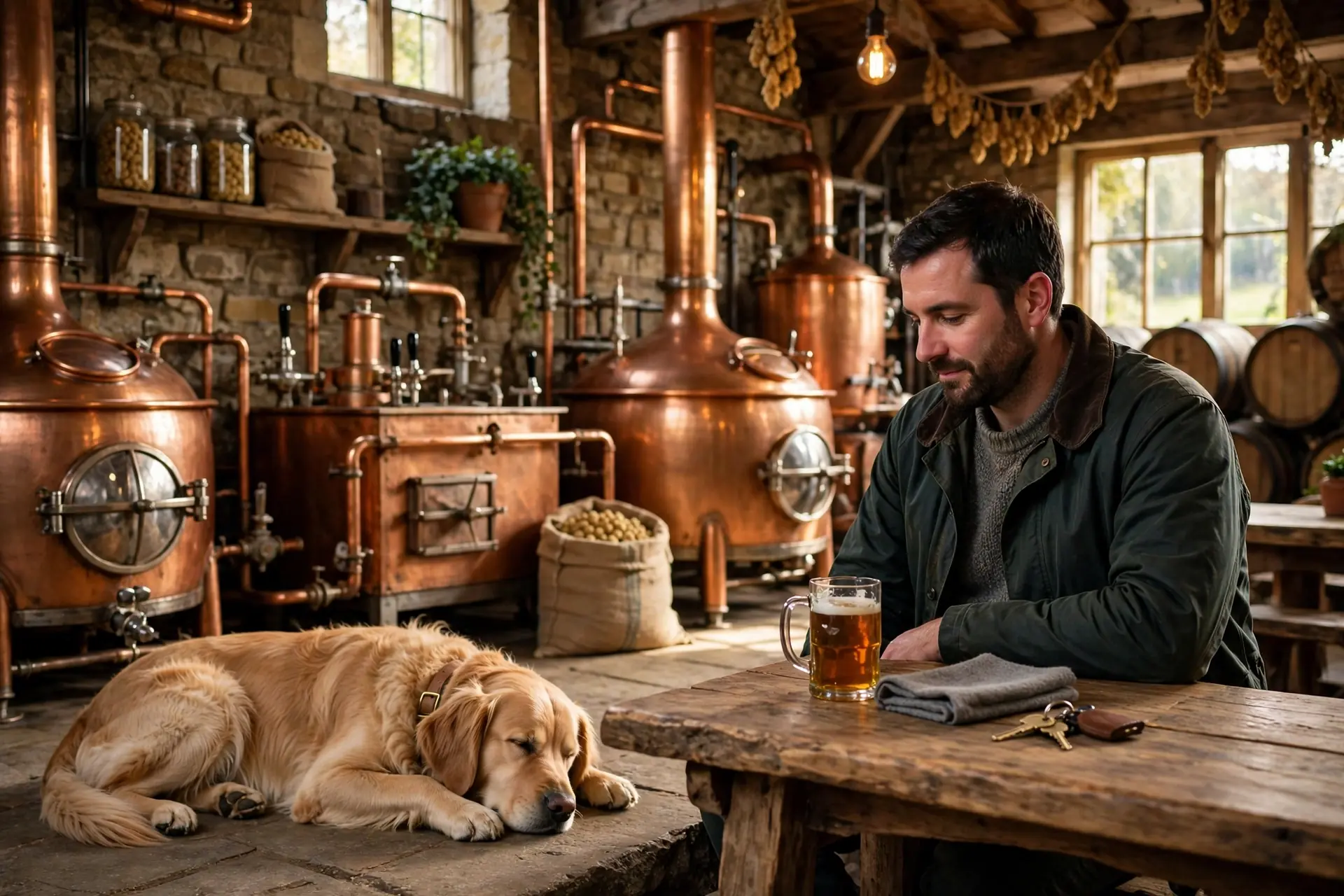
Taprooms vary enormously. A small rural brewery taproom may be a single room with a wood burner, a few tables and a dog asleep in the corner, while a large urban taproom may be a busy bar with live music, food service and a constant flow of visitors. The best taprooms for dogs have space between tables, a water bowl, a quiet corner, and staff who are relaxed about dogs but clear about rules. If a taproom is described as dog-friendly, ask whether that means dogs are allowed throughout, only in a section, or only outside, because those details change where you sit and how long you can stay comfortably.
Tours also vary, but in a different direction. Some breweries offer a short, ground-level tour that stays in public areas and allows dogs on leads, while others run a full production tour with stairs, catwalks, hot surfaces and restricted areas where dogs cannot go. A tour that is described as dog-friendly may still exclude dogs from certain rooms, and you may be asked to wait in the taproom for part of it. Ask for a tour-by-tour breakdown, not a general policy, and be ready to enjoy a taproom-only visit if the production tour is not suitable. A good taproom afternoon is a better day than a stressful tour.
The hops warning every owner needs
Hops are the most important safety warning in this guide. Hops, the flowers used to flavour and preserve beer, can be toxic to dogs, and ingestion can cause a dangerous condition in which body temperature rises rapidly, along with panting, restlessness, vomiting and, in severe cases, seizures. Some dogs appear more sensitive than others, and the risk applies to fresh hops, dried hops, pellets and spent hops left over after brewing. Because the reaction can escalate quickly, hops should be treated as a strict no-go area for dogs, not as a mild stomach upset risk.
In a brewery, hops may be present in several forms and places: in storage sacks, in the brewhouse during boiling, in dry-hopping additions to fermenters, and in spent hop waste awaiting disposal. A dog that scavenges, chews packaging, or investigates bins and waste areas could encounter hops without you realising, especially in a busy taproom where a spill or a discarded sample is easy to miss. Keep your dog on a short lead, keep them away from production areas, waste bins and open sacks, and do not let them eat anything offered by strangers that might contain hops or beer ingredients. If you homebrew or visit a brewery shop, store hops securely at home as well, because the risk does not end at the brewery door.
Training helps, but it is not a guarantee. A reliable leave command, practised with food on the ground, is essential for any dog visiting a food production site, and a muzzle can be a sensible precaution for a dog that scavenges persistently. Even with training, do not rely on the dog to avoid hops on their own, because a new smell, a dropped sample, or a moment of distraction can be enough. The safest approach is physical prevention: a short lead, a watchful owner, and a dog that stays in public areas where hops are not handled or stored.
Alcohol, spills and tasting flights
Alcohol is toxic to dogs, even in small amounts, and beer is no exception. Dogs are smaller than people, metabolise alcohol differently, and can become ill from amounts that would barely affect a person, with symptoms including wobbliness, vomiting, disorientation, slowed breathing and, in severe cases, collapse. Beer also contains hops, yeast and other ingredients that are unsuitable for dogs, so the rule is simple: dogs do not drink beer, taste beer, or lick beer from glasses, tables or floors. Give your dog water in their own bowl, and bring a dog-safe treat for tasting time, so they have something appropriate while you taste.
Spills are the practical risk in a taproom. Glasses are knocked over, tasting flights are carried across tables, and small amounts of beer end up on floors, table legs and dog paws. A dog that licks a spill may ingest alcohol and hops in one go, and a dog that walks through a spill and then licks its paws can do the same. Clean up spills promptly, keep your dog's bowl away from beer glasses, and watch for drips from tasting flights, especially if you are seated at a low table or on the floor. If your dog does lick beer, note how much they may have had, and contact a vet for advice, even if they seem well, because early advice is better than waiting for symptoms.
Tasting flights need a plan, because they involve several small glasses, conversation and note-taking, which divides your attention. Assign one person to focus on the dog, especially during the first flight, and keep the dog settled on a blanket with a chew. Do not leave beer glasses at dog height, do not let strangers offer your dog a taste, and do not assume that a small sip is harmless because the dog liked the smell. If you are driving, remember that tasting still counts towards alcohol limits, and plan transport accordingly, as covered later in this guide.
Inside the production zones
Production zones are working industrial spaces, and they are governed by food safety, health and safety, and insurance rules that do not bend for a well-behaved dog. Mash tuns and kettles involve hot liquids and steam, fermenters involve pressure and carbon dioxide, packaging lines involve moving belts, glass and cans, and storage areas involve forklifts, pallets and stacked kegs. A dog in such an environment is at risk from heat, noise, moving equipment, wet floors and chemicals, and the brewery is at risk if a dog contaminates a production area or distracts a worker operating machinery. Excluding dogs from production zones is therefore a safety decision, not a judgement on your dog.
The layout of a brewery tour also matters for dogs. Tours often involve stairs to viewing platforms, narrow walkways between tanks, low headroom, and doors that close behind the group, which can be stressful or physically difficult for dogs. A dog that is comfortable in a taproom may be anxious on a metal staircase, frightened by steam, or overwhelmed by the strong smell of yeast, malt and cleaning chemicals. Even a tour that allows dogs in principle may be unsuitable for a particular dog in practice, especially if the dog is nervous, elderly, or reactive to noise and strangers in confined spaces.
If you are offered a production tour that allows dogs, ask for details: how long it lasts, whether it involves stairs, how many people are in the group, whether other dogs will be present, and whether there are places to step out if the dog becomes stressed. A short, ground-level, small-group tour is a very different proposition from a long, multi-level tour with a large group. If the details sound stressful, choose the taproom instead, and ask whether the brewery offers a video, a tasting with an explanation, or a shop talk that gives you the story without the production floor.
Fermentation, heat and carbon dioxide
Fermentation is the process that turns sugary wort into beer, and it creates conditions that are particularly unsuitable for dogs. Fermenters produce carbon dioxide, which is heavier than air and can collect in low-lying areas, cellars and pits, where it displaces oxygen and can cause dizziness, unconsciousness or worse for people and animals. Breweries manage this risk with ventilation, monitoring and restricted access, but those controls are designed for trained staff, not for visitors with dogs. Dogs, being lower to the ground and less able to recognise the danger, are at particular risk in areas where carbon dioxide may collect, which is another reason production areas are restricted.
Heat is a related risk. Brewing involves boiling wort, hot water, steam cleaning and heated tanks, and surfaces can remain hot long after use. A dog that brushes against a hot pipe, steps on a heated floor, or walks through steam can be burned, and a dog that is already warm from a taproom visit may overheat in a hot production area. Cleaning chemicals add another layer: caustic cleaners, sanitisers and acids are used in breweries, and residues on floors, equipment and containers can irritate a dog's paws, skin or stomach if licked. Keep dogs in public areas, away from cleaning operations, and wash their paws if they have walked through a wet production area.
Yeast and spent grain deserve a mention too. Yeast, especially raw or active yeast, can ferment in a dog's stomach and produce alcohol, which is dangerous, while spent grain, the malt left over after mashing, may be offered as animal feed but can still cause stomach upset in dogs, especially in large amounts or if it has fermented. Do not let your dog eat spent grain, yeast samples, or any production waste, and do not accept food for your dog from brewery staff unless you are sure it is dog-safe. A dog treat from the taproom menu is a much safer option than a production sample.
Noise, machinery and forklifts
Breweries are noisy places, and the noise is not just background music. Pumps, compressors, bottling lines, canning machines, forklifts and steam vents all produce sudden, loud, or sustained sounds that can startle or stress a dog. A dog that is calm in a taproom may become anxious when a compressor starts, a forklift reverses with a warning beep, or a canning line clatters into action nearby. Dogs hear higher frequencies than people, and machinery sounds that seem merely loud to you may be painful or frightening to them.
Moving vehicles are a particular hazard. Forklifts move pallets and kegs through yards and warehouses, often with limited visibility around corners and stacks, and a dog on a lead can be in a driver's blind spot in seconds. Delivery lorries, vans and staff cars also move through brewery yards, sometimes without warning. Keep your dog close in yards and car parks, follow marked pedestrian routes, and do not let the dog wander between vehicles, pallets or keg stacks. If you see a forklift operating, stop, hold the dog close, and wait until it has passed and the area is clear.
Even in the taproom, noise can build up. Live music, quiz nights, sports screenings and busy Friday evenings all raise the volume and the crowd density, which can overwhelm a dog that was comfortable on a quiet weekday afternoon. Choose a quieter time for a first visit, sit away from speakers, and watch for stress signals such as panting, pacing, lip licking or attempts to leave. If the taproom becomes too loud, move to an outdoor area or leave early, rather than hoping the dog will get used to it, because prolonged noise stress can make future visits harder.
Stairs, wet floors and narrow walkways
Physical access is often the deciding factor for dogs on brewery tours. Many breweries are in converted buildings, with stairs to viewing galleries, mezzanines, cellars and taprooms above the brewhouse. Metal stairs with open treads are frightening for some dogs, and a dog that refuses to climb them will hold up the whole tour group. Wet floors are another common problem: brewing, cleaning and condensation all produce wet, slippery surfaces, and a dog that slips may injure a leg or become reluctant to walk further. Narrow walkways between tanks leave little room for a dog to pass other visitors, and a dog that is crowded may react defensively.
Before booking a tour, ask about the route: how many stairs, whether there is a lift, whether floors are wet, and whether the walkways are wide enough for a dog on a lead. If your dog has arthritis, a heart condition, or mobility issues, a tour with stairs and wet floors may be unsuitable, even if dogs are allowed in principle. A taproom-only visit avoids all of these problems, and it still gives you the chance to taste the beer, talk to staff, and buy bottles to take home. For a dog with mobility issues, a ground-level taproom with a comfortable blanket is a much kinder outing than a multi-level tour.
Also consider the dog's paws. Brewery floors may be concrete, tiled, or metal-grated, and they can be rough, cold, or slippery, especially when wet. A dog that walks comfortably on grass may struggle on a grated walkway, and a dog with sensitive paws may need boots, though boots themselves can be slippery on wet metal. Test boots at home first, and bring a towel to dry paws after the tour. If the tour involves a long walk on hard floors, build in rest breaks, and be ready to cut the tour short if the dog is struggling.
Taproom etiquette that keeps dogs welcome
Taproom etiquette is similar to pub garden etiquette, with a few brewery-specific additions. Keep your dog on a short lead, settled on a blanket, and away from the bar, the kitchen pass, and other tables. Do not let the dog beg from other tables, steal food, or approach strangers without permission, because a taproom is a social space where people expect to relax, not to manage someone else's dog. If your dog barks persistently, move outside or leave, because a barking dog in a taproom quickly becomes a reason for staff to reconsider their dog policy.
Be considerate about space. Taprooms can be crowded, especially at weekends, and a large dog lying in a thoroughfare will be stepped on or tripped over. Choose a table near a wall or in a corner, tuck the lead under your chair, and keep bags and coats out of walkways. If the taproom has a dog area, use it, and if it has a water bowl, refill it rather than expecting staff to do so. A dog that is calm, clean and unobtrusive is welcome back, while a dog that is noisy, messy or uncontrolled may lead to a policy change that affects other owners.
Talk to staff. Brewery staff usually know the beers, the tour options, and the dog rules better than any website, and they can suggest a quiet table, a suitable tasting, or a time when the taproom is calmer. If you are unsure about anything, from whether dogs are allowed in a particular area to whether a food item is dog-safe, ask. Staff would rather answer a question than deal with an incident, and a friendly conversation often leads to a better visit for everyone, including recommendations for other dog-friendly venues nearby.
Food, spent grain and bar snacks
Food in a taproom is a temptation and a risk for dogs. Bar snacks such as crisps, nuts, pork scratchings and spicy snacks are salty, fatty or seasoned in ways that upset dogs, and some contain onion, garlic or chilli. Nuts, particularly macadamia nuts, can be toxic to dogs, and even peanuts can cause stomach upset in large amounts. Keep bar snacks out of the dog's reach, do not share your food without checking ingredients, and bring a dog-safe chew instead, so the dog has something appropriate while you snack.
Spent grain and brewery food products need care too. Some breweries sell spent grain bread, crackers or dog treats made from spent grain, and while these products are usually processed and safe in small amounts, they are not the same as raw spent grain from the brewhouse. Do not let your dog eat raw spent grain, yeast, or any production waste, and do not assume that a product labelled as brewery-made is automatically dog-safe. Check ingredients, ask staff, and when in doubt, stick to treats you brought from home.
Meals in taprooms follow the same principles as other food venues: a settled dog, a short lead, no begging, and no feeding from the table without checking. If the taproom serves food, ask whether dogs are allowed in the dining area or only in the bar area, because the rules may differ. A dog that is fed from the table, even with good intentions, may become a beggar, may eat something harmful, and may disturb other diners, so agree the rules with everyone in your party before you sit down.
Booking questions for breweries
Before you book, ask a short set of brewery-specific questions. Are dogs allowed in the taproom, on the tour, or both, and are there areas where dogs are never allowed? Is there a taproom-only option, and can you taste without joining a tour? Are there size, number or breed restrictions, and must dogs be on a lead at all times? Is there outdoor seating, shade and water, and is there a dog toilet area nearby? Are there dates when dogs are not welcome, such as event days or busy festivals?
Also ask about the tour itself. How long does it last, does it involve stairs, wet floors or narrow walkways, and how many people are in the group? Will other dogs be on the tour, and is there a place to wait if you decide not to join part of it? Is there a refund or transfer policy if you arrive and the dog cannot join the tour, or if the tour is changed on the day? Those questions take a few minutes and prevent the common disappointment of arriving for a tour and discovering that the dog must wait outside alone, which is never a good option.
Keep the answers in writing, especially for tours and events. Breweries sometimes change policies for special releases, festivals or private hires, and a dated email is easier to show politely than a remembered conversation. If the brewery says dogs are welcome but cannot confirm tour details, plan for a taproom-only visit, and treat any tour access as a bonus rather than a guarantee. A flexible plan is the difference between a good afternoon and a frustrating one, and it also leaves you free to enjoy the beer without worrying about the dog.
When the group splits up
Splitting the group is often the best solution for a brewery visit with a dog, and it should not feel like a compromise. One person joins the production tour while the other enjoys the taproom with the dog, then you meet afterwards to compare notes, taste together, and buy bottles. That arrangement gives everyone the experience they want, without forcing a dog into an unsuitable environment or forcing a person to miss the tour. It works best if you agree it in advance, so nobody feels left out or rushed.
If you split up, plan the details. Agree a meeting time and place, make sure the person with the dog has water, treats and a comfortable seat, and make sure the person on the tour has a phone and knows where to find you. If you are travelling with children, decide who looks after whom, and do not leave a child alone with a dog in a taproom while both adults take the tour. A split visit also gives the dog a break: a calm taproom session, with a walk before and after, is often more enjoyable for a dog than a long, noisy tour, even if the dog is allowed on it.
Another option is to visit the brewery twice, in different ways: a taproom visit with the dog on one day, and a production tour without the dog on another, if you are staying nearby. That may sound extravagant, but it can be the most enjoyable way to experience a brewery properly, especially if the brewery is a highlight of your trip. If you are staying nearby, the planning lessons from holiday park stays apply here too: a comfortable base, a realistic timetable, and a dog that is not rushed from one activity to the next.
Getting home safely
Transport home is part of a brewery visit, not an afterthought. If you have been tasting, even small amounts add up, and driving after tasting is unsafe and illegal if you exceed the limit. Plan a designated driver, a taxi, public transport, or a nearby stay before you arrive, and do not rely on feeling sober, because tasting flights are designed to be enjoyable, not to be measured precisely. If you are travelling with a dog, check that your taxi or transport provider accepts dogs, and bring a blanket and a lead for the journey.
Public transport with a dog after a brewery visit needs planning too. Trains and buses have their own dog rules, and a dog that has been in a busy taproom may be tired and less tolerant of a crowded journey home. Allow time for a toilet break before you travel, bring water, and choose a quiet carriage or a less busy service if possible. If you are driving, make sure the dog is secured, the car is ventilated, and you have a safe place to stop if the dog needs a break. A brewery visit should end with a safe, calm journey home for everyone, including the dog.
Finally, store any beer you buy safely. Keep bottles upright, secured, and out of the dog's reach in the car, and do not leave beer in a hot car, where it can spoil and where a dog left briefly in the car could overheat. If you buy a large amount, consider shipping it home or collecting it later, rather than loading the car with glass bottles and a dog in the same space. A little care at the end of the visit protects both the beer and the dog.
If your dog eats hops or drinks beer
If you think your dog has eaten hops, spent hops, or drunk beer, contact a vet immediately, even if they seem well. Note what they ate or drank, how much, and when, if you can, and keep the dog cool and calm while you seek advice. Hops ingestion can cause a rapid rise in body temperature, so watch for panting, restlessness, drooling, vomiting, or a hot body, and do not try to cool the dog with ice water unless a vet advises it, because rapid cooling can also be dangerous. Do not try to make your dog vomit unless a vet specifically tells you to.
While you wait for veterinary advice, prevent further ingestion, keep the dog in a cool, quiet place, and note any symptoms, including changes in breathing, movement, or consciousness. If you are at a brewery, tell staff what has happened, because they can help you find the nearest vet, provide a quiet place to wait, and check whether other hops or beer are accessible. Save the vet's number before you visit, along with the address of the nearest emergency vet, because breweries are often in rural or industrial areas some distance from a practice, and time matters in a toxicity case.
After any incident, reflect on whether a brewery visit is suitable for your dog in future. A dog that scavenges persistently, that cannot settle in a taproom, or that is at risk from hops may be safer on a walk or in a quieter outdoor setting than in a brewery, and that is not a failure. Many dogs enjoy taprooms safely with a lead, a watchful owner and a clear plan, but a dog that cannot resist production waste or beer spills may need more training, a muzzle, or a different kind of outing. The goal is a safe, enjoyable day, not a risky visit to a working production site.
Practical questions
Before you go
Are dogs allowed on brewery tours in the UK?
Many taprooms welcome dogs, but production tours often exclude dogs from brewing, fermentation and packaging areas for hygiene and safety reasons. Always check the official guidance before you travel and ask which parts of the visit allow dogs.
Are hops dangerous to dogs?
Yes, hops can be toxic to dogs, and some dogs can develop a dangerous rise in body temperature after eating them. Keep your dog away from hops, spent hops and hop waste, and contact a vet immediately if you think your dog has eaten any.
Can my dog drink beer or taste beer?
No. Alcohol is toxic to dogs, even in small amounts, and beer also contains hops and other ingredients that are unsuitable for dogs. Give your dog water and a dog-safe treat instead, and clean up any spills promptly.
What is a taproom-only visit with a dog?
A taproom-only visit means you enjoy drinks and food in the public bar area, without joining the production tour. For many dogs this is the best option, because it avoids stairs, machinery, heat and restricted areas while still giving you the brewery experience.
Why are dogs kept out of fermentation areas?
Fermentation areas involve heat, steam, carbon dioxide, wet floors, cleaning chemicals and moving equipment, as well as strict hygiene rules for food production. Those risks, not a dislike of dogs, are why most breweries restrict access to production zones.
What should I do if my dog eats spent grain or hops?
Contact a vet immediately, note what your dog ate and when, and keep the dog cool and calm while you seek advice. Do not try to make your dog vomit unless a vet tells you to, and do not wait for symptoms if hops may be involved.