This guide is independent and contains no paid placement. Policies change often, so confirm dog rules directly before you book or travel.
Keep your dog on a short lead settled under or beside your bench, out of walkways and play areas, provide or ask for water in a bowl placed out of foot traffic, supervise every interaction with children and other dogs, clear up instantly, and keep barking, feeding and roaming under cheerful control. When in doubt, copy the regulars and ask staff.
The unwritten code: how pub gardens really work
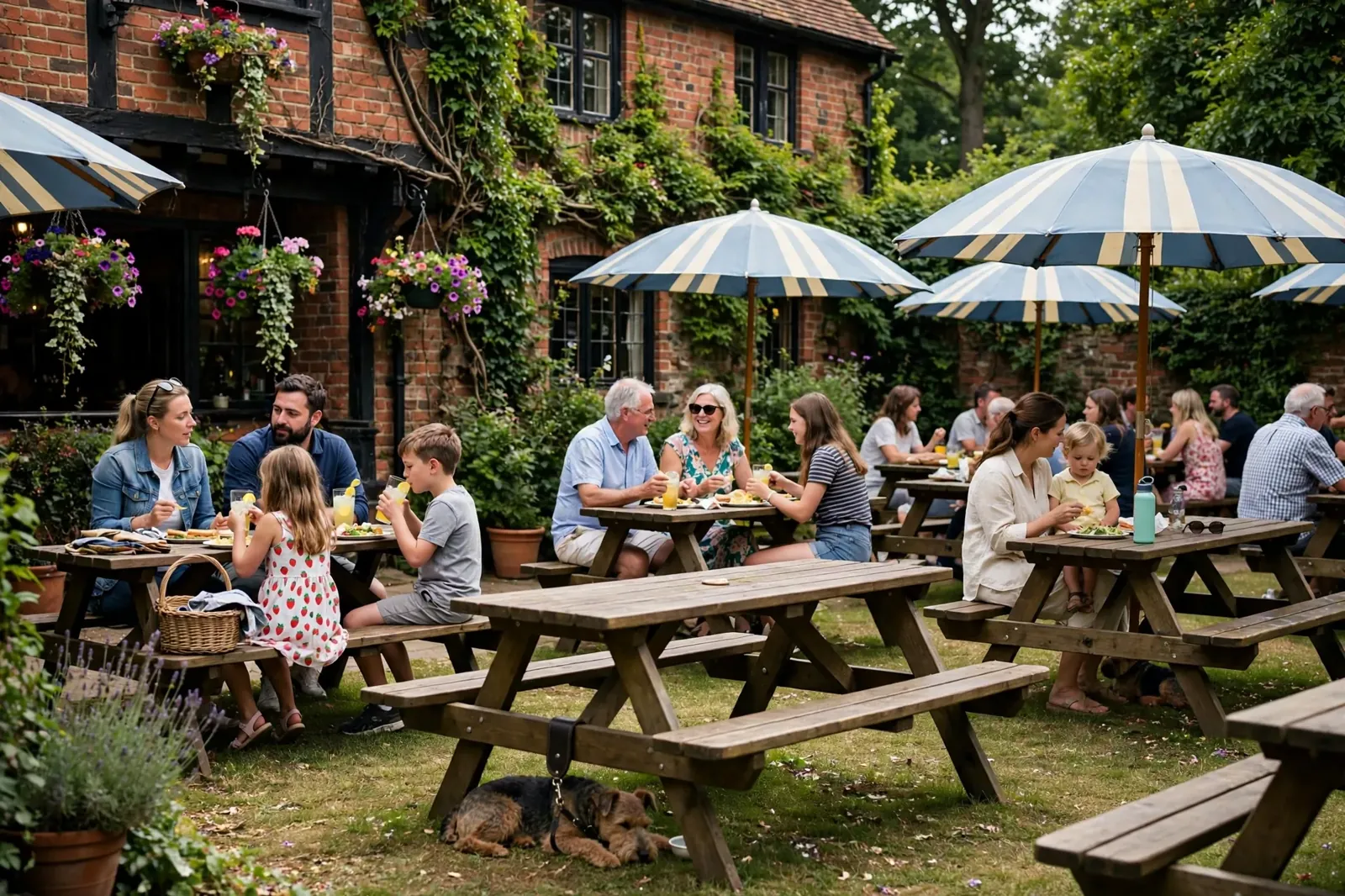
No sign at the gate can capture how a pub garden actually runs. The code is learned by watching regulars. Their dogs lie under benches, not on them. Leads are short and tucked away, not stretched across paths like tripwires between tables. Water bowls sit against bench legs where boots do not find them. Owners clear up the moment anything happens and carry waste to the bin without being asked. Children are greeted at the adults invitation, not mobbed by a hopeful dog hoping for dropped chips. The big exception to garden freedom is Wetherspoon: see our guide to dogs in Wetherspoons — company policy does not allow animals in pubs, hotels, gardens or other external areas.
That code exists because a garden is shared leisure space at close quarters. On a sunny Saturday it holds toddlers, birthday parties, walkers with three large dogs, a landlord collecting glasses at speed, wasps interested in everyones lunch and at least one dog that would rather be anywhere else. Etiquette is not stuffiness here. It is the traffic system that lets all of that coexist within a few metres of each other. The same settle-and-stay etiquette applies at a dog friendly afternoon tea, where dogs are seated in a named room and human food stays on the stand.
This guide spells the code out section by section, with the reasons behind each rule so you can adapt it intelligently to small courtyards, sprawling lawns, terraced beer gardens and country pubs where the garden runs into a field path. Check the pubs own rules on arrival too, because individual houses set boundaries on areas, hours and play equipment, and their word outranks any general guide, including this one. For the meal that follows the garden drink, the same settle skills carry straight into our restaurant dining guide.
Leads, benches and personal space
Keep the lead short, fixed and boring. A standard lead held or secured so your dog can lie down, turn and reach water, but cannot reach the next tables feet, plates or dog, is the garden standard. Extending leads are the gardens recurring accident: they vanish against grass, wrap chair legs, deliver your dog uninvited into a strangers lunch and saw at ankles when a squirrel appears. If you only own an extending lead, lock it at short length for the whole visit or borrow the principle for next time and buy a plain lead.
Position is everything. Settle the dog under your bench or table where shade and shelter live, or tight beside your seat on the side away from passing traffic. Never in the walkway to the bar door, the toilets, the smoking area gate or the play area entrance, where every passer-by becomes an interaction your dog must process. If the only free bench leaves your dog in a thoroughfare, ask staff if a quieter corner is coming free, or take drinks to the edge of the lawn if the pub allows it.
Furniture rules are simple: dogs on the floor unless a member of staff explicitly invites otherwise. Benches are seating and tables are for food, and a dog on a picnic table, however photogenic, ends conversations with landlords quickly. Bring a mat or use your coat on cold or wet ground, especially for older dogs, because a dog that is comfortable stays settled while a dog on cold slabs begins the fidgeting that precedes every garden incident.
Securing a lead needs thought. Tie to a bench leg or your own ankle rather than a free-standing table that a strong dog can drag, and never leave the dog tied alone while the whole party goes inside. One person stays, always. A tied, unsupervised dog approached by strangers is the gardens most preventable problem, and pubs that ban dogs usually cite exactly that scene.
Water, food and the chip problem
Water is a right, but the bowl has etiquette. Many gardens provide a dog bowl near an outside tap; ask where it is rather than letting your dog drink from glasses, fountains or other dogs bowls. Place the bowl hard against your bench leg, empty any remainder onto grass away from seating when you leave, and bring your own folding bowl at busy times when the shared bowl is doing rounds, which is also the hygienic choice for dogs prone to kennel cough or stomach upsets.
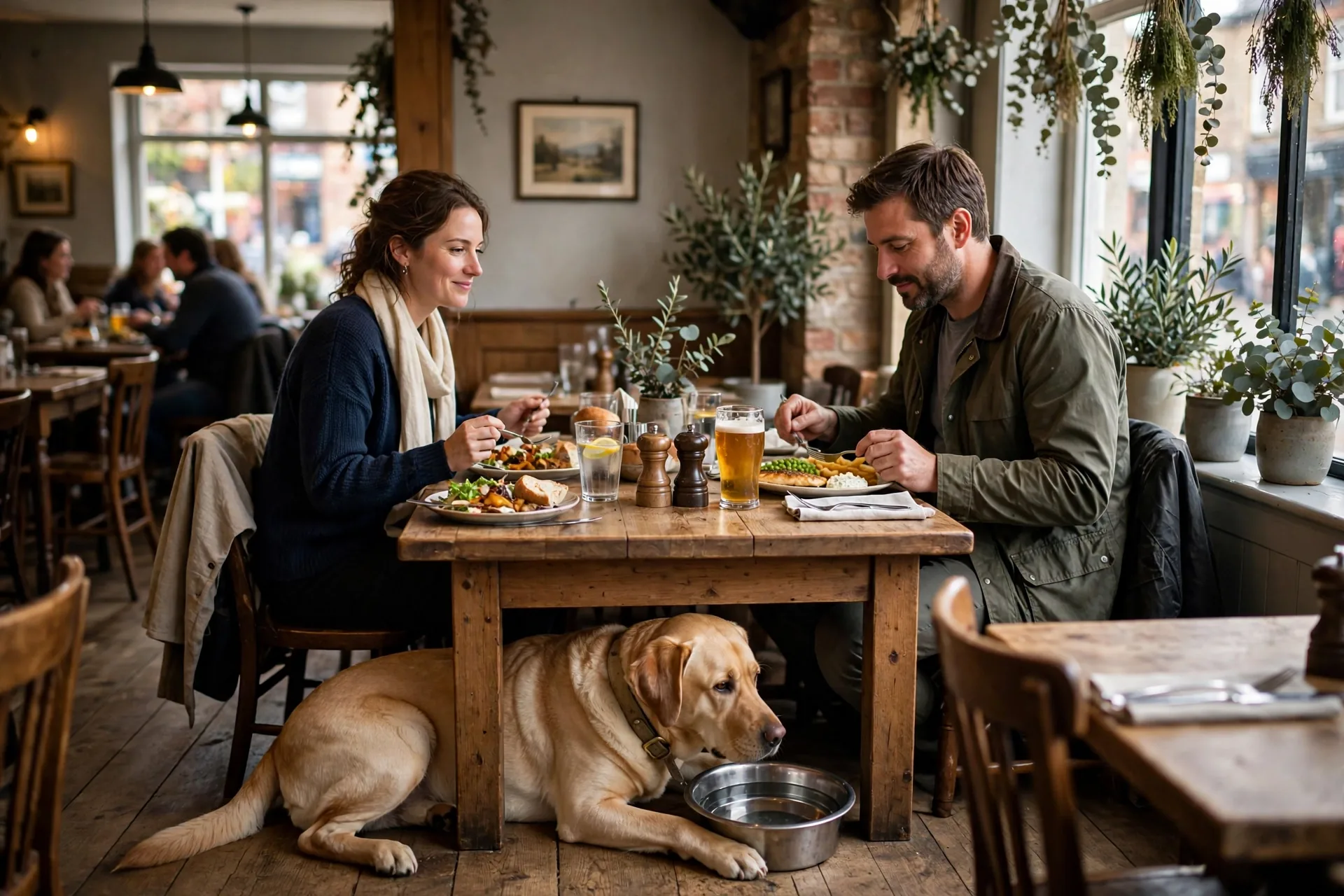
Food is where garden discipline is tested. Pub lunches arrive at dog nose height on low picnic tables, carried past your dogs face by staff with full trays. A practiced leave and a dog settled facing away from the serving route will carry you through. Feeding your dog chips, pork scratchings or pie crust at the table teaches scanning and begging, and rich salty food frequently produces a memorable night for the wrong reasons. If your dog eats during a long garden session, give normal food in its bowl, at the edge of your space, at a natural break, and tell neighbouring tables nothing is expected of them.
Other peoples generosity needs a cheerful fence. Strangers, especially after a drink or two, offer treats as friendship. A smiling line works everywhere: thanks, but he is training and cannot have extras today. Use it early, before the first chip creates a negotiation. For dogs with allergies or serious dietary rules, say so plainly and position the dog where offerings are physically harder, because most people mean well and simply do not think in ingredients.
Wasp season adds a small protocol. Keep sweet drinks and dog treats covered where you can, never let a dog snap at wasps around a bowl, and move benches if a dog becomes fixated. Landlords know their gardens wasp hotspots by August and will point you to a calmer table if asked.
Children, play areas and balls
Gardens with play areas are family territory, and dogs and play equipment mix only under rules. Many pubs exclude dogs from the fenced play area itself, rightly, because small children fall, run and drop ice cream at dog height. Respect that boundary even when the fence is symbolic, keep your dog settled well away from the equipment edge, and never let a dog chase a ball, football or frisbee that belongs to the games in progress, however good-natured the theft looks in photographs.
Introductions to children follow the childs adults, not the childs enthusiasm. A toddler running at your dog shouting puppy is a moment for calm management: step between kindly, settle your dog behind your legs, and let the parent collect and coach their child while you coach yours. Older children can be invited to say hello properly if your dog enjoys it: side-on, hand low, one stroke, done. You are modelling good dog manners to the next generation of owners in real time, which regulars quietly appreciate.
Your own children need the same structure. A child cannot supervise a dog in a garden while adults order inside, and a lead handed to a six-year-old is a suggestion, not control. Keep responsibility visibly with an adult, give children jobs that help, such as carrying the mat or the folding bowl, and plan toilet and bar trips in pairs so the dog is never the excuse for a lapse.
Noise from play is training gold if dosed well. A dog that can settle while a birthday party plays ten metres away has learned a durable skill, built in short successful visits rather than one overwhelming festival afternoon. Start at the gardens quiet edge at quiet hours, the pattern used for cafes in our cafe guide, and move closer to the action over weeks, not minutes.
Meeting other dogs in a crowded garden
Garden dog meetings work best when they mostly do not happen. On-lead greetings nose to nose in a narrow bench gap create tension neither dog chose, with leads tangling and owners apologising to spilled drinks. The regulars move is a nod, a wide arc, and dogs settled at their own tables aware of each other and unbothered. If both owners genuinely want a meeting, take it to the gardens open edge, keep leads loose, count to three and walk apart. Space, not the bench maze, is where dogs read each other well.
Watch for the dog that is not coping. A dog lunging, hard-staring or barking continuously from another table is stressed, not naughty, and your best contribution is distance and a screen: reposition your bench if you can, turn your dog away, and let staff help if a move would calm the garden. Never let your dog answer back from under the table in a barking exchange that escalates across a sunny afternoon, because gardens remember noise long after the cause is forgotten.
Intact dogs, bitches in season and known reactive dogs need extra planning and sometimes a different plan altogether. Choose quiet hours, the furthest bench, and keep visits short, or enjoy the walk and the takeaway at home instead. There is no failure in skipping a packed garden on a bank holiday. The failure mode is insisting a stressed dog endure it to prove a point while forty strangers watch.
Resident pub dogs deserve a special mention. The dog asleep by the bar door belongs there, knows the garden and is usually impeccably mannered with guests dogs that respect its space. Do not let your dog charge the resident for a play session, and ask staff before any introduction. A good relationship with the pub dog is the highest honour a visiting dog can earn, and it is earned by being ignorable.
Clearing up, mud and leaving no trace
Clear up instantly, completely and without commentary. Carry bags on your person, not in the car, use them the second your dog toilets anywhere in the garden or its approaches, and bin them in the outside bin the pub designates, never in indoor bins or general litter bins if staff direct otherwise. If your dog toilets on a path or, worst case, near another table, clean thoroughly, apologise briefly to anyone affected and tell staff if a surface needs water. Handled this way, an accident becomes a non-event. Handled slowly, it becomes the gardens story of the day.
Mud follows the same principle indoors and out. After a wet walk, towel the dog in the car park before the garden if the pub is your post-walk stop, keep the dog on hard standing rather than the lawns best grass where possible, and wipe bench-adjacent splashes you caused. In winter many gardens become gravel-and-terrace only for good reason, and respecting a landlords wet-weather boundary keeps the garden open to dogs in spring.
Leave your pitch better than gossip requires. Glasses returned or stacked as the house prefers, dog water emptied onto grass, mat shaken outside away from tables, no treats or chew fragments left in the grass for the next dog to guard or a toddler to find. These small departures are what staff notice after you have gone, and they decide whether the garden stays dog-friendly far more than any petition does.
Evenings, events and knowing when to call it a night
Gardens change character after dark and your dog management should change with it. Lighting drops, music and voices rise, glasses travel faster and lead trip hazards multiply. Move your dog closer, shorten the lead further, and give a proper toilet break before the last round rather than after. At closing time, leave through the flow calmly rather than joining the cheerful crush at the gate with an tired dog at ankle height among unsteady boots.
Events concentrate every risk. Quiz nights spill outside in summer, live music brings speakers into gardens, barbecues perfume the air at dog height for hours, and big-screen sport produces sudden roars that startle sound-sensitive dogs into tables. Check the pubs event calendar before a long garden session in season, choose the far bench for any event you attend, and treat fireworks nights, which many pubs mark with displays, as a hard no for dogs in gardens anywhere nearby.
Alcohol is the human factor nobody lists. A dog relies on its owners judgement for spacing, lead handling and reading trouble early, and that judgement softens across a long session. Rotate a sober dog handler the way groups rotate drivers, or keep sessions modest. The gardens saddest incidents almost always involve a dog whose owner was three drinks past noticing, and they are entirely preventable with that one rota.
Finally, read your own dog for the leaving signal: repeated yawning, lip licking, scanning, inability to resettle after a break. Leaving twenty minutes early on a good note preserves the garden as a happy place your dog will settle in faster next time. Staying to the bitter end of a dogs coping teaches the opposite lesson, at the price of everyone elses evening too.
Becoming a garden regular: the long game
Dog-friendly gardens survive because regulars protect them. If a pub garden becomes your local, invest like a regular. Learn staff names and the houses preferences, from where bowls live to which gate to use after muddy walks. Keep your bench habits impeccable at busy times when you are the example new dog owners copy. Mention problems early and privately to staff, whether it is a broken gate latch your dog could push or a wasp nest forming near the dog bowl tap.
Support the pub that supports dogs in the ways that count. Eat there, not just nurse one drink for three hours at the best table on the busiest day. Book for group garden meals, follow the houses social posts, and leave reviews that name the dog welcome specifically when it was good, because landlords weigh those signals when a complaint tempts them to simplify life with a ban.
And when a garden rule frustrates you, a new bench restriction, a lead rule tightened, a garden closed to dogs on event days, assume a reason arrived before you did. Ask staff about it like a regular rather than arguing like a customer who has been wronged. Gardens that stay dog-friendly for decades are partnerships between landlords and the owners who use them well. Every calm visit, every clean departure and every settled dog under a bench is a vote for the next dog through the gate.
The same manners apply beyond the pub garden: see how coffee chains, brewery tours and vineyards handle dogs, from puppuccinos and taprooms to tasting rooms where dogs wait in a different area.
Practical questions
Before you go
Must dogs stay on leads in pub gardens?
In most pub gardens, yes, and it is the core etiquette rule even where a lead is not formally required. Keep the lead short and fixed, settle the dog under or beside your bench out of walkways, and never use an unlocked extending lead. Always follow the individual pubs rules, which staff can confirm on arrival.
Can my dog sit on the bench or table?
No, unless staff explicitly invite it. Dogs belong on the floor, ideally on a mat you bring, because benches are seating and tables are for food and drinks. A mat also helps the dog settle, protects older joints from cold ground, and signals to staff and other guests that the dog has a defined place.
What should I do about water for my dog in a pub garden?
Ask staff where the dog bowl and tap are, or use your own folding bowl, and place it against your bench leg out of foot traffic. Do not let your dog drink from glasses or other dogs bowls. Empty leftover water onto grass away from seating when you leave, and bring your own bowl at busy times or if your dog is prone to stomach upsets.
Are dogs allowed in pub play areas?
Usually not inside fenced play areas, and dogs should be kept settled well away from play equipment even in open gardens. Children fall, run and drop food at dog height, so supervise every interaction, follow the childs parents lead on greetings, and never let a dog join games or chase balls belonging to children.
What if my dog barks in the pub garden?
Settle it quickly with a short walk away from the tables, a toilet break and a reset of the settle routine. If barking continues, move to a quieter corner or finish your visit early and graciously. Persistent noise is the most common reason gardens restrict dogs, and leaving on a good note protects both your dogs training and the pubs welcome.
Can I leave my dog tied outside while I order at the bar?
Do not leave a dog tied and unsupervised in a garden or outside a pub. Strangers, children and other dogs may approach, and most garden incidents involve unsupervised dogs. Take turns so one person always stays with the dog, or order at the table where service allows it.