This guide is independent and contains no paid placement. Drive-in policies change by venue and event, so check the official guidance before you travel.
Many UK drive-ins welcome dogs, especially if the dog stays in the car and settles well. Book an edge pitch, walk the dog first, set the car up like a den, keep the sound low, and be ready to leave early without feeling you have wasted the night.
Why the car helps, and where it hurts
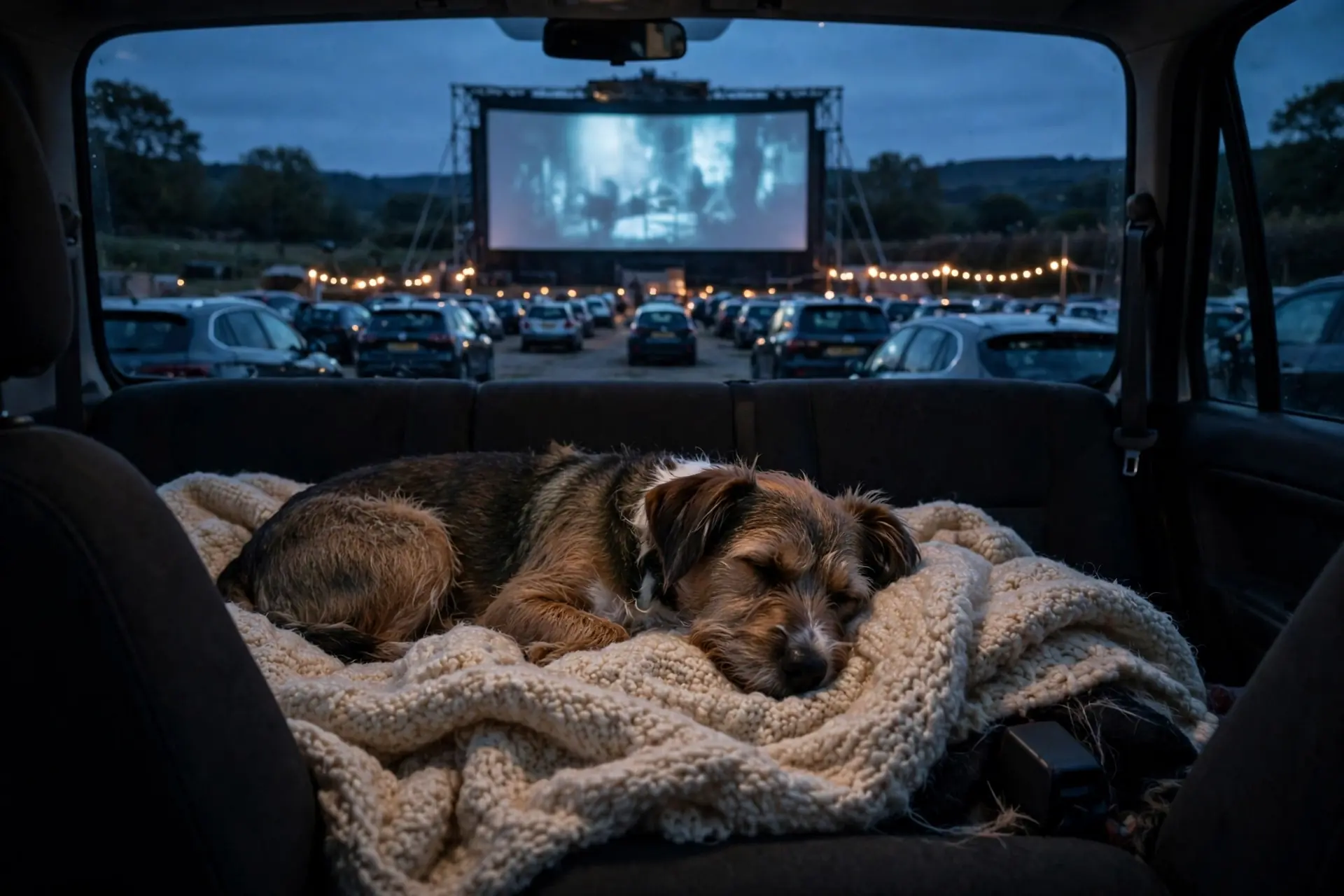
A drive-in is one of the few public entertainments where your dog does not have to cope with a strange room, a crowd pressing close, or a long walk through a busy venue. The car is familiar, it smells like home, the dog can lie in its usual spot, and you can leave whenever you need to without walking past rows of seated strangers. For a dog that travels calmly and settles in the car, that familiarity is a genuine advantage, and it explains why many owners report that their dog slept through the entire film while they enjoyed a rare night out together.
The same familiarity can also hide problems. A car that is comfortable for a twenty-minute journey may become stuffy, cramped or boring over a two-hour film, especially if the dog cannot stretch, toilet, or move away from a noisy soundtrack. Dogs that are restless in stationary cars, that bark at people walking past, or that become anxious when the engine is off and the world goes quiet may find a drive-in more stressful than a walk. The honest test is not whether your dog likes car journeys, but whether they can settle in a parked car, in the dark, with unfamiliar sounds and people moving nearby, for the length of a feature film.
Consider the dog's whole evening, not just the film. A dog that has had a good walk, a toilet break, a light meal and a calm journey will arrive ready to rest. A dog that has been left alone all day, rushed to the venue, and parked in a noisy field without a walk will arrive already aroused and unlikely to settle. If you can, visit the venue area earlier in the day, or at least build in a proper walk nearby before the gates open, so the film starts with a tired, comfortable dog rather than a wired one.
How a UK drive-in actually works
Most UK drive-ins are seasonal or pop-up events held in fields, car parks, airfields or showgrounds, rather than permanent cinemas. You buy a ticket per car, not per person, arrive during a stated window, and are directed to a marked pitch facing a large outdoor screen. Sound usually comes through an FM frequency tuned on your car radio, though some venues use a portable speaker, a phone app, or a hired radio. There is often a food van, toilets, and a small shop, but facilities vary enormously, and some rural venues have little more than portable toilets and a burger van.
Arrival order matters. Early arrivals usually get the front rows and the best view, while later arrivals may be parked behind taller vehicles, which can affect both your view and your dog's comfort if you need to open doors. Some venues allocate pitches by vehicle size, so a tall van may be placed at the back regardless of arrival time. Gates often close shortly before the film starts, and latecomers may be turned away, so plan to arrive well within the window. If you need an edge pitch for toilet breaks or an easy exit, say so on booking or on arrival, and explain that you have a dog, because staff can often help if they know in advance.
Check the small print before you book. Some drive-ins welcome dogs free of charge, some charge a small dog fee, and some allow dogs only at family screenings or only if they remain in the car. A few venues ban dogs entirely during busy events for safety reasons. The policy may also differ between the screening itself and the food area, so ask specifically about the car, the toilets route, and any outdoor seating. If the policy is unclear online, a short message to the venue, stating that your dog will stay in the car, usually gets a clear answer.
Choosing the right film and time
Film choice matters more for dogs than for people. A quiet drama or a gentle family film is far easier for a dog than a horror film, an action film with sudden explosions, or a thriller with sustained loud music. Dogs hear higher frequencies than people and react to sharp, sudden sounds, so a film with frequent gunfire, screaming or sirens is a poor first choice, even if the volume is low. For a first drive-in, pick a familiar, calm film at a family-friendly time, when the audience is likely to be relaxed and the venue is less crowded.
Timing matters too. Summer screenings often start late, after sunset, which can mean a long evening for a dog that normally sleeps early, while winter screenings may start earlier but involve colder weather and longer darkness. A screening that finishes by 10pm is usually kinder than one that runs past midnight, especially for puppies and senior dogs. Check the running time, including any short film or interval, and add the journey home, because a dog that copes for ninety minutes may struggle at two hours. If the venue offers double bills, treat the second film as optional, not as a commitment, and plan to leave after the first if your dog is restless.
Weather and crowd size should also shape your choice. A weekday screening in good weather, with a smaller audience, is a much gentler introduction than a sold-out Saturday night in a storm. If you are travelling some distance, remember that a long drive home after a late film, with a tired dog, is part of the outing, not an afterthought. The planning habit that helps with holiday parks helps here too: a realistic timetable, a known toilet stop, and a backup plan if the evening does not go as hoped.
Setting up the car for a dog
Set the car up before you leave home, not in a dark field while other cars are arriving. Put the dog's usual blanket or bed in their spot, add a familiar-smelling item, and make sure they have room to lie flat, turn around, and stretch without climbing over bags or people. In an estate or hatchback, the boot with a dog guard can work well, but the dog will be further from you and may feel isolated, so test that arrangement on a short stationary wait first. In a saloon, the back seat with a seat cover is often better, because you can reach the dog easily and reassure them without leaving your seat.
Keep the dog's area clear of loose items that could slide, fall or be chewed during the film. Secure bags, remove food packaging, and keep leads, torches and wipes within your reach rather than buried in the boot. If your dog normally travels in a crate, a secured crate in the car can be an excellent drive-in setup, provided there is ventilation and the dog can see you. Avoid letting the dog sit on your lap while you drive to the venue and then moving them to the back for the film, because that change alone can unsettle them. Choose one spot for the whole evening and keep it consistent.
Think about doors and windows. You will need to open a door for toilet breaks, and other people will be walking past your car, so agree who handles the dog and who stays with the car. Keep windows mostly closed, both for warmth and to prevent a dog jumping or barking through an open window, but leave a small gap or use a window vent for fresh air if the night is mild. A sunshade or window cover can reduce headlight glare from passing cars, which bothers some dogs, and it also gives the dog a little privacy from passers-by.
Sound, volume and sudden noise
Sound is the most underestimated challenge at a drive-in. Even at low volume, a film soundtrack includes music, dialogue, sound effects and sudden loud moments, and a dog in a metal box hears those sounds differently from a person in a living room. Test the FM frequency as soon as you park, set the volume to the lowest level at which you can still follow dialogue, and keep it there rather than turning it up for action scenes. If the venue provides a portable speaker, place it away from the dog's ears and check that it does not rattle or distort, because distorted sound is more irritating than clear sound at the same volume.
Some dogs are bothered less by volume than by specific sounds: sirens, barking on screen, fireworks, or high-pitched music. If you know your dog reacts to on-screen dogs, choose a film without prominent animal characters for the first visit. A pair of ear covers or a snood designed for dogs can help some noise-sensitive dogs, but introduce it at home first, with treats, rather than putting it on for the first time in a dark car park. If your dog is on anxiety medication, follow your vet's advice about timing, and do not rely on medication alone to make an unsuitable film suitable.
Also consider the sounds outside the car. Generators, food vans, children playing, other dogs barking, and cars arriving late all add to the load. A dog that is already listening to the film may cope with these, or may become overstimulated by the combination. If your dog starts scanning, whining or barking at outside sounds, a calm word, a hand on their side, and a small chew can help, but do not keep turning the film up to mask outside noise, because that simply raises the total volume. Sometimes the kindest choice is to turn the sound down, let the dog settle, and accept that you will miss some dialogue.
Toilet breaks without missing everything
Toilet planning is the difference between a relaxed evening and a frantic one. Walk your dog thoroughly before you arrive, including a proper sniffing walk rather than a rushed pavement stop, and offer water before the film, not a large drink during it. Most dogs can manage a two-hour film if they have toileted beforehand, but puppies, elderly dogs and dogs on medication may need a break halfway through. If that is likely, choose an edge pitch, sit near the end of a row, and plan your break for a quiet scene or an interval, rather than waiting until the dog is desperate.
Take a torch, bags and wipes, and keep the dog on a short lead at all times in the car park, because other cars may be moving, children may be running, and other dogs may be out for the same reason. Walk to the designated toilet area if there is one, and avoid letting your dog toilet on other people's pitches or near food vans. If the venue has no dog toilet area, ask staff where to go, and be prepared to walk to the edge of the site. Keep the break short and calm, without turning it into a play session, so the dog understands that the evening is continuing and can settle again on return.
If your dog toilets in the car, do not scold them. Clean up calmly, check whether they are unwell or simply caught short, and consider leaving early if they seem distressed. Accidents are more likely if the dog was rushed before arrival, if the film is very long, or if the dog is anxious, so treat an accident as information for next time rather than a failure. For future visits, a shorter film, an earlier toilet walk, or a venue with easier toilet access may solve the problem entirely.
Staying warm after dark
British evenings cool quickly, even in summer, and a parked car loses heat faster than a house. A dog that is comfortable at 9pm may be shivering by 11pm, especially if they are small, elderly, short-coated or lying still for a long time. Bring a dog coat, an extra blanket, and a spare towel, and check the dog periodically by feeling their ears and body, not just by looking at them. If the dog curls tightly, tucks their tail, or starts shivering, add a layer, offer a warm drink of water, and consider turning the car heater on briefly, with ventilation, rather than letting them get cold.
Heating a parked car needs care. Running the engine for heat uses fuel, produces exhaust, and may be restricted by the venue, so ask about the policy before you rely on it. Short bursts of heating with a window cracked open are safer than leaving the engine running for the whole film, and a well-insulated blanket often does more than a heater anyway. In winter, a hot water bottle wrapped in a cover, placed beside but not under the dog, can help, but check it regularly and remove it if the dog moves away from it. Never leave a dog alone in a car with the heater on and no ventilation, and never leave a dog in a car that is becoming too hot in summer either.
Summer nights bring the opposite risk. A car parked in the last of the sun, then closed up for a film, can become warm and stuffy, particularly if the dog is in the boot. Park in shade if possible, use window vents, and bring water in a spill-proof bowl. Watch for heavy panting, restlessness, or bright red gums, and be ready to open doors, move to shade, or leave early if the dog overheats. A dog that is too hot will not settle, and a film is never worth pushing a dog into heat stress.
Food, smells and begging
Drive-in food is part of the fun for people and a major distraction for dogs. Popcorn, burgers, hot dogs, chips and sweet treats produce strong smells that drift between cars, and a dog that is trying to settle will be constantly reminded that food is nearby. Feed your dog their normal meal before you leave, so they are not hungry as well as tempted, and bring a long-lasting chew or a stuffed food toy to give them something appropriate to focus on. Avoid giving the dog your cinema food, especially anything salty, fatty, spicy, or containing onion, garlic, chocolate or artificial sweeteners, all of which can upset a dog's stomach.
Be strict about dropped food. Popcorn and chips end up on car floors, and a dog that scavenges may eat something harmful or simply become obsessed with searching for more. Keep food in closed containers, eat over a tray or napkin, and clean up spills promptly. If you buy food from a van, keep the dog in the car while you queue, because a busy food queue with other dogs, children and hot food is a stressful place for a dog on a lead. If your dog begs persistently, a calm, consistent response works better than alternating between giving in and scolding, so agree the rules with everyone in the car before the film starts.
Also think about your dog's own treats. A chew that is safe at home may become a choking risk in a dark, moving car if the dog becomes excited, so choose something you have used before and can monitor easily. Avoid rawhide and small bones, and do not leave the dog unsupervised with a chew while you go to the toilet or food van. Water is essential, but offer it in small amounts during the film rather than leaving a full bowl that can spill, and take the bowl away if the dog is restless and likely to knock it over.
Rain, fog and steamed windows
Rain is the classic drive-in problem, and it affects dogs as well as viewing. Heavy rain on the windscreen blurs the picture, wipers need to run intermittently, and the sound of rain on the roof can mask dialogue or add to a nervous dog's stress. Some venues allow you to watch with wipers on, others ask you to keep them off during the film, so check the policy and bring a cloth for the inside of the windscreen. If rain is forecast, consider whether the outing is still worthwhile, because a wet, noisy, blurry film with a restless dog is rarely a good evening.
Fog and mist can be worse than rain, because they can hide the screen entirely while the sound continues, leaving you paying for an audio experience in a damp car. Check the forecast for your specific location, not just the general area, and have a backup plan if visibility drops. Steamed windows are a related nuisance: warm breath, wet dogs and closed windows quickly fog the glass, so crack a window slightly, use the demister briefly, and keep a cloth handy. A dog that is wet from a toilet break will make steaming worse, so dry them with a towel before returning to the car.
Wet ground also affects toilet breaks, because muddy fields, puddles and slippery surfaces make a quick break slower and messier. Bring a towel, a spare blanket, and a bag for wet items, and consider a dog coat with a belly cover if the ground is very muddy. If the venue becomes waterlogged, staff may move cars or cancel the screening, so follow their instructions and do not drive across soft ground without guidance, because a stuck car with a dog inside is a miserable end to the night.
Battery, engine and car safety
A flat battery is the most common practical problem at a drive-in, and it is avoidable with a little preparation. Arrive with a fully charged battery, turn off headlights, interior lights and phone chargers that are not needed, and use the radio at a moderate volume rather than running the full sound system with the engine off. If your car has an accessory mode, use it correctly, and check the manual for how long the radio can run without the engine. Some venues provide jump-start assistance, but do not rely on it, and consider carrying jump leads or a portable jump starter if you regularly attend drive-ins.
Engine use needs thought. Some venues prohibit running engines during the film because of exhaust and noise, while others allow brief use for heating or charging. Follow the venue rules, and never run the engine in an enclosed space or with the exhaust blocked by grass, mud or another vehicle. Carbon monoxide is odourless and dangerous, so ventilation matters even when you are only running the engine briefly. Keep children and dogs away from the exhaust, and if you feel drowsy or headachy, switch the engine off, open the doors, and move to fresh air immediately.
General car safety still applies in a dark field. Lock the doors when you are settled, keep valuables out of sight, and agree how you will exit in an emergency, because other cars may block your route. If you need to leave during the film, use dipped headlights, drive slowly, and watch for pedestrians and dogs, who may be hard to see in the dark. A torch is useful both for toilet breaks and for checking the ground around your car before you move, so keep one within reach rather than in the boot.
Other dogs, children and headlights
Other dogs are both a pleasure and a risk at a drive-in. Some dogs will bark at every dog they see arriving, others will settle once the film starts, and a few will remain alert all evening. If your dog is reactive, choose a pitch away from the main entrance and toilet route, where foot traffic is lower, and keep windows mostly closed to reduce visual triggers. A blanket over part of the window can help a reactive dog by blocking the view of passing dogs, while still leaving ventilation. If your dog barks persistently, consider leaving early, because a barking dog disturbs other viewers and will become more aroused, not less, as the evening goes on.
Children add excitement, noise and food smells, and they may want to visit your dog, especially if they can see them through a window. A polite, brief explanation usually works, but be prepared for children approaching the car without asking, and keep the dog secure so they cannot jump out when a door opens. If you have children in your own car, agree the rules before the film: no shouting during quiet scenes, no opening doors without asking, and no feeding the dog without permission. A child who is excited about the film can easily overwhelm a dog that is trying to settle, so assign one adult to focus on the dog.
Headlights are a specific drive-in hazard for dogs. Cars arriving late, cars leaving early, and staff vehicles moving around the site all produce sudden bright light that can startle a dog, especially if it shines directly into the car. A window shade or sunshade can reduce glare, and parking away from the main thoroughfare helps. If your dog is light-sensitive or easily startled, choose a pitch near the edge and away from the entrance, and be ready to reassure them calmly when a car passes. Over time, many dogs habituate to headlights, but a first visit is not the time to test that.
Leaving early, gracefully
Leaving early is not a failure, and planning for it makes it much easier. Before the film starts, check how to exit: whether you can drive out at any time, whether you need to wait for staff, and whether your pitch allows an easy departure without reversing through other cars. Edge pitches are best for this, which is another reason to request one when you book. Tell the people in your car in advance that you may leave early if the dog is unsettled, so nobody is surprised or disappointed, and agree that the dog's welfare comes first.
If you do leave, do it calmly and safely. Switch on dipped headlights, drive slowly, and follow any staff directions, because pedestrians and dogs may be moving around parked cars in the dark. Do not reverse blindly, and do not rush to escape the site, because a hurried exit is when accidents happen. Once you are out, give the dog a toilet break, water and a calm walk before driving home, so the evening ends with a positive experience rather than a stressed dash. A dog that leaves early and then enjoys a quiet walk will remember the outing far more kindly than a dog that was forced to stay.
Afterwards, reflect honestly on what happened. Was the film too loud, too long, or too exciting? Was the dog too tired, too hungry, or too cold? Was the pitch too busy, or the toilet break too difficult? Those answers tell you whether a different film, a different venue, or a different time of day would work, or whether drive-ins are simply not your dog's thing. Many dogs enjoy drive-ins enormously, but many others prefer a walk and an early night, and both outcomes are perfectly reasonable. The goal is a good evening for everyone, not a completed film at any cost.
A packing list that earns its space
Pack the night before, and keep the dog's items in one bag so nothing is forgotten in the dark. Essentials include the dog's blanket or bed, a coat if the weather is cool, a lead, bags, wipes, a torch, water and a spill-proof bowl, a long-lasting chew, and a towel for wet paws. Add a portable radio as a backup for sound, jump leads or a portable charger, a cloth for steamed windows, and a spare blanket for yourself, because you will also get cold. If your dog takes medication, pack it, and if they wear a harness or muzzle in busy places, bring those too, even if you do not expect to need them.
Leave behind anything that adds risk without adding comfort. Avoid retractable leads, which tangle in the dark, and avoid strong-smelling treats that will keep the dog aroused all evening. Do not bring a new toy that squeaks loudly, a new chew that you have not tested at home, or a new coat that the dog has never worn, because a drive-in is not the place to introduce novelty. The best packing list is boring: familiar items, tested equipment, and a few spares, so that when something goes wrong, and something usually does, you have a simple solution ready.
Finally, check the venue details one last time before you leave. Confirm the gate opening time, the FM frequency if published, the dog policy, the toilet facilities, and the weather forecast for the evening. Charge your phone, fill up with fuel, and make sure you know the route home, including a safe place to stop if the dog needs a break. A little preparation turns a drive-in from a gamble into a genuinely enjoyable night out, and it leaves you free to enjoy the film, knowing that your dog is comfortable, safe and, with luck, fast asleep by the interval. For more ideas on planning calm evenings away, see our guide to boat hire and shore walks, which covers a slower kind of day out that suits many of the same dogs.
Practical questions
Before you go
Are dogs allowed at UK drive-in cinemas?
Many drive-ins welcome dogs, but policies vary by venue and event, and some restrict dogs to certain screenings or require them to stay in the car. Always check the official guidance before you travel and confirm the rule for your screening.
Can my dog sit outside the car during the film?
Some venues allow dogs beside the car on a lead, while others require dogs to stay inside the vehicle for safety and to avoid disturbing other viewers. Ask before you arrive, and plan for the stricter rule if the answer is unclear.
How does the sound work at a drive-in cinema?
Most UK drive-ins broadcast sound through an FM radio frequency, played through your car speakers or a portable radio. Test the frequency on arrival, bring a backup radio, and keep the volume low enough that a nervous dog is not startled by sudden loud scenes.
What if my dog needs the toilet during the film?
Walk your dog thoroughly before the film, choose a pitch near the edge if possible, and plan a quiet toilet break at a natural pause. Bring bags, wipes and a torch, and keep the dog on a short lead in the car park.
Will my car battery last through a whole film?
A healthy battery usually copes with radio use for one film, but headlights, heaters and phone charging add drain. Arrive with a good charge, avoid unnecessary electrics, and ask staff what to do if you need a jump start.
Can I leave early if my dog is unsettled?
Yes, in most venues, though you may need to wait for a safe gap or follow staff directions because of parked cars and pedestrian routes. Leaving early is always better than forcing a distressed dog to stay through the credits.