This guide is independent and contains no paid placement. If affiliate links are added later, they will be clearly marked and will not change our editorial checks.
Some British pottery studios welcome a calm, well-behaved dog, many allow one only in a waiting area, and some allow none at all. Always ask before you book, keep your dog on a short lead away from wheels, kilns, clay and glaze, and plan the visit around a dog that can settle quietly for the length of the session.
Do studios welcome dogs at all?
The honest answer is that it depends entirely on the individual studio. Pottery studios in the UK range from large commercial centres with a shop, cafe and several teaching rooms to a single potter working from a converted barn, a garden studio or a small unit on a farm. A large centre may have a reception area where a dog can wait comfortably, while a one-person studio may have no spare floor space at all. The words dog-friendly on a website can mean very different things in each case, so treat the label as a starting point for a conversation rather than a promise that your dog can sit beside the wheel.
There are good reasons for the variation. A pottery studio is a working space full of fragile things at every stage: soft clay that dents with a touch, leather-hard pots that crack if knocked, glazed ware waiting for the kiln, and finished pieces on open shelves. Add a spinning wheel, buckets of slip, glaze chemicals, sharp trimming tools, electric kilns and a floor that is often wet or dusty, and it becomes clear why a studio owner thinks carefully before inviting a dog into the room. None of that makes a visit impossible. It does mean the studio needs to know the size, temperament and behaviour of your dog before it can say yes with confidence.
Location matters too. Studios in market towns, coastal villages and rural counties often have more outdoor space, a yard or a garden where a dog can wait, and a quieter atmosphere than a city-centre studio above a shop. A studio inside a shared craft centre or shopping arcade may have to follow the rules of the whole building, including a no-dogs policy in corridors or shared toilets, even if the potter personally loves dogs. Studios that run sessions for children, schools or vulnerable adults may also have stricter rules, because the session has to stay calm and predictable for everyone in the room.
The best approach is to assume nothing and ask early. Contact the studio by email or phone at least a few days before the date you want, and describe your dog honestly: breed or type, size, age, whether the dog settles on a mat, how the dog reacts to strangers, other dogs, loud noises and new smells, and whether the dog has been in a workshop or craft space before. A studio that hears a clear, realistic description can give a clear answer. A vague message that simply asks if dogs are allowed often gets a cautious no, because the studio cannot judge the risk. If the answer is no, thank the studio and ask whether a dog can wait in a reception area, a garden or a car with a companion, or whether there is a quieter session that might suit you better. Check the official guidance before you travel if anything about the booking, the venue or the local rules is unclear.
The questions to ask before you book
Once a studio says dogs may be welcome, the next step is to pin down exactly what that means. The details below are the questions that prevent most misunderstandings, and it is worth getting the answers in writing, by email, so you can check them again on the day. Start with the simplest one: is the dog allowed in the making area itself, or only in a waiting area, reception, shop or garden? That single distinction changes everything about the visit, from what you pack to how much of the class you can actually take part in.
Ask about limits and conditions. Is there a size limit, a limit of one dog per person or per session, or a rule that only dogs that can settle on a mat are accepted? Some studios welcome small dogs but cannot safely fit a large dog beside a wheel in a crowded teaching room. Others accept any size but only on sessions with fewer students. Ask whether other dogs will be present, whether the studio has its own dog, and whether the session includes children, because each of those factors changes how your dog is likely to behave.
Ask about the practical layout. Where will the dog sit or lie down, and is there a spot away from wheels, kilns, shelves and walkways? Is there a safe place to tie a lead if you need both hands, or should you plan to keep the lead in your hand or looped around your leg for the whole session? Is there an outdoor area for a toilet break, and can you step outside during the class without disrupting the other makers? A studio with a yard, a nearby lane or a patch of grass is a very different proposition from a studio on a busy high street with no outside space.
Ask about the session itself. Will a kiln be running, and if so, how hot is the room and how close will the dog be to the kiln? Will there be loud noises, such as a clay mixer, a compressor, a banding wheel or a kiln fan? Will the class involve glaze, oxides or other materials that need extra care around animals? Will the tutor need to move around the room, crouch beside you or handle your work, and will that bring strangers close to your dog? These are not fussy questions. They are the difference between a relaxed afternoon and a stressful one.
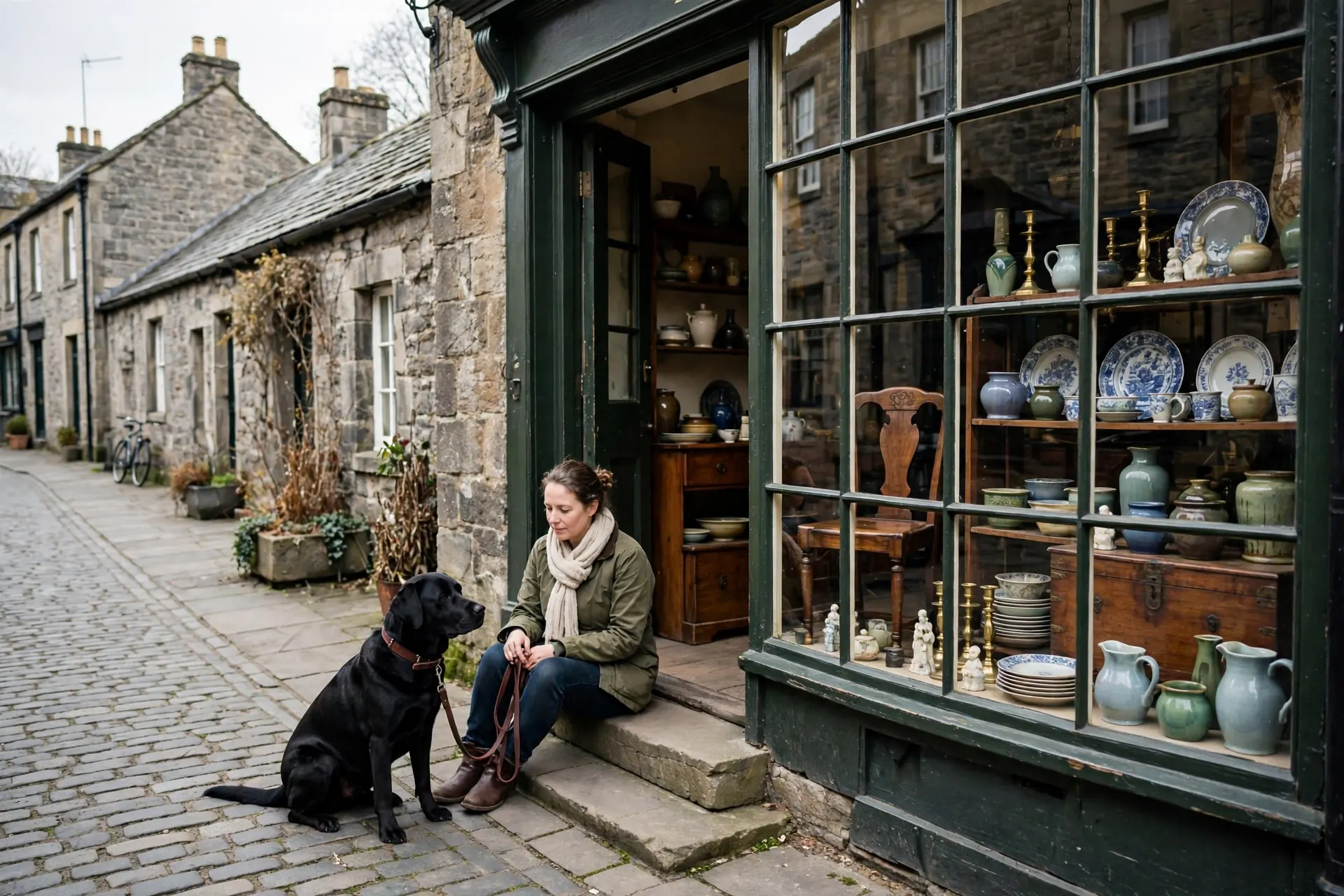
Finally, ask about the rules if things do not go to plan. What happens if the dog barks, needs the toilet urgently, knocks something over or becomes distressed? Will you be asked to leave, and if so, will you get a refund or a chance to rebook? Is there a deposit, and does it cover damage? A studio that can answer these questions calmly has almost certainly thought about dogs before, which is a good sign. If the answers are vague or the studio seems unsure, consider choosing a different session, a private lesson or a studio with more experience of dogs. Our guide to dogs in antique shops in the UK covers similar questions about fragile stock and narrow spaces, and the same habit of asking first applies here.
What a pottery session actually looks like
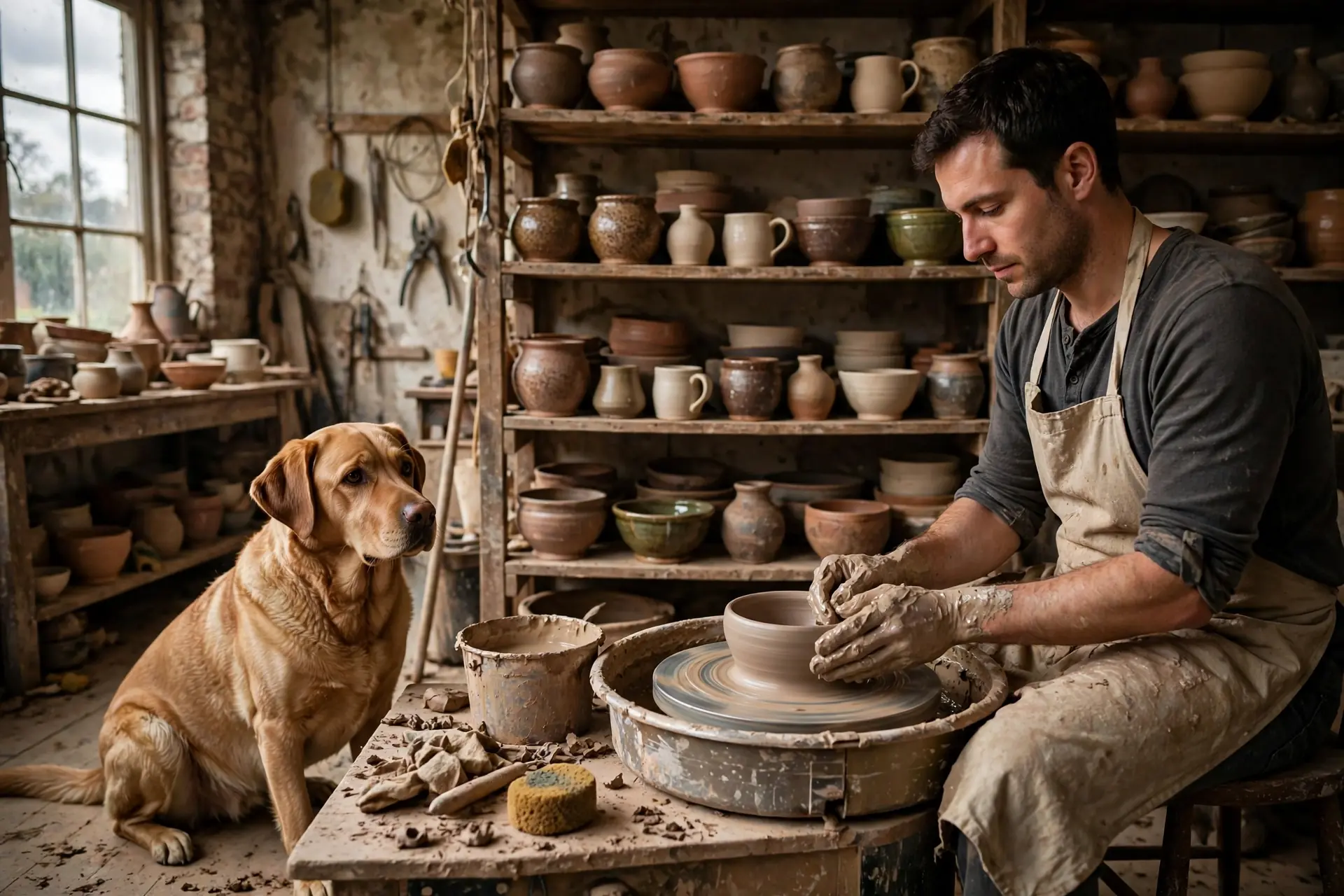
Most beginner sessions in the UK last between one and three hours, and they usually fall into two types: throwing on the wheel and hand-building. A throwing session, often called a taster session, starts with a short demonstration, then each student gets a wheel, a lump of clay and a set of basic tools. The tutor moves around the room, correcting posture, hand position and speed, and students take turns at the wheel if there are fewer wheels than people. A hand-building session is usually slower and quieter: students sit at a table, pinch, coil or slab-build a pot, a mug or a small bowl, and the tutor demonstrates each technique before the group tries it.
For a dog, the two types feel very different. Throwing is noisier and busier, with wheels humming, water splashing and the tutor moving constantly. Hand-building is calmer, with everyone seated and less movement around the room, which often suits a dog that needs to settle. Some studios also offer glazing sessions, where students paint or dip finished pieces in glaze, and these need extra care because glaze materials should not be licked or knocked over. Painting a ready-made ceramic, sometimes called paint-your-own pottery, is usually the calmest option of all: the pieces are already fired, the paints are generally water-based, and the pace is slow, although the shelves are still full of fragile stock.
The rhythm of a session matters when you plan toilet breaks and settling time. The first fifteen minutes are usually the busiest, with introductions, aprons, clay preparation and a demonstration. After that, most students settle into a steady routine and the room becomes quieter. The last part of a session often involves cleaning up, washing hands and tools, and choosing a glaze colour or finish for the finished piece. If your dog struggles with the busy start, ask whether you can arrive a few minutes early to settle the dog before the other students arrive, or whether a smaller group or a private lesson would be possible.
Remember that the pot you make on the day is rarely the pot you take home. Most throwing and hand-building pieces need to dry slowly, usually for one to three weeks, before they can be fired in the kiln. After the first firing, called the bisque firing, the piece is glazed and fired again, which can add another one to three weeks. Some studios offer collection in person, others post the finished piece for an extra fee, and some offer both. Ask about the timeline, the collection window and the postage cost before you book, especially if you are travelling and cannot easily return. A studio that explains the firing schedule clearly is also more likely to have clear rules about dogs, because both depend on careful planning.
Clay, slip, glaze and kiln safety
Clay is the main material in a pottery studio, and it deserves respect even though it looks harmless. Wet clay is soft, sticky and messy, and a dog that steps in it will track it across the floor, onto mats and onto other people's work. Dried clay turns to dust, and that dust should not be breathed in large amounts by people or dogs. Most potters' clay is not acutely poisonous, but it is not food, and a dog that eats a large amount of clay can develop stomach upset or a blockage. The safest rule is simple: keep your dog away from clay, slip and glaze buckets at all times, and do not let the dog lick clay off its paws, the floor or your hands.
Slip is liquid clay used to join pieces together or to decorate the surface, and it is just as messy as wet clay. Glaze is more serious. Glazes are coatings that melt in the kiln to form a glassy surface, and they can contain metal oxides and other chemicals that are not safe to eat. A dog that licks wet glaze, drinks from a glaze bucket or chews a glazed piece that has not yet been fired could be harmed, so glaze buckets should always be treated as out of bounds. Some studios use food-safe glazes for finished ware, but that does not make wet glaze safe to lick. If your dog swallows glaze, slip or a large amount of clay, or chews a piece of unfired ware, contact a vet promptly and tell the vet exactly what the dog may have swallowed, including the name of the material if the studio can provide it.
Kilns are the other major hazard. An electric kiln can reach temperatures well above 1,000 degrees Celsius during firing, and even when it is cooling down the outside can stay hot for many hours. A dog should never be allowed near a kiln, a kiln shelf or a trolley of hot ware, and should never be tied to anything near a kiln. Ask the studio whether a kiln will be running during your session, where it is located, and whether the room will be warmer than usual. Some studios fire overnight and the kiln is cool during the day, while others fire during teaching hours. If the room is hot, your dog will need water, shade and a chance to cool down, and a brachycephalic breed or an older dog may struggle more than a younger, fitter dog.
Other studio hazards are easy to overlook. Trimming tools, wire cutters, needles and fettling knives are sharp and often left on tables within reach of a curious nose. Shelves of unfired work are fragile and can collapse if a tail sweeps across them. Extension leads, wheel pedals and water hoses create trip hazards on the floor. Dust from dry clay and from cleaning can irritate eyes and airways, so studios should be ventilated and cleaned regularly, and dogs with breathing problems may be better off outside. The studio should also have a first-aid kit and a clear route to the nearest vet, and it is worth saving the vet's number on your phone before you arrive. Check the official guidance before you travel if you are unsure about any material, and ask the tutor to point out the hazards in the room when you first arrive, so you can choose the safest spot for your dog.
Leads, mats and the waiting spot
A short lead is the single most useful piece of equipment for a studio visit. A standard lead of about one metre gives you control without creating a trip hazard, while a long line or an extendable lead can wrap around wheels, table legs and other people's feet. Keep the lead in your hand or looped securely around your leg, and never tie it to a wheel, a shelf, a drying rack or a kiln. If you need both hands free to centre clay on the wheel, ask the tutor whether a second person can hold the lead, or whether the dog can wait on a mat beside you with the lead held under your foot.
A familiar mat, blanket or bed helps a dog understand where to settle, and it also protects the dog from a cold, wet or dusty floor. Bring a mat that is large enough for the dog to lie down comfortably, washable in case it picks up clay, and non-slip so it does not slide across a smooth studio floor. Set the mat up in the spot the studio has agreed, ideally against a wall or in a corner, away from walkways, wheels and shelves. Give the dog a chew or a long-lasting treat only if the studio allows food in the making area and the chew will not create crumbs that mix with clay, because some studios prefer no food near the clay for hygiene reasons.
Settling takes time, especially in a new place with new smells, sounds and people. Arrive early if the studio allows it, and give the dog a good walk and a toilet break before the session starts, so the dog is not restless in the first half hour. Let the dog sniff the mat and the area around it, then ask the dog to lie down and reward calm behaviour quietly. If the dog whines, paces or tries to explore the room, take a short break outside rather than waiting for the behaviour to escalate. A calm exit and a brief walk are better than a stressed dog and a disrupted class.
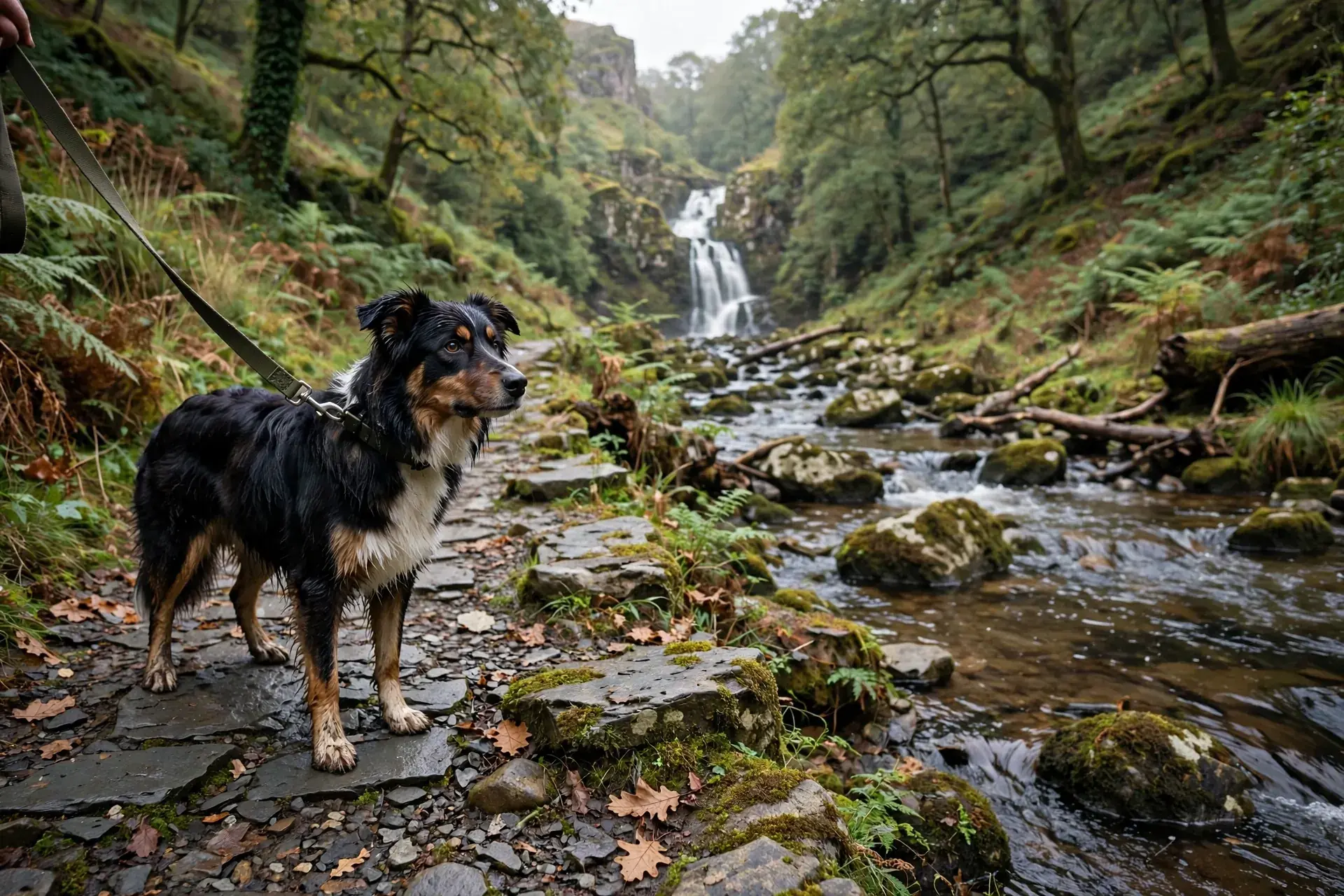
Waiting areas deserve the same care as the making area. Some studios have a reception, a shop or a garden where a dog can wait with a companion while you take the class. If that is the arrangement, check that the waiting area is safe, warm enough, free of fragile stock, and that the dog will not be left alone for long. A dog that waits happily with a familiar person is very different from a dog left alone in an unfamiliar room. If no companion is coming with you and the dog cannot be in the making area, it is usually better to leave the dog at home with a sitter or to book a different kind of day out. For ideas on calmer outdoor days, our guide to dogs at waterfalls in the UK explains how to manage leads, slippery paths and safe viewing distances in a very different setting.
Which dogs cope, and which should stay home
Calm adult dogs that have already learned to settle on a mat in cafes, pubs or friends' houses are the best candidates for a pottery studio. They are used to lying down while their owner does something else, they tolerate strangers walking past, and they are not startled by new sounds. A dog that has visited a craft fair, a garden centre or a quiet shop without incident is more likely to cope than a dog that has never been in a busy indoor space. Age matters less than temperament, but a settled middle-aged or older dog often finds a two-hour session easier than a young dog that still needs constant activity.
Some dogs are better left at home, and that is not a failure. Puppies under about six months old are usually too curious, too mouthy and too easily distracted to settle in a studio, and they are also more vulnerable to eating clay or glaze. Dogs that chew everything, including leads, mats and table legs, pose a risk to themselves and to other people's work. Dogs that bark at strangers, at other dogs or at sudden noises can disrupt a class and may be asked to leave. Dogs with separation anxiety may cope if they can stay beside you, but may struggle if they have to wait in a separate area. Dogs that are unwell, in season, recovering from surgery or on medication that affects behaviour should also stay home until they are fully recovered.
Breed and size are part of the picture, but they are not the whole story. A large, calm greyhound that sleeps through a two-hour class is easier to accommodate than a small, restless terrier that patrols the room. A long tail in a room full of shelves is a genuine hazard, whatever the breed, and a very large dog in a small teaching room may simply not fit safely beside a wheel. Be honest about your dog's tail, size and movement, and ask the studio whether the room can fit your dog comfortably. If the studio says the room is too small, believe it and look for a larger studio, a private lesson or an outdoor activity instead.
Consider the length of the session as well. A one-hour taster is a reasonable first visit, while a full-day workshop or a three-hour throwing course is a big ask for a dog that has never settled for that long. Build up gradually if you can: a short session first, then a longer one if the first visit goes well. Watch for signs of stress, such as panting, yawning, lip-licking, pacing, whining or trying to leave the room, and be ready to cut the visit short. A short, successful visit is far better than a long, stressful one that puts your dog off indoor spaces and leaves the studio reluctant to welcome dogs again.
What to pack for a clay day
Packing well makes the difference between a smooth visit and a scramble for supplies. Start with the essentials for the dog: a short lead, a harness or collar that fits well, a familiar mat or blanket, a water bowl and a bottle of fresh water, and a few small treats that do not crumble. Add a towel or two for wiping paws, a damp cloth for clay, and a plastic bag for muddy towels or waste. A spare lead is useful in case the first one gets covered in clay, and a chew or a lick mat can help a settled dog pass the time, provided the studio allows food in the making area.
Pack for yourself too. Wear old clothes and shoes that can get covered in clay, because pottery is messy even for experienced makers. An apron is usually provided, but it may not cover your shoes or your sleeves. Bring a hair tie if you have long hair, remove rings and bracelets before you start, and keep your phone in a pocket or a bag rather than on a table where clay can damage it. A small notebook is useful for writing down glaze choices, firing dates and collection details, because those details are easy to forget after a busy session.
Think about the journey as well as the studio. A car boot liner or an old blanket protects the car from clay dust and wet paws, and a towel by the door helps you clean the dog before the drive home. If you are travelling by public transport, check whether dogs are allowed on the bus or train you plan to use, and whether the studio is a short walk from the station. Rural studios can be a long walk from the nearest bus stop, and a tired dog that has already walked a long way may be less able to settle. Plan the route, check the weather and allow extra time, so you arrive calm rather than rushed.
Finally, pack a plan for the unexpected. Save the studio's phone number and the nearest vet's number on your phone, and carry a small first-aid kit with saline solution for rinsing eyes, a clean cloth and the vet's number written on paper in case your phone runs out of battery. Bring a lead and a muzzle if your dog sometimes needs one, even if you do not expect to use it, because a muzzle can be useful in an emergency and some studios ask for one as a condition of entry. A calm, well-packed visit is a visit where you can focus on the pottery instead of worrying about what you forgot.
Studio etiquette while you make
Pottery studios are shared, quiet working spaces, and good etiquette protects both your dog and other people's work. Keep your voice low, keep your dog close, and keep your workspace tidy. Clay that falls on the floor should be picked up promptly, water should be wiped up before it becomes a slip hazard, and tools should be returned to their proper place after use. If your dog does knock something over, tell the tutor immediately rather than trying to hide it, because a cracked pot can sometimes be repaired if the tutor knows about it quickly, and honesty builds trust with the studio.
Be considerate of other makers. Not everyone in the room will be comfortable around dogs, and some people may have allergies, phobias or simply a wish to concentrate without distraction. Ask the tutor to introduce your dog briefly at the start of the session, and keep the dog away from other students unless they actively want to say hello. Do not allow the dog to sniff other people's work, food or bags, and do not assume that another student wants to hold the lead or offer treats. If another student is allergic or nervous, offer to move your mat to a quieter corner without being asked.
Respect the studio's rules about photography and phones. Some studios welcome photos of your work in progress, while others ask for no photography because of privacy or because flashes disturb the class. If you do take photos, keep the dog out of other people's work and ask before photographing other students. Keep your phone on silent, and step outside to take a call rather than talking in the making area. A pottery class is a focused, hands-on activity, and a ringing phone or a loud conversation can break the concentration of the whole room.
Clean up as you go, and leave your space as you found it. Wash your hands and tools thoroughly, return borrowed aprons and tools, and check that you have not left clay on the floor, on chairs or on the dog's mat. Thank the tutor and the studio staff, and ask about the next steps for your piece: when it will be fired, when it will be ready for collection, and how you will be contacted. A polite, tidy exit makes it far more likely that the studio will welcome you and your dog again, and it sets a good example for other dog owners who want to visit in future.
After the class: paws, drying and firing
Cleaning up starts as soon as you leave the making area. Wipe your dog's paws and belly with a damp cloth before you get into the car or walk into a cafe, and check between the toes for dried clay, which can crack and irritate the skin if left in place. Pay attention to the ears and the tail, which can pick up clay dust from shelves and tables, and brush the coat once it is dry to remove any remaining dust. Do not let the dog lick clay off its paws, and wash your own hands before handling treats, the lead or the dog's water bowl, because clay and glaze residues can transfer easily.
If the dog's paws are very muddy or covered in clay, rinse them with clean water and dry them thoroughly, especially in cold weather when wet paws can chill a dog quickly. Check for small cuts or cracks between the toes, because clay dust can dry the skin and make existing cracks worse. A paw balm or a small amount of petroleum jelly can help if the pads are dry, but ask a vet before applying any product if the skin is broken or irritated. Keep an eye on the dog for the rest of the day: vomiting, diarrhoea, lethargy or loss of appetite after a studio visit should be checked with a vet, especially if the dog may have swallowed clay or glaze.
The pot you made will need time. Most studios ask you to leave the piece to dry slowly, and they will contact you when it is ready for collection, usually after two to six weeks depending on the firing schedule. Some pieces crack or warp during drying or firing, and a reputable studio will explain this risk before you book and will offer a chance to make another piece or to rebook if the failure was caused by the firing process. Keep your receipt, the collection date and the studio's contact details in a safe place, and check the studio's policy on uncollected work, because some studios dispose of uncollected pieces after a set period, often three months.
When you collect the finished piece, take the same care as you did on the day. A glazed mug or bowl is food-safe once it has been fired correctly, but check with the studio whether the glaze is suitable for food and drink, and whether the piece is dishwasher-safe. Hand-washing is usually recommended for handmade pottery, because harsh detergents and high temperatures can damage the glaze over time. If you are posting the piece home, ask the studio how it will be packed, whether postage is tracked and insured, and what happens if the piece arrives broken. A well-packed pot in a sturdy box with plenty of padding should survive the post, but it is worth confirming the details before you pay.
Costs, booking and cancellations
Prices for pottery sessions in the UK vary widely by location, length and group size. A one-hour taster session for one person often costs between 25 and 45 pounds, a two-hour throwing or hand-building class usually costs between 45 and 85 pounds, and a full-day workshop can cost 120 pounds or more. Private lessons are more expensive, often 80 to 150 pounds for a one-to-one session, but they offer more space, more tutor time and a better chance of bringing a dog. Materials, firing and glazing are usually included in the price, but check whether there is an extra charge for larger pieces, for a second firing or for postage.
Booking in advance is essential, especially for weekend sessions, school holidays and popular studios. Many studios release dates one to three months ahead, and the most popular slots can sell out quickly. Book early, confirm the dog policy in writing, and ask whether the session is suitable for complete beginners, because some classes assume basic experience. If you are booking as a gift, check whether the voucher has an expiry date, whether it can be transferred to another person, and whether the dog policy applies to the person who actually attends.
Cancellation terms are worth reading before you pay. Many studios offer a full refund if you cancel more than seven or fourteen days before the session, a partial refund or a chance to rebook if you cancel closer to the date, and no refund for a no-show. Some studios charge a non-refundable deposit, often 20 to 50 percent of the price, to cover materials and tutor time. If your dog becomes unwell or the weather makes travel difficult, contact the studio as soon as possible, because a studio that knows early may be able to offer a different date or a credit note even if the formal policy is strict.
Gift vouchers, group bookings and private hire deserve the same checks. A group of friends booking a pottery party may need a larger room, a different tutor ratio and a different dog policy, because several dogs in one room are harder to manage than one. A private hire for a birthday or a hen party may include food and drink, which changes the rules about dogs in the room. Ask about the maximum group size, the minimum age, the dog policy for the whole group, and whether the studio can provide a quiet corner for the dog. The more you ask before you pay, the fewer surprises you will face on the day.
If your dog cannot come inside
Some studios will say no to dogs in the making area, and that is a reasonable answer. It does not have to end the day out. If you are travelling with another person, one of you can take the class while the other walks the dog nearby, then swap for a second session or for a look around the shop. Many pottery studios are in villages or market towns with good walks, cafes and shops nearby, so the waiting person and the dog can enjoy the area while the class runs. Check the local walks before you travel, and plan a route that suits the dog's energy and the weather.
If you are travelling alone, consider leaving the dog at home with a sitter, a family member or a trusted dog walker, and enjoying the class without worrying about the dog. A pottery session is a hands-on, focused activity, and trying to manage a restless dog at the same time can spoil the experience for you and for the other makers. Alternatively, look for a studio that offers a shorter taster session, a paint-your-own pottery session where the dog may be welcome in the shop, or an outdoor pottery event where dogs are more easily accommodated.
Another option is to book a private lesson at a quieter time, such as a weekday morning, when the studio is less busy and the tutor can give you and your dog more attention. Private lessons cost more, but they often allow more flexibility about where the dog sits, how long the session lasts and how many breaks you take. Some studios also offer one-to-one sessions for people with access needs, and those sessions may be more suitable for a dog that needs extra space or a quieter environment. Ask the studio what is possible, and be prepared to pay a little more for the flexibility.
Finally, remember that a pottery studio is only one kind of hands-on day out. If the studio cannot welcome your dog, you can still enjoy a craft day together by choosing a different activity, such as a garden centre, a craft fair or a walk that ends at a dog-friendly cafe. Our guide to dog-friendly holiday parks in the UK can help you plan a longer break around craft days, with accommodation that welcomes dogs and walks that suit the whole family. The goal is a day that works for both of you, not a day where one of you has to struggle to fit in.
Practical questions
Before you go
Can I take my dog into a pottery studio in the UK?
Sometimes, but only with advance permission. Policies vary widely between studios, and many allow dogs only in a waiting area or on quieter sessions. Always ask before you book, confirm where the dog will wait, and get the answer in writing.
Is pottery clay safe if my dog licks or steps in it?
Wet clay is messy rather than acutely poisonous in most cases, but it should not be eaten, and dried clay dust should not be inhaled. Keep dogs away from clay, slip and glaze buckets, wipe paws promptly, and ask the studio which materials are in use. If your dog swallows glaze or a large amount of clay, contact a vet promptly.
Do dogs need to stay on a lead inside a pottery studio?
Almost always yes. A short lead keeps a dog clear of wheels, kilns, shelves of unfired work and other makers. Bring a flat mat for the dog to settle on, keep the lead short, and never tie a lead to a wheel, shelf or drying rack.
What should I ask before booking a pottery class with my dog?
Ask whether dogs are allowed in the making area or only in a waiting area, whether there is a size or number limit, what happens if the dog barks, whether a kiln will be hot during the session, and whether there is a safe outdoor toilet spot nearby. Confirm the answers before you pay.
Which dogs cope best in a pottery studio?
Calm adult dogs that settle on a mat, tolerate new sounds and smells, and are comfortable around strangers usually cope best. Puppies, very anxious dogs, dogs that chew everything, and dogs that cannot settle for an hour or two are usually better left at home or with a sitter.
How do I clean my dog after a pottery session?
Wipe paws and belly with a damp cloth as soon as you leave the making area, check between the toes for dried clay, and brush out any dust once the coat is dry. Do not let the dog lick clay off its paws, and wash your own hands before handling treats or the lead.