This guide is independent and contains no paid placement. If affiliate links are added later, they will be clearly marked and will not change our editorial checks.
Choose a spot where dogs are explicitly allowed, the water is slow and shallow at the entry, and you can see the bottom. Check for blue-green algae before anyone gets in, keep swims short, keep your dog in sight at all times, and dry and warm them straight afterwards. If any part of that checklist fails, walk instead.
Is this spot right for your dog?
Wild swimming in Britain covers an enormous range of water: slow river pools, steep-sided reservoirs, gravel pits, tidal estuaries, mountain lakes and sea lochs. A spot that is perfect for a confident human swimmer can be a poor choice for a dog, and a spot that suits a strong adult Labrador can be dangerous for a puppy, an older dog or a small breed. The first question is never "does this look beautiful?" but "does this water suit the dog I actually have?" Start with your dog's swimming ability, and be honest about it. Some dogs swim powerfully and happily; some paddle frantically with their back end sinking; some hate water altogether and should never be pushed in. A dog that swims well in a garden paddling pool or a calm lake may still struggle in a river with a current, in deep water with no shallow exit, or in cold water that saps strength far faster than a summer pond ever would.
The second question is whether dogs are actually allowed. "Wild swimming spot" is a loose label, not a legal status. Some well-known swimming places ban dogs during the summer, some allow them only on certain stretches of bank, and some are on private land where the landowner's rules change without notice. National Trust land, reservoir land owned by water companies, and Sites of Special Scientific Interest often have their own restrictions, and a swimming lake run as a business may charge for dogs or refuse them entirely. Check the rules for the specific spot before you travel, and check the official guidance before you travel if the rules are unclear or contradictory. A social media post from last summer is not a reliable source: rules, water levels and access arrangements change every season, and a spot that welcomed dogs last year may have fenced off the bank this year.
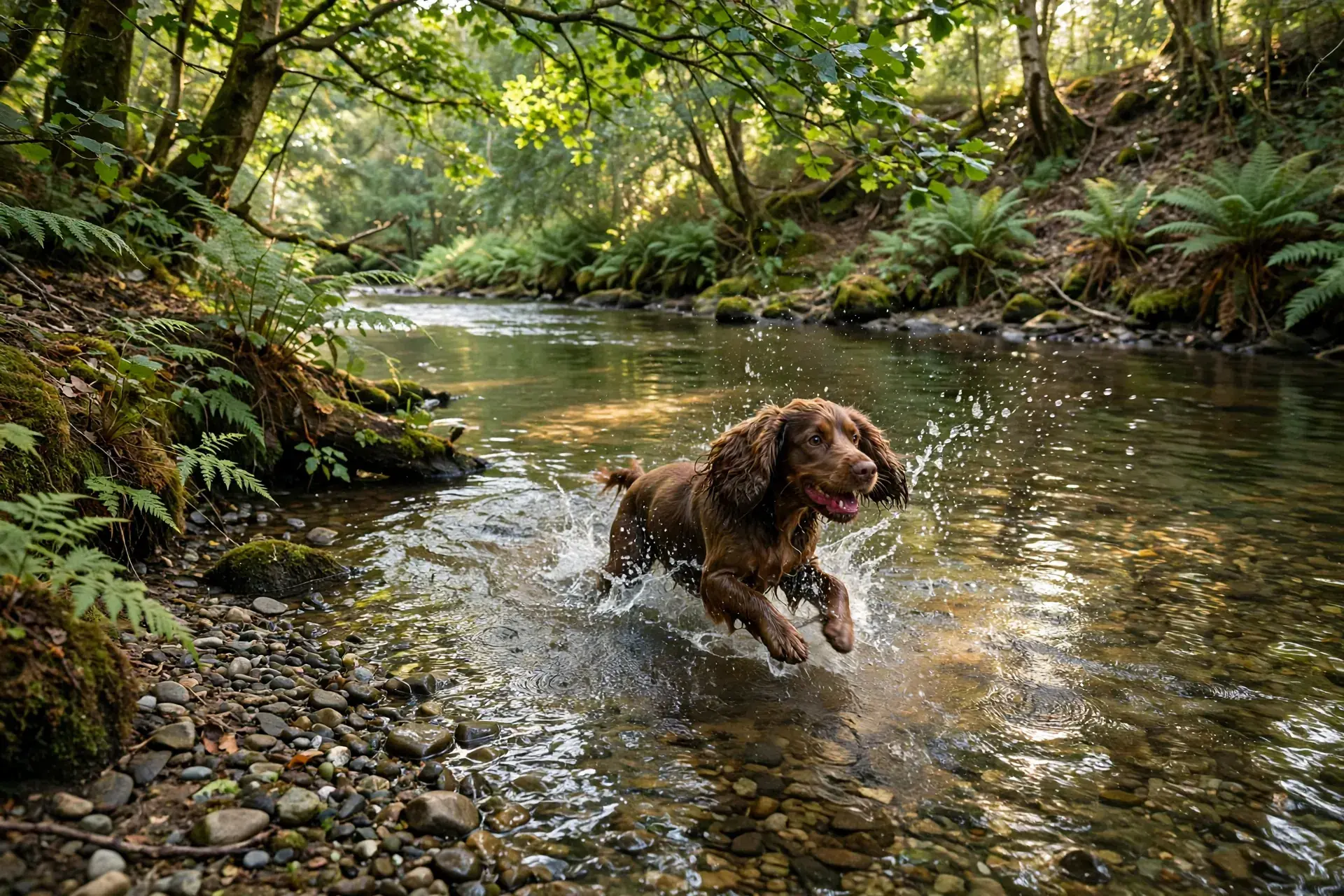
Think about the whole visit, not just the swim. Is there somewhere to park without a long walk on a busy road? Is the path to the water safe for a dog on a lead — no steep drops, no barbed wire at dog height, no livestock in the field you must cross? Is there shade for a dog waiting on the bank, and is there somewhere sensible for them to relieve themselves away from the water? A spot that ticks every swimming box but forces a nervous dog to cross a fast road or scramble down a crumbling bank is the wrong spot. The best wild swimming days for dogs are usually the unglamorous ones: a quiet river bend with a gravel beach, a shallow lake edge with a gentle slope, and nobody else around to rush you.
Finally, consider the other animals. Rivers and lakes are working habitats, not dog playgrounds. Nesting birds in spring, grazing livestock near the bank, and wildlife such as swans, otters and water voles all deserve space. A dog that chases birds or livestock should stay on a lead near water, and during bird nesting season — roughly March to July — extra care is needed around reed beds and islands. If you see warning signs about protected wildlife, respect them. The aim is a swim that leaves the place exactly as you found it, with no disturbed nests, no trampled banks and no unhappy encounters.
Reading the water: current, depth and entry
Before your dog touches the water, spend ten minutes reading it the way a swimmer would. Watch the surface: smooth, glassy water over a deep pool can hide a strong current below, while a riffled surface with leaves or twigs moving steadily downstream tells you the flow is real. Throw a stick or a leaf in and watch how fast it travels; if it moves faster than a brisk walking pace, the current is too strong for most dogs. Look for the line where fast water meets slow water, because that boundary is where a dog can be pulled sideways out of the shallows. Rivers are most dangerous just below weirs, sluices and narrow bridges, where water speeds up and can trap even strong swimmers in a recirculating current. Never let a dog swim near a weir, a mill race, a lock or a drainage outfall, however calm the water looks from the bank.
Depth matters just as much as current, and it is harder to judge from the bank. Clear water flatters the eye: a pool that looks knee-deep can drop to two metres in a single step, and dark peaty water hides the bottom altogether. Wade in yourself first, in shoes you do not mind getting wet, and feel the bottom with your feet before the dog follows. Check for sudden drop-offs, deep holes scoured out below a small fall, and slippery rock ledges under the surface. A good dog swimming spot has a long, gentle entry — a gravel or sand slope where the dog can walk in, choose its own depth, and walk out again without scrambling. Steep banks, vertical stone walls, high ledges and undercut banks are all bad news, because a tired dog needs an easy exit and may not find one in a panic.
Read the bottom as well as the surface. Gravel and sand are kind to paws; sharp flint, broken glass, rusted metal and fishing hooks are not, and all of them turn up regularly at popular swimming spots. After heavy rain, rivers carry branches, fencing wire and other debris, and the water itself becomes murkier and faster. As a rule, do not swim a dog in a river within 24 to 48 hours of heavy rain, when levels are still rising or the water is brown and full of floating debris. If you arrive and the river is higher than the bankside vegetation line suggests it usually is, or the water is moving noticeably faster than the last time you visited, walk somewhere else. The spot will still be there next week; a dog swept downstream may not be.
Check the exit points as carefully as the entry. A dog that swims downstream needs somewhere to get out, and on many rivers the next easy exit is a long way down. Walk the bank downstream before the swim and note where a dog could climb out if it drifted. If the banks are steep, fenced or overgrown for a long stretch, keep the dog on a long line or do not swim at all. In tidal water the calculation changes again: outgoing tides can carry a dog out to sea, incoming tides can cut off the route back to the car, and estuary mud can trap a dog that tries to cross it. Check tide times from an official source before any tidal swim, and check the official guidance before you travel if you are unsure how a particular estuary behaves.
Blue-green algae: recognising the risk
Blue-green algae, more properly called cyanobacteria, is the single most important water-quality risk for dogs at British wild swimming spots, and it is the one most often underestimated. It is not a rare problem confined to one or two lakes: blooms appear in ponds, lakes, reservoirs, slow rivers and even the sea, usually in warm, still, nutrient-rich water from late spring through early autumn. The danger is that dogs are far more exposed than people. They drink while they swim, they lick their coats afterwards, and they swallow the scummy water that collects at the edges — exactly where the algae concentrates. Toxins from some blooms can cause vomiting, diarrhoea, weakness, seizures and liver damage, and severe cases can kill a dog within hours. This is not a risk to manage with a quick rinse; if a bloom is present, the only safe choice is to stay out of the water entirely.
Learn what a bloom looks like before you go. The classic signs are water that looks like green paint, pea soup or a blue-green scum floating on the surface, often collecting in streaks or clumps along the downwind edge of a lake. Some blooms look more like a greenish cloud under the surface, or a paint-like film that breaks into flakes when disturbed. A musty, earthy or grassy smell is another warning sign, especially on a warm day when the water is still. But the absence of visible scum does not guarantee safety: toxins can be present in water that looks normal, and a bloom can be patchy, with one end of a lake affected and the other apparently clear. This is why local warnings matter as much as your own eyes. Before you travel, check the local authority, the water company or the site operator for algae warnings, and check the official guidance before you travel if you are visiting a spot you do not know well.
Season and weather shape the risk. Blooms are most likely in warm, sunny, calm conditions, especially after a dry spell when water levels are low and nutrients are concentrated. A hot August week on a shallow lake is the highest-risk combination; a cold, fast-flowing river in February is the lowest. Heavy rain can break up a surface scum and make the water look safe again, but the toxins may still be present, so do not treat a rainy day as an all-clear. If you arrive and see any of the warning signs — green paint-like streaks, scum at the edges, a musty smell, or dead fish or birds near the water — keep your dog on the lead, do not let them drink, and leave. It is also worth reporting what you see to the local authority or the Environment Agency, because early reports help protect the next dog that arrives.
Other water-quality risks deserve the same caution, even if they are less dramatic. After heavy rain, rivers and lakes can carry sewage overflow, farm run-off and road pollution; if the water smells of sewage, looks oily, or is full of foam that is not natural, stay out. Leptospirosis, a bacterial disease spread through water contaminated by rat urine, is a low but real risk in slow-moving water, especially after flooding, and vaccination status is worth discussing with your vet if your dog swims regularly. Dogs with open wounds, skin infections or a weakened immune system should not swim in natural water at all. And remember that "the water looks clean" is not a test: clear water can still contain bacteria, parasites and algal toxins that no eye can see.
Seasons and water temperature
British open water is cold for most of the year, and cold water changes everything about a dog swim. In midwinter, river and lake temperatures in Britain commonly fall to 4–8 degrees Celsius; in a warm summer they may reach 18–22 degrees in a shallow lake, but a deep lake or a fast river can stay below 15 degrees even in August. Dogs lose heat faster in water than in air, and a dog that seems full of energy on the bank can tire suddenly once the cold takes hold. The signs of cold stress are easy to miss if you are watching the water instead of the dog: shivering, a stiff or hunched posture, a tail tucked tight, a reluctance to keep swimming, or a dog that climbs out and refuses to go back in. A dog that stops swimming and starts to struggle needs help immediately — do not wait to see if it recovers on its own.
There is no single temperature that is safe for every dog, because breed, coat, body fat, age and fitness all matter. A thick-coated Newfoundland or Labrador handles cold water very differently from a lean whippet, a greyhound or a small terrier with little body fat. Puppies, older dogs and dogs with arthritis or heart conditions feel the cold sooner and recover more slowly. As a working rule, treat water below about 10 degrees as a short-dip-only situation for most dogs, keep swims very brief in water below 15 degrees, and build up gradually rather than letting a dog plunge in for a long swim on its first outing of the year. If your dog has never swum in cold water, start with a few minutes in the shallows and see how they respond before allowing anything longer.
Each season brings its own hazards beyond temperature. Spring brings high river levels from snowmelt and rain, nesting birds along the banks, and the first algae blooms as the water warms. Summer brings the warmest water and the busiest spots, which means more people, more dogs, more litter and the highest algae risk; it also brings the risk of heatstroke on the walk to the water, so a dog that is already hot should cool down in the shade before swimming, not plunge straight into cold water. Autumn brings falling leaves that can hide the bank, shorter days that cut into your drying and warming time, and rivers that rise quickly after rain. Winter brings the coldest water, the shortest days and the most dangerous conditions: ice at the edges, flooded paths and water that can incapacitate a dog in minutes. Winter swimming with a dog is a specialist activity, not a casual outing, and for most owners the sensible choice is to stick to shallow paddling or skip the swim altogether.
Plan the timing of the day as carefully as the season. Early morning water is often at its coldest after a cool night, while late afternoon water has had the day to warm slightly — but late afternoon also leaves less daylight for drying and warming up afterwards. On a hot day, avoid the middle of the day when the sun is strongest and the bank offers no shade; on a cold day, swim in the warmest part of the afternoon and leave plenty of time to get home before dark. Whatever the season, never swim a dog after dark, in fog, or in weather that is about to turn. If you are cold standing on the bank in a coat, your dog will be colder in the water, and that is a useful rule of thumb to carry with you.
The pre-swim check
A good wild swim starts at home, not at the water's edge. Check your dog's health before you go: any cough, diarrhoea, skin wound, ear infection or recent surgery is a reason to skip the swim. Dogs with ear problems are prone to infections after swimming in natural water, and dogs with open cuts can pick up bacteria from the water. Make sure vaccinations are up to date and ask your vet about leptospirosis vaccination if your dog swims in rivers and lakes regularly. Feed your dog a light meal at least two hours before swimming, not a full meal immediately beforehand, and make sure they have had a chance to relieve themselves before you set off. A dog that arrives bursting for the toilet is a dog that will relieve itself in or near the water, which is unpleasant for everyone and bad for water quality.
Test recall on dry land before you trust it near water. A dog that comes back reliably in the garden may ignore you completely at a riverbank full of smells, birds and other dogs. Practise recall in a safe, enclosed area first, and bring high-value treats that work even when your dog is excited. If recall is unreliable, use a long line attached to a well-fitted harness — never attach a long line to a collar near water, because a dog that is pulled up short can choke or panic. A long line of 10–15 metres gives a dog freedom to swim while keeping you in control, and it is the right choice at any unfamiliar spot, near other swimmers, or where the current could carry a dog away. Check the line for tangles before the swim, and never let it trail loose in the water where it can snag on branches or wrap around a leg.
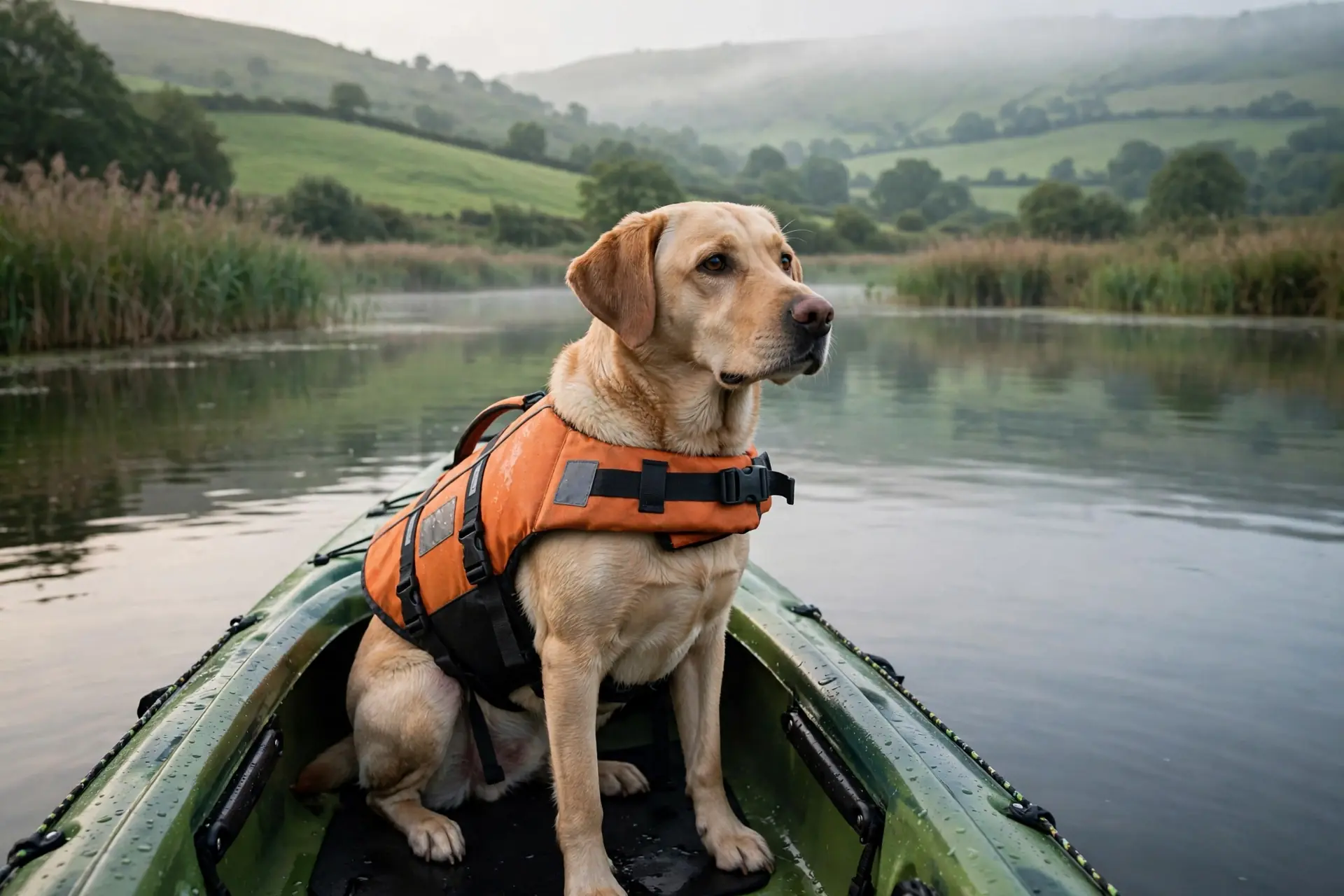
Pack the swim kit before you leave the house, and check it against a list rather than memory. The essentials are a well-fitted canine life jacket with a grab handle for unfamiliar or deep water, a long line and a standard lead, a harness that fits over a wet coat, fresh drinking water and a bowl, at least two large towels or a drying coat, a spare lead, poo bags, and a first-aid kit with wound dressings. Bring a change of clothes for yourself too — you will get wet, whether you plan to or not — and a dry bag or bin bag for wet towels on the way home. If you are driving, a waterproof seat cover or a crate with a towel inside keeps the car bearable. Leave the retractable lead at home: it offers no control near water and can snap or tangle at the worst moment.
Finally, tell someone where you are going. Many wild swimming spots have no mobile signal, and a riverbank in a remote valley is a lonely place if something goes wrong. Share your location with a friend or family member, note the nearest road and the name of the spot, and carry a charged phone in a waterproof pouch. Check the weather forecast and the river level before you set off, and have a plan B — a walk, a café, a different spot — so that turning back from an unsuitable swim never feels like a wasted trip. The best swims are the ones where every part of the day was a choice, not a gamble.
In the water: leads, recall and reading your dog
Once your dog is in the water, your job is to watch the dog, not the scenery. Stay within easy reach of the entry point and keep your eyes on your dog for the whole swim. Dogs tire faster than they look: a dog that is swimming strongly can become exhausted in a few minutes, especially in cold or moving water, and the change can be sudden. Watch the swimming style. A relaxed dog swims level, with its back flat and its tail loose; a struggling dog swims more vertically, with its front paws splashing high, its back end sinking, and its head held high out of the water. If you see the second pattern, call the dog back to the bank immediately, even if it seems to be enjoying itself. Panting, whining, wide eyes or a dog that keeps looking back at you are all signs to end the swim.
Keep swims short, especially at the start of the season or at a new spot. Five to ten minutes of actual swimming is plenty for most dogs, and many dogs are happiest with a few short dips and a lot of sniffing and paddling in the shallows. Let the dog set the pace: a dog that chooses to wade in and out is telling you what it wants, while a dog that has to be coaxed or carried in is telling you something else. Never throw a dog into the water, never throw a toy so far that the dog has to swim beyond its comfortable range, and never throw a ball or stick into a current. If you play fetch in the water, throw parallel to the bank in shallow water, not out into the middle, and use a floating toy in a bright colour that you can see easily. And never play fetch near a weir, a fast stretch or a deep pool — a dog focused on a toy will follow it anywhere.
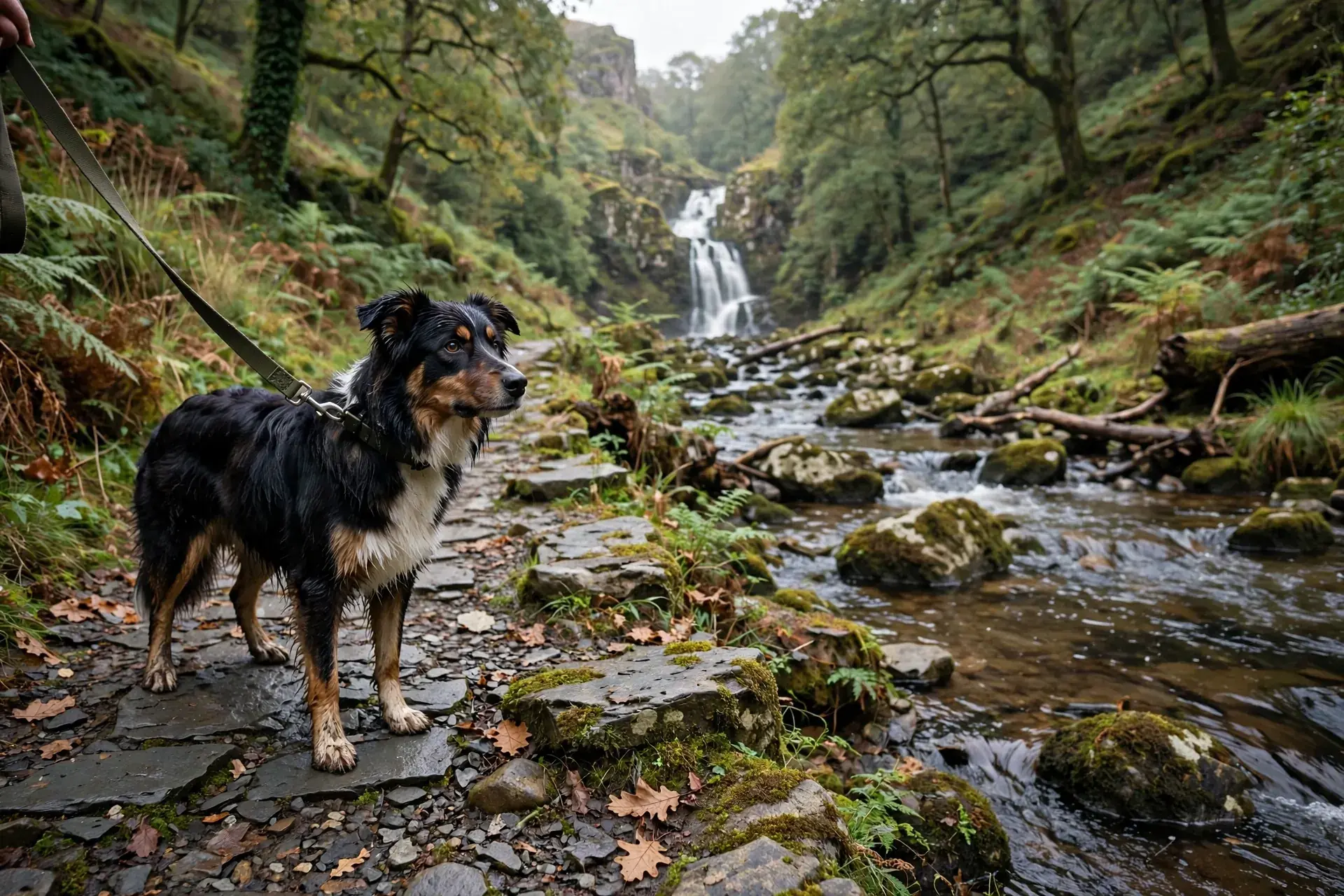
The lead question comes up at every wild swimming spot, and the answer depends on the place and the dog. At a quiet, enclosed pool with a gentle bank and no other swimmers, a reliable dog can swim off the lead. At a river with any current, near other people, near livestock or wildlife, or at any spot you do not know well, keep the long line on. A long line is not a failure of training; it is the tool that lets a dog swim freely while you keep the ability to guide it back. Hold the line loosely so it does not drag the dog, keep it clear of your own feet, and be ready to guide the dog towards the exit if it drifts. If the line snags, do not pull hard — walk to the dog or call it towards you instead. And if your dog is wearing a life jacket, clip the line to the harness or the jacket's designated attachment point, never to a collar.
Watch for the hazards that are invisible from the bank. Submerged branches, fishing line, discarded nets and shopping trolleys are all common in British rivers and lakes, and a dog can become entangled in seconds. If your dog suddenly stops, yelps or starts thrashing, do not wade in blindly — call the dog, guide it with the line, and approach from the bank if you can. Dogs also swallow water when they swim, especially when they are fetching or playing, and too much swallowed water can cause problems: offer fresh water regularly so the dog is not drinking the river out of thirst, and watch for coughing, vomiting or lethargy after the swim. If your dog swallows a lot of water and seems unwell, contact a vet and say how much water they may have taken in.
After the swim: rinsing, drying and warming up
The swim is only half the job; the hour afterwards decides whether your dog ends the day happy or ends it cold, stiff and unwell. As soon as your dog comes out of the water, rinse them with clean fresh water if you can — a portable shower or a large bottle of water will do. This matters most after swimming in water that may contain algae, bacteria or salt, because a dog that licks its coat dry will swallow whatever was in the water. Pay attention to the ears: water trapped in the ear canal is a common cause of infections after swimming, so dry the ears gently with a soft towel and, if your vet has recommended it, use an ear-drying solution made for dogs. Check the paws for cuts from sharp stones or glass, and check between the toes for grit and small stones.
Dry the dog thoroughly, and do it before you get in the car. Two large microfibre towels work better than one, and a drying coat — a fleece or towelling coat that covers the body — keeps a dog warm while it dries and is one of the best investments for any dog that swims regularly. Rub the coat dry in the direction of the fur, then put the drying coat on and let the dog move around for a few minutes. In cold weather, a second dry coat or a blanket in the car helps, and the car heater should be on before the dog gets in. Never put a wet dog in a cold car and drive home with the windows open; the wind chill on a wet coat can drop a dog's temperature fast. If your dog is shivering after the swim, keep drying and warming them, offer a small snack, and watch until the shivering stops completely.
Watch your dog for the rest of the day, not just the first ten minutes. Some problems show up hours after the swim: vomiting or diarrhoea after drinking contaminated water, lethargy or weakness after swallowing too much water, stiffness or lameness from a cut paw or cold muscles, and ear shaking or head tilting that suggests water trapped in the ear. If your dog seems unusually quiet, refuses food, vomits more than once, or shows any sign of distress, contact your vet and tell them where the dog swam and for how long. Keep a note of the spot, the date and the water conditions, because that information helps the vet and helps you decide whether to return. A swim that ends with a vet visit is a swim to learn from, not to repeat in the same conditions.
Think about the journey home as part of the swim. A wet dog in a car will soak seats, steam up windows and chill quickly, so plan for it: a waterproof seat cover, a crate lined with towels, or a boot liner that contains the water. Bring a spare towel for the final dry-off at home, and give the dog a warm, draught-free place to sleep afterwards. Older dogs and dogs with arthritis often feel stiff after cold water, so a warm bed and a gentle walk later in the day are better than another long outing. And if your dog swam in the sea or in brackish estuary water, rinse the salt off as soon as you can — salt dries the skin, irritates paws and makes a dog thirsty enough to drink too much water at once.
Types of wild swimming spots
Not all wild swimming spots behave the same way, and knowing the type helps you judge the risk before you arrive. River pools are the most common dog-friendly choice in Britain: a bend in a river where the water slows, the bottom is gravel, and the bank is gentle. The risks are current after rain, hidden depth and debris carried downstream, but a well-chosen river pool with a slow flow and a clear entry is the best starting point for most dogs. Look for pools where you can see the bottom, where the water moves slowly enough that a leaf drifts rather than races, and where the dog can walk out on the same gentle slope it walked in on. Avoid narrow channels, water below weirs, and any stretch where the bank is steep on both sides.
Lakes and reservoirs are the second common type, and they bring a different set of risks. The water is usually calmer than a river, but it can be much deeper, much colder, and more prone to blue-green algae in summer. The edges of a lake can shelve steeply, so a dog that walks in expecting a shallow bottom can suddenly be out of its depth. Reservoirs are often owned by water companies and may ban swimming altogether, or ban dogs, or both — check the rules before you travel, because a reservoir that looks inviting from the road may be strictly off-limits. Lakes that allow swimming usually have a designated area; use it, and do not let your dog swim near boat launches, fishing platforms or dam walls. If you enjoy paddling with your dog as well as swimming, our guide to dogs on kayak trips in the UK covers life jackets, boarding training and calm-water routes in detail.
Sea lochs, estuaries and tidal rivers add the complication of tides and salt. The water can be cold even in summer, the current can change direction with the tide, and the mud on the banks can be deep enough to trap a dog. Tidal spots demand a tide timetable, a clear understanding of when the water turns, and a plan for getting back to the car before the tide cuts off the path. Gravel pits and flooded quarries look tempting on a hot day but are among the most dangerous places to swim in Britain: the water is often very deep, very cold, and the sides can be steep and crumbling, with no easy exit. Several dogs and people have died in quarry pools, and most are on private land where swimming is not permitted. Do not swim a dog in a quarry, however inviting it looks.
Finally, there are the managed wild swimming venues — lakes and lidos run as businesses, with lifeguards, marked swimming areas and changing facilities. These are often the safest introduction to open-water swimming for a dog, because the water quality is monitored, the entry is designed for swimmers, and someone is watching. The trade-off is that many of them do not allow dogs at all, or allow them only at special dog-swim sessions. If you find one that runs dog sessions, it is worth the trip: your dog gets a safe, supervised swim, and you get to learn how they behave in open water before you try a truly wild spot. Whatever type of spot you choose, the same rules apply — check the rules, read the water, keep the swim short, and leave if anything feels wrong.
If something goes wrong
Most dog swims pass without incident, but it is worth having a plan before you need one. The most common emergency is a dog that gets tired and cannot get back to the bank. If your dog is wearing a life jacket with a grab handle, you can guide it to the nearest exit by the handle or by the long line — but do not jump in after a struggling dog unless you are a confident swimmer and the water is safe for you too. A panicking dog can climb on top of a rescuer and push them under, and cold, moving water is dangerous for people as well as dogs. Call the dog calmly, guide it with the line, and walk along the bank to the nearest easy exit rather than entering deep water yourself. If you cannot reach the dog safely, call for help and dial 999 — the fire service, not the police, is the usual responder for water rescues in Britain, and they would rather be called early than late.
Blue-green algae poisoning is the emergency that needs the fastest response. If your dog has been in water with visible algae, or has drunk from it, and then starts vomiting, has diarrhoea, drools heavily, seems weak or confused, or has a seizure, treat it as an emergency and contact a vet immediately. Tell the vet that algae exposure is possible and where the dog swam. Do not try to make the dog vomit, do not wait to see if the symptoms pass, and keep the dog still and warm on the way to the vet. Time matters with algal toxins, and early treatment gives the best chance. This is also why it is worth saving the number of the nearest vet — and an emergency out-of-hours vet — in your phone before you travel to a remote spot.
Cuts, entanglement and exhaustion are the other common problems. A cut paw from glass or sharp stone should be cleaned with fresh water, pressed with a clean dressing, and checked by a vet if it is deep or keeps bleeding. A dog tangled in fishing line or a net needs calm, careful untangling — cut the line with scissors or a knife if you have one, but keep the blade away from the dog's skin and do not pull the line tight around a leg. A dog that has swallowed a lot of water and is coughing, lethargic or vomiting may have water in its lungs and needs a vet, even if it seems to recover at first. In every case, the same principles apply: stay calm, keep the dog warm and still, stop the bleeding or the exposure, and get professional help sooner rather than later. A small first-aid kit in your swim bag — dressings, bandage, scissors, saline, a foil blanket — weighs almost nothing and can make a real difference.
After any incident, take time to work out what went wrong before you swim again. Was the current stronger than you thought? Was the exit harder to reach than it looked? Did the dog swim for too long, or get too cold? Write down what happened while it is fresh, and change one thing next time — a different spot, a shorter swim, a life jacket, a long line, an earlier start. There is no shame in cutting a swim short or abandoning a spot altogether; the only failure is repeating the same mistake. And if your dog had a frightening experience in the water, give them time before the next swim, and rebuild confidence slowly with shallow paddling and short, happy sessions rather than another long swim.
Kit list for a dog wild swim day
A well-packed swim bag turns a wild swim from a scramble into a relaxed day out. Start with the safety kit: a canine life jacket that fits snugly without rubbing, with a grab handle on top and a bright colour you can spot in the water; a harness that fits over a wet coat; a long line of 10–15 metres and a standard lead; and a spare lead in case one gets soaked or tangled. Add fresh drinking water — at least a litre for the dog, more on a hot day — and a collapsible bowl, because a dog that is offered fresh water regularly is less likely to drink from the river. Poo bags, a small first-aid kit, a charged phone in a waterproof pouch, and a towel for your own hands round out the essentials.
Drying and warming kit deserves its own bag. Pack two large microfibre towels, a drying coat, and a spare towel for the car. A portable shower or a large bottle of clean water is useful for rinsing salt, mud or suspicious water off the coat before the journey home. In cold weather, add a fleece blanket and a second drying coat; in hot weather, add a shade cloth or a pop-up shelter for the bank, because a dog waiting in full sun while you swim can overheat. A waterproof seat cover or a crate with towels inside protects the car, and a dry bag keeps wet towels from soaking everything else in the boot.
Think about what you will wear and carry too. Water shoes or old trainers protect your feet when you wade in to test the depth, and they give you grip on slippery rocks. A change of clothes, a warm layer and a waterproof jacket are worth packing even on a sunny day, because British weather changes fast and a wet owner is a cold owner. Bring snacks and water for yourself as well as the dog, and a small picnic that does not leave litter. If you are staying for a longer break near the water, our guide to dog-friendly holiday parks in the UK covers accommodation with drying facilities and nearby walks, which makes a swimming weekend far more comfortable. Finally, do a quick kit check before you leave: life jacket, leads, water, towels, drying coat, first aid, phone, poo bags. If one of those is missing, the swim can wait until it is not.
Practical questions
Before you go
Can dogs swim at any wild swimming spot in the UK?
No. Some spots ban dogs outright, some allow them only at certain times or in certain areas, and some are technically open but unsafe because of fast current, deep water or poor water quality. Always check the rules for the specific spot before you travel, and check the official guidance before you travel if anything is unclear.
How do I know if blue-green algae is present?
Look for water that looks like green paint, pea soup or a blue-green scum, especially along the edges and in still, warm, shallow water. A musty or earthy smell is another warning sign. If you see anything like this, keep your dog out of the water entirely, do not let them drink from it, and check local warnings before you travel. When in doubt, stay out.
What water temperature is too cold for a dog?
There is no single safe number, because breed, coat, body fat, age and fitness all matter. As a working rule, treat water below about 10 degrees Celsius as a short-dip-only situation for most dogs, keep swims very brief in water below 15 degrees, and watch constantly for shivering, stiffness or reluctance to keep swimming. Older dogs, puppies, lean breeds and dogs with arthritis feel the cold sooner.
Should my dog wear a life jacket for wild swimming?
For most dogs, yes, at least at an unfamiliar spot. A well-fitted canine life jacket with a grab handle helps a tired dog stay afloat, makes them easier to see, and gives you something safe to hold if you need to guide them to the bank. It is not a substitute for choosing calm, shallow water and supervising closely, but it is cheap insurance at rivers, lakes and tidal spots.
Can my dog swim off the lead at a wild swimming spot?
Only if the rules allow it, the water is calm and enclosed, and your dog has a reliable recall in exciting situations. If other swimmers, dogs or wildlife are nearby, keep the lead on or use a long line. A dog that ignores recall near water can be swept downstream or into deep water in seconds, so test recall on dry land first and never assume a pool-trained dog will respond the same way at a river.
What should I do if my dog drinks river or lake water?
Offer fresh drinking water straight away so they are less tempted to drink more, keep them out of the water, and watch them closely for the next few hours for vomiting, diarrhoea, weakness, drooling or unusual behaviour. If the water may have contained blue-green algae, or if symptoms appear at all, contact a vet promptly and tell them where the dog swam. Do not wait to see if it passes.