This guide is independent and contains no paid placement. Garden policies change, sometimes between seasons, so check the official guidance before you travel rather than relying on a single visit report.
Think of a botanical garden as two places sharing one ticket: an outdoor landscape where dogs on leads are usually welcome, and a set of glasshouses where they usually are not. Plan the day around that split, keep the dog on the paths, carry water, and the garden becomes one of the calmest days out you can have with a dog.
Start at the glasshouse door
Every good botanical garden visit with a dog begins at a threshold, and it is usually a literal door. Outside it, there are wide lawns, winding arboretum paths, a lake with ducks, and the easy feeling of a park. Inside it, the air turns humid, the paths narrow between raised beds, and a sign says, in one form or another, that dogs are not admitted. The mistake most visitors make is to treat that sign as a rejection of the whole day. It is not. It is the garden telling you, honestly, where the dog belongs and where it does not, and once you accept the split, the rest of the visit falls into place.
The reason the boundary matters so much is that botanical gardens are not parks with extra flowers. They are living collections, research sites and conservation projects, and the outdoor grounds are managed differently from the indoor displays. The outdoor landscape is built for footfall: surfaced paths, open sightlines, space to step aside. The glasshouses are built for plants that would not survive a British winter outdoors, and every extra visitor, every wagging tail near a rare orchid, every paw on a heated gravel bed, adds risk the garden cannot easily undo. Dogs are therefore welcome in the part of the garden designed for walking, and kept out of the part designed for looking closely.
So plan the day as two linked visits rather than one frustrated one. Walk the outdoor grounds first, while the dog is fresh and the light is good. Then, if your party has two adults, take turns in the glasshouses while the other walks the dog again or sits with it near a cafe terrace. If you are travelling alone with the dog, accept that the glasshouses are a reason to come back with a friend, not a reason to argue at the door. Gardens are honest about this division on their websites, and checking the rule before you leave home takes thirty seconds and saves the only real disappointment a botanical garden can offer.
It also helps to read the entrance signs as a map of zones rather than a single yes or no. Many gardens admit dogs to the grounds but restrict them from particular areas within the grounds, such as a walled garden, a children's discovery zone, a restaurant terrace at lunchtime, or a conservation area where ground-nesting birds are breeding. The entrance rule is the headline; the zone signs are the detail. Follow both, and you will rarely meet a member of staff having to explain a rule you could have read.
Why glasshouses usually say no
Glasshouses exclude dogs for reasons that are practical rather than unfriendly, and understanding them makes the rule easier to accept. First, the plants inside are often irreplaceable. A botanical garden may hold specimens collected decades ago, species that are endangered in the wild, or plants grown from a single seed batch. A dog brushing against a bench, knocking a pot, or cocking a leg on a heated bed can destroy something that cannot be replanted from a garden centre. The stakes are simply higher than in a public park, where a trampled daisy is replaced by spring.
Second, the physical space works against dogs. Glasshouse paths are narrow, often with steps, changes of level, and low-hanging growth. Visitors stop suddenly to photograph a flower, crouch to read a label, or step backwards into the path. A dog on a lead in that shuffle becomes a trip hazard for everyone, including the dog. Add heat and humidity, which many dogs find stressful, and the enclosed space stops being enjoyable for the animal it was supposed to include. Gardens that have trialled dog access indoors have generally found that neither the plants nor the dogs benefit.
Third, glasshouses are climate-controlled environments, and that control is part of the science. Doors are kept closed, humidity is managed, and pests are monitored closely. Dogs bring in seeds, soil and insects on their coats, and even a clean, well-groomed dog carries pollen and mud from the outdoor grounds. For a collection that includes quarantine plants or research material, that cross-contamination is a genuine problem, not a bureaucratic excuse. Assistance dogs are the recognised exception everywhere, because access law requires it and because a trained assistance dog is under close handler control, but the general rule stands.
None of this means you should skip gardens with impressive glasshouses. It means you should treat the glasshouses as a separate, optional part of the day. Check whether the garden publishes a dog policy page that names each glasshouse individually, because some gardens admit dogs to a modern, spacious palm house while keeping a Victorian fernery closed, and some reverse that depending on the season. Where the policy is unclear, check the official guidance before you travel, and never assume that a friendly welcome at the entrance extends through every door on the site.
The arboretum: the dog's best ground
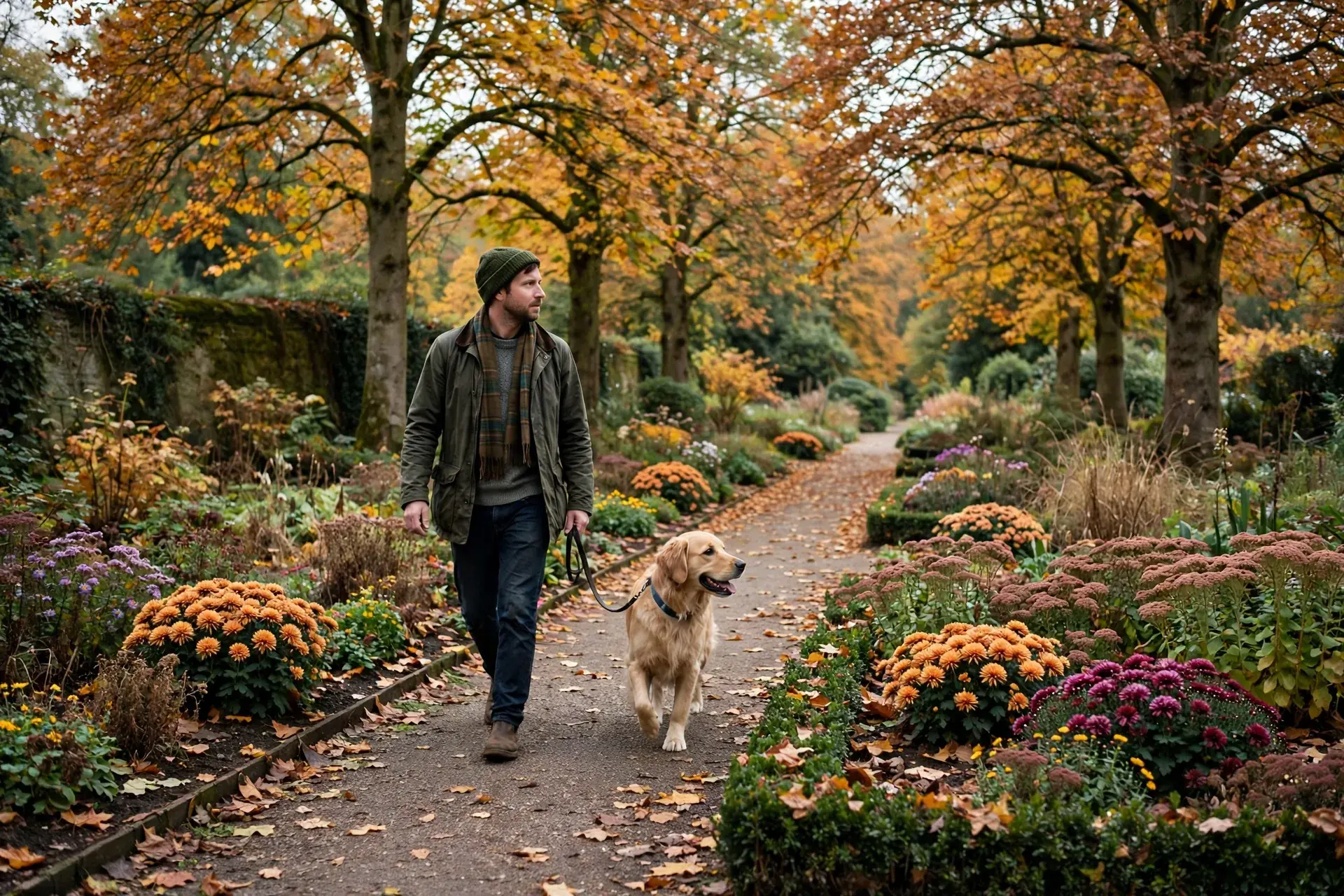
If the glasshouses are the garden's museum, the arboretum is its parkland, and it is where a dog's visit comes alive. An arboretum is a collection of trees, laid out with wide paths, labelled specimens and long views, and it suits dogs for exactly the reasons it suits walkers: space, shade, surfaced routes, and something new to sniff every twenty metres. Autumn is the obvious highlight, when acers, oaks and beeches turn colour in sequence, but a good arboretum rewards every season, from spring blossom to the bare winter structure that lets a dog see much further than its owner can.
Walk the arboretum the way the garden intends it to be walked: on the paths, on a lead, at a pace that lets the dog stop and sniff. Tree roots, fallen leaves and loose bark can hide uneven ground, so a short lead gives you control when a squirrel crosses the path or another dog appears around a bend. Older dogs benefit from the arboretum's gentle gradients, which are usually far kinder than a hillside walk, and reactive dogs benefit from the long sightlines, which let you see other visitors coming and step aside before a meeting becomes a confrontation. Bring a long line only if the garden explicitly allows it; in most arboreta a standard lead is the expected kit.
The arboretum is also where you learn the garden's character. Some collections are grouped by geography, so you walk from a Himalayan glade to a North American woodland in ten minutes. Others are grouped by family, so the oaks stand together and the conifers form a dark, scented corridor. Either way, the labels repay a glance: a tree planted in a particular year, or grown from seed collected on a particular expedition, turns a pleasant walk into a story. Dogs do not read labels, but the pauses they enforce while you read are part of the pleasure, and a garden visited at a dog's pace is a garden visited properly.
Watch for seasonal restrictions even here. During bird nesting season, some arboretum areas may ask dogs to stay on the main path rather than the woodland trails. After storms, branches and leaf litter can close a path, and in wet weather the unsurfaced trails between specimen trees turn to mud that clings to paws and coats. None of this ruins the visit, but it rewards the habit of checking the garden's notices at the entrance and carrying a towel in the car for the journey home.
Lakeside walks and water rules
Many botanical gardens have a lake, and lakes are where dog owners need their clearest head. Water draws dogs the way it draws ducks, and a dog that would ignore a flowerbed will still launch itself at a lake edge. The rule in almost every garden is simple: dogs stay on the path, out of the water, and on a lead near the bank. There are good reasons beyond tidiness. Ornamental lakes are managed habitats, often with nesting waterfowl, protected marginal planting, and water that is recirculated through pumps and filters. A swimming dog disturbs nests, damages bank planting, and can clog or damage equipment that the garden relies on.
The health side matters just as much. Ornamental lakes and ponds can carry blue-green algae in warm weather, and algae blooms can be dangerous to dogs that drink the water or lick it from their coats. The water may also be treated, or simply stagnant, and none of it is drinking water. The safe habit is absolute: carry water and a collapsible bowl, offer it regularly, and never let the dog drink from the lake, a fountain, or a stream running through the garden. If your dog does get into the water, rinse it as soon as you can, watch for vomiting, diarrhoea or lethargy afterwards, and contact a vet promptly if anything seems wrong.
That said, a lakeside walk is one of the great pleasures of a botanical garden, and it is entirely compatible with a dog on a lead. The paths are usually flat, the views are open, and the combination of water, trees and sky gives a walk a sense of occasion that a housing-estate loop never manages. Ducks, geese and herons become training opportunities: a dog that can walk calmly past a goose on a lead is a dog that is learning self-control in the most distracting classroom available. Keep the lead short near the bank, step aside for families feeding ducks, and remember that bread and bird food dropped on the path is a temptation worth steering around.
Some gardens have a second, quieter water feature worth seeking out: a stream garden, a bog garden, or a series of pools planted with moisture-loving species. These areas are often more restricted, sometimes with boardwalks where dogs must stay close and children must be supervised, but they reward a slow walk with a completely different planting style. Treat boardwalks with care in wet weather, when they are slippery under paws, and keep the dog off the planting at the edges, where a single paw can flatten a season of growth.
Flowerbeds, borders and off-limits planting
The most photographed part of a botanical garden is also the part where dogs need the most discipline. Herbaceous borders, rose gardens, alpine beds and trial grounds are planted for display and for science, and they are fragile in ways that are not obvious from the path. A bulb planted at a precise depth, a seedling trial with labelled rows, or a rare alpine in a raised bed can be ruined by one paw stepping off the path. The rule is therefore consistent across gardens: dogs stay on the paths, and in some areas they are not admitted to the enclosed beds at all.
The practical version of that rule is to treat every border edge as a boundary. Keep the dog on the path side of your body, so your own position blocks the temptation to step into the planting. Use a short lead near borders, because a long lead draped across a bed does the same damage as a paw. Teach a reliable "leave it" before the visit if you can, and use it for fallen petals, dropped food and the small animals that live in borders. If your dog is a digger, the walled garden is not the place to test whether training holds; choose the open lawns and arboretum instead, where a moment of enthusiasm costs nothing.
Some gardens mark their most sensitive areas clearly, with low ropes, hedges or signs asking visitors to keep to the path. Others rely on the general understanding that beds are not for walking on. Either way, the same courtesy applies to children, pushchairs and photographers, and dog owners who visibly keep their dogs on the path make the garden's job easier for everyone. Staff notice, and a garden that trusts its dog visitors is a garden that keeps welcoming them.
There is a reward for this discipline. Borders visited from the path, at a dog's walking pace, reveal far more than borders rushed through. Seasonal planting changes week by week: spring bulbs give way to summer perennials, which give way to autumn grasses and seed heads. A garden that you visit in April and again in September is effectively two gardens, and the dog, which does not care about planting schemes, will enjoy both equally as long as the walk is comfortable and the water bowl appears on schedule.
Pollen season, honestly handled
A botanical garden in pollen season is a concentrated version of the countryside, and dogs with pollen sensitivity feel it. Tree pollen peaks in spring, grass pollen in early summer, and weed pollen later in the year, and a garden that collects plants from around the world can hold all three in close succession. The honest advice is not to avoid gardens in pollen season, but to manage the visit: shorter walks, open paths rather than brushing through flowering borders, and a wipe-down afterwards.
Know your dog before you go. Dogs that sneeze on grass walks, rub their faces after a meadow, or develop red, watery eyes in spring are telling you something, and a vet can advise whether an antihistamine or another plan is appropriate for garden visits. Do not start a new medication on the morning of a visit, and do not assume a human remedy is safe for a dog. If your dog has a known sensitivity, choose a garden with long arboretum paths and open lawns over one whose highlight is a dense flower garden, and visit in the morning when pollen counts are often lower and the garden is quieter.
After the walk, the routine is simple and effective. Wipe the dog's coat with a damp cloth, paying attention to the belly and legs that brushed against planting. Clean the paws, including between the toes, where pollen and seeds collect. Shake out any bandana or coat the dog wore, and wash bedding if the dog slept in the car afterwards. These small steps reduce the pollen the dog carries into the house, which is where most of the evening's itching actually happens.
Pollen is not the only seasonal irritant. Some dogs react to particular plants on contact, and a garden's diverse collection means a dog may meet a species it has never encountered. Watch for excessive paw licking, face rubbing, or sudden scratching during the walk, and head for open ground if it starts. Severe reactions, such as facial swelling or breathing difficulty, need a vet urgently. Most visits pass without any of this, but a dog owner who knows the signs enjoys the garden more, because they are not wondering whether every sneeze matters.
Leads, drinking points and the practical kit
The kit for a botanical garden visit is short, but every item earns its place. A standard short lead is the single most important piece: it keeps the dog on the path, out of the beds, and away from the lake edge, and it signals to other visitors that the dog is under control. Extendable leads are a poor choice here, because they let a dog reach a border or a water feature before the owner can react, and many gardens ask visitors not to use them. A harness gives better control than a collar for strong dogs on narrow paths, and a familiar one is better than a new one bought for the occasion.
Water is the second essential. Gardens vary in how many drinking points they provide: some have dog bowls at the cafe and taps near the entrance, others expect visitors to carry their own supply. The safe assumption is to carry a bottle and a collapsible bowl regardless, and to offer water regularly rather than waiting for the dog to ask. On a warm day, plan a shade stop every twenty minutes or so, and watch for heavy panting, slowing down, or seeking shade, which are signs the dog needs a rest rather than another circuit of the arboretum.
Drinking points deserve a note of their own. Where a garden provides a dog water station, use it and leave it clean for the next dog. Where it provides only human drinking fountains, fill the bowl from a tap rather than letting the dog drink from the fountain. And where the only water in sight is ornamental, remember the lake rule: look, photograph, and walk on. A dog that has drunk from its own bowl every half hour will not be desperate enough to lunge at a fountain, which is another reason to offer water before the dog starts looking for it.
The rest of the kit is familiar to any dog owner: poo bags, and more than you think you need, because gardens expect owners to clean up immediately and to use the bins provided rather than leaving bags by a tree. A towel for muddy paws, especially after rain, protects both the car and the garden's indoor spaces if the dog is allowed into a shop or cafe. A few treats help with recall and with settling the dog while you read a label. And a phone photograph of the garden map, taken at the entrance, saves the walk back to ask where the nearest exit or toilet is. Pack all of it the night before, and the garden visit starts calm instead of improvised.
Planning the visit before you leave home
Botanical gardens reward a small amount of homework more than almost any other day out, because the dog policy is rarely a single sentence. Start with the garden's own website, and look for a dedicated dogs or visiting-with-dogs page rather than a line buried in general visitor information. That page usually answers the questions that matter: whether dogs are admitted at all, which areas are restricted, whether there is a charge for dogs, and whether assistance dogs follow a different rule. If the page is vague, or if it contradicts a review you read elsewhere, check the official guidance before you travel, because policies change between seasons and after refurbishments.
Tickets deserve a second look. Some gardens admit dogs free, some charge a small fee, and some include dogs in a membership that also covers other gardens. Booking in advance is increasingly common, and a timed entry slot changes the day: arriving in the first slot gives you the quietest paths and the coolest part of the day, while a midday summer slot means crowds, heat and a dog that has already waited in a car park. Check the cancellation terms too, because a garden visit is a weather-dependent plan, and a ticket that can move to another day is worth more than a cheaper one that cannot.
Travel planning is part of the dog's comfort. A garden with a large car park and shaded parking is a different proposition from one where you park on a road and walk in, and on a hot day the difference matters: never leave a dog in a parked car, even for a few minutes, and plan the arrival so the dog goes straight from the car to shade and water. If you travel by public transport, check whether dogs are allowed on the relevant service and whether the walk from the station to the garden is on pavements rather than a busy road. A calm arrival sets the tone for the whole visit, and a stressful one takes an hour to undo.
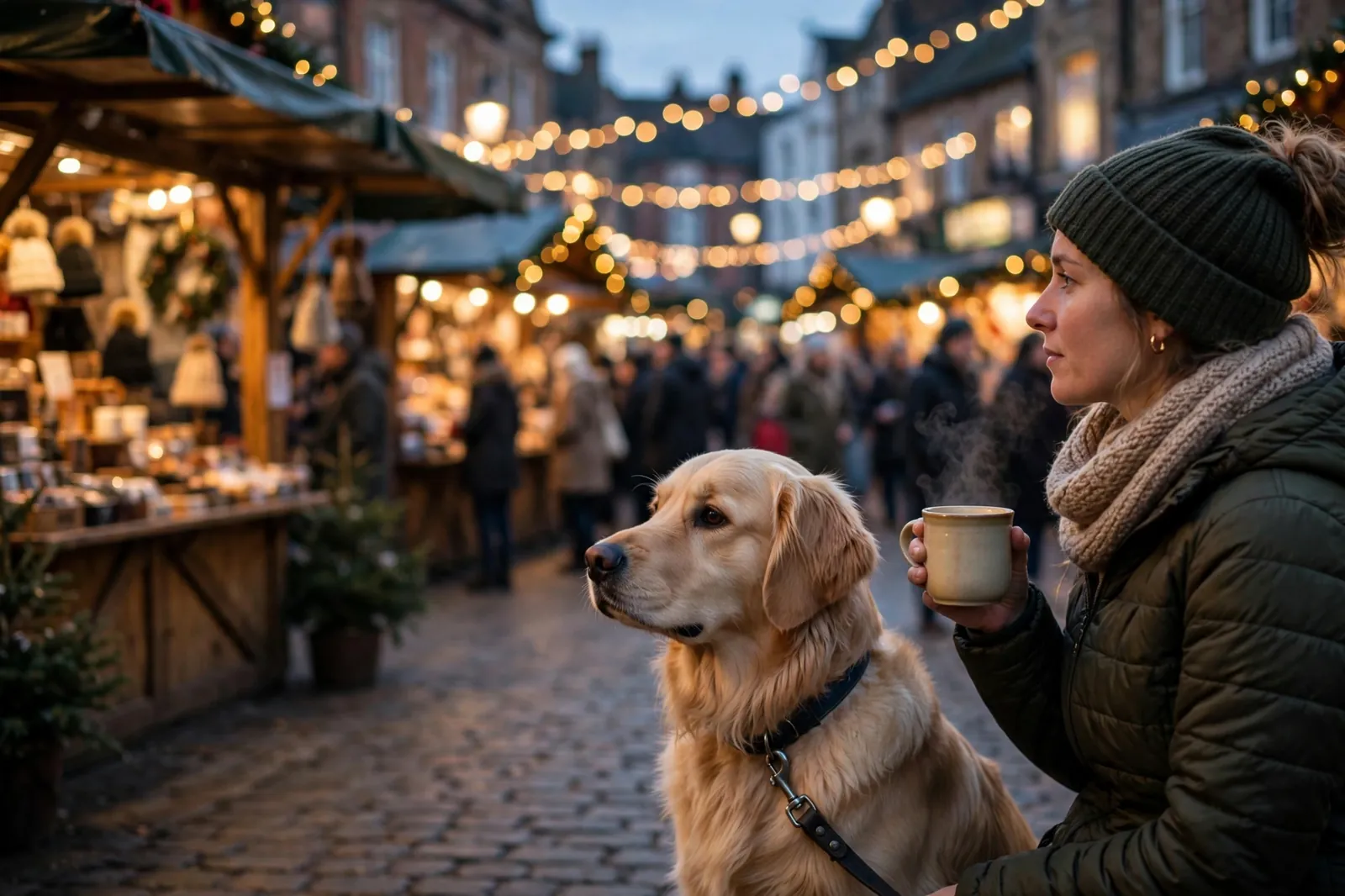
Finally, build the day around the dog's routine rather than fitting the dog into a sightseeing schedule. Feed at the usual time, walk the dog before the drive if the journey is long, and plan a proper break after the garden rather than driving straight to another attraction. Many garden visits pair naturally with a calm lunch afterwards, and dog friendly cafes in the UK are the obvious next stop when the garden's own cafe is crowded or does not admit dogs indoors. A day that ends with the dog settled under a cafe table is a day the dog will remember fondly, even if it cannot tell you about the trees.
Seasons change the garden
No two visits to the same botanical garden are alike, and the season you choose changes the dog's experience as much as the planting. Spring brings blossom, longer days and the first warm paths, but also the busiest weekends, school holiday crowds, and the tree pollen that troubles sensitive dogs. If spring is your season, go early, go on a weekday if you can, and choose the arboretum over the enclosed flower garden for the longest walk. The blossom will still be there from the path, and the dog will have room to enjoy it.
Summer is the season of shade and water awareness. Arboretum canopies and lakeside paths give natural shelter, but open lawns and gravel paths radiate heat, and a dog's paws feel it before you do. Test hot surfaces with your own hand, walk in the morning or late afternoon, and never rely on a garden's shade alone: carry water, watch for heavy panting, and cut the visit short rather than pushing for one more section. Summer also brings the highest visitor numbers, so a dog that is nervous in crowds will do better at opening time, when the paths are quiet and the staff are still setting out.
Autumn is, for many dog owners, the best season of all. The arboretum puts on its colour show, the crowds thin, the air cools, and the ground is usually firm enough for comfortable walking. Falling leaves hide uneven ground and the occasional conker or acorn, so keep an eye on what the dog picks up: conkers and acorns are toxic to dogs if eaten, and a dog that hoovers the leaf litter needs a watchful owner in autumn. The reward is a garden at its most photogenic, with the dog's coat against autumn colour making the cover photograph of many a family album.
Winter has a quiet charm that suits calm dogs. Many gardens are at their emptiest, the structure of the planting is visible, and winter-flowering shrubs and evergreens give the walk interest without crowds. Glasshouses become more tempting in winter, which makes the split-visit plan more important, not less: one person enjoys the tropical warmth while the other walks the dog through the crisp outdoor grounds. Check opening hours carefully, because winter hours are shorter and some gardens close on particular weekdays, and dress the dog for the weather if it is small, old, or short-coated.
Sharing a quiet place with everyone else
Botanical gardens are quiet places by design, and dog owners are guests in that quiet. The etiquette is not complicated, but it is worth stating plainly, because a garden where dogs behave well is a garden that keeps welcoming them. Keep the dog close and calm, especially in narrow sections and near seating areas. Keep barking to a minimum, and if your dog barks at other dogs, choose the wider paths and step aside early rather than hoping the next meeting goes better than the last one. Clean up immediately, every time, and use the bins the garden provides.
Other visitors deserve the same consideration. Not everyone loves dogs, and a garden attracts people who have come for peace, for sketching, for photography, or for a quiet hour after a difficult week. A dog that runs up to a stranger, however friendly its intentions, breaks that peace. Keep greetings on your terms: ask before letting the dog approach another person or dog, and accept a no without comment. Photographers with tripods, families with small children, and people with assistance dogs all have as much right to the path as you do, and the dog owner who yields the path gracefully makes the garden better for everyone.
Wildlife is part of the garden too, and dogs are predators in its eyes even when they are pets in yours. Ground-nesting birds, squirrels, rabbits and the waterfowl on the lake all change their behaviour when a dog is near, and during breeding season that disturbance has real consequences. The lead is the answer, again, and the habit of keeping the dog on the path rather than letting it investigate the undergrowth. A garden that protects its wildlife is a garden worth visiting, and a dog that walks calmly past a duck is a dog its owner can be proud of.
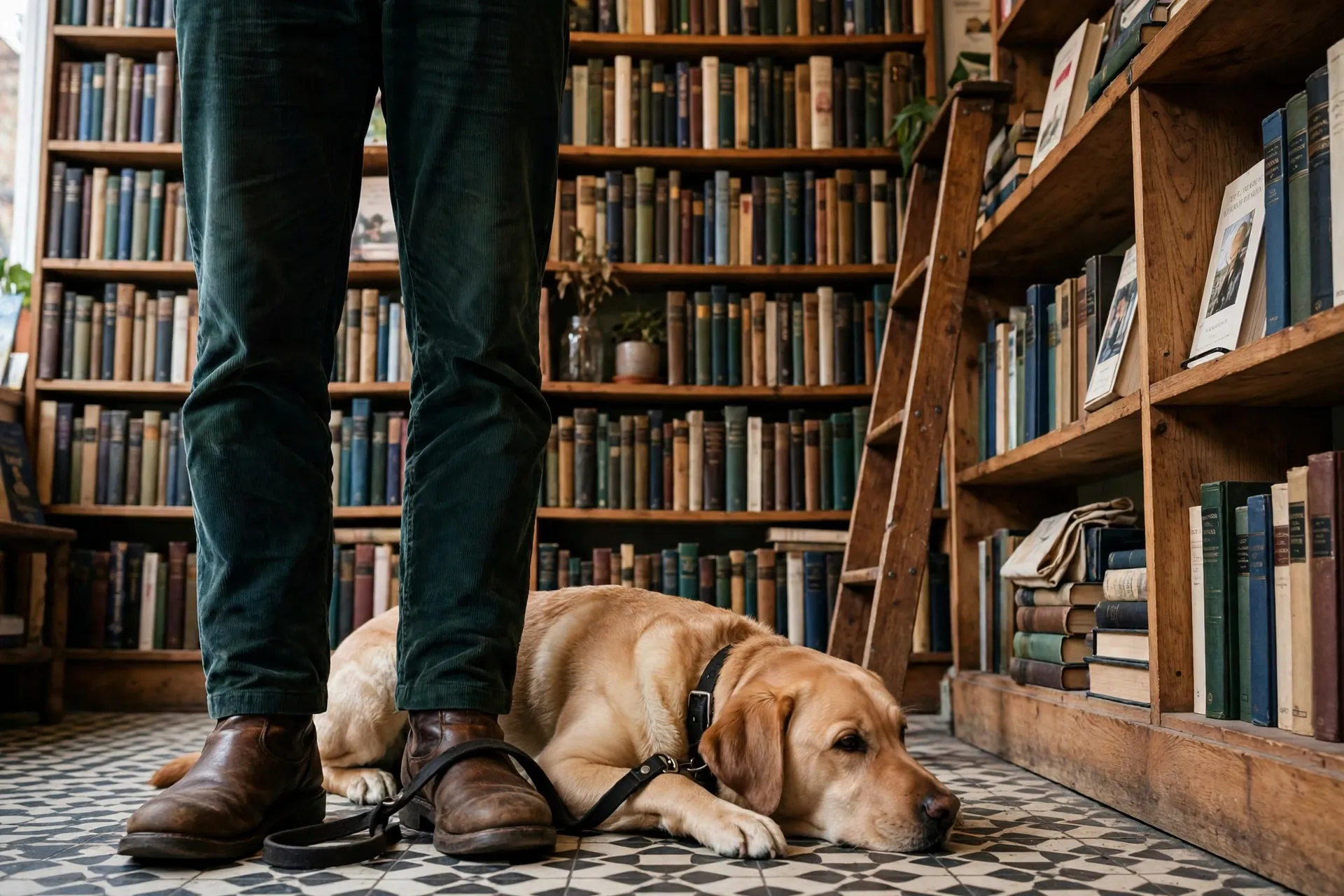
Finally, remember that gardens are workplaces as well as visitor attractions. Gardeners, volunteers and researchers are working among the planting, often with tools, wheelbarrows and vehicles, and a dog underfoot is a hazard to them. Give staff room, follow any temporary signs about closed paths or working areas, and thank the people who keep the garden beautiful. If a staff member asks you to move the dog or to avoid a section, treat it as helpful information rather than a reprimand. The gardens that welcome dogs most warmly are the ones whose visitors make that welcome easy to extend, and a calm, courteous visit is the best argument any dog owner can make for the next one. After a garden day, a slower browse elsewhere suits most dogs well, and dog-friendly bookshops in the UK offer exactly that kind of low-key, rain-proof follow-up when the weather turns or the dog is ready to settle.
Practical questions
Before you go
Are dogs allowed inside the glasshouses at UK botanical gardens?
Usually not. Most UK botanical gardens keep glasshouses dog-free to protect delicate plant collections, narrow paths and climate-controlled conditions, while welcoming dogs in the outdoor grounds on a lead. Assistance dogs are an exception. Always check the official guidance before you travel, because the rule can differ between gardens and between glasshouses in the same garden.
Which parts of a botanical garden are usually best for dogs?
Arboretum paths, lakeside walks and open lawns are usually the most dog-friendly areas, provided dogs stay on a lead and on the paths. Formal flowerbeds, alpine houses, research areas and newly planted beds are often restricted. Follow the signs at each zone boundary rather than assuming the entrance rule covers the whole site.
Do dogs need to stay on a lead in a botanical garden?
Yes, in almost every case. Botanical gardens ask for leads because of other visitors, wildlife, water features and fragile planting. A short lead is the safer choice on narrow paths and near beds. Some gardens have a designated dog exercise area, but that is the exception, so do not assume off-lead walking is available.
Can dogs drink from garden water features and lakes?
No, do not let dogs drink from ornamental lakes, ponds or fountains. The water may be treated, stagnant or home to algae that can be harmful. Carry water and a bowl, and use the drinking points or taps the garden provides. If your dog does drink lake water and seems unwell, contact a vet promptly.
What should I do about pollen season in a botanical garden?
Keep visits shorter on high-pollen days, stick to open paths rather than brushing through flowering borders, and wipe your dog's coat and paws after the walk. Dogs with known grass or tree pollen sensitivity may need a vet-approved plan before the visit. If your dog starts sneezing heavily, rubbing its face or showing irritated eyes, head for open air and cut the visit short.
What if one person wants to visit the glasshouses and the dog cannot go in?
Plan a split visit: one person explores the glasshouses while the other walks the dog in the outdoor grounds, then swap. Do not leave a dog tied up outside a glasshouse entrance or alone in a car. Check whether the garden offers a dog waiting area or shaded seating near the entrance, and keep the swap short on hot or cold days.