This guide is independent and contains no paid placement. Shop policies change, so treat anything described here as a starting point and confirm the current position before you set out.
Many British bookshops welcome dogs, but the welcome is rarely identical from one shop to the next. Check whether dogs are allowed throughout the shop or only in part of it, keep the lead short, give the dog a settled spot, and build the visit around short browsing blocks rather than one long expedition.
Why bookshops suit dogs so well
Push open the door of a good bookshop on a wet afternoon and the whole atmosphere changes. The air smells of paper and wood, the noise drops to footsteps and page turns, and the pace slows down without anyone having to announce it. For a dog, that change of pace can be a relief after a busy high street. There are no trolleys rattling past, no food counters drawing a crowd, and usually no sudden music or announcements. A dog that finds supermarkets overwhelming may still cope beautifully in a quiet shop, provided the visit is kept short and the dog has already had a proper walk first.
The shape of a bookshop helps too. Most shops are a sequence of small rooms or clearly defined bays rather than one vast open floor. That layout gives a nervous dog natural places to pause: a corner by a low shelf, a stretch of wall away from the door, a quiet bay where only one or two people pass at a time. Owners can use those pauses deliberately, letting the dog sniff a shelf base, take a drink, and watch the room for a minute before moving on. Dogs settle by gathering information, and a bookshop offers that information at a gentle rate, one shelf at a time.
Bookshops also reward the kind of trip that suits dogs best, which is a trip with a purpose but without a deadline. You are not trying to reach a summit, catch a train, or queue for a ticket. You can enter, look at one table, decide the dog has had enough, and leave with nothing bought and nothing lost. That freedom matters. The best bookshop visits with a dog often end early, and they still count as a success, because the dog learned that shops are calm places where nothing frightening happens and where leaving is always an option.
There is a practical side as well. Bookshops cluster in walkable town centres, which means a visit can sit naturally between a park walk and a cafe stop, rather than requiring a special journey. In many towns the high street, the riverside path and the bookshop are within a few minutes of each other, so the dog gets exercise, mental stimulation and rest in a sensible order. Planning the sequence well is more important than finding the biggest shop. A tired, toileted dog that has sniffed its way along a towpath will browse far more calmly than a fresh, bursting dog taken straight from the car into a narrow aisle.
Season matters, and bookshops come into their own outside summer. In winter, when beaches are windswept and gardens close early, a warm shop is one of the few indoor places where a dog is genuinely part of the outing rather than an afterthought waiting in the car. In spring and autumn, bookshops pair well with woodland walks and market days. Even in summer they offer a cool, shaded pause between outdoor stops. The point is not to turn every holiday into a literary pilgrimage. It is to notice that a bookshop is often the easiest indoor stop on a dog-friendly day, and to treat it as such.
Finally, bookshops tend to be run by people who enjoy conversation, and that includes conversation about dogs. Staff will often tell you which corner is quietest, whether there is a water bowl behind the counter, and whether the shop has a resident dog of its own that yours should meet slowly or avoid. That local knowledge is worth more than any general list, because it reflects the actual shop on the actual day. A shop with a resident dog may be wonderful for a sociable dog and a poor choice for a dog that guards space, so ask, listen, and be ready to adapt. The aim of this guide is to help you read those situations well, not to hand you a fixed list that will be out of date by the time you travel, so check the official guidance before you travel whenever a policy is unclear.
Independent shops and larger chains
Independent bookshops and larger chain bookshops both welcome dogs in many locations, but they usually do so for different reasons and under different rules, and understanding that difference saves awkward moments at the door. An independent shop is normally one room or a handful of rooms run by a small team, often the owners themselves. The dog policy there is personal: it reflects the owners, the layout of the building, and sometimes the presence of a shop dog. That can mean a warm, flexible welcome, with a biscuit jar on the counter and a blanket in a sunny corner. It can also mean a firm no on a day when the shop is hosting a crowded signing or a children's storytelling session, even if dogs are normally welcome. The policy is the owners' call, and it may not be written down anywhere obvious.
Larger chain bookshops work differently. A chain usually has a company policy that applies across branches, but individual branches still interpret it according to their building. A spacious branch with wide aisles and a ground-floor cafe may welcome dogs throughout, while a cramped branch in a listed building with a narrow staircase may restrict dogs to the ground floor only. Some branches allow dogs only when they are carried, which suits a small dog and excludes a large one in practice. Others welcome dogs but keep them out of a cafe area where food is served, because food hygiene rules and seating licences are separate questions from shop-floor access. The lesson is simple: a chain name tells you where to start looking, not what the answer will be at the branch you plan to visit.
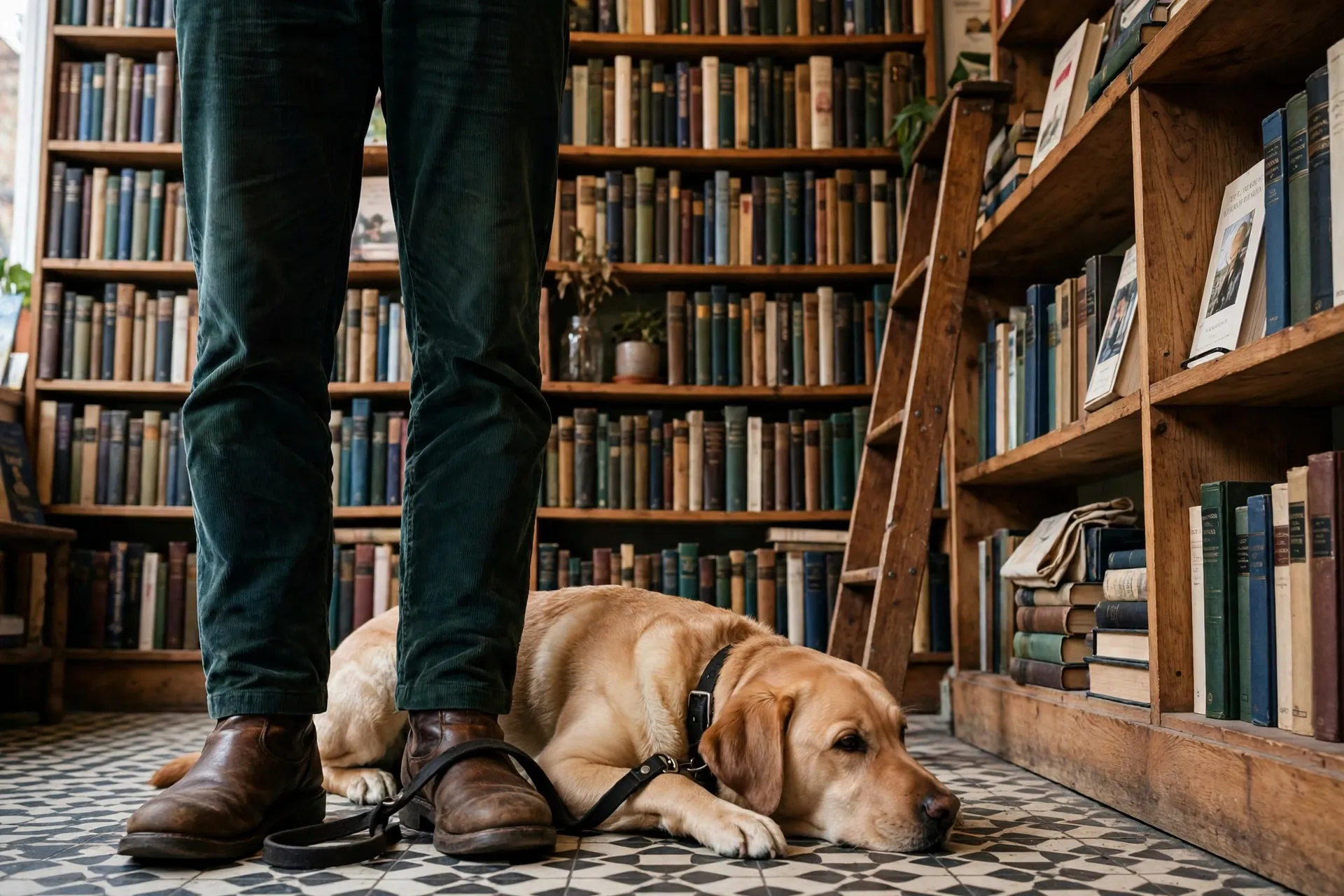
Secondhand and antiquarian shops deserve a note of their own, because they are often the most atmospheric and the least predictable. Narrow aisles, towering piles of books, uneven floors and low lighting are part of the charm for a browser and a genuine hazard for a wagging tail. A large dog in a secondhand shop needs more management than the same dog in a modern chain branch, not because the dog is badly behaved, but because the space leaves less room for error. Some secondhand shops welcome dogs warmly and even keep a bed by the till. Others ask dogs to wait outside because a single knocked pile can take an hour to rebuild. Neither position is unreasonable, and both are easier to accept if you know before you arrive.
Specialist shops add another layer. A children's bookshop may be busier, louder and full of small hands reaching for low shelves, which is stimulating for some dogs and overwhelming for others. A shop that focuses on maps, travel or natural history may attract a quieter crowd and offer wider browsing tables. A station bookshop or an airport-style outlet is a different animal altogether: it is a transit space, and even if dogs are allowed, it is rarely a place to linger. Match the shop type to the dog you have. A sociable dog that loves children may adore a children's bookshop on a quiet weekday morning. A shy dog will usually do better in a spacious general bookshop at opening time, when the aisles are empty and the staff have time to say hello.
Events change the picture in every kind of shop. Author talks, book clubs, launch evenings and school visits can transform a calm shop into a crowded room with chairs in the aisles and people standing in doorways. Some events welcome dogs, some explicitly do not, and some welcome dogs only if they can lie quietly under a chair for an hour, which is a big ask for most dogs. If you are visiting on a day when an event is advertised, check whether the event affects the whole shop or only one room, and whether the normal dog policy still applies during the event. Arriving an hour before an event, when the shop is being set up, can also be disruptive, so ask about timing rather than assuming the morning will be quiet.
Money and membership rarely affect dog access, but they do affect the visit in small ways. Many independent shops run loyalty schemes, reading groups and recommendation services that reward repeat visits, and a dog that becomes a regular will often be greeted by name. Chain shops may offer ordering and collection services that let you browse briefly and collect later, which is useful if the dog's patience runs out before yours does. Do not be embarrassed to buy one book, ask for the rest to be ordered, and leave while the visit is still going well. A short, happy visit builds a better pattern than a long visit that ends with a barking exit, and shop staff remember the difference.
Bookshop etiquette for dogs and owners
Good bookshop etiquette starts before you reach the door. Give the dog a toilet break and a proper sniffing walk first, so the shop is not the first exciting thing of the day. A dog that has already emptied, sniffed and stretched will walk into a shop at a lower level of arousal and will be far more likely to settle. Carry waste bags even if you do not expect to need them in town, because a toilet stop on the way to the shop is normal, and being caught without bags in a town centre is avoidable. Wipe wet paws at the door if the shop provides a mat, and keep the lead short from the threshold onwards, not only once you are inside.
Inside, the basic rule is to protect the books, the other customers and the dog, in that order of practical risk. Keep the dog close to your side or slightly behind you in narrow aisles, never trailing behind you on a long lead where the lead can sweep a display table or trip a passer-by. Watch the tail as carefully as the nose: a happy tail at shelf height can clear a low display in one sweep, and a low shelf of paperbacks is exactly at tail height for a medium dog. If your dog is a keen sniffer, guide the nose away from shelf bases and spines gently and early, before the sniff becomes a mouthing habit. Books are stock, not chew toys, and a damaged book is a cost to a small business.
Other customers deserve the same consideration you would want. Not everyone loves dogs, and some people are allergic or nervous, even in a shop that welcomes dogs. Keep the dog out of other people's personal space, do not let the dog approach children without the parent's clear invitation, and move aside promptly when someone needs to pass in a narrow aisle. If another dog enters the shop, do not assume a greeting is welcome. Shorten the lead, move to a wider bay, and let the other owner pass or settle first. Two dogs meeting nose to nose between shelves is a recipe for a tangle, and a tangled lead in a bookshop is harder to sort out than the same tangle in a park.
Settling is a skill, and a bookshop is a good place to practise it in small doses. Choose a spot with a wall at the dog's back, where the dog can see the room without being in the main flow of traffic. Put a mat down if your dog is trained to use one, and reward quiet lying with calm praise or a small treat delivered low and quietly, not with excited play. If the dog stands and stares at the door, paces, whines or pants heavily, those are signs that the visit is already too long or too stimulating. Step outside for a few minutes, offer water, and decide honestly whether to go back in. Returning for five calm minutes is better than pushing through twenty restless ones.
Water, food and toilets need a plan. Many shops provide a water bowl, but not all do, and a bowl by the counter may be intended for the shop dog rather than visitors. Carry a small portable bowl and offer water outside or in a quiet corner, away from book displays. Do not feed a full meal in a shop, and keep treats small and quiet. If the dog needs the toilet, leave promptly and without fuss; do not hope the dog will hold on until you have finished browsing. Staff will remember an owner who leaves quickly and cleans up thoroughly far more kindly than an owner who apologises at length while the problem continues.
Finally, respect the staff's judgement in the moment. If a member of staff asks you to move to a different area, keep the dog closer, or step outside during a busy period, treat that as normal shop management rather than a personal rebuke. Staff are balancing the needs of every customer, including people who may not have noticed your dog at all until that moment. A gracious response keeps the shop welcoming for the next dog owner. A defensive argument, even a polite one, can harden a policy that was previously flexible. Thank the staff, follow the request, and if you disagree with a policy, raise it later by email when everyone has time to consider it properly.
Book towns and browsing days out
A book town is a town where bookselling is the main attraction rather than a single shop on a high street, and for a dog owner that concentration is both an opportunity and a test of pacing. Hay-on-Wye, on the Welsh border, is the best-known example in Britain, with a dense cluster of secondhand and antiquarian shops within a short walk of each other, alongside a riverside, a castle area and plenty of cafe seating. The appeal is obvious: you can spend a whole day moving from shop to shop without ever needing the car. The risk is equally obvious: a dog can be taken into shop after shop until patience, bladder and concentration all run out at once. Treat a book town as a series of short visits separated by outdoor breaks, not as a marathon.
Plan a book town day in blocks. Start with a riverside or park walk that lets the dog sniff, toilet and burn off the first energy of the day. Then visit one or two shops, no more, before a cafe or outdoor break. After lunch, visit one or two more shops if the dog is still settled, then finish with another walk rather than one last shop. That rhythm gives you four shops in a day without asking the dog to behave like a statue for hours. It also gives you time to enjoy each shop properly, because browsing is better when you are not watching a restless dog out of the corner of your eye. If you find a book you want in the first shop, buy it and carry it, or ask whether the shop can hold it while you continue; carrying a growing pile through narrow shops only makes later visits harder.
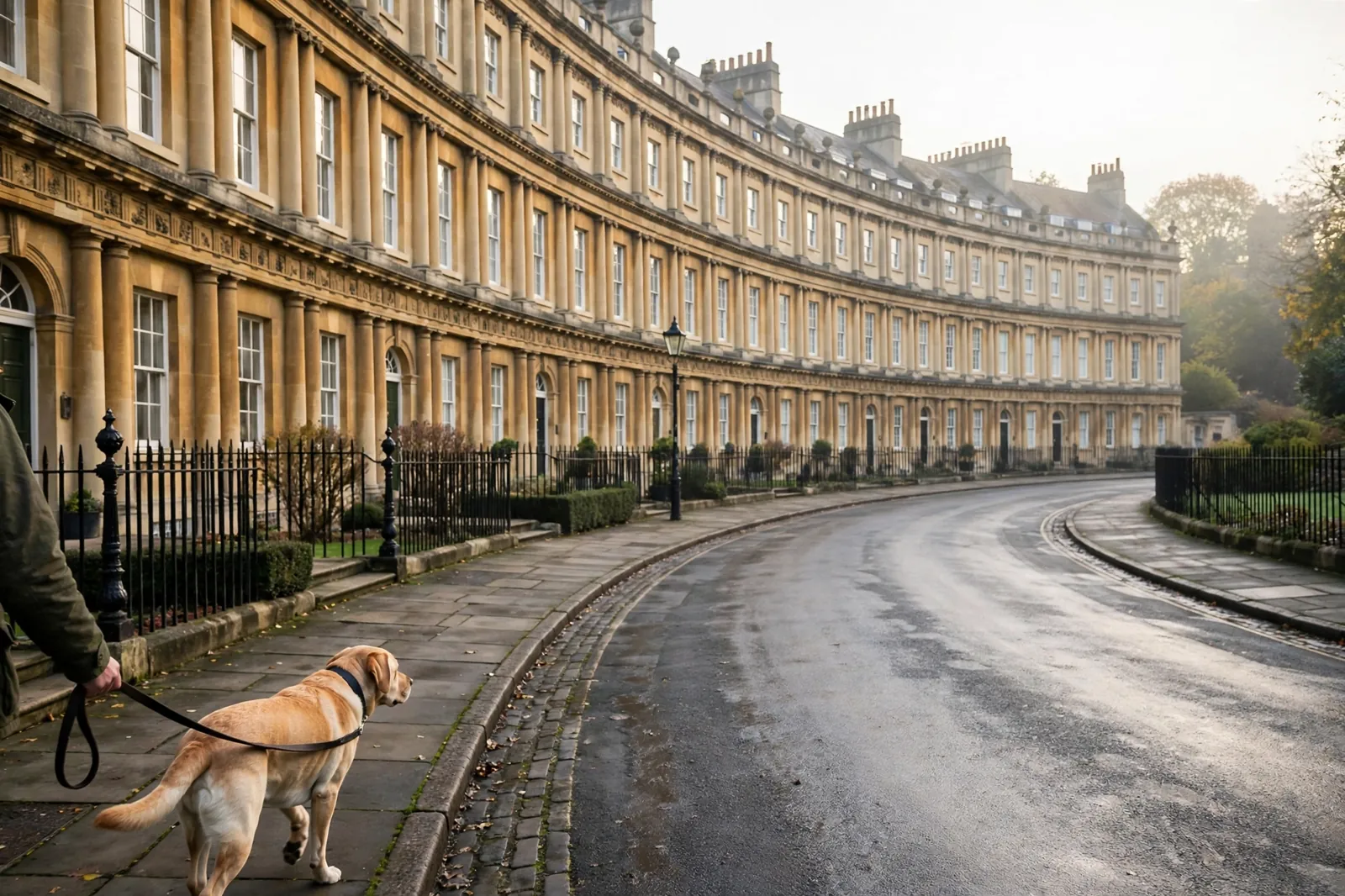
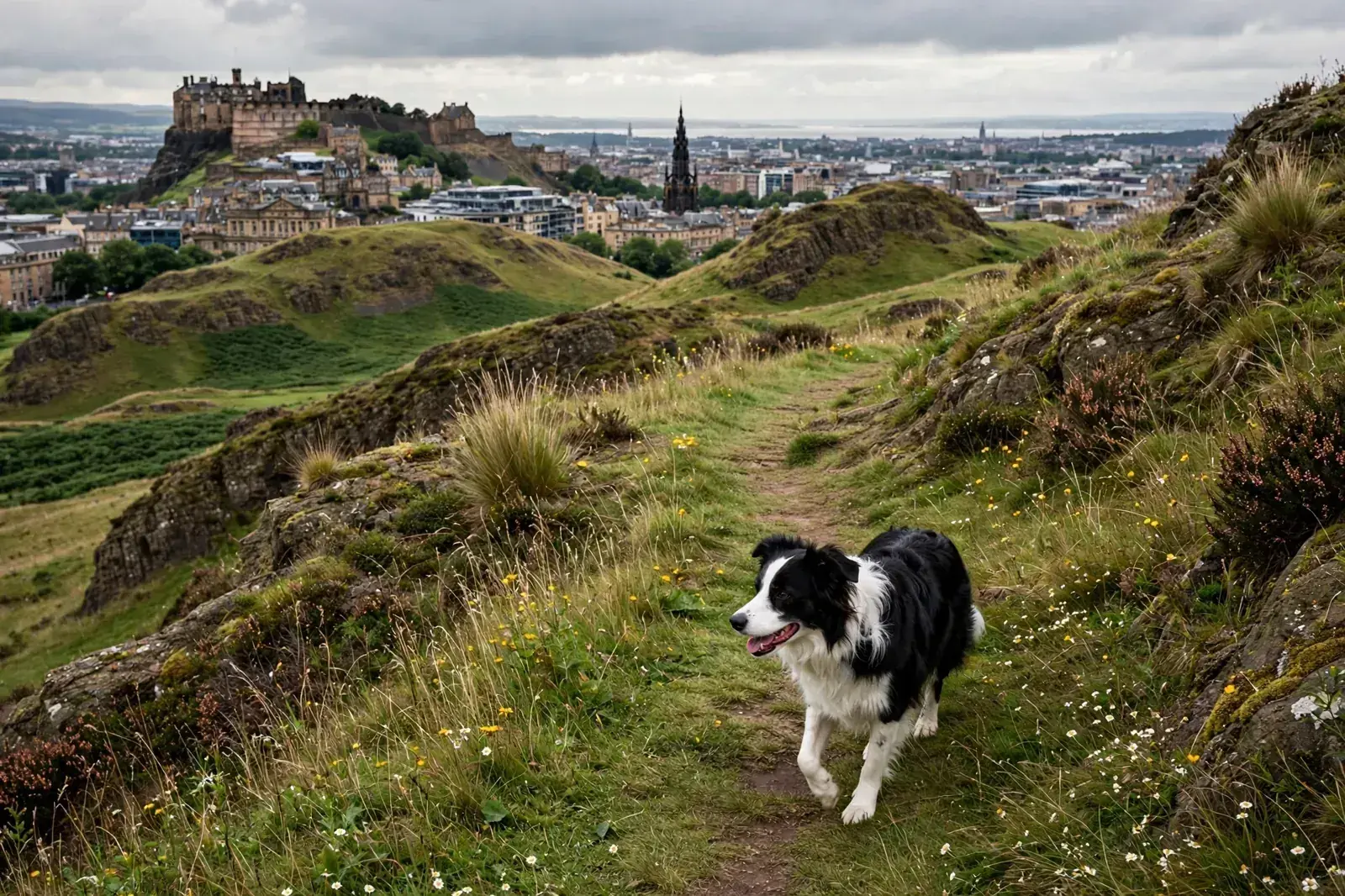
Other towns reward the same approach on a smaller scale. University cities such as Oxford and Cambridge have bookshops clustered near colleges, riverside walks and green spaces, which makes it easy to alternate browsing with open air. Oxford pairs well with Port Meadow and the Thames path, while Cambridge pairs well with the Backs and the commons, and both cities are covered in more detail in our city guides, including Oxford with a dog and the broader planning notes for a city break. Bath is another strong choice, because its Georgian streets are pleasant to walk with a dog and its bookshops sit close to parks and riverside paths, as described in our Bath with a dog guide. Edinburgh offers a different scale again, with bookshops spread across the Old Town, the New Town and Stockbridge, each area rewarding a separate short visit rather than one long trawl, and our Edinburgh with a dog guide explains how to split the city into walkable chunks.
Smaller market towns can be just as rewarding, and sometimes more relaxing for a dog, because the shops are quieter and the streets are wider. A town with one excellent independent shop, a good cafe and a riverside walk may give you a better day than a famous book town on a crowded Saturday. Look for towns where the bookshop is near a park or a towpath, so the dog's needs are met without a drive, and where there is an outdoor cafe option if the shop itself is busy. Market day can be a double-edged sword: it brings atmosphere and food stalls, but also crowds, children, other dogs and dropped food, all of which raise the difficulty for a dog in a shop. If you visit on market day, arrive early, browse before the crowds build, and leave the busiest hours for a walk away from the centre.
Festivals and literary events deserve special planning. A book festival can fill a small town with visitors, talks, queues and temporary stalls, and even a normally dog-friendly shop may restrict access during festival week. Accommodation also books up early, and the town's usual quiet corners disappear. That does not mean you should avoid festivals, but it does mean you should check the festival's dog arrangements separately from the shops' normal policies, and consider visiting the town in the week before or after the festival, when the shops are still well stocked and the streets are calm again. If you do visit during a festival, book a dog-friendly base with a garden or a nearby walk, so the dog has a retreat when the town gets busy, and check the official guidance before you travel if festival rules are unclear.
Transport to a book town is part of the plan too. Driving gives you a base for bags and books, but parking in a small historic town can be tight, and a dog left in a car is never an acceptable fallback while you browse. Walking from a station or a park-and-ride site is often calmer than circling for a central space, and it gives the dog a proper walk before the first shop. If you travel by train, check the train operator's dog rules and the station's facilities, and arrive with time to spare so the dog is not rushed straight from a train into a shop. A book town day works best when every transition is unhurried, because dogs cope with new places far better when they arrive calm than when they arrive flustered.
Rainy days, cafes and second stops
Rain is where bookshops earn their place on a dog-friendly itinerary. On a dry day, a dog may prefer a beach, a hill or a woodland trail, and a bookshop is a pleasant extra. On a wet day, the bookshop becomes the main event, because it offers warmth, shelter and interest without requiring the dog to lie on a wet floor in a busy pub or wait in a car. Plan rainy days around that strength. Choose a town with at least two bookshops within a short walk of each other, so a single shower does not end the outing, and pair the shops with a cafe that welcomes dogs indoors, so the dog can dry off properly between visits.
The cafe question needs care, because a bookshop with a cafe is not automatically a dog-friendly cafe. Some bookshop cafes welcome dogs at every table, some welcome dogs only in a designated area near the door, and some keep the cafe dog-free even though dogs are welcome among the shelves. The distinction often comes down to food preparation areas, seating licences and the layout of the room, and it is not always obvious from outside. Ask before you order, and if the cafe is dog-free, enjoy the shop and take your coffee to a nearby dog-friendly cafe instead. Our guide to dog friendly cafes in the UK explains how to tell a genuinely indoor welcome from a terrace-only welcome, which is a useful check before a rainy day when a terrace is no help at all.
Drying a wet dog before entering a shop is both courteous and practical. A damp dog in a warm shop will shake, drip and leave paw prints across a floor that other customers then walk through, and a wet dog is also less comfortable settling on a hard floor. Towel the dog down outside or in a porch, use a drying coat if the dog wears one, and give the coat a few minutes to do its work before you go in. Carry a small towel in your bag for a second wipe at the door, and consider a mat for the dog to lie on, which keeps the dog off a cold floor and protects the shop floor at the same time. If the dog is soaked through after a riverside walk, consider a cafe stop first and a bookshop second, so the dog arrives drier and calmer.
Second stops on a rainy day should be chosen for the same qualities as the bookshop: indoor, calm, spacious and dog-welcoming. A covered market hall, a large garden centre with a dog-friendly cafe, or a museum with a clear dog policy can all work, but each needs its own check, because policies vary widely and a rainy day is a bad time to discover a no-dogs rule at the door. Avoid stacking too many indoor stops in one day. Two good indoor visits with a proper break between them will feel like a full day, while four rushed visits will leave both of you tired and damp. Build in a return to your accommodation or car for a proper rest, a drink and a toilet break, even if that means missing a shop you had hoped to see.
Wet weather also affects what you buy and carry. Paperbacks and rain do not mix, so bring a waterproof bag or a large zip-lock bag for purchases, and ask the shop for a bag if you do not have one. Hardbacks are heavy, and a bag of books plus a lead plus a wet dog is a lot to manage in a narrow shop, so buy in stages and drop bags at your base between shops if you can. If you are travelling by public transport, keep purchases to what you can carry comfortably alongside the dog, and consider ordering heavier books for home delivery rather than carrying them all day. A bookshop visit should end with a book you are pleased about, not with a strained shoulder and a tangled lead.
Finally, remember that rainy days are busy days for bookshops, because every other dog owner has had the same idea. Arrive at opening time if you can, when the shop is quietest and the staff have time to help, and avoid the mid-afternoon peak when families and tour groups arrive together. If the shop is crowded when you arrive, walk past, have a coffee, and return in half an hour. A bookshop will still be there, and a calmer shop is worth a short wait. The best rainy-day plan is flexible by design, with a short list of options rather than a fixed timetable, so rain, crowds and a tired dog can all be accommodated without spoiling the day.
Pacing the visit around your dog
Pacing is the difference between a bookshop visit that feels effortless and one that feels like a test. Dogs do not browse. They sniff, watch, settle, and then need to move on, and their patience for standing still in a stimulating room is limited, even for a calm dog. A useful rule is to plan for twenty to thirty minutes inside a single shop for most dogs, less for a puppy, a nervous dog or a dog new to shops, and more only if the dog is clearly settled and happy. That is not a failure of training. It is a realistic reading of what a dog enjoys, and it leaves you time to return to the same shop another day with a fresh dog.
Watch for the early signs that the visit should end, rather than waiting for a bark or a pull. A dog that yawns repeatedly, licks its lips, pants when it is not hot, paces in a small circle, or keeps looking at the door is telling you that the room has become too much. A dog that lies down with a sigh and rests its head on its paws is telling you the opposite. Learn your own dog's signals before you rely on a general list, because one dog's sigh is relaxation and another's is stress. If you are unsure, step outside for five minutes. A short break outside often resets a dog completely, and you can then decide whether to go back in or call it a day.
Choosing books with a dog in tow requires a different method from browsing alone. Instead of wandering every aisle, start with a short list: one author, one subject, or one recommendation you want to check. Find that section first, browse it properly, and then allow yourself one unplanned aisle if the dog is still settled. That structure gives you a satisfying visit even if you leave after fifteen minutes, because you have already looked at what mattered most. Staff recommendations are particularly valuable here, because a bookseller can often find the right book in a minute that might take you twenty minutes of wandering to discover, and that saved time is time the dog does not have to spend waiting.
Children, other dogs and shop dogs all affect pacing, and each needs a plan. If you are visiting with children, agree beforehand who holds the lead and who browses, because a child and a dog pulling in different directions in a narrow aisle is stressful for everyone. If the shop has a resident dog, ask where it is and whether it is likely to approach yours, and keep your dog on a short lead until you know how the two dogs will react. If another customer brings a dog in while you are browsing, move to a wider area and give both dogs space, rather than letting them meet between shelves. These small decisions, made early, prevent the incidents that cut visits short.
Age and health change pacing more than most owners expect. An older dog may need a shorter visit, a softer place to lie, and a toilet break sooner than a younger dog, but may also settle faster once in place, because the novelty has worn off over years of outings. A puppy may be enthusiastic for ten minutes and then overtired and mouthy, which is a sign to leave, not a sign to push through. A dog recovering from illness or surgery may cope with a very short visit to a quiet shop but not with a whole book town day. Adapt the plan to the dog in front of you on the day, not to the dog you had last year or the dog you hope to have next year.
End every visit on a good note if you can. Leave while the dog is still calm, praise the dog outside, offer water, and walk a short distance before getting into a car or heading to the next stop. That ending teaches the dog that shops are places where good things happen and where leaving is calm, which makes the next visit easier. If a visit does go wrong, do not try to fix it by staying longer. Leave, let the dog decompress with a walk and a sniff, and think about what to change next time: a quieter shop, a shorter visit, a better walk beforehand, or a different time of day. Progress with dogs is built from many short, successful visits, not from one long visit that proves a point.
Before you go: the confirmation checklist
A short checklist before you leave home prevents most bookshop problems, and it takes less time than dealing with a single awkward moment at the door. Work through it the evening before a planned visit, or on the morning of a spontaneous one, and keep the answers with your trip notes. The checklist below covers the questions that actually change a visit, rather than every imaginable detail, and it applies equally to a single shop and to a whole book town day.
- Is the dog welcome throughout the shop, or only in part of it? Ask specifically about floors, cafe areas and event spaces, because a general yes can hide important exceptions.
- Are there size, breed or number restrictions? Some shops ask large dogs to stay in wider areas, and some restrict dogs during events. Declare your dog honestly and ask what that means in practice.
- Is there a resident dog, and where is it likely to be? A shop dog can be a delight or a complication, depending on your dog, so knowing in advance lets you plan the meeting or avoid it.
- Where is the nearest toilet and water stop before the shop? Plan the walk so the dog arrives toileted, exercised and ready to settle, not bursting and excited.
- What are the quietest times? Opening time on a weekday is usually calmest. Saturday afternoons, school holidays and event days are usually busiest.
- What will you do if the shop is crowded or the dog cannot settle? Have a cafe, a park or a walk as a fallback, so leaving early feels like a plan rather than a disappointment.
- What are you carrying? Short lead, portable bowl, towel, waste bags, a mat if your dog uses one, and a waterproof bag for purchases. Leave everything else behind.
Checking a policy is a skill in itself. Start with the shop website, where dog information is often on a visit page, a frequently asked questions page, or a social media profile. If the policy is not stated clearly, call or email, and ask the specific questions above rather than a vague question about whether the shop is dog-friendly. Vague questions get vague answers, and a vague answer at home becomes a problem at the door. Save the reply, including the name of the person who answered if you spoke on the phone, because that makes it easier to resolve any confusion on arrival. If you cannot get a clear answer, treat the shop as unconfirmed and choose a different shop or a different day, rather than turning up and hoping.
Assistance dogs are in a different category from pet dogs, and shops should not treat them as pets. If you travel with an assistance dog, you do not need to ask permission in the same way, but it is still helpful to let a small shop know you are coming if the layout is tight, so staff can clear a path or suggest the widest route. If you are refused access with an assistance dog, note the details and the reason given, and check the official guidance before you travel about your rights, because the law in this area is specific and a general guide cannot replace official advice. For pet dogs, remember that a shop's welcome is a courtesy, not a right, and that a polite response to a no keeps the door open for future visits and for other dog owners.
Finally, keep your expectations realistic and your plans flexible. A bookshop visit with a dog is not the same as a solo browsing session, and it should not try to be. You will browse less, buy more selectively, and leave earlier than you would alone, and you will also gain something a solo visit cannot offer: a shared outing, a dog that learns to settle in new places, and a reason to visit towns you might otherwise pass through. The best bookshop days with a dog are not the days when you cover the most shops. They are the days when the dog settles, the books surprise you, and you both leave wanting to do it again.
Practical questions
Before you go
Are all bookshops in the UK dog-friendly?
No. Policies vary by shop, by branch and sometimes by floor or event. Some shops welcome dogs throughout, others allow dogs only in part of the shop, and some do not allow pet dogs at all. Check the shop website or call ahead, and check the official guidance before you travel if anything is unclear.
Should my dog stay on a lead inside a bookshop?
Yes, keep your dog on a short lead inside a bookshop unless the shop clearly states otherwise. A short lead keeps your dog clear of low shelves, display tables, other customers and trailing cables, and it makes it easier to move aside in narrow aisles.
What should I do if my dog barks or pulls toward other customers?
Move calmly to a quieter corner or step outside, give your dog space and time to settle, and only return inside if the dog is calm. If the dog cannot settle, end the visit and try again another day with a shorter visit. Never scold loudly in the shop, as that usually raises the excitement for everyone.
Can I take my dog into a bookshop cafe area?
Sometimes, but cafe rules are often separate from shop-floor rules. Some bookshop cafes welcome dogs at tables, some restrict dogs to a particular seating area, and some keep food areas dog-free. Ask before ordering, and keep the dog under the table and away from food service routes.
How do I check a bookshop's dog policy before I visit?
Start with the shop website and social media pages, then call or email if the policy is not stated clearly. Confirm whether dogs are welcome throughout the shop or only in certain areas, whether there are size or event restrictions, and whether water bowls or treats are provided. Save the reply with your trip notes.
What should I pack for a bookshop visit with my dog?
Pack a short lead, a portable water bowl, a small towel for wet paws, waste bags, a chew or quiet enrichment item for waiting time, and a mat if your dog is trained to settle on one. Travel light otherwise, because narrow aisles and busy doorways are easier with one small bag than with a full day pack.