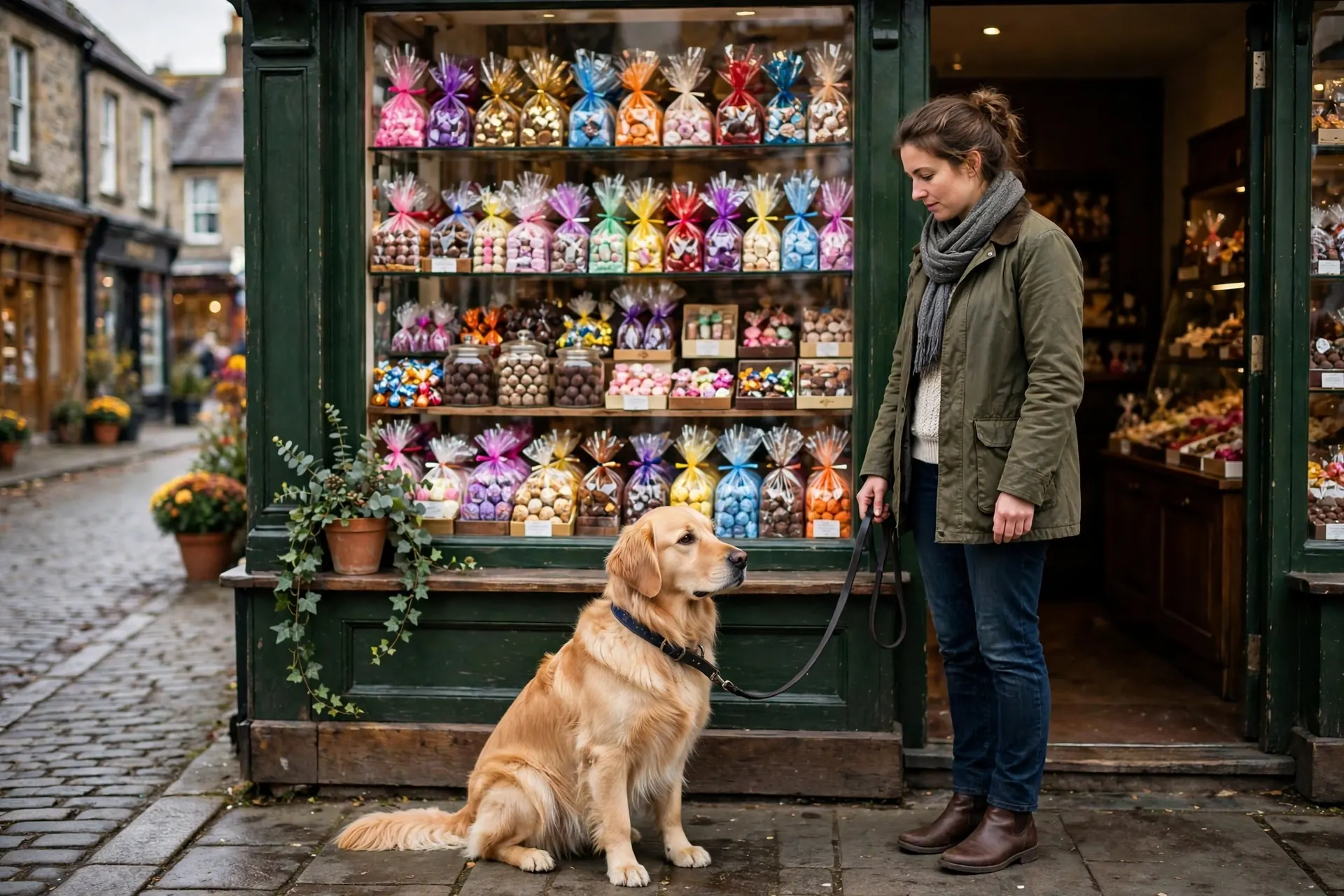
This guide is independent and contains no paid placement. Chocolate shop policies change by venue and season, so check the official guidance before you travel. This guide is not veterinary advice.
Many chocolate shops welcome dogs in the retail area, but chocolate is toxic to dogs, so a short lead, distance from displays, and a plan for dropped sweets are essential. Workshops and kitchens usually exclude dogs, so ask about each area separately.
The chocolate warning, plainly stated
Chocolate contains theobromine and caffeine, both of which dogs process much more slowly than people, and both of which can cause serious illness in dogs. Dark chocolate, baking chocolate and cocoa powder contain the highest levels of theobromine and are the most dangerous, while milk chocolate contains less but is still unsafe, and white chocolate, though low in theobromine, is high in fat and sugar and can still upset a dog's stomach. The risk depends on the type of chocolate, the amount eaten, and the size of the dog, with small dogs at greater risk from the same amount, but no amount should be treated as safe to share.
Symptoms of chocolate toxicity can include vomiting, diarrhoea, restlessness, panting, increased heart rate, trembling and, in severe cases, seizures, and they may appear hours after eating. That delay is why waiting to see if a dog becomes ill is a dangerous strategy: by the time symptoms are obvious, treatment is harder and the outcome is less certain. If your dog eats chocolate, the correct response is to contact a vet immediately, describe what was eaten and how much, and follow their advice, which may include bringing the dog in for treatment even if they seem well. Do not try to make your dog vomit unless a vet specifically tells you to.
A chocolate shop concentrates this risk in a small space. Displays are at dog nose height, samples are offered to visitors, children drop sweets, and the smell of chocolate fills the air, which can excite even a well-trained dog. A dog that scavenges, that is highly food-motivated, or that has never been in a food shop before needs extra care, and a muzzle can be a sensible precaution for such a dog, even in a shop that welcomes dogs. Prevention, in a chocolate shop, is not about willpower; it is about distance, a short lead, and a watchful owner who intervenes before the dog reaches a display.
Shops, cafes and workshops are different
Chocolate businesses in Britain take several forms, and each has different dog rules. A retail chocolate shop sells boxed chocolates, bars and gifts, often with a counter, shelves and a small tasting area, and many such shops welcome dogs on leads in the retail space. A chocolate cafe combines a shop with seating, drinks and cakes, and its dog policy may follow cafe rules, with dogs allowed in one area but not another. A chocolate workshop or factory shop combines retail with production, demonstrations and hands-on making sessions, and its production areas are usually closed to dogs for hygiene reasons, even if the shop itself is dog-friendly.
Understanding those distinctions helps you plan a visit that works. A retail shop is usually the easiest option for a dog, because the visit is short, the dog can stay on a lead beside you, and you can leave quickly if the dog becomes restless. A cafe visit is longer and more social, with food smells, other customers and children, so it suits a dog that settles well in cafes. A workshop visit is the most complex, because it may involve a tour, a demonstration, a making session, and a shop, each with different rules, and you may need to split the group or choose a viewing option. Ask about each part separately, rather than assuming one welcome covers the whole business.
Some chocolate attractions are larger experiences, with museums, trails, demonstrations and cafes, and they may have a detailed dog policy covering each area. Others are tiny independent shops, where the owner decides on the day and may welcome a calm dog but not a large group with several dogs. In a small shop, a polite question at the door, a short lead, and a willingness to wait outside if the shop is crowded will usually get a friendly response. In a larger attraction, check the website for a dog policy, book in advance if required, and allow extra time for the dog to settle between areas.
Small shops and narrow aisles
Small chocolate shops are charming and, for dogs, challenging. Aisles are narrow, displays are low, shelves are packed, and there is often only one way in and out, which means a dog cannot easily move away from another customer, a child, or a tempting display. A large dog in a small shop can block the aisle, knock a display with a wagging tail, or reach a low shelf before the owner can react. A small dog, on the other hand, may be stepped on, frightened by a closing door, or overwhelmed by the concentration of smells in a confined space.
Visit small shops at quiet times if you can, such as weekday mornings, when staff have time to help and the shop is less crowded. Keep the dog close to you, on a short lead, and away from displays, and avoid letting them sniff shelves, counters or open boxes. If the shop is busy, consider waiting outside with the dog while a companion shops, or asking staff whether you can order from the door. That is not a failure; it is a sensible way to enjoy a shop that was not designed for dogs, and it avoids an incident that could lead to a policy change for other owners.
Also think about the dog's tail, paws and nose as a combined hazard in a small shop. A wagging tail can sweep items off a low display, muddy paws can mark a light floor, and a curious nose can knock over a sample tray. Bring a blanket or mat for the dog to sit on if you will be browsing for a while, keep bags and coats tucked away, and clean up any mess promptly. Staff in small shops notice considerate owners, and they are far more likely to welcome dogs back if the visit leaves no trace.
Displays, samples and dropped sweets
Displays are the main attraction in a chocolate shop, and the main risk for a dog. Open displays, sample trays, loose sweets in jars, and chocolates arranged at counter height are all within easy reach of a dog's nose, especially if the dog stands on hind legs or pulls towards the counter. Even closed displays can be tempting, because the smell of chocolate is strong and the dog can see people eating and enjoying it. Keep the dog at a distance from displays, use a short lead, and do not let them put their paws on counters or shelves, even if staff are smiling, because one successful grab can teach a dog that chocolate shops are places where food is available.
Samples deserve special care. Many shops offer free samples, and staff may offer one to you without realising you have a dog, or may offer a treat to the dog that is actually a human chocolate sample. Decline politely, explain that your dog cannot eat chocolate, and ask whether there is a dog-safe treat available instead. If you accept a sample for yourself, eat it away from the dog, wash your hands before handling the dog's lead or treats, and dispose of packaging promptly, because a dropped wrapper with chocolate residue can still tempt a dog.
Dropped sweets are the hidden hazard. Children drop chocolates, visitors spill samples, and small items roll under displays, where a dog may find them before anyone else notices. Scan the floor as you walk through a shop, keep the dog on the path rather than letting them sniff under shelves, and intervene immediately if they pick something up. A reliable leave command, practised at home with food on the ground, is essential for a chocolate shop visit, and a muzzle can help for a dog that scavenges persistently. If your dog does pick up chocolate, take it away calmly, note what it was, and contact a vet if you are unsure how much they ate.
Workshop tours and making sessions
Workshop tours and making sessions are the most popular part of many chocolate attractions, and the least likely to allow dogs. A making session involves handling chocolate, using moulds, working at tables, and often wearing aprons and hairnets, with hygiene rules that exclude animals from food preparation areas. A demonstration may be more accessible, especially if it takes place in a public area with a viewing window, but even then, the audience may be seated close together, with chocolate samples and hot equipment nearby, which can be stressful for a dog.
Ask about workshop options before you book. Is there a demonstration that allows dogs in the audience, a viewing gallery where dogs can watch from outside the production area, or a shorter public tour that avoids the kitchen? Some attractions offer a family session where children make chocolate while adults watch, and dogs may be allowed in the viewing area but not at the making tables. Others offer a shop and cafe visit without a workshop, which may be a better option for a dog. If the workshop is the main reason for your visit, consider splitting the group, with one person taking the session while the other waits with the dog in the shop or cafe.
Heat and equipment are additional reasons workshops exclude dogs. Chocolate tempering involves heated machines, hot water, and warm surfaces, and a dog that brushes against equipment or walks through a production area could be burned or could contaminate food. Staff in workshops are focused on their work and may not expect a dog underfoot, which creates a safety risk for everyone. Respecting those restrictions is not just polite; it protects the dog, the staff, and the food, and it helps keep chocolate workshops open to visitors in other ways.
Tasting without sharing
Tasting is central to a chocolate shop visit, and it needs a clear rule: tasting is for people, not for dogs. Even a small piece of milk chocolate, offered with good intentions by staff or another visitor, can upset a dog, and a larger piece can be dangerous, especially for a small dog. Explain politely that your dog cannot eat chocolate, and do not feel awkward about declining, because staff and other visitors usually understand once you explain. If you want your dog to feel included, bring a dog-safe treat and give it to them while you taste, so they have something appropriate at the same moment.
Be careful about indirect sharing too. Chocolate on your hands, on a napkin, or on a tasting spoon can transfer to the dog's mouth if you stroke them or handle their treats without washing your hands. After tasting, wash your hands, dispose of wrappers and samples promptly, and keep the dog's treats separate from human chocolate. If you are tasting several chocolates, take breaks, drink water, and watch the dog, because a long tasting session with divided attention is when a dog is most likely to find a dropped sample unnoticed.
Tasting sessions also involve conversation, note-taking and comparison, which means your attention is divided for a sustained period. Assign one person to focus on the dog, especially during a guided tasting, so the dog is not ignored while everyone else is concentrating on flavour. If the dog cannot settle during a tasting, move to a quieter area, shorten the tasting, or leave the session early, because a stressed dog will not enjoy the experience and may become a distraction for other tasters.
Children, gifts and excited hands
Children and chocolate shops are a natural combination, and they add a layer of complexity for dog owners. Children may want to stroke your dog, offer them chocolate, or show them a sweet they have just bought, often without asking first. A friendly, brief explanation usually works: say that your dog cannot eat chocolate, that they would love a stroke if they are calm, and that treats for the dog are in your pocket. If you have children in your own party, agree the rules before you enter: no feeding the dog without asking, no holding chocolate at dog height, and no running in the shop.
Gift shopping adds another temptation. Boxes of chocolates, chocolate animals, and seasonal figures are often displayed at child height, which is also dog height, and a dog that grabs a gift box can damage it and eat its contents in seconds. Keep shopping bags closed, hold them away from the dog, and do not let the dog carry a bag, even if it looks cute, because a bag can tear or be dropped. If you are buying gifts for children, consider shopping without the dog, or asking staff to pack gifts securely while you wait outside with the dog.
Excited hands, whether children's or adults', can also overwhelm a dog. A dog that is stroked by several strangers in quick succession, offered food, and photographed may become overstimulated, even if they started out calm. Limit interactions, give the dog breaks, and watch for stress signals such as lip licking, turning away, yawning or moving behind you. A dog that moves behind you is asking for space, and respecting that request will help them recover and enjoy the rest of the outing.
Dog-safe alternatives that actually work
Carob is the most common dog-safe chocolate alternative, and it is worth understanding properly. Carob, made from the pods of the carob tree, looks and tastes somewhat like chocolate but does not contain theobromine, and it is used in many treats made specifically for dogs. Those treats are usually safe in moderation, but they are still treats, not a staple food, and they should be given in appropriate amounts for your dog's size. Check ingredients, buy only treats made for dogs, and do not assume that a human carob product, which may contain sugar, xylitol or other ingredients, is safe for dogs.
Some chocolate shops sell dog treats, including carob drops, biscuits and gift sets for dogs, and those can be a lovely souvenir, provided you check the ingredients and the use-by date. Other shops may offer a free dog biscuit, which is usually a plain, dog-safe biscuit, not chocolate, but it is still worth checking. If a shop does not sell dog treats, bring your own, so your dog has something to enjoy while you shop. A familiar treat, given at the right moment, can turn a potentially frustrating visit, where the dog smells food they cannot eat, into a positive experience where they are rewarded for calm behaviour.
Be wary of products that look like chocolate but are not clearly labelled for dogs. White chocolate-style drops, yoghurt-coated treats, and novelty sweets may contain sugar, fat, or artificial sweeteners, including xylitol, which is highly toxic to dogs. If you are unsure about a product, do not give it to your dog, and ask staff or check the packaging for a full ingredient list. When in doubt, a plain dog biscuit from home is always safer than a novelty treat from a shop, however cute the packaging looks.
Easter, Christmas and seasonal crowds
Seasonal peaks transform chocolate shops. At Easter, shops are full of chocolate eggs, bunnies and gift sets, with children, queues and displays everywhere, and the risk of dropped chocolate is at its highest. At Christmas, shops offer advent calendars, selection boxes and festive figures, with similar crowds and similar risks, plus the added complication of Christmas foods that are also toxic to dogs, such as raisins, currants, mince pies and Christmas pudding. A dog that copes well with a quiet weekday shop may be overwhelmed by a seasonal crowd, and a seasonal visit needs extra planning.
If you want to visit at Easter or Christmas, choose a quiet time, such as a weekday morning, book if required, and keep the visit short. Avoid peak shopping days, such as the Saturday before Easter or the last weekend before Christmas, when queues are long and displays are crowded. If the shop is busy, consider waiting outside with the dog while a companion shops, or ordering online and collecting from the door. A short, calm visit is better than a long, stressful one, especially at a time of year when the shop is already under pressure.
Seasonal products also affect storage and transport. Chocolate eggs and figures are fragile, melt easily, and are often bought as gifts, so they need careful packing and cool storage. Keep seasonal purchases in a closed bag, out of the dog's reach, and do not leave them in a hot car, where they will melt and where a dog left briefly could overheat. If you are buying a large amount for gifts, consider shipping it home or collecting it later, rather than carrying it around with a dog all day.
Heat, melting and storing chocolate
Chocolate melts at a relatively low temperature, and a warm shop, a sunny car, or a pocket on a summer day can turn a beautiful box of chocolates into a sticky mess. More importantly for dog owners, melted chocolate is easier for a dog to eat quickly, and a melted bar that leaks from a bag can be licked from a floor, a seat or a bag before you notice. Keep chocolate in a cool, closed bag, away from the dog, and do not carry it in an open tote or a pocket where the dog can reach it. In summer, use an insulated bag or a cool box for chocolate purchases, especially if you have further stops before going home.
At home, store chocolate securely, out of the dog's reach, in a closed cupboard or a high shelf, not on a low table or in a bag on the floor. Dogs are skilled at opening bags, boxes and cupboards, especially when they can smell chocolate, so a secure container is worth the effort. If you receive chocolate as a gift, store it immediately, and tell everyone in the household that chocolate is not for the dog, because a well-meaning visitor may offer a piece without realising the risk. The same care applies to cocoa powder, baking chocolate and chocolate spreads, which are often stored in kitchens at dog height.
Transport also needs thought. If you are travelling with a dog and chocolate, keep the chocolate in the boot or in a closed bag on a seat away from the dog, not on the dog's blanket or in the footwell where they can reach it. If you stop for a walk or a meal, do not leave chocolate in a hot car with the dog, because the chocolate will melt and the dog may overheat. A little care with storage protects both the chocolate and the dog, and it avoids the stressful situation of discovering that a gift box has been opened and eaten during a journey.
Booking and visiting questions
Before you visit, ask a short set of chocolate-specific questions. Are dogs allowed in the shop, in the cafe, and in the workshop, or only in some of those areas? Is there a tasting that allows dogs, or a viewing option for workshops? Are there size or number restrictions, and must dogs be on a lead at all times? Is there outdoor seating, shade and water, and is there a dog toilet area nearby? Are there dates when dogs are not welcome, such as event days, school holidays or seasonal peaks?
Also ask about practical details. Is the shop accessible for a dog with mobility issues, and are there steps or narrow aisles? Is there parking nearby, or a long walk from the car park? Can you order online and collect from the door if the shop is busy? Is there a dog treat available, or should you bring your own? If you are staying nearby, the same habit of asking specific questions helps with holiday park bookings, so treat this as good practice rather than extra work.
Keep the answers in writing if you are booking a workshop or a special event, because policies can change for private hires, festivals or seasonal peaks. If the shop says dogs are welcome but cannot confirm workshop details, plan for a shop and cafe visit, and treat any workshop access as a bonus. A flexible plan, with a nearby walk or a pub garden as a backup, turns a chocolate shop visit from a gamble into a pleasant stop on a larger day out.
If your dog eats chocolate
If your dog eats chocolate, contact a vet immediately, even if they seem well and even if the amount seems small. Note the type of chocolate, dark, milk or white, the amount, the weight of the product if you know it, and the time it was eaten, and keep the packaging if possible, because it helps the vet assess the risk. Do not wait for symptoms, because chocolate toxicity can develop over hours, and early treatment, which may include inducing vomiting under veterinary supervision, giving activated charcoal, or monitoring the heart, is far more effective than late treatment.
While you wait for veterinary advice, keep the dog calm, prevent further eating, and note any symptoms, such as vomiting, diarrhoea, restlessness, panting, increased thirst, or trembling. If you are in a shop, tell staff what has happened, because they can help you find the nearest vet, provide a quiet place to wait, and check whether other chocolate is accessible. Save the vet's number before you visit, along with the address of the nearest emergency vet, because chocolate shops are often in market towns some distance from a practice, and time matters in a toxicity case.
After any incident, reflect on what happened and whether a chocolate shop visit is suitable for your dog in future. A dog that scavenges persistently may need more training, a muzzle, or a different kind of outing, and that is not a failure. Many dogs enjoy chocolate shops safely with a short lead, a watchful owner and a clear plan, but a dog that cannot resist dropped sweets, even with training, may be safer waiting outside with a companion or enjoying a walk nearby. The goal is a safe, enjoyable day, not a risky visit to a shop full of temptation.
Planning a sweet stop that works
A good chocolate shop visit is short, calm and well-timed. Arrive at a quiet time, walk the dog before you enter, and allow time for browsing, tasting and buying, without rushing. If you are visiting with a group, take turns shopping, so the dog is never left alone outside and nobody feels rushed. Combine the shop with a walk, a meal or a visit to a nearby attraction, so the chocolate stop is part of a larger day, not the only activity, and the dog has a chance to stretch, sniff and relax before and after.
Choose a shop that suits your dog. A small, quiet, independent shop with a friendly owner and a dog treat on the counter is often a better choice than a large, busy attraction with queues and crowds, even if the larger attraction has more products. Look for shops that describe themselves as dog-friendly, that provide water bowls, and that have outdoor seating, because those details indicate that the shop has thought about dogs, not just tolerated them. A shop that welcomes dogs properly will usually say so clearly, and will be happy to answer questions about displays, workshops and dog treats.
Finally, remember that a chocolate shop visit should be enjoyable for everyone, including the dog, even though the dog cannot eat the main product. A calm dog, on a lead, with a treat of their own, watching the world from a comfortable spot, can enjoy the atmosphere, the smells and the attention, without ever needing chocolate. By keeping your dog safe, respecting the shop, and planning ahead, you help keep chocolate shops open to dogs for everyone, and you turn a sweet stop into a genuinely sweet memory, for you and for your dog.
Practical questions
Before you go
Are dogs allowed in UK chocolate shops?
Many small chocolate shops welcome dogs on leads, especially in the retail area, but workshops and food production areas often exclude dogs for hygiene reasons. Always check the official guidance before you travel and ask which areas allow dogs.
Is chocolate poisonous to dogs?
Yes. Chocolate contains theobromine and caffeine, which dogs process poorly, and dark chocolate and cocoa powder are more dangerous than milk chocolate. Contact a vet immediately if your dog eats chocolate, and do not wait for symptoms.
Can my dog join a chocolate workshop tour?
It depends on the workshop. Retail tastings and demonstrations in public areas often allow dogs, while hands-on making sessions and production kitchens usually exclude dogs for hygiene, heat and allergy reasons. Ask about a viewing option or a shorter public tour.
What if my dog eats chocolate in a shop?
Note the type and amount of chocolate, if you can, and contact a vet immediately for advice. Do not try to make your dog vomit unless a vet tells you to, and keep the packaging if possible, because it helps the vet assess the risk.
Are there dog-safe chocolate alternatives?
Some shops sell carob-based treats made for dogs, which look like chocolate but do not contain theobromine. Check ingredients, buy only treats made specifically for dogs, and do not assume that a human chocolate alternative is safe for dogs.
Can I buy chocolate gifts with a dog in the shop?
Yes, in most dog-friendly shops, provided the dog is on a short lead, settled, and kept away from open displays and tasting samples. Keep shopping bags closed and out of the dog's reach, and store chocolate securely in the car on the way home.