This guide is independent and contains no paid placement. Museum policies change and vary by site, so always confirm the current rule on the venue's own website before you travel.
Most indoor museums in the UK admit assistance dogs only — pet dogs stay outside the galleries. Your best options with a pet dog are open-air museums, living-history sites and heritage grounds where dogs on short leads are welcome outdoors. Build a rainy-day plan around grounds, covered courtyards and dog-welcome cafes, and check every venue individually before you set off.
Start with the rainy day itself
It usually begins the same way. The forecast that looked manageable at breakfast has turned solid grey by nine, the coastal path you planned is now a stream, and someone in the car says the sentence every dog owner on a British holiday eventually says: what about that museum we drove past yesterday? It sounds like the perfect rescue — dry, interesting, with a cafe at the end of it. For the humans, it often is. For the dog, the answer depends entirely on what kind of museum it is, and finding out at the entrance desk, with a wet dog shaking beside the ticket barrier, is the worst possible moment to learn it.
This guide is built around that rainy morning rather than around a list of logos. It explains the default rule for indoor galleries, why that rule exists, where the genuine exceptions are, and how to assemble a wet-weather day that still feels like a holiday for everyone — including the member of the party who cannot read the access page. The pattern that emerges is reassuring once you see it: Britain is full of heritage you can explore with a dog, but most of it is outdoors, under big skies and between old walls, rather than inside climate-controlled galleries. Plan for that pattern and rainy days stop being a problem to solve and become a different, often better, kind of day out.
One habit makes all the difference. The night before any museum visit, spend four minutes on the venue's own access information while the dog is asleep and you still have choices. Four minutes then saves a wasted drive, a difficult conversation at the desk, and a dog who has been promised a day out and gets a car park instead.
The short answer, venue by venue
The UK has no single museum dog rule, because museums are run by national bodies, local councils, universities, charities, trusts and private owners, each setting its own access policy. In practice, though, the landscape divides cleanly into four types, and you can predict most venues once you know which type you are looking at.
National and major city museums with indoor galleries — the large free museums in London, Edinburgh, Cardiff, Belfast and the big English cities — almost always admit assistance dogs only. Pet dogs are not allowed in the galleries, the exhibition spaces or usually the cafes inside. Smaller independent and local history museums follow the same pattern in most cases, because they share the same conservation and insurance pressures, although a handful of tiny, volunteer-run collections in a single room occasionally make local exceptions; never assume it, always ask. Open-air and living-history museums, where historic buildings have been rebuilt on a large outdoor site and most of the visit happens outside, are the great exception: many welcome dogs on short leads across the grounds and sometimes into recreated workshops, cottages and yards. Heritage sites that are mostly grounds — castles, ruined abbeys, historic gardens, industrial sites with outdoor machinery — frequently welcome dogs outdoors while keeping interiors, where they exist, assistance-only.
That four-way split is the whole guide in miniature. If the visit is mainly indoors and the objects are irreplaceable, expect assistance dogs only. If the visit is mainly outdoors and the experience is the place itself, there is a real chance your dog is welcome. Everything else in this article is detail that helps you judge the borderline cases and plan around the answer.
Why indoor museums say no — and why it is rarely personal
Owners sometimes read a no-dogs sign as a judgement on dogs in general. It almost never is. Curators worry, first, about conservation: gallery air is carefully controlled for humidity and pollutants because paintings, textiles, paper and early photographs degrade in ways that cannot be undone. A wet dog shaking beside a case, however charming, is exactly the sort of uncontrolled moisture and movement conservators spend their budgets preventing. Add thousands of visitors a day, some of them toddlers at lead height and some of them frightened of dogs, and the crowd-management case writes itself.
Insurance and object security point the same way. A lead caught on a plinth, a startled jump near glass, or an argument between two dogs in a narrow gallery can put an object worth more than the building at risk, and insurers price that risk accordingly. Food hygiene rules add a further layer wherever a museum cafe shares space with the collection. None of this means museums dislike dogs — many run dog-friendly outdoor events, welcome dogs in their grounds, and campaign happily with photographs of them. It means the indoor gallery is the one environment where the risks stack up fastest and the benefit, for the collection, is zero.
Understanding the reasoning helps you plan without resentment. You are not looking for a museum that has failed to notice dogs exist; you are looking for the venues whose format — outdoor, spacious, robust — makes welcoming dogs a sensible decision for them as well as for you. Those venues exist in good numbers, and the next sections show you where to find them.
Assistance dogs are a different category entirely
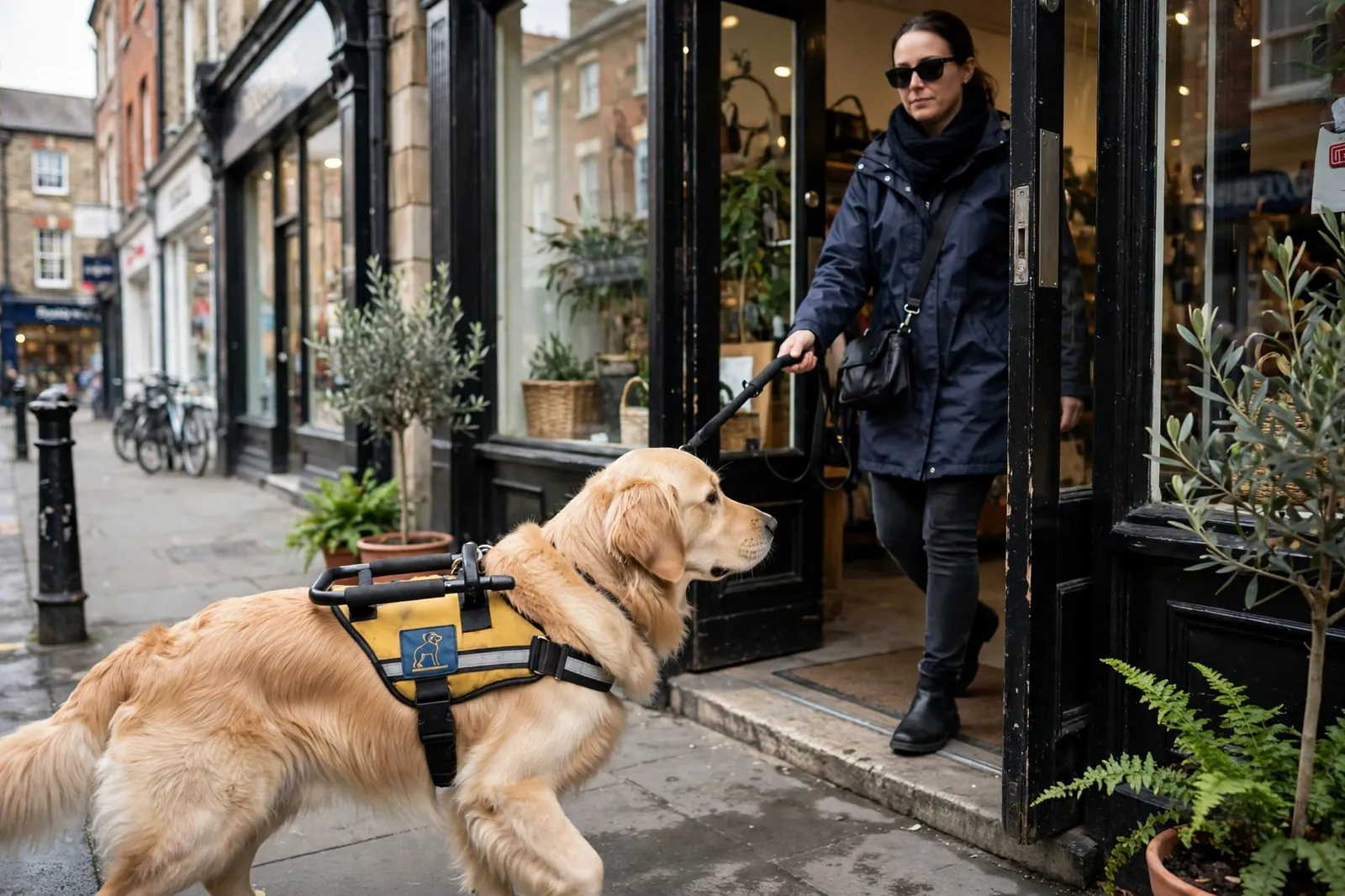
None of the restrictions above apply in the same way to assistance dogs. A trained assistance dog working with a disabled handler should be welcomed into UK museums, including the galleries that exclude pet dogs, and handlers should not face extra charges for bringing the dog that enables their visit. Our assistance dog access rights guide sets out the position in full, including what to do if entry is ever refused.
In day-to-day practice, museum staff are usually well briefed and the visit is uneventful. A few practical points still help. Water bowls are often available if you ask at the desk, and staff can usually point you to the quietest galleries, step-free routes and the nearest outdoor relief area for a break mid-visit — large museums are a long day for a working dog as well as for the handler. If a venue runs timed-entry exhibitions, mention the assistance dog when booking so the team expects you and entry stays smooth. And if a member of staff does hesitate, a calm explanation plus any identification your assistance dog organisation issues resolves almost every case on the spot; save complaints for the rare refusal that does not resolve.
For everyone else, the distinction matters for honesty's sake as well. Never present a pet dog as an assistance dog to gain entry. Apart from the obvious unfairness to disabled handlers, it undermines the trust that makes genuine access work, and venues that catch it become stricter for the next handler who arrives. The exceptions in the next section are generous enough that there is no need.
The exceptions worth knowing: open-air, living history and the outdoors-first sites
The museums most likely to welcome your dog share a format rather than a name. Open-air museums collect historic buildings — farmhouses, chapels, shops, workshops, miners' cottages — and rebuild them across a large site, so the visit is a walk between buildings rather than a route through galleries. Dogs on short leads fit that format naturally, and many such sites welcome them across the grounds and into a good number of the recreated buildings, while keeping a few interiors, food areas or animal enclosures restricted. Living-history sites with costumed interpreters, working machinery and farm animals work similarly, with the obvious extra rule that dogs must be kept calm and well away from livestock and demonstrations involving fire, steam or loud bangs.
Industrial heritage is the other happy hunting ground. Former mills, mines, dockyards, railway sites and canals often have extensive outdoor areas — engine yards, towpaths, sidings, quays — where dogs are welcome, even when the small indoor exhibition attached to them is not. Transport collections with large outdoor running areas can be similar. In each case the question to ask is not “is it a museum?” but “how much of this visit happens outside, and is the dog policy written for the grounds or for the whole site?”
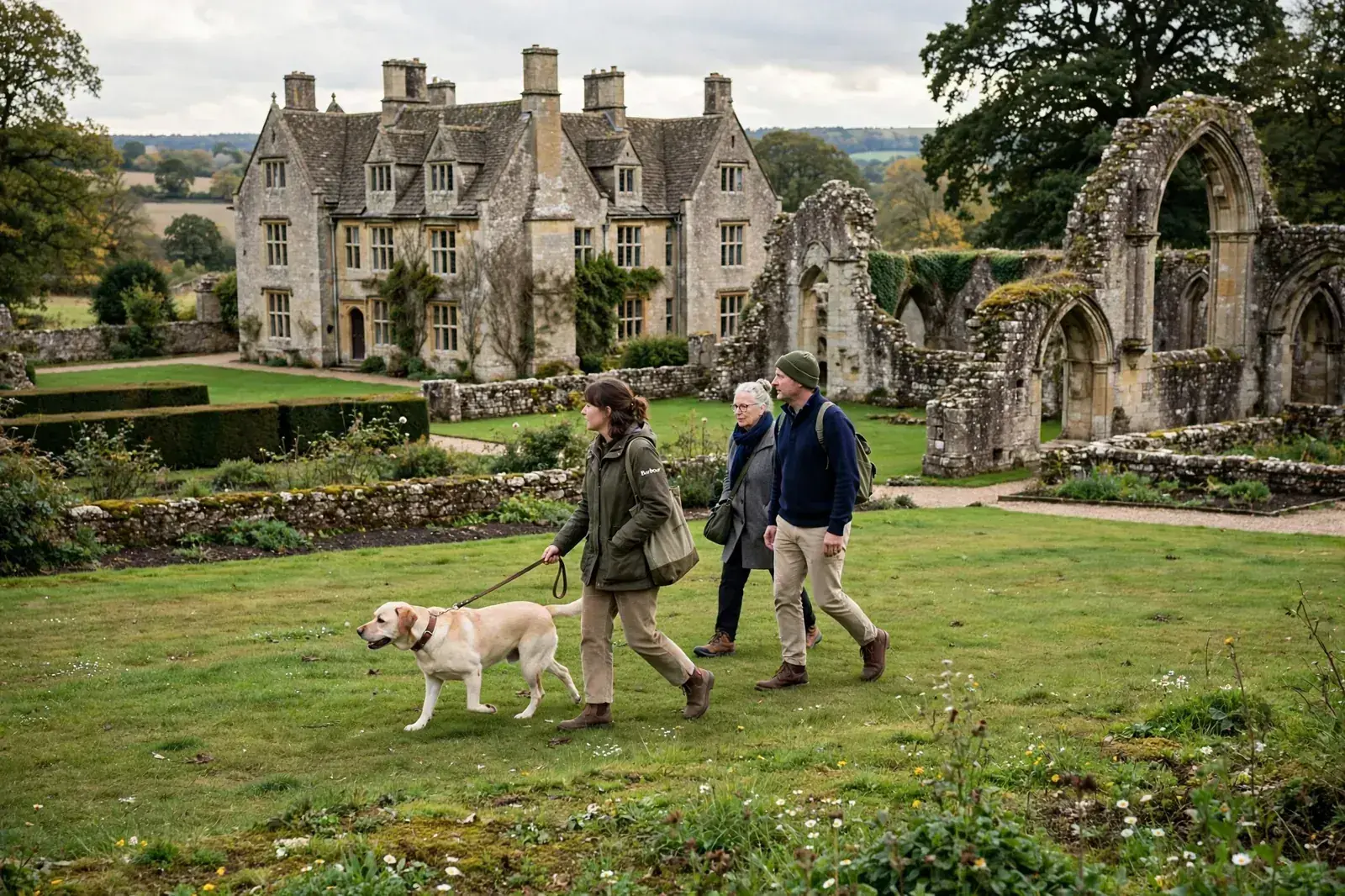
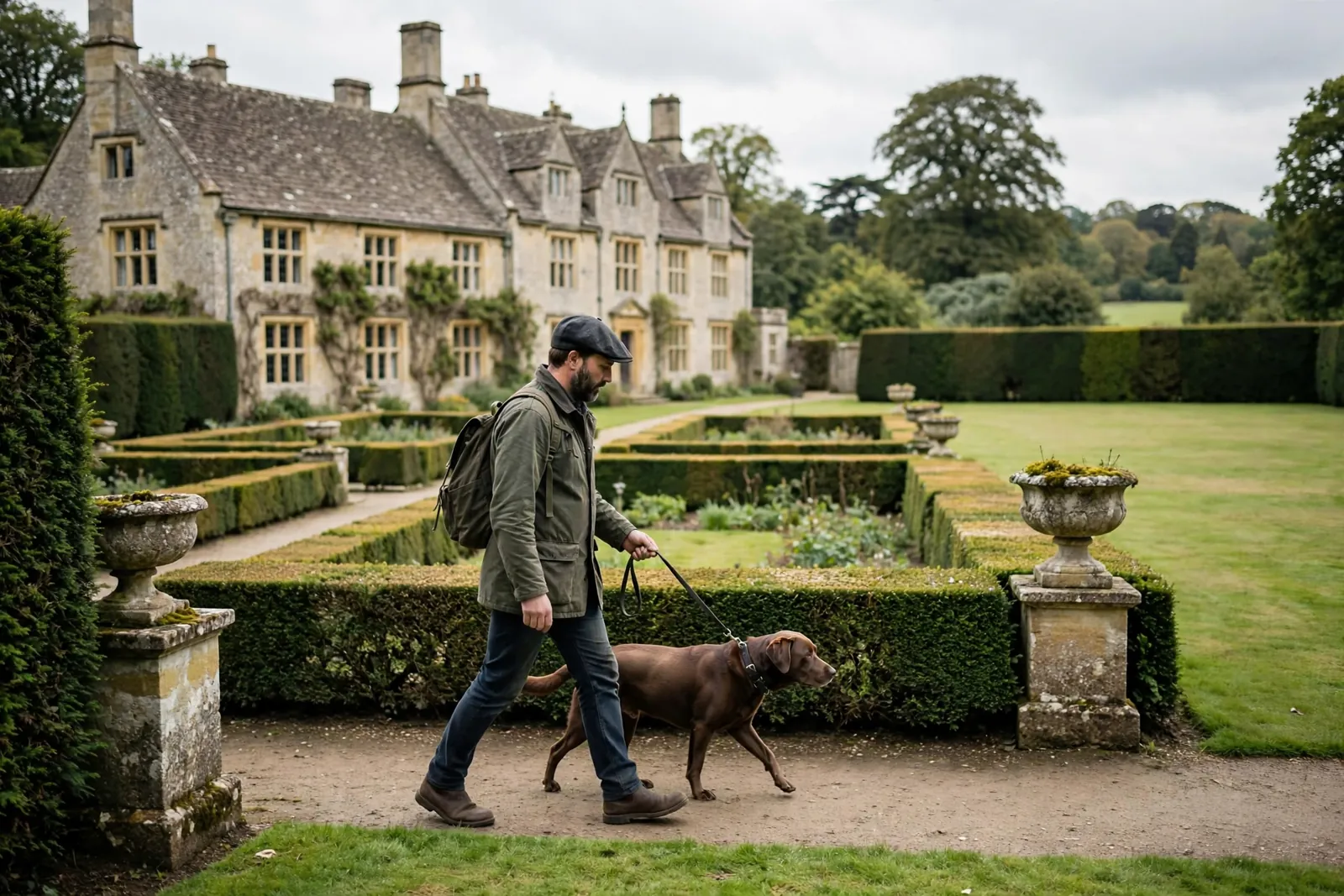
Historic houses sit at the stricter end. The house itself is almost always assistance-only, for the same conservation reasons as any gallery, but the surrounding parkland, gardens and courtyards are frequently dog-welcome, sometimes generously so. That split produces some of the best dog days out in Britain — a long garden and parkland walk, a courtyard cafe, and a house visit taken in turns by the adults if you want it. Our guides to English Heritage sites with dogs and National Trust places with dogs explain how those two big heritage organisations handle the grounds-versus-interiors split, including the rating systems that tell you in advance how much of a place your dog can actually enjoy.
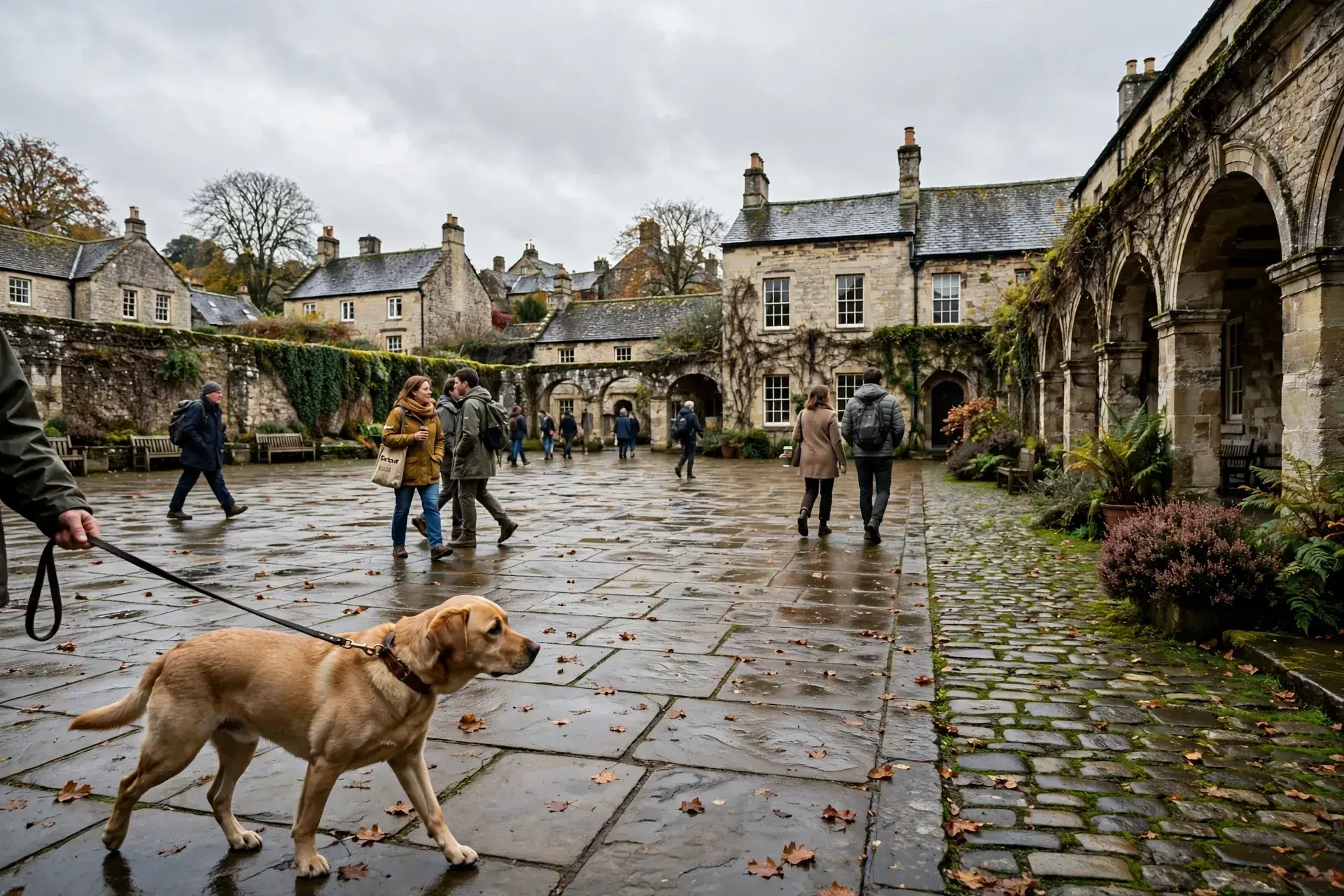
A final, underrated category is the museum with a genuinely dog-welcome cafe or courtyard even though the galleries are closed to dogs. It does not solve a solo visit, but for a couple or a group it turns a split visit — one adult in the exhibition, one with the dog — from a chore into a rotation where the person outside is sitting somewhere pleasant with coffee rather than circling the car park.
Grounds yes, galleries no: reading the split correctly
The phrase that causes the most disappointed arrivals in British heritage is “dogs welcome”. It can mean dogs are welcome everywhere, welcome in the grounds only, welcome everywhere except the house, or welcome on the terrace of a cafe attached to a site where they are otherwise barred. Each meaning produces a completely different day, so the follow-up questions matter more than the headline. Ask: which buildings, if any, can the dog enter? Is the cafe dog-friendly inside, on the terrace only, or not at all? Are the shop and the ticket area included? Is there a size, number or short-lead condition? And is there anywhere under cover where a dog and owner can shelter together when the rain that sent you here in the first place gets heavier?
Season changes the split, too. Some sites relax or tighten rules between peak season and quieter months, some allow dogs in more buildings on specific dog-friendly days or at special events, and a few run occasional sessions where dogs are welcomed into spaces normally closed to them. These are worth watching for if you live locally, but they are date-specific: a photograph of a dog inside a gallery on social media may be from a one-off event, not the everyday policy. The venue's own access page, checked close to your visit, outranks every photograph and every review.
Also check the practical geography. Grounds that welcome dogs are only a rainy-day solution if there is something to do in them for the length of your visit. Thirty acres of parkland with waymarked trails, recreated streets to explore and a covered barn or two is a full day. A small formal garden that takes twenty minutes, attached to a house you cannot enter, is a pleasant add-on to a day — but it is not the day itself, and you will need the itinerary thinking in the next section to build around it.
A rainy-day itinerary that actually works with a dog
Here is the shape of a wet day that experienced dog owners fall back on, built from interchangeable parts so you can adapt it to wherever you are staying.
First, spend the morning energy. Start with the best walk available in the rain rather than saving it for later: a surfaced forestry trail, a promenade, a canal towpath or a park circuit where the ground holds up and the dog can move properly. A dog who has had a real walk, a feed and a dry-off will settle happily through the slower middle of the day; a dog taken straight from a holiday cottage to a heritage courtyard will not, whatever the access policy says.
Second, make the heritage visit the middle of the day, and choose grounds-first. Pick the open-air site, castle grounds or parkland closest to you that welcomes dogs, and give it the late-morning and early-afternoon slot. Explore the outdoor exhibits, recreated buildings the dog can enter, and courtyards at a dog's pace. If there is an indoor element the humans want, rotate: one adult does forty minutes inside while the other explores the grounds or settles in the dog-welcome cafe, then swap. Rotation sounds like a compromise until you try it — each adult gets focused time in the exhibition instead of a distracted shuffle, and the dog gets continuous company.
Third, plan the warm, dry anchor. Every rainy itinerary needs one guaranteed indoor-or-covered hour that includes the dog. That might be a genuinely dog-friendly cafe or pub — our guide to dog-friendly cafes across the UK explains how to tell the truly welcoming ones from the merely tolerant — a covered market, a garden centre with a dog-welcome cafe, or the heritage site's own dog-friendly eating space. Book it or time it before the lunchtime rush, because everyone else with a dog and a rained-off plan has had the same idea.
Finally, keep an evening in reserve. Finish with a short, familiar walk, a proper dry-off and drying-coat routine back at your base, and an early night. Rainy heritage days are surprisingly tiring for dogs: wet ground, crowds, new smells and hard floors all day add up. The itinerary works not because any single element is spectacular, but because no part of it depends on a policy you have not checked or on weather you do not have.
If the dog cannot come: honest alternatives, ranked
Sometimes the museum you most want is indoor, assistance-only, and non-negotiable — a special exhibition, a child's long-promised visit, the one collection that is the point of the trip. In that case the dog needs a proper alternative, and the options rank clearly.
Best is usually splitting the visit, as above, if there are at least two adults and the grounds or surrounding town give the outside adult a decent time. Next comes leaving the dog settled at your accommodation, but only where the booking terms allow unattended dogs, only for a dog who genuinely settles alone, and only for a sensibly short visit — many holiday lets prohibit it outright, so check the written terms rather than assuming. A local day sitter or day-care place, booked in advance with vaccination records to hand, suits sociable dogs and longer visits; in peak season the good ones fill up, so this is a plan-ahead option, not a morning-of fix. Swapping the day — doing the indoor museum on a day when the dog is at home with family, or saving it for a return trip without the dog — is unglamorous and often the kindest choice of all.
What does not belong on the list is leaving the dog in the car. Museum visits expand: the exhibition is bigger than expected, the cafe has a queue, the children find a workshop. A stay planned as an hour becomes three, and even a cool day can turn a parked car dangerous faster than most people believe, quite apart from the theft and distress risks. If the only version of the plan involves the car park, change the plan, not the dog's luck.
Check before you travel: a four-minute routine
Run through this sequence for every venue, every time, because policies change with refurbishments, new exhibitions and new management. First, open the venue's official website and find the access, accessibility or plan-your-visit page — not a review site, not a listing aggregator. Second, search that page for both “dogs” and “assistance dogs”: they are separate entries, and finding only the assistance line tells you pets are almost certainly excluded. Third, pin down the geography of the rule — grounds, buildings, cafe, shop — and any conditions on lead length, number of dogs, or areas such as play spaces and animal enclosures where dogs are barred even outdoors. Fourth, check opening and last-entry times against your plan, because grounds sometimes close earlier than the museum itself.
If anything is unclear, contact the venue directly and ask the specific question: “We have one pet dog on a short lead — which parts of the site can we visit together?” Keep the reply on your phone. Front-of-house teams are almost always helpful, but they follow the written policy on the day, and a clear email answer prevents a misunderstanding from becoming an argument at the desk. Finally, build the fallback into the plan before you leave: the cafe, walk or second venue you will use if the policy turns out tighter than the website suggested. A fallback decided in advance feels like flexibility; the same decision made in a wet car park feels like failure.
Before you travel, please check the venue's official website for the latest position — policies quoted anywhere else, including in round-ups and reviews, may be out of date.
Etiquette where dogs are welcome: keeping the welcome alive
Every dog-welcome policy in this guide exists because previous dogs behaved well enough for the venue to keep it. A few habits protect that welcome for the next owner. Keep the lead short in courtyards, recreated streets and anywhere near demonstrations, animals or machinery, and give costumed interpreters, horses and working displays a wide, calm berth. Take your dog out of recreated buildings if they become unsettled — a barking dog inside a small historic cottage is loud for everyone — and never let a dog onto furniture, beds or exhibits in recreated interiors, however inviting the photograph would be.
Carry water and a small bowl rather than assuming provision, clear up immediately everywhere including long grass in parkland corners, and keep dogs out of ponds, ornamental water and planted beds. In cafes and covered areas, settle the dog under or beside your table, out of walkways, and ask staff where they would prefer you to sit — they know which corners work. If your dog is having a bad day, and every dog has them, cut the visit short without resentment: the sites that welcome dogs deserve visits that end well, and there will be another rainy day, another town and another courtyard.
Practical questions
Before you go
Are dogs allowed in UK museums?
In most indoor museums, pet dogs are not allowed inside the galleries — assistance dogs only. The main exceptions are open-air museums and heritage sites where dogs on short leads are welcome in the grounds and sometimes in outdoor or recreated buildings, while historic interiors, cafes and shops may still be restricted. Always check the specific venue's access page before you travel, because policies differ even between sites run by the same organisation.
Are assistance dogs allowed in all UK museums?
Yes, in practice assistance dogs should be welcomed in UK museums, including galleries where pet dogs are excluded. Handlers should not be charged extra or asked to leave their dog outside. Carry any identification your assistance dog organisation provides, be ready for a brief, polite access conversation at the desk if staff are unsure, and check our assistance dog rights guide if you are ever refused entry.
Which UK museums and heritage sites welcome pet dogs?
Open-air and living-history museums are the most likely to welcome pet dogs on leads in their grounds, along with many castle, abbey and industrial heritage sites where most of the visit is outdoors. Grounds-only access is common: the gardens, courtyards and exterior displays are open to dogs while the main house, exhibition galleries and food areas are not. Names and rules change, so confirm the current policy on the venue's own website before setting off.
Can I leave my dog in the car while I visit a museum?
Do not plan to leave a dog alone in a car for a museum visit. Even on a cool, overcast day a car can heat up quickly, many museum car parks have no shade, and a full gallery visit usually lasts far longer than a quick stop. Safer options are splitting the visit between adults, booking a local day sitter, choosing a grounds-based site where the dog can come too, or saving the indoor museum for a day when the dog is at home.
How do I check a museum's dog policy before I travel?
Start with the venue's access or plan-your-visit page and search it for 'dogs' and 'assistance dogs' — the two are listed separately. Check whether the rule covers grounds only or buildings too, whether leads must be short, and whether cafes and shops are included. If the page is vague, phone or email before you travel and keep the reply, because front-of-house staff will follow the written policy on the day.