This guide is independent and contains no paid placement. Vineyard policies change by estate and season, so check the official guidance before you travel. This guide is not veterinary advice.
Many UK vineyards welcome dogs outdoors and on terraces, but grapes are toxic to dogs, so a lead, a watchful eye and a plan for fallen fruit are essential. Confirm tasting-room and tour rules separately, because one welcome rarely covers the whole estate.
The first warning: grapes and dogs
Grapes, raisins, sultanas and currants can be toxic to dogs, and the risk is not limited to large quantities or to particular breeds. Veterinary guidance is clear that even a small amount can cause serious illness in some dogs, including kidney damage, and sensitivity varies unpredictably between individuals. That means a vineyard visit is not a place to test whether your dog can tolerate a grape, and it is not a place to assume that a dog that has eaten fruit before without obvious harm will be safe again. The only safe approach in a vineyard is prevention: keep the dog on a lead, keep them away from low fruit, and watch for fallen grapes on paths, in grass and near tasting areas.
Prevention is harder than it sounds, because vineyards are full of temptations at dog height. Fallen grapes collect under vines after wind, pruning or harvest, birds drop fruit, and visitors may drop grapes or raisin-based snacks without noticing. A dog that scavenges on walks is at particular risk, and a muzzle can be a sensible precaution for such a dog, even if it feels unnecessary on a leisurely walk. Train a reliable leave command before you visit, practise it with food on the ground in a controlled setting, and bring high-value treats to reward your dog for ignoring fruit. If your dog cannot yet leave food reliably, choose a vineyard with a clear, mown path well away from the vines, or enjoy the terrace and shop rather than walking the rows.
Also be aware of related risks. Raisin scones, fruit cakes, muesli bars and some dog treats marketed as natural may contain currants or raisins, so check ingredients before sharing any food with your dog at a vineyard cafe. Grape juice, wine and grape-based drinks are also unsuitable for dogs, not only because of alcohol but because of the grape content. If you are buying wine as a gift, keep bottles and packaging out of the dog's reach in the car, and clean up any spills promptly. A vineyard day should be enjoyable, but the grape warning is the reason this guide starts with safety rather than scenery.
Vineyard, winery and tasting room
People use the words vineyard and winery interchangeably, but they describe different spaces with different dog rules. A vineyard is the outdoor growing area: rows of vines, grass paths, fences and often a walk or trail. A winery is the production building where grapes are pressed, fermented and bottled, and it is usually a working industrial space with hygiene rules, machinery and chemicals. A tasting room may be a separate building, a converted barn, or a terrace attached to either, and its rules may follow hospitality law, food hygiene rules, or simply the owner's preference. Understanding those distinctions helps you ask the right questions, because a vineyard that welcomes dogs outdoors may still exclude them from the winery for entirely legitimate reasons.
Outdoor areas are usually the most dog-friendly part of an estate. Many vineyards allow dogs on leads on marked walks, terraces and picnic areas, and some even provide water bowls, waste bins and a dog menu of treats. Indoor areas are more variable. A tasting room that serves food may allow dogs only in a designated section, only on the terrace, or not at all, depending on its licence, layout and insurance. A production area is rarely open to dogs, because of moving machinery, forklifts, wet floors, cleaning chemicals and the risk of contamination. Do not assume that a friendly welcome at the gate covers every building, and do not be surprised if staff ask you to wait outside during part of a tour.
The best vineyard visits for dogs are designed around the outdoors. Look for estates that describe a vineyard walk, a terrace tasting, or a self-guided trail, rather than only an indoor tour and tasting. Those formats let the dog enjoy the main attraction, the landscape, while you enjoy the wine, and they avoid the awkward moment when a tour group moves indoors and you are left outside with a dog and no plan. If the estate you want to visit is mainly indoor, call ahead and ask whether there is a terrace tasting, a shorter outdoor option, or a place where one person can wait comfortably with the dog while the other takes the tour.
What different tours actually allow
Guided walking tours are the most common dog-friendly format. A guide leads a small group through the vines, explains the growing cycle, and finishes at a tasting room or terrace, and dogs on short leads are often welcome throughout the outdoor part. The pace is usually slow, with frequent stops, which suits most dogs, but group size matters: a large group with several dogs can become chaotic, especially if dogs are reactive or if the path is narrow. Ask about group size, whether other dogs will be on the tour, and whether the guide is comfortable with dogs, because a guide who is nervous around dogs will set a tense tone for everyone.
Self-guided walks are often even better for dogs, because you control the pace, the route and the stops. Many estates provide a map, a trail with numbered posts, or an audio guide, and you can walk the rows at your dog's pace, pause for water, and skip sections that are too busy or too close to fruit. The trade-off is that you miss the guide's knowledge, but you gain flexibility, which is usually worth more for a dog. If you choose a self-guided walk, follow the marked route, keep to paths, and do not let the dog run between rows, because vines are crops, not a playground, and damage to vines or irrigation can be costly.
Production tours, cellar tours and blending experiences are the least likely to allow dogs. These tours involve indoor spaces, stairs, narrow walkways, strong smells, and sometimes tasting directly from barrels or tanks, where hygiene rules are strict. Some estates offer a hybrid: an outdoor tour for everyone, followed by an indoor tasting for people, with a terrace or waiting area for dogs. If you are travelling as a pair, you can also split up, with one person taking the indoor tour while the other walks the dog, then swapping stories over lunch. That arrangement is not a compromise; it is often the most enjoyable way to visit a working estate with a dog.
Walking between the rows
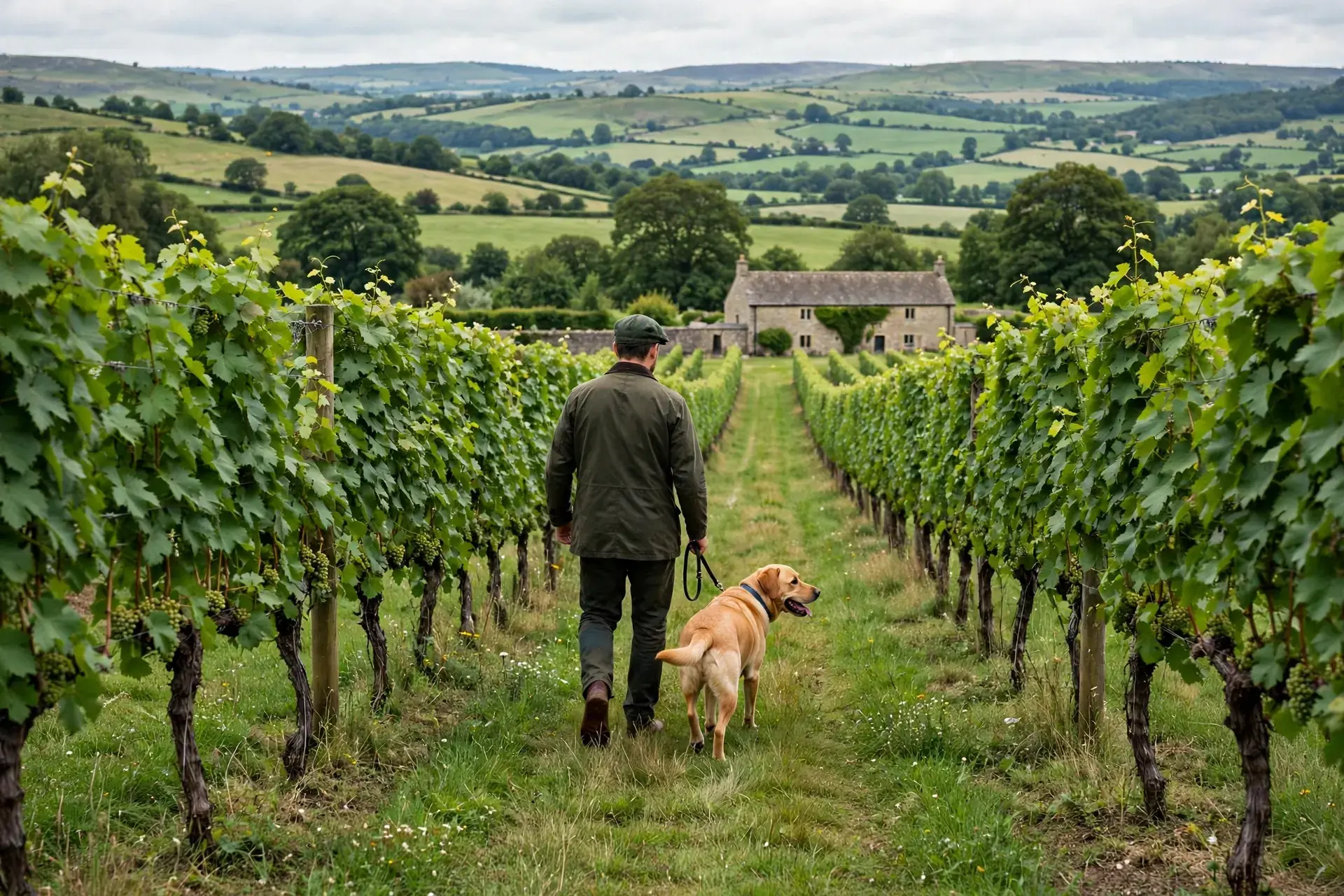
Walking between vine rows is the heart of a vineyard visit, and it deserves a little preparation. Wear sensible shoes, because grass paths can be uneven, muddy after rain, or dusty in summer, and bring water for both you and the dog. Keep the dog on a short lead, not a retractable lead, because long leads tangle around vine posts, wires and irrigation pipes, and a dog on a long lead can reach fruit before you can stop them. Walk on the marked path, not between the vines themselves, and keep the dog on the side away from the fruit if the path runs close to low-hanging bunches.
Watch the dog, not just the vines. A dog that is sniffing intently at the base of a vine may be investigating fallen fruit, a rabbit hole, or a spray residue, and all three deserve intervention. A dog that is pulling towards the vines, lunging at birds, or trying to eat grass may be overstimulated or simply enjoying the smells, but either way, a short lead and a calm recall are essential. Bring treats to reward the dog for walking calmly beside you, and take breaks in shade, because vineyard rows offer little shelter in summer and a dog walking on hot, dry ground will tire faster than you expect.
Respect the crop. Vines are pruned, trained and harvested with care, and a dog that runs through rows, digs at roots, or urinates on vines can damage plants and affect the harvest. Keep the dog on the path, clean up after them promptly, and carry bags even if the estate provides bins, because bins may be far apart. If you see signs asking visitors to stay on paths, follow them, even if other visitors do not, because vineyard staff notice who respects the crop and who does not, and that respect shapes future dog policies for everyone.
In the tasting room and restaurant
Tasting rooms are social, sensory places, and they can be overwhelming for dogs. Glasses clink, people talk loudly, food smells drift from kitchens, and strangers may want to stroke your dog or offer them a treat. If your dog is welcome in the tasting room, choose a table near the edge, away from the main thoroughfare, and settle the dog on a blanket with a chew or a stuffed toy. Keep the lead short and held, not tied to a table leg, because a dog that lunges or is startled could pull a table or break glass. If the dog cannot settle, a terrace table is usually kinder than an indoor one, even if the weather is cooler.
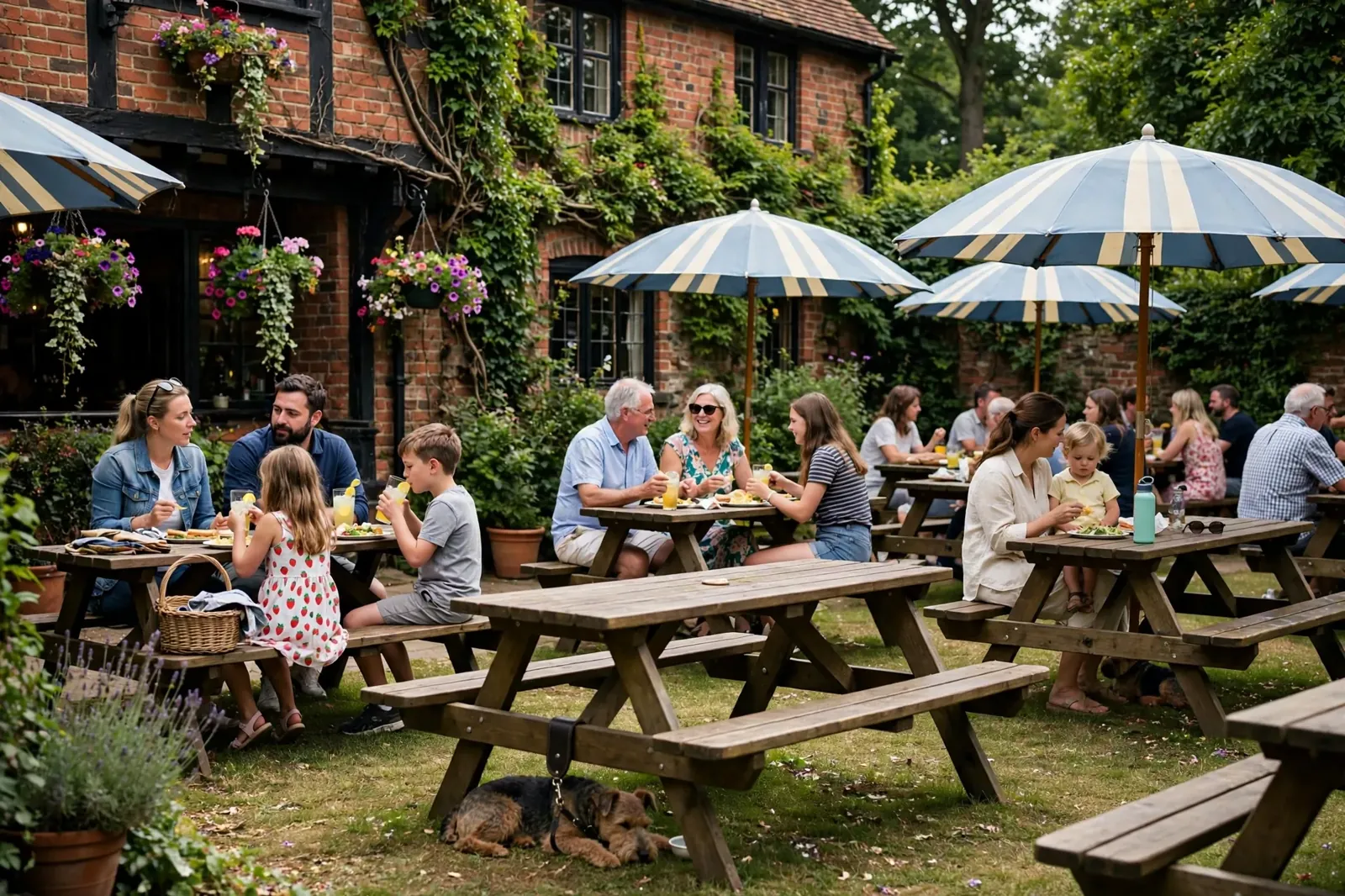
Restaurants and cafes on vineyard estates follow similar rules to other food venues, with the added complication that they may be busy at lunchtime and quieter in the afternoon. A weekday afternoon tasting is often calmer than a Saturday lunch, and it gives staff more time to help with seating and water. Ask whether dogs are allowed in the restaurant itself, on the terrace, or only in a specific area, and whether there is a dog menu or a water bowl. If you are planning a meal, the etiquette in our guide to pub garden etiquette applies here too: a settled dog, a short lead, and no begging are the basics that make staff and other diners happy.
Wine tasting itself needs a plan if you are with a dog. A tasting flight involves several small glasses, conversation, and note-taking, which means your attention is divided. Assign one person to focus on the dog, especially during the first tasting, so the dog is not ignored while everyone else is concentrating on wine. Do not let the dog drink from glasses, lick spills, or eat food pairings that may contain grapes, raisins or chocolate, and clean up spills promptly. If you are driving, remember that tasting still counts towards alcohol limits, and plan transport accordingly, because a vineyard day should end safely for both you and the dog.
Fallen fruit, prunings and sprays
Fallen fruit is the main hazard, but it is not the only one. Prunings, vine cuttings and leaves can also be tempting to dogs that chew, and while vine leaves are not as dangerous as fruit, they can still cause stomach upset. Sprays used in viticulture, including fungicides and pesticides, are another concern, because residues may remain on leaves, grass and soil for a period after application. Estates should follow safety intervals and keep visitors away from recently sprayed areas, but it is sensible to keep your dog on paths, prevent them eating grass or leaves, and wash their paws after a walk if they have been through muddy or treated areas.
Season affects the risk. In spring, vines are pruned and tied, and cuttings may be on the ground. In summer, fruit develops and begins to ripen, and birds may drop damaged grapes. In autumn, harvest leaves fallen fruit everywhere, and fermentation smells attract dogs. In winter, vines are dormant, fruit is gone, and the risk is much lower, though the estate may be quieter or partially closed. Ask about spray schedules and harvest dates when you book, and if staff mention a recent spray, follow their advice about which areas to avoid, even if the vineyard looks open.
Also watch for other fruit on the estate. Many vineyards grow other crops, have orchards, or sell jams, chutneys and dried fruit in the shop, all of which may contain grapes or raisins. A dog that is safe in the vineyard rows may still encounter a dropped raisin scone on a terrace, a fallen apple in an orchard, or a sample of dried fruit in a shop. Keep the dog on a lead in shops and cafes, check ingredients before sharing food, and be particularly careful with children, who may offer food to a friendly dog without checking with you first.
Harvest and working days
Harvest is the busiest, most exciting and least dog-friendly time in a vineyard. Tractors, trailers, pickers, crates and forklifts move through the rows, noise levels rise, and fallen fruit is everywhere. Some estates close vineyard walks during harvest, others restrict dogs to terraces, and a few run special harvest events where dogs are welcome but must be kept well away from working areas. If you want to visit during harvest, book early, ask specifically about dog access on working days, and be prepared to change your plan if the estate says dogs are not welcome that week.
Working days outside harvest also deserve attention. Pruning, spraying, mowing and maintenance involve machinery, chemicals and workers who may not expect a dog around a corner. A vineyard is a farm, not a park, and farm safety rules apply: keep to paths, keep the dog on a lead, do not enter closed areas, and do not distract workers operating machinery. If you see a tractor approaching, step off the path, hold the dog close, and wait until it has passed, because a dog that lunges at a moving vehicle is at serious risk.
Events add another layer. Wine festivals, open days, weddings and concerts at vineyards can be wonderful, but they are also crowded, noisy and full of food, drink and other dogs. A dog that enjoys a quiet weekday walk may be overwhelmed by a festival, and a festival that welcomes dogs in principle may still be unsuitable for a nervous or reactive dog in practice. Check the event details, look for dog-specific information, and consider visiting on a quieter day instead if the event sounds too busy. A vineyard that is perfect on a Tuesday may be a poor choice on a festival Saturday.
Wildlife, livestock and other dogs
Vineyards are rural places, and rural places have wildlife. Birds, rabbits, hares, deer and pheasants all live around vineyards, and a dog with a strong prey drive may lunge or chase, even on a lead. Keep the dog close, especially at dawn and dusk when wildlife is most active, and do not let them off lead in a vineyard, even if the area looks empty, because a chase through vines can damage crops and injure the dog. Some estates also keep sheep, chickens or other livestock for pest control or as part of a farm shop, so watch for signs and keep the dog away from animal enclosures.
Other dogs are a common encounter, particularly on popular walks and terraces. A vineyard walk that is described as dog-friendly may have several dogs on the same trail, and not all of them will be under control. Keep greetings brief and on lead, and avoid letting dogs meet nose-to-nose on a narrow path, because that is where many incidents happen. If your dog is reactive, choose a quieter time, walk the trail in the opposite direction to the main flow if possible, and be ready to step aside and let other dogs pass. A calm, controlled walk is more enjoyable than a series of stressful encounters, even if it means waiting a few minutes.
Cats, estate dogs and working dogs also live on many vineyards, and they may be off lead and confident on their own territory. A visiting dog that chases an estate cat or confronts a working dog can cause a serious incident, so keep your dog close near buildings, yards and farmhouses, and follow any signs about estate animals. If an estate dog approaches, stay calm, keep your dog on a short lead, and walk away slowly rather than trying to separate dogs by shouting or pulling, which usually escalates the situation.
Weather, ground and shade
Weather shapes a vineyard visit more than most people expect. In summer, vineyard rows offer little shade, and a dog walking on hot, dry ground can overheat quickly, especially if they are brachycephalic, elderly or overweight. Bring water, take shade breaks, and walk in the morning or late afternoon rather than at midday. In winter, paths can be muddy, slippery or frozen, and a dog with arthritis or a short coat may need a coat and shorter walks. In spring and autumn, rain can make grass paths boggy, so wear waterproof shoes and bring a towel for the dog.
Ground conditions also affect safety. Vineyard paths may be grass, gravel, chalk or bare earth, and each surface has different grip, especially when wet. A dog that slips on a chalk path or a muddy slope may injure a leg, so keep the pace slow and the lead short on uneven ground. After rain, check the dog's paws for mud, stones or cuts, and clean them before getting back in the car. If the estate has a dog wash or a tap, use it, and if not, a towel and a bottle of water will do for most muddy paws.
Shade and shelter deserve planning, especially if you are tasting outdoors. A terrace with umbrellas or a covered area is ideal, because it gives the dog a cool place to lie while you taste. If the terrace is in full sun, ask whether you can move to a shaded table, or bring a portable shade or a cooling mat for the dog. In wind, vineyard rows can be exposed, and a dog that is cold or wet will not enjoy a long walk, so check the forecast for wind and rain, not just temperature, and be ready to shorten the walk if conditions turn.
Booking questions that matter
Before you book, ask a short set of specific questions. Are dogs allowed on the vineyard walk, in the tasting room, and in the restaurant, or only in some of those places? Is there a tour that allows dogs, or only a self-guided walk? Are there size, number or breed restrictions, and must dogs be on a lead at all times? Is there a dog toilet area, water bowls, and shade on the terrace? Are there any dates when dogs are not welcome, such as harvest or event days? Those questions take five minutes and prevent most disappointments.
Also ask about practical details that websites often omit. Is the walk suitable for a dog with mobility issues, and are there steps, stiles or steep slopes? Is there parking near the tasting room, or a long walk from the car park? Are dogs allowed in the shop, and can you buy wine to take away if you do not want to taste on site? Is there a cancellation or transfer policy if the weather turns or your dog becomes unwell? If you are staying nearby, the same habit of asking specific questions helps with holiday park bookings, so treat this as good practice rather than extra work.
Keep the answers in writing, especially if you are booking a tour or a special event. Operators sometimes give different answers by phone and at the gate, and a dated email is easier to show politely than a remembered conversation. If the operator says dogs are welcome but cannot confirm the details, decide in advance how you will handle a change of plan, such as splitting the group, skipping the indoor tour, or enjoying the terrace instead. A flexible plan is the difference between a good day and a frustrating one.
Picnics, shops and buying wine
Many vineyards offer picnics, either as a pre-booked hamper or as a bring-your-own option on a terrace or lawn. Picnics are often ideal for dogs, because they are outdoors, relaxed, and at your own pace, but they need the same care as any outdoor meal. Keep food in closed containers, do not share grape, raisin or chocolate items with the dog, and clean up promptly, because dropped food attracts other dogs and wildlife. If the estate provides a picnic area, check whether dogs are allowed there specifically, and whether there is shade and water nearby.
Shops are a highlight for many visitors, and they vary in dog-friendliness. Some vineyard shops welcome dogs on leads, others ask dogs to wait outside, and a few have a specific dog-friendly section. If you want to browse, ask about the shop policy, and consider taking turns with your travelling companions if the dog is not allowed inside. When buying wine, check that bottles are packed securely, keep them out of the dog's reach in the car, and remember that wine is for people only, even in small amounts. A dog that licks a spill or chews a cork can become unwell, so clean up promptly.
Tasting and buying also raise a transport question. If you are driving, plan who will taste and who will drive, or arrange alternative transport, because a vineyard visit should not end with an unsafe journey home. Many estates are rural, with limited public transport and narrow lanes, so a taxi, a designated driver, or a nearby stay may be necessary. If you are staying nearby, a vineyard visit combined with a walk and a meal can make a wonderful day, without the pressure of driving home the same evening.
If your dog eats a grape
If you think your dog has eaten a grape, raisin, sultana or currant, act immediately, even if they seem well. Note what they ate, how much, and when, if you can, and contact a vet or an emergency vet straight away for advice. Do not wait for symptoms, because grape toxicity can cause serious illness even before obvious signs appear, and early veterinary treatment is far more effective than late treatment. Do not try to make your dog vomit unless a vet specifically tells you to, because induced vomiting can be dangerous if done incorrectly.
While you wait for veterinary advice, keep the dog calm, prevent them eating more fruit, and note any symptoms, such as vomiting, diarrhoea, lethargy, loss of appetite, or changes in drinking and urination. If you are at a vineyard, tell staff what has happened, because they can help you find the nearest vet, provide a quiet place to wait, and check whether other fruit is accessible. Save the vet's number in your phone before you visit, along with the address of the nearest emergency vet, because rural vineyards may be some distance from a practice, and time matters in a toxicity case.
After any incident, reflect on what happened and whether a vineyard visit is suitable for your dog in future. A dog that scavenges persistently may need more training, a muzzle, or a different kind of outing, and that is not a failure. Many dogs enjoy vineyards safely with a lead, a watchful owner and a clear path, but a dog that cannot resist fallen fruit, even with training, may be safer on a terrace or in a shop than walking the rows. The goal is a safe, enjoyable day, not a risky walk through a tempting crop.
Planning a vineyard day that works
A good vineyard day starts with a realistic timetable. Arrive in the morning or early afternoon, walk the dog before you enter the estate, and allow time for a calm walk, a tasting, a meal and a rest, rather than rushing from one activity to the next. If you are visiting more than one vineyard, allow travel time, toilet breaks and rest between visits, because a dog that is tired and overstimulated will not enjoy a second tasting as much as the first. A single, well-chosen vineyard, visited slowly, is usually better than a rushed tour of three.
Combine the vineyard with other dog-friendly activities nearby. A walk in the countryside, a visit to a dog-friendly beach on the way home, or a meal at a pub garden can turn a tasting into a full day out, and it gives the dog a chance to stretch, sniff and relax between structured activities. If you are staying overnight, choose accommodation that welcomes dogs and is close to the vineyard, so you do not have to drive home after tasting. A relaxed timetable, a known toilet route, and a backup plan for weather or a change in dog policy are the basics that make a vineyard day work.
Finally, remember that a vineyard is a working farm, a business, and a place where other people are enjoying wine, food and scenery. A well-behaved dog, on a lead, with a watchful owner, is welcome in many vineyards precisely because owners like you have shown that dogs and vineyards can mix safely. By keeping your dog away from fruit, respecting the crop, and following staff guidance, you help keep vineyards open to dogs for everyone. That is a good outcome for your dog, for the estate, and for the next visitor who wants to share a glass and a walk with their dog.
Practical questions
Before you go
Are dogs allowed in UK vineyards?
Many vineyards welcome dogs on outdoor walks and terraces, but tasting rooms, cellars and working areas often have different rules. Always check the official guidance before you travel and confirm where your dog can and cannot go on the day.
Are grapes poisonous to dogs?
Yes. Grapes, raisins, sultanas and currants can be toxic to dogs, and even a small amount can cause serious illness in some dogs. Keep your dog on a lead in a vineyard, prevent them eating fallen fruit, and contact a vet immediately if you think they have eaten any.
Can my dog join a vineyard tour?
It depends on the tour. Outdoor walking tours often allow dogs on leads, while indoor production tours may exclude dogs for hygiene and safety reasons. Ask whether there is a dog-friendly tour, a shorter outdoor option, or a place where one person can wait with the dog.
What if my dog eats a grape in a vineyard?
Do not wait for symptoms. Note how many grapes, if any, your dog may have eaten and when, then contact a vet or an emergency vet immediately for advice. Do not try to make your dog vomit unless a vet tells you to.
Are dogs allowed in vineyard restaurants and shops?
Policies vary. Many vineyard restaurants allow dogs on terraces but not indoors, and shops may allow dogs on leads if they are calm and clean. Ask about each space separately, rather than assuming one welcome covers the whole estate.
When is the best season to visit a vineyard with a dog?
Late spring and early autumn are often best: mild weather, open terraces and fewer crowds than high summer. Harvest season is busy and may involve machinery, so check whether dogs are still welcome on working days before you book.