This guide is independent and contains no paid placement. If affiliate links are added later, they will be clearly marked and will not change our editorial checks.
Condor Ferries sailings to Jersey and Guernsey are short, so dogs usually stay in the car or in a designated pet area, and day returns are practical. Book the dog on the sailing from the start, walk the dog before boarding, and check the official guidance before you travel, because vessel rules and pet areas differ between routes.
Condor Ferries in one page
Condor Ferries connects the south coast of England with Jersey and Guernsey, and the crossing is one of the shortest international sailings a dog owner can make. From Poole or Portsmouth, the fast catamaran reaches the Channel Islands in a few hours, and the islands themselves are small, green and full of coastal walks. The whole trip can be a day return, a long weekend, or a slow week, and the dog's day changes with the length of the stay.
The ships are fast catamarans, which means they are quicker and livelier than a conventional ferry. The crossing is short, the sea can be choppy, and the dog's time on board is limited. That brevity is the key to the whole operation: the dog does not need a cabin or a long kennel stay, because the sailing is over before the animal has time to become unsettled. The arrangement is simpler than on a long overnight ferry, and the preparation is simpler too.
Dogs on Condor Ferries usually stay in the car or in a designated pet area, depending on the vessel and the sailing. The rules differ between the fast catamaran and the conventional ferry that also serves the route, so the ship matters more than the company name. Before you book, find out which vessel serves your sailing and what it offers for dogs. Check the official guidance before you travel, because the allocation can change with the season and the ship.
The Channel Islands are Crown Dependencies, not part of the United Kingdom, and the travel rules reflect that. Dogs travelling from England need the same core documents as for France: a microchip, a valid rabies vaccination and an animal health certificate, or a valid EU pet passport where one applies. The certificate has limited validity, so time the vet visit with the sailing date in mind. Check the official guidance before you travel, because the requirements can change.
Finally, remember that the islands are small and the pace is slow. Jersey is about nine miles by five, Guernsey smaller still, and the roads are narrow and quiet. A dog that enjoys coastal walks, beaches and village lanes will be happy here, and an owner who plans for a slow pace will enjoy the islands more than one who tries to pack in too much. The ferry is the gateway, not the destination, and the islands reward those who arrive unhurried.
The day return: Jersey in a day, with the dog
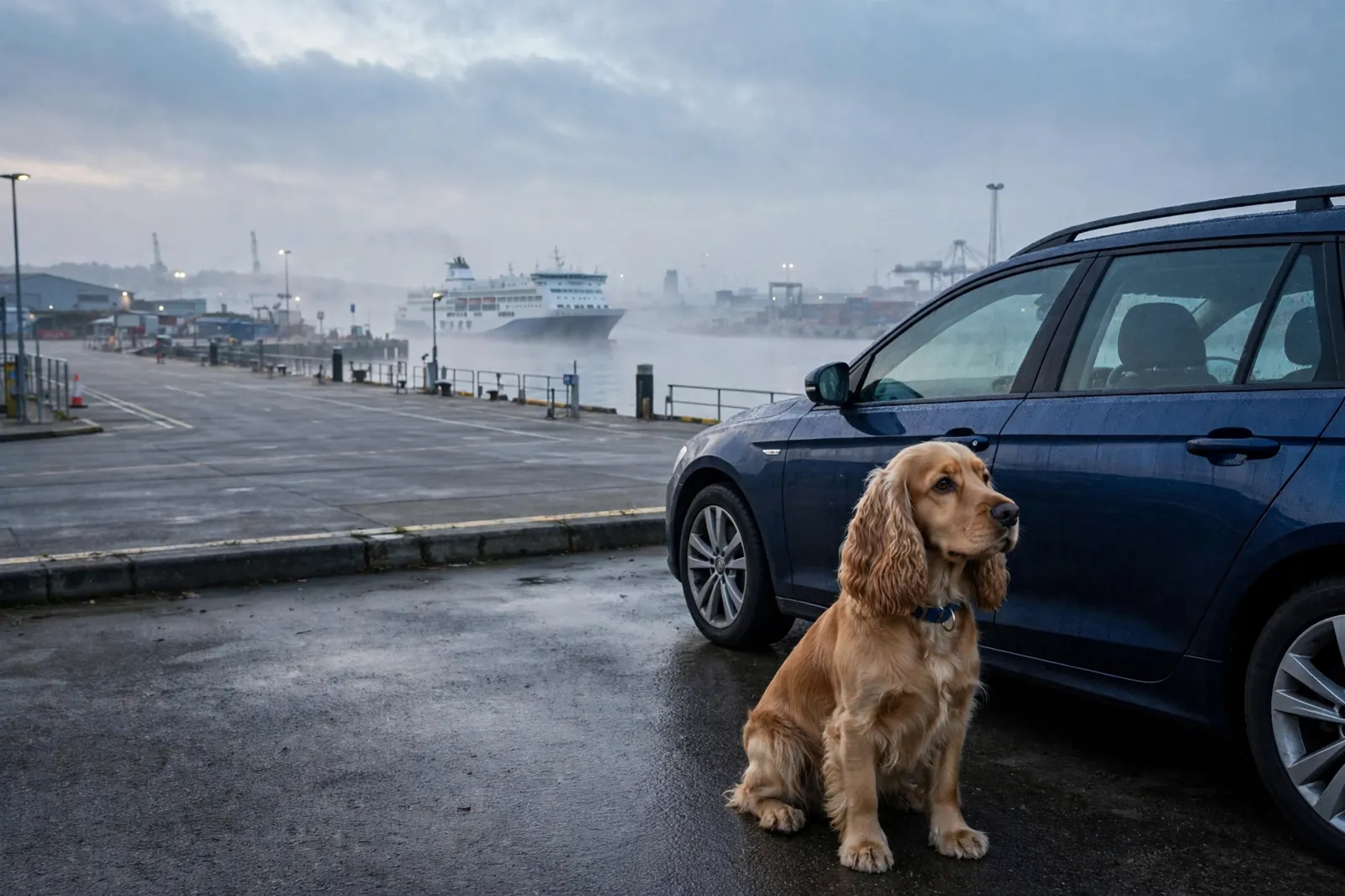
The day return to Jersey is the quickest way to the Channel Islands, and the dog's day on it is short enough to be simple. The crossing from Poole takes about four and a half hours, and the animal stays in the car for the whole trip, in the vehicle it knows, with its own bed and smells. There is no kennel to book and no cabin to find: the car is the arrangement, and it is the same for every vehicle. Walk the dog before boarding, settle it in the car with water and its own blanket, and then walk away. The ship will arrive before the dog has noticed the sea.
Speed changes the weather question. A fast craft feels the sea more than a slow ship, and a rough crossing on a fast craft is a livelier ride. Feed the dog at the normal hour, but keep the meal light before a fast crossing, and resist the urge to offer extra food because the animal looks bored. A full stomach on a rolling ship is a bad idea, and the cleaning up will be yours. Water is the opposite: leave a bowl that will not tip, and keep it topped up. A thirsty dog will drink when it needs to.
Disembarkation is the day return's advantage. The ship docks in St Helier, the car deck empties quickly, and the drive off takes minutes. Do not let the dog out of the car in the lanes, and do not stop in the port. Jersey's beaches are a short drive away, and a proper walk can begin within half an hour of landing. The day return's whole point is time saved, and the dog's whole point is a walk that is not rushed. The return sailing leaves in the evening, so the dog will have a full day on the island and a quiet crossing home.
The overnight sailing: sleeping on the way to Guernsey
The overnight sailing to Guernsey is the slower way to the Channel Islands, and the dog's night on it is the longer one. The ferry leaves Portsmouth in the evening, sails through the night, and arrives in St Peter Port in the morning. The crossing takes about seven hours, and the dog sleeps in a pet cabin, a small room with a wipe-clean floor, a dog bed and a water bowl, a short walk from the open deck.
The cabin is the whole reason to choose this route. The dog sleeps beside you, hears you breathe, and wakes up in Guernsey. For a dog that frets when left alone, that closeness is the difference between a night of sleep and a night of worry. Book the cabin the moment dates open, because the handful on each ship disappears first in summer. Bring the dog's own blanket, because the smell of home does more than any amount of reassurance.
Portsmouth is a city worth a day on its own, and the port is easy to reach. Arrive in the afternoon, walk the dog on the waterfront, and board in the evening. The ship has restaurants and bars, but the dog's evening should be quiet, because the cabin is the reason the night boat was chosen. Eat early, take a last walk on deck, and settle in the cabin with a book. Keep the lights low, the room calm, and the routine familiar, and the dog will sleep. Morning on the night boat is the mirror of the evening: a walk on deck, water, a short wait, and then the drive off.
Poole to Jersey: the classic fast crossing
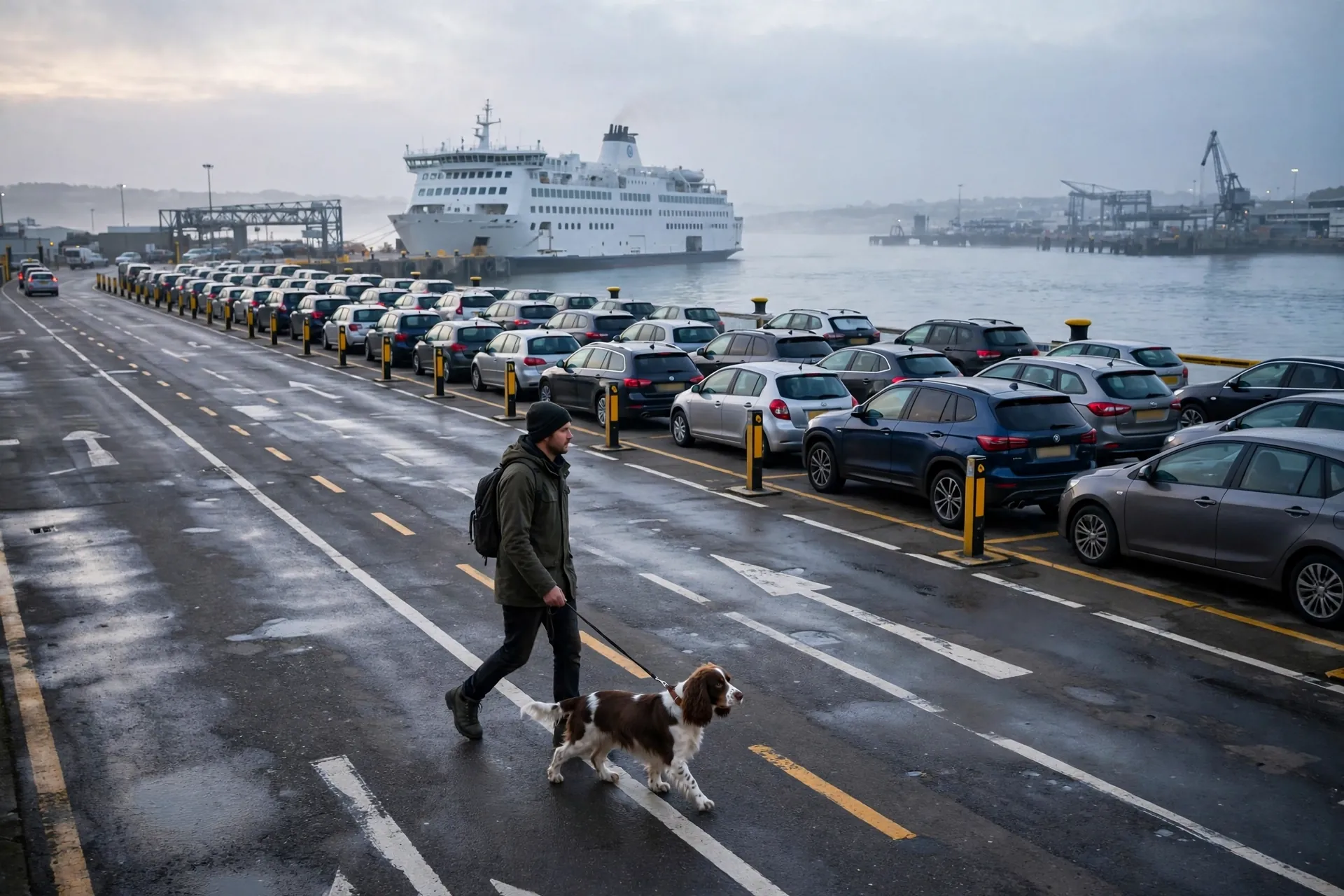
Poole to Jersey is the classic Condor crossing, and it is the one most dog owners will use first. The fast catamaran leaves Poole harbour, crosses the Channel in a few hours, and arrives in St Helier, Jersey's capital. The port at Poole is busy in summer, with holiday traffic and ferry queues, so arrive early and walk the dog before check-in, in the area around the terminal rather than in the traffic.
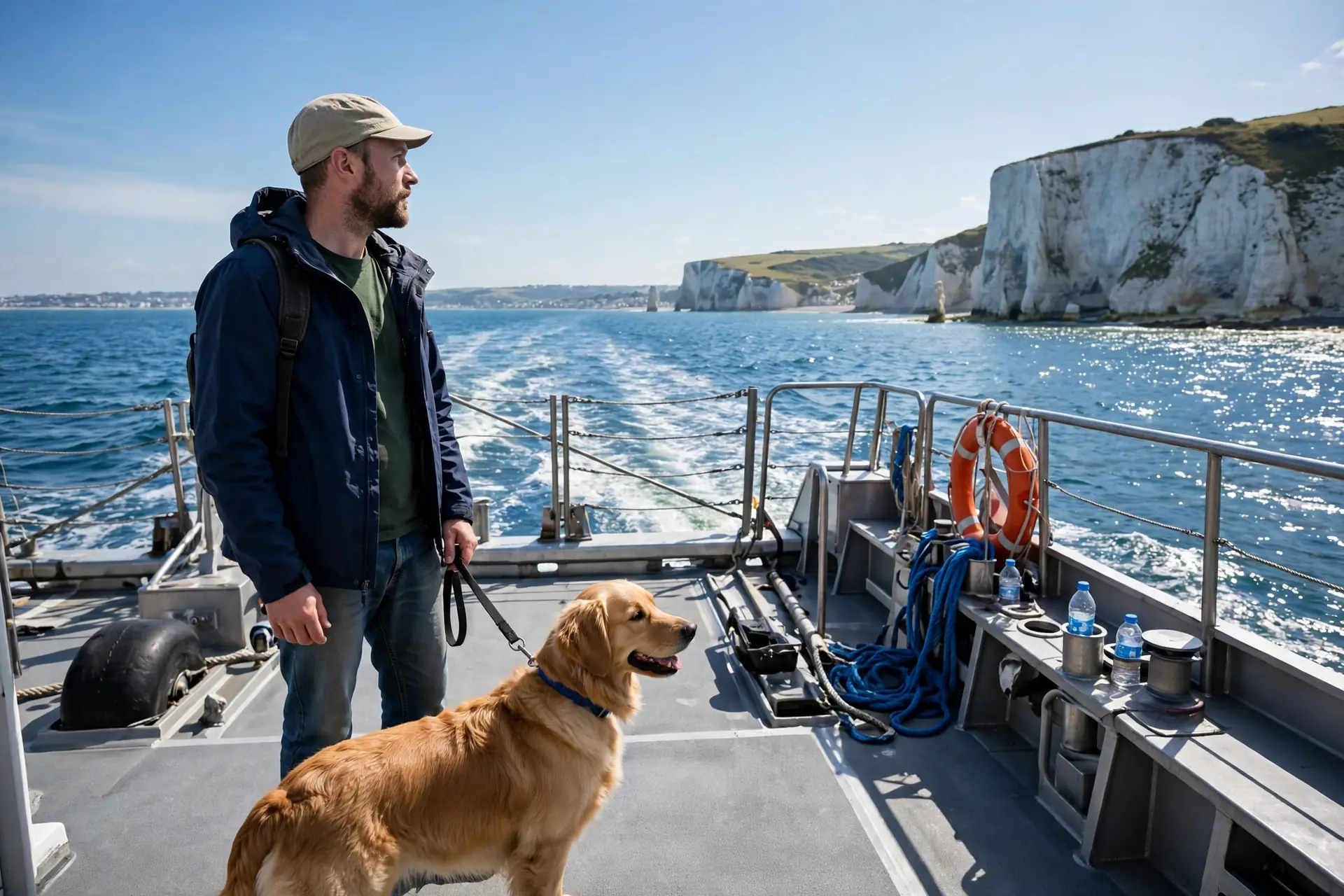
The crossing itself is short and lively. The catamaran moves quickly, the sea can be choppy, and the dog's time on board is limited. Dogs that are prone to seasickness may feel it on this crossing, so ask your vet about medication before the trip if your dog is sick in the car. Bring cleaning supplies and spare bedding, and do not feed a large meal just before boarding. A small meal several hours before departure is kinder than a full stomach on a fast boat.
St Helier is a working town with a harbour, shops and cafes, and the arrival is straightforward. The drive out of the port is easy, and Jersey's coast is close in every direction. Plan a walk soon after landing, and keep the first day short. Jersey's north coast has dramatic cliffs and quiet lanes, the south coast has sandy beaches, and the west coast has long open sand. A dog that has a good first day will enjoy the rest of the trip.
The route is popular in summer, and the fast catamaran books up early. Pet spaces are limited, so book the dog on the sailing from the start, and be flexible about the day and the time if the sailing you want is full. Early morning sailings are often calmer, and a calm sea is a kinder sea for a nervous dog. Check the official guidance before you travel for the current timetable, because the frequency changes by season.
Poole also has good road connections, which matters if you are driving from further afield. The town has places to stay before an early sailing, and the harbour area has walks for the dog. If you are travelling a long way to the port, consider staying nearby the night before, so the dog is rested and the morning is calm. A relaxed departure is worth more than an early start.
Portsmouth to Guernsey: the southern route
Portsmouth to Guernsey is the southern Condor route, and it suits dog owners travelling from London and the south-east. The crossing is a few hours by fast catamaran, and the arrival in St Peter Port, Guernsey's capital, is one of the prettiest in the Channel Islands. The town rises from the harbour in a jumble of streets and steps, and the dog will have plenty to sniff on the walk from the port.
Portsmouth is a large, busy port, and the check-in needs time. Arrive early, follow the marshalling instructions, and keep the dog on a short lead in the vehicle lanes. The area around the terminal has limited green space, so walk the dog before you reach the port, and use the waiting time calmly rather than rushing. Dogs pick up on their owners' stress, and a relaxed check-in sets the tone for the crossing.
Guernsey is smaller than Jersey, and the pace is slower. The island has cliff paths, sandy beaches and quiet lanes, and the walking is gentle. Dogs are welcome on most of the beaches outside the summer restrictions, and the coastal path around the island can be walked in sections over several days. The island's size means a long weekend is enough to get a feel for it, and a week is enough to know it well.
The route also serves as a gateway to Sark and Herm, the smaller islands that have no cars. The inter-island ferry from Guernsey is short, and the islands are car-free, so the dog walks everywhere. Sark has dramatic cliffs and dark skies, Herm has white sand beaches and a single hotel. Both are worth a day trip, and both suit dogs that like to walk. Check the official guidance before you travel for the current inter-island timetables, because they change by season.
Book early in summer, when this route is at its busiest, and be ready to be flexible about the sailing time. The fast catamaran is popular, and the pet spaces are limited. If the sailing you want is full, consider travelling midweek, when the boats are quieter and the dog has more space. Check the official guidance before you travel for the current timetable and pet rules.
Before you book: the Channel Islands check
Before you book Condor, check three things, because the Channel Islands are not quite Britain and not quite France. First, the route: Poole to Jersey is a day return, Portsmouth to Guernsey is an overnight sailing, and the dog's arrangements are different on each. Second, the ship: the fast craft and the conventional ferry are different vessels, with different facilities for dogs. Third, the documents: the Channel Islands are Crown Dependencies, and the rules for dogs are different from the rules for France, though they are simpler than the EU rules.
The ship matters more than the time, because the fast craft and the conventional ferry are different products. The fast craft is quick, the conventional ferry is slow, and the dog's arrangements are different on each. Open the timetable, find the ship's name, and check what that vessel offers for dogs before you look at the price. A cheap fare on the wrong ship is not a bargain, it is a problem, and the problem will surface at check-in, when it is too late to fix.
Add the dog at the first step of the search. The booking system only shows pet cabins and kennel spaces when the animal is declared, and a search made without a dog will show a cheaper fare that cannot take one. Say how many dogs there are, honestly, because two dogs may need a bigger cabin. If the arrangement you need has gone, change the day. A Tuesday with a cabin is a better trip than a Saturday without one.
Life on board: the Channel Islands by the hour
Life on board a Condor ship has a rhythm of its own, and the dogs that cope best are the ones whose owners follow it. Board, find the car or the cabin, settle the dog, and learn the way to the exercise deck. Then go up to the lounge, find a seat with a view, and settle in for the crossing. The sea will pass, the dog will sleep, and the island will arrive sooner than expected. The ship has restaurants and a lounge, but the dog's day should be quiet, because the crossing is long enough without excitement.
The exercise deck is a small, fenced patch, often with artificial grass, and it is the dog's only outdoor space for the crossing. Go there early, so you know the way, and keep each visit brief. Five minutes, lead on, clean up, and back inside. Other dogs will use the same patch, so do not let yours rush another animal, and do not linger. The deck is a toilet, not a park, and treating it as one is how trouble starts. A short, calm visit is enough.
Meals follow the dog's clock, not the ship's. Feed at the normal hour, in the normal amount, and resist the urge to offer extra food because the dog looks bored. A full stomach on a rolling ship is a bad idea, and the cleaning up will be yours. Water is the opposite: offer it often, in small sips, and keep the bowl topped up. A well-watered dog settles faster, and a settled dog is the goal of every crossing.
Arriving in the Channel Islands: the first walk
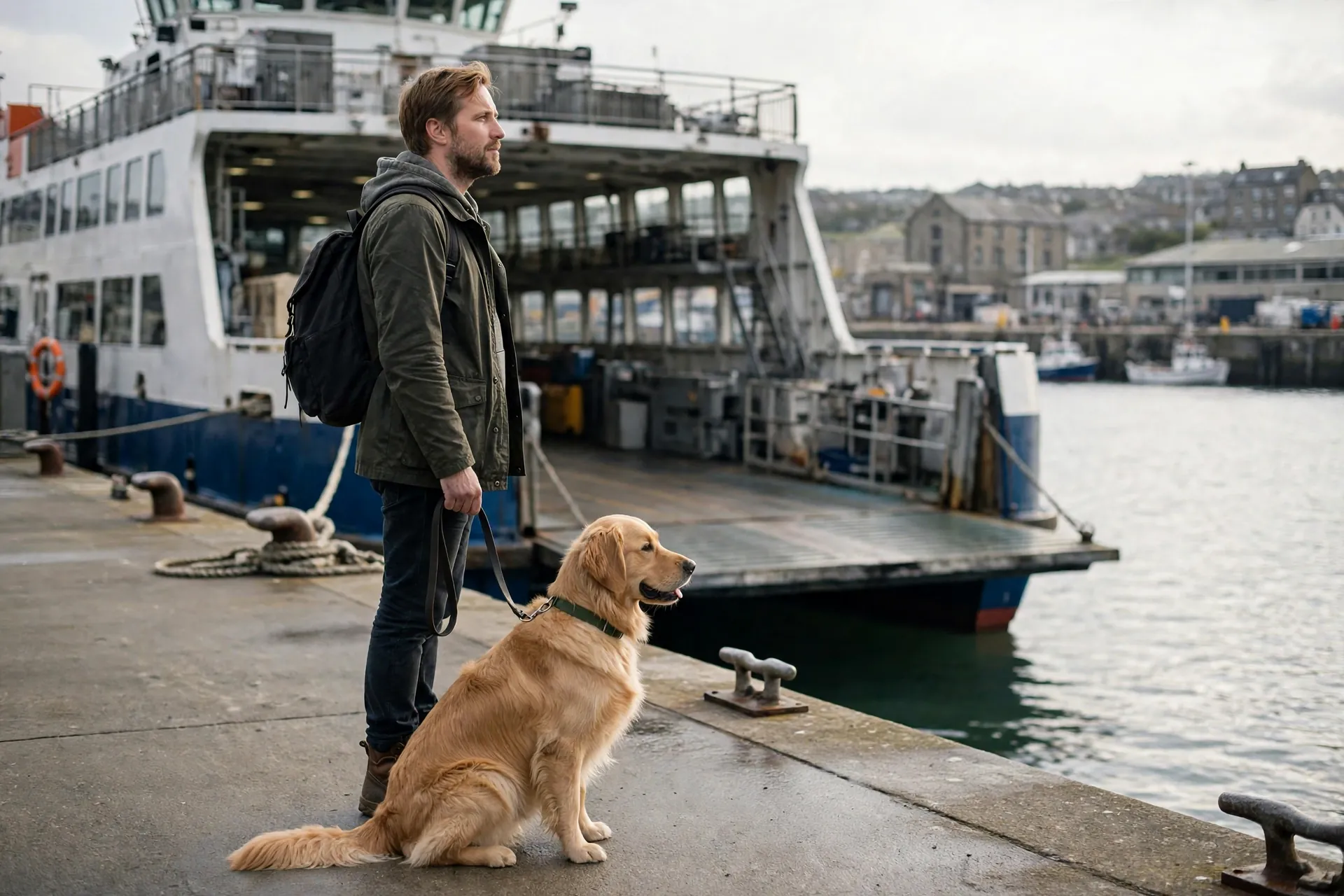
Arriving in the Channel Islands is the gentlest landing in Britain, because the islands are small, green, and full of dogs. Drive off the ship, find a beach or a coastal path, and give the dog twenty minutes to stretch, drink and empty itself. The dog has spent hours at sea, and the first walk ashore is the reset button for the whole holiday. Jersey's beaches are the obvious choice, long stretches of sand with a cafe at the top of the steps, and dogs are welcome on most of them.
The islands open up from there. Jersey has a coastal path that runs around the whole island, 48 miles of cliffs, beaches and bays, and the dog can walk a different section every day. Guernsey has a smaller path, with harbours, beaches and lanes, and the dog can walk the whole island in a week. The islands are famous for their welcome, and the dog will feel it. Keep the first day short, and let the dog discover the island at its own pace.
Staying over is easy, because the Channel Islands are used to dogs. Hotels, cottages and guesthouses welcome them, often with a small charge, and the restaurants with terraces welcome them too. Book early in summer, because the dog-friendly rooms go first, and confirm the policy in writing, because the details vary. The islands are small, so no drive is long, and the dog can have a different walk every day without ever repeating one.
The island rules: what changes on Jersey and Guernsey
The Channel Islands have their own rules for dogs, and they are worth knowing before you travel. Jersey and Guernsey are Crown Dependencies, not part of the UK and not part of the EU, and the rules for dogs reflect that. The dog needs a microchip, a rabies vaccination in date, and an animal health certificate, or a valid EU pet passport, to travel from Britain, and the same papers to return. The rules are enforced at the port, and the check is real.
The beaches have their own rules too, and they change with the season. Some beaches welcome dogs all year, and some restrict them in summer, with clear signs. The coastal paths welcome dogs all year, and the dog should be on a lead near the cliffs, because the cliffs are high and the wind is strong. The lanes are quiet, and the dog can walk off the lead on the paths, but the livestock in the fields needs respect. Keep the dog close, and the walk will be a good one.
The vets on the islands are used to British dogs, and the treatment for the return journey is the same as for France: a tapeworm treatment inside a strict window before the return sailing, written into the certificate. Book the vet on the first day of the trip, because practices on the islands need notice, and the window does not bend. Check the official guidance before you travel, because the rules change from time to time.
Planning the trip: the week before you sail
The week before you sail is the time to plan, because the Channel Islands reward preparation. Book the vet appointment first, because the animal health certificate only lives for a limited time, and the appointment must fall in the right window. Book the ferry second, because the pet cabins disappear first in summer. Book the accommodation third, because the dog-friendly rooms go first, and confirm the policy in writing, because the details vary.
Pack the dog's bag the day before: food for the trip plus a spare day, medication, a blanket, a water bowl, a chew, a lead, a collar, and a bag for cleaning up. Shops on the islands do not always stock the brand your dog eats, and a hungry dog on the first night is an avoidable problem. Carry the folder in the car, where you can reach it, not in a suitcase in the boot: certificate, vaccination records, chip number, vet's phone number, insurance, all together, in one place. Photograph every page as a backup.
The day of departure is the time to be calm. Walk the dog before you leave, feed at the normal hour, and arrive at the port early. The queues build up, and the lanes fill quickly on a summer morning. A calm owner means a calm dog, and a calm dog means a good crossing. The Channel Islands are worth the preparation, and the dog will remember the beaches long after the owner has forgotten them.
If you are weighing the Channel Islands against a longer crossing, our guide to dogs at UK ferry terminals covers check-in and the walk before boarding, and our dog travel insurance for Europe guide explains overseas vet cover before you sail.
Practical questions
Before you go
Do dogs need a ticket on Condor Ferries?
Yes. The ticket covers the dog's place, whether that is a pet cabin on the overnight sailing, a kennel on the day boats, or a car stay where the ship allows it. The price changes with the route and the ship, so search with the dog included and check that the confirmation names the arrangement.
Can my dog stay in the car on Condor Ferries?
Yes, on the day boats, and the car is the usual arrangement on the fast craft. The crew announce visiting times on the longer crossings. On the overnight sailing, the dog needs a pet cabin. Check the rules for your exact ship.
How long is the Condor crossing to Jersey?
Poole to Jersey takes about four and a half hours on the fast craft, and the dog stays in the car for the whole trip. Portsmouth to Guernsey takes about seven hours overnight, and the dog sleeps in a pet cabin. The crossing is the easy part of the holiday.
What documents does my dog need to travel to the Channel Islands?
A microchip, a rabies vaccination in date, and an animal health certificate, or a valid EU pet passport. The certificate only lives for a limited time, so the vet appointment must be timed with the sailing. Verify the current rules before you travel.
Does my dog need a vet visit before returning from the Channel Islands?
Yes. A vet on Jersey or Guernsey must give the tapeworm treatment inside a strict window before the return sailing, and write it into the certificate. Book the vet on the first day of the trip, because practices on the islands need notice.
Which Condor route is best with a dog?
Poole to Jersey is the quickest, with a day return and a beach within minutes. Portsmouth to Guernsey is the overnight option, with a pet cabin and a gentler landing. The best route is the one that fits the dog's temperament and the owner's timetable.