This guide is independent and contains no paid placement. Wheel policies change by operator and season, so check the official guidance before you travel.
Some UK Ferris wheels welcome dogs, some allow them only in private gondolas, and some do not allow them at all. Confirm the rule for your date, book a quiet slot if you can, keep the lead short, and be ready to skip the ride if your dog shows stress on boarding.
The short answer, honestly given
A Ferris wheel looks like an easy dog outing because it is slow, seated and short, but it is also enclosed, elevated and impossible to leave halfway through. That combination suits a settled dog that is comfortable with novelty, movement and strangers in a small space, and it suits a nervous dog very badly indeed. The most useful question is therefore not whether dogs are allowed in general, but whether this wheel, on this day, with this dog, is a sensible idea. Operators differ widely: a permanent observation wheel at a seaside resort may have a written dog policy, a travelling fairground wheel may leave the decision to the staff on duty, and a special event wheel may ban dogs entirely for crowd-control reasons. Policies also change between seasons, so a helpful answer from last summer is not a guarantee for a winter visit.
Start with the operator, not with a review site. Look for a pets or frequently asked questions page, then send a short message if the position is unclear, stating your dog's size, whether you want a private gondola and whether you are travelling with children. Keep the reply, because gate staff may not know the details of an online policy. If you cannot get a clear answer, treat that as information in itself: a vague policy often means a stressful negotiation at the gate, with a queue behind you and a dog that is already picking up on your tension. In that situation, walking away is not a failed day out. It is the decision that protects the rest of the day, and there are usually ground-level viewpoints nearby that give you the photograph without the risk.
Think about the whole outing, not just the ten or twenty minutes in the air. A dog that has already had a long walk, a toilet break and a drink will board calmer than a dog that has been waiting in a busy queue, surrounded by food smells and excited children, for forty minutes. Plan the ride for a quiet part of the day, ideally early morning or a weekday evening, and build in a calm walk afterwards rather than rushing straight to another attraction. If you are staying nearby, the planning lessons from dog-friendly holiday parks apply here too: a good base, a known toilet route and an unhurried timetable matter more than ticking off one more ride.
Not all wheels are the same ride
Permanent observation wheels tend to be the most predictable option. Their gondolas are usually enclosed, climate-controlled to a degree, and loaded on a slow-moving platform with staff guiding each group. Rides often last longer, sometimes with two or three full rotations, and the wheel may pause at the top for photographs. That steadiness helps many dogs, because there are no sudden jolts and the gondola does not swing freely. The downside is height: a large observation wheel can rise to sixty metres or more, and the view downwards through a glass floor or large windows can unsettle a dog that is fine at ten metres but not at fifty. Ask about the maximum height, the number of rotations and whether the gondola has a solid floor, because those details change the experience far more than the name on the ticket.
Travelling fairground wheels are a different proposition. They are often smaller and faster to load, with open or partly open gondolas, more vibration and a livelier atmosphere around them, including music, generators and the smell of fried food. Some fairground operators welcome dogs enthusiastically, while others refuse them for insurance reasons or because the ride was not designed with animals in mind. The queueing area is also more chaotic, with fewer barriers and more close encounters with other dogs. If your dog is sound-sensitive or reactive, a permanent wheel on a quiet morning is a much safer first attempt than a fairground wheel on a Saturday night, even if the fairground ride is shorter and cheaper.
There are also hybrid cases worth knowing about. Some wheels offer private gondola hire for celebrations, which can be ideal for a dog because you control who shares the space and how much chatter and movement there is. Others run special dog-friendly sessions, usually at off-peak times, where staff expect dogs and other passengers are prepared. A few wheels allow dogs only on the ground-level platform or in an accompanying viewing area, which is not the same as riding at all. Read the wording carefully: "dogs welcome" on a venue page may mean dogs are welcome on site, not necessarily on the ride, and that distinction has disappointed many owners at the gate.
Will your particular dog cope
Forget the generic image of a happy dog in a gondola and assess the dog in front of you. A dog that settles quickly in cafes, tolerates lifts, and recovers fast from surprises has a good starting point. A dog that paces in cars, barks at strangers in confined spaces, or panics at sudden noises has several risk factors stacked together on a wheel: confinement, height, movement, vibration, unfamiliar people and no exit. Age matters too. A confident adult dog is usually the best candidate, while a puppy that has not yet learned to settle in public and a senior dog with arthritis, heart disease or deteriorating eyesight may find the ride physically uncomfortable as well as mentally stressful. When in doubt, ask your vet, especially if your dog takes medication for anxiety, motion sickness or a cardiac condition.
Test the component parts before you commit to the whole ride. How does your dog behave in a lift, on a glass walkway, or in a small room with strangers? Does the sound of machinery bother them, or do they ignore it? Can they lie down on cue and stay there for ten minutes while people move around them? If you have never seen your dog in a comparable situation, a Ferris wheel is an expensive and irreversible way to find out. A short, quiet ride at a small wheel is a better trial than a tall observation wheel, and a ride you can abandon at ground level is better still. Watch for early stress signals during boarding: lip licking, yawning when not tired, turning away, a tucked tail, trembling, excessive panting or a sudden refusal to move forward. Those signals are your dog asking you to stop, and they deserve more weight than the ticket price.
Breed and size are relevant, but temperament beats both. A large, calm retriever that lies flat at your feet is easier to manage than a small, highly reactive terrier that lunges at every passer-by, even though the terrier takes up less floor space. Brachycephalic breeds, such as bulldogs and pugs, need extra attention to temperature and breathing, particularly in a sun-warmed gondola in summer. Herding breeds may fixate on movement outside the window, including other gondolas passing, birds and people below, and may become frustrated because they cannot chase or control what they see. None of this rules a dog out automatically, but it should shape your decision about timing, gondola choice and whether to ride at all.
Questions to ask before you queue
A five-minute check before you travel saves a wasted journey. Ask whether dogs are allowed on the ride itself, not just on the site, and whether there are size, number or breed restrictions. Ask whether a private gondola is available, what it costs, and whether it must be booked in advance. Ask about the ride duration, the number of rotations, and whether the wheel pauses at height, because a single slow rotation is very different from three rotations with long pauses. Ask whether dogs must be carried, kept on a lead, or kept in a carrier, and whether muzzles are required for any dogs. Finally, ask about the refund or transfer policy if you board and your dog becomes distressed, or if the ride closes for weather after you have queued.
Also ask practical questions that websites often omit. Is there a dog toilet area near the attraction, and is there shade and water while you wait? Is the queue covered, and is there a separate, quieter entrance for people with dogs? Are dogs allowed in the gift shop and cafe afterwards, or will one person need to wait outside? Is there a height or age restriction for children that affects your party composition, and does the gondola have air conditioning or heating? These details determine whether the outing is comfortable or merely survivable. If you are planning a longer trip, the same habit of asking specific questions pays off everywhere, from beach rules and seasonal bans to restaurant seating, so treat this as good practice rather than extra work.
Write the answers down. Operators sometimes give different answers by phone, by email and at the gate, and a dated email is easier to show politely than a remembered conversation. If the operator says dogs are welcome but cannot confirm private gondolas, decide in advance how you will handle sharing with strangers. Some owners are delighted to share with a dog, others are allergic, frightened or simply not expecting it, and staff may need to manage that mix. A private gondola removes that negotiation entirely, and for a first ride it is often worth the extra cost, even if your dog is sociable.
Gondola space, seating and leads
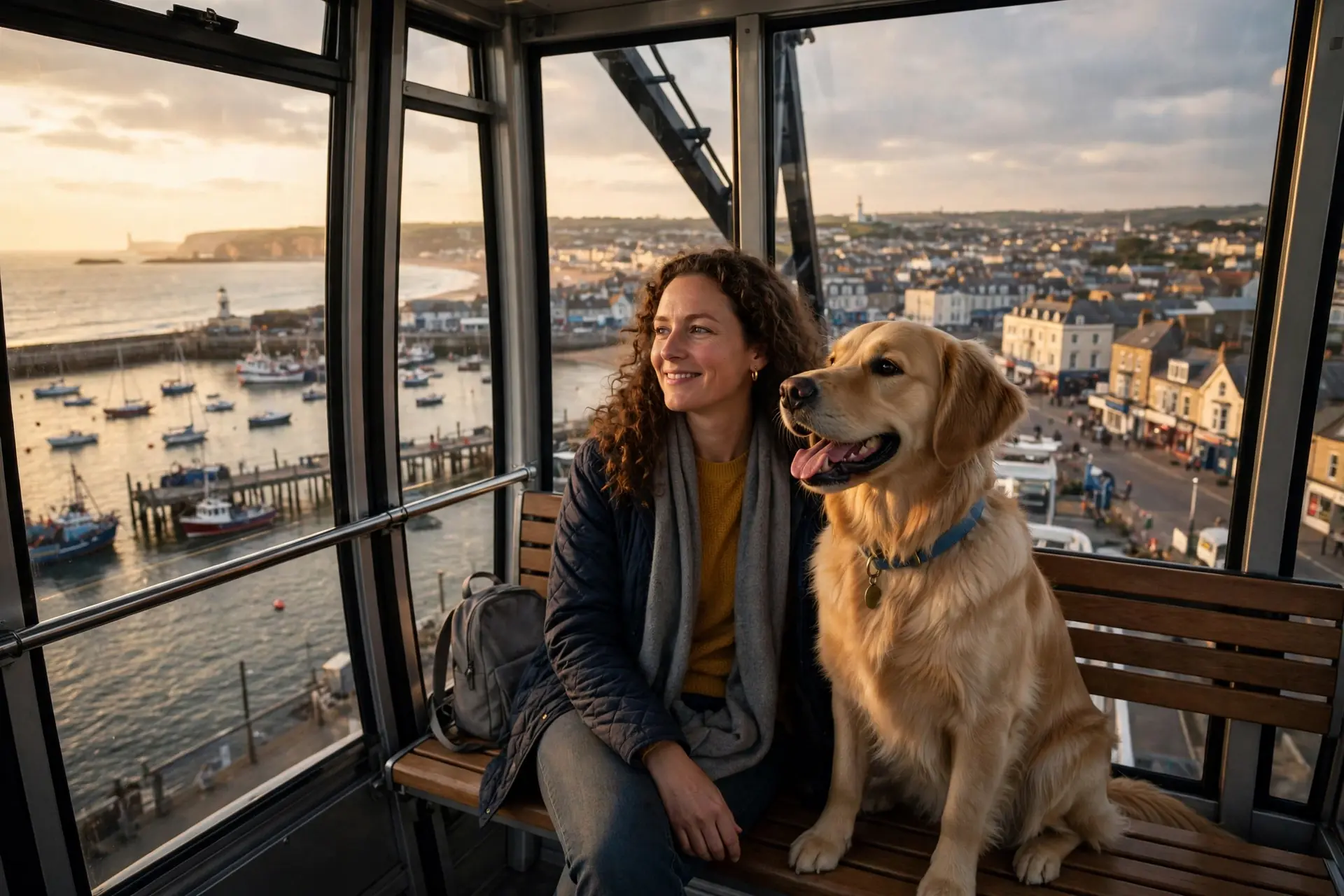
Most standard gondolas seat between four and six people on bench seating around the sides, with floor space in the middle for feet and bags. A medium dog can usually lie at your feet if the gondola is not full, but a large dog plus four adults leaves little room to move, and a dog that stands, turns or tries to look out of every window will be underfoot. Ask whether you can book a gondola with fewer passengers, or whether staff will load dogs into quieter gondolas at off-peak times. If your party is large, consider splitting across two gondolas so the dog has breathing room, rather than squeezing everyone into one.
Keep your dog on a short, non-retractable lead throughout, held in your hand rather than looped around a seat or fixture. Retractable leads are a hazard in a moving gondola: they tangle around legs, doors and other passengers, and they give a dog enough range to reach a window or another person's lap before you can react. A harness is usually more secure than a collar for a dog that might lunge or scramble, and it distributes pressure if the gondola sways. Never tie a lead to the gondola structure, because a sudden movement could injure the dog or trap the lead in a door. If your dog normally wears a muzzle in busy places, bring it, even if it is not required, because a crowded gondola is not the place to test whether your dog can cope without one.
Seating position matters more than people expect. Sitting with your dog between your feet, against the side of the gondola and away from the door, gives the dog a sense of enclosure and keeps the door clear for staff. Avoid placing a nervous dog directly beside a large window if the drop bothers them, and avoid the seat nearest the door if your dog is a door-dasher. Bring a familiar blanket or mat for the dog to lie on, both for comfort and to protect the seating, and keep bags and coats tucked away so the dog is not tripping over straps. A chew or a long-lasting treat can help a settled dog pass the time, but avoid anything that crumbles, smells strongly or could be dropped and fought over in a confined space.
Height, motion and vibration
Dogs do not experience height the way people do. They are less likely to fear the abstract idea of being high up, and more likely to react to the sensory changes that come with it: the sway of the gondola, the vibration of the machinery, the change in air movement, the sound of wind against glass, and the sight of the ground moving away. Some dogs stare fixedly out of the window, some ignore the view entirely and focus on their owner, and some become restless as the gondola rises and settles. A slow, smooth wheel with enclosed gondolas usually produces the calmest reaction, while a wheel that jerks at loading, swings in wind, or pauses suddenly at height is more likely to unsettle a sensitive dog.
Motion sickness is a real possibility, even for dogs that travel well by car. The gentle rocking of a gondola is different from road motion, and a dog that has eaten a large meal shortly before riding is more likely to feel unwell. Feed a light meal a couple of hours before the ride rather than immediately beforehand, offer water before boarding, and bring a towel and bags just in case. If your dog has a history of travel sickness, talk to your vet about whether medication is appropriate, and do not experiment with a new medication for the first time on the day of the ride. Signs of nausea include drooling, lip smacking, restlessness, yawning and vomiting, and if they appear, keep the dog still, speak calmly and wait for the ride to end rather than trying to move around the gondola.
Wind changes everything. A gondola that feels steady on a calm day can sway noticeably in a gust, and operators may slow or stop the wheel in strong winds. If you know your dog dislikes sway, choose a calm day and an early slot before the wind picks up, and check the forecast for gusts rather than just average wind speed. Glass floors, where fitted, deserve a specific mention: some dogs refuse to walk on transparent surfaces, and a dog that will not step into the gondola at all is telling you something important. Never drag a reluctant dog across a glass floor or into a gondola, because a forced entry guarantees a stressed ride and may make the dog fearful of similar situations in future.
Noise, crowds and other passengers
The ride itself is only part of the sensory load. Queues for popular wheels can be noisy, crowded and full of competing smells, from food stalls to other dogs, and the boarding area often involves announcements, beeping gates and the mechanical clunk of gondolas arriving. A dog that is already over threshold before boarding will not magically calm down once the doors close. Arrive early, use a quieter entrance if one exists, and keep waiting time as short as possible. If the queue is long and your dog is becoming restless, step out, walk around the block, and return when the queue has shortened, rather than pushing through for the sake of the plan.
Sharing a gondola with strangers adds another variable. Some passengers will want to stroke your dog, offer treats or take photographs, and while most mean well, a confined space makes it hard for a dog to move away from unwanted attention. A polite, brief explanation usually works: say that your dog is settling and would prefer not to be stroked during the ride. If you have children in your party, agree the rules before boarding: no shouting, no banging on windows, no trying to make the dog look out, and no feeding the dog without asking. Children who are excited about the height can easily overwhelm a dog that is trying hard to stay calm, so assign one adult to focus on the dog and another to focus on the children.
Other dogs in adjacent gondolas or in the queue can also trigger reactions, particularly for dogs that are reactive on lead. The gondola itself provides a barrier, but barking can carry between gondolas, and a dog that barks at every passing gondola will have a miserable ride and may disturb other passengers. If your dog is reactive, a private gondola at a quiet time is the only sensible option, and even then you should consider whether the queue and boarding area are manageable. A reactive dog that cannot pass other dogs calmly in a queue is not ready for a shared attraction, and no amount of reassurance in the gondola will undo the stress of the approach.
Weather, wind and closures
Weather affects Ferris wheels more than most attractions, because operators must balance passenger comfort with safety in wind, lightning and extreme heat. Wheels commonly close or pause in high winds, thunderstorms and heavy rain, and a closure after you have queued is frustrating but not a reason to argue with staff. Check the operator's social media or website on the morning of your visit, and have a backup plan for the same area so a closure does not ruin the day. A riverside walk, a dog-friendly cafe or a covered market can turn a cancelled ride into a pleasant outing, whereas standing in the rain hoping the wheel reopens usually just makes everyone, including the dog, more miserable.
Heat deserves special attention in summer. An enclosed gondola in direct sun can warm up quickly, even on a day that feels mild at ground level, and dogs cool themselves far less efficiently than people. Brachycephalic breeds, elderly dogs, overweight dogs and dogs with respiratory conditions are at particular risk. Choose a morning or evening slot, bring water for the dog, and watch for heavy panting, bright red gums, drooling or lethargy. If the gondola feels hot when you board, ask whether you can wait for a shaded or ventilated gondola, or skip the ride. In winter, the opposite problem applies: a cold, draughty gondola can chill a small, elderly or short-coated dog, so bring a coat and a blanket, and keep the ride short if the dog starts shivering.
Rain and fog change the value of the ride as well as its comfort. Heavy rain on glass makes the view murky, fog can hide the view entirely, and wet boarding platforms can be slippery for dogs. A dog that slips on a wet platform may become reluctant to board, and a wet dog in an enclosed gondola will make the space damp for everyone. Check the forecast for your specific slot, not just for the day, and be willing to rebook if conditions turn. Operators often allow ticket transfers for weather closures, but the policy varies, so ask about it when you book rather than discovering it at the gate.
Boarding without a scramble
Boarding is the moment most rides go wrong for dogs, because it is rushed, noisy and unfamiliar. Staff usually keep the wheel moving slowly while passengers step on, which means you have a short window to get yourself, your dog and your bags into a moving gondola. If you feel rushed, say so and ask staff to pause the wheel or to load you at a slower point. Most operators would rather take an extra thirty seconds than deal with a panicked dog, and asking calmly is not an imposition. Let the dog enter after you, guide them to their spot with a treat or a familiar cue, and settle them before the doors close.
Prepare the dog for the step and the gap. Some gondolas sit slightly above or below platform level, and some have a small gap that a nervous dog may hesitate over. Practise stepping onto unfamiliar platforms at home or in quiet places, and reward calm stepping rather than rushing the dog forward. If your dog wears boots, check that they provide grip on smooth gondola floors, and if your dog is small, be ready to lift them in and out rather than expecting them to jump. Keep the lead short but not tight, because a tight lead transmits your tension directly to the dog, while a loose lead with a dog that is actually settled is far more reassuring.
Do a final check before the doors close: lead held, bags stowed, water offered, dog settled, children seated, and nothing dangling near the door mechanism. If the dog is already panting heavily, pacing or trying to leave, this is your last easy exit, and taking it is wise. Staff see people abandon rides at this point regularly, and there is no shame in it. A dog that boards calmly has a much better chance of enjoying the ride than a dog that boards in a state of panic, and the few minutes you spend settling at ground level are the cheapest insurance for the whole experience.
During the ride itself
Once the gondola is moving, your job is to be boring. Sit still, speak quietly, and let the dog choose whether to look out, lie down or rest their head on your knee. Avoid pointing excitedly at landmarks, standing up, or encouraging the dog to stand on the seat to see better, because sudden movements in a small gondola can unbalance a dog and startle other passengers. If your dog settles, reward that calmly with a quiet word or a small treat, but do not create a stream of treats that keeps the dog aroused and scanning for the next one. A settled dog that is simply watching the world go by is succeeding, even if they never look out of the window.
Watch the dog, not just the view. Subtle signs of stress are easy to miss when you are enjoying the panorama: a dog that was lying down but starts shifting position repeatedly, licking its lips, yawning, or staring fixedly at the door may be becoming uncomfortable. Gentle reassurance, a hand resting on the dog's side, and a familiar cue to lie down can help, but if the signs escalate to trembling, whining or attempts to climb, do not try to force the dog to enjoy the view. Keep them close, keep your voice low, and wait for the ride to end. Trying to open a door, stand up, or attract staff attention mid-ride will usually make things worse, so unless there is a genuine emergency, patience is the safest response.
Photographs are part of the fun, but keep them quick and unobtrusive. A phone held steadily for a few seconds is fine; a prolonged photo session with flashing, repositioning and calling the dog to look at the camera is not. Avoid using flash in an enclosed gondola, because it can startle dogs and annoy other passengers, and never hold a dog up to a window for a photograph. The best photographs are usually the candid ones: a dog lying calmly with a view behind them, taken without disturbing the dog at all. If the operator offers a professional photograph at the top, check whether your dog is included and whether you actually want it before agreeing.
Puppies, seniors and nervous dogs
Puppies are often enthusiastic but not yet equipped for a Ferris wheel. They may be excited by the novelty, but they also toilet more frequently, chew when anxious, and have shorter attention spans for settling. A puppy that has not completed its vaccinations should not be mixing in busy public attractions at all, so check the official guidance before you travel and confirm vaccination requirements with your vet. Even a fully vaccinated puppy may be better served by a short, quiet ride at a small wheel, with a toilet break immediately beforehand and a familiar blanket to lie on, than by a tall observation wheel at peak time. If the puppy cannot settle, the ride will teach them that novel experiences are overwhelming, which is the opposite of good socialisation.
Senior dogs need a different kind of care. Arthritis can make stepping into a gondola painful, and standing for a long ride on a hard floor can be uncomfortable for stiff joints. Bring a padded mat, allow extra time for boarding, and consider whether a shorter ride or a ground-level viewpoint would be kinder. Dogs with heart conditions, breathing difficulties or cognitive decline may also find the sensory load confusing or exhausting, and a vet check before a new type of outing is sensible. On the other hand, a calm senior dog that loves watching the world and is comfortable in new places can genuinely enjoy a gentle wheel ride, especially if the gondola is quiet and the weather is mild. Judge the individual, not the age alone.
Nervous and rescue dogs deserve the most cautious approach. A dog that is still building confidence in the world does not need a high, enclosed, inescapable experience to prove anything. Desensitisation works best in small, controllable steps: a quiet cafe, a lift, a short boat ride, a low viewing platform, and only then, if the dog is coping well, a small wheel. If your dog is on anxiety medication, follow your vet's advice about timing and dosage, and do not add a new stressor on top of a new medication. A successful day for a nervous dog is often a day where nothing dramatic happened, and skipping the wheel in favour of a calm walk is a success, not a failure.
If it goes wrong mid-ride
Most problems on a Ferris wheel are manageable if you stay calm. If your dog toilets in the gondola, do not panic or scold them; clean up as best you can with bags and wipes, inform staff on exit, and apologise briefly. Accidents happen, and staff have dealt with them before. If your dog vomits, keep them still, offer water when the ride ends, and check whether they need a vet if vomiting continues or they seem unwell afterwards. If your dog becomes extremely distressed, with continuous shaking, howling or attempts to escape, keep hold of the lead, keep your voice low, and wait for the ride to end, because there is no safe way to stop a wheel mid-rotation for a single passenger in most cases.
In a genuine emergency, such as a medical problem for a person or a dog, or a mechanical fault, follow staff instructions and use any intercom or emergency button provided. Do not attempt to force a door open, climb out, or lower yourself or your dog from a gondola, because the height and movement make that extremely dangerous. Operators have procedures for evacuations, including bringing the wheel to a safe position and assisting passengers down, and those procedures exist precisely because improvisation at height is so risky. After the ride, give your dog time to recover: a quiet walk, water, a toilet break and a calm environment, rather than another attraction immediately afterwards.
After a bad experience, do not rush to try again the same day. A dog that has had a frightening ride may associate wheels, or even similar enclosed spaces, with that fear, and repeated exposure without a careful plan can entrench it. If the experience was mildly stressful but the dog recovered quickly, a future attempt at a smaller, quieter wheel may still be reasonable, with a proper desensitisation plan. If the experience was severely distressing, talk to a qualified behaviourist before trying again, and consider whether the wheel is simply not a suitable outing for this dog. There is no shortage of dog-friendly days out in Britain that do not involve height, and choosing one of them is not giving up.
Better viewpoints if you skip it
Skipping the wheel does not mean skipping the view. Many British towns with wheels also have hilltop parks, castle walls, pier ends, cliff paths and riverside promenades that offer excellent panoramas without confinement or height anxiety. A walk to a viewpoint, with stops for sniffing and a picnic, often suits a dog far better than a ride, and it gives you photographs that are just as good. Look for viewpoints with a fence or wall, shade, and a nearby toilet area, and choose a route that matches your dog's fitness and the weather. A dog that can walk to a viewpoint at its own pace is in control of the experience in a way that a gondola passenger never is.
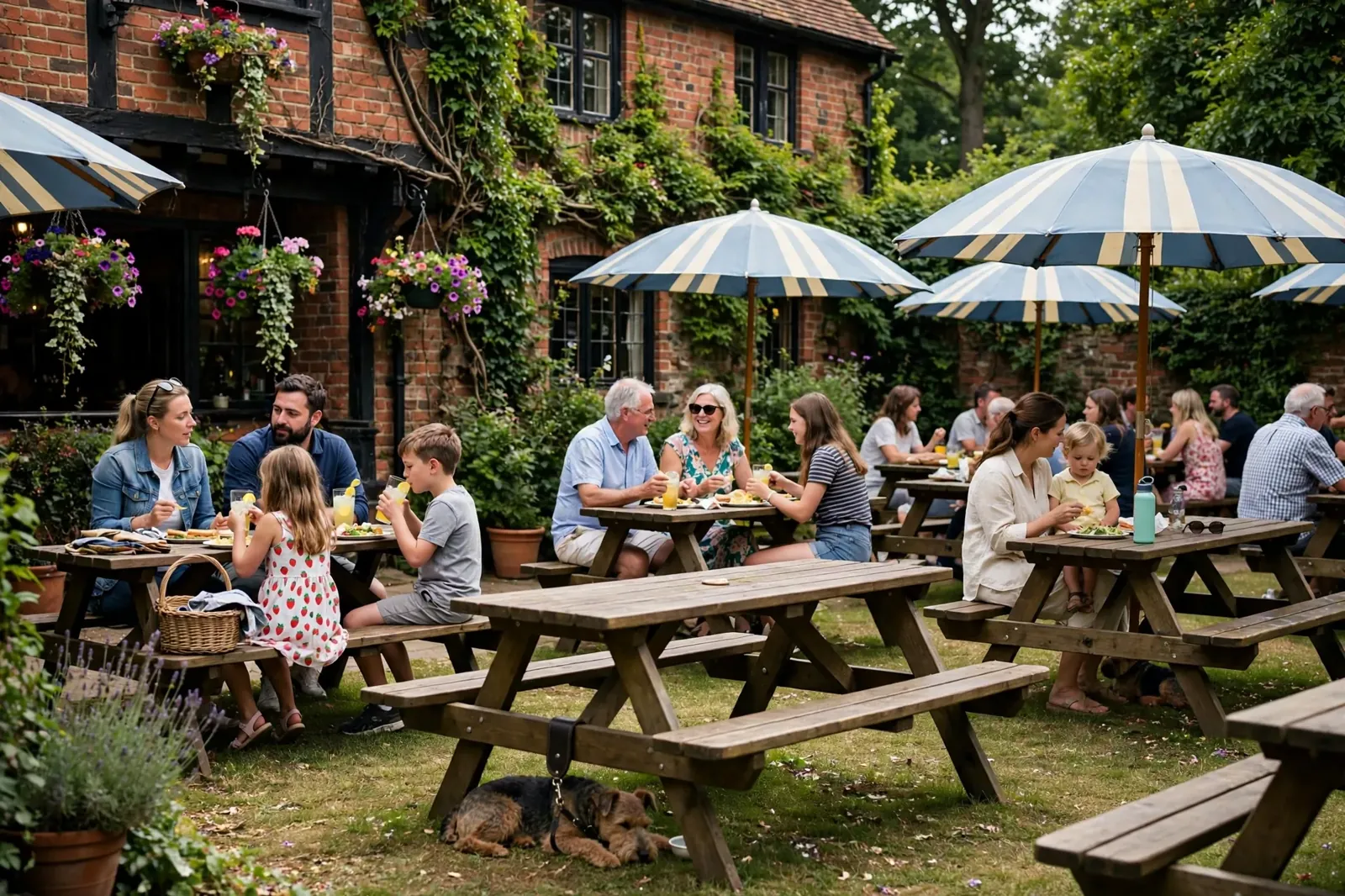
Other attractions can provide novelty without height. A boat trip, a steam train, a garden, a market or a dog-friendly pub garden with a view can all make a memorable day, and many are easier to leave if your dog becomes uncomfortable. If you are travelling with a group, you can also split up: one person rides the wheel while another walks the dog around the base, then you meet for a meal afterwards. That arrangement avoids forcing a choice between the ride and the dog, and it often produces better photographs anyway, because the person on the ground can photograph the wheel with the town behind it.
Finally, remember that the best dog days out are rarely the most dramatic ones. A calm walk, a safe place to play, a good meal together and a comfortable place to rest will usually matter more to a dog than a famous view from sixty metres up. If you do ride, ride because your dog is likely to enjoy it, not because the wheel is there. If you skip it, skip it proudly, and spend the ticket money on a longer walk, a better lunch or a treat for a dog that has had a genuinely good day. That is the standard to judge every dog outing by, wheel or no wheel.
Practical questions
Before you go
Are dogs allowed on all UK Ferris wheels?
No. Policies vary by operator, site and event, and some wheels allow dogs only in private gondolas or at quiet times. Always check the official guidance before you travel and confirm the rule for your date, because a policy that applied last season may have changed.
What size of dog can fit in a Ferris wheel gondola?
Most standard gondolas seat four to six people, so a medium dog at your feet is usually workable, while a very large dog plus a full party may be tight. Ask about private hire if your dog is large, restless or travelling with several people.
How do I know if my dog will cope with the height?
Watch for trembling, panting, pacing, whining, drooling or attempts to climb into your lap. Dogs react more to movement, vibration and unfamiliar sounds than to the view itself, so a calm dog on a balcony may still dislike a swaying gondola.
Should my dog wear a lead inside the gondola?
Yes, keep a short lead attached and held throughout the ride unless staff tell you otherwise. Never tie a lead to the gondola structure, and keep it clear of the door mechanism and other passengers.
What happens if the wheel stops at the top?
Brief pauses are normal for loading and unloading, and some rides pause for photographs or technical checks. Stay seated, keep your dog settled, and follow staff instructions rather than trying to open a door.
Can I take a puppy or an elderly dog on a Ferris wheel?
It depends on the individual dog. Puppies still learning to settle and elderly dogs with joint pain, heart conditions or poor balance need extra care, and a vet check is wise if you have any doubt. If in doubt, choose a ground-level viewpoint instead.