This guide is independent and contains no paid placement. If affiliate links are added later, they will be clearly marked and will not change our editorial checks.
Book Uber Pet, not a standard Uber, when travelling with a dog in the UK. Uber Pet drivers have opted in to carry pets, so the ride is far more likely to go ahead, but it costs more, it is not available everywhere, and a driver can still refuse a dog that is out of control. Assistance dogs travel free on any Uber and cannot be refused. Check the official guidance before you travel.
What Uber Pet actually is
Uber Pet is a ride option inside the Uber app that matches you with a driver who has chosen to carry pets. That opt-in is the whole point. In a standard UberX booking, the driver has no obligation to take a pet dog, and many drivers decline, because a dog means hair on the seats, mud on the mats, the risk of a cleaning fee dispute, and a passenger who may be late while the dog toilets. Uber Pet changes the bargain: the driver knows a dog is coming, is paid a higher fare for it, and has agreed in advance to the idea. It does not guarantee a perfect ride, but it turns a hopeful request into a proper booking.
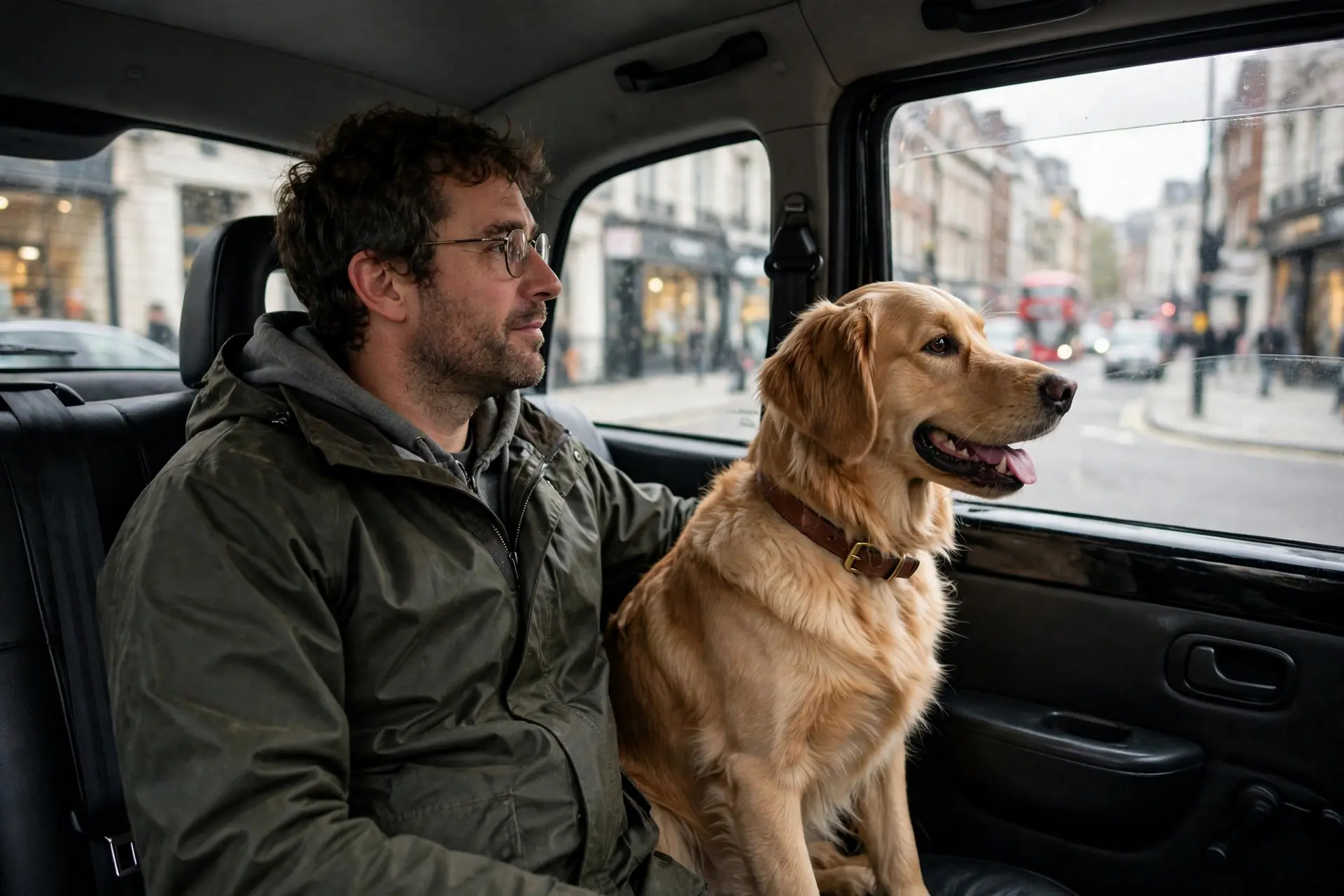
The option works like any other Uber product. You choose Uber Pet in the app, enter the destination, see the fare before you confirm, and get matched with a nearby driver. The dog travels in the back seat or the footwell, on a lead, and the driver decides where the dog sits. There is no special vehicle type, no crate requirement and no size limit published as a single rule, which means a large dog and a small dog are both accepted in principle, but the practical limit is the car: a Great Dane in a small hatchback is a different proposition from a terrier in the same car, and the driver can refuse if the dog cannot travel safely. One dog per trip is the normal expectation, and if you have two dogs, say so in the message to the driver before the car arrives, because a driver who agreed to one dog may not agree to two.
Uber Pet is not a pet taxi service in the traditional sense. There is no pre-booked time slot days ahead, no guaranteed vehicle type, and no driver who knows your dog. It is an on-demand ride with a pet flag, and that shapes how to use it: it is excellent for a short hop from a hotel to a restaurant, from a station to a cottage, or across town to a vet, and it is a poor tool for a timed airport run or a long cross-country journey where a cancellation would strand you. Treat it as a convenience for short urban trips, and use a pre-booked local taxi firm for anything where the timing matters. Our guide to dogs in UK taxis explains the wider rules, including black cabs and minicabs, which behave differently from app-based rides.
Where Uber Pet works, and where it does not
Uber Pet is available in many UK cities, but coverage is patchy, and the list changes as Uber adds or removes the option. London is the strongest market, with Uber Pet usually available across the city, and other large cities such as Manchester, Birmingham, Bristol, Leeds, Edinburgh and Glasgow generally have it too. Smaller cities and towns are less reliable: the option may appear in the app on a Saturday night and vanish on a Tuesday morning, because availability depends on how many local drivers have opted in. Rural areas, market towns and holiday villages are the weakest of all, and in much of the countryside there is no Uber at all, let alone Uber Pet.
The practical consequence is that you cannot assume Uber Pet will be there when you need it. Before a trip, open the app at your destination and check whether Uber Pet appears as an option for that location. Do it at the time of day you expect to travel, because driver supply changes through the day: a Friday evening has more drivers than a Sunday morning. If the option is missing, do not waste time refreshing the app; switch to the backup plan. That backup should be a local dog-friendly taxi firm, found before the trip, with the phone number saved. In many smaller towns the local firm is a better choice than Uber anyway, because the driver knows the area, can be booked in advance, and will wait at a station or a cottage at an agreed time.
Availability also varies by demand. During surge pricing, Uber Pet may be harder to find, because the drivers who opted in are busy, and the fare quoted will be higher. At large events, the app may show no Uber Pet cars at all, even though standard cars are available. If you are travelling for a holiday, check the app on arrival at your destination rather than on departure from home, because the coverage at the cottage matters more than the coverage at home. And remember that the app is the only reliable source: a blog post or a forum thread from last year may describe coverage that no longer exists, so check the official guidance before you travel and test the app yourself.
Booking an Uber Pet trip, step by step
Booking is straightforward, but a few small steps make the difference between a smooth pickup and a cancellation at the kerb. Open the Uber app, enter the destination, and choose Uber Pet from the list of ride options. The app shows the fare before you confirm, so check the total, including any surge multiplier, and confirm only when you are ready, because the driver will arrive within minutes. As soon as the trip is accepted, send a short message through the app: the dog's size, that it is on a lead, and that you have a blanket for the seat. A driver who reads "one calm spaniel, on a lead, with a blanket" is far more likely to stay than a driver who arrives to find a muddy dog with no warning.
Be at the pickup point before the car arrives, with the dog toileted, on a short lead, and under control. The driver is on a timer, and a passenger who is still in the house while the dog sniffs the garden is a common reason for a cancellation. Stand somewhere the driver can see you, hold the lead short, and let the driver open the door or tell you where the dog should sit. Put the blanket on the seat before the dog gets in, not after, and keep the dog in the footwell or on the seat as the driver directs. If the dog is large, ask the driver whether the back seat or the boot area is better, and accept the answer, because the driver knows the car.
During the ride, keep the dog still and quiet. A dog that climbs into the front seat, paws at the windows or barks at passing dogs will not be welcomed back, and the driver can end the trip. Keep the lead in your hand, keep the dog's head inside the car, and keep the windows up unless the driver agrees to open one. At the destination, get out promptly, check the seat for hair or mud, and thank the driver. A short, honest rating and a tip for a driver who handled the dog well helps the next dog owner, because drivers remember which passengers were easy. If something goes wrong, report it in the app rather than arguing at the kerb.
Fares, surcharges and surge pricing
Uber Pet costs more than a standard UberX trip on the same route, and the difference is the point: the extra fare is what persuades drivers to opt in. The surcharge varies by city and by demand, and the app shows the total before you confirm, so the figure you see is the figure you pay, apart from any cleaning fee if the dog makes a mess. There is no single national surcharge to quote, and any guide that gives one is out of date the moment it is published. The reliable method is to price the exact trip in the app at the time you need it, and to compare it with a local taxi quote for the same journey.
Surge pricing affects Uber Pet like every other Uber product. At busy times, on Friday and Saturday nights, during bad weather and around large events, the fare can rise sharply, and the Uber Pet option may become scarce at the same time. A trip that costs eight pounds on a quiet Tuesday can cost twenty on a rainy Saturday, and the app will show the surge multiplier before you confirm. If the price looks wrong, wait ten minutes and check again, or switch to a local taxi firm, which usually charges a fixed or metered fare that does not surge. For a holiday, the cost of a handful of Uber Pet trips is rarely the deciding factor, but for a daily commute with a dog it adds up, and a local firm with a regular arrangement is usually cheaper.
Payment is through the app, and the usual rules apply: the fare is charged to the saved payment method, and any tolls or waiting time are added. A cleaning fee is a separate charge, applied after the trip if the driver reports a mess, and the amount depends on the severity. The best way to avoid it is prevention: a blanket on the seat, a towel under a wet dog, and a dog that is calm and dry. If a cleaning fee is charged and you think it is unfair, dispute it in the app with a clear explanation, but be honest with yourself first, because a muddy paw print on a light-coloured seat is a genuine cleaning job. Keep the receipt for each trip, because the fare, the route and the time are all recorded, and that record is useful if a dispute arises.
Why a driver can still say no
Even on an Uber Pet trip, the driver can refuse a pet dog. The opt-in means the driver is willing in principle, but the driver can still decline a particular dog on a particular day, for example if the dog is aggressive, out of control, unsecured, or clearly likely to damage the car. A driver with an allergy, a driver whose car has just been cleaned, and a driver who has had a bad experience with a previous dog may all decline, and the app will then try to match you with another driver. This is frustrating, but it is part of how the system works, and the correct response is to request another car rather than to argue.
The most common reason for a refusal is the dog's behaviour at the kerb. A dog that lunges at the car, barks at the driver, jumps up, or cannot be controlled on the lead is a reasonable refusal. A dog that is calm, on a short lead, with a blanket ready, is rarely refused. The second most common reason is size and numbers: a driver who expected one small dog may refuse two large dogs, and a driver in a small car may refuse a very large dog that cannot fit safely. The third reason is mess: a dog that is wet, muddy or shedding heavily, with no blanket, is a cleaning bill waiting to happen, and the driver knows it. All three are within your control, and preparing properly is the best way to avoid a refusal.
There is one refusal that is never allowed: an assistance dog. A licensed driver must accept an assistance dog, and refusing one is unlawful under the Equality Act 2010. If a driver refuses an assistance dog, note the driver's name, the time and the trip details, cancel the trip, and report it through the app and to the licensing authority. For pet dogs, the law is different: there is no right to take a pet dog in a private hire vehicle, and the driver is entitled to say no. Knowing that distinction before you travel saves a lot of frustration, and it is why the message to the driver, the blanket and the calm dog matter so much. Our guide to dog friendly taxis in the UK covers how to phrase the booking with a local firm so the same problem does not arise there.
Assistance dogs: a different set of rules
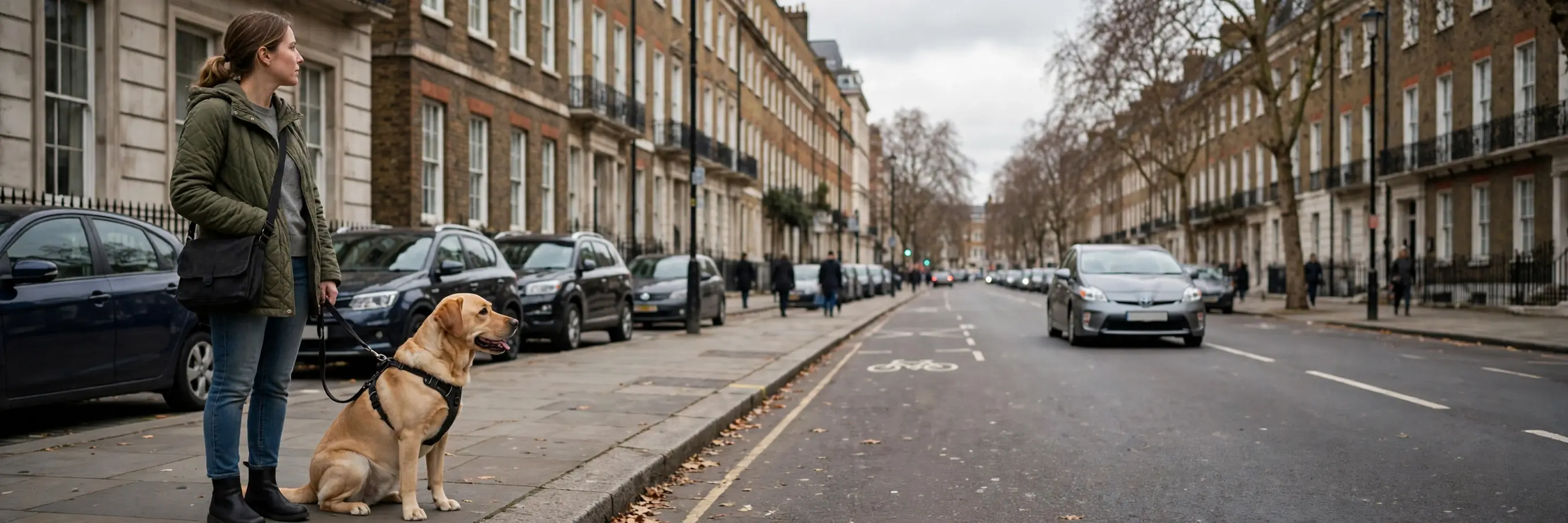
Assistance dogs are not pets in the eyes of the law, and the rules for them on Uber are completely different. A guide dog, hearing dog or other recognised assistance dog travels with its owner on any Uber trip, standard or Uber Pet, at no extra charge, and the driver cannot refuse the dog or charge a fee for it. The dog sits in the footwell, usually at the owner's feet, and the owner is responsible for the dog's behaviour. This right applies across the UK, and it is backed by the Equality Act 2010, which makes it unlawful for a licensed taxi or private hire driver to refuse an assistance dog.
In practice, most drivers know the rule and accept assistance dogs without fuss, but mistakes still happen, usually when a driver confuses an assistance dog with a pet dog, or when the dog is not wearing an identifying harness or jacket. Carry the assistance dog's identification, keep the harness on, and mention the dog in the app message so the driver is not surprised. If a driver does refuse, stay calm, note the details, and report it. Uber can investigate and take action, and the licensing authority can too, because a refusal is a licensing matter as well as a customer service complaint. The law also covers the situation where a driver claims an allergy or a fear of dogs: those are not valid reasons to refuse an assistance dog.
There is a grey area around emotional support animals and therapy dogs, which do not have the same legal status as recognised assistance dogs in the UK. An emotional support animal is treated as a pet for Uber purposes, which means it needs Uber Pet and can be refused. If your dog is an assistance dog, make sure its status is documented and recognised, and if it is not, plan as a pet owner rather than assuming a right that does not exist. For a pet dog, the practical advice is the same as ever: book Uber Pet, message the driver, bring a blanket, and keep the dog calm. The distinction matters, and getting it wrong at the kerb helps nobody.
When the trip is refused or cancelled
A refusal at the kerb is annoying, but it is not the end of the journey. If a driver cancels or refuses the dog, the app will usually offer to match you with another driver, and the second driver is often more willing, because the first refusal has already filtered out the least willing. Wait for the new match, and use the time to send the same clear message: one dog, on a lead, with a blanket. If the second driver also refuses, stop requesting and switch to the backup plan, because repeated requests in the same area will keep matching you with the same small pool of drivers, and the wait will grow.
Cancellations work both ways. A driver may cancel after accepting, and you may cancel if the car that arrives is unsuitable, for example if it is far too small for the dog. If you cancel, do it quickly, before the driver has waited long, because a late cancellation can attract a fee. If the driver cancels, there is no charge, and the app will try again. Keep a note of what happened, because a pattern of refusals at a particular place or time tells you something useful: that area may have few Uber Pet drivers, and a local firm may be the better choice there. If the refusal was for an assistance dog, report it in the app immediately and keep the trip details, because that is a legal matter rather than a customer service complaint.
The worst case is a refusal when the timing matters, for example a train to catch or a vet appointment. That is why the backup plan matters more than the app itself. Before any timed journey, have the local taxi firm's number saved, and know roughly what the firm charges for the route. If Uber Pet fails twice, call the firm. A pre-booked taxi that knows a dog is coming is a far more reliable tool for a timed journey than an on-demand app, and the small extra cost is worth the certainty. For a holiday, the same logic applies to the first and last journeys: the trip from the station to the cottage and the trip back are the two that matter most, so book those with a local firm and use Uber Pet for the casual trips in between.
Alternatives when Uber Pet is not there
When Uber Pet does not appear in the app, the best alternative is usually a local dog-friendly taxi or private hire firm. These firms take bookings by phone, often days in advance, and the driver knows a dog is coming before setting off. The fare is usually metered or fixed, and many firms charge no extra fee for a dog, or a small one. Ask when you book: is there a pet fee, is there a limit on the number or size of dogs, and is a blanket required? A firm that answers those questions clearly is a firm that carries dogs regularly, and that is exactly what you want. Save the number of a good firm at each destination, because it will be useful for the whole trip.
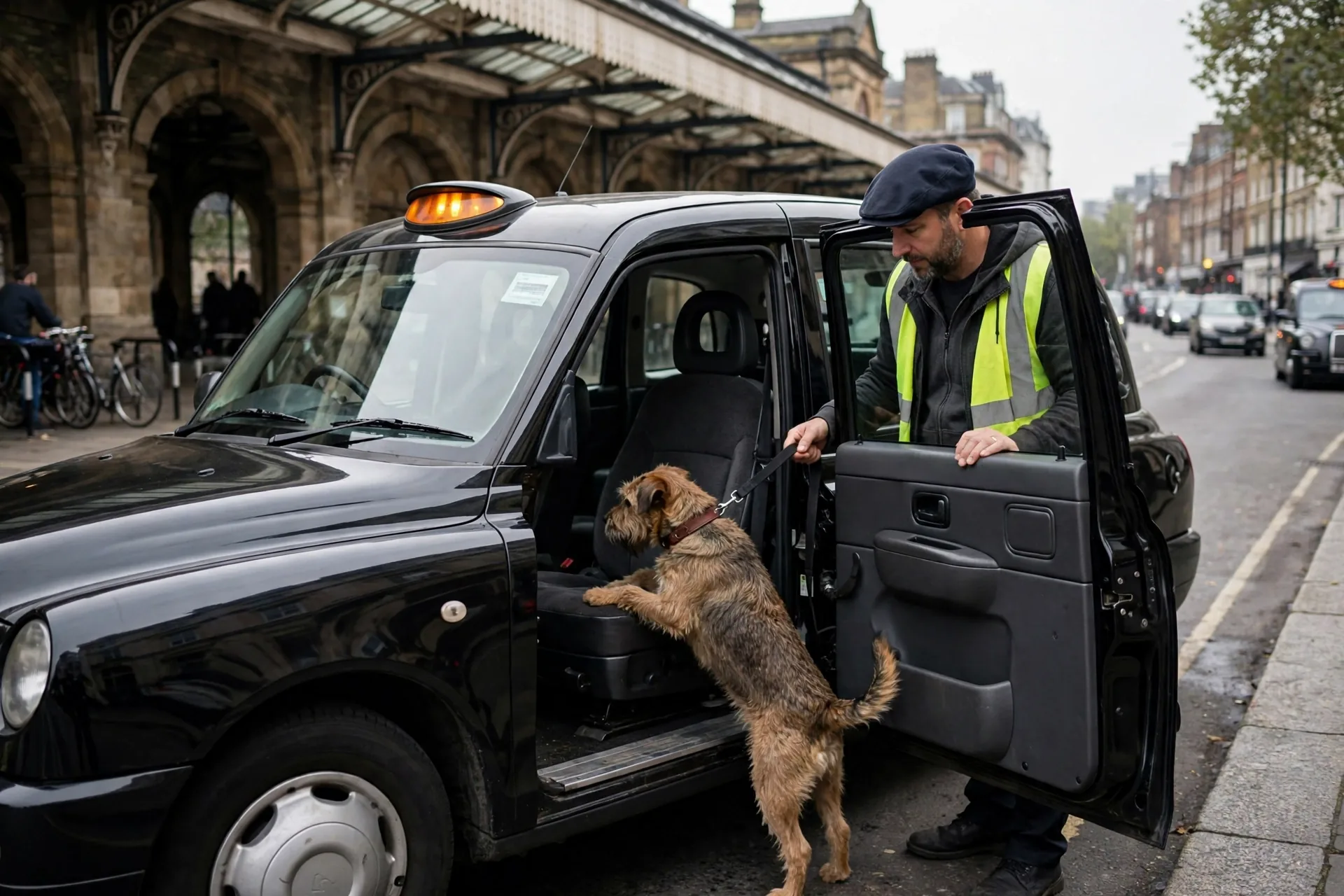
Black cabs are a second alternative in London and some other cities. A black cab driver can refuse a pet dog, but many accept dogs, especially in London, where cab drivers are used to them. The practical approach is to hail or book the cab, mention the dog before the dog gets in, and accept the driver's answer. A cab is a good option for a short hop with luggage, because the space is generous and the driver can help with bags. Minicabs booked through a local office work the same way, and the office can note the dog on the booking so the driver arrives prepared. Our guide to dogs on National Express is a useful reminder of the limits of public transport with a dog, because coaches do not accept pet dogs at all, and the taxi is often the only way to bridge the gap.
Other alternatives depend on the journey. For a short distance, walking is often the best option, and a dog that has just had a long train journey may prefer a walk to another car. For a longer distance, a hire car gives you control, and our guide to dogs in rental cars covers the rules there. In some cities, a dog-friendly bus or tram can work, but the rules vary by operator and by city, so check before you board. The point is that Uber Pet is one tool among several, and a dog owner who knows the local firm, the black cab rules and the walking route will rarely be stranded. The app is convenient, but it is not a plan.
Kerb-side etiquette that keeps drivers happy
Good etiquette is not politeness for its own sake; it is what keeps drivers opting in to Uber Pet, and what keeps the option available for the next dog owner. Start before the car arrives: toilet the dog, wipe muddy paws, and have the blanket ready. A dog that arrives at the car clean and calm is a different proposition from a dog that arrives wet and excited. Keep the lead short and the dog at your side, and let the driver see that you are in control. If the dog is a jumper, hold it steady while the door opens, and guide it in rather than letting it leap across the seat.
Inside the car, the rules are simple: the dog stays where the driver puts it, the dog stays calm, and the dog stays off the front seat. Keep the lead in your hand for the whole journey, and keep the dog's head inside the car. If the dog is a window-leaner, keep the window up or only slightly open, and if the dog is a barker, keep it focused on you with a calm voice and a treat. Do not feed the dog in the car, because crumbs and smells linger, and do not let the dog chew anything that sheds. At the end of the trip, check the seat and the footwell, pick up any hair or mud you can see, and thank the driver by name. A driver who has a good experience with one dog owner is more likely to accept the next.
There are a few things that drivers consistently mention as problems, and avoiding them is easy. The first is the surprise dog: a passenger who books a standard Uber and then appears with a dog, with no warning, is the fastest way to a refusal. The second is the wet dog after a walk, with no towel and no blanket, in a car with light-coloured seats. The third is the dog that is left to roam the car, climbing over seats and pawing at windows. The fourth is the owner who argues when a driver declines, which helps nobody and can lead to a report. None of these are hard to avoid, and all of them are within your control. A well-prepared owner with a calm dog and a blanket is the passenger drivers remember fondly.
Stations, airports and tight timings
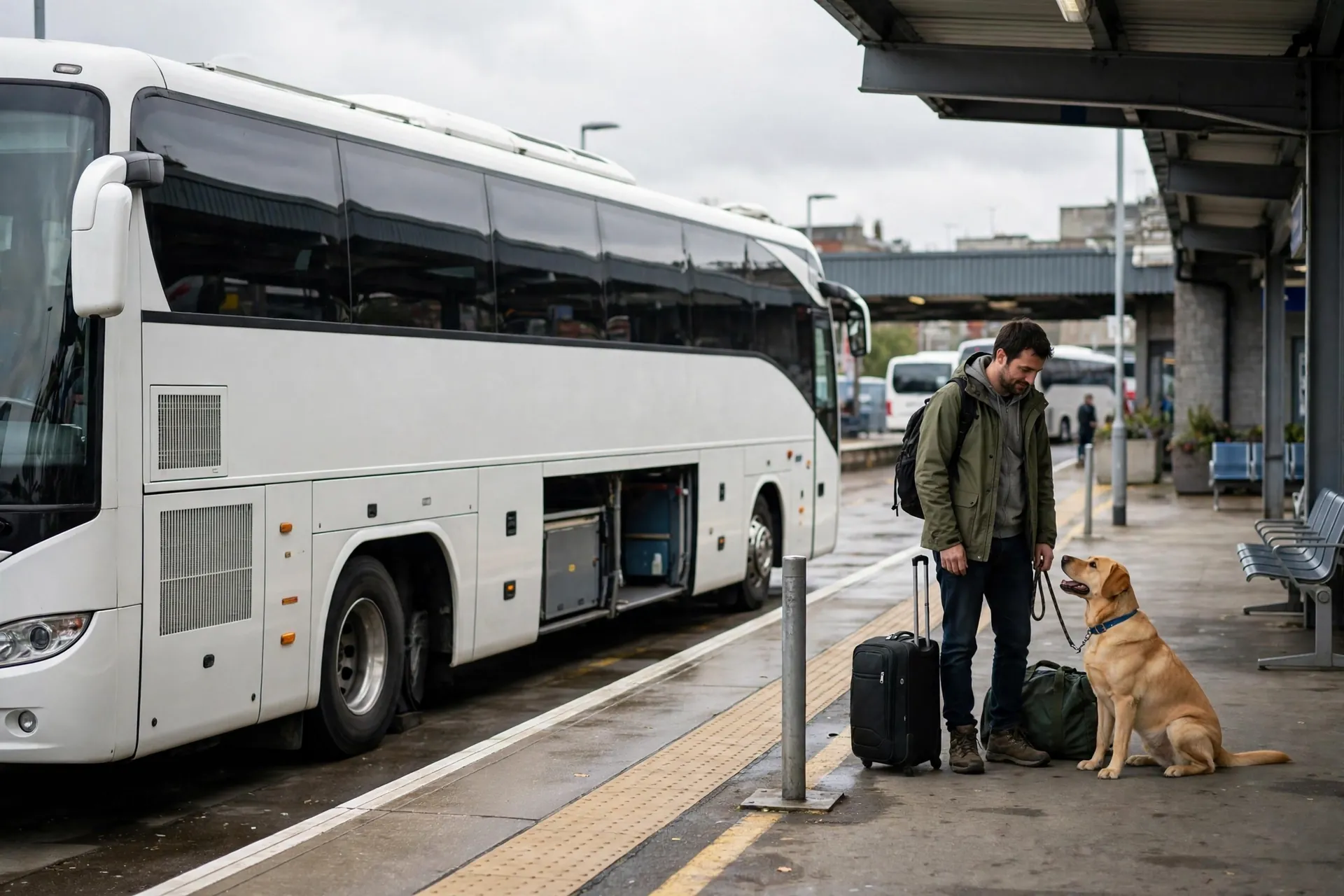
Stations are where Uber Pet is most useful and most stressful at the same time. A train arrival with a dog, luggage and a tired traveller is exactly the moment when a short car ride helps, and it is also the moment when a refused ride hurts most. The advice is to plan the station pickup before the train leaves, not after it arrives. Check the app at the departure station, and if Uber Pet is available there, it is likely to be available at the arrival station too, but that is not guaranteed. Have the local taxi firm's number saved as a backup, and know where the taxi rank is, because a rank taxi is often faster than an app booking at a busy station.
Airports are harder. Uber operates at most UK airports, but the pickup points are specific, and the walk from arrivals to the pickup point with a dog and luggage can be long. Uber Pet at an airport is also less reliable, because the drivers waiting at the airport may not have opted in. For an airport arrival, a pre-booked local firm or a hire car is usually a better choice, because the driver meets you at arrivals, knows the dog is coming, and waits if the flight is delayed. If you do use Uber Pet from an airport, allow extra time, check the app as soon as you land, and be ready to walk to the designated pickup area with the dog on a short lead.
Tight timings are the enemy of on-demand rides with a dog. A train to catch, a check-in deadline, or a vet appointment all need a buffer that Uber Pet cannot guarantee. The rule is to allow twice the time you think you need, and to book the critical journeys in advance with a local firm. If the journey is genuinely time-critical, do not rely on the app at all: book the taxi, confirm the dog, and get the driver's number. The app is for the casual trips, the ones where a ten-minute delay does not matter. For the trips where it does matter, a booked car with a named driver is the right tool, and the small premium is the price of certainty.
Practical questions
Before you go
Can I take my dog in a normal Uber in the UK?
Not reliably. A standard Uber driver can refuse a pet dog, and many do, because pets are not part of the standard service. Uber Pet is the option designed for dogs: drivers who accept Uber Pet trips have chosen to carry pets, so the ride is far more likely to go ahead. Book Uber Pet rather than hoping a standard driver says yes, and check the official guidance before you travel for the latest availability in your area.
What is Uber Pet and how much does it cost?
Uber Pet is a ride option in the Uber app for travelling with a pet dog. It costs more than a standard UberX trip on the same route, because the driver is paid a higher fare for carrying a pet. The exact surcharge varies by city and by demand, and the app shows the total before you confirm, so always check the quoted price rather than relying on a figure from a guide.
Can an Uber driver refuse my dog?
Yes, for a pet dog a driver can refuse, even on an Uber Pet trip if the dog is out of control, unsecured or likely to damage the car. The exception is assistance dogs: a licensed driver must accept an assistance dog, and refusing one is unlawful. To reduce refusals, keep the dog on a short lead, use a blanket on the seat, keep the dog calm, and message the driver as soon as the trip is accepted to confirm the dog is coming.
Do assistance dogs travel free on Uber?
Yes, assistance dogs travel with their owner at no extra charge, and a driver cannot charge a pet fee or refuse the dog. This applies to standard Uber trips as well as Uber Pet, because the law treats an assistance dog as a working animal rather than a pet. You do not need to book Uber Pet for an assistance dog, but telling the driver in the app message avoids confusion at the kerb.
Can I be charged a cleaning fee if my dog makes a mess in an Uber?
Yes. If your dog sheds heavily, leaves mud, vomits or has an accident in the car, Uber can charge a cleaning fee to your account, and the amount depends on the mess. A blanket on the seat, a towel under the dog and a calm dog on a short lead prevent most problems. If an accident happens, clean up what you can, tell the driver honestly and report it in the app rather than leaving the mess for the next passenger.
Is Uber Pet available everywhere in the UK?
No, Uber Pet is available in many UK cities but not all of them, and availability can change. Large cities such as London usually have Uber Pet, while smaller towns and rural areas may not. Check the app for your location before you rely on it, and have a backup plan, such as a local dog-friendly taxi firm, for places where Uber Pet does not appear. Check the official guidance before you travel for the latest coverage.