This guide is independent and contains no paid placement. If affiliate links are added later, they will be clearly marked and will not change our editorial checks.
Dog friendly taxis in the UK are mostly a booking task, not a hoping task. Assistance dogs must be carried free by law, but pet dogs travel at the driver's or operator's discretion — so pre-book, state the dog clearly, confirm no surprise terms, carry a blanket and towel, and keep a backup plan. Most refusals and fees become non-events when the dog is declared before the car is dispatched.
The station-platform moment this guide exists to prevent
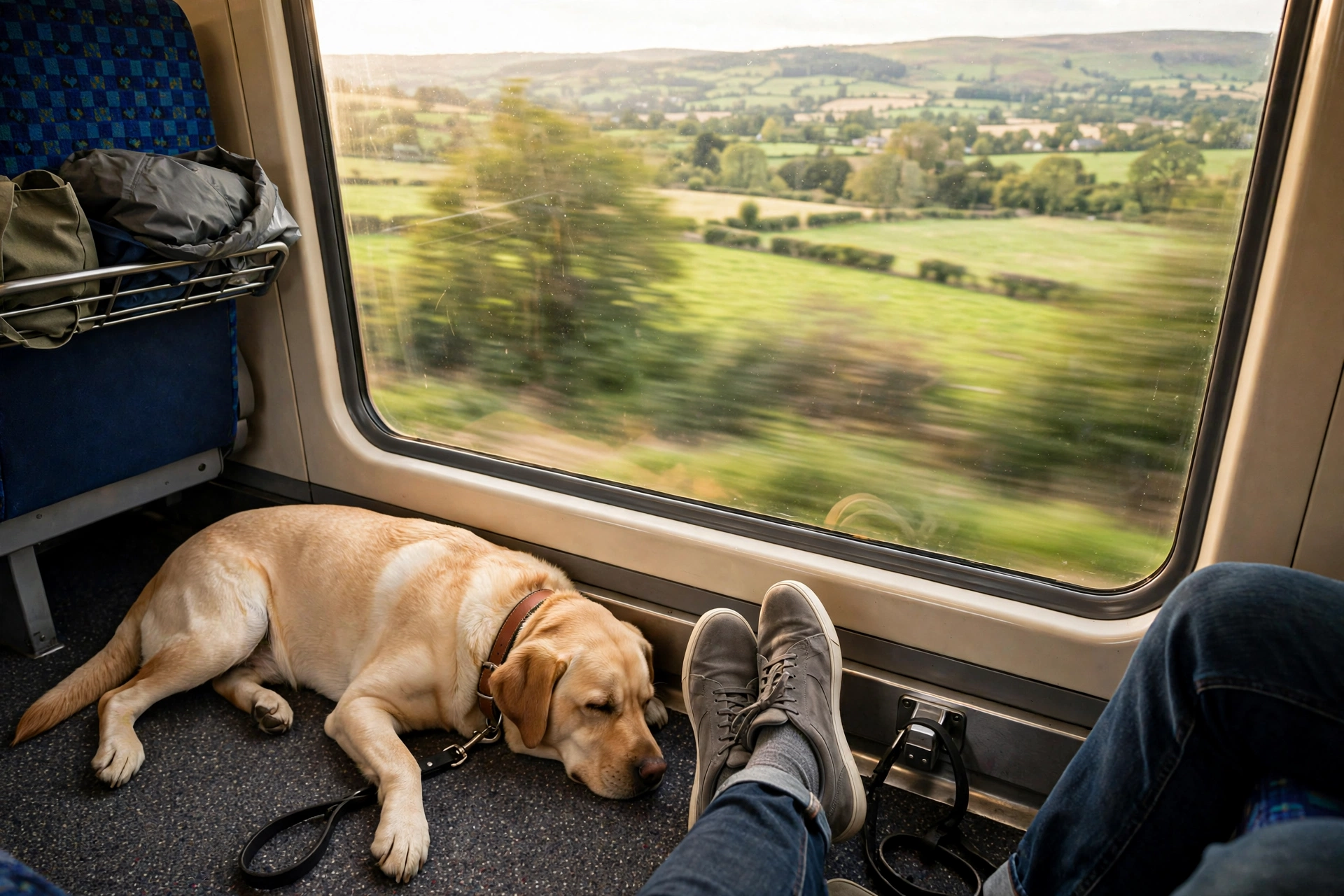
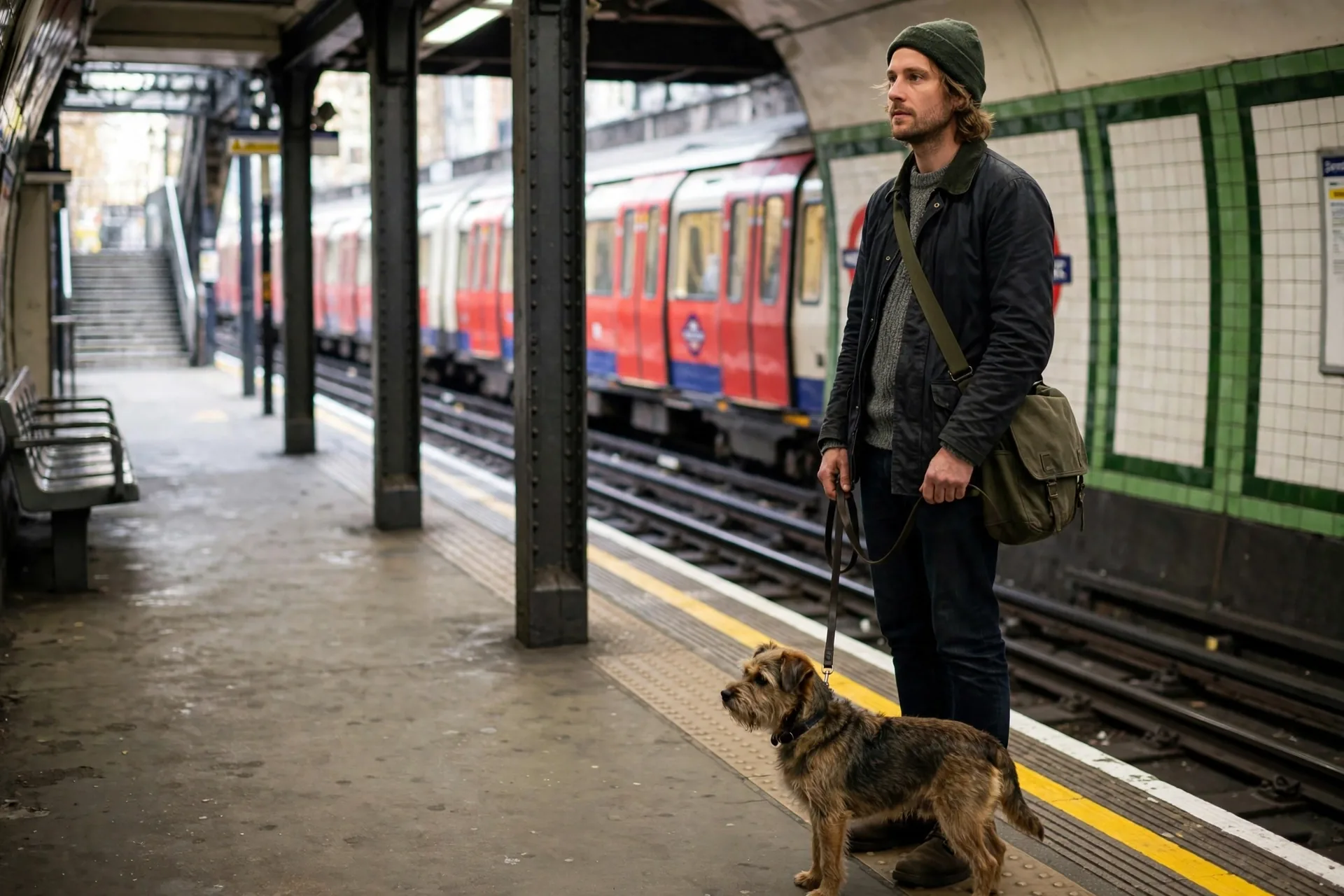
Picture the scene honestly, because most owners have lived a version of it. The train is late, the connection is gone, rain is coming sideways across the platform, and your dog — patient for three hours — has reached the end of patient. You open a taxi app, book the nearest car, and watch the driver arrive, look at the dog, shake his head and drive away. Nothing about that moment required bad luck. It required only one omission: the dog was never mentioned until the car was already there.
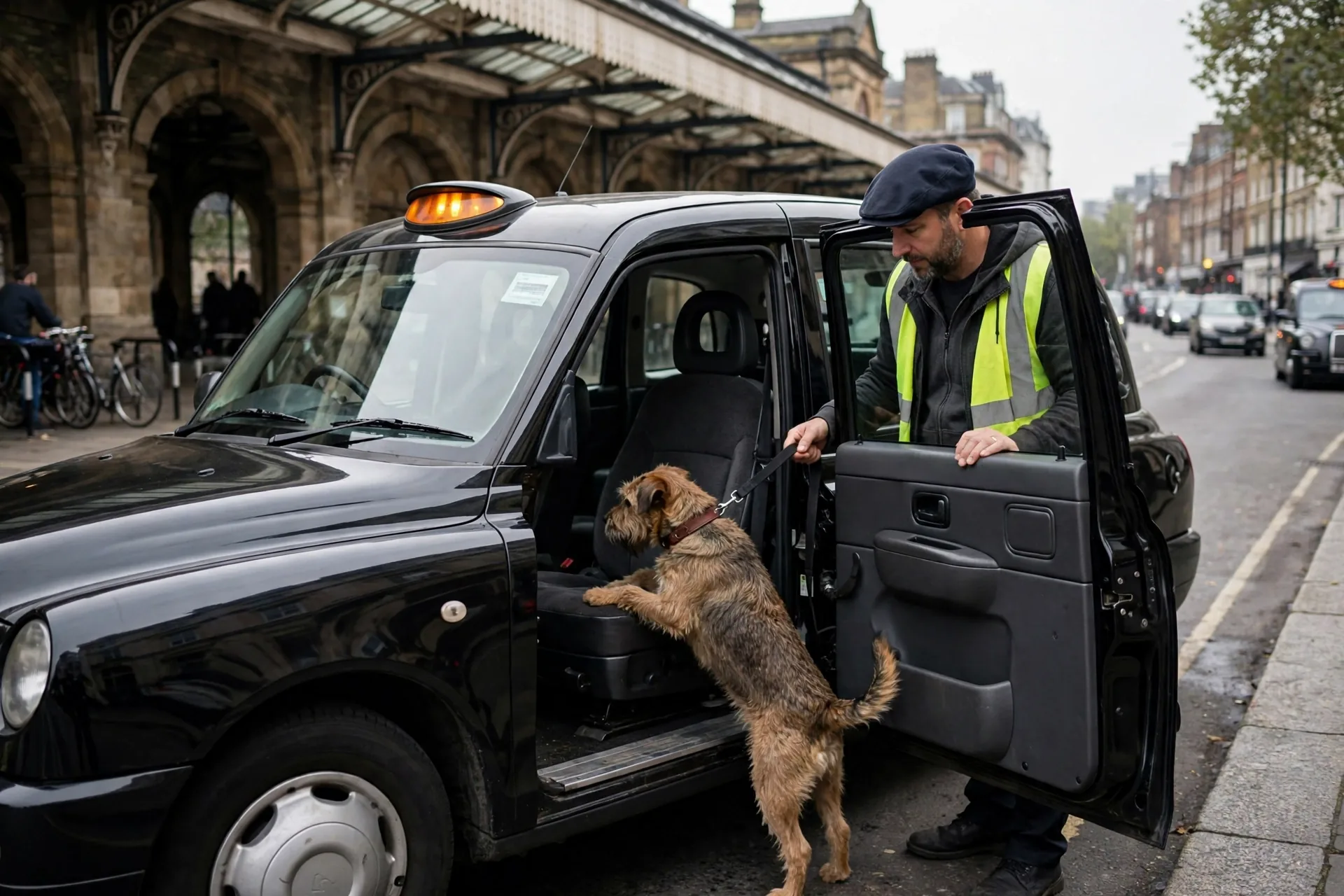
Pet dogs, unlike assistance dogs, travel in taxis at discretion. Drivers and operators may have genuine reasons — allergies, a small car, a previous dog who wrecked an interior, religious or personal considerations, or a simple company policy — and arguing at the kerb in the rain changes none of them. The system works when the information moves first: book ahead, declare the dog in plain words, get the acceptance confirmed, and the car that arrives is driven by someone expecting a dog, often with a towel already on the seat.
This guide works through that booking craft in detail: what the law guarantees and what it does not, the exact phrasing that prevents misunderstandings, what fair cleaning charges look like versus unfair surprises, how specialist pet-taxi services differ from ordinary firms, and the alternatives to keep in reserve. It pairs naturally with our guide to taking a dog on UK trains, because taxis most often appear at either end of a rail journey — and journey plans fail at the joins, not in the middle.
One principle runs throughout: reliability is bought with forewarning. The owner who books the return taxi before leaving home, confirms it on the day, and carries a clean-dog kit in their bag will experience dog friendly taxis in the UK as a solved problem. The owner who improvises at midnight in a storm will experience them as a lottery. Both owners live in the same country with the same firms. The difference is entirely in the booking.
The law: assistance dogs are protected, pet dogs are negotiated
Know the legal line precisely, because it divides what you can insist on from what you must arrange. Under the Equality Act 2010, licensed taxi and private hire drivers must carry assistance dogs — guide dogs, hearing dogs and other trained assistance dogs — at no extra charge, must not refuse or charge more because of the dog, and exemptions exist only for drivers with a specific medical exemption certificate displayed as required. Refusing an assistance dog without an exemption is a criminal offence. If this applies to you, our guide is mostly backup; the law is already on your side, and local licensing authorities handle complaints seriously.
For pet dogs, there is no equivalent right to be carried. A taxi driver hailed in the street or met at a rank may decline a pet dog, and a private hire operator may set its own conditions, including size limits, a requirement that the dog travels in the boot area of an estate car or on a blanket, or a pre-agreed cleaning charge. This discretion is not a market failure to rage against; it is the actual rule, and planning around it produces far better trips than contesting it at the kerbside.
Licensing differs in detail between England, Scotland, Wales and Northern Ireland, and between local authorities, so the specifics of driver duties and complaint routes vary. The consistent threads everywhere are the assistance-dog protections, the operator's ability to set pet conditions in advance, and the passenger's duty to keep the dog under control and prevent mess and damage. Check your local authority's current guidance if a dispute matters to you, and treat anything in this guide as general information rather than legal advice for a specific case.
Practical consequence: your booking conversation is the contract that counts. What was declared, what was accepted, and what charge — if any — was agreed before dispatch is what both sides should be held to. That is why the next section treats wording as a skill worth learning properly.
Booking craft: the words, the timing and the confirmation
Book by phone or in-app note, never by hope. The formula that works everywhere has five elements: one dog, its size in plain terms, that it will travel on a blanket on the seat or floor as the firm prefers, that it is calm and will be clean and dry as far as you can manage, and the journey itself with pickup point and time. A model phrasing: one medium dog, about twenty kilos, travelling with me on his own blanket, calm in cars — is that fine, and is there any charge for the dog? Every common objection has been answered before it was raised, and the firm can allocate a suitable car and driver from the start.
Timing is the second skill. For station pickups, book when you book the train, and reconfirm on the day with your arrival time, platform-side pickup point and a phone number the driver can actually reach — station concourses eat mobile signals and messages alike. For evenings out, book the return before you leave home; the midnight version of you will not enjoy negotiating with three firms from a pub doorway. Where an app allows a note to the driver, use it for the dog declaration even if you also phoned, because written notes travel with the job when drivers change.
Specialist pet-friendly services exist in many towns and most cities: firms and individual operators who advertise dog carriage, animal transport businesses licensed for pet transport, and drivers within ordinary firms known locally for welcoming dogs. Asking your vet, groomer, dog walker or accommodation host for the name everyone locally uses is old-fashioned research that outperforms star ratings, because dog taxi quality is hyper-local. Save the number in your phone under the town's name; future you, standing on that platform again, will be grateful. For a long-distance trip, a taxi is not the only alternative to driving: see our guide to dogs on National Express for what coaches allow — and what they do not.
Confirm the details that cause the rows: the total price or meter basis, any dog charge agreed in advance, where exactly the dog rides, and what happens if the train is late. A firm that answers these questions crisply is a firm that carries dogs regularly. Vagueness at booking predicts improvisation at pickup, and improvisation is where fees appear and tempers go. Our London Underground dogs guide covers the capital's other dog transport rules when a taxi is not the right tool for the leg.
Fees, mess and the etiquette that keeps firms dog-friendly
Money first, because surprise charges poison more dog taxi journeys than refusals do. A pre-declared dog should mean a pre-agreed price: many firms charge nothing extra for a clean dog on a blanket, some apply a small fixed dog supplement, and metered taxis may simply run the meter as normal. All three are reasonable when agreed before dispatch. What is never reasonable is a charge invented at the destination for a dog who was declared at booking — query it politely, reference the booking conversation, and take the dispute to the operator or licensing authority afterwards rather than escalating at the kerb.
Genuine mess is different, and honesty here keeps the whole system working. A dog who vomits, toilets or leaves a seat soaked and mud-caked has created real cleaning cost and taken a car out of service. Expect a soiling charge in that situation, agree it calmly, and remember the figure next time you plan: it is the strongest argument for the pre-journey toilet break, the modest meal timing, and the travel-sickness conversation with your vet that experienced owners build into every trip. Prevention is cheaper, in money and goodwill, than any cleaning fee.
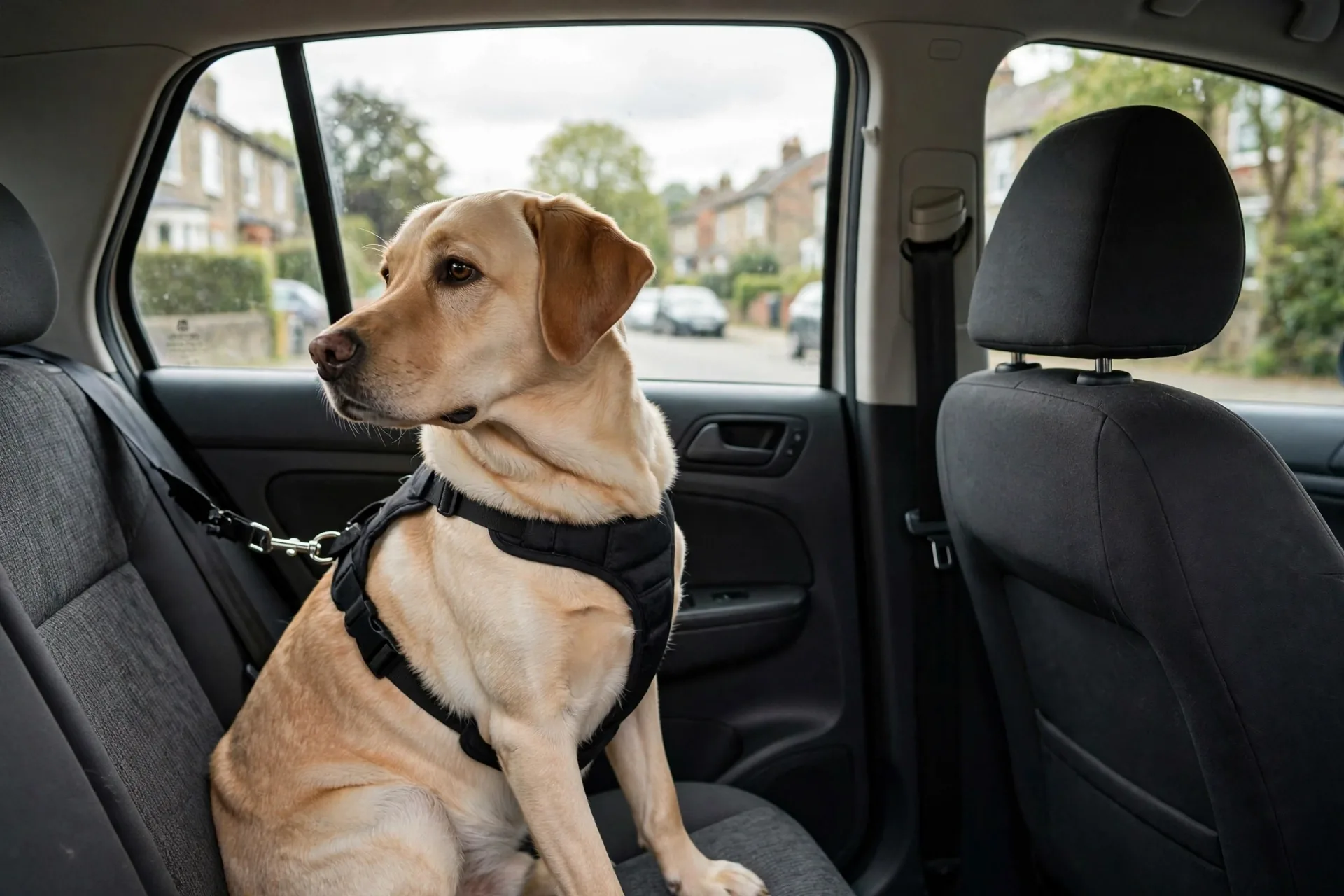
Etiquette is the deposit you pay for the next dog owner. Arrive with the dog toileted, reasonably clean and dry, and on a short lead. Bring your own blanket or towel for the seat, keep the dog off upholstery unless invited, window requests polite and minimal, and never feed the dog in the car without asking. At the destination, check the seat area before you close the door, take every hair-covered blanket with you, and tip a driver who was kind to your dog. Firms remember dog bookings; a trail of muddy complaints is how a town quietly stops having a dog friendly taxi at all.
Drivers who love dogs exist in every fleet, and finding yours is an asset. If a particular driver was excellent, ask the firm how to request them again, save the details, and book through the firm rather than privately, which keeps insurance and licensing clean for everyone. Repeat, declared, tidy bookings are what convert an individual favour into a dependable service you can build holiday plans around, including the vet-run and bail-out journeys that punctuate every travelling dog's year.
When no taxi will take the dog: the backup ladder
Even good planners meet the empty-rank evening, so build the backup ladder before you need it. Rung one is another firm: keep at least two numbers per destination, ideally one ordinary firm with known dog-friendly drivers and one specialist pet service. Rung two is the train or bus you dismissed earlier — dogs travel free on most UK trains within operator conditions, and many bus operators carry dogs at the driver's discretion with similar declaration etiquette, so the same booking craft applies.
Rung three is walking, planned rather than endured. A mile on a lit pavement with a toileted dog is often quicker than forty minutes of failed booking, provided the route is safe, the weather survivable and the dog fit for it. Rung four is your accommodation or destination host, who may have a standing arrangement with a local driver invisible to the internet. Rung five, for rural areas, is the community layer: village Facebook groups and local dog walkers frequently know the one driver who will always come out for a dog, and asking early — at booking stage, not crisis stage — surfaces them.
Car-based alternatives close the ladder. If you drove to the area, a planned split — one person fetches the car while the other waits somewhere warm with the dog — solves many evenings without any taxi at all. For car-free holidays, check whether your destination has a dog-welcoming private hire operator who can be block-booked for the week's key legs; arranging three rides in one calm conversation at the start of a stay beats three separate negotiations under pressure. Our driving with a dog guide covers the rules if that solution involves a borrowed or hired car.
Airport runs deserve a special mention on this ladder, because they combine every difficulty at once: fixed timing, heavy luggage, a dog who may be facing a flight-day routine, and ranks where hailed drivers have the least room to improvise. For an airport leg, pre-book a private hire car with the dog declared in writing, agree a meeting point that keeps the dog out of the busiest terminal doors, and build in a grass stop immediately before the terminal so the dog boards the car toileted and calmer. Arriving home is the mirror image: book the pickup before you fly out, keep the blanket at the top of a case so it is reachable in the arrivals hall, and expect a tired dog to need water and five quiet minutes before loading. Owners who rehearse this leg once, on an ordinary station run, stop dreading it — the airport version is only the same booking with higher stakes and less forgiving timing, which is exactly why it belongs in the plan rather than in the improvisation.
Record what worked. Every successful dog taxi booking should end with a saved contact, a note of the price and any dog charge, and a line about the driver. That tiny database, built trip by trip, is the real product of this guide: within a year of regular travel, most owners stop searching for dog friendly taxis and simply call the people who already know their dog by name.
Practical questions
Before you go
Can a taxi driver refuse my pet dog in the UK?
Yes, for pet dogs. Carriage of pet dogs is at the discretion of the driver or operator, who may set conditions such as size limits, travelling on a blanket, or a pre-agreed charge. Assistance dogs are different: licensed drivers must carry them free under the Equality Act 2010, with refusal an offence unless the driver holds a medical exemption.
How do I book a taxi that will definitely accept my dog?
Pre-book and declare the dog in plain terms: one dog, its size, that it travels calmly on its own blanket, plus the pickup point and time. Ask directly whether the dog is fine and whether any charge applies, then reconfirm on the day for station pickups. A firm that allocates you a suitable car in advance will not surprise you at the kerb.
Should I expect to pay extra for a dog in a taxi?
Many firms charge nothing for a declared, clean dog on a blanket; some apply a small fixed supplement agreed at booking; metered taxis may simply run the meter. Pay what was agreed, query any charge invented at the destination for a declared dog, and expect a legitimate soiling charge if the dog genuinely messes the car.
Are there specialist pet taxi services in the UK?
Yes. Many towns have firms or individual operators who advertise dog-friendly carriage, plus licensed animal transport businesses for longer or unaccompanied journeys. Ask local vets, groomers, dog walkers and accommodation hosts who they use — dog taxi quality is very local, and a personal recommendation usually beats online ratings.
What should I bring for a taxi ride with my dog?
A short lead and harness, a blanket or towel for the seat, poo bags, water for longer waits, and a dog who has had a toilet break before pickup. Keep the dog off seats unless invited, check the seating area before you leave the car, and take the blanket — and any mess — with you.