This guide is independent and contains no paid placement. If affiliate links are added later, they will be clearly marked and will not change our editorial checks.
Wightlink ferries to the Isle of Wight take 40 to 60 minutes, and dogs travel in the car, in the pet lounge or on deck, depending on the ship. Foot passengers can walk on with a dog, cars must be booked, and the island has beaches and walks for every kind of dog. Check the official guidance before you travel, because pet areas differ between ships.
Wightlink in one page
Wightlink runs car ferries from Portsmouth to Fishbourne and from Lymington to Yarmouth, and the two routes serve different ends of the Isle of Wight. The crossings are short, forty minutes from Lymington and about an hour from Portsmouth, and the ships are frequent, with sailings throughout the day. Dogs are part of the daily traffic, and the crew are used to them. A dog on a Wightlink ferry is unremarkable, which is exactly what you want.
The most useful fact for planning is that the crossing is short enough that the dog's arrangements are simple. The dog can stay in the car, travel in the pet lounge, or spend the crossing on deck, depending on the ship and the owner's preference. None of the options requires a cabin or a kennel booking, and none of them asks much of the dog. A short crossing is a kind crossing, and the Solent is sheltered water, so the sea is usually calm.
Foot passengers and cars are treated differently, and the difference shapes the trip. Foot passengers with dogs can usually turn up and travel, subject to space, while cars must be booked, especially in summer and at weekends. If you are on foot, you have flexibility. If you are in a car, you need a booking, and the booking is the anchor for the whole day. Check the official guidance before you travel for the current fares and booking rules, because they change by season.
The Isle of Wight itself is the reason for the trip, and it is one of the most dog-friendly places in Britain. The island has beaches, coastal paths, forests and villages, and the walking is generous. Dogs are welcome on most of the beaches outside the summer restrictions, and the coastal path can be walked in sections over several days. The island is small enough that no drive is long, and the pace is slow enough that a dog can enjoy every day.
Finally, remember that Wightlink is a working ferry service, not a tourist attraction. Islanders use it to get to work, to school and to the shops, and the timetable serves their needs as well as yours. Travel outside the commuter peaks when you can, when the boats are quieter and the dog has more space. Plan with that in mind, and the crossing will feel like part of the holiday rather than an obstacle to it.
Portsmouth to Fishbourne: the eastern route
Portsmouth to Fishbourne is the main Wightlink route, and it lands you on the eastern side of the island, close to Ryde, Sandown and Shanklin. The crossing takes about an hour, and the ships are the larger ones in the fleet, with a pet lounge, a passenger deck and room to move. The route suits a longer stay, because Fishbourne is close to the island's main towns and beaches, and the drive from the port is easy.
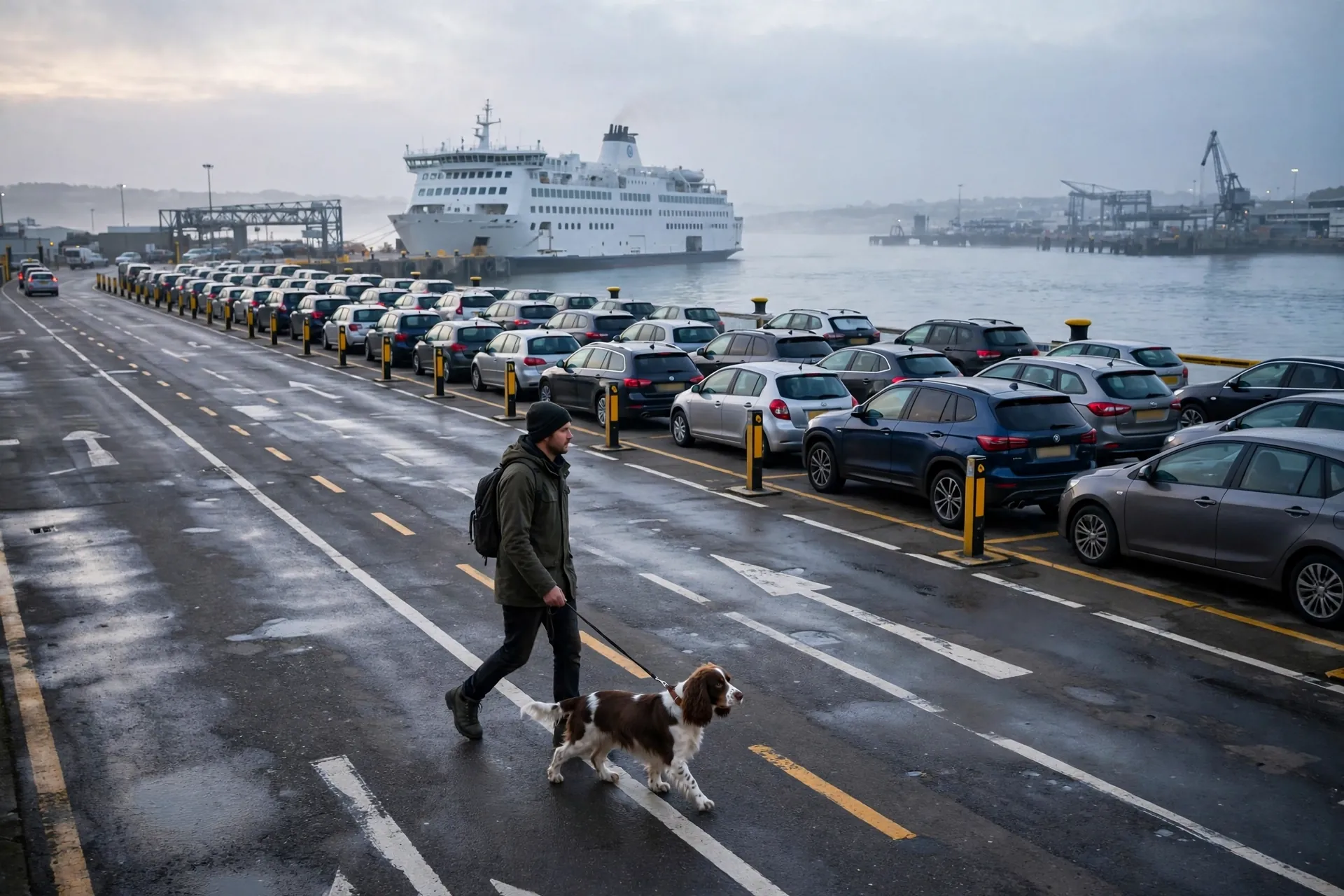
Portsmouth is a large, busy port, and the check-in needs time. Arrive early, follow the marshalling instructions, and keep the dog on a short lead in the vehicle lanes. The area around the terminal has limited green space, so walk the dog before you reach the port, and use the waiting time calmly. Dogs pick up on their owners' stress, and a relaxed check-in sets the tone for the crossing.
On board, the pet lounge is the place to settle. Find it as soon as you board, choose a quiet corner, and let the dog get used to the space. The lounge is warm and dry, with seating and water, and the dog can stay with you for the whole crossing. If the dog prefers fresh air, the open deck is available too, on a lead, and the Solent views are a pleasure on a clear day. Keep the dog on a short lead on deck, because the wind can be strong.
Fishbourne is a small, quiet port, and arrival is calm. The drive out is straightforward, and Ryde is a few minutes away, with a long sandy beach and a promenade that suits dogs. Plan a walk soon after landing, and keep the first day short. The eastern side of the island has the best beaches for dogs, and the coastal path from Ryde to Sandown is a gentle introduction to the island.
The route is popular in summer, and the car ferries book up early, especially at weekends. Book the car as soon as your dates are fixed, and be flexible about the sailing time if the one you want is full. Early morning and late evening sailings are often quieter, and a calm ship is a kinder ship for a nervous dog. Check the official guidance before you travel for the current timetable, because the frequency changes by season.
Lymington to Yarmouth: the western route
Lymington to Yarmouth is the shorter Wightlink route, and it lands you on the western side of the island, close to the Needles, Freshwater Bay and the quieter beaches. The crossing takes about forty minutes, and the ships are smaller, with a more intimate feel. The route suits a short break, a day trip, or a stay on the western side, where the island is wilder and less crowded.
Lymington is a small, pretty town, and the port is calm compared with Portsmouth. The check-in is straightforward, the queues are shorter, and the walk before boarding can be genuinely pleasant, along the river or through the town. Arrive early, walk the dog, and keep the pre-boarding routine slow. A relaxed departure is worth more than an early start, and Lymington makes relaxation easy.
On board, the crossing is short enough that the dog can stay in the car without any trouble, or travel in the passenger areas with you. The choice depends on the dog: a calm dog that sleeps in the car will be happy there, while a dog that needs its owner nearby will be happier in the lounge or on deck. The crossing is forty minutes, and the dog will barely notice it either way. Settle the animal, find a comfortable spot, and let the Solent pass.
Yarmouth is a small harbour town, and arrival is gentle. The drive out is easy, and the western side of the island opens up from there: the Needles, the lighthouse, the cliffs at Freshwater, and the long beach at Compton Bay. The west is the quieter side, and it suits dogs that like open space and long walks without crowds. Plan a walk soon after landing, and keep the first day short.
This route is also the best choice for a day trip from the New Forest, because Lymington is close to the forest and the crossing is short. Drive to Lymington, sail to Yarmouth, walk the west coast, and sail home in the evening, with the dog having had a full day out. Check the official guidance before you travel for the current timetable, because the frequency changes by season and the route is less frequent than Portsmouth.
The pet lounge: a room of your own at sea
Wightlink's pet lounge is the reason many owners choose it over the car deck. The lounge is a room on the passenger deck, with seating, a water bowl, and space for the dog to lie down, and it is the one place on the Solent where the dog can be with you for the whole crossing. The crossing takes about 45 minutes from Portsmouth, or an hour from Lymington, and the lounge turns that time into a shared one. Book it when you book, because the lounge has limited seats, and it fills up on summer weekends.
The lounge is not a kennel. There is no box, no door, no separation: the dog sits beside you, on a lead, on the floor or on a blanket you bring. Other dogs will be there, so the animal needs to be comfortable around strangers, and the owner needs to keep the lead short. A nervous dog will be calmer in the car, where it has its own space, and an honest owner will choose the car. A sociable dog will love the lounge, and the owner will love watching it.
Bring what the dog needs: a blanket, a water bowl, a chew, and a bag for cleaning up. The lounge has water, but the dog's own bowl is familiar, and familiarity is the point. Keep the visit simple: settle in, sit still, and let the dog sleep. The Solent will pass, the island will appear, and the crossing will be over before the dog has noticed it.
Foot or car: how the dog travels across the Solent
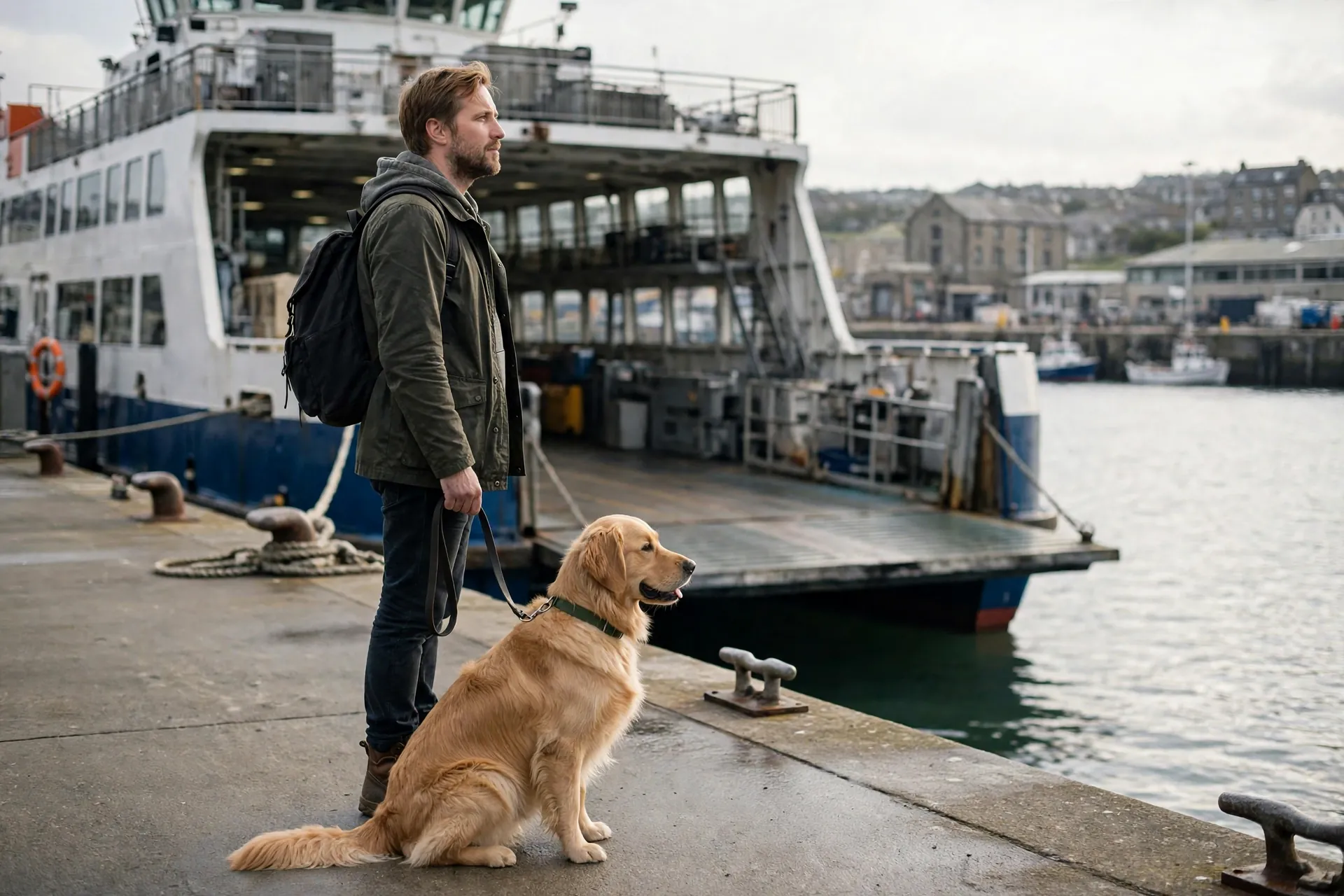
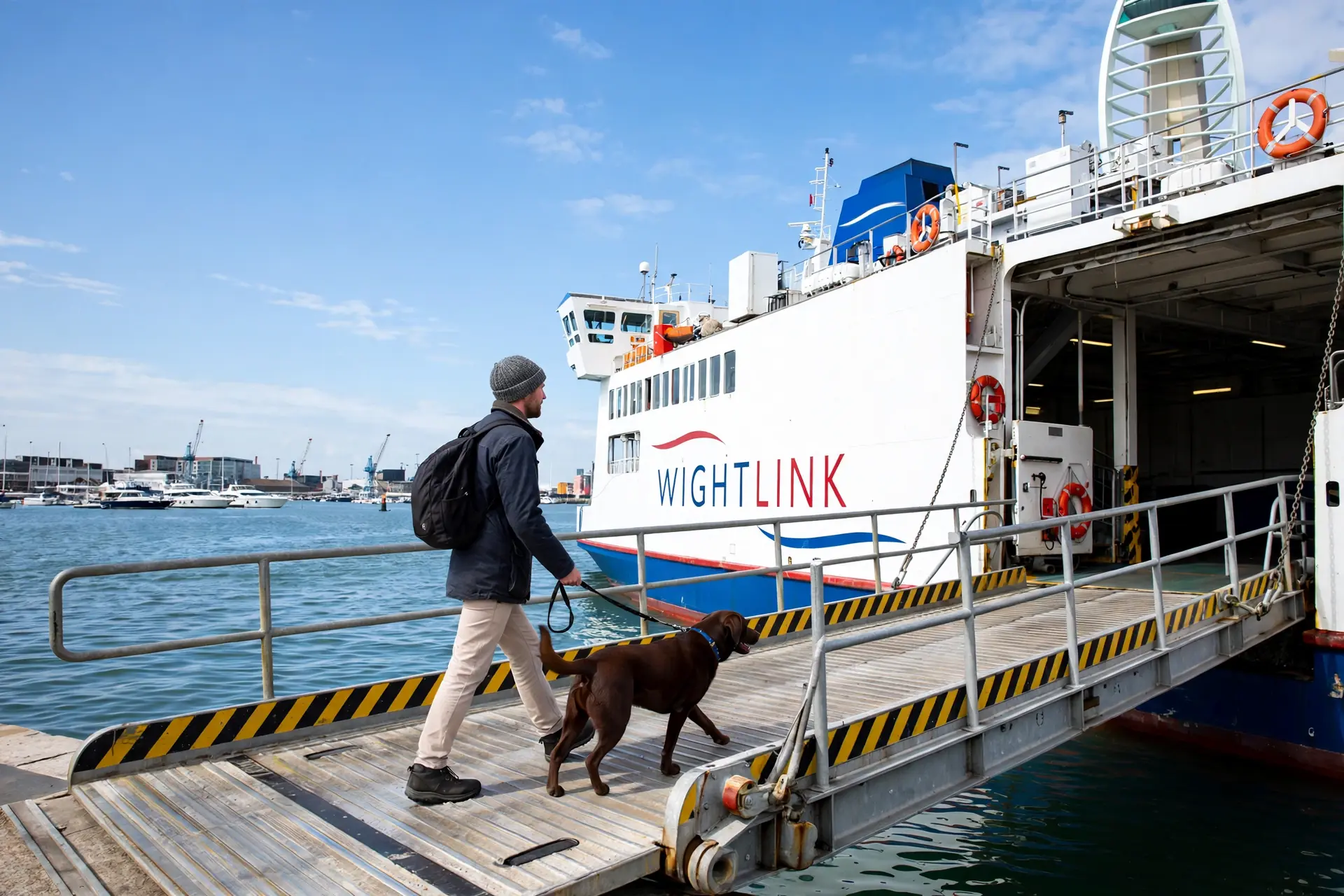
The choice on Wightlink is between foot and car, and the dog's day depends on it. A foot passenger walks on with the dog on a lead, sits in the lounge or on the open deck, and walks off at the other end. A car passenger drives on, leaves the dog in the car, and sits in the lounge or the car. The crossing is short, so the car is fine, but the foot passenger's dog gets the whole crossing with its owner, and that is a better day for the animal.
Foot passengers have the easier arrival. Walk off the ship, and the island is there: Ryde's beach, Yarmouth's harbour, or Fishbourne's lanes. The bus and the train take dogs, and the island is small enough to walk. Car passengers have the easier holiday, because the car carries the luggage, the food, and the dog's bed. The choice is between a light trip and a full one, and the dog will be happy either way.
The car deck is the place to leave a nervous dog. The car is familiar, the smells are known, and the dog can sleep through the crossing. Leave water in a bowl that will not tip, crack a window if the ship's rules allow, and take anything chewable out of reach. The crossing is short, so the dog will not be alone for long, and the owner can visit at any time. The car is the simplest option, and simplicity is its only virtue.
Booking Wightlink: the crossing is the easy part
Booking Wightlink is the easy part of an Isle of Wight holiday, because the crossings run often and the dog is welcome on all of them. Portsmouth to Fishbourne takes about 45 minutes, Lymington to Yarmouth takes about 40, and Portsmouth to Ryde, the fast catamaran, takes about 20. Open the timetable, choose the port that fits your drive, and book the sailing that fits your day. The price changes with the time, not with the dog, and the dog travels for a small charge or free, depending on the ticket.
Add the dog when you book, and say whether it will be in the car or in the lounge. The lounge has limited seats, so book early on summer weekends, and the car needs its registration, so have it ready. The confirmation should name the route, the time, the car, and the dog, and each one is easier to fix now than at the port. Keep the confirmation on your phone and on paper.
The flexible fare is worth a look, because the Isle of Wight is a place where plans change. A fare that can be moved costs more up front and less in regret, and the dog is the most likely reason a trip will change. Travel insurance that covers the dog is worth a look for longer trips, and the policy should cover vet treatment on the island, not just cancellation.
The crossing: 45 minutes across the Solent
The crossing from Portsmouth to Fishbourne takes 45 minutes, and the dog's day on it is short enough to be simple. Board, find the lounge or settle the dog in the car, and then sit still. The Solent will pass, the island will appear, and the crossing will be over before the dog has noticed it. The ship has a cafe and a shop, but the dog's day should be quiet, because the crossing is short enough without excitement.
The open deck is the ship's best feature, and it is the place to go when the weather allows. The wind is strong, the view is wide, and the dog is allowed there on a lead, so enjoy it together. The Isle of Wight appears slowly, green and low, and the dog will smell it before the owner sees it. A short walk on deck, a look at the water, and then back inside for the arrival.
Disembarkation is the easy part. The car deck empties quickly, the drive off takes minutes, and the island is there. Do not let the dog out of the car in the lanes, and do not stop in the port. Fishbourne's lanes are quiet, and a proper walk can begin within minutes of landing. The crossing's whole point is time saved, and the dog's whole point is a walk that is not rushed.
Arriving on the island: the first walk
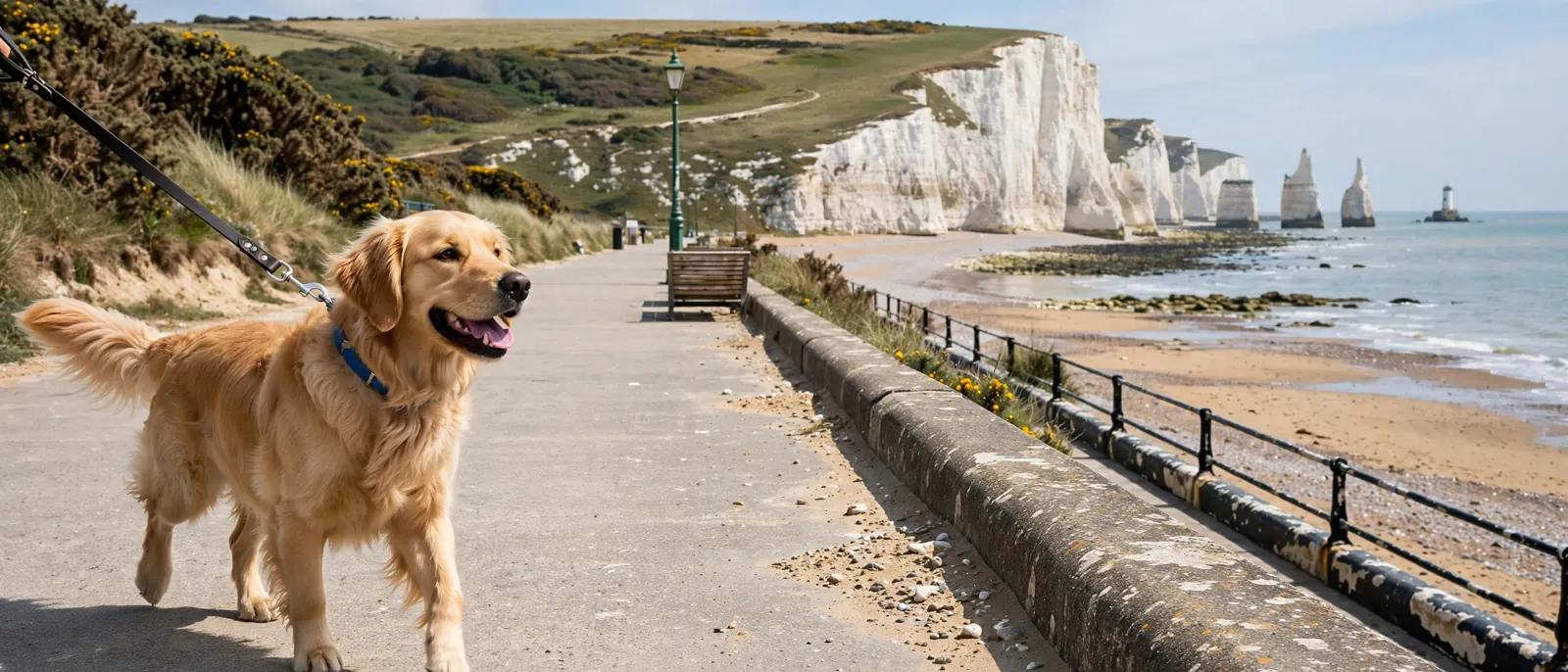
Arriving on the Isle of Wight is the gentlest landing in Britain, because the island is small, green, and full of dogs. Drive off the ship, find a beach or a coastal path, and give the dog twenty minutes to stretch, drink and empty itself. The dog has spent an hour at sea, and the first walk ashore is the reset button for the whole holiday. Ryde's beach is the obvious choice, a long stretch of sand with a pier and a cafe, and dogs are welcome on most of it.
The island opens up from there. The coastal path runs around the whole island, 70 miles of cliffs, beaches and downs, and the dog can walk a different section every day. The downs are high and windy, the beaches are sandy and flat, and the villages have pubs with gardens. The island is famous for its welcome, and the dog will feel it. Keep the first day short, and let the dog discover the island at its own pace.
Staying over is easy, because the Isle of Wight is used to dogs. Hotels, cottages and campsites welcome them, often with a small charge, and the restaurants with terraces welcome them too. Book early in summer, because the dog-friendly rooms go first, and confirm the policy in writing, because the details vary. The island is small, so no drive is long, and the dog can have a different walk every day without ever repeating one.
The island's beaches: sand, dogs and tides
The Isle of Wight's beaches are the reason most dogs come, and the rules are generous. Ryde's beach welcomes dogs all year, and the sand is firm and flat, perfect for running. Compton Bay, on the west coast, has cliffs and fossils, and dogs are welcome. Ventnor's beach is small and sheltered, with a cafe at the top of the steps. The beaches are the highlight, and the dog will love them.
The tides matter, because the beaches change with them. At low tide, the sand stretches out, and the dog can run for miles. At high tide, the sand disappears, and the dog needs a different walk. Check the tide times before you go, and plan the beach walks for low tide. The water is cold, even in summer, and the dog should be dried off after a swim, because the wind on the island is strong.
The cliffs are the other feature, and they need respect. The coastal path runs along the top, with views that stretch for miles, and the dog should be on a lead near the edge. The paths are waymarked and safe, but the cliffs are high, and the wind is strong. Keep the dog close, and the walk will be a good one. The island's beaches and cliffs are the best of Britain, and the dog will remember them.
Day trips from the island: the mainland is an hour away
The Isle of Wight is an island, but the mainland is an hour away, and the day trips are part of the holiday. The ferry back to Portsmouth takes 45 minutes, and the New Forest is a short drive from there, with ponies, pigs and dogs on the paths. The forest is the largest open space in the south of England, and the dog can run off the lead on the heaths. A day in the forest is a good change from the island's beaches.
Portsmouth itself is worth a day, with a historic dockyard, a beach, and a harbour full of ships. The dog can walk the seafront, sit on a terrace, and watch the ferries come and go. The city is compact, so no walk is long, and the dog can have a different walk every day without ever repeating one. The ferry home is the same as the ferry out, and the dog will sleep through it.
A day trip is a good test for the dog, because it shows whether the animal is ready for a longer holiday. If the dog copes with the ferry, the forest and the city, it will cope with anything. If it does not, the island is still there, and the beaches are still waiting. The Isle of Wight is a place that rewards a slow holiday, and the dog will be happier for it.
For the full island picture, read our Isle of Wight with a dog guide, and if you are comparing operators, our dogs at UK ferry terminals guide covers check-in and the walk before boarding.
Practical questions
Before you go
Do dogs need a ticket on Wightlink?
Yes, a small charge, or free depending on the ticket. The dog can travel in the car, in the pet lounge, or on foot with its owner. Book the lounge early on summer weekends, because the seats are limited.
Can my dog travel in the pet lounge on Wightlink?
Yes, where the ship offers one. The lounge is a room on the passenger deck, with seating and water, and the dog sits beside you on a lead. A sociable dog will love it, and a nervous dog will be calmer in the car. Choose the arrangement that fits the dog.
How long is the Wightlink crossing to the Isle of Wight?
Portsmouth to Fishbourne takes about 45 minutes, Lymington to Yarmouth takes about 40, and the fast catamaran from Portsmouth to Ryde takes about 20. The dog can be in the car, the lounge, or on foot, depending on the sailing.
Can I take my dog on foot on Wightlink?
Yes. Foot passengers walk on with the dog on a lead, sit in the lounge or on the open deck, and walk off at the other end. The bus and the train on the island take dogs, and the island is small enough to walk.
Which Wightlink route is best with a dog?
Portsmouth to Fishbourne is the most popular, with the pet lounge and a short crossing. Lymington to Yarmouth is quieter, with a gentler landing. The fast catamaran to Ryde is quickest, and the beach is minutes from the pier. The best route is the one that fits the drive and the dog.
Do dogs need documents to travel to the Isle of Wight?
No. The Isle of Wight is part of England, so no passport, certificate or vet treatment is needed. The dog needs a collar, a lead, and a microchip, as at home. Check the ferry's own rules before you travel, because they change from time to time.