This guide is independent and contains no paid placement. If affiliate links are added later, they will be clearly marked and will not change our editorial checks.
Elgin is one of the easiest towns in Moray to visit with a dog: a compact centre, the grassy grounds around Elgin Cathedral, flat riverside paths along the Lossie, and several cafes and pubs that welcome dogs. Base yourself in town, walk the cathedral and river in the morning, and use Elgin as a launch point for the Moray coast and Speyside.
Why Elgin works so well with a dog
Elgin sits in the heart of Moray in north-east Scotland, roughly midway between Inverness and Aberdeen, and it makes an unusually practical base for a dog-friendly break. The town is compact enough to explore on foot, which matters more than it sounds when you are travelling with a dog: you can park once, walk to the cathedral, stroll down the High Street, follow the River Lossie for a while, and be back at a dog-friendly cafe for lunch without ever needing to load the dog back into the car. That simple rhythm — one parking stop, several short walks, plenty of sniffing time — suits most dogs far better than a day built around driving between distant viewpoints.
The town also has the right mix of history and everyday convenience. Elgin Cathedral, often called the Lantern of the North, gives the town its most striking landmark and a memorable walk, while the surrounding streets provide the practical things dog owners actually need: supermarkets, pet supplies, pharmacies, a choice of cafes, and veterinary practices within easy reach. If the weather turns, you are never far from shelter, a warm drink, or the car. If the sun comes out, the river paths and the open grass around the cathedral give your dog room to stretch without a long drive.
Elgin works as a base as well as a destination in its own right. Lossiemouth and its long sandy beaches are a short drive to the north, the whisky country of Speyside lies to the south, and Forres, the Findhorn valley and the Moray coast are all within comfortable day-trip distance. Staying in Elgin rather than in a single isolated village means you can change your plans at short notice: a wet morning can become a slow town walk and a long cafe stop, while a bright afternoon can stretch into a coastal walk or a woodland loop. For multi-day trips, that flexibility is worth more than any single attraction.
The character of the town helps too. Elgin is a working market town rather than a polished resort, so the pace is relaxed and the streets are generally quiet outside peak shopping hours. Dogs are a familiar sight on the High Street and along the river, and local walkers tend to be straightforward about lead rules and right of way. That does not mean every doorway welcomes dogs — always check before you travel — but it does mean a well-behaved dog on a lead rarely draws a second glance here. Plan the day around your dog's energy and temperament, keep walks short and frequent rather than long and forced, and Elgin will reward you with an easy, unhurried break.
Elgin Cathedral and its grounds
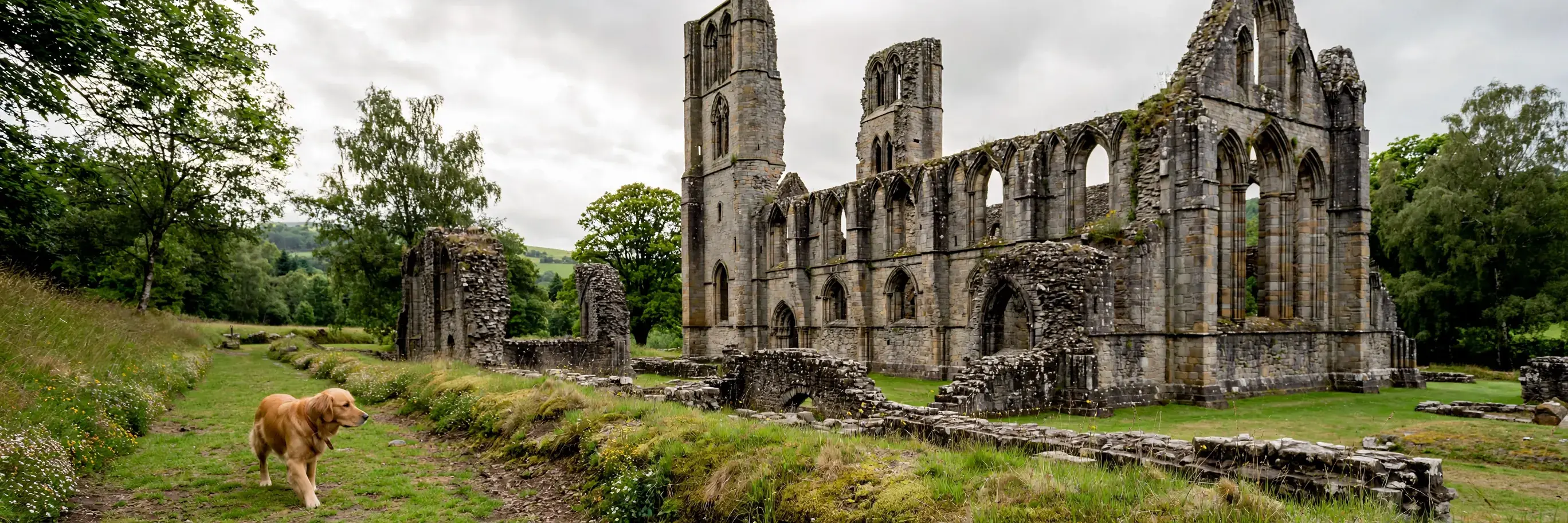
Elgin Cathedral is the town's great landmark and the natural starting point for a visit with a dog. The ruined medieval cathedral, founded in the thirteenth century and long known as the Lantern of the North, stands on a grassy site a short walk from the High Street. Its twin towers, pointed arches and weathered stonework are impressive from every angle, and the open grounds around the ruins give dogs a pleasant, unhurried walk in one of the most atmospheric settings in Moray. The site is managed by Historic Environment Scotland, and opening times, admission charges and access arrangements can change with the season, so check the official guidance before you travel rather than relying on an old timetable.
Dogs are not normally allowed inside the cathedral ruins themselves, but they are welcome on a lead in the surrounding grounds and on the paths around the site, which is where most of the enjoyment lies for dog owners. Walk the perimeter slowly and let your dog take in the smells and sounds of the place: the grassy areas, the mature trees, the stone walls and the views back towards the town. The ground is mostly level grass and surfaced paths, so it suits older dogs and puppies that are still building up their walking distance, although the grass can be soft and muddy after rain, so bring a towel and a drying coat in wet weather.
Give the cathedral visit the time it deserves rather than rushing through it as a photo stop. A slow circuit of the grounds takes twenty to thirty minutes at a dog's pace, and that is about right: long enough to appreciate the scale of the building and the quiet of the site, short enough that a dog does not get bored or restless. Early morning and late afternoon are often the best times, when the light is softer and the site is quieter, and the low sun on the stonework makes for the best photographs. Keep your dog on a lead throughout, stay on the paths and grassy areas, and do not let them climb on walls or ruins, which can be unstable and are protected historic fabric.
Combine the cathedral with the streets around it for a fuller walk. The area to the south and east of the cathedral includes some of Elgin's older streets and quieter residential lanes, where traffic is light and the walking is easy. A loop from the cathedral down towards the town centre and back along a different street gives you a forty-minute walk with plenty of variety: historic stonework, gardens, shopfronts and the everyday life of the town. If you are visiting in summer, carry water for your dog and look for shade under the trees in the cathedral grounds; in winter, the site can be exposed and windy, so a warm layer for you and a coat for a short-haired dog make the visit far more comfortable.
Town centre and River Lossie walks
The High Street is the spine of Elgin, and a walk along it with your dog is a good way to get your bearings. The street is broad and mostly level, with pavements on both sides and a mix of independent shops, cafes, supermarkets and familiar high-street names. Walk it at a relaxed pace in the morning, before the shops get busy, and you will find it easy going: dogs on short leads, plenty of room to pass other walkers, and regular chances to stop for a sniff or a sit. Keep your dog close at crossings and outside busy shop doorways, and remember that some shops welcome dogs inside while others do not — look for a sign, ask at the door, and never assume.
The River Lossie runs through Elgin and offers the town's best everyday dog walk. The riverside paths are flat, mostly surfaced, and close enough to the centre that you can reach them in a few minutes from the High Street, yet they feel a world away from traffic once you are under the trees. A gentle out-and-back along the river is ideal for a morning leg-stretch or an evening wind-down, and the water, the riverside vegetation and the birds give dogs plenty to watch and smell. The path network is not a single long-distance trail through the town, so treat it as a series of short, pleasant stretches rather than a fixed route, and turn back whenever your dog has had enough.
After heavy rain the river can rise quickly and the lower paths can become muddy or slippery, so check conditions before you set off and keep your dog on a lead near the water, especially if they are inclined to jump in. The Lossie is a working river with changing currents, and steep or slippery banks are not a safe place for a dog to scramble. In dry weather, look for the quieter stretches away from the main footbridges, where the path narrows and the riverside feels more peaceful. If your dog is reactive to other dogs, choose the early morning or late evening, when the paths are quieter, and keep to the wider sections where you can step aside and give other walkers room.
For a longer town walk, link the cathedral, the High Street and the river into one loop of around an hour. Start at the cathedral grounds, walk down to the High Street, follow it to a river crossing, then return along the Lossie before cutting back up to your starting point. This gives your dog three different kinds of walking in a single outing — open grass, busy pavements and quiet riverside — which is more tiring and satisfying than the same distance on a single path. Build in a rest stop halfway, ideally at a bench by the river or a dog-friendly cafe, and carry water and a few treats so the walk stays positive from start to finish.
Dog-friendly cafes and pubs
Elgin has a useful scattering of cafes and pubs that welcome dogs, and knowing how to use them well makes a big difference to a day out. The general pattern is the same as in most Scottish towns: dogs are usually welcome in a bar area, a snug, or on an outdoor terrace, while a formal dining room may be dogs-off-limits. Policies vary from place to place and can change with the season, the time of day or a change of management, so check before you travel and always ask staff on arrival rather than assuming the dog can sit anywhere. A quick, friendly question at the door — "Is it all right if our dog sits with us in the bar?" — saves an awkward moment later.
Choose your stop with your dog in mind. A quiet cafe with tiled or wooden floors, a corner table and space to tuck a dog underneath is a far better bet than a crowded room with narrow gaps between tables and food at dog height. Look for places with outdoor seating in good weather, which suits most dogs best, and for pubs with a traditional bar area where a dog lying by the fire or under a table is part of the atmosphere. Arrive at off-peak times if your dog is nervous or excitable — a late morning coffee or a mid-afternoon drink is usually calmer than the lunch rush — and keep the visit short the first time so your dog learns that cafes are a place to settle, not a place to demand attention.
Pack a small cafe kit and use it every time: a familiar mat or blanket for your dog to lie on, a collapsible water bowl, a chew or a stuffed Kong for longer stops, and a few small treats for rewarding calm settling. Keep the lead short and attached to you or tucked under your foot, not tied to a chair leg where it can be tripped over, and settle your dog before you order so you are not juggling a menu, a lead and a restless dog at the same time. If your dog barks, paces or begs, take a short walk outside and try again; if they cannot settle, finish your drink and move on rather than letting the visit become stressful for the dog, the staff and the other customers.
Remember the small courtesies that keep dog-friendly places dog-friendly. Wipe up any water spills, pick up any dropped food, keep your dog off chairs and tables, and do not let them approach other tables uninvited — not everyone wants a wet nose in their lunch. Tip well when staff have been welcoming, and leave a kind word if the visit went well, because pubs and cafes that welcome dogs do so by choice and can change their policy if a few visits go badly. If you are planning a longer stay, ask staff for their recommendations: local people often know which other cafes, pubs and farm shops in Moray welcome dogs, and which ones are best avoided at busy times.
Where to stay with a dog
Elgin offers a practical range of dog-friendly places to stay, from hotels and guesthouses in the town centre to self-catering cottages and holiday parks in the surrounding countryside. Staying in town puts you within walking distance of the cathedral, the river and the cafes, which is ideal if you want to leave the car parked for the day. Staying just outside town, towards Lossiemouth or into Speyside, usually buys you more space, a garden, and quieter walks from the door, at the cost of a short drive into Elgin for shops and meals. Decide which matters more to your dog — a garden to toilet in at night, or a walk straight from the front door — and choose accordingly.
When you book, treat "dog-friendly" as the start of the conversation, not the whole answer. Ask how many dogs are allowed and whether there is a charge per dog per night or per stay, which rooms or units accept dogs, whether dogs can be left alone in the room, and where the nearest practical toilet walk is after dark. A ground-floor room with direct access to a garden or a quiet street is worth far more than a pretty first-floor room up a flight of stairs with a nervous dog. If you are comparing self-catering options, our guide to dog-friendly holiday parks in the UK explains pet fees, boundaries, unit locations and the questions that matter most before you pay.
Check the practical details that only become obvious on arrival. Is the garden genuinely enclosed, and how high is the fence? Is there a tap or a hose for washing muddy paws? Is the flooring easy to clean if your dog comes back wet from the river? Is there a drying area, a boot room or a porch where wet leads and coats can hang? These small things shape the stay more than the thread count of the bedding. For older dogs or dogs that struggle with steps, ask about the exact access to the specific room or unit — the number of steps, the doorway width and whether you can park beside the door — rather than accepting a general assurance that the property is accessible.
Pack for the accommodation as carefully as you pack for the walk. Bring your dog's own bed or blanket so the room smells familiar, their usual food and a measuring scoop, a spare lead, towels and a drying coat, and a small bag for muddy paws by the door. Keep the first evening quiet: a short walk, dinner at the usual time, and an early night will do more for a good stay than a late arrival and a tour of the town. If your dog is allowed on the bed or the sofa at home, clarify the house rule before they jump up; if they are not, bring a bed they love so the rule is easy to follow. And always leave the room as you found it — a quick vacuum of dog hair and a check for chewed items costs five minutes and keeps the next dog owner welcome too.
Parking and getting there
Elgin is easy to reach by car from Inverness, Aberdeen and the south, and the town has several car parks within a short walk of the cathedral, the High Street and the river. Charges, time limits and payment methods change from time to time, so check the official guidance before you travel and read the signs in the car park itself rather than relying on a remembered tariff. Choose a car park with a direct, pavemented route to your first walk, so you are not crossing busy roads or a large open car park with an excited dog on a lead. If you can, park near the edge of the car park, away from the main pedestrian flow, which gives you space to load and unload calmly.
Arriving by train is also straightforward. Elgin station sits on the Aberdeen to Inverness line, with regular services in both directions, and the walk from the station into the town centre is short and level. Dogs travel free on most UK trains when kept on a lead and under control, but station layouts, waiting rooms and platform access vary, so read our guide to dog-friendly train stations in the UK before you travel, especially if you are changing trains or travelling with luggage and a large dog. Arrive early, keep your dog close on platforms, and use the quieter end of the platform where there is room to wait without blocking other passengers.
Driving to Elgin in winter deserves a little extra planning. Moray can be cold and the roads around the town, especially the smaller rural roads towards Speyside and the coast, can be icy or foggy in the early morning. Allow extra time, keep the fuel tank well filled, and carry a blanket, water and a torch in the car for your dog as well as for yourself. In summer, never leave a dog in a parked car, even for a few minutes: a car in sunshine heats up far faster than most people expect, and a shaded car park in Elgin is no exception. If you need to pop into a shop that does not allow dogs, take it in turns or leave the dog with a companion in the shade with water.
Once you are in town, the best transport is your own feet. Elgin's centre is compact and the pavements are generally good, but some older streets are narrow and some junctions are busy, so keep your dog on a short lead and cross at marked crossings where you can. If you are driving out to the coast or into Speyside, plan your parking at the other end too: beach car parks can be busy on sunny weekends, and some rural car parks are small and fill early. A good habit is to arrive at popular spots before late morning or after mid-afternoon, when the car parks are quieter and the walking is more relaxed for everyone.
Moray day trips from Elgin
Lossiemouth is the easiest day trip from Elgin and the one most dogs will enjoy the most. The town sits on the Moray Firth coast a short drive north of Elgin, with a long sandy beach, a harbour, and open views across the water. The East Beach is a wide stretch of sand backed by dunes, ideal for a long, free run for dogs that enjoy the beach, while the West Beach near the town is shorter and more sheltered. Check seasonal dog restrictions before you travel, because some beaches limit dogs during the summer months, and always keep your dog under control around other beach users, children and nesting birds in the dunes. Bring fresh water — dogs should not drink seawater — and a towel for the sandy, salty journey home.
Speyside, to the south of Elgin, offers a completely different kind of day out: wooded river valleys, quiet country lanes, and the gentle River Spey itself. The Speyside Way, a long-distance walking route that follows the river, has sections that are ideal for dogs, with surfaced paths, riverside meadows and woodland shade. Choose a short, circular section rather than attempting a long linear walk, and carry water and a lead at all times, because the path is shared with walkers and cyclists and passes through farmland where livestock may be present. The distillery country around Dufftown, Aberlour and Craigellachie is beautiful to drive through, but most distillery tours do not allow dogs inside, so plan your stops around outdoor tasting rooms, gardens and riverside walks instead.
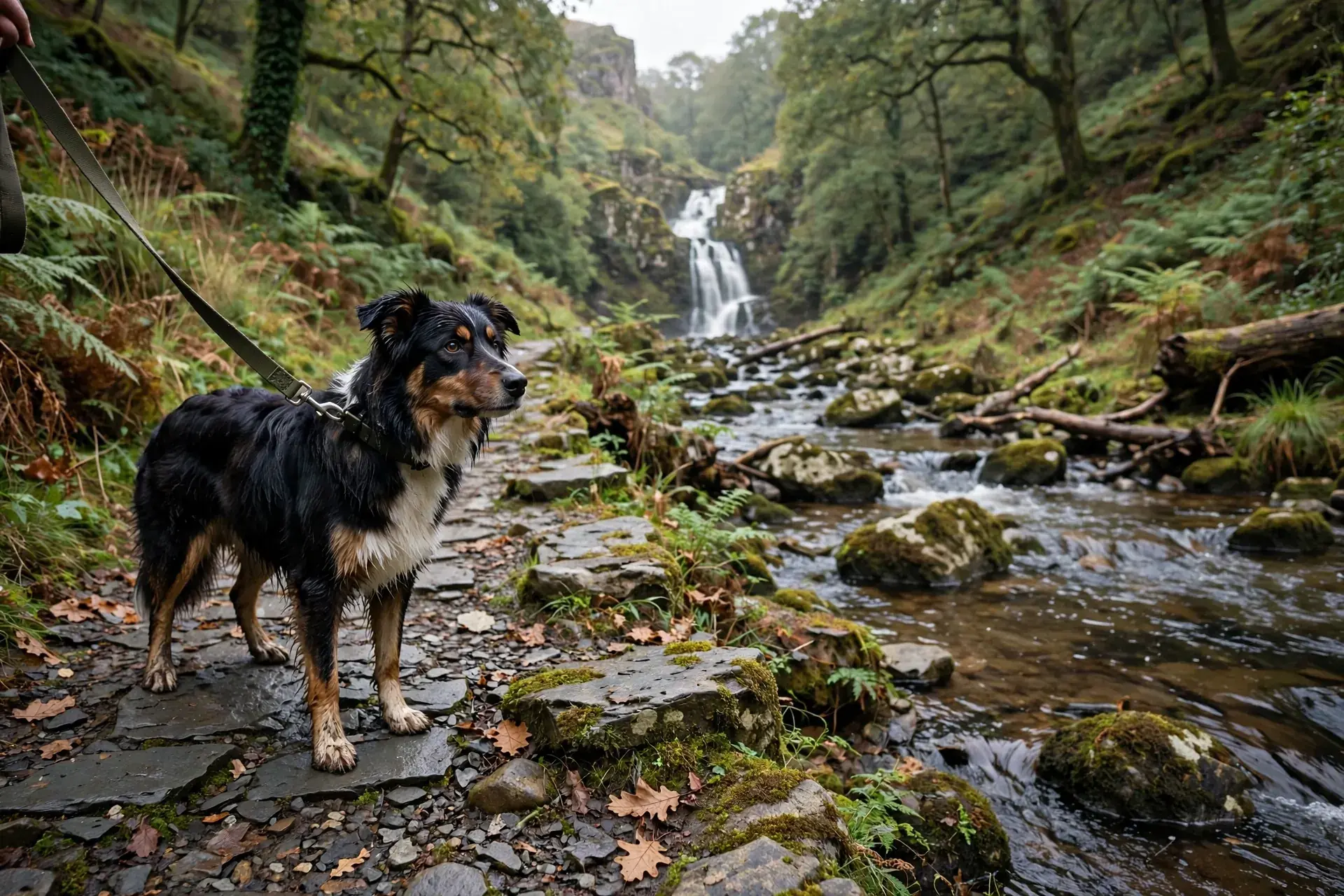
Forres, a short drive west of Elgin, is a smaller, quieter town with its own charm and a good base for walks along the River Findhorn. The Findhorn valley is one of the most beautiful river landscapes in Scotland, with wooded gorges, clear water and paths that suit confident walkers and their dogs. Take care here: the gorge paths can be steep, slippery and exposed in places, and the river can be fast and deep after rain, so keep your dog on a lead near drops and fast water. If you enjoy waterfalls, our guide to dogs at waterfalls in the UK covers slippery rocks, safe viewing distances and lead rules that apply just as well on the Findhorn as anywhere else.
Other day trips worth considering include the fishing villages along the Moray coast — Portsoy, Cullen and Findochty among them — where a harbour walk, a fish-and-chip lunch and a paddle on the beach make a relaxed outing, and the inland forests and moorland around the Cabrach and the upper Spey, where quiet forestry tracks offer long, traffic-free walks. Whichever direction you choose, keep the day simple: one main walk, one cafe or pub stop, and plenty of time to drive home without rushing. Dogs enjoy a day out far more when it has a clear rhythm and a rest built in than when it is packed with three destinations and a tight timetable.
Practical rules and dog etiquette
Elgin has no special dog rules that will surprise an experienced UK dog owner, but the usual responsibilities apply and are worth stating clearly. Keep your dog under control at all times, on a lead in built-up areas, around livestock, near roads, and on busy paths. Pick up after your dog everywhere, including on riverside paths, in the cathedral grounds and on beaches, and use the bins provided or take the bag home with you. In Scotland, the right of responsible access under the Land Reform (Scotland) Act 2003 allows access to most open land, but it comes with responsibilities: keep dogs under close control, especially around livestock, wildlife and other people, and follow any local signs or seasonal restrictions.
Livestock deserves particular care around Moray. The fields and farmland around Elgin are working land, and sheep, cattle and horses are common on the edges of town and on the walks out towards the coast and Speyside. A dog that chases livestock can cause serious harm and can be shot by a farmer in extreme circumstances under UK law, so never let your dog off the lead near livestock, and keep them close and calm when passing through fields. If you are walking on a path that crosses a field with animals in it, keep to the path, keep your dog on a short lead, and move through steadily without stopping to let them stare or bark.
Think about other people as well as other dogs. Not everyone loves dogs, and some people — including children, older walkers and people with allergies or a fear of dogs — would rather not be approached. Keep your dog close when passing others on narrow paths, step aside where you can, and recall your dog promptly if they move towards someone uninvited. The same applies to other dogs: do not let your dog rush up to an on-lead dog, and respect a yellow ribbon, a "do not approach" sign or an owner who is clearly working on training. A short, friendly exchange between owners is part of the pleasure of walking in Moray, but it should always be the owners' choice, not the dogs'.
Finally, know where to find help if you need it. Save the number and address of a local vet before you travel, and note the location of the nearest out-of-hours practice, because rural practices can be some distance away and may close early. Carry a basic first-aid kit for your dog — a spare lead, a muzzle for emergencies, a bandage, tweezers for ticks, and your vet's phone number — and know the signs of common problems such as heatstroke, a cut paw or a swallowed foreign object. Elgin's shops sell most of what you might forget, but a little preparation before you leave home means a small problem stays small.
Wet weather and winter visits
Moray gets its share of rain, and a wet day in Elgin can still be a good day with a dog if you plan for it. The town itself is the best wet-weather option: the cathedral grounds have surfaced paths, the High Street has covered shopfronts and cafes to duck into, and the river paths are usable in light rain as long as you avoid the lowest, muddiest stretches. Choose a shorter walk and a longer cafe stop, and treat the rain as a reason to slow down rather than a reason to stay indoors. A waterproof coat for you, a drying coat for your dog, and a towel in the car will cover most wet days.
Winter in Elgin brings shorter days, colder mornings and the possibility of frost, ice and snow, but it also brings quieter streets, crisp light on the cathedral stonework, and a cosy pub atmosphere that summer visitors miss. Walk in the middle of the day when the light and the temperature are at their best, keep walks shorter for older dogs and puppies, and watch for ice on pavements and on the river path, where a slip can injure a dog as easily as a person. Salt and grit on pavements can irritate paws, so wipe your dog's feet after a town walk and check between the toes for small stones or cracked pads. A dog that is comfortable in cold weather will still need a warm, dry place to rest afterwards — a bed near a radiator, not a cold floor by the door.
After a wet or muddy walk, the routine matters more than the walk itself. Towel your dog down before they get into the car, use a boot liner or an old blanket to protect the seats, and dry their ears, paws and belly properly once you are back at your accommodation. Check for ticks after walks in long grass and woodland, especially in spring and autumn, and remove any you find promptly with a tick remover. If your dog has been swimming in the river or the sea, rinse them with fresh water to remove salt and silt, and watch for signs of stomach upset after drinking river water. These small habits take a few minutes and prevent the skin irritations and sore paws that can spoil the rest of a trip.
Fireworks and festive noise are worth planning for if you visit in late autumn. Bonfire Night and the Christmas period can be noisy in Elgin, and a dog that is sensitive to bangs and flashes will need a quiet room, a familiar bed, and a calm routine in the evening. Keep walks earlier in the day during firework season, close curtains and windows in the evening, and consider a calming chew or a long-lasting enrichment toy to help your dog settle. If your dog is very anxious about fireworks, talk to your vet before you travel about the options available — do not wait until the first bang to discover that your dog cannot cope.
A relaxed one-day plan
A good day in Elgin with a dog does not need to be complicated. Start with a morning walk around the cathedral grounds, arriving early when the site is quiet and the light is good. Give your dog twenty to thirty minutes to explore the grass and paths, then walk down to the High Street for a coffee at a dog-friendly cafe. Sit outside if the weather allows, or settle your dog under a table inside, and use the stop to plan the rest of the day. A slow start like this sets the tone: the dog is exercised, you are caffeinated, and nobody is in a rush.
Mid-morning, follow the River Lossie for a gentle out-and-back walk, choosing the quieter stretches and turning back when your dog has had enough. This is the walk to let your dog sniff and dawdle — the river, the trees and the birds are the entertainment, not the distance covered. After the river, head back into town for lunch at a dog-friendly pub, keeping the visit short and calm. If the sun is out, a terrace table is ideal; if it is raining, a quiet corner in the bar with your dog settled on a mat is just as good. Use the lunch stop to rest properly rather than rushing on to the next attraction.
In the afternoon, choose one thing and do it well. On a bright day, drive to Lossiemouth for a beach walk and a paddle; on a grey day, take a slow drive into Speyside and a short riverside walk; on a wet day, stay in Elgin and explore the town's quieter streets and shops at a leisurely pace. Whichever you choose, leave plenty of time to get back, walk your dog once more before dinner, and settle in for a quiet evening. Dogs, like people, enjoy a day out far more when it ends with a familiar routine and a comfortable bed than when it ends with a late, rushed drive home.
If you are staying for a second day, use it to explore in the opposite direction: if day one was the coast, make day two the Findhorn valley or the Moray coast villages; if day one was town-based, make day two a longer woodland walk. Two days in Elgin give you enough time to see the cathedral, the river and the coast without hurrying, and enough flexibility to change your plans if the weather turns. Pack the car the night before, lay out leads, coats and towels, and start the second day as calmly as the first. That is the whole secret of a good dog-friendly break in Elgin: short walks, frequent rests, and a town that makes it easy to do both.
Practical questions
Before you go
Can dogs go inside Elgin Cathedral?
No, dogs are not normally allowed inside the cathedral ruins themselves, but they are welcome on a lead in the surrounding grounds and on the paths around the site. The outside walk is the main attraction for most visitors with dogs, and the stonework, towers and grassy areas are best enjoyed from the paths and open ground.
Where is the best dog walk in Elgin?
The River Lossie paths are the best everyday choice, with flat, easy walking close to the town centre. For a longer outing, combine the cathedral grounds with the river path and the quieter streets of the old town. In wet weather, stick to surfaced paths and keep your dog on a lead near the river after heavy rain.
Are dogs welcome in Elgin cafes and pubs?
Several cafes and pubs in Elgin welcome well-behaved dogs, usually in a bar area, a snug or on an outdoor terrace. Policies can change, so check before you travel and ask staff on arrival. Keep your dog on a lead, settle them under or beside your table, and bring a mat and water bowl.
Where can I park in Elgin with a dog?
Elgin has several town-centre car parks within a short walk of the cathedral and the High Street. Check the official guidance before you travel for current charges and time limits, and choose a car park with a direct, pavemented route to the river or cathedral so you are not crossing busy roads with your dog.
Is Elgin a good base for exploring Moray with a dog?
Yes. Elgin is a practical base for Moray: Lossiemouth and its beaches, the Speyside whisky country, Forres and the Findhorn valley are all within easy driving distance. Staying in town gives you shops, vets and cafes, while the surrounding countryside offers longer walks and quieter beaches.
Do dogs need to be on a lead in Elgin?
Keep your dog on a lead in the town centre, around the cathedral grounds, near roads, on busy riverside paths and wherever livestock or other dogs are close by. Use a longer lead or off-lead time only in open spaces where it is clearly allowed and safe, and always recall your dog promptly around other walkers, cyclists and children.