This guide is independent and contains no paid placement. If affiliate links are added later, they will be clearly marked and will not change our editorial checks.
Make the castle decision before you arrive: treat the castle grounds as the shared dog walk, check the official guidance before you travel for any interior dog rules and opening times, and keep a split-visit plan ready if part of the castle is not open to dogs. Then enjoy the market place on a lead, the mere at a wildlife-aware pace, and lunch somewhere that states its dog policy clearly.
Start with the castle decision
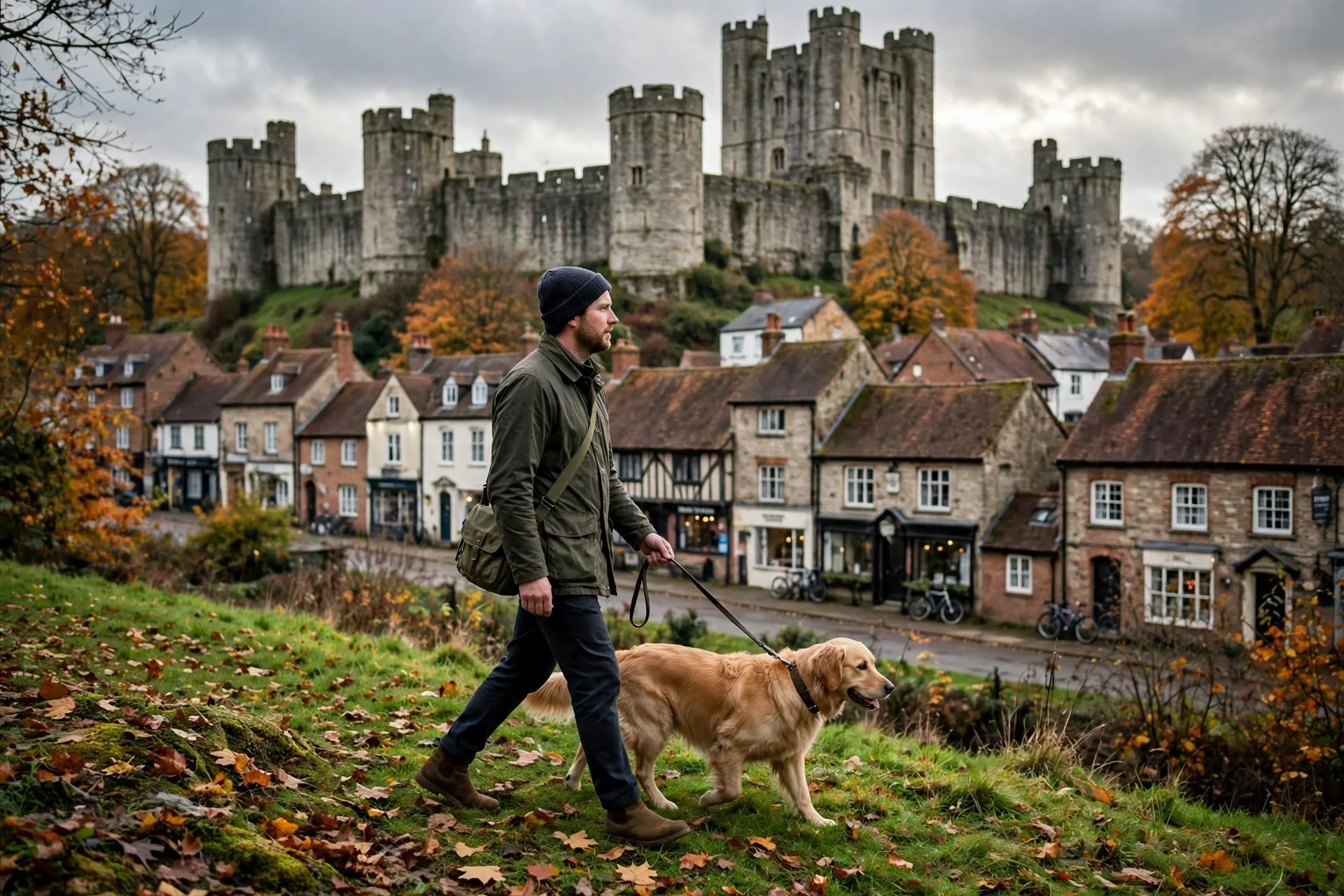
Framlingham is a castle town in the most literal sense: the great stone curtain walls rise above the town, and a visit naturally starts by looking up at them. For a dog owner, the first decision is not where to park or where to eat, but what the dog will do while the castle itself is explored. That decision shapes the whole day, because castle interiors vary from site to site and from season to season, and a plan made on an assumption is the plan most likely to unravel at the entrance.
Start by separating the visit into three parts in your head: the grounds outside, any interior rooms or exhibitions, and the wall walk or elevated viewpoints if they are offered. The grounds are usually where a dog can share the experience most easily, with grass, open sky and room to pause. Interiors, by contrast, are where rules tend to be stricter, narrower and more sensitive to other visitors, to historic fabric and to assistance-dog arrangements. The wall walk, where one exists, can involve steep steps, narrow passages and exposed heights that suit some dogs and people poorly even when dogs are permitted in principle. Do not assume that permission in one area means permission in all three.
For anything unverified, including exact castle interior dog rules and opening times, check the official guidance before you travel. Look for the current visitor information for Framlingham Castle on the day you plan to go, not for a general rule remembered from another castle. Heritage sites update their arrangements for conservation work, events, school holidays and seasonal staffing, and a rule that applied last summer may not describe this visit. Save or screenshot the relevant page if you will have weak mobile signal in the town, and note the last time you checked it.
Then build a split-visit plan that works even if the interior answer is no. If you are travelling as a pair or a group, decide in advance who will stay with the dog and where that wait will be comfortable: a shaded bench, a quiet stretch of grass, or a nearby cafe with outdoor seating. If you are travelling alone with the dog, decide whether the grounds alone will satisfy you, or whether you would rather save the interior for a return visit without the dog. Either answer is reasonable. What spoils a day is arriving with no fallback and having to improvise in a busy entrance area with a dog that is already overexcited.
Timing matters for this decision too. An early visit often means cooler air, fewer crowds and a calmer dog, which helps if the dog must wait outside for a short period. A midday visit in summer can mean heat on stone and grass, limited shade and a busier entrance, which makes a split visit harder rather than easier. If the forecast is hot, prioritise shade, water and a shorter castle stop, and move the longer walk to the cooler part of the day. If rain is expected, a muddy wait outside is less pleasant for everyone, so a waterproof coat for the dog, a towel in the car and a cafe fallback become part of the castle plan, not extras.
Finally, think about the dog in front of you rather than the ideal castle visitor. A dog that settles quietly beside a bench can wait happily while one person steps inside briefly. A dog that barks at strangers, pulls toward other dogs or panics on narrow steps will not enjoy a crowded historic interior, and the people around you will not enjoy it either. Choosing the grounds, the mere and the market place instead is not missing out; it is choosing the version of Framlingham that your dog can actually enjoy, and that choice usually produces a better day for everyone.
Castle and grounds rules
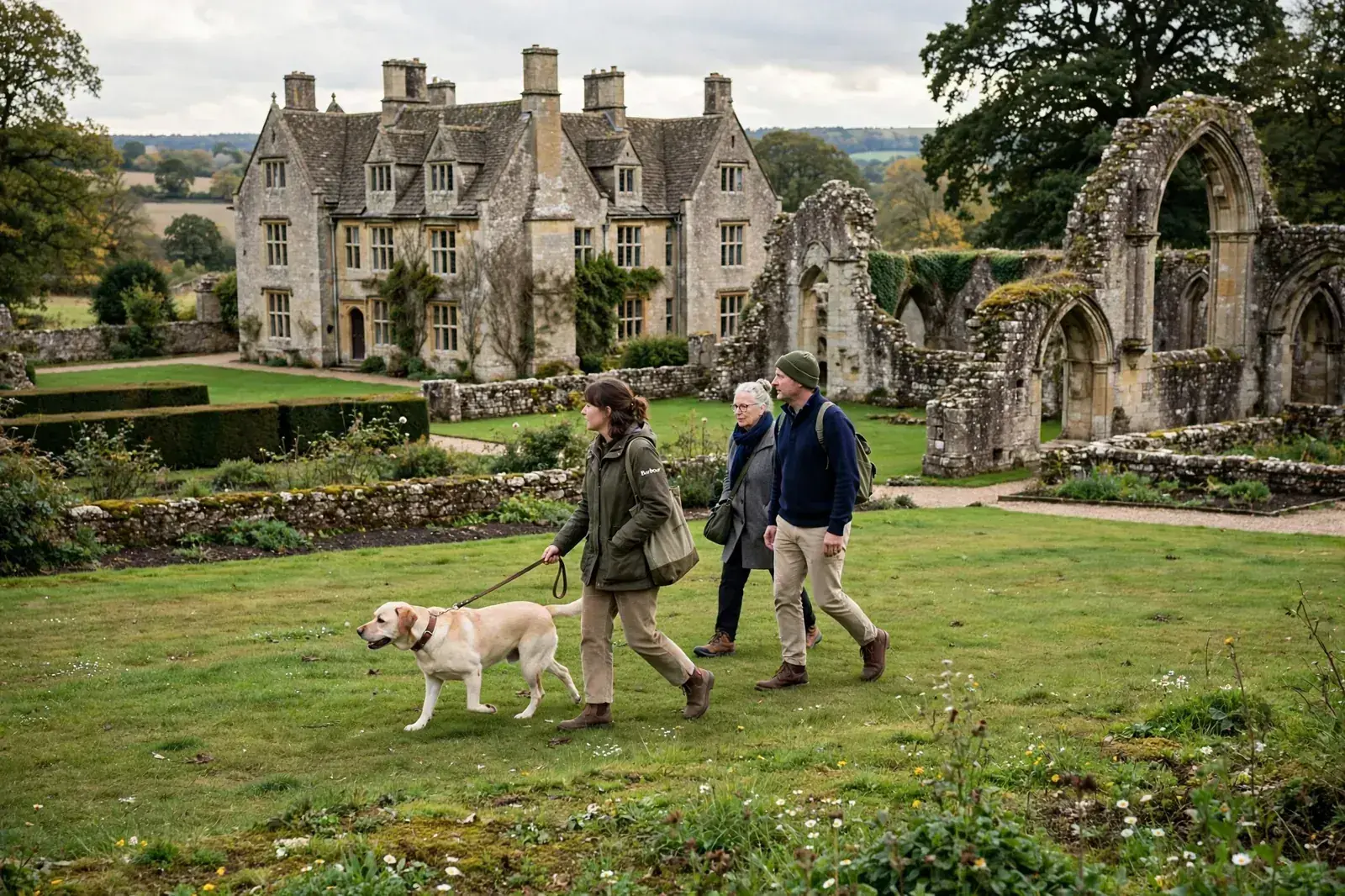
The castle grounds give Framlingham its best dog walk in miniature: open grass, long views of the curtain walls, space to move at a dog's pace and a sense of scale that no town-centre pavement can offer. Treat this as the heart of the visit. Walk slowly around the outside, let the dog sniff, pause for photographs away from the main entrance flow, and use the grounds as the place where the dog burns off the excitement of arrival before you ask for calm behaviour in the town.
Keep the dog on a lead in the grounds unless a clearly signed area says otherwise, and keep that lead short near entrances, gates and other visitors. Castle grounds attract families, school groups, photographers and other dogs, often in the same narrow approach at the same time. A short lead prevents tangles, protects children who may run toward a dog without warning, and keeps your dog from darting toward the base of a wall or a ditch where footing may be uneven. A long line has its place on an open countryside path, but it is a poor tool in a busy historic entrance.
Respect the fabric of the site as well as its visitors. Do not let the dog climb on walls, dig near banks or ditches, drink from ornamental water or chase birds that nest and feed around historic grounds. Stonework can be sharp, uneven and slippery after rain, and a dog scrambling over a low wall can injure a paw or startle someone on the other side. If your dog is a keen digger or a determined chaser, a harness with a secure clip and a lead you can shorten quickly will serve you better than a retractable lead that offers little control at the moment you need it most.
Waste and water are practical, not trivial, in a historic setting. Carry more waste bags than you think you need, use the bins provided, and never leave a bag on a wall, a bench or a grass verge for collection later. Carry water for the dog even on a mild day, because a walk around a large castle site takes longer than it looks, and there may not be a convenient tap at the exact moment a thirsty dog needs one. A collapsible bowl weighs almost nothing and avoids the awkward business of offering water from a bottle cap.
Watch for seasonal and event changes in the grounds. A summer event can bring marquees, extra footfall, loudspeakers and food stalls that change a calm walk into a stimulating one. Conservation work can close a path or fence off an area without much warning. A wet week can leave grass slippery and low areas muddy, which matters for older dogs, small dogs and dogs recovering from injury. None of this should put you off, but all of it is easier to handle when you have checked the official guidance before you travel and have a second, quieter walk in mind.
For a broader sense of how heritage sites handle dogs, including the difference between grounds, interiors and special events, our guide to English Heritage sites with dogs is a useful companion read. It explains the kind of questions worth asking at any historic site, so you arrive at Framlingham with a clearer sense of what to confirm on the day. Remember, though, that a general heritage guide never replaces the current guidance for this castle on this date.
The market-place walk
From the castle, Framlingham settles quickly into a compact market town: a market place at its centre, independent shops, cafes and pubs around it, and streets that invite a slow wander rather than a route march. This is the part of the day where the dog learns the town at pavement pace. Keep the walk short, unhurried and focused on sniffing, greeting and settling, rather than covering every street in one determined loop.
A sensible town loop begins at the castle end of town and works toward the market place, then returns by a parallel street so the dog sees something new without doubling back through the same busy stretch. Pavements in an old market town can be narrow, uneven and interrupted by shop displays, street furniture and parked cars, so walk on the side away from traffic where you can, keep the dog on the inside away from the road, and pause at corners rather than stepping into the road to pass another dog. If your dog reacts to other dogs, cross the street early, use a shop doorway as a brief waiting spot, or turn down a quieter side street instead of forcing a close pass.
The market place itself is a social space, and social spaces reward a settled dog. Find a bench or a low wall away from the main flow, let the dog watch the town for a few minutes, and reward calm behaviour. This pause is more valuable than another ten minutes of walking, because it teaches the dog that a busy town centre is a place to rest, not a place to pull toward every new smell. If the dog cannot settle, do not persist in the busiest spot; move to a quieter street, shorten the town visit and head for the mere, where space is easier to find.
Shops in a market town vary widely in their dog policies, and a friendly window display does not guarantee a welcome inside. Ask before entering, keep the dog close to you, and be ready to wait outside if the shop is small, crowded or full of fragile stock at nose height. Many independent shops welcome well-behaved dogs, but they also have the right to change that policy on a busy day. A polite question, a short lead and a dog that does not pull toward shelves will open more doors than any assumption about a town being dog-friendly in general.
Look up as you walk, because Framlingham rewards that habit. Timber-framed buildings, the church tower, the castle walls appearing between rooftops and the changing rooflines of a Suffolk market town give the walk its character. For the dog, the rewards are lower down: grass verges, interesting smells, a drink stop and a quiet corner. A good market-town walk balances both, with the human looking at architecture and the dog allowed time to investigate the ground. Rushing either half makes the walk feel thin.
Traffic and parking deserve a practical note. Market towns can be busy at school-run times, on market days and on Saturday mornings, and delivery vehicles use the same narrow streets as pedestrians. Plan your town walk outside the busiest hour if your dog is nervous of traffic or large vehicles, and agree in advance where the car will be so you are not searching for it with a tired dog at the end of the day. Check parking guidance before you travel, including any time limits, because a relaxed lunch is spoiled by a hurried return to move the car.
The mere and countryside loop
Framlingham Mere, just beyond the castle, offers a different kind of walk from the town: flat, open, watery and rich in birds. It is a nature reserve landscape of reedbed, open water and grassy paths, and it suits a calm, observant dog walk rather than a high-energy run. Think of it as the place where the dog can breathe out after the castle and the market place, provided you walk it at nature-reserve pace.
Wildlife awareness is the central skill on the mere. Birds nest, feed and rest here through the year, and a dog running through reedbed edges or splashing at the water margin can disturb far more than it appears to disturb from the path. Keep the dog under close control, stay on marked paths, and use a lead wherever the reserve asks for one or wherever birds are close to the path. If you see ground-nesting birds, ducklings or a heron standing still at the water edge, give them a wide berth and move on quietly. A dog that has learned to watch wildlife calmly from a path is a pleasure to walk here; a dog that lunges at every bird is not yet ready for an off-lead mere walk.
Ground conditions change the walk more than distance does. After rain, paths around a mere can be muddy, slippery and puddled, and grassy sections can hide uneven ground. In dry summer weather, the same paths can be dusty and exposed, with little shade for a dark-coated dog. Choose footwear and a lead length to match the day, carry a towel for muddy paws, and be ready to shorten the loop rather than push on through the worst section. A short, enjoyable loop that ends with a clean, settled dog beats a long loop that ends with a stressed dog and a muddy car.
Build the loop around the dog's stamina and age. Older dogs, puppies and small breeds often enjoy a shorter out-and-back walk with plenty of sniffing stops more than a full circuit, while a fit adult dog may enjoy the full loop with a water break and a rest on a bench. Watch for signs of tiredness that are easy to miss in a stimulating landscape: lagging behind, excessive panting, a reluctance to move forward or a sudden interest in lying down. Those are not disobedience; they are information. Turn back, offer water and let the dog recover in shade.
Countryside beyond the mere extends the walk if you want it, with field paths and quiet lanes leading away from the town. These paths bring their own rules: livestock may be present, crops may be growing, and a dog that chases sheep or runs through a field can cause real harm. Keep the dog on a lead near livestock, close gates behind you, and stay on the marked right of way. If you are unsure whether a path is public or whether livestock are in a field, check a current map and the official guidance before you travel, and choose another route rather than guessing.
Finish the mere walk the way you started it: calmly. Give the dog water, check paws for mud, burrs or small cuts, and allow a few minutes of quiet standing before returning to the car or the town. Dogs carry the excitement of a nature walk with them, and a short settling pause helps them transition back to town behaviour. If the car is nearby, a towel, a drink and a familiar blanket turn the return journey into a rest rather than a second walk.
Dog-friendly eating in Framlingham
Eating with a dog in a small market town works best when you plan for a quiet corner rather than the most popular table. Framlingham has cafes and pubs around the market place, and many of them understand dog owners, but policies differ by room, by season and by how busy the day is. A place that welcomes dogs on its terrace in quiet weather may ask dogs to stay outside a small indoor dining room at lunch, and a place that welcomes one calm dog may struggle with three dogs under one table. Ask clearly, before you sit down, and listen to the exact answer.
Outdoor seating is usually the simplest option, especially in warmer months. A table at the edge of a terrace, away from the main walkway, gives the dog a boundary and gives you room for a lead, a water bowl and a mat. In cooler or wet weather, ask whether dogs are welcome inside, in which room, and whether there is a quieter area away from the kitchen door or the main thoroughfare. If the answer is uncertain or the only available table is in the middle of a busy room, consider a takeaway lunch and a picnic on a bench or in the castle grounds instead. A relaxed picnic often beats a tense restaurant meal, for the dog as much as for you.
Set the dog up for success before food arrives. Offer water first, give the dog a mat or blanket to lie on, and settle the lead so it cannot trip staff or reach another table. Bring a chew or a stuffed enrichment toy if your dog settles with one, but avoid noisy toys, squeakers and long-lasting chews that shed crumbs across a dining room. Feed the dog a small part of its normal meal before you sit down if hunger makes it restless, but do not feed from your plate at the table. Table food teaches begging, upsets sensitive stomachs and makes the next table's meal harder for everyone.
Timing changes the experience more than the menu does. An early lunch, before the main rush, usually means more space, calmer staff and a dog that can settle before the room fills. A late lunch can work similarly, once the busiest tables have cleared. The hardest slot is the peak hour, when tables turn over quickly, staff move fast with hot plates, and dogs are passed by strangers, children and other dogs in quick succession. If your dog is young, reactive or new to eating out, choose the quiet slot even if it means reshaping the rest of the day.
Be honest about your dog's restaurant skills. A dog that lies quietly under a table at home may still struggle in a new room with new smells, new people and food passing at nose height. Practise with short cafe stops before a full lunch, keep the first meal short, and leave while the dog is still settled rather than waiting until behaviour unravels. Leaving early with a calm dog is a success, not a failure, and it makes the next cafe visit easier. If the dog barks, pulls or cannot settle, pay, apologise briefly and move on without making a scene; every dog owner in the room has had a difficult meal.
For a low-pressure fallback, pack a picnic as well as planning a cafe. Bread, cheese, fruit and a flask, plus the dog's own food, water and a mat, turn a closed kitchen, a long queue or a too-busy terrace into a pleasant pause rather than a problem. A picnic also suits dogs that are tired after the castle and the mere, because they can lie on grass while you eat, rather than being asked to lie still under a table in a warm room. In Framlingham, a picnic keeps the day flexible without losing its market-town flavour.
Day-trip pairing: coast and heritage
Framlingham works beautifully as half of a day, paired with the Suffolk coast or with another heritage stop. The town itself rewards a slow morning, but it does not need to carry a whole day, and pairing it with a coastal walk gives the dog a second landscape: shingle, sea air, open sky and a different set of smells after the castle walls and the mere. Plan the pairing around driving time, the dog's energy and the tide or beach rules at the coast, not around a wish to tick off as many places as possible.
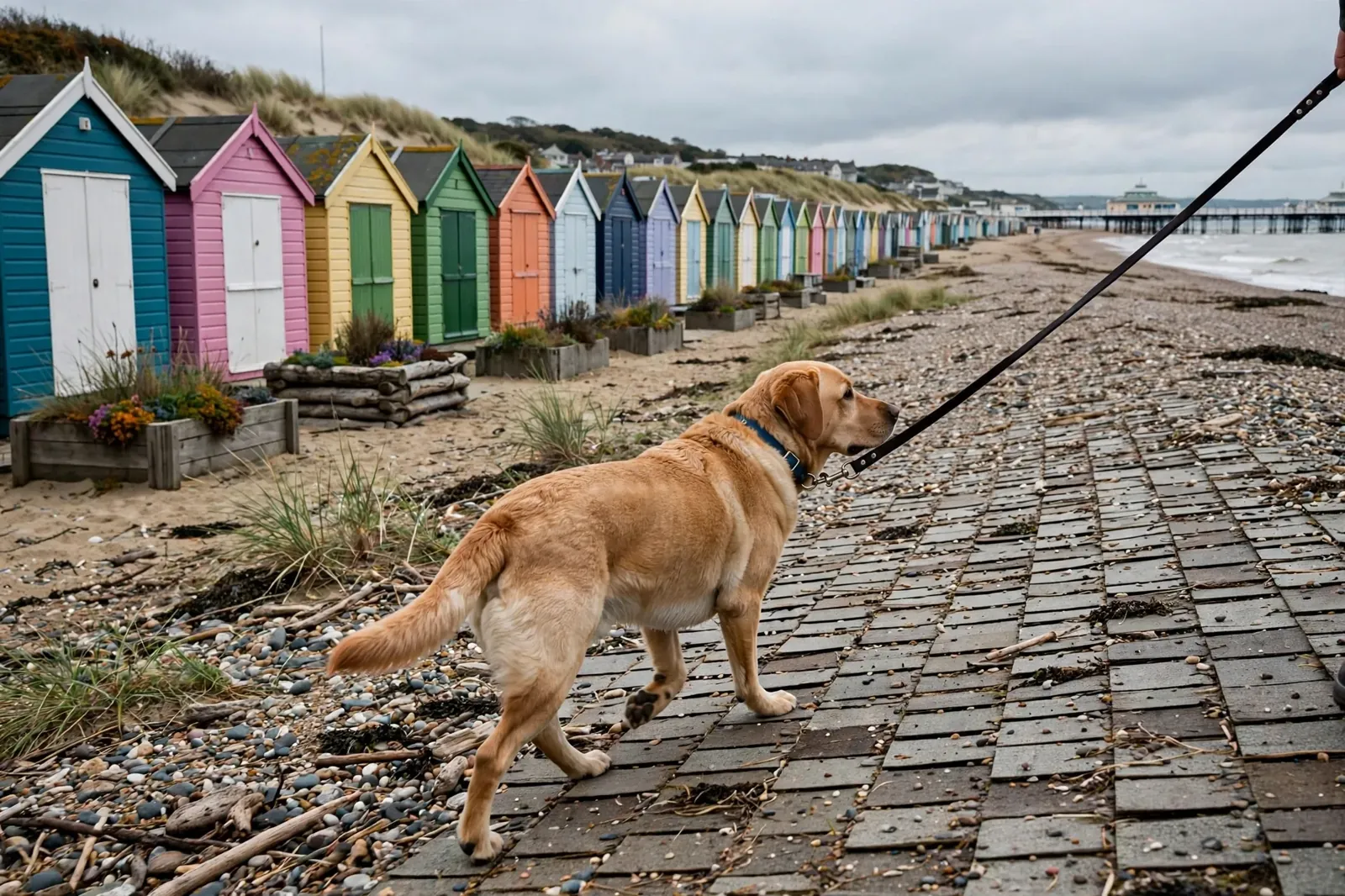
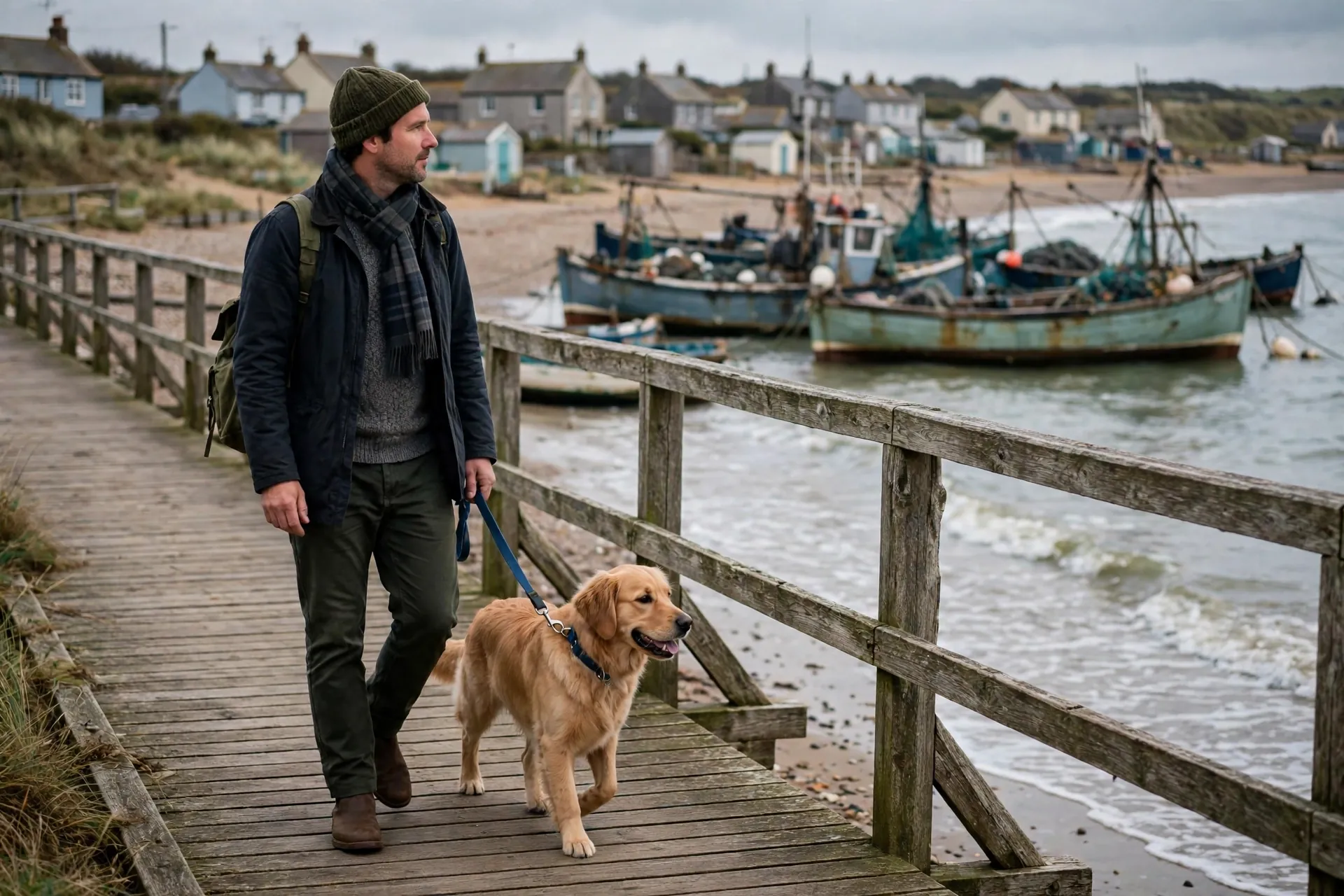
Aldeburgh is the most natural coastal pairing. It is a small seaside town with a promenade, fishing boats, beach huts and a long shingle shore, and it pairs well with a Framlingham morning because the two towns offer contrasting walks in one day. Our guide to Aldeburgh with a dog explains the seasonal beach rules, the promenade walk and the practical points about parking and tides, all of which matter more than the distance between the two towns. Check the seasonal rules before you travel, because a beach that welcomes dogs freely out of season may restrict them in summer, and the promenade may be the better walk on a busy day.
The wider Suffolk coast offers a second kind of pairing: a quieter beach or nature walk rather than a second town. Our guide to the Suffolk coast with a dog covers year-round beaches, seasonal rules for Aldeburgh, Southwold and Felixstowe, and the safety points that matter on shingle and near water. Use it to choose a coastal stop that matches your dog: a long, open beach for a fit dog that needs space, or a shorter, sheltered walk for an older dog that has already walked the castle and the mere. A coastal pairing should add variety, not exhaustion.
If you prefer heritage to coast, pair Framlingham with another historic site and compare how each one handles dogs. That comparison is instructive: one site may welcome dogs in extensive grounds but not in a house, another may offer a riverside walk but restrict a garden, and a third may be best enjoyed from the outside. Use the Framlingham castle decision as your template: check the official guidance before you travel for the second site too, decide who waits with the dog if needed, and keep the second stop shorter than the first if the dog is already tired. Two heritage stops in one day can feel rich for people and long for dogs, so build in a rest, water and a toilet walk between them.
Order matters on a paired day. Framlingham first, coast second often works well, because the town walk wakes the dog up gently, the mere provides a nature interlude, and the coast then offers space to stretch out before the drive home. Coast first, Framlingham second can work if you want a quiet town lunch after a beach walk, but a wet, sandy dog in a market-town cafe is harder to manage than a dry dog. Whichever order you choose, carry a towel, a change of lead if the first gets wet, and a brush for sand or mud, so the second stop does not inherit the first stop's mess.
Finally, protect the drive home. A dog that has walked a castle, a town, a mere and a beach in one day may be tired in a way that looks like calm but is really fatigue. Offer water before the drive, settle the dog in its usual car space, keep the car cool and ventilated, and stop if the journey is long. A paired day should end with a dog that sleeps soundly at home, not a dog that is overstimulated, sore or unsettled the next morning. If the dog is already tired after Framlingham alone, skip the pairing without regret; a good single-town day beats a forced two-town day every time.
Seasonal notes
Spring in Framlingham brings longer days, greener grass and a town waking up after winter, but it also brings nesting birds, lambing in nearby fields and muddy paths that have not yet dried. Keep the dog on a lead near livestock and on nature paths, watch for ground-nesting birds around the mere, and carry a towel even on a bright day, because a spring shower can turn a grassy path muddy in minutes. Spring is a good season for a castle and town visit, provided you walk at wildlife-aware pace and do not assume that a dry morning guarantees dry ground all day.
Summer rewards an early start. Castle grass and market-town pavements can become hot by midday, shade can be scarce in open grounds, and a dark-coated or brachycephalic dog can overheat faster than its owner expects. Walk the castle and the mere in the cooler morning or evening, rest in shade at midday, offer water frequently and watch for heavy panting, drooling or a reluctance to move. Never leave a dog in a parked car, even with a window open, and plan lunch somewhere with shade and water rather than a sun-baked terrace. Summer also brings more visitors, more dogs and more events, so a lead, a short town loop and a quiet cafe corner matter more, not less.
Autumn is arguably Framlingham's most photogenic season, with autumn colour around the castle, cooler walking weather and a quieter town after the summer peak. It also brings wet leaves on pavements and paths, which can be slippery for dogs as well as people, and shorter days that require a head torch or a reflective lead for a late walk. Autumn storms can close paths or leave debris, and fireworks season in early November can unsettle noise-sensitive dogs, especially in the evening. Check local event guidance before you travel in autumn, keep evening walks short and familiar, and give a nervous dog a safe, quiet place to settle at home or in your accommodation after dark.
Winter offers a quieter, more atmospheric Framlingham, with fewer crowds, crisp light on the castle walls and a town that feels local rather than touristic. The trade-offs are short days, cold wind across open castle grounds, muddy mere paths and the possibility of ice on pavements and steps. Dress the dog appropriately if it is small, short-coated, older or arthritic, shorten exposed walks, and dry paws after walking on gritted pavements. Check opening times and official guidance before you travel in winter, because heritage sites and cafes may run reduced hours, and a plan that worked in August may not work in January.
Across all seasons, the same principle holds: check the official guidance before you travel, dress for the ground as well as the sky, and let the dog's behaviour tell you when to shorten a walk. A season does not make a walk good or bad on its own; it changes the hazards, the crowds, the light and the ground, and a good dog owner adjusts the plan to match. Framlingham rewards that adjustment, because its castle, town and mere each offer a different kind of walk, and at least one of them usually suits the day you actually have.
Practical checklist
Use this checklist the night before you travel, and tick it off in the car before you set out. It is deliberately short, because a checklist that is too long gets ignored, but each item on it prevents a common Framlingham problem: a dog without water at a castle, a lead that is wrong for a town, or a plan that assumes an interior rule that does not exist.
- Check the official guidance before you travel for castle interior dog rules, opening times, mere restrictions and parking. Save the relevant pages for weak-signal areas.
- Decide the castle plan in advance: grounds as the shared walk, a split-visit plan if an interior is not open to dogs, and a comfortable waiting spot for the dog.
- Pack two leads: a short lead for the town, castle entrance and cafes, and a longer lead or long line for open countryside paths where it is allowed and safe.
- Carry water and a bowl for the dog, plus waste bags, a towel for mud or rain, and a mat or blanket for cafes and car rests.
- Plan the town walk for quiet hours if your dog is nervous of traffic, crowds or other dogs, and agree the car location and any parking time limits in advance.
- Walk the mere at wildlife-aware pace, staying on marked paths, keeping the dog under close control near birds and livestock, and shortening the loop if ground or stamina demands it.
- Ask before entering shops and eating places, choose a quiet corner, settle the dog on its mat, and keep a picnic fallback for busy or wet days.
- Pair the day only if the dog has energy left: Aldeburgh or the wider Suffolk coast for contrast, with seasonal beach rules checked before you travel.
- Note the nearest vet and emergency vet before you need one, and carry your dog's usual medication, a basic first-aid item and your phone charged for navigation and guidance checks.
- Protect the journey home: water, a cool car, a settled resting space and a stop on a long drive, so a good day does not end with an overtired dog.
If you work through this list honestly, Framlingham becomes a straightforward day: a castle decision made early, a town walk at pavement pace, a nature walk at wildlife pace, and lunch somewhere that welcomes the dog you actually have. That is the whole secret of a good castle-town visit, and it is also why Framlingham suits dog owners so well. The town is compact enough to explore without a car, varied enough to offer castle, town and nature in one day, and calm enough, outside peak hours, for a dog to settle and enjoy it. Take the castle decision seriously, check the official guidance before you travel, and let the rest of the day follow at the dog's pace.
Practical questions
Before you go
Can dogs go inside Framlingham Castle?
Interior rules can vary by area and by season, so check the official guidance before you travel. Plan the castle grounds as the main shared part of the visit, and have a plan for the dog if an interior space is not open to dogs. If you are travelling with others, agree a split visit in advance; if you are travelling alone, decide whether the grounds alone will satisfy you or whether you would rather save the interior for a return visit without the dog.
Are dogs allowed in the castle grounds at Framlingham?
The grounds are the natural place to plan a dog walk around the castle, but lead rules, restricted areas and seasonal conditions can change. Check the official guidance before you travel, keep the dog on a lead where required, and be ready to give other visitors and wildlife plenty of space. Walk slowly, carry water and waste bags, and use the grounds as the calm start to the day rather than a rushed photo stop.
Is Framlingham Mere a good walk for dogs?
Framlingham Mere suits a calm, wildlife-aware walk rather than a free run. Keep the dog under close control, respect any seasonal restrictions for nesting birds and wet ground, and choose the shorter paths if the dog is older, smaller or less steady on muddy ground. Stay on marked paths, keep the dog on a lead near birds and livestock, and shorten the loop if the dog tires.
Where can I eat with a dog in Framlingham?
The most reliable options are places around the market place with outdoor seating or a clearly stated dog policy. Ask before you sit down, choose a quiet corner, keep the dog on a lead under the table, and have a picnic fallback if the busiest lunch hour is too stimulating for your dog. An early or late lunch usually gives more space and a calmer room than the peak hour.
What is the best day trip to pair with Framlingham for dogs?
Aldeburgh makes a natural coastal pairing: a castle town in the morning and a seaside walk later in the day. Check the seasonal beach rules for Aldeburgh before you travel, because the rules that apply in summer are not the same as those that apply out of season. If the dog is already tired after Framlingham, skip the pairing; a good single-town day beats a forced two-town day.
Do dogs need to stay on a lead in Framlingham?
Use a lead as the default in the town centre, around the castle and on nature paths, and only let the dog off where it is clearly allowed, safe and under reliable recall. Near roads, livestock, nesting birds and other dogs, a lead is the kind and practical choice even for a well-trained dog. A short lead suits busy areas, while a longer lead suits open countryside paths where it is permitted.