This guide is independent and contains no paid placement. Beach rules and business policies can change, so check the signs on the day and check the official guidance before you travel.
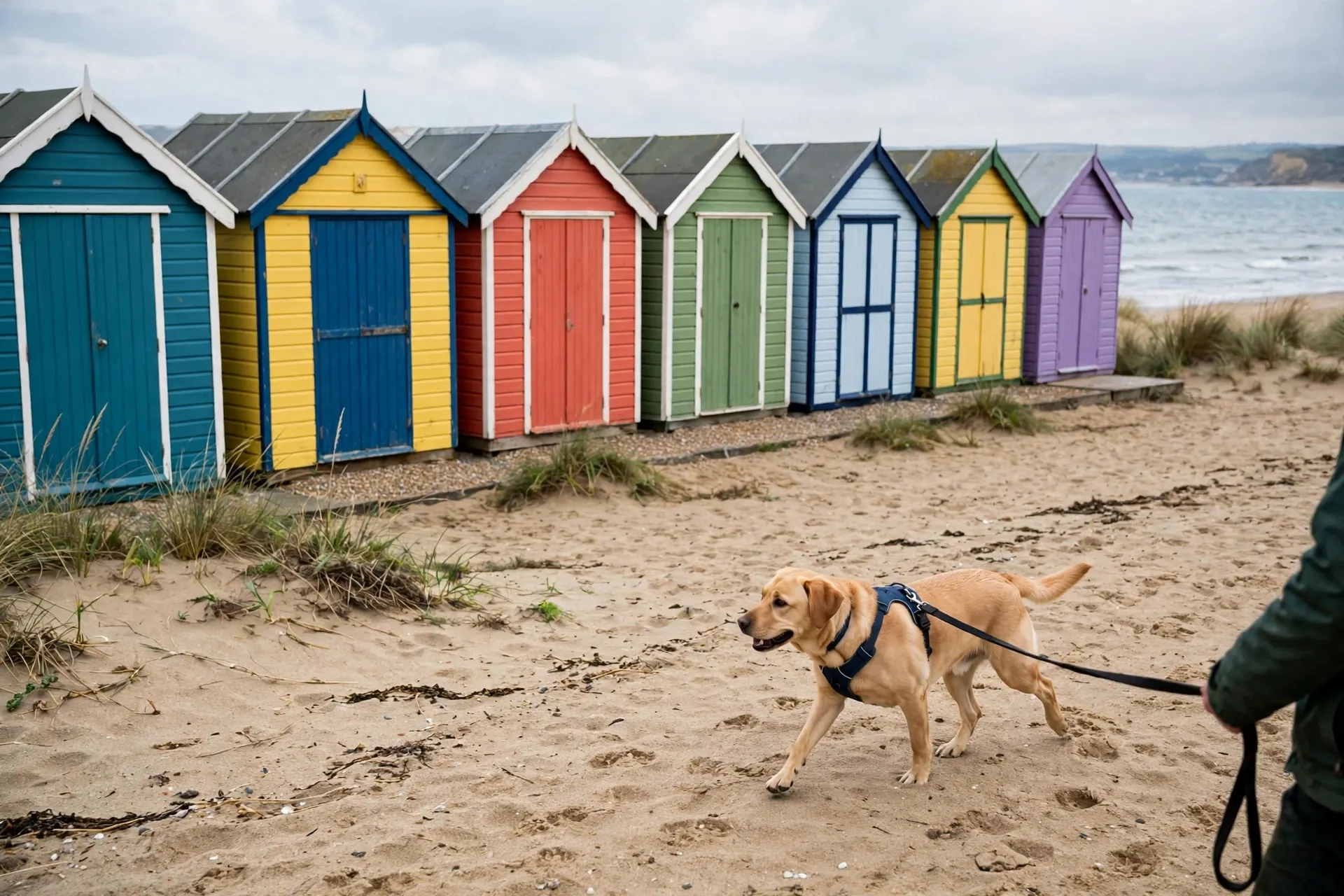
Aldeburgh is an easy Suffolk day out with a dog if you plan around the beach rules first. Some stretches of beach restrict dogs in the busier season, others stay open all year, so pick your access point by the season, walk the level promenade past the fishing boats, and save the long beach run for a dog-permitted stretch or a quieter month.
First look: boats on the shingle
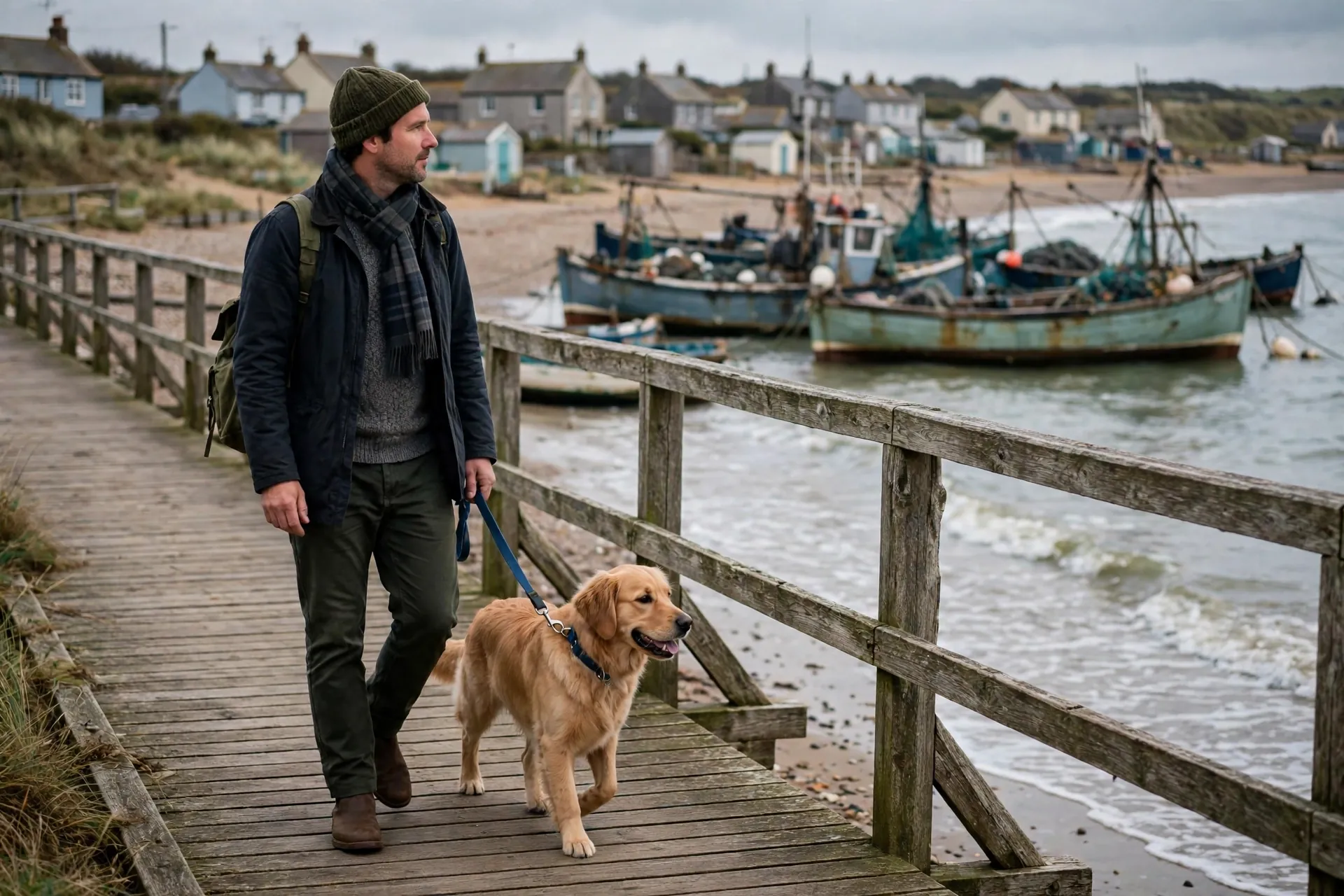
Stand on the edge of Aldeburgh beach with a dog on a lead and the town makes sense at once. Fishing boats sit on the shingle above the tide line, painted in working colours rather than holiday colours, with nets, crates and coiled rope stacked nearby. The sea is right there, close enough to hear, and the promenade runs along the top of the beach so you can watch the boats without walking through the working area itself. For a dog, the first impressions are shingle underfoot, salt air, gulls overhead and a long straight line of smells running in both directions along the shore.
That working character is what sets Aldeburgh apart from a purpose-built resort beach. This is not a beach that was cleared and smoothed for holidaymakers; it is a fishing beach that visitors share. The boats are not props, and the fishermen are at work, mending nets, unloading a catch or winching a boat up the shingle. Dogs are welcome visitors here, but the beach works best when owners treat the fishing area the way they would treat any workplace: keep to the edges, keep the dog close, and do not let curiosity turn into interference.
Start your visit the slow way. Walk the promenade first, let the dog take in the boats from a few metres away, and watch how the beach is laid out before you commit to a long walk in either direction. You will quickly see where the main beach access points are, where the fishing boats cluster, where families gather, and where the beach opens out into a longer, quieter stretch. That ten-minute orientation walk saves a lot of backtracking later, especially if you arrive in the restricted season and need to find the dog-permitted stretch.
The promenade also gives you a useful fallback. If the tide is high, the wind is sharp, or the dog is not coping with shingle, the paved walk along the seafront is a perfectly good outing in itself, with benches, shelters and regular chances to stop. Many dogs enjoy the promenade more than the beach anyway: the surface is kinder on paws, the route is level, and there are interesting smells without the effort of walking on loose stones. Treat the promenade as the spine of your day and the beach as the optional extra, not the other way round.
Beach rules, season by season
The single most important thing to get right in Aldeburgh is the seasonal dog restriction. Like many English seaside towns, Aldeburgh applies a dog control order to part of its beach during the busier months, while other parts of the beach remain open to dogs throughout the year. The practical consequence is simple: the beach you can use in February is not necessarily the beach you can use in August, and the boundary between the two matters more than any general statement about the town being dog-friendly. Always read the signs at the access point you are actually using, because a sign two hundred metres away may describe a different stretch.
In the restricted season, the usual pattern is that dogs are excluded from the main central beach, roughly the busy stretch in front of the town, while the beach to the north and south remains available. If you are visiting in summer, plan to walk to the permitted stretch rather than hoping the central beach will be quiet enough to ignore the rules. Fines for breaching a public spaces protection order can apply, and the restriction exists because the central beach is crowded with children, sunbathers and picnics in high season. The dog-permitted stretches are generally quieter and longer, which suits most dogs better anyway.
Outside the restricted season, the whole beach is usually much more relaxed, and Aldeburgh becomes one of the easiest Suffolk beaches for a long dog walk. Winter and shoulder-season visits have their own pleasures: fewer people, bigger skies, and dogs that can run properly on the open shingle. Even then, keep the dog under control around the fishing boats and other beach users, and remember that local rules can change from year to year. If you are planning a trip months ahead, check the official guidance before you travel rather than relying on a guide written in a previous season, including this one.
Assistance dogs are treated differently from pet dogs under most beach orders, and an assistance dog should not be excluded from a beach where pet dogs are restricted. If you travel with an assistance dog, carry whatever documentation you normally use and check the official guidance before you travel so you know exactly how the local order is worded. For pet dogs, the rule to remember is that a lead does not override an exclusion: if a stretch says no dogs in the restricted season, a dog on a lead is still not permitted there.
Our wider guide to dog-friendly beaches in the UK and the rules, bans and fines explained covers how seasonal orders work across the country, what a public spaces protection order means in practice, and how to check a beach before you go. The general principles there apply here too: look for the current order, not last year's blog post; trust the sign on the beach over a memory of a previous visit; and if you are unsure, walk the extra distance to the stretch that is clearly permitted.
Good beach manners matter as much as the formal rules. Keep the dog in sight and under control, pick up after it immediately, and bag and bin the waste rather than leaving bags on the shingle or hanging from a groyne. Shingle beaches hide waste less forgivingly than sand, and other beach users notice quickly. If your dog is inclined to chase gulls or approach other dogs uninvited, a long line gives it freedom without giving up control, and it is much easier to use on an open stretch than on a crowded central beach.
One more seasonal point: the restriction calendar and the holiday calendar do not always line up neatly. Easter, half-term weeks and bank holidays can fall just inside or just outside the formal restriction period, and a beach that felt empty in March can be busy by late May. Check the dates for your specific visit, not just the month, and have a plan B in mind. The marsh paths and the promenade are useful plan B options on any day when the beach rules or the crowds do not suit your dog.
The promenade walk
Aldeburgh's promenade, known locally as Crag Path, is the walk most visitors with dogs will use most, and it deserves to be treated as a destination rather than just a route to the beach. It runs along the seafront above the shingle, level and paved, with the sea on one side and the town's handsome seafront houses on the other. For older dogs, small dogs, dogs with sore paws and owners pushing a buggy, it is the most accessible walk in town, and it works in weather that would make the beach itself unpleasant.
Walk the promenade from south to north to get the full picture. Starting near the Martello Tower at the southern end, you pass the town's main seafront, the fishing boats, the lifeboat area and the long run of beach huts and houses heading toward Thorpeness. The whole route is easy to shorten: turn back at any access point, drop down to the beach where dogs are permitted, or cut inland into the town for a cafe stop. There is no single correct distance, and a twenty-minute promenade stroll with three sniffing stops can be a better outing for many dogs than a forced hour on shingle.
Benches and shelters along the promenade are part of the walk, not an afterthought. Use them. Dogs that are asked to walk non-stop past every interesting smell will pull, whine or shut down; dogs that are allowed to stop, watch the boats and settle for a few minutes tend to walk more calmly afterwards. Carry a small mat or blanket if your dog likes to lie down, because the promenade surface can be cold or damp, and a mat also gives the dog a clear place to settle outside a cafe.
The promenade is also where you will meet most of Aldeburgh's other dogs, so think about lead manners before you set off. Keep the lead short in busy sections, move to one side when another dog approaches, and do not let your dog rush up to an on-lead dog without checking with the other owner. A surprising number of seaside arguments start with an off-lead dog greeting a nervous on-lead dog in a narrow space. If your dog is reactive, walk the promenade early in the morning or in the evening, when it is quieter, and use the beach or marsh paths for the main exercise instead.
Watch for the small hazards that come with any seafront walk. Fishing tackle, dropped food, broken shells and the occasional fish bone can all appear on the promenade near the boats, so keep an eye on what a scavenging dog is sniffing at ground level. In strong winds, loose items can blow across the path, and sea spray can make the surface slippery after a storm. None of this should put you off the walk; it just means keeping the dog close near the boats and checking paws afterwards, as you would after any beach outing.
Fishing boats and working beach etiquette
The fishing boats are the heart of Aldeburgh beach, and they repay a bit of respect. Boats are launched from the shingle and hauled back up it, which means tractors, winches, ropes under tension and heavy equipment moving across the beach at working speed. Keep a clear distance when a launch or recovery is under way, keep the dog on a short lead, and do not walk between a boat and the sea while it is being moved. The crew will be focused on the boat, not on your dog, and a loose dog under a moving boat is a serious risk.
Between launches, the boats and their gear still need care. Nets can snag a collar or a paw, rope coils can trip a dog, and fish boxes may contain ice, fish remains and sharp fins. Do not let a dog nose through crates, chew on rope or drink from puddles near the fish sheds. If your dog is a determined scavenger, this is a lead-only stretch of beach, however tempting the open shingle looks. A few minutes of close control here is worth it: the smell of fish will excite most dogs, and excitement plus loose gear is a combination that ends in a vet visit more often than owners expect.
Photographs are part of the Aldeburgh experience, and the boats make a wonderful backdrop, but take them from the promenade or from a respectful distance on the beach. Do not climb on a boat, lean equipment against one for a photo, or let a dog jump up at a hull. Fishermen are generally friendly and happy to chat when they are not busy, and a quick conversation can teach you more about the day's catch than any guidebook. If you buy fish from the sheds, keep the dog well back from the counter and the queue, and bag the fish securely before walking on, because a bag of fresh fish at dog-nose height is an invitation to trouble.
The working beach also explains why some parts of the shore feel less like a playground than others. The shingle near the boats is working ground, with uneven surfaces, winch cables and parked vehicles at certain times. Dogs that love to run flat out are better off on the open stretches away from the boats, where there is room to sprint without crossing a working area. Think of the beach in zones: the boat zone for looking and walking through carefully on a lead, and the open beach zones for running, playing and swimming where the rules allow.
Children and dogs both love the boats, so this is also a good place to practise calm behaviour. A dog that can walk past a boat, a gull and another dog without lunging is a dog that will enjoy the whole town. If your dog is still learning, use the promenade for training walks and the quieter beach stretches for free running, and do not expect the busiest part of the beach to be the training ground. Aldeburgh rewards patience: the same dog that pulls past the first boat will often settle by the third, once the novelty wears off.
Fish-and-chip stops that work with a dog
Fish and chips in Aldeburgh are not just a meal; they are part of the rhythm of the day. The classic pattern is to buy a portion, carry it to the seafront, and eat it on a bench or on the sea wall with the dog settled beside you, watching the boats and the sea. This suits dogs far better than a long indoor restaurant meal, because the dog stays with you, the smells are interesting but not overwhelming, and you can leave whenever the dog has had enough. It also means you do not need to worry about a venue's dog policy for the main meal of the day.
Plan the fish-and-chip stop the way you plan the walk. Buy the food after the main walk, not before it, so the dog is settled and a little tired rather than hungry and overexcited. Choose a bench away from the busiest queue if your dog begs or guards food, and keep the dog on a lead with a mat or blanket to lie on. Feed the dog its own meal or a few treats first, so it is not watching every mouthful, and keep the fish-and-chip paper well out of reach: hot fat, bones and batter are all bad for dogs, and a snatched chip can burn a mouth or cause a stomach upset that ruins the rest of the day.
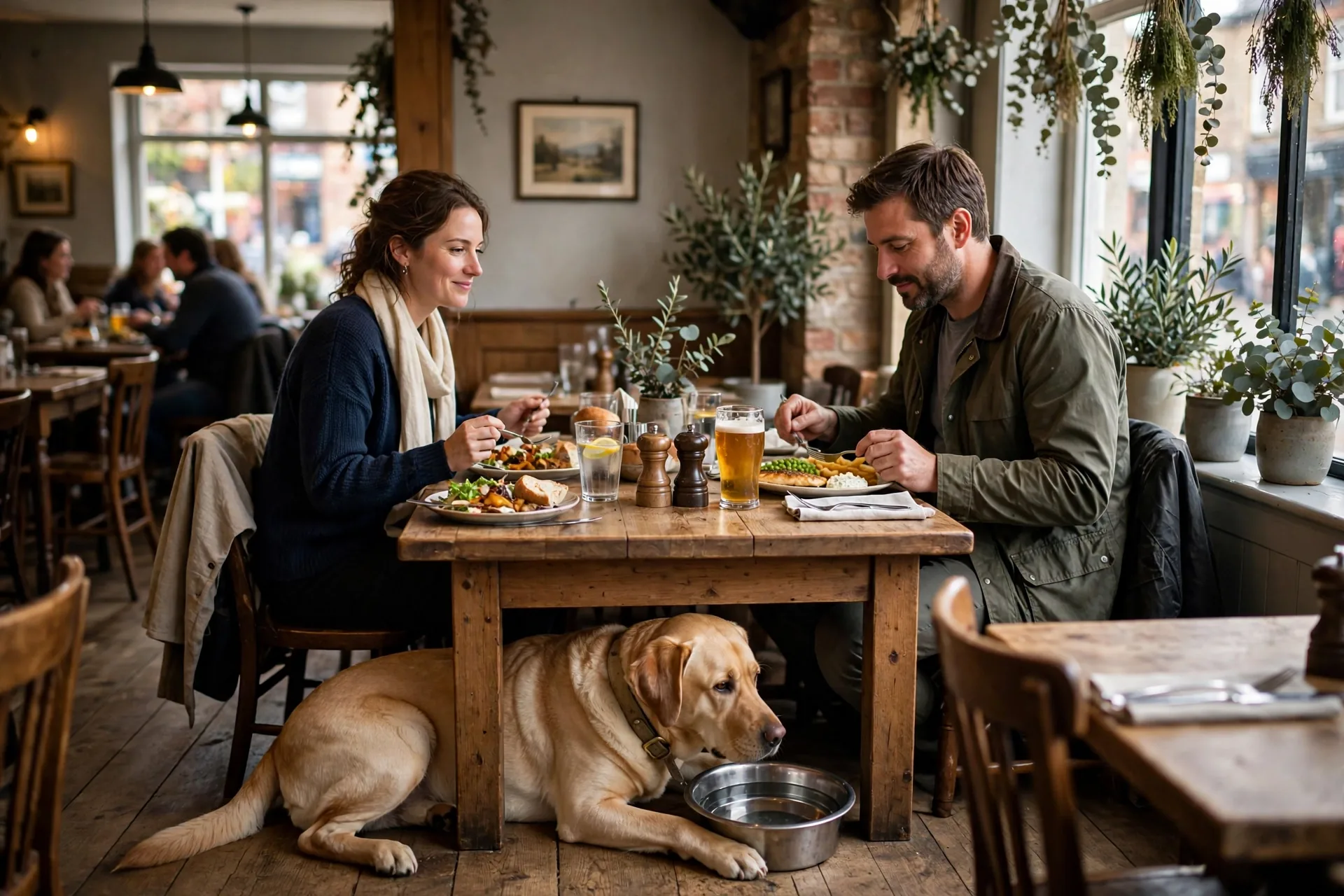
If you would rather sit inside, Aldeburgh has cafes and pubs where dogs are welcome, but policies vary from venue to venue and can change with the season. Some places welcome dogs throughout, some allow dogs only on a terrace or in a bar area, and some have a dogs-outside-only rule in summer. Check the sign on the door or ask a member of staff before you settle in, and do not assume that a venue that welcomed dogs last year still does. Our guide to dog friendly restaurants in the UK covers how to book well and dine calmly with a dog, including table manners, water bowls and what to do if the dog cannot settle.
Other food stops suit dogs in different ways. A bakery or deli that sells takeaway food lets you eat on the seafront without any policy questions at all, and a cafe with outdoor seating on a quiet side street can be calmer than a busy seafront terrace. Ice cream is a popular Aldeburgh stop, but keep the dog's portion to a plain, dog-safe treat rather than sharing a dairy ice cream, which can upset many dogs' stomachs. Carry water for the dog at every food stop, because salty seaside air and excitement both increase thirst, and a dog that is offered water regularly is less likely to beg for yours.
Time your food stop with the tide and the weather. A bench on the sea wall is perfect in calm sunshine and miserable in a driving easterly wind, so have an indoor backup in mind for bad weather. Similarly, a lunchtime stop in August will be busy, while the same bench at four in the afternoon can be peaceful. Dogs read the mood of a place quickly: a calm, unhurried food stop where the dog can lie down and watch the world is a rest, while a crowded, noisy queue with food at nose height is a test of patience. Choose the rest whenever you can.
Beyond the beach: Thorpeness and the marshes
When the beach is busy or restricted, Aldeburgh still has good dog walks. The most popular extension is the walk north along the coast toward Thorpeness, a smaller village with its own beach, boating lake and quieter feel. The route can be walked along the beach where dogs are permitted, or partly along the coast path, and it turns a short Aldeburgh visit into a proper half-day walk. Check the beach rules for the Thorpeness stretch separately, because it may differ from the Aldeburgh central beach, and check the official guidance before you travel if you are planning to rely on it.
Thorpeness suits dogs that like variety: beach, village green, boating lake edges and quiet lanes in a compact area. The boating lake itself is a place to walk around rather than swim in, and dogs should be kept on a lead near the water and other visitors. The village is smaller and quieter than Aldeburgh, which makes it a good choice for nervous dogs or for a second, calmer walk after a busy morning in town. If you drive between the two villages, park thoughtfully and do not leave a dog in a car in warm weather.
Inland from the coast, the marshes and river paths around the River Alde offer a completely different landscape: flat, open, big skies and long views, with far fewer people than the seafront. These paths suit dogs that need a long, steady walk without the effort of shingle, and they are a good wet-weather alternative when the beach is rough. Keep dogs on a lead near livestock and ground-nesting birds in the breeding season, and be aware that marsh paths can be muddy and exposed, with little shade in summer and little shelter in winter.
The marshes also need a word about water safety. Ditches, channels and the river itself can have currents and soft banks, so do not let a dog swim in the river without checking the conditions and the local rules. A dog that swims happily in the sea may still struggle in a tidal river, and muddy banks can trap a small dog. Stick to the paths, keep the dog in sight, and treat any water as a supervised activity rather than a free-for-all. The same caution applies to the boating lake at Thorpeness and to any drainage channels on the marsh.
If you want a base for the night rather than a day trip, a beach hut or similar seaside stay can change the shape of the trip, giving you early-morning and evening beach access when day visitors have gone. Our guide to dog-friendly beach huts in the UK covers renting rules, what to pack for a hut day, and how beach restrictions affect hut users. Even if you do not rent a hut, the principle applies: the best Aldeburgh dog walks are often the early and late ones, when the beach is quiet and the light is good.
Parking, arrival and the first hour
Aldeburgh is a small town with limited parking, and the first hour of your visit will go better if you plan it. The main car parks are close to the seafront, but they fill quickly on summer weekends, bank holidays and sunny days, and the walk from a car park to the beach can involve narrow streets and busy pavements. Arrive early if you can, or plan to park a little further out and walk in, which is often calmer for the dog than circling for a central space.
Before you leave the car, do the dog checks: water, a short toilet walk, a lead that is easy to handle, and poo bags in a pocket rather than buried in a bag. Dogs that are let out of a car straight onto a busy seafront tend to be overexcited and hard to control, while dogs that get a quiet toilet walk and a few minutes to sniff before the main walk settle much faster. If the car park is busy, keep the dog on a short lead from the car door onwards, and do not let it run up to other dogs in the car park.
Never leave a dog alone in a parked car in warm weather, even with a window open, and be cautious about leaving a dog in a car at all in Aldeburgh in summer. The town is compact enough that the dog can come with you almost everywhere outdoors, and most of the best experiences — the promenade, the beach, the seafront food stops — are dog-inclusive. If you need to visit a shop or venue that does not allow dogs, take turns with another adult rather than leaving the dog in the car.
Your first hour should be deliberately boring: a promenade walk, a toilet stop, a drink of water, a bench sit, and then a decision about the longer walk. This routine gives the dog time to adjust to the new smells, sounds and surfaces, and it gives you time to read the beach signs and check the tide. Dogs that are rushed straight into a long beach run often pull, bark or refuse to walk later in the day, while dogs that start slowly tend to last the whole outing. If the dog is already tired from the journey, a short promenade walk and a cafe stop may be the whole visit, and that is fine.
Think about the journey home too. A wet, sandy or shingle-dusted dog in a car needs a towel, a blanket on the seat and a fresh drink before the drive. Shake off loose shingle outside the car rather than inside it, check paws for small stones or cuts, and give the dog a few minutes to settle before you set off. A tired dog that has had water, a toilet stop and a comfortable seat will travel home far more calmly than a dog that is bundled straight from the beach into a hot car.
Seasons, tides and weather
Aldeburgh changes with the seasons more than many visitors expect, and the best dog visit depends on matching your plans to the season you are actually in. Summer brings the full seaside experience: busy beaches, long days, ice cream queues and the seasonal dog restriction on the central beach. It also brings heat, which matters for dogs: shingle reflects heat, cars warm up fast, and a dog that runs hard on a hot beach can overheat quickly. Walk early or late in summer, carry extra water, and use the shade of the promenade shelters for rests.
Autumn is often the sweet spot for dog owners. The restriction period ends, the crowds thin, and the beach opens up for long walks, while the weather is often still mild enough for a seafront lunch. October half-term can be busy, but it is usually calmer than August, and the light on the Suffolk coast in autumn is particularly good for walking. This is also the season when the marshes and coast path are at their best, with firm paths and fewer insects than in high summer.
Winter in Aldeburgh is bracing, quiet and very dog-friendly, as long as you dress for it. The beach is open, the promenade is empty, and the town's cafes feel welcoming after a cold walk. The trade-offs are shorter days, stronger winds and the possibility of rough seas, so check the forecast, wear layers, and bring a drying coat for the dog. A winter walk that ends with a warm drink and a dry dog is a success; a winter walk that ends with a shivering dog and a long wet drive home is a lesson in packing better next time.
Spring brings longer days, nesting birds on the marshes and the return of busier weekends. Keep dogs on a lead near nesting areas and livestock, and remember that the beach restriction may return as the busy season approaches. Spring is also a good time to check the current year's rules, because orders can be renewed or changed over the winter. A quick check of the official guidance before you travel in spring can save a wasted journey to a stretch that is newly restricted.
Tides shape every Aldeburgh beach walk. At low tide the beach is wide and the walking is easier; at high tide the shingle narrows and the sea can reach the sea wall in places, leaving little room to walk. Check tide times before a long walk, plan your turn-back point, and do not assume you can walk the same distance at every state of the tide. If you walk north toward Thorpeness at low tide, allow enough time to return before the tide turns, or plan a route back along the coast path rather than the beach.
Weather on the Suffolk coast can change quickly, and an easterly wind off the North Sea feels colder than the forecast suggests. Pack a windproof layer for yourself and a coat for the dog if it feels the cold, and be ready to shorten the walk if the wind picks up. Fog can also roll in off the sea, reducing visibility on the beach and the marshes, so keep the dog close and use a lead if visibility drops. The promenade is the safe fallback in fog, wind and rough seas alike.
Safety on shingle, sea walls and groynes
Shingle is harder work than sand, and it affects dogs in ways that are easy to underestimate. A dog that runs happily on sand may tire quickly on loose shingle, and small stones can lodge between toes or cause sore paws on a long walk. Watch for limping, frequent stopping or licking of paws, and shorten the walk if any of these appear. After the walk, check paws carefully, remove any small stones, and rinse off salt and grit with fresh water if you can.
Sea walls and groynes need respect, especially in rough conditions. Groynes are the wooden or rock structures that run out to sea to reduce erosion, and they can be slippery, sharp and surrounded by deep water at high tide. Do not let a dog climb on groynes or jump between them, and keep dogs away from the sea wall edge when waves are breaking over it. A dog that falls from a sea wall or gets caught against a groyne in a strong current is in serious danger, and rescue in those conditions is difficult for everyone.
Swimming deserves a cautious approach. Some dogs love the sea and swim well; others panic in waves, swallow water or chase balls into currents they cannot handle. Let a dog paddle first, watch how it copes with the movement of the water, and do not throw a ball far out to sea on a first visit. If the dog does swim, rinse it with fresh water afterwards, dry it thoroughly, and watch for vomiting or lethargy, which can be signs of swallowing too much seawater. Never let a dog swim near boats, groynes or strong currents, and never swim after a dog that has got into difficulty: call for help instead.
Other beach hazards include jellyfish, sharp shells, discarded fishing line and the occasional dead fish or bird, all of which attract dogs and can cause injury or stomach upsets. Fishing line in particular can tangle around legs or be swallowed, so keep a close eye on scavenging dogs near the boats. If your dog picks up something suspicious, trade it for a treat rather than chasing the dog, which usually makes it swallow faster. Carry a basic first-aid kit with saline, bandages and the number of a local vet saved in your phone before you need it.
Heat, cold and exhaustion are the quieter risks. A dog that is panting heavily, drooling, staggering or refusing to move needs shade, water and rest immediately, and veterinary advice if it does not recover quickly. In cold weather, watch for shivering and reluctance to walk, especially in small, short-coated or elderly dogs. The best safety measure is the simplest: plan a walk the dog can comfortably finish, with rests and water built in, rather than a walk that tests its limits.
Eating and drinking with a dog in town
Beyond fish and chips, Aldeburgh has a range of cafes, pubs and delis, and many of them are used to dogs. The pattern is familiar from other Suffolk towns: dogs are often welcome on terraces and in bar areas, sometimes welcome throughout, and occasionally not allowed inside at all. The variation is the point: do not rely on a single venue, and have two or three options in mind so a change of policy does not derail lunch.
Good table manners make every venue more welcoming. Settle the dog on a mat under or beside the table, keep the lead short and under your chair, and offer water before you order. Avoid feeding the dog from the table, because begging is the behaviour that most often leads to a venue changing its dog policy. If the dog cannot settle after ten minutes, it is kinder to take the food away and eat on the seafront than to persist with a stressed dog in a busy room. Dogs, like people, have off days, and a venue that feels overwhelming at lunchtime may be fine at a quieter hour.
Water is the one thing to ask for without hesitation. Most dog-friendly venues will provide a bowl, and if they do not, use your own collapsible bowl. Offer water regularly, especially after a beach walk, and do not let the dog drink from puddles near the fishing area or from the sea. If you are eating outdoors, watch for dropped food from neighbouring tables, which can include bones, onions or chocolate, all of which are unsuitable for dogs.
Shopping with a dog in Aldeburgh is usually a pavement and takeaway affair rather than a long browse. The high street has food shops, galleries and gift shops, some of which welcome dogs and some of which do not. Keep visits short, keep the dog close, and do not tie a dog up outside a shop on a busy pavement where it can be stolen, frightened or tangled with passers-by. If you need to shop properly, take turns or save the shopping for a day without the dog.
Evening visits have a different feel. The seafront quiets down, the light softens, and a short evening promenade walk can be the best walk of the day. If you eat in the evening, check whether a venue's dog policy changes at dinner time, because some places that welcome dogs at lunch restrict them in the evening. An evening walk followed by takeaway food on the seafront avoids the question entirely, and it gives the dog a calm end to the day before the drive home.
Wet-weather and quiet-day alternatives
Rain does not have to end an Aldeburgh dog day, but it does change it. The promenade works in light rain, the marsh paths work in drizzle if you do not mind mud, and the town's cafes and takeaway food stops work in any weather. What does not work well in heavy rain is a long beach walk on shingle, where the dog gets soaked, cold and covered in grit, and the owner gets equally wet trying to keep up. On a truly wet day, shorten the outdoor walk, lengthen the cafe stop, and save the long beach walk for a better day.
Pack for wet weather as a matter of course on the Suffolk coast. A drying coat for the dog, two towels, a waterproof mat for the car, and a change of socks for yourself will transform a wet day from miserable to manageable. Dry the dog thoroughly before getting in the car, check ears and paws for grit, and give the dog a warm drink of water and a rest before the drive home. Dogs that are dried and settled travel better and are less likely to develop skin irritation from a damp coat.
Quiet days have their own logic. If the beach is busy, the promenade is crowded or the dog is tired, a short walk and a long rest is a better day than a forced march. Aldeburgh is small enough that a quiet day still feels like a visit: a promenade stroll, a bench sit watching the boats, a takeaway lunch and a slow walk back to the car can be all a dog needs. Do not measure the day by distance walked; measure it by whether the dog comes home calm, tired in a good way, and ready to sleep.
Finally, keep a note of what worked for your dog. Different dogs love different parts of Aldeburgh: some love the open beach, some love the promenade, some love the marshes, and some just love the fish-and-chip bench. The first visit is for learning; the second visit is for doing the bits that worked best, at the times that suited your dog, on the beach stretch that the season allows. Check the official guidance before you travel on each return visit, because the rules, the tides and the town itself will all have moved on a little since you were last there.
Practical questions
Before you go
Are dogs allowed on Aldeburgh beach all year?
It depends on the stretch of beach and the season. Some parts of Aldeburgh beach carry a seasonal dog restriction in the busier months, while other stretches stay open to dogs all year. Check the signs at the access point you actually use and check the official guidance before you travel, because restriction zones and dates can change.
Where is the best place to walk a dog in Aldeburgh?
The seafront promenade is the easiest walk, with a level surface and regular places to pause. For a longer outing, head north along the beach toward Thorpeness or south toward the Martello Tower, choosing the dog-permitted stretch for the season. The marsh and river paths inland offer a quieter alternative on busy days.
Can dogs go near the fishing boats on Aldeburgh beach?
Yes, dogs can usually walk past the fishing boats on the shingle, but keep them on a lead near working boats, nets, ropes and fish boxes. Fishing gear can include hooks and sharp equipment, so do not let a dog sniff through crates or chew rope, and keep a clear distance while boats are being launched or hauled out.
Are there dog-friendly places to eat fish and chips in Aldeburgh?
Many visitors eat fish and chips outdoors on the seafront, which suits dogs well, and some cafes and pubs in the town welcome dogs inside or on a terrace. Policies vary by venue and can change, so check the door sign or ask staff before you settle in, and keep the dog settled under the table with water nearby.
What should I pack for a dog day out in Aldeburgh?
Pack a lead, water and a collapsible bowl, poo bags, a towel for shingle dust and wet paws, and a blanket or mat for seafront stops. Shingle can be hard on paws on a long walk, so watch for limping and shorten the route if needed. In summer add shade and extra water; in winter add a drying coat and a warm layer for the dog if it feels the cold.
Is Aldeburgh beach safe for dogs at high tide?
The shingle beach narrows at high tide and the sea can reach the sea wall in places, so check tide times before a long walk and plan your turn-back point. Keep dogs out of strong waves and away from groynes in rough conditions, and never let a dog swim after a ball into a fast current. If the sea looks rough, use the promenade instead.