This guide is independent and contains no paid placement. If affiliate links are added later, they will be clearly marked and will not change our editorial checks.
Gatehouse of Fleet earns its garden-town name: a small, walkable village where the River Fleet runs down to a wide tidal bay, with a castle on the hill, woodland paths along the river and enough cafes to make a slow day easy. Bring tide times for Fleet Bay, a lead for the castle grounds and the village streets, and a towel for muddy paws.
The garden town where the river meets the sea
Gatehouse of Fleet calls itself the garden town of Galloway, and the nickname is the best way to understand the place. This is not a town with one famous garden behind a ticket barrier. It is a whole village that was laid out with space for greenery: wide streets, mature trees, walled gardens behind stone houses, and planting that spills over walls and gates onto the pavements. The effect is gentle rather than grand. You notice it on a walk with a dog because the village invites slow movement: there is always something to sniff at the base of a wall, a patch of shade under a tree, a garden gate to peer through, and a bench where you can sit while your dog watches the street go by.
The village sits in Dumfries and Galloway, in the south-west of Scotland, where the River Fleet runs down from the Galloway hills and meets the sea at Fleet Bay. That geography shapes everything about a visit. The river is the thread that runs through the village: you cross it, walk beside it, hear it from the gardens, and follow it downstream until the water turns tidal and the land opens out into the wide, flat bay. A dog walk here is rarely just a loop around a field. It is a walk with a direction and a destination, and the dog can feel the change in the ground underfoot as the firm riverside path gives way to the soft sand and mud of the bay.
Gatehouse of Fleet was built as a planned town in the eighteenth century, when mills along the river powered a small industrial boom in cotton and later in other trades. The grid of streets and the solid stone houses date from that period, and the village still has the tidy, deliberate feel of a place that was designed rather than grown by accident. The mills are long gone, but the river that powered them is still the centre of the village, and the old mill buildings and the bridges over the Fleet give the place its character. For a visitor with a dog, the history matters in a practical way: the village is compact, flat in the centre, and easy to explore on foot, with the wilder walks starting almost as soon as you leave the last houses.
The village is also part of the Galloway and Southern Ayrshire UNESCO Biosphere, a designation that covers the wider region and recognises the way people, wildlife and landscape fit together here. You do not need to know the details of the biosphere to enjoy the visit, but it is a useful signpost: this is a landscape where nature is close at hand, where the river, the woods and the bay are part of daily life rather than a distant attraction. Birdlife is everywhere, especially around the bay, and the woods along the river hold the usual Galloway mix of oak, birch and pine. Dogs on leads fit naturally into that picture, and the village has the relaxed, unhurried atmosphere that makes a dog holiday feel like a holiday rather than an expedition.
What makes Gatehouse of Fleet work so well as a dog destination is its scale. It is small enough to learn in an afternoon and large enough to fill two or three days without repeating the same walk. You can base yourself in the village, walk out to the bay in the morning, visit the castle in the afternoon, and be back in time for a cafe stop without ever starting the car. That is a rare thing in a region where many of the best walks need a drive to reach them. Here, the walk starts at the front door, and the dog can settle into a rhythm of short, varied outings rather than one long forced march a day.
The other thing to know before you arrive is that Gatehouse of Fleet rewards patience. It is not a place of big-ticket attractions or dramatic viewpoints, and anyone arriving in search of a checklist will miss the point. The pleasures here are small and cumulative: the smell of the river after rain, the light on the bay at low tide, the sound of birdsong in Garries Wood, the sight of a heron standing motionless in the shallows. Dogs are good at this kind of holiday. They notice the small things, they set the pace, and they are happy to repeat a walk that was good yesterday. Plan your visit the way a dog would: short loops, plenty of sniffing time, water at regular intervals, and a comfortable place to sleep at the end of it.
Getting there and parking with a dog
Gatehouse of Fleet sits just off the A75, the main road that runs across southern Scotland from Gretna towards Stranraer, and it is an easy stop on a longer journey through Dumfries and Galloway. Drivers coming from the east will pass through Castle Douglas, about twenty minutes away, and drivers from the west come through Creetown and Newton Stewart. The village is roughly an hour and a half from Carlisle by car, and the roads are mostly single carriageway with passing places in the quieter stretches, so allow more time than a map suggests, especially if you are towing a caravan or driving a larger motorhome. The final approach into the village is gentle, with the river appearing beside the road as you arrive, and there is no steep or difficult descent to worry about.
Public transport is possible but needs planning. The nearest railway stations are at Dumfries and at Lockerbie, both some distance away, and the onward journey to the village relies on local bus services that run less often than city visitors expect. If you are travelling without a car, check the bus timetable before you travel and be ready for a wait between connections, particularly on Sundays and public holidays. Dogs are generally welcome on local buses, but it is sensible to check the official guidance before you travel, as policies can differ between operators. For most visitors with a dog, a car is by far the easiest option, because it gives you the freedom to reach the bay, the castle and the woodland walks on your own schedule, and it gives the dog a familiar base to return to between outings.
Parking in the village is straightforward. There is free public parking near the centre, with spaces close to the river and within a short walk of the start of the riverside paths. On a quiet weekday you will usually find a space without difficulty, but on busy summer weekends the central spaces fill early, so arriving before late morning is worth the effort. If the centre is full, look for spaces a little further out and walk in: the village is small, and a five-minute stroll from the edge of the village to the river is a pleasant start to the day rather than a chore. Always check the signs on the day, because parking arrangements can change, and be careful not to block driveways, farm entrances or passing places on the narrow lanes around the village.
Arriving with a dog needs a little more thought than arriving alone. Give the dog a short toilet walk as soon as you park, before you do anything else, and let them sniff the new surroundings for a few minutes. A new village smells completely different from home, and a dog that has had time to take it in will settle much faster than one that is hurried straight into a cafe or a shop. Keep a bottle of water and a bowl in the car, and never leave a dog in a parked car on a warm day, even for a few minutes: the inside of a car heats up far faster than most people realise, and the village is small enough that you can always take the dog with you. If you need to pop into a shop that does not allow dogs, take turns with your travelling companion, or leave the dog with someone outside in the shade.
One more practical point: mobile phone signal in this part of Galloway can be patchy, especially in the river valley and in the woods. Download offline maps and tide times before you leave home, and save the address of your accommodation and the number of the nearest vet in your phone. The village itself usually has reasonable coverage, but you do not want to be standing on a muddy path at Fleet Bay trying to load a tide table with one bar of signal. A paper map of the area is a useful backup, and the visitor information in the village can point you towards the walks that suit the weather on the day.
Fleet Bay: tides, sand and the dog walk
Fleet Bay is the great open space at the end of the village, and it is the walk most dogs will remember. At low tide the bay opens out into a wide expanse of sand and mudflats, with the river winding across it in shallow channels and the hills of Galloway rising behind. At high tide the water comes right in, covering the flats and turning the bay into a broad sheet of water that reflects the sky. The change between the two is dramatic, and it happens quickly enough that you should never treat the bay as a static beach. Check the tide times before every visit, and build your walk around them rather than around the clock.
The best time to walk the bay with a dog is on a falling tide, a couple of hours after high water, when the sand is firm and the channels are shallow. This is when the bay is at its most generous: there is room to walk for a long way, the dog can run on the firm sand, and the wading birds are feeding along the waterline. Keep your dog away from the soft mud, which can be deep and sticky in places, and away from the deeper channels, which can fill faster than they look as the tide turns. A long lead is useful here, because it lets an enthusiastic dog range out on the sand while you keep control near the channels and the mud. If your dog loves to swim, let them paddle in the shallow edges rather than striking out across a channel, and rinse them afterwards: the bay water is salty and the mud is thick, and a dog that dries off in the car will leave a memorable smell behind.
Birdlife is one of the great pleasures of Fleet Bay, and also one of the reasons to keep a dog under close control. The bay is an important place for wading birds, especially in the winter months, when large numbers of geese, ducks and waders use the flats to feed and rest. A dog running through a flock of feeding birds causes real disturbance, burning the energy the birds need to survive the winter, and it can also put the dog at risk from the deep mud the birds are standing on. Keep your dog on a lead or under very close control near the birds, and give feeding flocks a wide berth. If you are a keen birdwatcher, bring binoculars and enjoy the spectacle from a distance: the sight of hundreds of birds lifting off the flats at once is one of the finest things in Galloway, and it is best watched quietly.
The ground underfoot deserves respect. The sand near the river mouth is usually firm, but the mudflats further out can be soft and deceptive, and there are places where the mud will hold a boot, let alone a paw. Walk the bay the way local people do: stay on the firm sand, follow the line of the river, and turn back well before the tide turns. Never walk out onto the flats in fog, and never let a dog chase a ball or a stick out towards the deeper channels. If your dog does get stuck in soft mud, stay calm, keep them on the lead, and pull steadily from firm ground rather than wading in after them and getting stuck yourself. The golden rule of the bay is simple: the tide sets the timetable, and the tide always wins.
After a bay walk, the practical routine matters. There is usually no tap or wash station at the bay itself, so bring your own water and a towel, and expect muddy paws. A portable dog shower or a large bottle of water in the car makes the clean-up much easier, and a drying coat will keep the car seats and the accommodation clean. Check between the toes for sand and small stones, and look for any cuts from shells or sharp debris on the beach. In the summer months, watch for the heat of the sand on a sunny day: if it is too hot for the back of your hand, it is too hot for your dog's paws, and the walk is better done in the cooler morning or evening.
For visitors who want to understand the bay better, the wider region offers useful context. Our guide to Dumfries and Galloway with a dog covers the Solway shore, the forest trails and the dark-sky nights that make this corner of Scotland special, and it will help you place Fleet Bay in the larger landscape. The bay is one of the quieter stretches of the Solway coast, without the crowds of the better-known beaches, and that quiet is part of its charm. You are more likely to share the sand with a heron and a handful of waders than with a crowd, and that is exactly how most dogs prefer it.
Cardoness Castle and the castle walk
Cardoness Castle stands on a rise above the village, looking out over the River Fleet and Fleet Bay, and it is the most striking landmark in the area. The castle is a fifteenth-century tower house, built by the McCulloch family, and it has the solid, square-shouldered look of a building that was meant to be both a home and a fortress. It is managed by Historic Environment Scotland, and the tower itself can be climbed for views over the bay and the surrounding countryside, although the climb involves narrow stone stairs that are not suitable for dogs or for anyone who dislikes tight spaces.
For dog owners, the real pleasure of Cardoness is not the climb but the approach. The castle stands in open grassland, with a walk up from the village that gives you the building growing larger as you approach, and the views from the grounds are worth the walk on their own. Dogs on leads are welcome in the grounds, which is where most of the visit happens anyway: the grassy slopes, the views over the river and the bay, and the quiet of a place that sees far fewer visitors than the better-known castles of Scotland. Bring a lead and keep your dog close, because the grounds are open and the edges of the site drop away towards the river, and because sheep and other livestock may be grazing nearby.
The walk to the castle from the village is short and straightforward, and it makes a good half-day outing when combined with a riverside walk. The route follows the road and then a path up to the castle, and the ground is mostly firm underfoot, although it can be muddy after rain. Allow time to stand in the grounds and look back towards the village and out across the bay: the view takes in the whole sweep of the Fleet valley, from the wooded hills upstream to the open water of the bay, and it is the best orientation point in the area. If you climb the tower yourself, take turns with your travelling companion so that one person stays outside with the dog, and leave the dog in the shade with water on a warm day.
The history of the castle is worth knowing, even in outline. The McCullochs were a powerful local family, and the tower was their statement of status as much as their home. The family fell from favour after involvement in a murder, and the castle eventually passed to other hands before falling into ruin. That story of rise and fall is typical of the tower houses of Galloway, and it gives the building a melancholy quality that suits its setting: a strong, square tower standing alone on a hill, looking out over a landscape that has moved on without it. You do not need to be a history enthusiast to feel it, and dogs, who are famously indifferent to history, will be perfectly happy with the grass, the views and the smells.
Before you visit, check the official guidance before you travel: opening times, admission charges and access rules can change with the season, and the tower may be closed at certain times of year or during maintenance work. The grounds are generally accessible even when the tower is closed, but it is worth confirming this in advance so that you are not disappointed. If the castle is closed, the walk up to the grounds is still worth doing for the views, and the riverside path below the castle offers a quiet alternative that many visitors miss entirely.
Riverside walks: Garries Wood and the Fleet valley
The river walks are the heart of a dog holiday in Gatehouse of Fleet, and they divide neatly into two kinds: the gentle paths close to the village, which suit almost every dog, and the longer woodland and valley routes, which suit fitter dogs and owners who want a proper walk. Start with the gentle paths and build up. Your dog will tell you which kind they prefer, and the village is small enough that you can try a different route every day without repeating yourself.
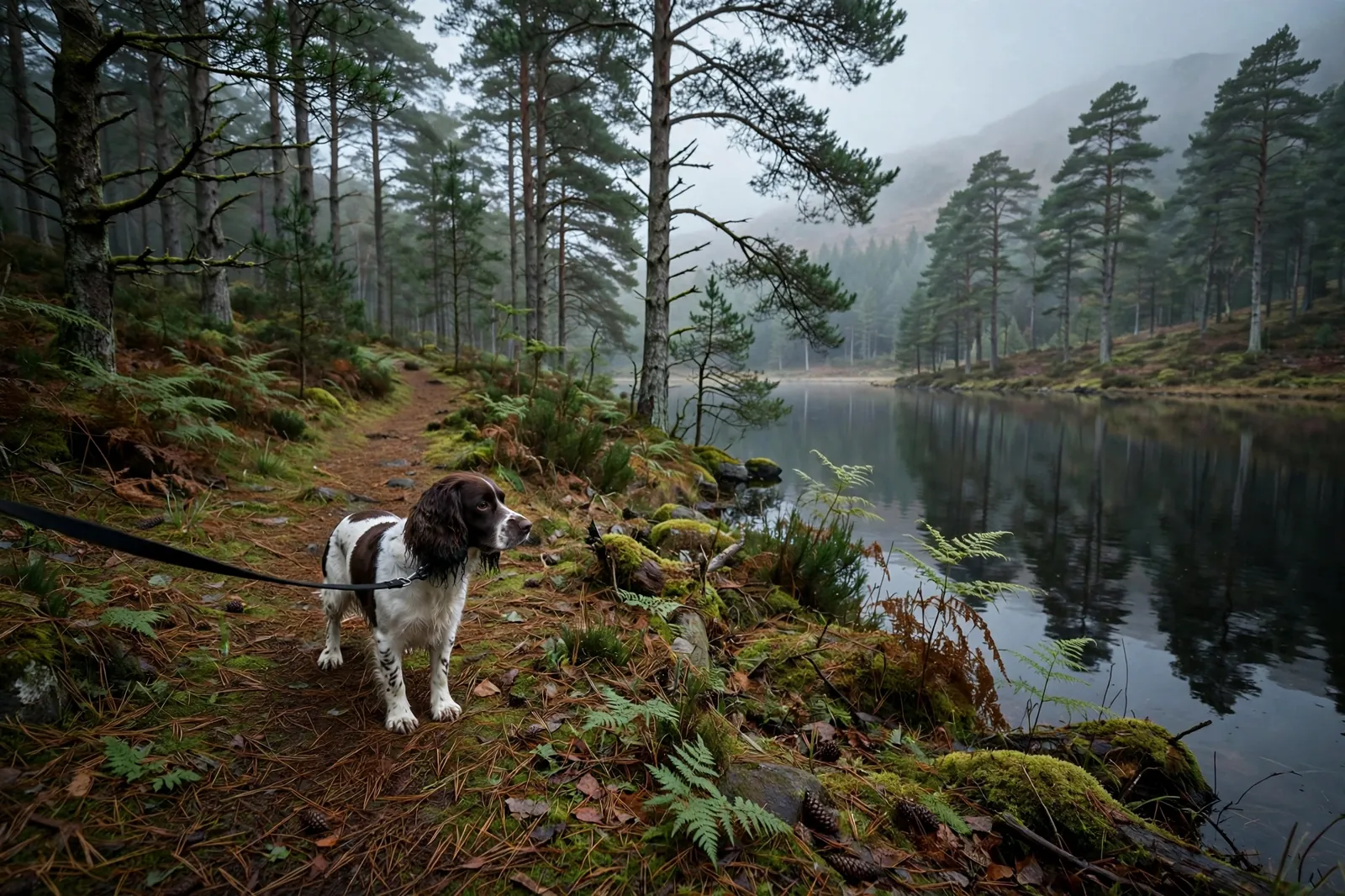
Garries Wood is the best-known woodland walk near the village, and it is a lovely place for a dog that likes trees. The wood sits beside the river, with a network of paths through mature woodland that is cool and shady in summer and full of birdsong in spring. The ground is uneven in places, with roots and fallen branches, and it can be muddy after rain, so good footwear matters, and older dogs may find the steeper sections tiring. Keep your dog on a lead or under close control in the wood: there are other walkers, the paths are narrow in places, and the river runs close by with steep banks in some stretches. The reward is a proper woodland walk that feels a world away from the village, even though you are only minutes from the centre.
The Fleet valley walk upstream from the village follows the river as it winds through farmland and woodland towards the hills. This is a longer, more open walk, with views across the valley and the chance to see the river in its wilder mood, running fast over rocks and through pools. The path is not always well surfaced, and there are stretches where the ground is rough or wet, so this is a walk for a fit dog and an owner who does not mind mud. Take water for both of you, because there are no shops or taps along the way, and let someone know where you are going if you are walking alone. The valley walk is at its best in late spring, when the trees are in fresh leaf and the river is full, and in autumn, when the colours turn and the air is clear.
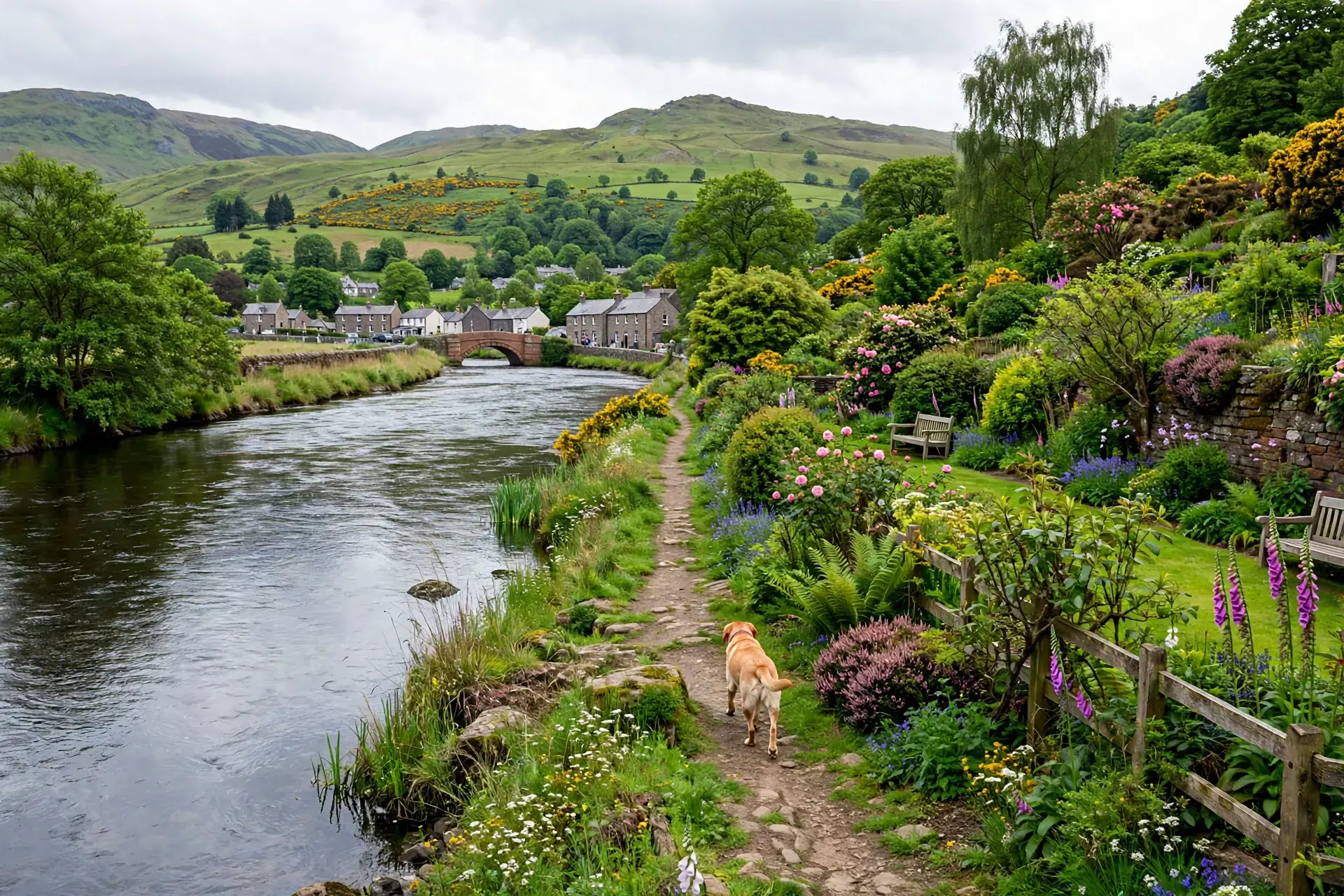
For a shorter and easier option, the riverside paths within the village itself are ideal for older dogs, puppies and anyone who wants a gentle stroll rather than a hike. These paths are mostly flat, with firm surfaces and frequent places to sit, and they give you the sound of the river and the sight of the gardens without any climbing. A loop of twenty or thirty minutes along the river and back through the village streets is enough for many dogs, especially in the morning or evening when the light is soft. If your dog is stiff or elderly, this is the walk to choose: it is kind on joints, easy to shorten, and close to the car if you need to cut it short.
Whatever route you choose, a few rules apply to all of them. Keep your dog on a lead near livestock, because the fields around the village are working farmland and sheep and cattle are easily stressed by a loose dog. Close gates behind you, and stick to the marked paths rather than cutting across fields. Carry poo bags and use them: the paths are popular with local walkers, and a village that welcomes dogs depends on dog owners behaving well. In the summer months, check for ticks after woodland walks, especially if your dog has been through long grass or bracken, and remove any ticks promptly with a tick remover. In the winter, watch for icy patches on the riverside paths, which can be slippery underfoot even when the village streets are clear.
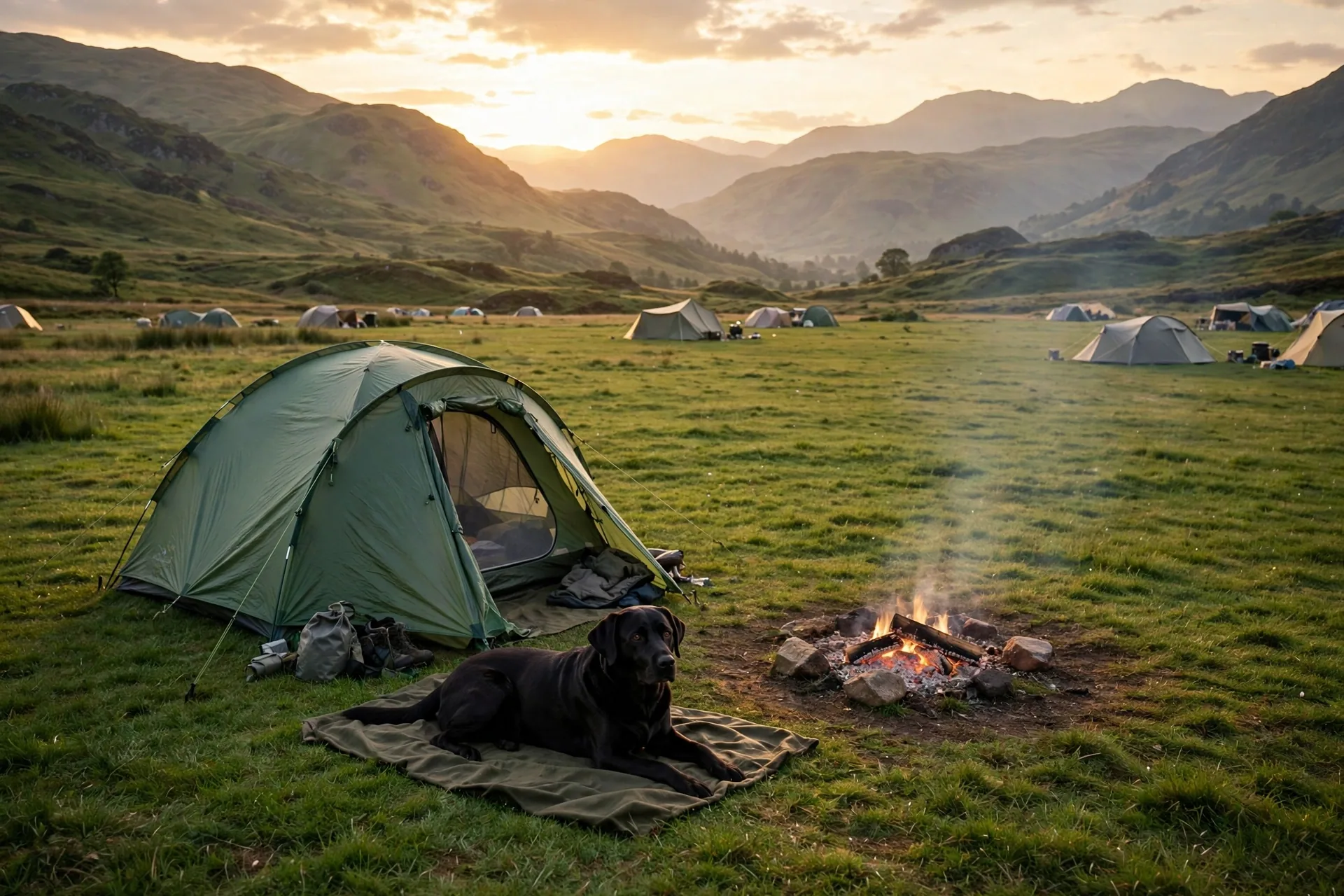
If you are planning a longer stay in the region and want to mix riverside walks with other kinds of outdoor time, our guide to camping with a dog in the UK covers the practical side of outdoor stays, from tent setups to lead rules and sleeping arrangements, and much of it applies to a village-based walking holiday too. The key point is the same in both cases: plan the walk around the dog, not the other way round, and always have a shorter option in reserve for the day the weather turns or the dog is tired.
A slow day in the village
A slow day in Gatehouse of Fleet starts with the river. Walk the dog along the riverside path in the morning, when the village is quiet and the light is low, and let the dog set the pace. The morning walk is the time for sniffing: every gatepost, every patch of grass, every scent left by the dogs that walked the same path yesterday. Do not hurry it. A twenty-minute walk that takes an hour because the dog has stopped to investigate everything is a successful walk, not a wasted one, and the dog will be calmer and happier for it.
After the morning walk, the village itself is worth exploring on foot. The main street has a small selection of shops, including a general store for supplies, and there are cafes and tearooms where dogs are welcome. Several village cafes welcome dogs indoors as well as on outdoor seating, and the village is small enough that you can simply ask at the door and see the policy for yourself. Bring a mat or blanket so your dog can settle under the table, keep the lead short in a busy room, and order something that gives you time to sit: a pot of tea, a slow lunch, a cake that takes a while to eat. The point of a village cafe with a dog is not the food, although the food is usually good. It is the chance to sit still together in a warm room while the world goes by outside.
The Mill on the Fleet is the village visitor centre, housed in a former mill building beside the river, and it is a good place to get your bearings. It has information about the area, exhibitions about the village and the river, and staff who can point you towards the walks that suit the weather and the season. Dogs are welcome in the visitor centre, which makes it a useful stop on a wet day when an outdoor walk is less appealing. Check the official guidance before you travel for opening times, as these can vary with the season. Even if you only pop in for ten minutes, you will come out with a better sense of the village and its history, and your dog will have had a chance to meet new people and smell new things, which is a form of enrichment in itself.
The gardens are the other pleasure of a village day, and they are best enjoyed slowly. Gatehouse of Fleet is known for its gardens, and the village has a tradition of opening private gardens to visitors on certain days, as well as public planting that is worth seeking out. Wander the streets and look over the walls: you will see herbaceous borders, old roses, fruit trees and the kind of cottage planting that has largely disappeared from modern gardens. Dogs should stay on the pavement and on a lead, and they should not be allowed into private gardens unless invited, but the view from the street is pleasure enough. In late spring and early summer, the gardens are at their best, and the village smells of flowers and cut grass.
Shopping for dog supplies in the village is limited, so come prepared. The general store will have the basics, but if your dog needs a specific food, medication or piece of equipment, bring it with you or buy it in Castle Douglas or Dumfries before you arrive. The nearest large supermarket is a drive away, and the village shops keep shorter hours than city visitors expect, especially on Sundays. Pack the dog's food, treats, medication and a spare lead in the car before you leave home, and you will not need to worry about finding them in the village.
An afternoon in the village can be as simple as a second, shorter walk and a sit in the garden of your accommodation. Dogs do not need constant stimulation, and a holiday that is packed with activities is often less enjoyable for them than one with long stretches of rest. Let the dog sleep in the afternoon, with a chew or a puzzle toy if they need occupation, and save your energy for the evening walk, when the light is golden and the village is quiet again. The rhythm of a good dog holiday is walk, rest, walk, rest, and Gatehouse of Fleet, with its small scale and gentle pace, is built for exactly that rhythm.
Where to stay with a dog
Gatehouse of Fleet has a good range of dog-friendly places to stay for a village of its size, including self-catering cottages, bed and breakfasts and small hotels, and the surrounding countryside has farm stays, caravan sites and holiday parks within a short drive. The best choice depends on your dog. A cottage with a garden is ideal for a dog that needs outdoor space and a secure area to toilet at night, while a bed and breakfast suits a calm dog that is happy to settle in a bedroom and wait quietly while you eat. A caravan or lodge gives you more space and your own kitchen, which makes feeding routines easier, but check the access: some units have steps that older dogs struggle with, and some have decking with gaps that small dogs can slip through.
Book early, especially for the summer months and school holidays, because the dog-friendly units are always the first to go. When you book, be specific about your dog: how many dogs, what breed, what size, and whether they are likely to bark or be left alone in the accommodation. Honesty at booking time avoids awkward conversations on arrival, and most hosts would rather know in advance than discover a large dog in a unit that was booked for one small one. Ask the questions that matter: is there a secure garden, is there a pet fee and how much is it, are dogs allowed in all rooms or only in certain ones, and is there a charge for damage or extra cleaning. Get the answers in writing with your confirmation, and keep the email until you are home.
Pet fees in the area vary, but a common pattern is a charge of twenty to fifty pounds per dog per stay, or a weekly rate for longer bookings. Some places charge nothing for dogs, and some charge a flat fee regardless of the number of dogs, so it is worth comparing the total cost rather than the headline price. Check whether the fee includes a deep clean or whether there is a separate refundable deposit, and ask what happens if your dog damages something: a clear policy, agreed in advance, is better than a surprise bill at checkout. If you are staying for a week or more, ask about a discount on the pet fee, as some hosts will waive or reduce it for longer stays.
On arrival at your accommodation, walk the boundary before you let the dog off the lead in the garden. Check the fences and gates for gaps, look for low windows and open drains, and move cleaning products, medicines and anything chewable out of reach. Give the dog water and a familiar bed, and let them sniff the new space for a few minutes before you unpack. A dog that has had time to investigate will settle much faster than one that is left alone in a strange room while you carry bags in from the car. Photograph any existing damage when you arrive, so that you are not blamed for it when you leave, and report it to the host straight away.
Leaving a dog alone in holiday accommodation is a sensitive subject, and the rules vary from place to place. Many hosts prohibit it outright, and many more allow it only for a short period and only if the dog is crated and quiet. Plan as if the answer is no, and choose accommodation and activities that let the dog come with you. If you do need to leave the dog alone, keep it brief, leave the dog with something to chew, and make sure the dog is tired from a walk first. A dog that is left alone in a strange place after a long walk is far more likely to sleep than one that has been cooped up all day.
For a wider view of staying options across the region, our guide to Dumfries and Galloway with a dog covers dog-friendly stays across the county, from forest lodges to coastal cottages, and it will help you plan a longer trip that takes in Gatehouse of Fleet alongside Kirkcudbright, Wigtown and the Galloway Forest. Gatehouse of Fleet works well as a base for exploring the whole region, but it also works well as a destination in its own right, and many visitors find that two or three nights in the village is exactly the right length for a first visit.
Practicalities: vets, shops, tides and weather
The nearest veterinary practices are in Castle Douglas and Newton Stewart, both a short drive from the village, and there are larger practices in Dumfries. Before you travel, save the number of the nearest vet in your phone, along with the number of an out-of-hours emergency vet, and check the opening hours: rural practices can close early and may not be open at weekends. If your dog is on medication, bring more than you need for the trip, and carry the prescription details with you in case you need an emergency supply. A basic dog first-aid kit is worth packing: tweezers or a tick remover, a bandage, saline solution for cleaning wounds, and any medication your dog takes regularly.
Tides deserve a section of their own, because they shape the best walk in the village. Fleet Bay is tidal, and the difference between high and low water is the difference between a broad sheet of water and a vast expanse of sand. Always check the tide times before you set off for the bay, and plan to walk on a falling tide rather than a rising one. A rising tide can cut off a walk faster than you expect, and the channels on the bay fill quickly. If you are unsure, ask a local or check with the visitor centre: people who live beside a tidal bay have a healthy respect for it, and their advice is worth taking. Never walk on the bay in fog, and never let children or dogs wander out towards the deeper channels.
Weather in Galloway changes quickly, and the village is no exception. A bright morning can turn to rain by lunchtime, and a wet afternoon can clear into a golden evening. Pack for all of it: a waterproof coat for you, a drying coat for the dog, and a towel in the car for muddy paws. The river paths and woodland trails can be muddy after rain, so waterproof footwear with good grip is essential, and a spare pair of socks is a small luxury that makes a big difference. In the summer, bring sun protection and water for the dog, and remember that the sun can be strong even on a cloudy day. In the winter, bring warm layers and a torch for the short afternoons, because the village streets are quiet after dark and the riverside paths are unlit.
Midges are a fact of life in parts of Scotland in the summer, and Galloway is no exception. The tiny biting insects are at their worst on calm, damp evenings near water and woodland, especially from June to August, and they can make an evening walk miserable for both you and the dog. A midge repellent for you, and a light covering for the dog if they are sensitive, will help, and choosing a breezy, open walk rather than a sheltered woodland path on a still evening will make a difference. Midges do not carry disease in the UK, but their bites are itchy and uncomfortable, and a dog that is constantly bothered by them will not enjoy the walk. If the midges are bad, walk earlier in the day and save the evening for a sit in the garden.
Finally, a word about the practicalities of travelling with a dog in a rural area. Petrol stations, cash machines and shops are further apart than in a town, so fill up the car before you arrive and carry some cash. The village has a cash machine, but it is worth having a backup. Keep the dog's lead, water bowl and poo bags in a bag by the door of your accommodation, so that you can grab them on the way out without thinking. And remember that the village is a real place where people live and work, not a theme park: be polite, pick up after your dog, keep the noise down at night, and leave the village as clean as you found it.
Seasons and when to visit
Spring is one of the best times to visit Gatehouse of Fleet with a dog. The gardens come alive, the woodland paths are full of birdsong, and the days are long enough for a full walk and a village wander. The river is usually full after the winter rains, and the bay is quiet, with the winter waders still present in the early spring before they leave. The weather can be changeable, with bright spells and sudden showers, but the village is at its most hopeful in spring, and the dogs, who have spent the winter indoors, seem to feel it too.
Summer brings the longest days and the warmest weather, but it also brings the most visitors and the midges. The village is at its busiest in July and August, and the dog-friendly accommodation books up early, so plan ahead if you want to visit in the school holidays. The bay is at its best in summer, with warm sand and long evenings, but the heat can make midday walks uncomfortable for dogs, so walk early in the morning or late in the evening and rest in the shade during the heat of the day. Always carry water, and watch for signs of overheating: heavy panting, drooling, or a dog that lies down and refuses to move are all signs to stop, cool the dog down and seek shade.
Autumn is, for many people, the finest season in Galloway. The trees turn gold and red, the light is low and clear, and the midges disappear. The gardens take on a different kind of beauty, with seed heads and autumn colour, and the bay is quiet again after the summer crowds have gone. The walks are at their best in autumn, with firm ground underfoot and cool air that suits dogs perfectly. Pack a waterproof, because autumn showers are common, but do not let the rain put you off: a walk in light rain, with the autumn colours around you and the dog happily trotting ahead, is one of the great pleasures of the season.
Winter in Gatehouse of Fleet is quiet and atmospheric, but it demands more planning. The days are short, the paths can be muddy and icy, and some cafes and attractions keep reduced hours or close altogether. On the other hand, the village is almost empty, the bay is full of wintering birds, and a walk on a clear winter morning, with frost on the grass and the sun low over the bay, is unforgettable. If you visit in winter, plan shorter walks, carry a torch, and make sure your accommodation is warm and dry. An older dog will need a coat, and a young dog will need to be dried thoroughly after every walk, but the rewards of a winter visit are real, and the village will feel like it belongs to you alone.
A two-day dog-friendly plan
Day one starts with the river. Walk the riverside path in the morning, letting the dog sniff and explore, and then wander the village streets, looking at the gardens and stopping for a coffee at a dog-friendly cafe. In the afternoon, walk up to Cardoness Castle, spend time in the grounds, and enjoy the views over the bay. Come back to the village for a second, shorter riverside walk in the evening, and then settle in for a quiet night. The first day is about learning the village: where the paths go, where the cafes are, and which walk your dog likes best.
Day two is the bay day. Check the tide times the night before, and plan to reach Fleet Bay on a falling tide, a couple of hours after high water. Walk the firm sand, let the dog run and paddle, and give the wading birds a wide berth. Bring water and a towel, and expect muddy paws. After the bay walk, drive or walk to Garries Wood for a shady woodland walk, which is a complete contrast to the open bay and a good way to cool down. Finish the day with a slow evening in the village, a final riverside stroll, and a long sleep. Two days is enough to see the best of Gatehouse of Fleet, and it is also enough to know whether you want to come back for a longer stay.
If you have a third day, use it to explore the wider area. Kirkcudbright, the artists' town on the Dee estuary, is a short drive away and has its own harbour walks and cafes. Castle Douglas, the food town of Galloway, is worth a visit for its delis and its loch-side walks. The Galloway Forest Park, with its dark skies and forest trails, is further afield but makes a superb day trip for a fit dog. Our guide to Dumfries and Galloway with a dog covers all of these in more detail, and it will help you plan a longer trip that takes in the best of the region without rushing. The key is to keep the days short and the walks varied: a dog that has had a good morning walk and a good afternoon rest will enjoy the next day far more than one that has been marched from dawn to dusk.
Packing for two days in Gatehouse of Fleet is straightforward, but a checklist helps. Bring the dog's food and treats, medication, a lead and a spare, poo bags, a water bottle and bowl, a towel and a drying coat, a tick remover, and a blanket or mat for cafes and for the car. Bring a waterproof coat and good footwear for yourself, a torch for the evenings, and a phone charger. Download the tide times and offline maps before you leave, and save the number of the nearest vet. With that kit, you are ready for whatever the village and the weather have in store, and you can focus on the important things: the river, the bay, the castle, and the dog walking happily beside you.
Practical questions
Before you go
Can dogs go on Fleet Bay beach?
Yes, in most places, but Fleet Bay is a tidal bay with wide mudflats, so the practical question is not whether dogs are allowed but whether the tide and the ground suit your dog. Walk at low tide on firm sand, keep your dog away from soft mud and deep channels, and check the tide times before you set off. Local restrictions can change with the season, so check the official guidance before you travel.
Is Cardoness Castle dog-friendly?
Dogs on leads are welcome in the grounds around Cardoness Castle, which is where most of the pleasure of the visit lies: the grassy approach, the views over Fleet Bay and the riverside path below. Dogs are not usually allowed inside the tower itself, so plan for one person to wait outside with the dog if you want to climb to the top. Check the official guidance before you travel, as access rules can change.
Where can I park in Gatehouse of Fleet with a dog?
The village has free public parking near the centre, including spaces close to the river and the start of the riverside walks, so you can usually park and be walking within a few minutes. On busy summer weekends the central spaces fill early, so arrive before late morning or park a little further out and walk in. Always check the signs on the day, as parking arrangements can change.
Are dogs welcome in cafes in Gatehouse of Fleet?
Several village cafes and tearooms welcome dogs, often indoors as well as on outdoor seating, and the village is small enough that you can ask at the door and see the policy for yourself. Bring a mat or blanket so your dog can settle under the table, and keep the lead short in busy rooms. Policies can change between seasons, so check before you travel if a particular cafe matters to your plans.
Is the riverside walk at Gatehouse of Fleet suitable for older dogs?
The short riverside stretches close to the village are mostly flat and gentle, and they suit older dogs well if you keep the walk short and turn back before the path climbs or gets rougher. The longer routes through Garries Wood and up the Fleet valley add uneven ground, roots and steady climbs, so save those for fitter dogs and choose the level loop by the river for a stiff or elderly companion.
When is the best time of year to visit Gatehouse of Fleet with a dog?
Late spring and early autumn are usually the sweet spot: the gardens are at their best, the days are long enough for a full walk and a village wander, and the midges that bother parts of Galloway in high summer are less of a problem. Winter is quiet and atmospheric but brings short days and wet, muddy paths, so pack drying coats and plan shorter walks. Summer is the busiest season, so book dog-friendly stays well ahead.