This guide is independent and contains no paid placement. Site rules, prices and facilities change, so confirm the current details with the site before you travel.
Camping with a dog works when you control four variables: a site with a sensible lead policy and a real dog-walking area, a tether system the dog cannot tangle or escape, a sleeping setup rehearsed at home, and food and water routines that keep wildlife and neighbouring campers out of your tent. Master those, and the rest is fresh air.
Choosing the right site
Tick these boxes in order when you choose a first campsite with a dog. One: the site explicitly welcomes dogs and states its maximum per pitch, because 'dogs welcome' on a listing sometimes means one small dog and sometimes means three large ones. Two: there is somewhere to walk the dog for the first and last trips of the day without leaving the site or crossing a road — a dog walking field, a rough meadow margin, or a footpath from the gate. Three: the lead rule is workable; most UK sites require dogs on leads on the pitching fields, which is reasonable, but the best sites pair that rule with a dedicated off-lead area where a dog can actually run. Four: fresh water taps are plentiful, because you will fill the dog's bowl and wash muddy paws far more often than you expect. For an even cheaper night, YHA hostels that allow dogs also offer camping barns and pods in some locations.
Facilities divide campsites more sharply for dog owners than for anyone else. A dog shower or at least an outdoor tap with a hard standing saves your tent from the worst of the mud in wet weeks. A small on-site shop that stocks basics forgives forgotten supplies. And a site layout that lets you pitch away from the play area, the toilet block footpath and the entrance barrier reduces the passing traffic your dog feels obliged to monitor. When you book, ask for a pitch at the edge of the field near the dog walk: you get shorter midnight walks, fewer neighbours on two sides, and a quicker exit for dawn exercise before the site wakes up.
For a first trip, choose boring on purpose. Pick a site within an hour of home, with bookable pitches, a pub or café within walking distance as a weather fallback, and walks you already know or can easily research. Save the remote, facilities-free field for the third trip, when the dog knows the tent routine and you know your kit. Our guide to dog-friendly holiday parks in the UK covers the more serviced end of outdoor stays, which makes a useful comparison point if you are deciding how basic to go. Whatever you choose, read the site's own current rules before travelling — dog policies, lead rules and fire rules are the three that change most often.
Tethers, leads and boundaries
A campsite dog spends much of the day attached to something, so the system matters. The standard setup is a spiral ground stake with a long, chew-resistant tether line of three to five metres, giving the dog a territory that includes the tent door, some shade and a view of your chairs — but not the stove, the guy ropes of the next pitch, or the footpath. Position the stake before you pitch the tent, and walk the circle yourself to check what the dog can reach. A tether that reaches the cooking area is an accident arranged in advance; a tether that tangles around every peg will teach the dog that camping means frustration.
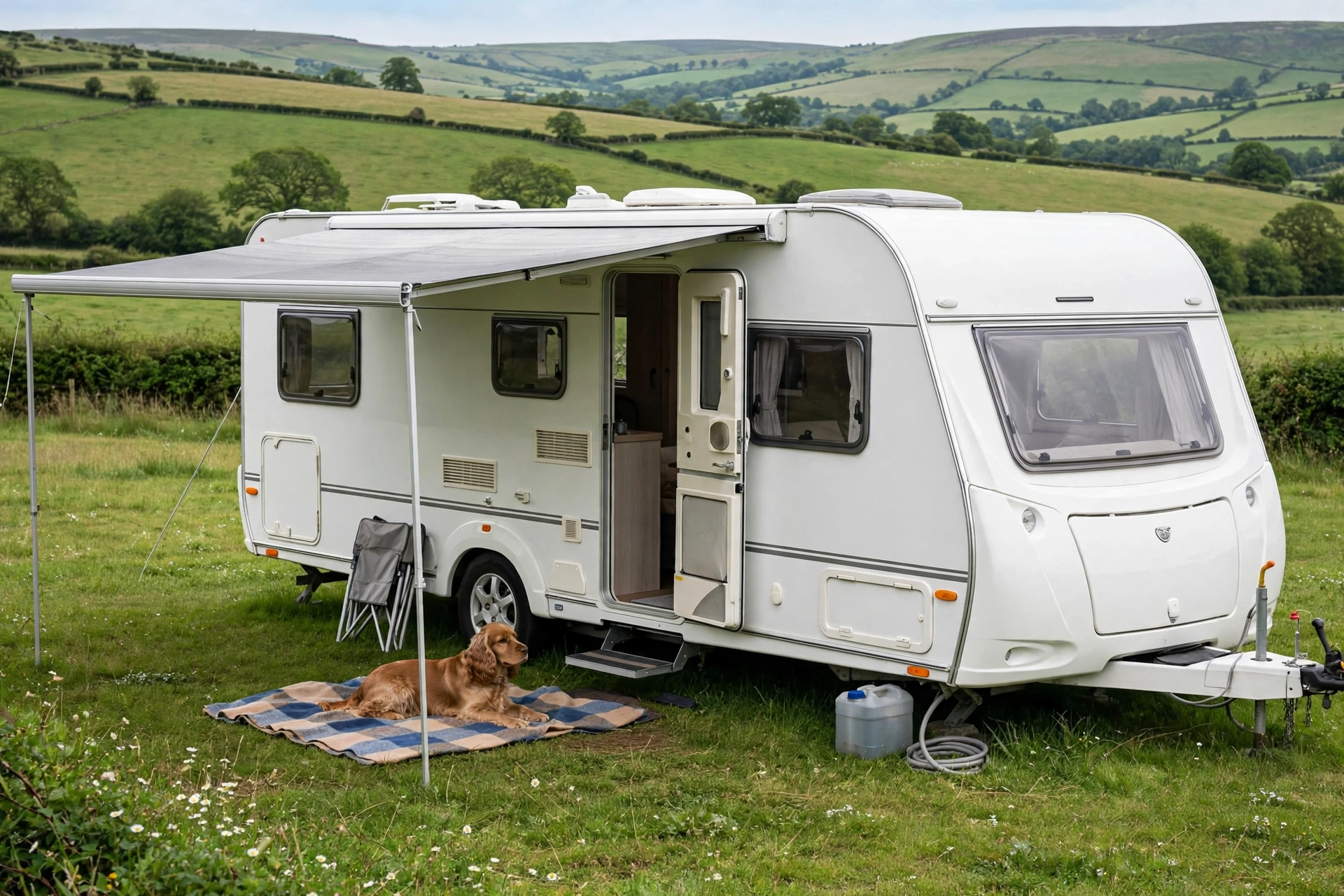
Stakes fail in two predictable ways: soft ground after rain, and a determined dog lunging at a passing spaniel. Counter both by carrying alternatives. A heavy filled water container makes a serviceable anchor on hard ground where stakes are banned or useless, and a car wheel can anchor a line for short, supervised periods — never with the engine warm, and never as a habit. Whatever the anchor, the dog on a tether should be supervised as a rule; tethers are for dogs relaxing alongside you, not for dogs left alone, and every reputable site prohibits leaving dogs unattended on pitches anyway.
Beyond the pitch, leads are the social contract of the campsite. Keep the dog on a standard lead on all shared areas, use the designated off-lead field for running, and treat every other camper's pitch as private ground even when your dog is convinced the barbecue smells are a public invitation. Retractable leads cause more campsite tangles and arguments than any other piece of kit — leave yours at home and bring a fixed long line for the dog field and a short lead for the lanes. With those two, plus a stake and a spare, you have a boundary system that works in any field in Britain.
Setting up the tent for a dog
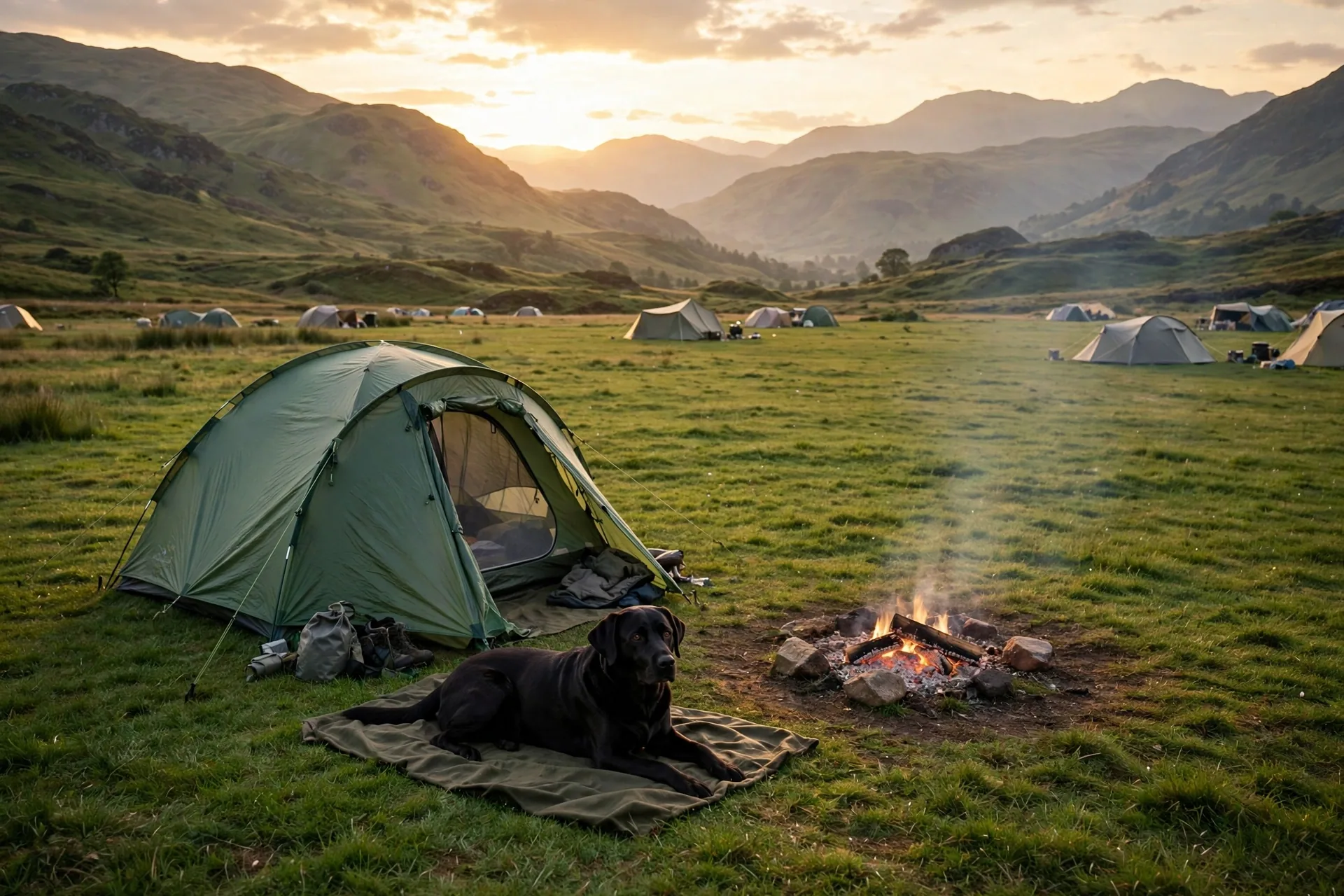
Pitch the tent as a dog space from the first peg. Decide where the dog's zone is — usually a corner of the porch or vestibule, or a defined mat just inside the inner tent — and put the bed there before anything else is unpacked, so the dog has somewhere sanctioned to be while you work. A raised or insulated mat under the bed matters more than the bed itself: ground cold climbs through a sleeping mat on autumn nights, and a dog that cannot get warm will spend the night climbing onto yours. Keep water in a low, heavy, spill-resistant bowl in the porch, where a knocked bowl floods gravel rather than your sleeping bags.
Protect the tent from its guest. Trim or check the dog's nails before the trip — claws are the leading cause of punctured groundsheets and torn inner tents — and train a pause at the door, because a dog that bursts through a mesh panel after a rabbit has ended more than one trip. Lay an old blanket or washable rug as a sacrificial floor layer wherever the dog walks, shake it out daily, and keep the dog's towel at the entrance for the paw wipe that happens every single time, without exception, before the dog comes in. The owners who skip the paw wipe on a dry evening are the ones digging mud out of the tent on the wet morning after.
Practise the whole arrangement at home first. Pitch the tent in the garden, or lay the footprint out indoors, and let the dog explore it, settle in it and sleep a nap in it with the doors in their camping configuration. Feed a meal in the porch. The goal is that on the first real night, every element — the sounds of nylon, the closeness of the walls, the tether outside — is familiar except the view. Dogs who have rehearsed the tent usually sleep through; dogs meeting it for the first time in a strange field at dusk often provide commentary until midnight, which neither you nor the neighbouring pitches will remember fondly.
Sleeping arrangements that work
Where the dog sleeps is a comfort decision with safety edges. Most dogs settle best in the porch or in a corner of a multi-person inner tent, on their own bed, within earshot and smell of their humans but not underfoot when someone gets up in the dark. Small dogs frequently end up in the foot of a sleeping bag and nobody regrets it, but plan the arrangement rather than negotiating it at 2am: a dog that expects to climb in will, and a dog trained to its own mat needs that mat to be genuinely comfortable — insulated below, familiar from home, and big enough to stretch on.
Cold is the main night-time risk in British camping, including in summer. Single-skin tents track outside temperature closely, and a clear June night in the hills can drop below five degrees. Short-coated, elderly and very young dogs feel it first. Pack a dog coat or fleece for the night even in July, add a blanket over the bed, and check the dog in the early hours on the first night to calibrate how much insulation your dog actually needs. Shivering, curling into the tightest possible ball and trying to climb onto your mat are instructions, not misbehaviour — respond by adding warmth, not by discipline.
The other night-time event to plan is the exit. A dog that needs the toilet at 3am in a tent is an exercise in zips, torches and leads in the dark. Sleep with the lead and a head torch clipped in the same place every night, keep your shoes by the door, and walk the short route you scouted at dusk — this is where the pitch near the dog walk pays for itself. Dogs learn the camping night pattern quickly; by the third night most are sleeping longer and deeper than they do at home, worn out by fresh air and novelty. Protect that sleep by keeping evenings calm: the rowdy game of fetch at 9pm borrows from everyone's night.
Weather: rain, heat and cold
Rain is the default planning assumption in Britain, and a dog multiplies its effects. A wet dog needs drying before entering the tent, a dry place to lie that is not your bedding, and more towelling than you think — pack one large towel for the dog per day of a wet-weather trip, or a quick-drying microfibre set you rotate through the wash points on site. A dog drying coat earns its bag space many times over, pulling moisture out of the coat while the dog rests. Site the tent so the door does not face the prevailing wind, keep the paw-wipe station under the porch canopy, and accept that in a wet week the dog will smell like a dog; ventilation, not perfume, is the answer.
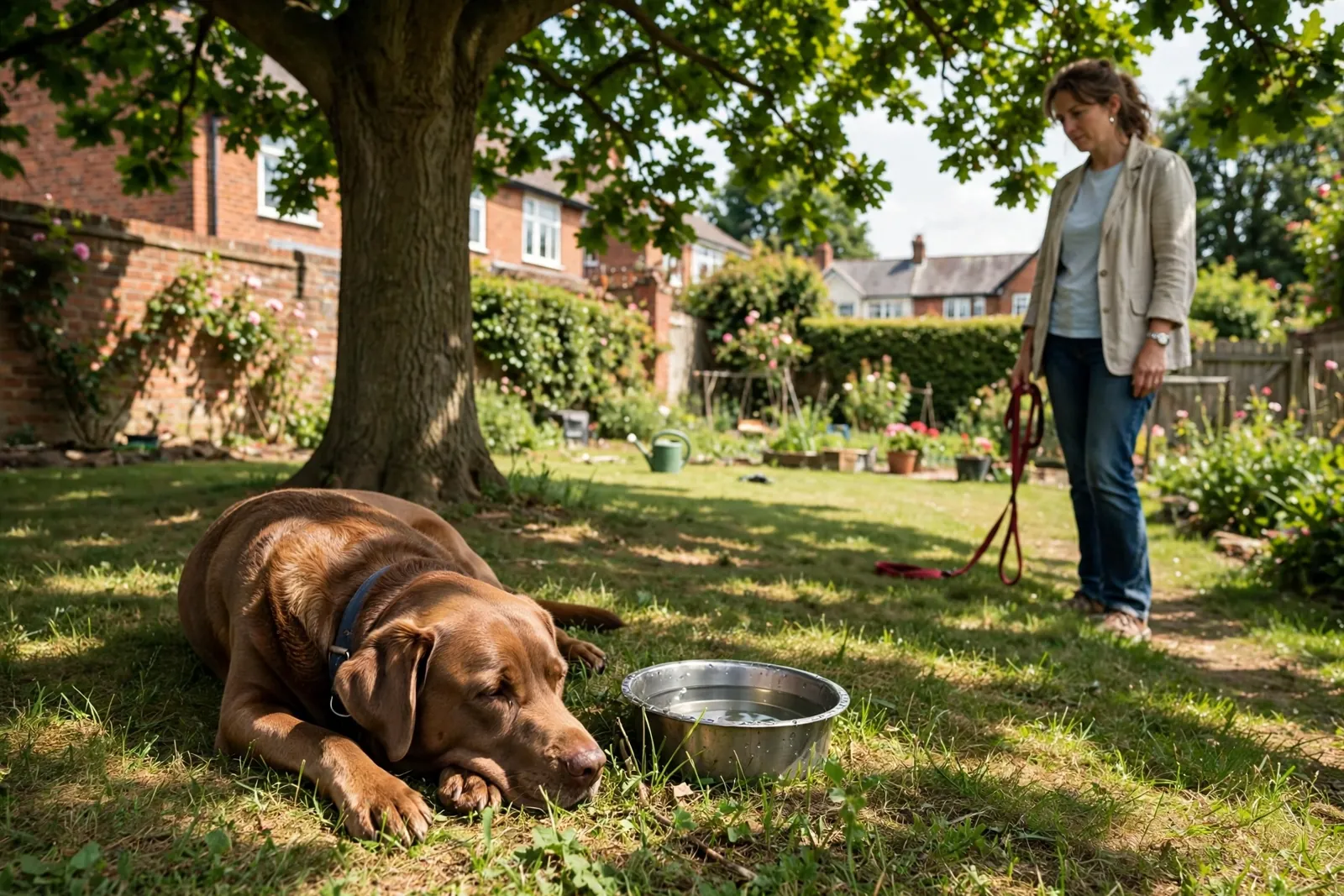
Heat is rarer but more dangerous. A tent in full sun becomes an oven by mid-morning, and a dog must never be left inside a closed tent in warm weather, even 'for ten minutes'. Pitch for morning shade, open every vent and door panel when you are present, and plan the dog's day around water — a stream, a lake shore where dogs may swim, or a simple paddling bowl in the shade of the tent. Camp near the coast or in the hills for moving air, walk early and late, and know the signs of overheating: heavy panting, drooling, disorientation. Our guide to summer heat and dogs travelling gives the full safety picture, and it is worth reading before any July or August trip.
Cold-weather camping with a dog is a joy for the right breeds and a logistics exercise for everyone: frozen water bowls, condensation dripping from the inner tent, and short days that put the long walk at lunchtime. Insulate the dog's bed from the ground with a closed-cell mat, carry more food than summer rations — dogs burn extra calories staying warm — and dry the dog's coat by the stove or fire only under close supervision, at a distance, because wet nylon and wet dog hair both scorch faster than you expect. Choose your season honestly: a dog that hates cold rain will not be converted by your enthusiasm, and a winter trip with a miserable dog is miserable for the whole tent.
Food, wildlife and livestock
Camp food discipline starts with a simple rule: dog food lives in a sealed, hard-sided container, never in the tent's sleeping area and never in an open bag in the porch. Crows, gulls, badgers and the site cat all read an unsealed kibble bag as an invitation, and a dog defending its dinner from a badger at midnight is a veterinary emergency with fur on. Store the container in the car or a sealed storage box, measure meals as you would at home, and resist feeding rich campsite scraps — barbecue fat and sausage skins cause the upset stomachs that fill the night air of every campsite in August.
Feeding times and places should mirror home as closely as the field allows. Feed after the evening walk, in the same spot by the tent, and wash the bowl or use a fresh one rather than leaving residue to attract insects and wildlife. Carry the dog's water from the site tap in a dedicated container, and top up from known sources only; dogs that drink from stagnant puddles and livestock troughs pick up stomach bugs and worse, including leptospirosis in some areas, so a firm 'leave it' around standing water is a health measure, not fussiness. In blue-green algae season, keep dogs out of affected lakes and reservoirs entirely — our blue-green algae guide for dog owners explains what to look for.
Around livestock, camping adds one specific duty: the countryside code is not optional because you are on holiday. Keep the dog on a short lead anywhere sheep, cattle or horses may be, close every gate, and never let the dog into a field of stock 'for a run' because it looks empty of people. The law treats livestock worrying seriously, farmers are entitled to protect their animals, and campsites border farmland precisely because the walking is beautiful. The same lead discipline applies to ground-nesting birds on moorland and coast in spring and summer — signs will tell you, and they are there because dogs, however gentle, read to a nesting skylark as a predator.
Walks from the tent door
The quality of a camping trip is largely set by the walks within reach of the tent. Research them before you book, not after you pitch: a site with a footpath network from the gate, a river or coast path within half a mile and a choice of a short loop (for wet evenings) and a long route (for the big day) gives the week its shape. Carry an offline map and know the livestock and lead requirements of your planned routes, because printed site leaflets go out of date and online walk descriptions often omit the words 'dogs on leads through the farmyard' that matter most.
Build the walking day in the camping pattern: a proper morning walk that empties the dog's energy before any driving or sightseeing, short sniff-rich outings during the day, and a calm leg-stretch last thing. Dogs on camping trips cover more ground than at home and eat novelty with every step, so watch for the quieter signs of tiredness — lagging on the lead, seeking shade, drinking more — and scale the second walk down rather than pushing a young or older dog through a route card written for humans. Puppies need particular restraint: the five-minutes-per-month-of-age rule of thumb for structured exercise applies in the hills too, however keen they seem.
Mix in rest as a deliberate activity. A day based at the tent, with the dog dozing on its tether territory while you read, is not a wasted day; it is how dogs process a week of stimulation, and it is often the day owners later describe as the best of the trip. If you are planning a longer touring break, our guide to holidays with two dogs covers the extra logistics when the walking party doubles — many of its routines, from staggered feeding to paired tethers, transfer directly to camping with one dog and ambitions.
The dog camping packing list
Pack the dog's kit as its own bag, packed first and loaded last so it is reachable at the first stop. Food in a sealed container with a scoop, measured portions for longer trips; two bowls, one for the pitch and a collapsible one for walks; the bed and an insulation mat; a drying coat and at least two towels; the tether line, ground stake and a backup anchor; a short lead, a long line and a spare lead; waste bags in serious quantity, because sites are not obliged to forgive you for running out; and a head torch for the human end of the night walk.
Health and paperwork go in the same bag. Tick remover and a tick check routine every evening — see our ticks and dogs guide for technique — plus any medication with a day's buffer beyond the trip, vaccination details, microchip number, your vet's phone number and the number of a vet near the site saved before you leave coverage. A basic canine first-aid kit — bandage, saline, antiseptic wipes, a spare boot or sock for a cut pad — weighs almost nothing and converts several trip-ending problems into ten-minute fixes. In tick and adder country, know the symptoms worth driving for and the location of the nearest emergency practice.
What not to pack is half the wisdom. Leave squeaky toys, rawhide chews that need supervision you cannot give in a tent, and the dog's full home toy box; bring one comfort object and one chew for settling. Leave the retractable lead, the delicate food that needs refrigeration you do not have, and any kit you have not tested — camping is the worst classroom for new equipment. Every item on the list should have survived a garden rehearsal. The trips that feel effortless are the ones where nothing in the field is being used for the first time.
Leave no trace, canine edition
Camping with a dog ends with the pitch, and the standard is simple: the next camper should find no evidence a dog was ever there. Walk the pitch in a slow grid before you leave, collecting every waste bag, dropped treat and chewed stick fragment your stay produced. Check under the tent footprint and around the tether circle, where the evidence concentrates. Fill or stamp down any digging — some dogs excavate enthusiastically in soft ground — and if the dog has damaged the grass or a fixture, tell the site and offer to pay; sites remember honest dog owners and quietly welcome them back, which matters at the popular ones with waiting lists.
Waste discipline applies on every walk from the site, not only the pitch. Bag it and bin it, or carry it out, on footpaths, beaches and open access land alike — the 'stick and flick' idea does not apply near paths, campsites or water, and dog waste carries parasites that affect livestock and other dogs long after it stops being visible. Our explainer on dog fouling fines in the UK sets out the legal position, but the camping ethic is stricter than the law: you are a guest in a working landscape, and the welcome dogs receive in the British countryside is maintained by the owners who leave it clean.
Finish the trip at home with the same care. Wash and dry all dog bedding before storing it — damp kit stored in a bag will ruin itself and announce the fact next season. Check the dog over thoroughly for ticks in the day after you return, note anything that needs replacing in the kit bag while the memory is fresh, and jot down what worked: the pitch position, the tether length, the walks worth repeating. Camping with a dog improves quickly with each trip precisely because these small records compound. The second trip is easier than the first, and by the fourth, the dog will be waiting by the tent bag when you start to pack the car.
Practical questions
First-time camping questions
Can I leave my dog alone in the tent while I shower or go out?
No. Tents offer no security and no temperature control, and every reputable campsite prohibits leaving dogs unattended on a pitch. A dog left in a tent can overheat on a sunny morning, escape through a zip or mesh panel, or bark at every passer-by. Take the dog with you, tethered nearby where permitted, or take turns with another adult so someone is always with the dog.
Do campsites in the UK charge for dogs?
Many include dogs free, while others charge a small fee, commonly around £1–£5 per dog per night, or a flat charge per stay. Most sites limit the number of dogs per pitch, usually to two. Charges and limits change between seasons, so confirm the current dog policy with the site when you book rather than relying on an old listing.
How do I stop my dog barking at other campers at night?
Prevention works better than correction. Tire the dog with a proper evening walk, rehearse tent sleeping at home before the trip, pitch away from footpaths and facilities where possible, and settle the dog with a chew inside the tent at your normal bedtime. Respond to the first woof calmly and briefly. Dogs usually quieten dramatically after the first night once the sounds of the site become familiar.
What is the best way to keep a dog secure on a pitch?
Use a spiral ground stake with a chew-resistant tether of three to five metres, positioned so the dog can reach shade, water and the tent door but not the stove, neighbouring pitches or footpaths. On hard ground use a heavy water container as an anchor. Always supervise a tethered dog, and use designated off-lead areas — never the tether — for proper exercise.
Can my dog sleep outside the tent?
It is not recommended in the UK. Night temperatures drop sharply even in summer, wildlife from badgers to livestock can approach a sleeping dog, and most sites require dogs to be kept under control, which a sleeping owner cannot guarantee. Dogs also settle better close to their owners. Bring the dog inside the porch or inner tent on an insulated bed, with a coat or blanket in colder months.