This guide is independent and contains no paid placement. If affiliate links are added later, they will be clearly marked and will not change our editorial checks.
A dog day in Honiton can stay on foot from start to finish: browse the antique shops along the broad High Street, step into the Allhallows Museum for the lace story, pick up picnic food at the Tuesday or Saturday market, and finish on the flat paths beside the River Otter. Sidmouth and its beaches sit about nine miles south for a seaside afternoon, the car parks sit a short stroll from the shops, and the pubs and cafes along the street are accustomed to four-legged regulars. Market mornings reward an early start, and hours, charges and beach rules are worth confirming in the official guidance before you set off.
Walk the High Street first: antiques, lace and all
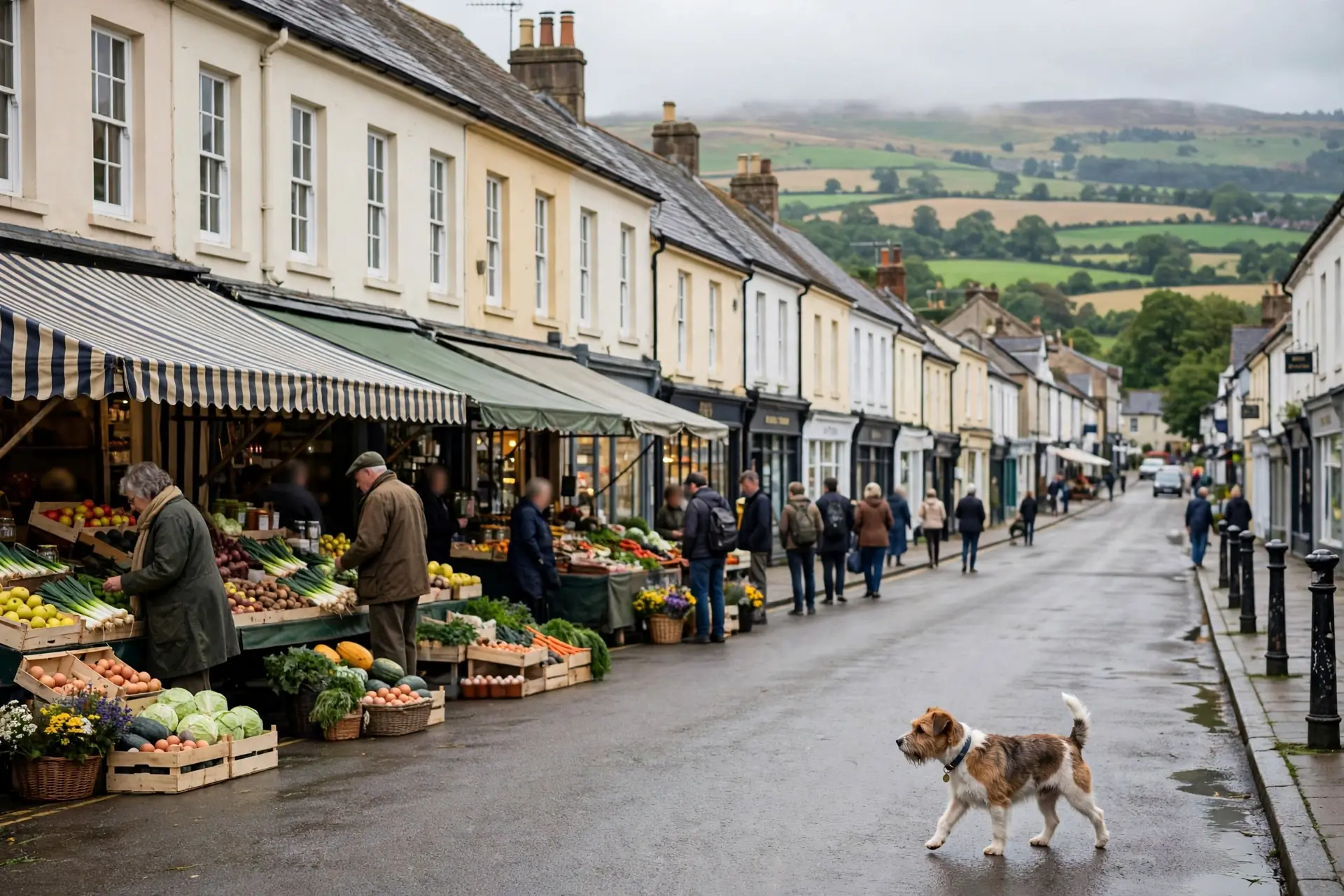
Honiton is best understood on foot, starting at one end of its High Street and walking slowly to the other. The street is one of the widest in Devon, a legacy of its centuries as a coaching town on the London to Exeter road, and it still feels like a place built for stopping rather than passing through. The buildings are mostly Georgian, rebuilt after two great fires in 1747 and 1765, and they give the town a handsome, even rhythm: brick and stucco frontages, sash windows, shop signs painted rather than lit, and doorways that open straight onto the pavement. For a dog, the width matters. There is room for a lead, a pushchair and a browsing shopper to pass each other without anyone being squeezed against a wall, which is more than can be said for many Devon market towns. A slow wander from end to end, with stops, takes about an hour, and that hour tells you most of what you need to know about the town.
The antiques are the reason many people come, and they are the first thing to plan around with a dog. Honiton has been called the antiques capital of the south-west, with around eighty dealers and two auction houses in and around the town, and the High Street is lined with shops selling furniture, pottery, glass, clocks, books, pictures and the kind of small objects that reward a patient browser. That density is a pleasure and a practical problem in equal measure. Some shops welcome dogs warmly and keep a water bowl by the door; others have narrow aisles, low shelves and fragile stock, and would rather a dog waited outside. There is no single rule, so ask before you step in, keep the lead short and your dog close to your leg, and accept a no gracefully. If you are travelling as a pair, take turns: one person browses while the other walks the dog to the next shop, and nobody has to rush. Honiton Pottery, the town's own collectable ware, turns up in several shops, and a patient hour here can easily turn into a whole morning.
The street itself needs a little care. The High Street is still a through road carrying traffic on the A30 and A35 routes, so this is not a traffic-free stroll. Keep your dog on a short lead, on the pavement side, and use the crossings rather than darting between parked cars. The pavements are broad, but market stalls, A-boards and displays of goods narrow them on market days, and a long lead stretched across a busy pavement is a trip hazard for everyone. Early morning is the calmest time to walk the street, when the shops are opening and the traffic is light; late afternoon is the next best, when the day visitors have gone and the light turns the brickwork warm. If your dog is nervous around traffic, walk the quieter side streets and the lanes behind the High Street as well, and save the main drag for a short, purposeful pass rather than a long browse.
Use the High Street as your map of the town. Honiton railway station sits at the eastern end, a short walk from the shops, on the line between London Waterloo and Exeter. The River Otter runs past the western end, where the town meets the valley. In between are the churches, the museum, the market hall, the pubs and the cafes, all within a few minutes of each other on foot. That compactness is what makes Honiton work as a dog base: you can park once, walk the street, eat lunch, and be on a riverside path within minutes, without ever needing the car again until you leave. Start here, get your bearings, and let the rest of the day arrange itself around what the street shows you.
Lace, gloves and the town's making history
Honiton's fame was made by hand, one stitch at a time. Lace-making was brought to the town by Flemish immigrants in the Elizabethan era, and over the following centuries Honiton lace became known across Europe for its fine, delicate work. The most famous commission came in 1840, when the lace for Queen Victoria's wedding dress was made in the Honiton area, and the craft's reputation was sealed: this small Devon town supplied lace for royalty, and for the ceremonial regalia of the Speaker of the House of Commons, whose jabot and cuffs were traditionally made of Honiton lace. The work was done at home, mostly by women and children, sitting by the window with a lace pillow on their lap and dozens of bobbins moving in a rhythm learned young. It was slow, skilled, poorly paid work, and it shaped the town's streets, its cottages and its sense of itself for generations.
The place to meet that history is the Allhallows Museum of Lace and Local Antiquities, on the High Street beside St Paul's Church. The museum building is the oldest in Honiton, a former chapel that existed before 1327, and it now holds one of the most comprehensive collections of Honiton lace in the world, with displays in two galleries covering lace from the sixteenth to the early twentieth century. A third gallery covers local history more widely, including Honiton Pottery, wartime memorabilia and the town's other stories. Entry is free, the museum is run entirely by volunteers, and lace-making demonstrations are usually given by volunteers on Thursday and Friday afternoons. Opening hours are seasonal, with shorter hours in winter, so check the official guidance before you travel rather than assuming it will be open. The museum is small, so check its current policy on dogs before your visit; most visitors with a dog find it easiest for one person to pop in while the other stays outside with the dog, or to admire the building from the street and save the lace for a return visit without the dog.
Lace was not the town's only making trade. Honiton was also known for its gloves, and for pottery, and the three crafts together explain why the town grew as it did: a market town on a main road, with skilled homeworkers supplying goods that travelled far beyond Devon. Machine-made lace from Nottingham in the nineteenth century undercut the handmade trade, and the lace industry faded, but it never quite died in Honiton. Lacemakers still meet and demonstrate, the museum still teaches, and lace still turns up in the town's shops, in the gift shop at the museum and in the windows of the antique dealers. That continuity is part of the pleasure of the place: the heritage here is not a plaque on a wall, it is a craft that people in the town still practise.
There are other traces of the making town to look for on a walk with a dog. St Paul's Church stands on the High Street beside the museum, and the older parish church of St Michael's sits on a hill above the town, reached by a climb that rewards you with a view across the rooftops to the Blackdown Hills. The churchyards are quiet, green places to pause, but keep your dog on a lead and be respectful of graves and of anyone visiting them. Look up as you walk the High Street, too: above the modern shopfronts, the Georgian first floors, the old coaching inns and the former market hall tell the story of a town that served travellers for centuries. A dog does not care about any of this, of course, but a walk with something to look at is a better walk for the human half of the partnership, and Honiton gives you plenty to look at without ever leaving the pavement.
Market days, food and eating with a dog
Honiton's market is older than most of the buildings on the High Street. The town's street market was granted a Royal Charter in 1257, and it has been held in the High Street ever since, which makes a market day here less of an event and more of a habit: stalls set up along the broad thoroughfare, locals doing the weekly shop, and visitors browsing for things they did not know they wanted. The regular market days are Tuesdays and Saturdays, with a Thursday market currently suspended according to the town council's traders' handbook, so check the official guidance before you travel if you are planning a trip around a particular day. Stalls sell fresh local produce, plants and flowers, bread and cakes, crafts, clothing and household goods, and the last Saturday of the month usually adds a craft market element. The market is busiest late morning, when the stalls are fully stocked and the street is full, so dog owners who want the atmosphere without the crush should arrive early, walk the stalls while there is still room to move, and leave before the midday peak.
Treat a Tuesday or Saturday morning as two passes along the same stretch of High Street. On the first pass, keep the dog tight to your side on the pavement edge and move past the food stalls without lingering: bread, cakes and cheese sit on low tables at exactly the height of a curious nose, and one stolen sample can sour a stallholder's morning. Once the dog has had a leg-stretch down by the Otter and settled, come back for the shopping pass — a loaf, some cheese, fruit and a couple of pasties pack into a rucksack far better than anything grabbed in a hurry, and they make the riverside lunch that follows. Nervous dogs cope best before the stalls are fully up, while the street is still half-asleep; by late morning the pavements narrow and the crowd thickens. Carry water for the dog, because the open street offers almost no shade when the sun is out. If your cottage stay stretches over several days, this same morning shop covers the week, and the people behind the stalls will usually tell you what has just come in and what will keep.
Honiton keeps a few older customs that are worth knowing about, if only so you can plan around them. Hot Pennies Day takes place every year on the first Tuesday after 19 July, when warmed pennies are thrown from balconies and pubs along the High Street to the crowds below, a ceremony that dates back to the thirteenth century. It is loud, crowded and great fun for confident dogs and a poor choice for nervous ones, so check the date before you travel and either join in early or give the town a miss that day. The Honiton Agricultural Show, held each summer since 1890, is the town's big country day out, with livestock, crafts and trade stands on the showground outside the town; check the show's own guidance on whether dogs are welcome, as showground rules differ from town rules and livestock areas are usually off limits. Both events are reminders that Honiton is a working agricultural town, not a museum piece, and that its calendar still runs on farming seasons as much as on tourism.
The most relaxing lunch in Honiton may not involve a table at all. Pick up pasties or pies from one of the bakers or takeaway shops on the High Street, carry them the short distance to a bench beside the Otter, and let the dog sprawl on the grass while you eat with the water in front of you — no tucked-away lead, no negotiating a crowded room, and no dog curled under a chair. When you do want to sit inside, the pubs and cafes on and around the High Street are generally happy to have dogs, with terraces and bar areas the most reliable spots and indoor seating depending on the individual place; that picture shifts with the season, so confirm with the venue itself before building an evening around one particular room. Give the dog its walk before the meal either way: a dog that has already stretched its legs along the valley will doze through lunch, while one that has spent the morning in the car will fidget through it. Pack the dog's own mat or blanket so it has a spot that smells like home, a bowl and water, and a lead kept close to your chair and out of the path of anyone carrying plates.
The Otter Valley: river walks from the town
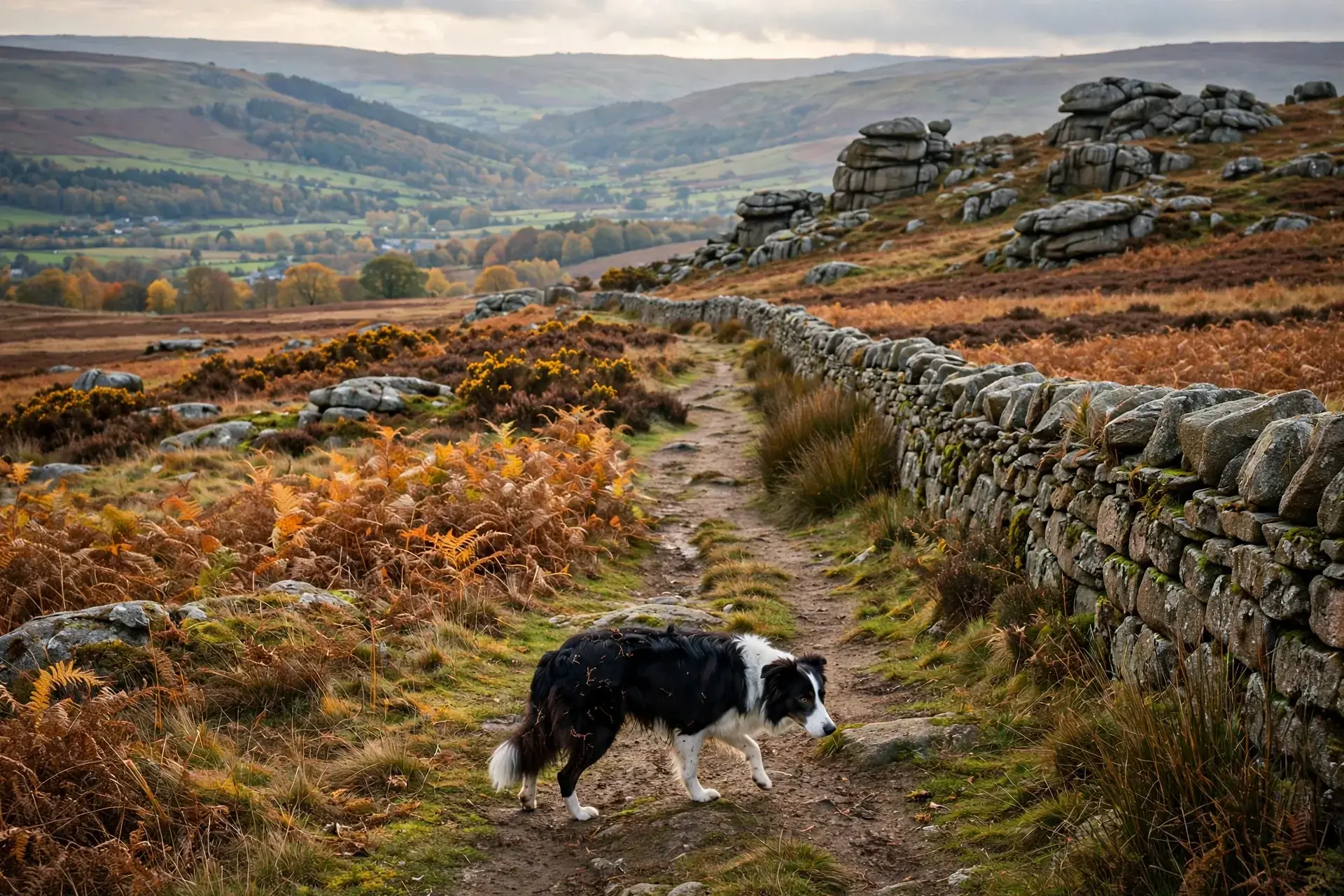
The River Otter is the quiet half of a Honiton visit, and the reason to stay longer than a morning. The river rises in the Blackdown Hills to the north, runs south through Honiton, and continues down the valley past Ottery St Mary to the sea at Budleigh Salterton, carving a broad, gentle valley of water meadows, hedgerows and wooded slopes. From the town centre you can be on a riverside path within minutes, and the change of pace is immediate: the traffic noise of the High Street fades, the ground softens underfoot, and the walk becomes about water, birds and open sky. This is not dramatic walking. There are no cliffs and no big climbs from the town itself, and that is precisely the point. The Otter Valley suits older dogs, puppies, dogs recovering from injury, and anyone who wants a proper walk without a proper hill.
The most useful walk from town is a simple riverside loop of two to three miles, following public footpaths along the river and back through the meadows. The ground is flat and the distance is forgiving, which makes it a good first walk of the day, a good evening walk after dinner, and a good option when the weather is too wet or too hot for anything longer. Surfaces are mostly grass and earth rather than tarmac, so the paths get muddy and slippery after rain, and in winter they can stay wet for days; sturdy footwear and a towel for the dog are not optional extras here. There are gates and, in places, stiles to negotiate, and the meadows are grazed, so keep your dog on a lead where livestock are present, close every gate behind you, and never let a dog chase sheep or cattle. Longer walks are possible by following the valley downstream towards Feniton and Ottery St Mary, but the full distance is a serious day out rather than a stroll, so most visitors are better off driving to a second starting point than trying to walk the whole valley from Honiton in one go. Check the official guidance before you travel and carry an Ordnance Survey map or a downloaded offline map, because the footpath network is generous but the signposting is not always obvious where paths cross farmland.
Wildlife is the valley's main reward, and it repays a slow walk. Herons stand motionless in the shallows, kingfishers flash along the narrower stretches, and in spring the meadows fill with wildflowers and the hedgerows with birdsong. Otters do use the river, as the name promises, but they are shy, mostly active at dawn and dusk, and a sighting is a matter of luck and patience rather than something to plan a day around. The practical side of a river walk is about water and ground: there are shallow spots where a dog can paddle on a warm day, but the current quickens after heavy rain, the banks can be steep and slippery, and a dog that drinks large amounts of river water can end up with an upset stomach, so offer fresh water from your bottle and rinse the dog off afterwards. Ticks live in the long grass and bracken along the valley in the warmer months, so check your dog after every walk, carry a tick remover, and keep up with your dog's regular tick prevention. In spring, keep dogs on a lead near ground-nesting birds and away from nests in the meadow grass.
The valley changes with the seasons more than the High Street does, and it is worth timing your walk to match. Spring brings lambs, wild garlic and the first bluebells in the woods on the valley sides. Summer brings long light, warm meadows and the risk of heat, so walk early in the morning or in the evening, carry more water than you think you need, and watch for the signs of overheating in a dog that is running in long grass. Autumn is the valley at its best for many walkers: the crowds are gone, the light is low and golden, and the paths are firm after the summer. Winter is quiet and beautiful in a stark way, but the meadows flood in places after heavy rain, the paths turn to mud, and the short days mean a walk that starts at three in the afternoon can end in the dark. Whatever the season, tell someone where you are walking if you are heading far from town, keep your phone charged, and remember that the valley is working farmland as well as a walking route: the farmers whose fields you cross are the reason the paths exist, and a dog under control is the price of using them.
Day trips: Sidmouth, the Jurassic Coast and the Blackdown Hills
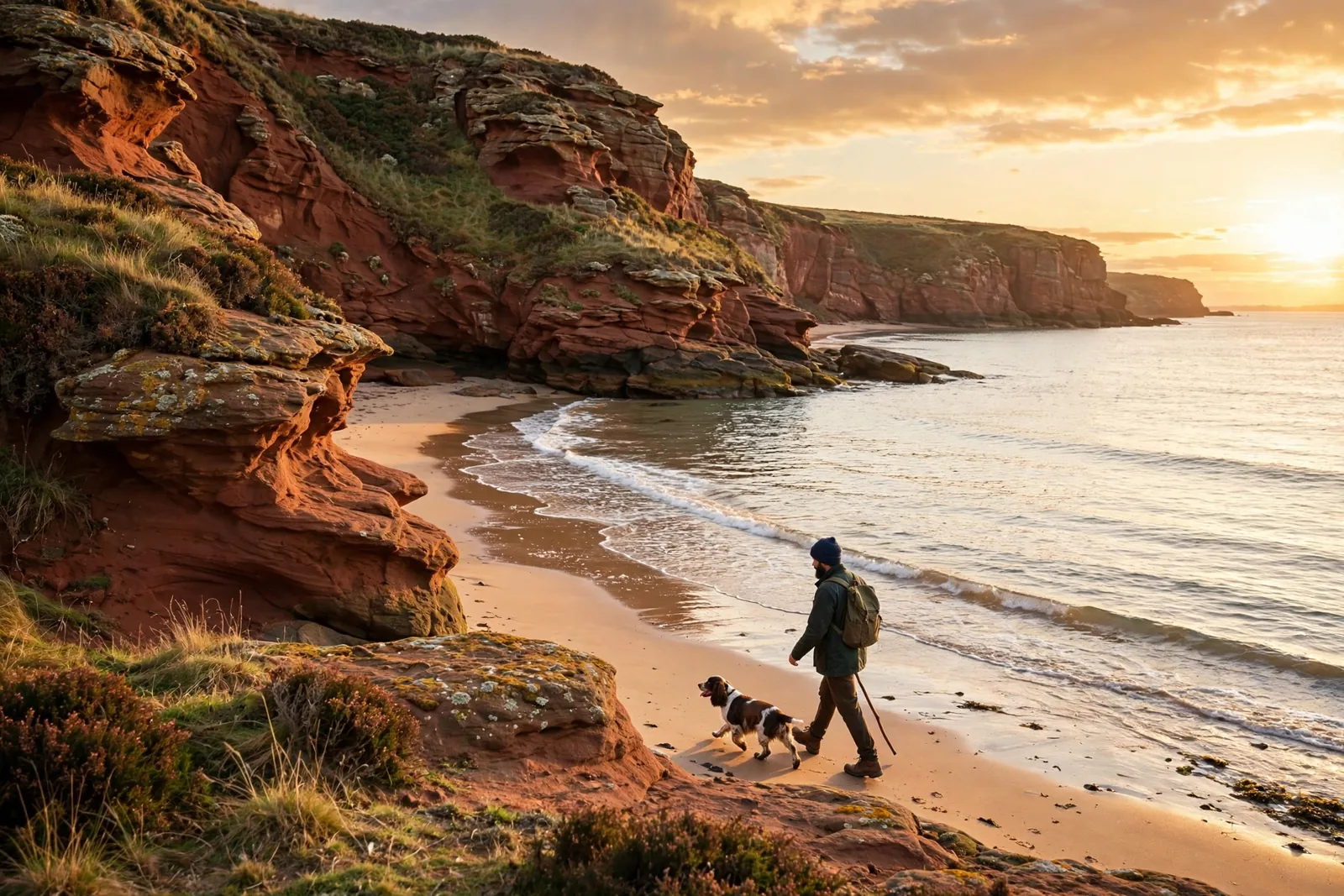
Sidmouth is the easiest day trip from Honiton and the one most dog owners make first. It is about nine miles south down the A375, roughly twenty minutes by car, and it could hardly be more different from Honiton: a Regency seaside town of elegant white esplanade buildings, red cliffs, a shingle beach and a slower, saltier pace. The town itself is good for a lead walk along the esplanade, with cafes and ice-cream shops that are used to dogs, and the cliff walk west towards Jacob's Ladder gives you views along the Jurassic Coast without a long drive. The beach needs planning, because the rules change with the season. Dogs are banned from the main town beach between Jacob's Ladder and the ramp opposite the sailing club from 1 May to 30 September, and dogs must be on a lead on the esplanade and the stepped area in front of the beach huts; outside those dates, from 1 October to 30 April, dogs are allowed on the main beach. Port Royal beach at the eastern end of the promenade is open to dogs all year, and the stretch of beach a hundred metres west of Jacob's Ladder is also open year-round, so there is always somewhere for a dog to get its paws wet, but always read the signs at the beach entrance and check the official guidance before you travel, because zones and dates can change and the fixed penalty for a breach is real.
Each beach along this stretch of coast runs its own version of the same split, so it pays to learn the local pattern before you set out. At Budleigh Salterton, roughly twelve miles from Honiton, the pebble shore stays open to dogs through the year at both ends — east from Lime Kiln and out past the western end — while the middle section closes to dogs from 1 May to 30 September. Seaton, further east, divides its sand and shingle the same way: the ends stay open all year and the centre is restricted in the summer months. Beer and Branscombe sit between Sidmouth and Seaton in steep little cliff coves; both are far quieter than the bigger beaches, but their shores are small and reached by steps and slopes, so check the rules for the day before you commit to the climb down with a dog. Our guide to dog-friendly beaches in the UK sets out how seasonal bans and public space protection orders are applied and how to confirm the position at a particular beach, which matters here because no two beaches on this coast share exactly the same zones — the board at the entrance has the last word.
North of Honiton, the Blackdown Hills offer the opposite kind of day out: high, open, quiet country with none of the seaside crowds. The Blackdown Hills are a designated Area of Outstanding Natural Beauty, a plateau of heathland, beech hedges and deep lanes straddling the Devon and Somerset border, and they start almost at the town's edge. Villages like Dunkeswell, Upottery and Smeatharpe sit among the hills, and the walking is a mix of open heath, forestry tracks and quiet country lanes, with big skies and long views back towards the Otter Valley. This is the best choice for a hot day, when the coast is packed, or for a dog that prefers open ground to crowded beaches. Keep dogs on a lead near livestock and ground-nesting birds, especially in spring and summer, and carry water, because there are long stretches of heath with no shops and no taps. Ottery St Mary, about seven miles south-west of Honiton, is another easy half-day: a small town on the River Otter with a handsome church, independent shops and cafes, and a riverside walk of its own. Its famous Tar Barrels event in November draws huge crowds and burning barrels through the streets, so it is emphatically not a night for a nervous dog, but on an ordinary day it is a gentle, dog-friendly stop.
Honiton also works as a base for longer days out, and the town's railway station makes some of them possible without a car. Exeter is about seventeen miles west on the A30, roughly half an hour by car or a short train ride, with a cathedral, a quayside, shops and riverside walks that reward a day trip. Lyme Regis is about fifteen miles east on the A35, with its famous Cobb harbour, fossil beach and a seafront that is busy in summer and lovely out of season. Trains run from Honiton station on the line between London Waterloo and Exeter, and dogs travel free on most UK train services, on a lead and under control, though it is worth checking the operator's rules before you travel and avoiding the busiest peak-time services with a large dog. If the moor-edge market-town pattern appeals to you, our guide to Liskeard with a dog covers a similar kind of town across the border in Cornwall, with moor walks, a market and valley routes of its own. The point of basing yourself in Honiton is that none of these days is far away, and you can choose between coast, hills and city on the morning of the trip, according to the weather and the dog's mood, rather than committing to a single plan days in advance.
Staying over and parking
Because Honiton is a working town rather than a resort, its sleeping options spread across the whole map: bed and breakfasts and small hotels on and around the High Street, self-catering cottages in the town and in the villages beyond it, and holiday parks, farm stays and campsites out in the surrounding countryside — with places that take dogs in every one of those groups. What changes from place to place is the fine print, so put the same five questions to every host before you pay: does the welcome cover the exact room or cottage you are booking, or only the property in general; how many dogs may come, and does the charge run per dog or per stay; is the garden enclosed, and how high is the fence; may the dog be left alone there, and for how long; and is there a ground-floor room, or one an older dog can reach without stairs? Booking direct and getting the answers in writing beats trusting a website's pet-friendly filter, which says nothing about your particular dog. If you are weighing a park-style stay further west, our guide to dog-friendly holiday parks in Cornwall runs through the same checks — charges, boundaries, where your unit sits, and how you dry a wet dog — for the Cornish coast, and the same questions serve just as well for a park stay around Honiton.
A cottage on the edge of Honiton earns its keep on the first muddy afternoon. Pick one with a fenced garden the dog can wander in without a lead, a washing machine for the towels that come back brown from the Otter, and a door that opens onto a valley path or a short stroll to the High Street — that direct walk out matters more than a prettier cottage that needs the car for every outing. Inside, hard floors shrug off valley mud where pale carpets hold it, and a bedroom on the ground floor saves an older dog the stairs at the end of a long day. A kitchen of your own also lets you feed the dog at its usual hour and come and go on its timetable rather than a hotel's. Hotels and bed and breakfasts in the town suit a shorter visit, and several take dogs, but plan on the dog staying in your room while you eat: breakfast usually happens without it, or on a tray brought upstairs. Before booking a hotel, ask where the first walk of the morning goes — a place a minute from the river beats one on a busy road. Autumn and winter bring lower prices here and beaches free of the summer bans, though a few cafes and attractions shorten their hours once summer ends, so confirm before you book.
On a Tuesday or Saturday, the clock matters more than the map: the car parks nearest the High Street are often full by late morning, especially on a fine summer Saturday, so aim to arrive while the market stalls are still going up. Lace Walk, tucked just off the High Street, suits a day visit best — the shops, the market and the riverside paths all sit a short stroll away, which means you can leave the car where it is and walk the valley from there. Dowell Street, beside The Beehive community centre, takes the overflow when Lace Walk is full. Prices and maximum stays shift over time, so confirm them in the official guidance before you travel and read the board in the car park itself once you arrive. The station has a small car park of its own that suits rail travellers and early birds, and a few side streets hold time-restricted bays, though spaces there are scarce. Whatever you choose, never leave a dog in a parked car in warm weather, even for a few minutes; on a hot day, pick shade, leave water, and better still bring the dog along.
Arriving in Honiton is easy by road or rail. The town sits where the A30 from Exeter meets the A35 from Dorchester, so most visitors arrive by car, and the drive from Exeter takes about half an hour while the drive from the east along the A35 is a scenic run through the Axe Valley. Honiton station is on the West of England line between London Waterloo and Exeter, with regular services in both directions, and the station is a short, flat walk from the High Street, which makes a car-free visit genuinely practical: arrive by train, walk to your accommodation, and use the town's buses and your own feet for the rest of the trip. Local bus services connect Honiton with Sidmouth, Ottery St Mary, Exeter and the surrounding villages, though services are less frequent on Sundays and in the evenings, so check the timetable before you rely on a bus for the journey home. Whatever way you arrive, give the dog an easy first hour: a short riverside stroll, water, a familiar bed, and time to learn the smells of the place before the evening. A settled first night makes every day that follows easier.
Vets, kit and practical details
Do the vet homework in the first ten minutes after you arrive, while nothing is wrong. Honiton has veterinary practices of its own, so save the nearest one's number in your phone as soon as you park, together with the number for out-of-hours cover — which for this area is usually based in Exeter, a drive away, and country practices can shut early. The moment you actually need a vet is the worst moment to go hunting for a number: a dog that has picked up something on a beach, sliced a paw on shingle, or taken in too much seawater needs attention quickly, and a twenty-minute search is twenty minutes lost. Pack more of any regular medicine than the trip requires, leave it in its original packaging, and carry a note of the dose and the vet who prescribed it. Keep the insurance details on your phone as well — policy number and claims line — and if your dog has a condition a strange vet ought to know about, write a short summary and put it in your bag, because a note survives stress better than memory does.
Think of the kit list in three piles: what goes in your pocket on the High Street, what goes in the bag for the valley, and what stays in the car. For the street and the market, a short lead and a harness that fits properly, with a spare lead tucked away in case one snaps or comes back caked in mud. For the riverside paths, a long lead, water and a bowl that folds flat — the valley runs for long stretches with nowhere for a dog to drink, and the market street gives almost no shade when it is warm. For the journey home, a towel and a drying coat, because Otter Valley mud and beach shingle follow a wet dog into the car and the smell stays for days, plus a blanket so the dog has somewhere familiar to curl up. Poo bags deserve over-packing, along with something to carry a full one in: bins sit at the main entrances to the paths, not along every mile of them. Add a tick remover and keep the dog's tick prevention current, a coat for a short-coated dog in wind or rain, and a pocket-sized first-aid kit — saline, a bandage, tweezers and antiseptic wipes — which weighs next to nothing and earns its place on any valley or coast walk.
Autumn is the kindest season to bring a dog to Honiton: the valley paths firm up after summer, the beaches reopen once the bans lift, and the crowds thin out — though the light goes quickly, so a walk begun at three can finish in darkness, and a torch and a reflective lead belong in the bag. Winter turns the meadows to mud and floods them in places after heavy rain, with short days to match. Spring fills the valley with lambs and ground-nesting birds, and brings ticks with it. Summer is the season to watch: heat sits on the open High Street and the exposed meadows, so take the long walks early or late, carry more water than feels necessary, test paving with the back of your hand before the dog steps onto it, and look out for heavy panting, drooling, or a dog that suddenly drops into the shade. Early November carries its own warning — Bonfire Night, and the Tar Barrels at Ottery St Mary, fill the area with fireworks and crowds — so if your dog startles at noise, plan a quiet evening inside with the curtains drawn and the radio on, and check the local dates before booking a stay then.
A few points of etiquette will make the trip smoother for everyone. Keep your dog on a lead on the High Street, in the market, and wherever livestock graze; close gates behind you, every time, even when the field looks empty; pick up after your dog on pavements, paths and beaches, and carry the bag to a bin rather than leaving it by the path. In the valley, keep dogs out of the river's faster stretches and away from nesting birds in spring, and on the beaches, keep dogs away from cliff edges and the base of cliffs, where rockfalls happen. Ask before taking a dog into a shop, a cafe or a museum, and take a no gracefully — the town's traders are used to dogs and most will say yes, but a polite question costs nothing. Finally, remember that opening times, charges, market days and beach rules all change, and that this guide is a starting point rather than a promise: check the official guidance before you travel, read the signs when you arrive, and let the day you actually have shape the day you planned.
Practical questions
Before you go
Is Honiton High Street good for a walk with a dog?
Yes. Honiton High Street is one of the widest in Devon, with broad pavements, Georgian shopfronts and dozens of antique shops to browse past on a lead. It is also a through road, so keep your dog on a short lead on the pavement side and use the crossings. Early mornings and non-market days are calmest; on Tuesdays and Saturdays the market stalls narrow the pavements and the street gets busy, so nervous dogs do better before the stalls are fully set up or later in the afternoon.
Can dogs walk in the Otter Valley near Honiton?
Yes. Public footpaths follow the River Otter out of the town through flat riverside meadows, and a short loop of two to three miles from the town centre suits most dogs, including older ones. The paths are mostly grass and earth, so they get muddy after rain and can be slippery in winter. Keep dogs on a lead where livestock graze, close gates behind you, and only let a dog paddle where the water is shallow and slow. Check the official guidance before you travel for current path conditions.
Are dogs welcome in Honiton's antique shops and cafes?
Many cafes and pubs in Honiton welcome dogs, especially on terraces and in bar areas, and a good number allow dogs inside too. Antique shops vary: some welcome dogs warmly, while others have narrow aisles and fragile stock and prefer dogs to wait outside, so ask before you step in and keep the lead short once you are inside. The Allhallows Museum is small, so check its current policy before your visit. Bring a mat for the dog to settle on and water for warm days.
Which beaches near Honiton allow dogs?
Sidmouth sits about nine miles south and is the nearest seaside town. Port Royal beach, at the eastern end of the promenade, stays open to dogs through the year, while the main town beach closes to dogs from 1 May to 30 September and dogs stay on a lead on the esplanade. Budleigh Salterton and Seaton split their beaches the same way, with the ends open all year and the middle closed in the summer months. Beer and Branscombe are smaller and quieter, so check their rules for the day, and always read the board at the beach entrance and confirm the current position in the official guidance before you travel, as zones and dates change.
Where is the best place to park in Honiton with a dog?
Lace Walk, tucked just off the High Street, suits a day visit best: the shops, the market and the riverside paths all sit a short stroll away, so the valley walk can start without moving the car at all. Dowell Street, beside The Beehive community centre, takes the overflow when Lace Walk is full. Both are often full by late morning on market days, so arrive while the stalls are still going up on Tuesdays and Saturdays. Confirm current charges and time limits in the official guidance before you travel, and never leave a dog in a parked car in warm weather.