This guide is independent and contains no paid placement. Policies change often, so confirm dog rules directly before you book or travel.
Choose a static caravan by its pitch and boundaries first: enclosed or gated decking, a safe evening toilet route, shade, and site rules on dog numbers, leads and unattended time. Confirm whether your booking is a designated dog-friendly unit, get all dog charges in the total, and walk the pitch boundary before you unpack.
First decision: hire for a week or own for a season
Everything about a static caravan stay flows from one fork in the road. Hiring a dog-friendly static for a week is a holiday booking, judged on unit, pitch and nearby walks. Owning or long-term renting a static is a lifestyle and financial commitment, judged on site licence, annual fees, seasons and how often you will genuinely travel to it with the dog. The questions overlap, but the order matters, so decide which decision you are making before you fall for a decking view.
For hirers, the central trap is assuming that a park that accepts dogs places them in every caravan. Most parks and private owners designate specific units as dog-friendly, often because of flooring, furniture and cleaning routines. The caravan in the photographs may be a different unit on a different pitch. Confirm the exact unit type, its pitch position if possible, and that your booking, not just the park, accepts your number and size of dogs.
For prospective owners, the trap is the opposite: touring a beautiful show caravan in spring and forgetting to ask how the site runs in February, how long the season lasts, what the dog rules are for owners versus holiday guests, and whether breed, number or fencing rules would limit the life you are imagining. A static you cannot fence, cannot visit for four winter months, or cannot keep two dogs at is a very different purchase. This guide covers hiring in depth and flags the ownership questions that must be answered in writing before any deposit.
Read the pitch before the caravan
Owners of dogs should shop from the ground up. Start outside: where exactly does the caravan sit, what borders the pitch, and where will your dog toilet at seven in the morning and eleven at night. A pitch backing onto open walking ground with a lit path is a daily gift. A pitch on the main site road, beside the clubhouse bins or overlooking the play area may keep an alert dog on duty from dawn until midnight.
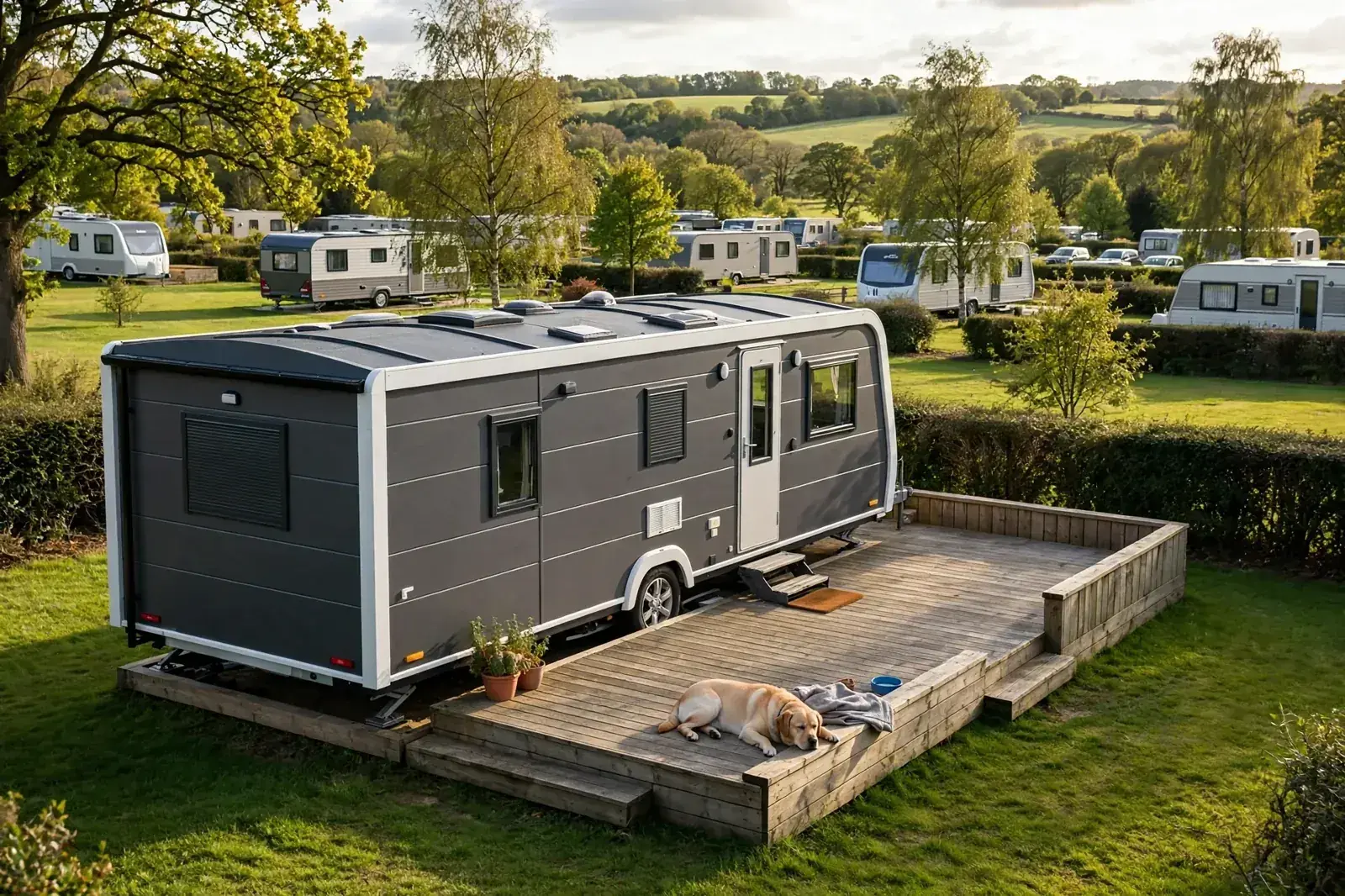
Next, the boundary. Many statics have decking with a gate, some have open decking with steps a small dog can slip past, and some have only a grass surround where tethering is the sole option. Ask for the gate and railing arrangement specifically, with photographs of your actual unit if a private owner is renting it. Measure gaps mentally against your dog: terriers treat six-inch gaps as doors, and elderly dogs need a ramp or shallow steps rather than a cheerful assurance that most dogs manage fine.
Then shade and surface. Decking bakes in summer sun and turns slippery in algae season. Grass pitches muddy quickly at the door. Ask which way the decking faces, whether there is shade at midday, and where wet towels, boots and a muddy dog can be dealt with before they meet the caravan carpet. A hose point or a simple outside tap near the unit transforms wet-week management, especially on coastal breaks like those in our caravan holidays field guide.
Finally, neighbours. Statics sit close together, sound carries between them, and a dog that barks at passing mobility scooters, delivery vans and neighbouring dogs will be heard by six households. Edge pitches, end-of-row positions and pitches away from footpath shortcuts are worth requesting explicitly, and worth paying a small premium for if your dog is watchful.
Inside the box: layout that helps a dog settle
A static caravan is a long, narrow, single-room-deep home, and dogs read it quickly. The layout questions that matter are simple. Is there floor space for a proper dog bed that is not in the kitchen walkway or directly against a heater. Can doors close to create a separate sleeping zone. Is the flooring hard and washable in the living area, or pale carpet that will record every muddy entry. Does the shower have room to rinse a large dog, or will bathing happen with a bucket outside.
Heat and ventilation deserve attention because caravans warm and cool faster than houses. Check opening windows and whether they are secure if a dog is resting inside during a brief, permitted absence, and ask how heating is paid for and controlled. A dog that pants through a hot afternoon on a south-facing unit will not settle, and a cold unit in shoulder season makes old joints stiff. Portable fans, window shades and a cool mat help, but orientation and ventilation decide the baseline.
Storage is the quiet third factor. Dog food, towels, leads, a crate if you use one, wet-weather kit and human luggage all compete for the same cupboards. A caravan that sleeps six on paper may store for two comfortably. Pack in soft bags that fit under beds, bring a lidded food container that seals smells into one cupboard, and plan a drying line or rack position before the first wet walk creates a corridor of dripping towels.
Site rules that actually affect your stay
Park rules for dogs usually cover five areas, and you need all five in writing for your dates. Number and type: maximum dogs per unit, any size or breed conditions, and whether visitors dogs count. Leads and zones: where leads are mandatory, whether there is a dedicated dog exercise area, and which buildings or terraces admit dogs. Absence: whether a dog may ever be left unattended in the unit, and for how long. Noise: the complaints process and its consequences. Waste: bin locations and any rule about pitches being kept clean, which matters if your dog toilets on your own grass surround.
Exercise areas vary from a proper fenced field to a narrow strip beside the bins, and the difference changes your day. If the only off-lead option is a ten-minute drive, a young high-energy dog will need a different plan, perhaps two longer lead walks on quiet lanes. Ask for the walking route map at booking, not at reception, and cross-check beach or countryside restrictions for your dates, since seasonal dog rules on nearby beaches can remove the walk you were counting on.
Assistance dogs sit outside pet rules and should not be charged pet fees or counted in pet limits, but telling the park in advance still helps them allocate a suitable unit and pitch. For pet dogs, get the rule sheet for the current season rather than relying on last years forum posts, because parks change operators, insurers and policies. Where this guide gives typical patterns, treat them as questions to verify, and follow the parks latest official terms for your booking.
Private rentals through owners add one more layer: the park may allow dogs while the owners own letting terms do not, or the reverse confusion can occur in listings. Confirm both layers agree, and that the cleaning fee, damage deposit and dog charge in the owner agreement match what the park expects at check-in.
Fees and totals: what a dog-friendly static really costs
For a hired week, build the total in layers. Base hire for your exact unit and dates, then dog charges per dog per week or per stay, cleaning fees, damage deposit and whether it is refundable, linen and passes, parking for a second car, and energy charges where meters apply. Peak school-holiday weeks multiply the base quickly, and the small lines become significant with two dogs. A worked comparison of your final two options, totals only, settles most arguments faster than another hour of photographs.
Owners face a longer ledger: purchase price, siting and connection, annual pitch fees, rates, insurance, gas and electricity, winter drain-down, and eventual resale or removal. Dog-specific costs are smaller but real: fencing or gating a deck to a standard the site approves, replacing flooring with washable surfaces, and possibly higher cleaning costs between family uses. Ask the site which decking enclosures are permitted before designing one, because sites often control materials, height and appearance tightly.
Whether hiring or owning, cancellation and change terms decide how risky a booking is. Illness of a dog is a common reason plans move, so check date-change options as well as refunds, and consider insurance that fits the value of the booking. Our guide to dog travel costs sets out a simple budgeting method that works for statics as well as cottages: list every line, price the wet-week version of the trip, and keep a small contingency for the cost you forgot.
Settling a dog into a caravan: thinner walls, faster routine
Caravans creak, flex slightly underfoot and carry the sounds of neighbours, awnings and site vehicles. Most dogs adapt within a day if the first hours are handled quietly. Walk the pitch boundary on a lead first, check gates, decking gaps and anything stored under the unit, then let the dog explore inside on a lead before beds and bowls appear. Familiar bedding goes down in its chosen corner immediately, water follows, and the first meal happens at the usual time even if the drive has shifted everything else.
Evenings need a plan for light and sound. Site lighting, clubhouse music and neighbours televisions create a busier backdrop than a cottage in a field. A proper last walk, a covered crate for a crate-trained dog, a long-lasting chew and curtains closed against passing movement all reduce night vigilance. If your dog is sound-sensitive, request a pitch away from entertainment venues when booking rather than hoping for quiet on arrival, and bring the white-noise option you already know works at home.
Wet weather is where statics prove themselves. A dog can toilet on the pitch surround if rules allow, towels live by the door, and nobody must cross a hotel lobby with a soaked spaniel. Build the routine on day one: lead, toilet spot, towel station, mat, settle. Dogs learn caravan geography fast, and a consistent sequence repeated for two days usually carries the rest of the week without negotiation.
Safety checks specific to caravans
Run a five-minute safety sweep on arrival. Gas appliances and carbon monoxide alarms: locate the alarm, test it if the instructions invite it, and know how to turn off gas and water. Chemicals: cleaning products, toilet fluids and hot-tub or decking treatments must move out of dog reach, ideally into a locked or high cupboard. Gaps: check under the unit skirting, decking edges and any hole a small dog could use to get beneath the caravan, a classic and frightening hiding place.
Heat safety needs active management. Never leave a dog in a closed caravan on a warm day even for a short errand, because internal temperatures climb faster than in a house. Use shade, ventilation and cool water, walk early and late, and treat a dog that seems restless and panting in a warm unit as a reason to move outside into shade immediately. In cold snaps, check that heating reaches the dogs sleeping corner and that pipes and external taps are understood before a frosty night, not during it.
Fire procedure is brief and worth reading. Know your pitch number, the site address for emergency services, the nearest extinguisher point and the assembly area, and keep a lead and torch by the door at night. Save the local and emergency vet numbers before you need them, and note the drive in daylight. Rural sites can be twenty minutes from help, which is manageable when the number is already in your phone.
If you are buying: dog questions for the sales conversation
Ownership can give a dog a second home territory it knows by heart, which many dogs visibly love. Protect that dream with unglamorous questions. What is the licence length and season, and can the caravan stay on site as it ages. What are the sites dog rules for owners in full, including numbers, fencing permissions and exercise areas. Can you rent the unit out with dogs when you are not using it, and who sets those terms. What happens to pitch fees if the site is sold.
Visit at a busy weekend and again on a wet weekday evening if you can. Walk the dog routes at the times you would use them, listen to the pitch at night, and talk to neighbouring owners with dogs, who will tell you more about exercise fields, lead enforcement and clubhouse terraces in ten minutes than a brochure will in a year. Check mobile signal and vet distance as working facts, not holiday trivia.
Finally, run the honest usage test. Count the weekends and weeks you will truly use in a normal year, with work, weather and family life as they are, and divide the annual costs by that number. If the result still beats hiring and the dog rules fit your actual dog, ownership may be a sound joy rather than an expensive hope. If the numbers only work at fantasy usage, hire happily and keep the flexibility.
Practical questions
Before you go
Are all static caravans on a dog-friendly park dog-friendly?
No. Parks usually designate specific units for dogs, and private owners set their own terms on top of park rules. Confirm that your exact booked unit accepts your dogs, in writing, with the number and size of dogs stated, rather than relying on the park being described as dog-friendly in general.
Can I fence the decking of a static caravan for my dog?
If you hire, only use the gating or enclosure already fitted and described for your unit, and ask for photographs if it matters. If you own, most sites control decking enclosures by material, height and appearance and require approval before fitting. Never assume you may add fencing, tethering or screening until the site confirms it in writing.
May I leave my dog alone in a static caravan?
Only where the park or owner terms for your booking explicitly allow it, and never in warm weather or for long periods. Many lets prohibit unattended dogs entirely. Check the rule before booking if evening meals out matter to you, keep any permitted absence short, and leave the dog settled with ventilation, water and familiar bedding.
How many dogs can I bring to a static caravan?
Limits are set by the park and the unit owner, commonly one or two dogs per unit, with larger numbers only by prior arrangement. Size, breed conditions and visitor dog rules may also apply. State your dogs clearly at booking and get the agreement in writing, because arriving with an extra dog is a common cause of refused check-ins.
What should I check about a pitch for an elderly or small dog?
For small dogs, check decking and gate gaps, skirting openings under the unit and balcony-style rail spacing. For elderly dogs, check step height, ramps, slippery decking, distance to a level toilet area and whether the pitch is quiet at night. Photographs of the actual pitch and a direct conversation with the park or owner answer these better than generic unit descriptions.
Is owning a static caravan good value for dog holidays?
It can be, if you will use it often, the season is long enough, and the sites dog rules fit your dog for years ahead. Divide total annual costs by realistic nights of use and compare with hiring. Check licence, pitch fees, fencing permissions and resale terms in writing before buying, and treat official site terms as the deciding document.