This guide is independent and contains no paid placement. If affiliate links are added later, they will be clearly marked and will not change our editorial checks.
Answer five questions honestly and the decision usually makes itself: take the dog if the journey, the accommodation rules and the daily plan all suit them; leave them with a trusted sitter if any one of those three fails badly; and choose the hybrid — a short break together plus a sitter for the main trip — when you want both. Cost rarely settles it alone, because the two options land surprisingly close for one dog over a week.
The five-question decision tree
Most advice about this decision starts with destinations and accommodation, which is backwards. The right starting point is a short, blunt questionnaire. Answer each question yes or no, and keep score as you go. The questions are deliberately ordered so that a hard no early on saves you from planning a trip your dog will hate.
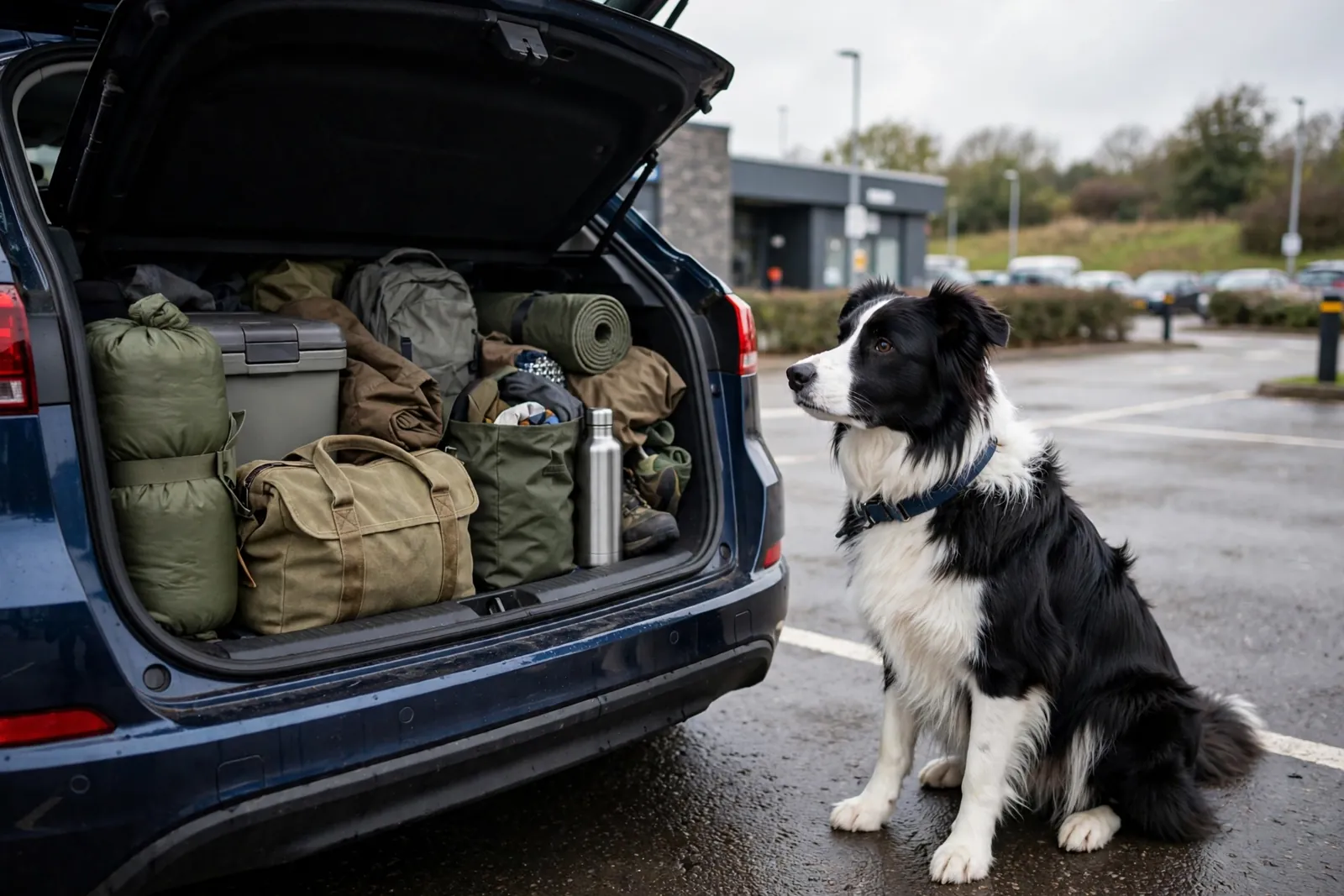
Question 1: Does your dog travel calmly for at least two hours? This is not about whether your dog tolerates a ten-minute drive to the park. It is about a motorway journey with traffic, a service-station stop and a final stretch on unfamiliar rural roads. If your dog vomits, pants heavily for the whole journey, trembles, barks non-stop or needs to stop every twenty minutes, that is a no. If they settle after ten minutes, sleep, and arrive ready to walk, that is a yes. A no here does not automatically mean leaving them behind, but it does mean the journey itself needs fixing first, or the whole holiday starts with a stressed dog and a stressed driver.
Question 2: Can your dog settle in a strange room within an hour? Think about what actually happens on arrival: a new smell, a different floor, unfamiliar sounds through thin walls, a bed that is not quite their bed. Some dogs sniff everything, drink, and flop down. Others pace, whine at the door, refuse food or stay on high alert until midnight. If your dog is in the second group, every evening of the holiday repeats that first hour, and the people in the next room will hear it too. A yes here is worth more than a pretty cottage.
Question 3: Does your actual holiday plan include the dog for most of the day? Be specific, not aspirational. List the days: beach walks, yes; a six-hour theme-park day, no; a restaurant that allows dogs on the terrace, yes; a museum, a boat trip with no dogs, and a long lunch indoors, no. If the dog would be alone in the accommodation for more than three or four hours on most days, you are not really taking the dog on holiday. You are taking the dog to a different place to be alone, which is usually worse than leaving them at home, where at least the surroundings are familiar. Count the dog-included hours before you count the scenery.
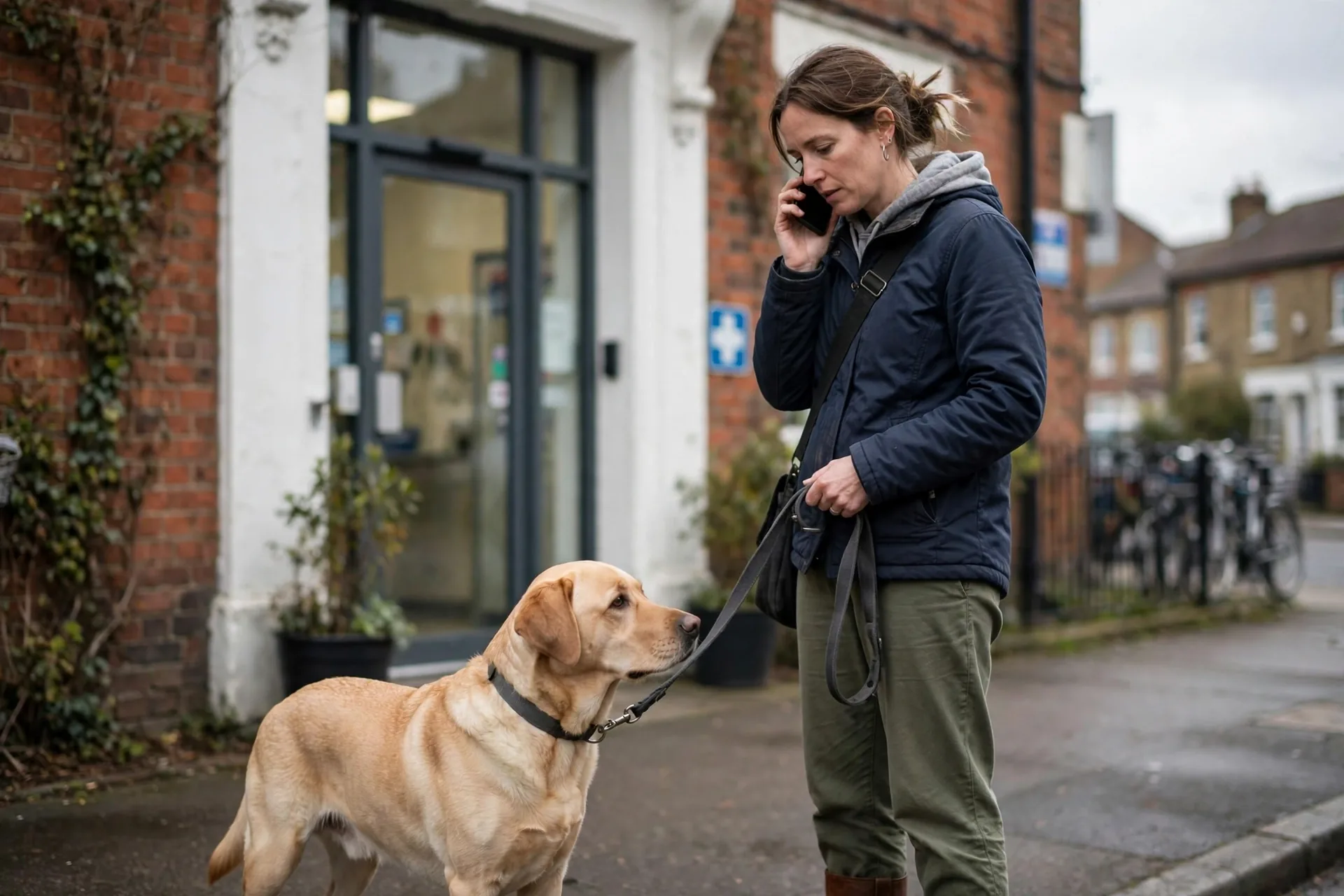
Question 4: Is there a sitter you would genuinely trust with a key, a vet decision and a 2am phone call? This question is not about whether sitters exist in your area. It is about whether you already have one, or can find one with references, a trial visit and a written agreement, in time. A trusted family member, a regular dog walker who already knows the dog, or a professional house sitter with reviews all count. A stranger found in a hurry the week before departure, with no trial and no backup plan if they fall ill, does not. If the answer is no, taking the dog may be the safer option even if the trip is imperfect, because an untested sitter is a risk, not a solution.
Question 5: Can you afford the worse of the two totals without resenting it? Look at the two cost tables below, take the higher total for your situation, and ask whether paying it would sour the holiday. If the sitter bill would make you count every meal out, or the pet fees plus a larger car plus extra gear would do the same, the money is telling you something. This question comes last on purpose: people who start with money often choose the cheaper option and then spend the week feeling guilty or irritated. Decide on welfare first, then check that the money does not ruin the result.
Now read the result. Mostly yes, especially to questions 1, 2 and 3: take the dog, and plan the trip around them properly. No to question 1 or 2, and yes to question 4: leave the dog with the sitter, and enjoy the holiday without pretending the dog would have enjoyed it too. Mixed answers, or yes to question 4 but a dog who clearly loves being with you: choose the hybrid in the section below. No to question 4 and no to questions 1 or 2: you have the hardest version of this problem, and the honest answer is to fix one side before you book anything non-refundable — either a trial with a sitter, or shorter practice trips for the dog, whichever is quicker. Do not let a non-refundable booking force a decision your dog has not yet had a chance to pass.
One more honesty check before you move on. Ask everyone travelling, not just the person who wants the dog along. A teenager who will be asked to walk the dog at 7am in the rain, or a partner who will miss the restaurant they booked months ago, will not enjoy the holiday if the dog becomes a daily negotiation. The decision tree works best when the whole household answers it together, even if the dog is only one person's idea.
One week taking the dog: the real cost
The headline pet fee is the smallest part of taking a dog on holiday, which is why so many budgets go wrong. The table below builds a realistic one-week total for one medium-sized dog, travelling by car from home to a self-catering cottage in Britain. All figures are illustrative ranges commonly seen in the UK market, not quotes: your dates, region and dog count will move them, so get a written total for your own booking before you decide. The point of the table is the shape of the spending, not a single magic number.
| Item | Illustrative one-week range | What moves it |
|---|---|---|
| Pet fee or pet supplement | £25 to £75 | Per dog, per week; some places charge per night instead |
| Refundable damage deposit | £0 to £200 held, not spent | Returned if nothing is damaged; check the terms in writing |
| Extra fuel and tolls for a longer or slower route | £20 to £60 | Detours for dog-friendly stops and a heavier car |
| Dog travel gear you do not already own | £0 to £80 | Boot guard, seat cover, travel bed, long line, drying coats |
| Food, treats and poo bags for the week | £15 to £35 | Buying the usual food away from home costs more |
| One emergency or out-of-hours vet visit, if needed | £0 to £150 or more | Not every trip needs one, but budget as if it might |
| Meals and days out you change because of the dog | £0 to £100 saved or spent | Terrace meals can be cheaper; missed attractions are a real cost |
That gives a typical added cost, excluding the deposit, of roughly £60 to £300 for the week, on top of the accommodation and travel you would pay anyway. Two dogs roughly double the pet fee and the food, and some places cap the number of dogs or charge more for the second one, so check the per-booking total rather than assuming the first dog's price times two. The hidden cost is time rather than money: earlier starts, a walk before every outing, a search for a dog-friendly lunch spot, and a last walk after dark even when everyone else is tired. If that rhythm sounds pleasant, it is not a cost at all. If it sounds like a chore, it will feel like one by Wednesday.
There are also costs that only appear if something goes wrong. A dog that chews a curtain, scratches a floor or fouls a carpet can turn a refundable deposit into a deduction, so photograph the accommodation on arrival and keep the photos until the deposit is returned. A dog that escapes on an unfamiliar walk can turn a holiday into a search, which is why a long line, an up-to-date tag and a charged phone matter more than any gadget. Our full breakdown of dog holiday costs in the UK works through weekend and week-long budgets in more detail, including the kennel comparison that many people use as their starting point.
One saving people forget: taking the dog removes the sitter bill entirely, and for a longer trip that saving grows every day. A three-week trip that looks expensive with a dog can be cheaper than three weeks of boarding, even after pet fees. That is why the decision changes with trip length. For a weekend, the sitter is often the cheaper and simpler option. For a fortnight, taking the dog often wins on money alone, provided the dog travels well. Run both tables for your actual number of nights, not for a generic week.
One week leaving the dog: the real cost
Leaving the dog behind looks simple on a quote and complicated in real life, because the price depends on which kind of care you choose and how many visits or nights it covers. The table below uses the same one-week, one-dog basis as the previous table, again as illustrative ranges rather than quotes. Always ask for the total for your exact dates, including bank holidays, medication administration, extra walks and any key-holding or meet-and-greet fee.
| Option | Illustrative one-week range | What you get |
|---|---|---|
| Boarding kennels | £175 to £350 | Licensed kennels, daily exercise, staff on site, fixed routine |
| House sitter staying in your home | £175 to £350 | Dog stays home, house occupied, routine closest to normal |
| Dog sitter's home boarding | £140 to £315 | Dog lives with the sitter, usually with other dogs present |
| Twice-daily home visits | £140 to £280 | Dog alone between visits; suits independent, settled dogs only |
| Family or friend, unpaid | £0 plus a thank-you | Cheapest in money, dearest in obligation; agree the terms clearly |
The totals land in the same neighbourhood as taking the dog, which surprises most people. A week of kennels at the middle of the range costs about the same as a week of pet fees, fuel, gear and food, and a house sitter can cost more than the entire added cost of taking the dog. The difference is what the money buys: with a sitter, it buys freedom on holiday — restaurants without checking the policy, long days out without a guilt clock, and a lie-in without a 7am walk. With the dog along, the same money buys togetherness and a holiday that is shaped around walks, beaches and early mornings. Neither is wasted. They are simply different holidays.
Watch for the extras that turn a reasonable quote into a shock. Bank-holiday surcharges, a second dog at a reduced but still real rate, medication given twice a day, a puppy or an elderly dog needing extra visits, and a late key return can each add £20 to £50 or more. Ask whether the quote includes an emergency vet run, what happens if your return is delayed by a day, and who pays if the dog needs treatment while you are away. A good sitter answers these questions before you ask them, in writing. If the answers are vague, the price is not the problem; the arrangement is.
There is also a cost that never appears on an invoice: the emotional cost of worrying. Some owners check their phone all holiday, ask for daily photos, and still feel guilty at every good meal. Others relax completely because they trust the sitter and know the dog is asleep on their own bed. Which group you fall into is not a character flaw; it is information. If you know you will worry, factor that into the decision, because a holiday spent worrying is not a holiday, however good the sitter is. Daily updates help, but agree the frequency in advance — a sitter who sends three photos a day is generous, and a sitter who is expected to send ten will resent the job.
The emotional maths nobody puts in a spreadsheet
Guilt is the worst adviser in this decision, because it pushes in both directions at once. Leave the dog and you feel guilty for enjoying yourself without them. Take the dog and you feel guilty when the dog is bored, wet, tired or left alone in a strange room while you eat. The way out is to stop asking what a good owner would do in general, and ask what this dog, on this trip, will actually experience hour by hour.
Picture the dog's week, not yours. On the take-the-dog version, the week includes a long car journey, a new house, new walks, new dogs, new smells, and a lot of waiting while humans do human things. For a confident, social dog, that is enrichment. For a nervous dog, it is a week of low-level stress with no safe place to retreat to, because home is two hundred miles away. On the leave-the-dog version, the week includes a familiar house or a kennel routine, a known sitter, regular meals and walks, and no car journey. For a home-loving dog, that is a calm week. For a dog that is deeply bonded to one person and panics when that person disappears, it is a week of separation anxiety, however nice the sitter is.
Children change the emotional maths again. A child who has promised to walk the dog every morning may love the responsibility for two days and resent it by day four, and the adults then inherit the job anyway. A child who is upset at leaving the dog may enjoy the holiday more if the dog comes, even if the adults would prefer the freedom. Talk about it plainly before you book, including who does the early walk and who stays with the dog if the rest of the group wants to do something dogs cannot join. A plan that only works if everyone is cheerful all week is not a plan.
There is also the question of what the holiday is for. A walking holiday in the hills, a beach holiday with long days outdoors, and a city break built around restaurants and museums are three different trips that happen to share a calendar. The first two are naturally dog-shaped. The third is not, and forcing a dog into it helps nobody. If the purpose of the trip is rest, and the dog's presence turns rest into logistics, leaving the dog is not selfish. It is the decision that lets both parties rest: you on holiday, and the dog in a calm routine at home. If the purpose is shared adventure, and the dog is the reason you chose the destination, leaving them behind will feel wrong every day, however good the sitter is. Name the purpose, and the decision gets easier.
Reading your dog, not your guilt
Temperament is a better predictor than breed, age or size, although all three matter. A young, social dog that greets strangers happily, recovers quickly from surprises and sleeps anywhere is a strong candidate for travelling. An older dog with arthritis, a rescue dog that is still building confidence, a dog that guards food or space, and a dog that barks at every noise through a wall will all find a holiday harder, and their owners will find it harder too. None of this is a judgement on the dog. It is a description of what the trip will demand from them.
Look for four specific signals from recent weeks, not from puppyhood. First, car behaviour: does the dog settle, or does every journey end with drool, vomiting or shaking? Second, settling in new places: on a visit to a friend's house or a dog-friendly cafe, does the dog relax within twenty minutes, or stay on alert the whole time? Third, alone time: can the dog be left for two to three hours without distress, destruction or barking that neighbours would notice? Fourth, recall and lead manners in exciting places: on a busy beach or a path with livestock, does the dog come back and walk calmly, or does excitement override training? If three or four answers are positive, travelling is realistic. If two or more are negative, a sitter deserves serious thought, and the weak areas are exactly what a trial trip should test.
Medical needs deserve their own paragraph, because they quietly decide many trips. A dog on twice-daily medication, a dog with epilepsy, diabetes or a heart condition, and a dog recovering from surgery all need a carer who can manage the condition confidently, whether that carer travels with you or stays at home. Taking such a dog on holiday means finding a vet near the destination before you go, carrying the medication and the prescription details, and knowing what to do if a dose is missed. Leaving them means briefing the sitter in writing, leaving the vet's number and an authorisation for treatment, and agreeing a spending limit for emergency care. If either version feels shaky, that is the decision talking. For the travelling version, read our guide to finding emergency vet help on holiday before you book, and save the nearest practice number in your phone on arrival day, not on the day you need it.
Seasonal temperament matters too. A thick-coated dog that overheats in summer, a short-coated dog that shivers in a cold cottage, and a noise-sensitive dog in firework season will all have a worse trip at the wrong time of year, however dog-friendly the accommodation claims to be. If the trip falls in a difficult season for your dog, that alone can tip the balance towards a sitter, or towards moving the trip by a month. Local conditions change and a guide cannot cover every parish and every season, so if you are unsure about seasonal rules, beach restrictions or livestock areas on your planned walks, check the official guidance before you travel.
The four kinds of sitter, honestly compared
Not all sitters are the same job with a different price. Each type suits a different dog, and choosing the wrong type is worse than paying too much for the right one. Start with the dog's needs, then match the sitter, not the other way round.
Boarding kennels suit confident, social dogs that cope with noise, other dogs and a structured routine, and owners who want licensed premises, staff on site and a fixed price. They suit less well dogs that are anxious in kennels, dogs that need one-to-one attention, and dogs that do not eat when stressed, because a kennel is a busy place however good it is. Visit before you book, at a normal working time rather than a staged open day, and ask how many dogs each staff member looks after, how long dogs are alone at night, and what the exercise routine actually is.
A house sitter in your home suits dogs that are happiest in their own territory, multi-dog households, and owners who also want the house occupied. The dog keeps its bed, its garden, its feeding times and its neighbourhood walks, which is the closest thing to normal while you are away. The trade-off is trust: this person has your keys, sleeps in your house and makes decisions alone. Use a reputable platform or agency, check references and insurance, meet them with the dog present, and leave a written house guide covering alarms, bins, neighbours and what to do if something breaks.
Home boarding with a sitter suits dogs that enjoy company and settle in a new house, and owners who want a home environment without giving a stranger their keys. The risk is the other dogs: ask how many will be there, how introductions are managed, whether dogs are ever left alone together, and what happens if two dogs do not get on. A good home boarder takes fewer dogs than they could, and says no to a mismatch rather than taking the fee.
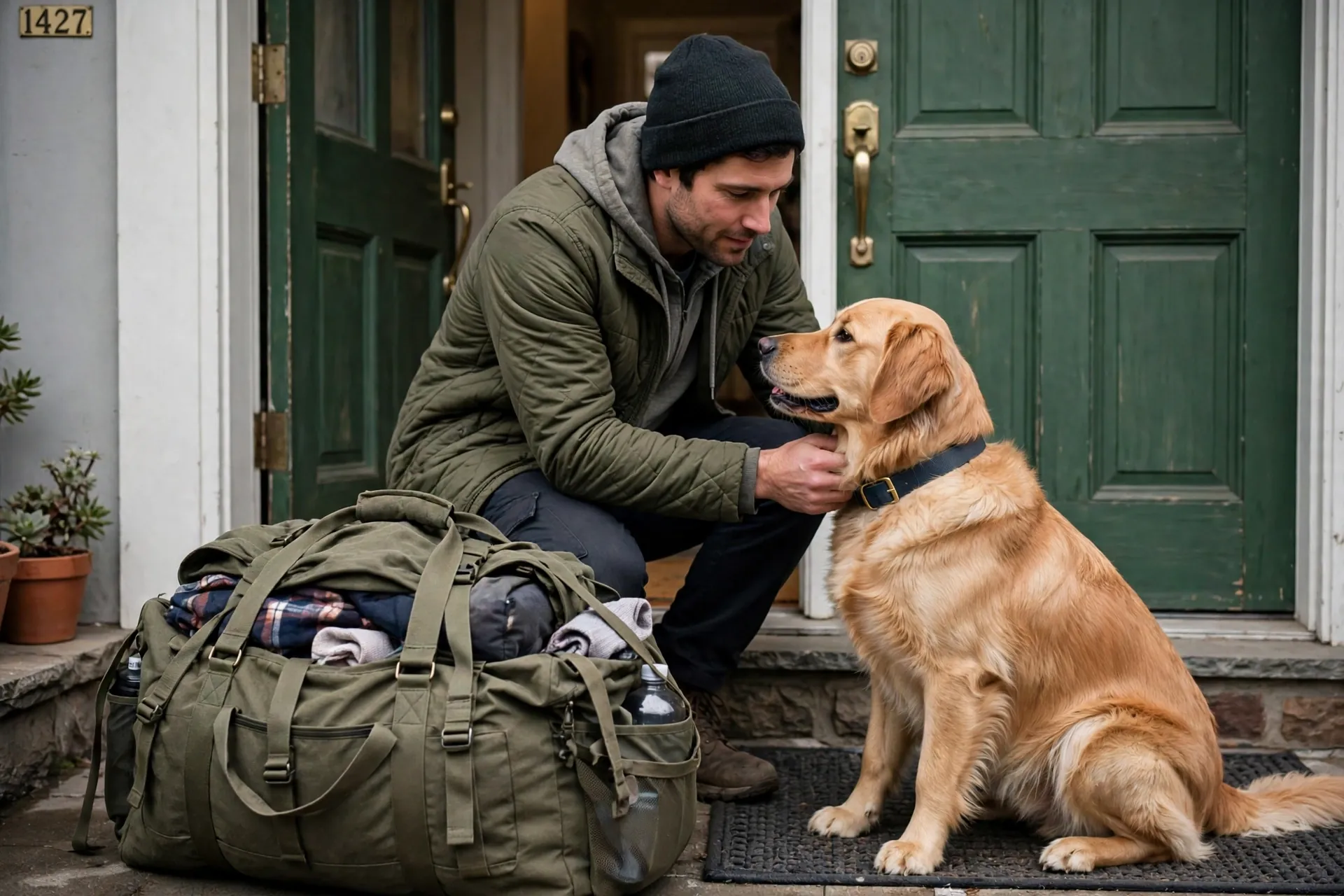
Family or friends suit dogs that already know the person, and owners who trust that person completely. The risk is not affection but clarity: an unpaid favour can go wrong when the dog is ill, the carer is busy, or the holiday runs long, and nobody wants to argue about vet bills with a relative. Write it down anyway, kindly and briefly: dates, feeding, medication, vet authorisation, spending limit, and what to do if plans change. A thank-you gift and a clear agreement protect both the friendship and the dog.
Whichever type you choose, the same checks apply. Ask for references you can actually contact, proof of insurance, experience with your dog's age and temperament, and a written agreement. Do a trial: a single overnight or a weekend before the main trip tells you more than ten messages. Leave the dog's usual food, bed, lead, medication and a worn item of your clothing, and leave your vet's details and an emergency contact who can decide if you are unreachable. A sitter who welcomes a trial and a written brief is a sitter worth paying.
The hybrid: the third option
The hybrid is the option most guides skip, and it solves more arguments than either extreme. It accepts that one trip can contain two different plans, and that the dog does not have to be present for every day to be part of the holiday. Three versions work particularly well in Britain, because distances are short and sitters are flexible.
Version one: a short break together, then the main holiday apart. Take the dog for a two- or three-night break in a dog-friendly cottage or on a low-stress weekend break, then leave them with the sitter for the longer, less dog-suitable main trip. The dog gets a holiday, you get a guilt-free main trip, and the sitter gets a shorter booking that is easier to fill. This works best when the two trips are separated by at least a few days at home, so the dog is not passed from one new place to another without a reset.
Version two: a dog-friendly base with a local day sitter. Stay somewhere dogs are welcome, walk together in the morning and evening, and book a local walker or day sitter for the one or two days when the group wants to do something dogs cannot join. This keeps the dog's nights familiar and the days flexible, and it costs far less than a full week of boarding. The key is booking the day sitter before you travel, not hoping to find one on arrival, and telling the accommodation that a walker may collect the dog.
Version three: split the party, not the holiday. If the group includes someone who would happily spend a day with the dog while others visit a museum or a theme park, plan that day explicitly and rotate the role so it is not always the same person. This only works if the person staying behind genuinely wants to, and if the dog-friendly alternative for that day is enjoyable rather than a consolation prize. A coastal walk while others visit a castle is a good trade. Sitting in a cottage watching television while others have the best day of the trip is not.
The hybrid also helps with the hardest case: a dog that loves being with you but cannot cope with the full trip. A dog that travels well for two hours but not for five, or settles for two nights but not for seven, can join the first part and go to the sitter for the rest, with a handover that is planned rather than panicked. Tell the sitter the dog's recent routine, including what the trip changed, so the handover is not a surprise. And tell the accommodation the exact arrival and departure pattern, because a booking that assumes seven nights with a dog and gets three will have a different pet fee, and a sitter booking that assumes a Monday start and gets a Wednesday one will have a different price.
Run a trial before you commit
A trial is the cheapest insurance in this whole decision, and it takes a weekend, not a week. If you are leaning towards taking the dog, book one night, no more than ninety minutes from home, in dog-friendly accommodation with a walk you can do straight from the door. Drive there in normal traffic, arrive in daylight, and watch the dog honestly: the journey, the settling, the first night, the morning walk and the journey home. If all five go well, a week is realistic. If two go badly, you have learned something valuable for the price of one night, and you can fix the weak part or choose the sitter with evidence rather than anxiety.
If you are leaning towards a sitter, run the trial the other way round. Book a single overnight with the sitter, go away for that night even if it is only to a nearby town, and see how the dog and the sitter cope without you. Ask for the updates you agreed, check whether the routine was followed, and notice how the dog greets you on return. A dog that comes home relaxed and happy has passed the trial. A dog that comes home distressed, off its food or unusually clingy has told you something important, and you still have time to try a different sitter or a different type of care before the main trip.
Trials also test the humans. A trial night reveals whether the early walk is actually enjoyable or a resentful chore, whether the accommodation's dog rules are workable or irritating, and whether the sitter's updates reassure you or make you check your phone every hour. Write down what worked and what did not, the same evening, while it is fresh. That note becomes the briefing for the real trip, and it stops the same argument happening twice.
The booking checklist
Once the decision is made, the checklist is what stops a good decision becoming a bad booking. Work through it in order, and do not pay a deposit until the items that affect your decision are confirmed in writing.
- If taking the dog: confirm the pet fee, the dog limit, any breed or size condition, whether dogs can be left alone and for how long, where dogs can and cannot go on site, and the cancellation terms if the dog becomes ill.
- If taking the dog: check the journey honestly, including stops, traffic and arrival time, and book accommodation where the first walk needs no car.
- If leaving the dog: confirm the sitter's availability for the full dates, including bank holidays, the total price, the emergency vet plan, the backup if the sitter falls ill, and the update routine.
- If leaving the dog: do a trial night, leave a written brief with feeding, medication, vet details and an emergency contact, and agree a spending limit for treatment.
- Either way: check travel insurance and pet insurance terms, keep every confirmation email until you are home, and tell one other person the plan, so someone can act if you are unreachable.
- Either way: photograph the accommodation or the sitter arrangement on arrival, keep the photos, and agree in advance how any damage or extra cost will be handled.
Timing matters as much as the list. Good sitters and dog-friendly units both fill first for school holidays and bank-holiday weekends, so the worst version of this decision is a late one, where the only sitter available is untested and the only accommodation available is unsuitable. If you are deciding late, check sitter availability before you pay for non-refundable accommodation, and check accommodation rules before you confirm a sitter, so neither booking traps the other. If both sides are already full, the honest answer may be to move the trip, shorten it, or choose the hybrid, rather than forcing a booking that neither the dog nor the sitter can carry.
When plans change mid-holiday
Even a good decision can meet a bad week: a dog falls ill, a sitter falls ill, a journey is delayed, or the weather turns a walking holiday into a wet week indoors. The plan that survives is the one with a second option already thought through. If you take the dog, know the nearest vet, a local walker who could help for a day, and an accommodation rule for leaving the dog briefly if you need to visit a hospital or deal with an emergency. If you leave the dog, know how the sitter will reach you, who else can decide if you are out of signal, and how a delayed return will be paid for.
Illness is the most common change, and it is the one people least want to plan for. A dog that vomits once after a car journey is different from a dog that is lethargic, off food and drinking excessively for a day, and both are different from a dog that has eaten something dangerous. When in doubt, call a vet rather than waiting to see, and do not let the holiday schedule delay that call. The same applies at home: a sitter who calls you about a worrying symptom is doing their job, and the right response is a calm decision and a vet visit, not a reassurance that it will probably pass. Agree this in advance, so the sitter does not hesitate to call.
Finally, give yourself permission to change your mind next time. A dog that travels happily at three may struggle at twelve. A sitter that was perfect for a weekend may not suit a fortnight. A family that loved a dog-friendly cottage holiday may prefer a city break next year, and the dog may prefer staying home for that one. The decision is not a verdict on your love for the dog, and it is not permanent. It is a practical choice for one trip, made with the information you have, and revisited honestly for the next one. That is what good dog ownership looks like: not always taking the dog, and not always leaving them, but choosing, trip by trip, the version of the holiday that the dog in front of you would actually enjoy.
Practical questions
Before you decide
Is it kinder to take my dog on holiday or leave them at home?
It depends on the dog, not on the holiday. A confident dog that travels calmly and settles in new places often enjoys coming along, while an anxious dog that hates car journeys and new rooms is usually kinder left in familiar surroundings with a trusted sitter. Judge by stress signals, not by guilt.
How much does a dog sitter cost for a week in the UK?
Costs vary widely by region, service and the number of dogs. As an illustrative range, boarding and house sitting commonly fall in the tens of pounds per day, so a week often runs into several hundred pounds. Always get a written quote for your exact dates, dog count and any medication or extra walks before you compare it with taking the dog along.
What if my dog is fine at home but terrible in the car?
That is a strong vote for staying home or for a very short trial trip. Car sickness and travel anxiety do not reliably improve in a single long journey, and a miserable outward trip sets the tone for the whole week. Try a short practice journey first, and if it goes badly, book the sitter without guilt.
Can I split the difference and take my dog for part of the holiday?
Yes, and for many families this hybrid is the best answer. Options include a short dog-friendly break first, a sitter for the main holiday, a dog-friendly base with a local day sitter for one or two outings, or leaving the dog with family for the long journey and collecting them for the final days. Plan the handover dates explicitly so neither part is improvised.
How far ahead should I book a sitter or dog-friendly accommodation?
Book as early as you can, especially for school holidays, bank-holiday weekends and the Christmas period, when good sitters and dog-friendly units fill first. If you are deciding late, check sitter availability before you pay for non-refundable accommodation, and check accommodation rules before you confirm a sitter, so neither booking traps the other.
What should I ask a sitter before I leave my dog with them?
Ask about their experience with your breed and age of dog, how many other dogs will be present, their daily routine, how they handle emergencies and vet visits, what happens if they fall ill, and how often they will update you. Ask for references, insurance details and a written agreement covering keys, medication, feeding and emergency contacts.