This guide was written independently, with no paid placement anywhere in it. Should affiliate links ever be added, they will be labelled clearly, and they will not alter what we recommend or how we check it.
Tavistock works for dogs because it is a working market town rather than a resort. The Pannier Market gives a lead-on wander through food smells and crowded stalls, the River Tavy offers flat riverside paths straight out of the centre, and the western edge of Dartmoor lies a short drive away for open moorland walking. Shape the day around market times, moor weather, livestock rules out on the open ground, and the Saturday crowds in the middle of town.
Start at the market
Begin in the Pannier Market, because the market is why Tavistock exists in the form you see it. The hall, raised in the eighteen-sixties with its great arched roof, fills on market days with growers and makers selling vegetables, cuts of meat, cheeses, loaves, cakes, plants, flowers and crafts. Stepping inside with a dog means stepping into a thick cloud of scent: warm bread, ripe cheese, raw meat, cut flowers, leather goods, and the damp-stone smell of a building that has traded for well over a century. Keep the lead short, keep the dog tucked to your side beside the food stalls, and be ready to move aside when a queue forms behind you.
Markets run on several days each week, and the pattern shifts through the year, so confirm the current days and hours from official information before setting out. Saturdays carry the biggest crowds and the fullest hall, including the farmers market, which makes them the liveliest time to visit and also the hardest for a dog that dislikes being hemmed in. Arrive before ten in the morning if your dog is uneasy in crowds, when the aisles are still passable and the stalls are just setting out. The hall doubles as a larder for a self-catering stay or a moor walk: a loaf, a wedge of local cheese, a pasty and some fruit from the stalls will make a better lunch on the moor than anything grabbed in a hurry on the road.
Outside the hall, Bedford Square spreads wide and open, with the town hall on one side and shops and cafes edging the rest. Benches line the square, several cafes put tables out in fine weather, and the ground is flat, so a dog can settle and watch the town pass by after the press of the hall. The centre is compact enough to cover on foot in about an hour, yet the pavements along Duke Street and Brook Street narrow in places, so walk with the dog on the building side and keep clear of the traffic. From the square the riverside paths are only a few minutes away, which makes it a natural place to pause between the market and the river.
What sets Tavistock apart from other Devon market towns is that its market still feeds the people who live here first and visitors second. Farmers, traders and shoppers use it as part of an ordinary week, and dogs are woven into that routine, waiting by stalls, lying under cafe tables, trotting beside their owners on the school run and the shopping round. The town is less polished than its neighbours, and that is a strength: wet flagstones, the smell of the market, gulls overhead and the sound of the Tavy running under the bridges give the place its character, and a dog tends to notice all of it before its owner does.
On market days the car parks fill quickly, above all on Saturdays and in summer, so arrive early rather than circling the narrow centre streets. If you are shopping in earnest, two people make it far easier, one to hold the dog and one to browse; on your own, keep the shopping brief and never leave a dog tied outside a shop for long, even where it can be seen. Market days and hours can shift with the season and with local events, so confirm them from official information before you travel.
Abbey, town and the Tavy
Tavistock grew around its abbey, and the abbey still explains the shape of the town. Founded in the tenth century, it ranked among the most powerful religious houses in the west of England, holding wide lands and running the markets that drew traders here. The Dissolution swept it away in the fifteen-thirties, yet fragments survive in the heart of town: the gatehouse, cloister arches, stretches of old wall and the parish church of St Eustachius, which stands on the abbey site. Walk the gardens and paths around the remains with the dog on a lead, and the ruins give an ordinary town stroll a clear destination.
The town that rose beside the abbey is built of granite and slate, much of it shaped by the Dukes of Bedford, whose estate rebuilt large parts of Tavistock in the eighteen-hundreds. Bedford Square, the town hall, the Guildhall and the Bedford Hotel carry that period's confident stonework, while the streets climbing away from the river narrow and twist past thick walls, small windows and broad doorways made for market trade. A dog on a lead can cover the centre comfortably in an hour, though the climb away from the Tavy is steeper than the riverside paths, so take the uphill lanes slowly with an older dog.
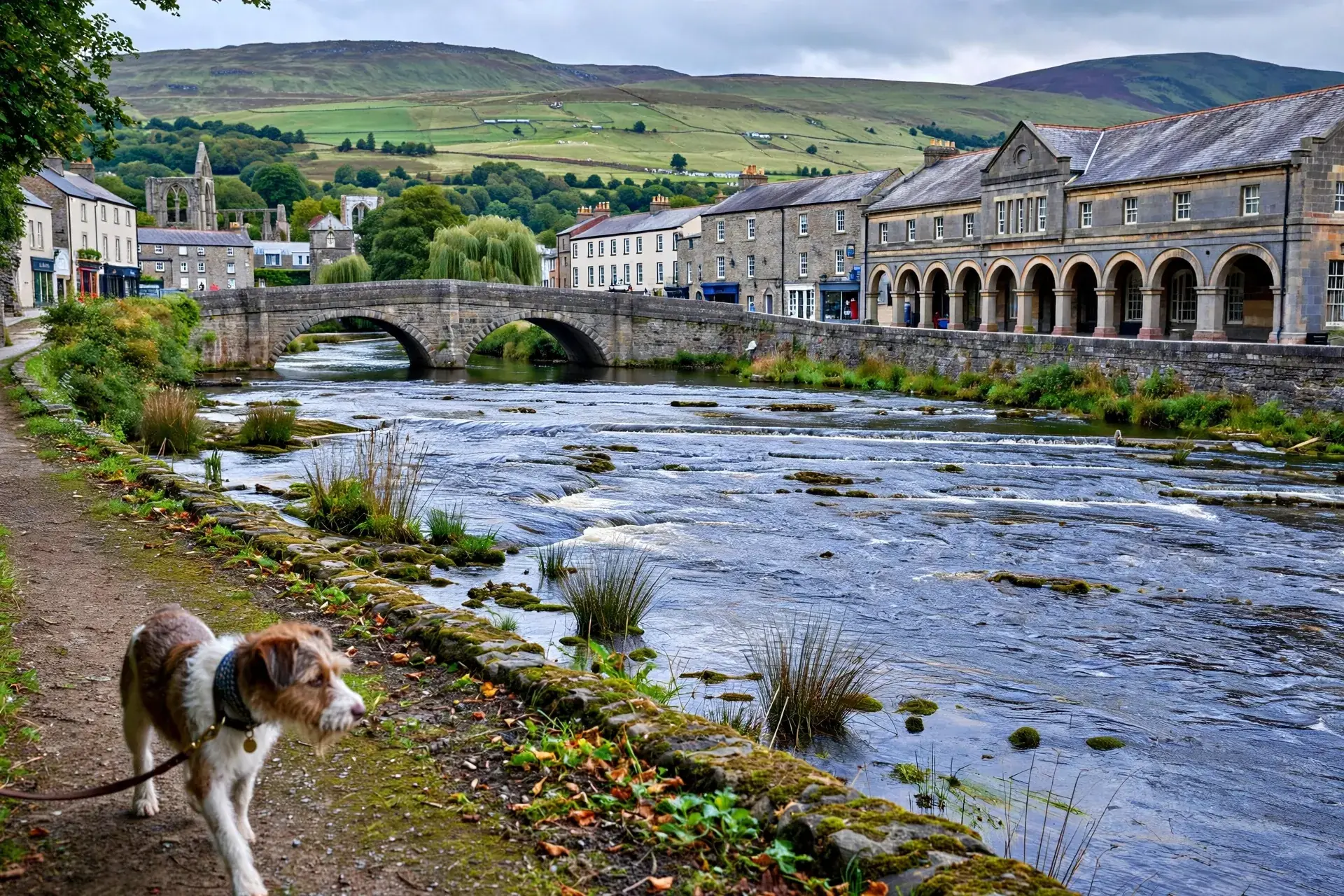
The River Tavy is the reason the town sits where it does. It rises on Dartmoor, hurries through Tavistock under its bridges, and runs on to join the Tamar. The water is quick, clear and rocky, and the riverside paths beside it are flat, easy and well used by local dog walkers. Along the banks you may spot dippers bobbing on stones, grey wagtails flicking their tails, and herons standing motionless in the shallows. Keep the dog on a lead close to the water, because the river runs deep in places, the current is strong after rain, and some banks drop steeply.
Mining forms the other half of Tavistock's story. Copper, tin and arsenic workings ringed the town, and their engine houses and spoil heaps still mark the landscape out towards the Tamar Valley, alongside the old Tavistock Canal. Tavistock is also the birthplace of Sir Francis Drake, born at Crowndale Farm a short drive from the centre, and the Drake connection runs through the town's history. None of this matters to a dog, yet knowing a little of it changes how the streets look to the person holding the lead.
In the colder months the town quiets, the river runs high, and mist gathers over the moor beyond the rooftops, which is when the centre feels most atmospheric. Some cafes and shops shorten their hours outside summer, so confirm opening times from official information before you go. The riverside paths stay walkable all year but turn muddy after rain, and the wind on the moor bites in winter, so pack a coat for a small or short-coated dog and be ready to shorten a walk if the weather closes in.
River Tavy walks from the town
For a gentle walk straight from the centre, the paths beside the River Tavy are the best choice in Tavistock. They follow the river upstream and downstream out of town, mostly level, partly surfaced, and shaded by trees along much of their length. That shade makes them a good option on a hot day, while the shelter of the valley takes the edge off the wind on a wet one, though the surface turns muddy after heavy rain. Local dog walkers use them every day, which is usually a reliable sign that a route suits dogs.
Upstream, the river runs through a wooded valley past the abbey remains, the gardens and the meadows, and out towards the open countryside. Allow about an hour each way to the edge of town, depending on how often you stop, and expect an easy, flat walk that suits older dogs, young dogs and anyone who wants a stroll that is kind on the legs. Small bridges cross the water, the valley opens into fields, and there are shallow margins where a dog can paddle. You will meet other dogs here, so keep yours on a lead until you can see what is ahead, and step aside on the narrower stretches.
Downstream, the Tavy runs towards the Tamar through meadows and woodland, with the town behind you and the valley opening ahead. The walk is similar in length and ease to the upstream route, but the scenery feels more open, with wider meadows and longer views of the river. The water runs fast over rock in places, and some pools are deep, so keep the dog on a lead beside the water and do not let it swim where the current is strong. After heavy rain the river rises quickly and the banks can be slippery, so check conditions before setting out.
The riverside is also the best place in town to watch wildlife. Dippers, grey wagtails, kingfishers and herons all work this stretch of river, and the way to see them is to pause and watch the water instead of striding on. Keep the dog close and on a lead near the birds, because they are protected and a chasing dog is a danger to them and to itself. Spring and summer bring birdsong from the trees and wildflowers along the banks, autumn turns the riverside gold, and winter brings the river up high and fast. Cyclists use parts of these paths too, so listen for bells and keep to one side.
Timing shapes the riverside more than anything else. Early morning belongs to dog walkers, anglers and the birds, and it is the quietest time on the paths. By mid-morning the day visitors arrive, and the centre is at its busiest around lunchtime. Late afternoon is the golden hour in every sense: the light warms the water, the crowds thin, and the paths become a local walk again. Shape the day to that rhythm, an early start, a riverside walk, a long lunch, then a slow evening stroll, and you will get the best of Tavistock with the least friction. Flooding and maintenance can close stretches at short notice, so confirm the latest official information before you travel.
The moor edge: Cox Tor and the open moor
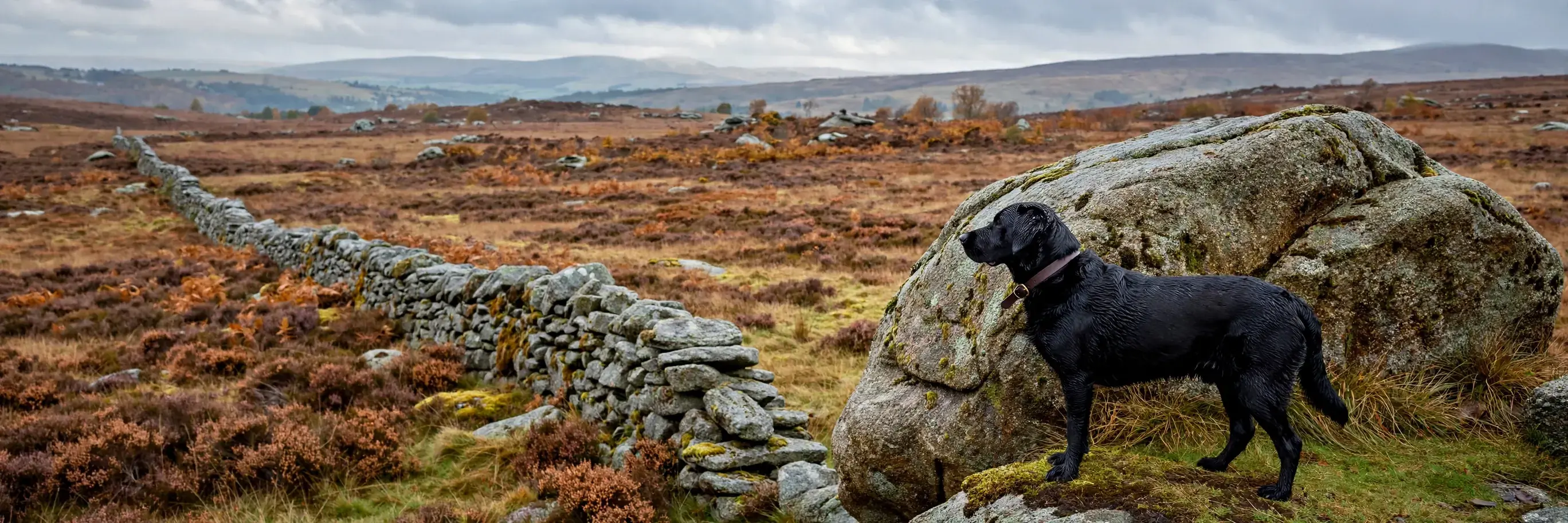
Tavistock sits on the western edge of Dartmoor, and the open moor begins only a short drive from the market square, which is the strongest reason to base a stay here rather than pass through. The change is abrupt: one moment you are among shops and stone terraces, the next you are on open moorland, with granite tors, heather, bracken and views that run for miles. These walks feel entirely different from the riverside paths in town: exposed, wild, and full of room for a dog to stretch its legs.
Cox Tor makes the best first moor walk from Tavistock. The granite outcrop stands a short drive from town, with parking nearby and a path climbing to the summit, roughly a mile each way and about half an hour up, with a steep finish. From the top the views reach across the moor to the tors beyond, down to Tavistock and the Tavy valley, and out towards the coast on a clear day. Keep the dog on a lead near the summit, because the rocks are steep, the drops are real, and the wind can gust hard. The ground is rocky and uneven, so wear boots with a good grip and take your time on the way down.
Pew Tor, a short drive from Cox Tor, is larger and broader, and it suits a longer day, with paths running across the moor to other tors and to the villages along the moor edge. These routes demand more time and kinder weather than the Cox Tor climb, and they call for navigation, because the moor is open access land and the paths are not always clear. Mist can settle in minutes and cut visibility to a few metres, so download an offline map before you set out and carry a compass and a phone with maps saved on it.
Out on the moor, the rules for dogs differ from those in town. Keep the dog on a lead whenever livestock are in sight, above all during lambing, which runs from March to July, and keep it under close control at all times. Sheep, cattle and ponies graze the open ground, and ground-nesting birds are vulnerable through the breeding season, so a dog that chases is a serious problem for farmers, for wildlife, and for the dog itself. The moor also holds bogs, mires and fast streams, so steer clear of the wettest ground and do not let a dog drink from moorland streams, which can carry bacteria.
Moor weather is the other thing to plan around. A calm morning in Tavistock can turn windy and wet on the high ground within the hour, and the mist can arrive with little warning, so check the forecast before you leave and be ready to turn back if conditions turn. Bring water for the dog, because no water on the open moor is reliably safe to drink, pack a coat for a small or short-coated dog, and keep a towel in the car, because the moor is muddy and the dog will come back wet. Late afternoon, when the light warms the tors, and early morning, when the mist is lifting, are the finest times to be out there.
Our guide to dog-friendly holiday parks in Devon covers the park option for a longer stay, including what to ask about moor access and quiet-season value. A week in Tavistock works well when the days rotate: a moor day, a river day, a market day, then a moor day at a different tor. That rotation keeps both the dog and the owner from tiring of the same walk. The open moorland also gives a dog room for a proper run, which is hard to find in Devon, where so many routes are narrow lanes with nowhere to step aside. A dog that has run hard on the moor will be asleep before the car reaches the edge of town.
Eating in a market town
Mealtimes in Tavistock follow the market. On a market morning the hall decides what lunch will be: a pasty from a stall, a wedge of cheese, a loaf still warm from the oven, fruit for the walk ahead. The town also holds bakeries, delis and small restaurants along Duke Street and around the square, plus pubs that serve food through the day. Many of them welcome dogs, above all outside, and a few let dogs into the bar. The result is that a dog owner can eat properly here, morning, noon and evening, without once leaving the dog in the car or tying it up outside a door.
A cafe stop works best once the dog has already had its walk. Order at the counter, pick a table at the edge of the room or near the door, and give the dog a blanket or mat of its own to settle on. Tables around Bedford Square suit dogs in fine weather, and the square's terraces give a dog room to lie down without blocking anyone's path. If you are unsure whether dogs are allowed inside, ask the staff before you sit; most places will tell you straight away, and many keep a dish of water and a few treats behind the counter. A dog that has just come off the moor will usually curl up and sleep through a coffee, while a dog that has been waiting in the car will fidget, so always walk first and eat second.
Evenings belong to the pubs, and a drink after a moor walk is one of the pleasures of a stay here. In summer the gardens and terraces are the easy choice, with space for a large dog to stretch out. When the rain sets in, ask whether dogs are allowed in the bar, because many pubs draw the line between the bar and the dining room, and the rule can change between lunch and dinner. Bring a familiar blanket, keep the lead on even when the room feels relaxed, and pick food that arrives without a long wait so the dog is not left restless. Each pub sets its own policy, and policies shift, above all in peak season, so check the venue's own listing or ring ahead before you count on a particular place for dinner.
Tavistock is also a good place for a cream tea, and the town's cafes serve them properly: warm scones, jam, clotted cream and a pot of tea. In Devon the cream goes on first and the jam on top, the opposite of the Cornish way, and locals will happily debate the point. A dog can sit beside you while you eat, and a small piece of plain scone makes a fair treat, but keep the cream and jam out of reach, because they are rich and a dog that eats too much of them will be sick. The cafes that serve cream teas are popular, above all on market days, so arrive early or be ready to wait for a table.
Cooking for yourselves is easy here, because the market and the town shops supply a week of meals: vegetables, meat, cheese, bread and cakes from the hall, plus a supermarket for everything else. Eat in town one night, cook in the cottage the next, and drive somewhere new on the third night for a change of scene. Bodmin with a dog covers the historic market town over the border in Cornwall, with its moor, jail and steam railway, and it makes a natural companion read for a week based in Tavistock. When you do eat out, feed the dog first, carry water and a folding bowl, and give the dog a mat so it knows where to lie. On a bad day, skip the restaurant altogether and eat in your cottage or on a bench in the square instead; the dog will be far happier, and nobody will mind.
Day trips: Plymouth, Dartmoor and the Tamar Valley
Tavistock sits well for day trips, and the three that matter most are Plymouth, the deeper moor, and the Tamar Valley. Plymouth lies about twenty minutes south, a city with a harbour, a waterfront, shops and cafes, and a history worth a day. Dogs are welcome along the waterfront and in many cafes and pubs, though the city is busier than Tavistock, so keep the dog on a short lead and arrive early for the quietest walks. The Barbican and the Hoe give the best dog walks in the city, with views across the harbour, and the waterfront cafes make a good lunch stop. Check the latest official information before you travel, because city rules can change.
The deeper moor is the day trip dogs enjoy most. The villages on the high ground, Princetown, Postbridge and Widecombe, each offer a different kind of moor day, and all lie within about half an hour of Tavistock. Princetown, the highest village on the moor, makes a good base for a walk, with the prison, the museum and the open moor around it. Postbridge is a small village with a famous clapper bridge and a good riverside walk. Widecombe sits in a valley with a church, a pub and a green, and it suits a quiet afternoon. Each village has pubs and cafes that welcome dogs, though hours and policies can change with the season.
The Tamar Valley is the day trip most visitors miss. The valley follows the River Tamar along the Devon and Cornwall border from Tavistock down towards Plymouth, through woodland, meadows, old mine workings and riverside paths, and it is protected as an Area of Outstanding Natural Beauty. The paths here are mostly level and easy, which suits older dogs and young dogs, and the valley holds the mining heritage that shaped Tavistock, with engine houses and spoil heaps worth a look. Morwellham Quay, down the valley, gives a glimpse of the old river trade, and the riverside trails make a sheltered walk when the moor is blowing a gale.
For a gentler day, the great houses and estates around Tavistock offer gardens and grounds where dogs on leads are welcome. Buckland Abbey, the former home of Sir Francis Drake, stands a short drive away, with grounds and woodland walks to explore, while Cotehele, across the Tamar in Cornwall, offers riverside gardens and estate paths. Dogs are generally welcome in the grounds on a lead, though the houses themselves have different rules, so confirm the latest information from the property before you go. These estates make a good wet-weather or tired-legs alternative to a full moor day, with cafes, shelter and easy paths.
Because every trip sits within about half an hour, the plan can stay loose. A wet morning suits Plymouth, a clear morning suits the moor, and a windy day suits the sheltered paths of the Tamar Valley, so let the forecast pick the day rather than fixing everything in advance. That freedom is the real advantage of basing a break here: no single day has to work perfectly, and a change of plan costs nothing more than a short drive.
Staying over and parking
A longer stay in Tavistock is easy because the town is built for everyday life. Groceries, a chemist, cash points, the market hall, places to eat and the riverside path all sit within a few minutes of each other, so a self-catering break runs without the driving that a smaller moorland village would demand. Arrive, park, walk to the shops, cook dinner, take the dog along the Tavy in the evening, and repeat it the next day. Dog owners tend to value that ease as much as any view.
Places to stay in and around Tavistock run from hotels and bed and breakfasts in town to self-catering cottages, apartments, holiday parks out in the countryside and farm stays a short drive away. Dog-friendly choices exist in every one of those groups, yet the fine print differs from place to place, and the fine print is what matters. A property that calls itself dog-friendly may still limit dogs to certain rooms, so confirm that your exact room or cottage is included. Then ask how many dogs the booking covers, what the charge is and whether it is per dog or per stay, and whether any size or breed conditions apply. Check the garden too: is it fenced, how high does the fence run, and could a determined dog push a gate open? Find out whether the dog may be left alone, and for how long, since that decides whether you can go out for dinner. And think about the floors and the stairs: hard floors cope with mud far better than pale carpets, and a ground-floor room suits an older dog far better than one up a flight of stairs.
Self-catering usually suits a dog stay here best, because a cottage gives you a kitchen, a garden or terrace, and the freedom to live by the dog's timetable rather than a hotel's. A place with a fenced garden, a washing machine for muddy towels, and a short walk to the square is worth more than a prettier cottage that needs a drive to reach every walk, so weigh the location against the looks. Holiday parks and campsites around Tavistock can work well too, above all for families, but run through the same checks: limits on dog numbers, charges, fenced space, and the rules on leaving dogs alone. If you book a caravan or a lodge, look at the steps and the decking, because a dog that finds steps hard will find them hard every time it needs to go outside.
Driving into the centre is the awkward part of a Tavistock stay. The streets are narrow, on-street space is scarce, and a larger vehicle will struggle, so use the town car parks at the edge of the centre instead, including the ones by the market hall and the river, and walk in from there. Charges and time limits apply and they change, so confirm the current prices and maximum stays from official information before you travel. On market days, bank holidays and Saturdays, arrive early, because the car parks closest to the market fill by mid-morning. If you are staying in town, ask the accommodation about parking before you book, since some cottages come with a space and some do not, and that gap matters more here than in most Devon towns. And never leave a dog in a parked car when it is warm, even briefly.
Tavistock has a veterinary practice, so find out where it is when you arrive and save the number in your phone, along with the number of the nearest out-of-hours emergency vet. Pet food and supplies are on sale in town, so running out is not a disaster. Mobile signal is usually fine in the town but fades on the remoter parts of the moor, so save an offline map before you head out. In winter, confirm that the places you want to visit are open, because some cafes, pubs and attractions shorten their hours outside summer, and the moor turns quiet and muddy after heavy rain. For packing, take both leads, a harness that fits, a water bottle and a folding bowl, towels, a drying coat, a blanket for the car seat, plenty of poo bags, a coat for a short-coated dog, and the dog's usual food and any medicine. A little planning goes a long way, and Tavistock rewards visitors who plan around the market, the river and the moor in that order.
A weekend shows how the pieces fit. Arrive on Friday afternoon, park near the market, and take a short evening stroll beside the Tavy so the dog learns the smells of the place before dark. Saturday belongs to the market: arrive early, browse the hall, have lunch in town, then drive down into the Tamar Valley for a sheltered riverside walk in the afternoon. Sunday starts early on the moor, up to Cox Tor while the light is good, then back to town for a slow circuit of the square before the drive home. Between the three days the dog gets a market morning, a river afternoon and a moor climb, and you get a different kind of scenery each day without ever driving far. If the weather turns, rearrange the days: the market cafes make a genuine fallback, the Tamar Valley is the best sheltered walk in the area, and the town is a pleasure in the rain as well as in the sun.
Practical questions
Before you go
Can dogs go to Tavistock Pannier Market?
Yes, dogs are generally welcome inside the Pannier Market hall and around the square, though the rules can differ by market day and by stall, and the hall gets crowded on market days. Keep your dog on a short lead, keep it close beside food stalls, and step aside when the aisles jam. Confirm the current market days and any changes to the rules from official information before you travel.
Where can I walk my dog along the River Tavy in Tavistock?
The riverside paths beside the River Tavy run through the town and out into the valley in both directions, and they are flat and easy, which suits dogs of every age. The routes are popular with local dog walkers, so keep your dog on a lead until you can see what is ahead. Do not let a dog swim where the current runs strong or the water is deep, and confirm the latest official information before you travel in case a stretch is closed after flooding.
Can I walk on Dartmoor from Tavistock with a dog?
Yes. Tavistock sits on the western edge of Dartmoor, and the open moor is a short drive away, with walks starting from Cox Tor, Pew Tor and the villages along the moor edge. Dogs are welcome on the open moor, but they must stay on a lead near livestock, above all during lambing from March to July, and under close control at all times. Carry water, wear sturdy footwear, and confirm the latest official information before you set out, because moor weather can change very fast.
Can I take my dog into pubs and cafes in Tavistock?
Plenty of pubs and cafes in Tavistock take dogs, most readily outside on terraces and in gardens, with some also letting dogs into the bar. Each place sets its own rules, and those rules can shift with the season, so look at the venue's own listing or ring ahead before you go.
Where should I park in Tavistock with a dog?
Use one of the town car parks by the market hall or the river rather than hunting for a space in the narrow centre streets. From there it is a short walk into town with the dog. Charges change, so confirm the current prices from official information before you travel, and never leave a dog in a parked car when it is warm.